Wildlife Photography Workshop Dedicated To The Photographing of The Rut Of The Deer Within The Charente-Maritime - September of 2017.
This year of 2017 was an excellent period for the making and realization of photographs documenting the deer’s rut in the French region of Charente-Maritime.
Once again, we were faced with a late start to the event due to the excessive heat which had washed over the area within the recent past. Much perseverance was demanded and required from the photographers in order to locate and uncover the deer hidden within the shadows of the forests’ overhead and towering oaks. The morning fogs enabled for the realization and capturing of beautiful and quintessentially dreamlike images and photos.

The participants in this wildlife photography workshop dedicated to rut of the deer in September 2017: Jean, Guy, Didier, Eric and Pascal.
Exceptional Lighting Conditions
We’ve had this tendency to repeat ourselves: The Charente-Maritime possesses some rather exceptional climate conditions. It is for this very reason that she stands out as a veritable paradise for wildlife and animal photographers and enthusiasts. Throughout this past week, we were able to both verify and confirm once more that this statement remained completely justified. Each morning we experienced fogs and mists gliding along the surface of the ponds and prairies. The surrounding atmospheres were ones of dual enigmas and mysteries.
We arrive very early before the sunrise so as to install the blinds. It’s a given that we do not see the animals as a result of the obscurity yet they themselves had the great difficulty of detecting ourselves given the darkness. Each and every day, I would assign each photographer a marked location. We were dropped off by 4x4 in order to avoid the useless, tiring and obsolete marches in the nighttime sky. From thereon, it simply became a matter of waiting for daybreak to observe what mother nature had in store for us.
Each occasion was a matter of up to standards surprise. Some saw a buck and his herd caught in the act of rutting. Others does and their fawns. Some were even presented the unexpected vision of some wild boars and their piglets in the act of uncovering and eating plant roots before just as rapidly hiding and disappearing themselves into the very woods from which they’d emerged.
Feet On The Ground, From The First Day
The rendezvous point was preordained as a group just before noon to meet up and prepare ourselves a hearty lunch in the typical and local flavor of cuisine. It was undoubtedly the occasion for us to better get to know each other and present our plans for this photography workshop.
Once everyone had had their rooms and bunking arrangements worked out, we set off in a Land Rover in a reconnaissance mission of some 800 hectares (~1977 acres) of forests, undergrowth’s, woods, ponds and prairies that would, for the following six days, serve as our photographic playing field. Each participant was equipped with a map to inform them of the various pedestrian roads and tracks, the important locations marked to provide orientation at their discretion.
At around five p.m., once the sun had started to fall slowly back down towards the horizon, it was time to put things into motion. We divided up our sandbox into large geographic zones, with each of these said divisions encompassing some 150 hectares (~370) to themselves.
For this first outing and day, we take two of our party members for a unique and specialized training session. This act repeats itself every day of the workshop’s duration. The photography trip begins in earnest. The rendezvous time is set for dinner at eight p.m.
Days Organized and Split into Image Captures and Photo Analyses
Every day followed the same ritual. A filling breakfast is expected at 5:30 a.m. every morning. The departure time, either on foot or by Land Rover, is previewed by 6 a.m. Certain areas are rather far off from the house. The most effective method we could come up with was to drop off the photographers at predetermined locations to have them endure unnecessary two-hour long walks. Next, they would either set up shop with their blinds or continue walking and attempt an approach by stealth.
Every session we accompany a lone photographer to teach him new techniques and their section’s terrain and topography. In reality, the ability to achieve good images and wildlife photographs necessitates an almost perfect knowledge of the surrounding environment in question. We show them the locations of the most favored ponds for animal bathing, mud baths for wild boars, bushes for bucks and brambles in whence roe deer find shelter. Only the day’s chosen photographer has a camera. We bring only our pair of binoculars. We have not come along to take photos but to teach how to take them.
The time of return in the morning is set at 11 a.m. at the latest. We from thereon engage in a quick image review so as to ascertain our progress, answer questions and offer suggestions and ideas in order to improve the next batch of images. Throughout this stay, every participant has presented us with some five images daily.
From a technical standpoint, we focused upon the various cameras’ settings, tripod placements, photo composition, image framing, how to handle depth of field, the choice of apertures, lens sensitivity, shooting speed. We also placed an important amount of emphasis on the various methods and procedures of giving the subjects within images value and making them pop, no matter whether the photo itself was big or small. Creating a portrait of a tree horned deer is not the same as photographing a herd of eight deer. Each situation is unique and possesses their own individual types of camera settings and requirements and, more importantly, their own particular rules of composition.
Following a very hefty and very rich lunch as the physical expenditures are intense, comes the so eagerly awaited midday nap for rest and recuperation.
At around 3 p.m., we meet up once more within the auditorium for an informational expose. Wildlife and animal photography requires specific settings and adjustments in terms of software. Every day, we have developed new subjects so as to approach subjects including trimming, the reduction of noise pollution, all the whilst broaching issues such as pixel quality and image definition. All forms of technical subjects are taken into account, even the exporting of photos with added watermarks.
Around 5 p.m., it’s the point of departure for the afternoon’s photography session. At this time of the year, it’s at around this time that the lights start to turn their most beautiful. We accompany a photographer. The others depart to their assigned geographic sectors.
Every day, the time of return is set for dinner at 8 p.m.
Some pictures taken by the students
Testimonials From the Participants in the Wildlife Photography Workshop
 Eric.
Eric.
I’d been here a year ago the last time a workshop was dedicated to the deer’s rut. I’ve come here again because I like investing several years into fully discovery new lands and territory. A single week was not sufficient to understand these deers’ habits and the undiscovered portions of this immense landscape.
I’ve also chosen to come along agin with you because I had some very detailed and precise ideas of what kind of photographs I wanted to realize. I did not achieve all of my objectives however this was both a natural and unavoidable part of wildlife and animal photography in general and as a rule.
This year was quite different than the last’s as most of the animals remained hidden within the forest due to the heat. Last year in stay within my blind and the animals would approach me. This year, I was required to move around more so as in order to find them.
This year, I realized more snapshots and image captures beneath tree cover because it’s a technique I have come to greatly appreciate and enjoy. We have to track the animals and be smarter than them within their natural environment. You further develop your hunter’s instinct. The other technique with which I worked with was that of facing direct sunlight and playing with the ensuing shadows and silhouettes. It naturally lends itself to the creative and I really enjoyed it.
This year, I took great pleasure in capturing snapshots whilst very early on in the morning. The cameras are so specialized that we’re able to realize pictures in various peculiar fashions in otherwise traditionally very difficult conditions.
Your technical advice is one which complement that which you bestowed upon us last time in the previous year. I would almost be willing to make my stay that of a third week as I am still in need of your particular brand of photographic ideas. For example, I would like to finalize and polish a video which I have been working on and whose focus is that of the rut of the deer. I have not yet obtained all of the ruts of which I am in need.
The Charente-Maritime and this corner in particular are just as magnificent as they’ve always been. This year, the photographers who’d held within them a certain hunter’s flair were able to obtain some very beautiful photos.
If I had to preserve into memory a nice event from throughout this week it would be that of my encounter with a buck. I enjoy the experience of a little fear and the ensuing adrenaline rush. A bit dumb perhaps but still true none the less. A buck stood just some three or four meters from myself. I hadn’t seen him at all. I wasn’t moving as I’d just discovered the herd he belonged to. Out of nowhere he let out a cry. I could feel my heart bursting from my chest. It was like suddenly coming down from a magnificent high. These kinds of meetings are those who permit ourselves to enjoy our mornings.
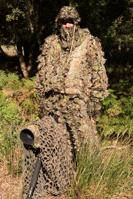 Jean.
Jean.
It’s my second workshop dedicated to the rut of the deer with you. I’d already experience it once last year.
I came back because I greatly appreciated your method of presentation as well as your advice. You opened my eyes as until then I’d mainly been involved with, as you’d explained, documentary style photography. With your guidance I discovered artistic photography and the joys of imaging wildlife and untamed fauna. Last year I’d realized some beautiful photos thanks to your mentorship, yet I felt like I had not yet reached the proverbial grail.
I’ve also come back as the first time, I took the liberty of learning and memorizing the nooks and crannies of the territory due to the sheer vastness of its nature. I taught myself the habits of its animals and their routines. I also learned how to properly guide myself whilst lost within the terrain. I told myself that this second week shall be less difficult to whether and put into action the tricks and techniques you instilled within me from last time.
I’ve returned to do better and apply your teachings tied to your specific method of ACAPN photography.
This year I had an incredible stroke of luck. Whilst waiting beneath my blind on very early morning a deep fog rolled in. I was able to capture some exceptional photographs. I applied all of your advice. This morning I stayed indoors as it was raining. I looked at these famous images. Every last one of the shots I took before knowing you are doomed to become obsolete.
These infamous and peculiar photos of which I speak are extraordinary because of the lighting. The impact of the fog alone wouldn’t permit to make these images extraordinary. It wasn’t particularly thick and was localized rather closely to the ground. Through this cloud, I observed masses of fungi and clonal plants. The bucks were partially within these bushes. At one point, rays of sunlight arrived and bathed the entire scene, glowing. It was like the beams of light created by stage projectors. Upon developing the photograph, I had the impression that someone had taken a brush and painted light across the image.
I believe that I truly understand what it was you meant when you’d explained how primordially important the choice of background and setting were to the success and quality of an image of wildlife. Now it’s become a certainty. I could have had it simply pass by, never the wiser. Yet I had the switch turned on. Just like you’ve said in the past, that’s inspiration.
This year, I also snapped many scenes of bathing deer. It was my second objective following that of imaging deer whilst in fog. I therefore spent quite some lengths of time buried within my blind, on occasion spending long hours with nothing of notice. However, my patience finally paid off. Shows how even three hours of boredom can really pay off.
This year, I did not photograph any deer involved in combat. I can’t be everywhere at once, sadly. I prioritized the ponds and lakes. I’d thought of capturing on camera a video of combat to add to my slideshow on deer. It’s nothing but a challenge for the next time.
The atmosphere within the group was extraordinary as always. The participants within your workshops love nature and the joy of loving. Our lodgings were excellent.
This year, I’ll hold onto the fact that your expertise and advice have once again helped me to achieve so truly beautiful photos. I’ve had a tendency to forget certain aspects of the techniques in question. A positive outcome of both listening to them once more and practicing such skills is its own reward. For example, this year, I’ve gone back to focusing on the specifics on how to frame the scenes of my images.
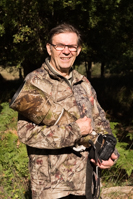 Didier.
This workshop is very special for me as it was my daughters whom presented it to me as a gift for my birthday.
Throughout this week, I had a lot of fun. Yet I was also frankly destabilized by the manner through which you taught the intricacies associated with wildlife and animal photography as a whole. I was untrained in terms of artistic photography. My photographic vision has hence completely changed. It is without a doubt that I’ll hold your particular lessons in mind the most.
I’d already had the privilege of capturing shots pertaining to the rut of the deer but not in these conditions and neither in such environments. Within the Charente-Maritime, the territory is quite vast and the terrain heavily varied in between the prairies, forests and lakes. All kinds of backgrounds and decors are possible. Before I’d always archived the deer’s rut either in the forest or in the mountains.
The advantage of the Charente-Maritime is that the land is mostly flat. It makes things easier in terms of relocating and moving around. But its also more difficult then when located within the woods or groves as you have to walk around for some time in order to find the animals in question. However we can also spot them quite easily. Yet I’ve got to recognize that it’s easier than when attempting the same thing whilst in the mountains.
I was unaware of the region of Charente-Maritime. The landscape is magnificent in testimony to its nature. There are valleys, prairies and woods. It really is beautiful. The choice of the Haute-Saintonge for this workshop permitted to place better value upon these snapshots of deer. The surroundings are magnificent.
It’s my first photography workshop. It can be difficult for me to explain how I experienced it. Your training and advice obviously gave me another potential vision of photography. A learned an all together new way to make photos. I was more used to capturing and making what you’d call documentary photography. Now in the follow-up of your advice, I will orient myself into a more artistic direction of imagery. Of course, it’s more interesting and rewarding. Your method of capture is an altogether different version of the animal. Just like you’ve always said, “It’s like placing the animal directly onto the paper”.
The group atmosphere throughout the week was perfect. The people are charming. The lodging without issue. I ate well. Everything was great.
If I had to preserve into memory some special moment for my girls, it would without a doubt be the images I took whilst buried within a fog whom, at the time, covered the entirety of the visible prairie. There’s a buck in the distance and he materializes just above the moving sea of foggy cloud.
 Agnes.
My general impressions about this wildlife photography workshop dedicated to the rut of the deer are generally focused upon its sheer difficulty. I was not prepared for the daunting challenge that it put forth.
It’s my first animal-oriented photography workshop in Europe. I’d been on occasion to several regions of Africa so as to photograph the big game and various birds whom resided there. Normally, I rent a car along with the services of a local guide. We scout the terrain. We find some examples of wildlife and I catch a few quality snapshots. Here in the Charente-Maritime, it’s a whole other ballgame. You’ve got to know the animals’ habits, be aware as to what places they frequent and at what times of the day they come out of the forests. It’s my first time making use of a blind. The wait can drag on for many hours and get quite boring. There really isn’t much to do within a blind. What’s really frustrating is waiting two or three hours and never seeing anything of interest. In addition, on the off chance of spotting a deer out into the distance and trying to get in close, it just immediately runs off even when making sure to avoid any aggressive or startling movements from your part.
I’d never though that wildlife photography could be so difficult. The bucks and does are cowardly and aren’t enthusiastic of letting themselves be approached. The hardest part is finding them in the first place. I’d gone so far as to equip myself with a hood and matching gloves. It’s not exactly comfortable. It can be hard to breathe. I hadn’t gone and gotten myself camouflaged version of the clothes as yourself and the others had done. I regret that now. It really is a whole different practice of photography than what I’d grown used to until now.
The landscapes are magnificent with its grand prairies, small ponds and numerous forests. Yet we are sometimes required to wad through several kilometers of terrain before catching sight of an animal. It’s really tiring as I have to carry my 600-millimeter camera lens, the camera itself and the accompanying tripod. I’m used to traveling by car. It makes things much easier. I was not anticipating such a roadblock.
It’s quite lucky for us that you know the region well otherwise it would have been difficult to place us in those areas where best to attempt our photos. The terrain is practically impossible to navigate if your new to this. This area here is truly wild and positively immense. I would have appreciated some sings for direction along the way so as to help orient myself in terms of the available tracks. You provided us with maps, but it remained complicated.
It wouldn’t be a bad idea of taking into consideration the possibility of placing some 4x4s or ATVs (All Terrain Vehicles) at our disposal in order to move around more rapidly as the sheer load of walking can become exhausting.
Your technical advice allowed me to realize some interesting background shots whilst on the morning outings when using my blind. It was strange arriving at our pre-sited positions whilst it was still dark out. I’m not exactly used to orienting myself in the dark. Yet even after this initial phase, moving around silently without any of the requisite knowhow is not an easy task.
The overall ambience of the group was friendly. The accompanying photographers’ skill levels were all elevated. We shared between each other quite a lot. The rooms were spartan but very quiet. The food was fortifying. It wasn’t very refined but nourishing. I’m more used to quality restaurants and fine tables.
If I had to preserve a memorable event from throughout this workshop dedicated to the deer’s rut it would have been an occurrence on the very first morning with a blind within the forest with fog surrounding us whole. I managed some beautiful images. It was magnificent.
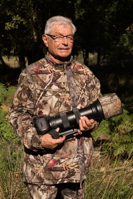 Guy.
Guy.
I’d already came along last year so as to experience the deer’s rut. I’ve come back due to it having been a enjoyable experience. In addition, I really enjoy deer in general and as a species because I find them both elegant and beautiful. I like following them. They are splendid but can be difficult to locate.
This region of the Charente-Maritime is magnificent. It’s superb. This week, I marched my way through ferns whom displayed splendid colors. The autumn colors are magnificent. I found them more richly colorful and vibrant than last year.
This year was more difficult than last year because of the heat. They stay hidden within and beneath the forest’s undergrowth. Yet encountering a herd is spectacular.
This year since it was my second session amongst this particular workshop, I felt more at ease in terms of the varying techniques of approach and image framing. I knew the technical aspects, yet it took me quite a ways of walking to find the animals in question.
With this workshop underneath my belt, I came to recognize the importance of being knowledgeable about the surrounding terrain to properly select the correct stakeout points for quality photos. I snapped several beautiful images though this wasn’t by any means easy.
If I had to hold onto a memorable moment about this workshop it would be one from a morning where I encountered a herd with some ten or so does. They were all situated directly ahead of my blind. They all looked in my direction with fixed stairs as they were fascinated. They stayed calm. I was well hidden. For several minutes they remained. It was very beautiful. I’ll keep this image in memory for a long time to come. A magnificent moment.
 Pascal.
It’s my fifth workshop consecrated to the deer’s rut that I’ve carried out in your company. Now this region has no secrets from me.
If I’ve returned, it’s primarily because I forget. I really don’t practice my skills enough throughout the year. During the workshops, I pay close attention to your directions and advice only to afterwards forget. I live just outside of Paris and photographing wildlife isn’t exactly easy.
However, the main reason is because the region is magnificent. Every year, I come back to try and capture some news photos. Sometimes I succeed. Other times not. And so I continue to return to face the challenge. This year I wanted a snapshot of a bathing deer. The exterior temperature landed itself to such an endeavor. I failed. I’ll have to come back next time. However, this year, I snapped some beautiful images of deer concealed within the bushes. I am therefore quite happy.
The biggest moment of this year was undoubtedly the morning in which it rained. Since it was much cooler, the various animals emerged from their forest hideouts. Those that I saw were quite energetic. I was able to photograph some very captivating snapshots of deer amongst a prairie of broom plants. Following the rain as was so common, the sun appeared. My blind was established not too far off from a ridge from whence water flowed like a miniature waterfall. It made from some nice silhouettes and beautiful lighting colors.
This week was quite different from those preceding it. The animals were much more difficult to find and far more skittish. They’re even more paranoid than usual. In addition, this year I didn’t see a single wild boar while in previous years I’d always encountered some whilst using a blind.
I am well aware of your method of photography: ACAPN. This tear, I once again learned some new techniques. Most notably of these was the placement of the animals’ legs in relation to the ground. Everything that you taught us about the handling of spacing, of positioning was very important. I was also able to obtain a better grasp upon the handling of the line of separation, something which I hadn’t always payed attention to. It really does some good to hear you repeat and go over certain pieces of advice and technique you’d already taught us before.
The choice of lodging and overall organization is well thought out as they’ve always been. The welcoming, the house, our hosts: Everything is top notch. The food is excellent and hearty. When I get back I’ll have to diet!
My favorite moment of the week is without a doubt this morning, yet I wait with impatience this afternoon’s upcoming session in the hopes that it will be even better.