• The Art of Choosing
  • Fine Art Prints3 Editions
  • CollectionsAll Collections
  • AboutAmar Guillen
  • Customer Space & Contact
  • Search
  • Select your language

    • English (United Kingdom)
    • Français (France)
  • Just for You
    • Fine Art Prints to Tell Your Story
    • Fine Art Prints to Express Your Difference
    • Fine Art Prints to Shape Your Living Space
    • My Commitments for your Fine Art Prints
    • How to Choose a Fine Art Print - Q&A - FAQ
  • Go Gurther
    • Fine Art Print Blog
    • Explore Some Interiors
  • My Offer
    • 3 Different Editions
    • Different Finishes
  • Visual Journeys
    • New Creations
    • All Fine Art Prints
    • Searching Using Criteria
  • Browse by Edition
    • Unique Edition
    • Limited Edition
    • Open Edition
  • Browse by Style
    • Black and White
    • Color
    • Fusion
    • Impression
    • Back to Black
    • Landscapes in Black and White
    • Landscapes in Color
    • Animals in Black and White
    • Animals in Color
  • Browse by Theme
    • Landscape
    • Wildlife
    • Underwater
    • Abstract
    • Symbolic
    • Landscapes of the United States
    • Landscapes of France
    • Landscapes of Scotland
    • Seascapes
    • Relaxing
    • Energizing
    • Playful
  • Browse by Format
    • Rectangular
    • Square
    • Panoramic
  • Contact Me
    • Contact Me by Email or Phone
  • Collections
    • New Collections
    • All Collections
  • Browse by Theme
    • Landscapes
    • Wildlife
    • Underwater
    • Abstract
    • Symbolic
    • Landscapes of France
    • Landscapes of the United States
  • Browse by Style
    • Black and White
    • Color
    • Impression
    • Back to Black
    • Fusion
  • Contact Me
    • Contact Me by Email or Phone
  • Discover More About Me
    • Discover Who is Amar Guillen
    • Artistic and Photographic Statement
  • Galleries and Portfolios
    • Photo Galleries
    • Portfolios
  • Contact Me
    • Contact Me by Email or Phone
  • Your Customer Space
    • Create or Manage your Account
    • Your Download Space
    • Your Orders
  • Contact Me
    • Contact Me by Email or Phone

Photography Workshop in floating blinds in Dombes in June 2017

For this new season of training in floating blinds in the Dombes, we acquired new floating blinds, new lodges and new ponds. This first workshop was a complete success despite a weather a little bit capricious.

The participants of this wildlife photography workshop with floating blinds in La Dombes in June 2017: Benoit, Robert, Nathalie, Serge, Jean-Francois, Francis and Amar.

Dombes: A Paradise for Wetland Birds

The region of the Dombes hosts numerous species of birds. Near 130 species nest and reproduce there regularly. 30 000 Birds migrate there regularly throughout the winter months.

The region of La Dombes is peppered by more than 1000 ponds. These ponds are of human origin. Their uniqueness is due to their slightly sloped bottoms that permit their waters to slowly and regularly trickle down towards the tributaries. These fish filled waters attract numerous species of birds. It is an important international zone for those migrating wetland birds.

During the months of May, June and July, it is possible to observe several emblematic species of the region: Great Crested Grebe, Little Grebe, Black – Necked Grebe, Red Crested Pochard, Whiskered Tern, Black – Crowned Night Heron, Purple Heron, Grey Heron, Squacco Heron, Little Egret, Great Egret, Cattle Egret, Comoran, Eurasian Coot, Eurasian Reed Warbler, Sedge Warbler, Common Kingfisher, Warbler, Western Marsh Harrier, Red Kite.

The Dombes does not solely attract birds. The Muskrats and the Nutrias are also mammals that we often come across on the ponds.

Dragonflies, green frogs and grass snakes are also part of the animal landscape.

The lights which flood the Dombes are exceptional. In the spring and beginning of summer, the early mornings are often bathed by warm and felted lights. What joy to observe the ducks or grebes moving themselves along the ponds in this magical setting.

The Floating Blind: an Unforgettable Experience for an Animal Photographer

The use of a floating blind always leaves an indelible trace in the memory of an animal photographer. It's a unique way to observe and photograph the animal world. This is the only way to photograph birds at the water's edge without disturbing them. The approach is an incredible way to go a few meters from a bird. We can spend hours in front of a heron ash to observe.

Our courses in floating blinds in the Dombes always obey the same ritual.

On the first day, after going around the various ponds and explaining how to launch the boat, taking care of the photo equipment, each photographer leaves for a first session of 3 hours in search of the first ponds, coots and others Great Crested Grebe. Returning at dusk, the satisfaction of the first shots successful gives the tempo of the atmosphere of the week that follows.

The floating blind scares many photographers who are afraid of dropping the camera into the water. Many people are afraid of taking water in the waders or not knowing how to get back to the starting point. During our courses, we give all the explanations to ensure maximum security. If the advice is scrupulously followed, no problem can happen. It is a safe photographic activity that allows you to live closer to aquatic animals without ever disturbing them. It allows you to create exceptional creative photos that would be impossible to create otherwise.

The floating blind is certainly the best way to freeze animal behavior that is impossible to achieve from the mainland. The choice of point of view is certainly the most essential element in this technique.

Acquire Solid Technical Expertise and Develop Creativity

During our workshops, we have either confirmed photographers with a very good photographic level. Either we have novice photographers who are not familiar with wildlife photography, let alone the technique of the floating blind. We always plan educational progressions adapted to the group. We always focus on photographic creativity while returning to certain fundamentals without dropping on the basics. The fact of revealing many secrets that make the success of our photographs is a real plus for the participants.

A Friendly & Relaxed Ambiance for Seven Days

For us, a photo workshop is made up of three elements: technical learning, discovering the hidden treasures of a region and good humor and conviviality.

The recipe still works We rent two large cottages so that each participant has his room and its amenities. At noon we will eat at a typical restaurant in the area. Each village of Dombes has at least one restaurant. We can taste a regional specialty daily. Breakfast and evening meals are provided at the cottages. Each participant brings a regional specialty. In general, the week is not enough to consume everything. But that ensures the good atmosphere. The ice is still broken very quickly.

Finally, our wildlife photography courses in floating blinds are big photo weeks in a friendly atmosphere.

Testimonials From the Participants in the Wildlife Photography Workshop in La Dombes - June 10th, 2017
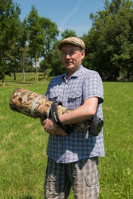
Benoit Benoit.

My general impressions of this course in floating blinds in Dombes are excellent. I observed many birds. I photographed them quite easily. I was able to approach them very closely.

By participating in this workshop, I wanted above all to improve my techniques of shooting birds. Already I wanted to learn to use a floating blind to be at the height of animals. I also wanted to have better bokeh’s. I did not control the light measurements at all to correctly expose the plumages. Now I understand how to do and I realize better shots. I also wanted to easily track birds in flight with clear shots during my gusts. Now I know how to do it. These are technical elements around which I juggled constantly without knowing how to really do. Before this workshop, I was so busy with these technical settings that I forgot the shot. With your advice, I now master my case. I do not ask myself any more questions. Moreover, I know how to adapt to all situations. The case has become an accessory. I focus more on shooting to compose well and fit well.

This is the first time I use floating carts to take photos. The interest is that I can choose my points of view according to the decorations and the light. With a fixed blind, it's very frustrating because when I'm in place, I can not move. The floating blind provides complete freedom to create the photos I want.

I did not know the region of Dombes. It is a beautiful region with beautiful lights and beautiful surroundings. It's really good.

Regarding the organization of the workshop, everything is well balanced. The food is excellent. Everything is well balanced between the photo sessions, the nap, the technical presentations.

Your technical presentations were a real plus for me. Whether it's for shooting or post-processing, I've made a lot of progress. You answered many questions that I asked myself. I had not been able to find the answers alone.

The atmosphere during the week was very good. The level of the photographers was very high. I was pushed to excellence all week.

Choosing a good time of the week would be difficult. But I still have one. Yesterday morning, I was on a pond with a lot of fog. I was alone. It was very calm. I did not think about anything. I was good.
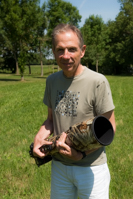
Francis Francis.

This is my second workshop with you in La Dombes. What has been very different this year is the morning mists. I looked forward to them. We were spoiled.

Also, this year, we saw new birds. Last year the waders were absent. This year, I photographed a lot.

For me the mists of the morning evoke the mystery. A bird wrapped in mist is very evocative for me.

But this year we had less water. Fortunately, you had bought the new floating blinds. They are much lighter and more manageable. They allowed us to move better in the ponds with little water. They are more beautiful and more aesthetic. Moreover, as they are lower, I could make better photos. We see the result on the computer. Bokehs are much better.

I found that I improved again compared to last year. I am more creative in my shots. I came with a new box that is much better. This year, I was able to practice the burst. In the same way my exhibitions are much better notably in the highlights.

Regarding the atmosphere during the week, it was very good. The level of the photographers was very high. I was inspired by the photographic approach of the other participants. Everyone has his style and we can draw new ideas from others. It's enriching. We help each other.

I am very satisfied with this week's organization. Last year had already been very good. That's why I came back. I think I will come back next year because it is a unique way to photograph birds. The conditions are fantastic.

If I had to keep a good time of this, it would be a morning with beautiful reflections with the landscapes and feathers on the surface of the water. But there have been so many good times that it's hard to choose.
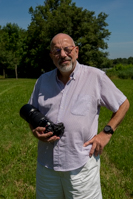
Jean-François Jean-François.

This photo shoot in Dombes was a complete immersion. I totally forgot about my work and my daily life. I rediscovered a fabulous region with a biodiversity that I do not know anywhere else in France. The atmosphere is so great that with Nathalie we dread the departure.

I participated in this course in floating carts because it was the technique that interested me the most to photograph the birds. I was able to observe the birds without disturbing them while being as much as possible. I could observe unthinkable scenes. For example, during a morning with mist I was surrounded by 18 night herons. I did not scare them. If we use the floating blinds as you've taught us, we can go very close without disturbing anyone. We are very respectful of the environment. I had the impression never to disturb the birds even if sometimes interferes in their behavior. But it's very sweet. Which brings sometimes amusing attitudes. But we never bother. For example, we do not approach nests.

The floating look makes it easy to change your point of view to choose the right setting and the lights for the staging. The landscapes of the Dombes is a beautiful region. My only regret is that because the ponds are used for fish farming, there is such a quantity of fish in the water that the big waders have only to use. I have only seen a few pairs of frightening frogs when there should be dozens. The drought this year is not to improve the situation.

Regarding the organization everything was very good. The cottages are prodigious. I did not know that these kinds of houses existed. Your workshop has been remarkably well organized. And this is not sycophancy. You are very attentive. This is fun. Each participant is open. We all share the same values and passions. It's very nice. Your theoretical presentations are very original and very well done. I put my head in order.

The atmosphere was excellent. Everyone helped me a lot. The sharing of all information is excellent. The photographic level of the other participants was bluffing. I'm taking care of a photo club. But here the level is much higher. It's incredible. With Nathalie, we do at least 6 photo exhibitions a year. All the pictures I saw this week could be in these shows. But all in a rather surprising modesty.

If I had to keep a moment of this week, it would be the first morning on a pond with all these birds that surrounded me: egrets, a coupling of crested grebes. All in a calm atmosphere without disturbing anyone. It was an incomparable experience.
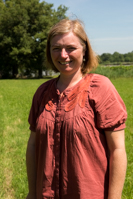
Nathalie Nathalie.

I came as a companion and wife of Jean-François. I am naturalist. La Dombes was a real discovery for me. I was pleasantly surprised by the landscapes. While accompanying Jean-François on the ponds, I could observe many birds just while waiting on the banks. As I was on vacation, I took my time to observe. In the Dombes around the ponds, there is very little human noise. We can soak up the atmosphere and the calm that reigns everywhere. The weather was excellent with warmth and beautiful mists. I had a little lost the habit of these atmospheres.

I took advantage of this week of vacation to get back to the drawing by making sketches. It allows me to better understand nature. This morning, for example, I observed a small grebe that was nesting again. It's really very nice.

Regarding the organization of the workshop, you left nothing to chance. For example, Jean-François had forgotten his pendulum joint and some equipment. You have found solutions. You had a plan B. Even for the ponds you always found solutions for those who had fewer birds. As a vacationer, I took full advantage. There is a pool which I enjoyed. In the park around the lodgings, we have been able to observe Eurasian eagle-owl. The cottages you have chosen are really hospitable to nature lovers. I never got bored either on the ponds or in the accommodation. I was surprised by the number of night herons.

The restaurants where we went for lunch are excellent. I targeted Peyrouge. The living environment in the area is very beautiful. People know how to take advantage of what they have. I want to come back because the rural aspect I like. I really disconnected from everyday life. The group was great. I never felt excluded because I was not a photographer. The atmosphere was excellent. There is a good mood with adventures. I appreciated having no expectations and being surprised by everything around us. It was great.
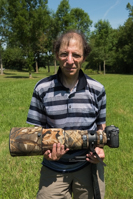
Robert Robert.

My impressions on this wildlife photography workshop are good. I was pleasantly surprised by the lights and scenery of the area. I had already experienced some quite short experiences in floating blinds in other regions especially in the Camargue and Brenne. But this workshop in La Dombes was a shock because of the lights and moods and the variety of birds. I was deeply impressed.

The floating blinds makes it possible to stand at the height of the birds at the water's edge and to choose perfectly the points of view to highlight it. We choose our perspectives. I was able to choose the lights, the environments. I can be in an active creation process when shooting. This is the strength of this technique.

What surprised me in La Dombes is the variety of birds but especially that in some ponds the density is important while on others it is less. You never know what you will find. But during that I learned something essential. It is not so much the quantitative criterion that is important but the qualitative criterion. For example, this morning, I saw that I could spend more than 2 hours photographing a given species. On a given bird, one can vary to infinity the shots with perspectives, points of view or by choosing the lights. It's not worth chasing after all the species.

Before this workshop, I did not formalize the fact that I like to give an artistic side to my shots. Now I have a formalism and a frame to create my photos. I understand that a good photo is the meeting between an environment, a light and an animal. In animal photography, I am very interested in behavior, attitudes and action. From now on, I will know how to highlight them. To magnify them is the foot.

I really appreciated your technical presentations. Unlike the other courses I attended, you push a lot of questions to make photos. You push us into our entrenchments. You push us to ask questions to create our photos. You force us to surpass ourselves. You force us to be creative. With your theoretical approach and your formalization, you give us the tools to refine our photographic eyes.

Regarding the organization, I found that everything was fine. It was a little tiring because you had to get up early to get the nice lights. But we have nothing without anything. The highlight of your workshop is the diversity of the ponds. The lights can change. Every pond is different. We can make photos completely different from one day to another. It is a permanent renewal.

The cottages are excellent and pleasant. The atmosphere during the week was very friendly. But your workshop can bring together different photographers and very strong. This drives humility when seeing the work of others.

If I had to remember a moment of this workshop it would be difficult. Indeed, there may be moments of sharing in the group, but it can also be on a new pond. We are always in uncertainty. It's a little scary but it allows you to always question yourself. Finally, what I will remember from this course is that we must always adapt to the conditions to get the best for a good photo.
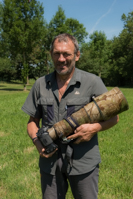
Serge Serge.

I am delighted with this animal photography course in La Dombes. This is my second workshop with you. The first was devoted to the deer slab. This time again it was great. All my expectations have been met. But I did not take great risks because I knew you.

By participating in this workshop, I wanted to have special opportunities for birds. In addition, I do a lot of animal photography but often now I saturate because I do a lot of naturalistic photos. I wanted to be more creative and more artistic in my approach. I wanted to regain dynamism. This week with the approach of the animal digital stream, I found a real plus to improve my photos.

The floating blind was for me a discovery. Your carts are fantastic. We are at the water's edge. The carts are very manageable, light, easy to use. As they are inflated we have a great flexibility of use. It's pretty funny to wander in ponds.

The morning moods with the mist are extraordinary. I know the basin of Archon well but to be in it is incredible.

I was surprised by the variety and diversity of birds. The lack of water this year has seen many waders. I did not know the Dombes. I recognize that it's beautiful.

Regarding the organization of the course everything was good. I know you. I know you always choose beautiful places and you go out of your way for trainees. This week did not depart from your principles. The cottages are really nice and friendly. We can live easily in groups. The restaurants are excellent.

The atmosphere in the group was excellent. The photo level was very high. I appreciated that Jean-François and Nathalie are naturalists and ornithologists. Really a good atmosphere. All the photographers were open, very creative and very inspiring.

If I had to keep a good moment of this workshop, it would be the moment when I observed a couple of grebes that were resting. I did not take pictures. They were ten meters away from me. It is a great moment of calm and serenity. It was happiness.
 

Some pictures taken by the students

To play the video, just click the "Play" button.

May of 2017. Wildlife Photography Workshop in the Delta of Danube - Romania

For this wildlife photography workshop in the Danube Delta situated in Romania, 5 photographers gave themselves a rendezvous in or order to observe and frame the most beautiful species of birds in this immense and humid region. The Danube Delta is one of the largest reedbeds in the world covering a total area of some 3500 kilometers squared or approximately 2175 miles squared.

This workshop is place beneath the sign of amicability, the sharing of the passion for nature and was a success. The trips participants photographed between one another purple herons, Dalmatian pelicans, Eurasian penduline tits and bearded reedlings.

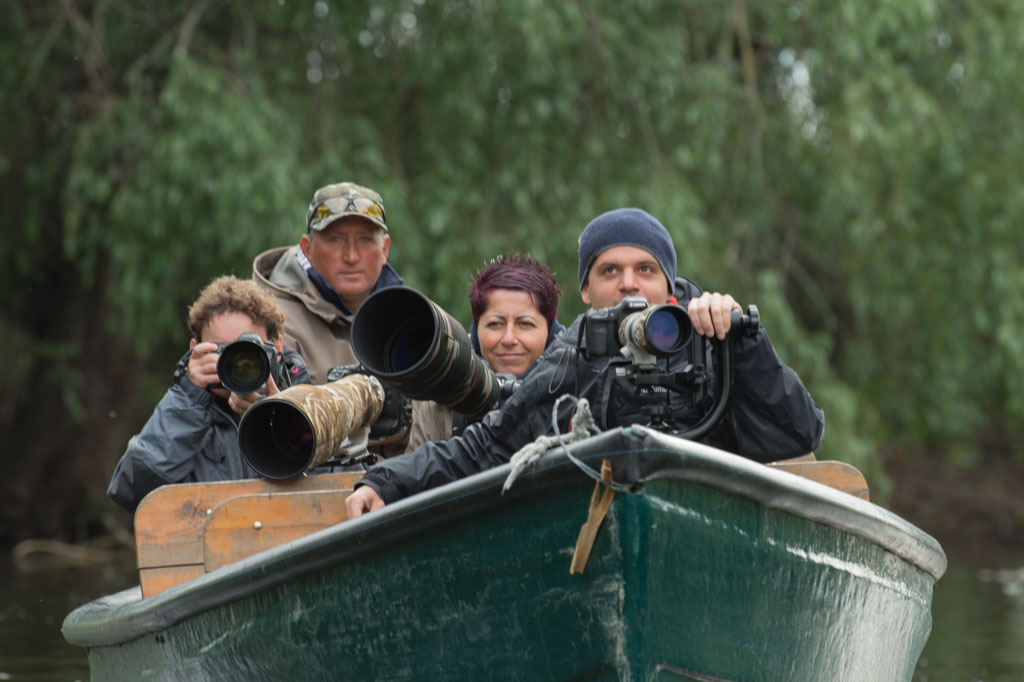
In the Danube delta, photos are made from wooden boats. Three of the participants, Patricia, Agnes and Nicolas and their guide in an arm of the Danube.


The Danube Delta: A Unique Biodiversity

The Danube Delta is the second largest in Europe following that of the Volga. It covers an area of 3446 kilometers squared, or approximately 2141 miles squared. It is an extraordinary universe that is also a protected natural region and classed as a World Heritage Site by UNESCO, or United Nations Educational, Scientific and Cultural Organization World Heritage Committee. The waters of the delta are full of fish. They attract numerous species of migratory birds such as pelicans (white or Dalmatian), night herons, pond herons, little bitterns, Eurasian hobbies, red-footed falcons, western marsh harriers, white-tailed eagles, bearded reedlings, Eurasian penduline tits, Caspian terns, great reed warblers, little crakes, white-winged terns, Eurasian curlews, Kentish lovers, etc.

The mouths of the Danube Delta count more than 1200 varieties of plants, 300 species of birds and 45 species of fresh water fish. During the periods of migration, the swamps and numerous lakes welcome millions of birds of different biomes of the Earth in provenance of Europe, Asia, Africa and the Mediterranean.

The Danube Delta is a very rural region and poorly populated with around 40000 people living in small villages and towns. The region is therefore barely touched by the urbanism of large metropolitan cities. The birds have found in this region the tranquility to breed and abundant food to sustain themselves throughout the mating season.

An Original Method for Photographing Avian Fauna

The Danube Delta with its innumerable waterways is an immense territory. The best way to discover it is by boat. For this workshop, we opted for motorized power boats with flat hulls. Each vessel can house 3 photographers.

Without boats, it would be impossible to find and photograph the birds. The area of the Danube Delta is so large that the birds have but the paradox of choice to hide themselves within the reeds or choose a pond so as to feed.

Most of bird species are not scared by boats with human passengers. On one end, the Danube Delta is a protected nature and wildlife preserve where hunting is forbidden. On the other, many boats navigate the 3 main waterways of the Danube River. The animals are accustomed to observing humans on these boats.

Days Dedicated to Photography

Each day is organized in the same fashion. Mornings start very early so as to take advantage of the gorgeous morning lights. Every day, we try to realize photos in the fogs which bathe the canals. After 5 hours of photography, it’s back to the guest house to download these photos followed by their reviewal and some choice key pieces of advice.

Once a large lunch and a nice nap, a technical expose is organized with corresponding themes to the capture techniques of the day. For example, we touched a great deal on the techniques to capture birds’ mid-flight as they are quite challenging.

As always during our workshops, we focused on photography under the specific angle of artistic photography, whether they be naturalistic or creative. We have realized with time and experience that our photographers are further and more interested in creating photographs different from the mainstream that are marked by their individual styles. We attempt to accommodate to their wishes by providing them personalized techniques that permit them to more deeply research photography.

A Pleasant & Friendly Ambiance for 7 Days

For us, a photography workshop is comprised of three elements: The technical apprenticeship, the discovery of hidden treasures within a region and good vibes and friendliness.

This time once more, the recipe worked. We bunked in a guest house in a village at the heart of the Danube Delta. The food was excellent. The rooms were very comfortable. The ornithological guides had a superb knowledge of the terrain as well as of the birds to photograph. Thanks to their knowhow, the participants were able to realize some very beautiful and creative snapshots.

Finally, it was a wonderful week for photography in an amicable and friendly group environment.

Testimonies of the Workshop – Mai 2017

Patricia Patricia.

This trip for me was a remarkable success. It was a grand case of culture shock as well. I completely disconnected from Parisian life. I participated in this workshop as I wanted to photographer birds’ flying. I wanted to compose my photographs. I desired to see other species. I was content in observing Eurasian reed warblers, pratincoles, whiskered terns. These species are very different from those that I can find in France. For this workshop, I wanted to continue what I’d see with you: artistic photography. In France, we have the tendency of pursuing natural photography. I now have the need to frame animals in more intuitive fashions. The Danube Delta is well adapted to such purpose as the local decors are magnificent. For me, framing with snapshots is to give them life, to relive the sensations of the moment. Now I enjoy using the surrounding environments colors to make my photographs central subjects pop, stand out. In the Danube Delta, I saw numerous yellow water lilies, why amazing green tints and overlaps. The colors are superb. In France, it’s uncommon that I find such decors.

This trips advantage is the utilization of dinghies for up close snapshots. We were able to come up real close different species without scaring them off. The guides which we had are real knowledgeable of the terrain and its affiliate species. I would even go so far as to say they have a hunter’s state of mind.

When I saw the Danube Delta for the first time, I was surprised. The main canal that we traveled is large and bordered by boulders. I had asked myself how I was going to realize my photos. But once we’d arrived on the island and that I had left by boat into the connecting waterways, it was superb. The waterways that crisscross the delta are magnificent and everything becomes magical. The morning the landscapes are ghostlike and eerie. It’s like being on another world. You must know when to seize the moment, to capture them on camera.

What surprised me is the richness of biodiversity throughout the Danube Delta. The quantity of birds is impressive. When we photographed on a lake I told myself we were done. Yet this was an error as moving forward along the stream or to another lake, I saw other species. Each time it was a discovery. At every turn, I asked myself what I was going to observe. I will for a long time remember my energetic search for Eurasian reed warblers and common kingfishers. It was truly rich.

Dinghies are an interesting way to rapidly move around from one place to another. It’s rather technical but you need good guides.

Overall, the trips organization was very good. Our hosts’ welcoming were genuine. The food was abundant and excellent. The people are very nice.

The workshops ambiance was really great. It was awesome. We got along well. The discussions were nonstop and interesting.

If I had to conserve a moment of this trip, it would be difficult as everything was magnificent. I was awestruck by everything that I’d seen. Even the shows put on by the frogs were incredible. I was a great outing.

Nicolas Nicolas.

Once more this wildlife photography workshop was a success. You made me discover a region which was truly magical. I’d watched a documentary at home on the Danube Delta. I’d made myself a mental picture of the area. Yet this trip showed and made me discover the region in a completely different fashion. The diversity of birds is incredible. The guides were surprising as they showed us many things. I’d already had previous experience with you when visiting the Dombes. But here it was even more dense and rich with life. The sheer amount of birds I saw was phenomenal.

I love nature. In coming to this workshop, I wanted to see many birds. What I like about you is your work with lighting and decor. Here, in the delta, it was well adapted as the environments were very beautiful. The lightings are extraordinary, especially in the morning and evening. I really enjoyed capturing landscapes shots as well. This place is magic. It reminds me of the region where you observed the deer’s call.

Following a workshop in the Dombes last year with you, I have really progressed. In coming to the Danube Delta, I wanted to apply all the techniques that we’d gone over together. Now I take fewer unnecessary or hurried snapshots than before. I look for favorable lighting and backgrounds. The birds approach come after. I’ve become more demanding on the quality of my images. I’ve truly progressed. The purple heron was a genuinely magical instance. During this dinghy based workshop, I had the impression of melting into the background so as to not startle or bother the birds.

The atmosphere within the group was quite nice, as is custom in every trip with you. We meet photographers just as impassioned by nature as yourself. There’s always this sense of adventure when going off the predefined paths and tourist tracks. Even with the relatively capricious weather, including cold mornings and hot noons, the ambiance was always superb. We had great fun. There’s always a few laughs and good humor to go around. We ate very well with lots of fish. During your workshops, we always share a lot. The exchanges between photographers are forever present even among the most staunchly secretive. Your trips are always organized and hold a friendly, welcoming atmosphere. You handle groups well.

If I had to hold onto one good moment from this workshop it would be the guide whom I most appreciated. He was impressive in his method of approach. He sees things that we don’t. He has a way with nature. The fogs of the morning, the pelicans will have marked me too. The Danube Delta is magnificent before the sunrise.

On what concerns the humid zone whilst on the wagon, it was surprising. Photographing the pratincoles was a tough yet fun challenge. The avocet was superb with the nice background decors.

Agnès Agnès.

This wildlife photography workshop in the Danube Delta was enchanting. I decided to come back with you next year as there are so many photos left to take.

I came as I wanted to perfect my photographic technique for capturing birds flying. Now I understand and am perfectly on point. Your advice on the ground for the whiskered terns were very beneficial to myself. I did not know Romania and I wanted to discover this country. I recognize that the Danube Delta is a savage region as well as magnificent. The communion between man and nature is astounding. Everyone lives in symbiosis.

I was surprise by the diversity and quantity of birds that i saw. The number of species is impressive. What’s nice is that we can practice artistic photography just like you explained to us in your exposes. The perfect environments permitted us the use of magnificent decors. The lighting choices within the Danube Delta are superb. Everything is brought together to realize beautiful images.

Taking pictures from a boat was a novelty thing for me. You have to get used to it but it permits you to approach the birds from up close without bothering them. In addition, the use of a dinghy allows one to cover great distances in the search for birds.

The workshop’s organization was very well done. The rooms were comfortable. The food was good. The atmosphere within the group was great. Your workshops are always times of sharing and inspiration.

If I had to put into memory this wildlife photography workshop it would be the flight of pelicans across the sprawling lakes. The numbers of birds was incredible.

Germain Germain.

This workshop within the Danube Delta was a positive occasion. I was enchanted by this short stay that was out of the ordinary. I enjoyed the vast nature. The climate conditions were very variable but you’ve got to adapt.

I came on this trip to discover a new country that I didn’t know about. It’s very different from France. I stayed two days in Bucharest to discover this city. I also came to visit this grand delta. I originally come from around the Rhône. I wanted to see what such a reputedly huge delta looked like. I desired to observe a savage and preserved nature. I wasn’t disappointed. There are people who live here. The communion between the people and nature is very strong.

I thought I’d have seen more birds than I saw. But there’s no use in dreaming. The region is so vast that they’ve got more than enough spots to hiding amongst the massive reed beds. There are many birds yet they are not always accessible. I let my imagination run a bit too wild. I do, however, recognize that their some giant colonies of pelicans. It’s very beautiful. It was quite the surprise. Watching the pelicans fly off was magnificent.

What really please me as well is the humid area to the north. Taking snapshots from one of the wagons was an interesting experience as we were very close to the birds. I truly appreciate the landscapes, especially in the very early mornings.

What I’ll hold onto from this trip were the grandiose landscapes between the waters, earth and sky.

Concerning the birds themselves, I like them but not as much as the landscapes. In the end I enjoyed the nature itself rather than the ensemble of animals which populated it.

The organization was well done. The seafood and fish based meals were excellent. I did not lose any weight.

Photographing from a dinghy is not always an easy task. You need time to get used to it. The ideal would be for there to be only 2 people per boat rather than 3. The guides were extraordinary. They were locals. They know the region and its birds well. Our reflections within the waterways of the Danube were fabulous. This passion for nature and its surrounding will always be mine.

Francis Francis.

I am amazed by this workshop in the Danube Delta. I’d already participate in previous excursions with you. This one was totally different. We saw so many birds.

I have a passion for these animals. I had the occasion to see various documentaries dedicated to the Danube Delta. I wanted to see it with my own eyes. The nature here is green and inspiring. What really surprised me here was the sheer immensity of the swamp and the numerous waterways. You can get easily lost. The most shocking thing, however, were the very early mornings when there isn’t any wind. The waters’ reflections were magnificent.

The bird species which marked me the most was certainly the whiskered tern. These birds are very beautiful. Their flights are extraordinary. The bearded reedling will also stay in memory. The collared pratincole was also a nice meeting.

Realizing snapshots from a boat was a novelty thing form me. It has a tendency to move but we’re able to capture some nice images all the same. It’s not always easy because we had to refocus our cameras for every shot. It’s quite different from a floating blind.

In terms of the workshops organization everything was very well handled in terms of shelter, food and travel.

The guides with whom accompanied us were highly competent. They pointed out the various birds from far away and got to know us very well over time.

This workshop will have permitted me to realize photographs of birds mid flight. I’d just acquired a higher performing camera. That helped a lot. Mastering the photo technique to capture flights is a real plus for me. I finally feel much more at ease.

The group atmosphere was very nice. It was really calm and relaxing. I spent a real week of vacation. I completely disconnected from my routine back in France. It was a beautiful week.

If I had to preserve into memory a portion of this wildlife photography workshop in the Danube Delta it would certainly be the sheer immensity of the region’s reed bed and all of its birds. I am originally from the Charente-Maritime whom itself is home to some beautiful reed beds and lovely zone of humidity. Yet here it is far more vast, not including more varied and richer in the number of birds overall. I realize that discovering the area boat is easier than to uncover it by foot. The region is so huge that it would take forever to observe everything.


Some photos taken by the participants

To play the video, just click the "Play" button.

  1. Wildlife Photography Workshop in Ethiopia – February 2017
  2. Wildlife Photo Workshop on the call of the deer - September 2016
  3. Wildlife Photo Workshop From Floating Blinds in La Dombes-June 2016
  4. Wildlife Photo Workshop From Floating Blinds in La Dombes-May 2016

Page 2 of 6

  • 1
  • 2
  • 3
  • 4
  • 5
  • 6
Copyright © 2003 - 2026 Guillen Photo LLC - All rights reserved. Amar Guillen, professional photographer since 2003.
  • Blog
  • Calibration
  • Legal Information
  • Sitemap
  • Accessibility
  • Contact Me
  • Updates of the Website

Select your language

  • English (United Kingdom)
  • Français (France)

Contact Me By Email

1 + 3 =

Office Address:
3512 Robin Road
Plano Texas 75075
USA

Office phone: (+1)214-769-6825