• The Art of Choosing
  • Fine Art Prints3 Editions
  • CollectionsAll Collections
  • AboutAmar Guillen
  • Customer Space & Contact
  • Search
  • Select your language

    • English (United Kingdom)
    • Français (France)
  • Just for You
    • Fine Art Prints to Tell Your Story
    • Fine Art Prints to Express Your Difference
    • Fine Art Prints to Shape Your Living Space
    • My Commitments for your Fine Art Prints
    • How to Choose a Fine Art Print - Q&A - FAQ
  • Go Gurther
    • Fine Art Print Blog
    • Explore Some Interiors
  • My Offer
    • 3 Different Editions
    • Different Finishes
  • Visual Journeys
    • New Creations
    • All Fine Art Prints
    • Searching Using Criteria
  • Browse by Edition
    • Unique Edition
    • Limited Edition
    • Open Edition
  • Browse by Style
    • Black and White
    • Color
    • Fusion
    • Impression
    • Back to Black
    • Landscapes in Black and White
    • Landscapes in Color
    • Animals in Black and White
    • Animals in Color
  • Browse by Theme
    • Landscape
    • Wildlife
    • Underwater
    • Abstract
    • Symbolic
    • Landscapes of the United States
    • Landscapes of France
    • Landscapes of Scotland
    • Seascapes
    • Relaxing
    • Energizing
    • Playful
  • Browse by Format
    • Rectangular
    • Square
    • Panoramic
  • Contact Me
    • Contact Me by Email or Phone
  • Collections
    • New Collections
    • All Collections
  • Browse by Theme
    • Landscapes
    • Wildlife
    • Underwater
    • Abstract
    • Symbolic
    • Landscapes of France
    • Landscapes of the United States
  • Browse by Style
    • Black and White
    • Color
    • Impression
    • Back to Black
    • Fusion
  • Contact Me
    • Contact Me by Email or Phone
  • Discover More About Me
    • Discover Who is Amar Guillen
    • Artistic and Photographic Statement
  • Galleries and Portfolios
    • Photo Galleries
    • Portfolios
  • Contact Me
    • Contact Me by Email or Phone
  • Your Customer Space
    • Create or Manage your Account
    • Your Download Space
    • Your Orders
  • Contact Me
    • Contact Me by Email or Phone

Photography Workshop in floating blinds in Dombes in June 2016

For this second trip to Dombes in the year of 2016, the weather conditions were once again very erratic yet the participants were able to fully take advantage of the covered skies and rain to realize superb snapshots, quite saturated.

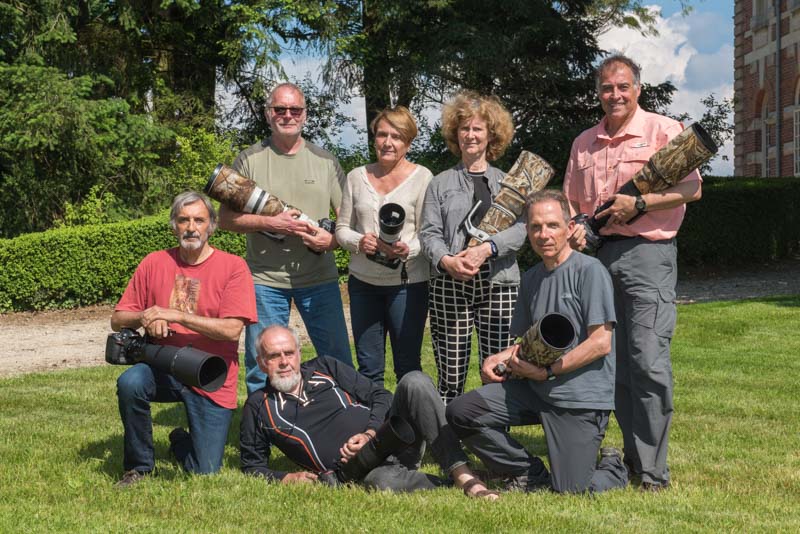
The participants in the  photography workshop dedicated to the floating blinds in La Dombes in France.
The participants in the photography workshop (from left to right) James, Gaston, Daniel, Josiane ,Annik, Francis and Amar.

A First-Time Experience in floating blinds for All Six Participants

None of the six participating photographers within this wildlife photography workshop had ever used a floating blind to realize photos. It was a memorable first.

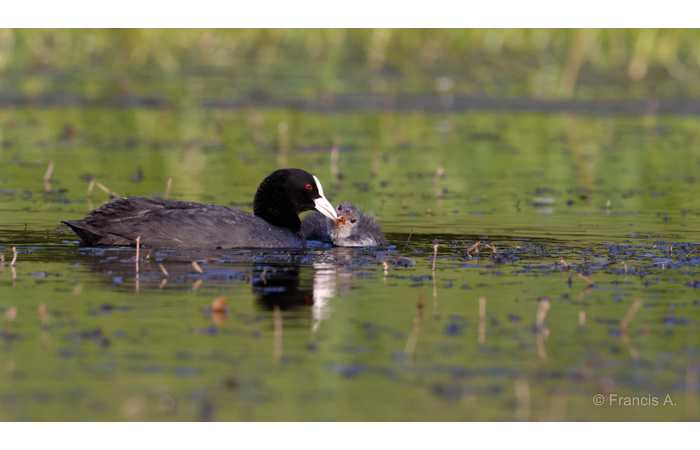
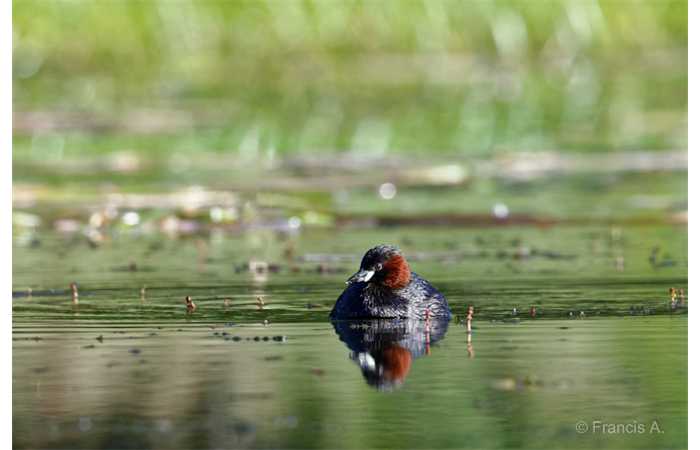
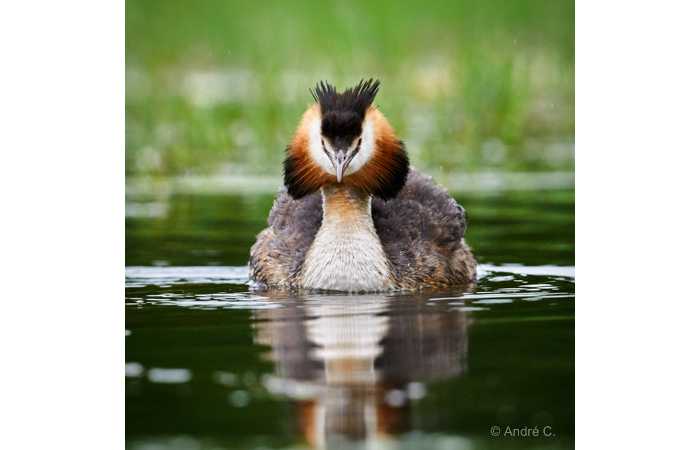
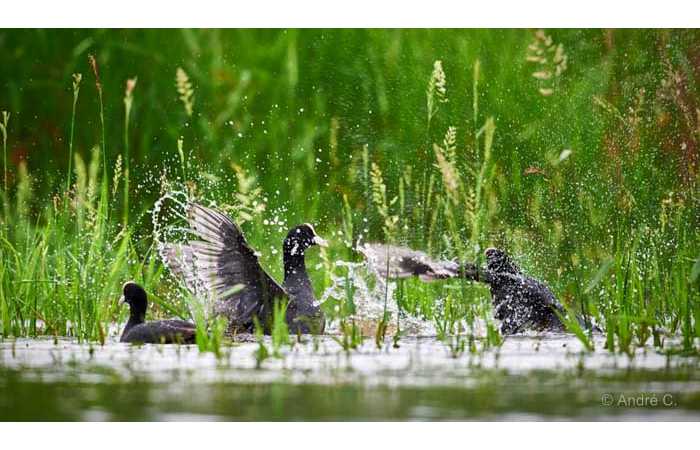
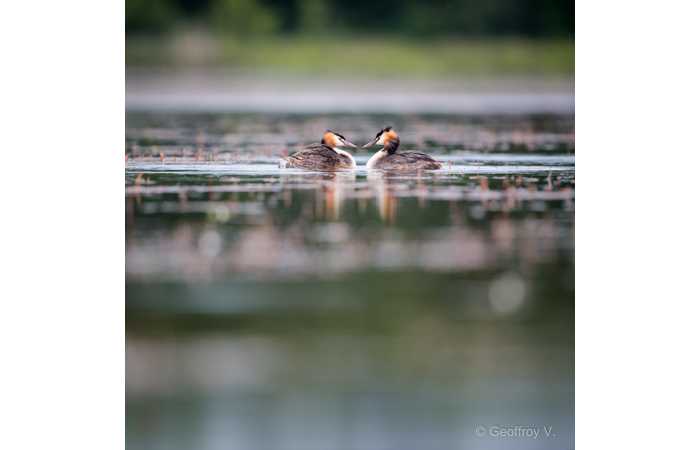
The first day, after having circled around the various ponds and explained how to ease into the water while taking care of the photographic equipment, everyone left for their first three-hour session in search of the first ponds, Eurasian Coots and other Great Crested Grebes. Returning at nightfall, the feeling of satisfaction with the first successful snapshots set the tempo and ambience of the week that would follow.

Many photographers are afraid of using floating blinds as they are afraid of their cameras falling into the water. Many people are afraid of taking to the water in water proof chest overhauls, or waders, as well as not knowing how to return to the starting point. During our workshops, we give out every possible explanation to insure maximized personal security. If our directions are scrupulously followed then there are no issues that could possibly occur. It is an empowering photographic activity which allows one to live closely as possible among aquatic animals without ever bothering them. The hides permit the taking of exceptionally creative images that would be impossible to create otherwise.

This photography workshop once again confirmed what we believed: The floating blind is certainly the best method to capture animal habits that are otherwise impossible to realize on solid ground. The choice of point-of-view is certainly the most essential element in this technique.

Dombes: A Paradise for Wetland Birds

The region of the Dombes hosts numerous species of birds. Near 130 species nest and reproduce there regularly. 30 000 Birds migrate there regularly throughout the winter months.

The region of the Dombes is peppered by more than 1000 ponds. These ponds are of human origin. Their uniqueness is due to their slightly sloped bottoms that permit their waters to slowly and regularly trickle down towards the tributaries. These fish filled waters attract numerous species of birds. It is an important international zone for those migrating wetland birds.

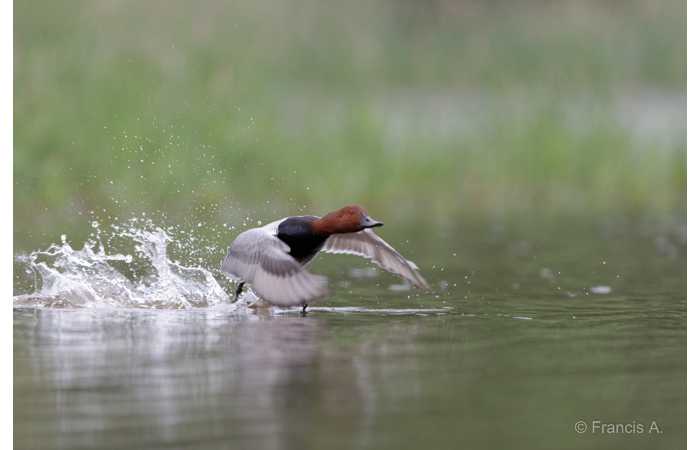
During the months of May, June and July, it is possible to observe several emblematic species of the region: Great Crested Grebe, Little Grebe, Black – Necked Grebe, Red Crested Pochard, Whiskered Tern, Black – Crowned Night Heron, Purple Heron, Grey Heron, Squacco Heron, Little Egret, Great Egret, Cattle Egret, Comoran, Eurasian Coot, Eurasian Reed Warbler, Sedge Warbler, Common Kingfisher, Warbler, Western Marsh Harrier, Red Kite.

The Dombes does not solely attract birds. The Muskrats and the Nutrias are also mammals that we often come across on the ponds.

Dragonflies, green frogs and grass snakes are also part of the animal landscape.

The lights which flood the Dombes are exceptional. In the spring and beginning of summer, the early mornings are often bathed by warm and felted lights. What joy to observe the ducks or grebes moving themselves along the ponds in this magical setting.

Experienced Photographers in Search of Creativity

Even though the participants of this workshop had never used floating blinds, all were capable wildlife photographers. We had therefore chosen an educative learning curve based upon creativity.

After having gone over certain fundamentals of wildlife photography, we expanded on our take on the realization of heavy impact and message driven photography to the attention of our audience.

Certain participants whom had already participated in other workshops were very surprise by this theoretical and technical approach. They rapidly adapted to this approach thanks to the quality of their photos, their interest in the method and its ease of application while on the terrain.

The slideshow of several choice snapshots by the photographers will show you the quality of the image work.

Yet Again Strange Weather Conditions

For this second week of the workshop, the weather conditions were identical to those of the first week: Charged skies with clouds and rain. Yet once again, the interns measured the usefulness of the cloud cover so as to realize beautiful wildlife photography. The expositions are coherent and the colors saturated. There are never any bright illuminations. By applying the correct lighting techniques, it is possible to create very homogenous photos were the animals take on their true dimensions.

The blinds are designed to resist difficult climate conditions. Even when the rains are drenching, the photographers could stay protected in order to realize the images of birds whom remained totally paralyzed under the rain.

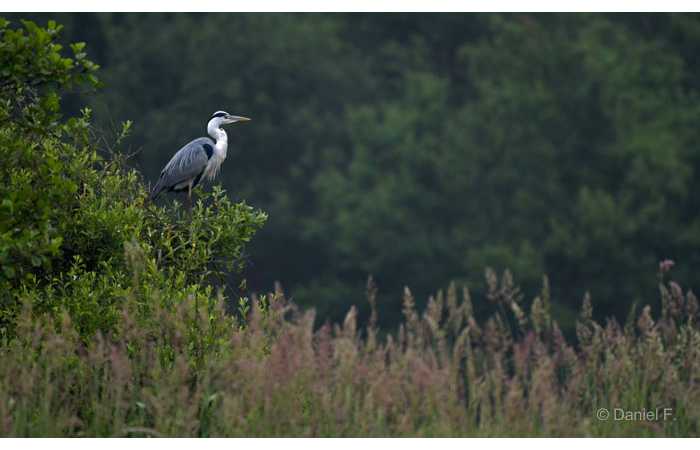
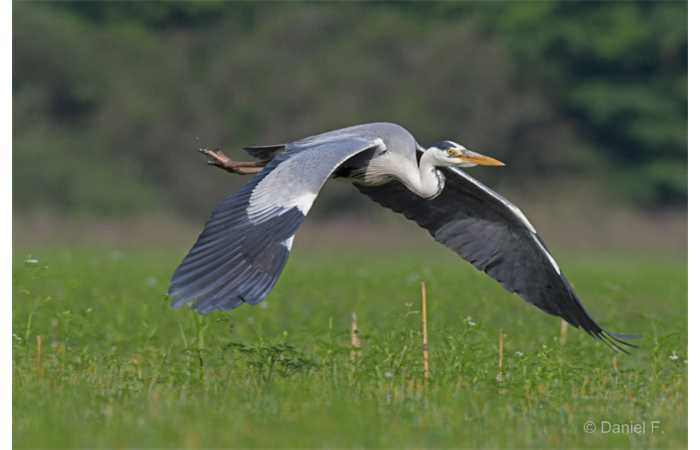
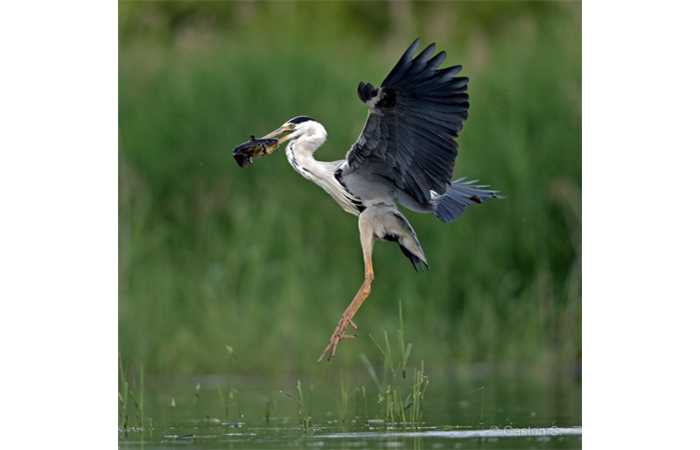
The exceptionally elevated water levels following the rains have seen certain species of Waders become rarer. However, the birds’ behavior has changed. We could witness fishing scenes where Heron’s took off from trees and gathered Carps from the ponds’ centers.

A Friendly & Relaxed Ambiance for Seven Days

This new workshop dedicated to floating blind based wildlife photography in Dombes was once again a very beautiful experience. It was based upon technical apprenticeship, the discovery of the region’s hidden treasures, good humor and group socializing.

The act of selecting hotels with private rooms and commodities for each participant adds a comfort that we judge as indispensable. The photo review sessions and daily technical exposes are assets which allow each photographer to broaden their photographic horizons in order for them to progress.

This manner of organizing photography workshops within small groups reinforces the idea that we are on the right path to take advantage of the greatest amount of knowledge and competence that we possess.

Some photos taken by the participants

stage-photo-animaliere-affut-flottant-en-dombes-annik-1
stage-photo-animaliere-affut-flottant-en-dombes-annik-2
stage-photo-animaliere-affut-flottant-en-dombes-annik-3
stage-photo-animaliere-affut-flottant-en-dombes-annik-4
stage-photo-animaliere-affut-flottant-en-dombes-annik-5
stage-photo-animaliere-affut-flottant-en-dombes-annik-6
stage-photo-animaliere-affut-flottant-en-dombes-annik-7
stage-photo-animaliere-affut-flottant-en-dombes-annik-8
stage-photo-animaliere-affut-flottant-en-dombes-annik-9
stage-photo-animaliere-affut-flottant-en-dombes-daniel-1
stage-photo-animaliere-affut-flottant-en-dombes-daniel-2
stage-photo-animaliere-affut-flottant-en-dombes-daniel-3
stage-photo-animaliere-affut-flottant-en-dombes-daniel-4
stage-photo-animaliere-affut-flottant-en-dombes-daniel-5
stage-photo-animaliere-affut-flottant-en-dombes-daniel-6
stage-photo-animaliere-affut-flottant-en-dombes-daniel-7
stage-photo-animaliere-affut-flottant-en-dombes-daniel-8
stage-photo-animaliere-affut-flottant-en-dombes-daniel-9
stage-photo-animaliere-affut-flottant-en-dombes-francis-1
stage-photo-animaliere-affut-flottant-en-dombes-francis-2
stage-photo-animaliere-affut-flottant-en-dombes-francis-3
stage-photo-animaliere-affut-flottant-en-dombes-francis-4
stage-photo-animaliere-affut-flottant-en-dombes-francis-5
stage-photo-animaliere-affut-flottant-en-dombes-francis-6
stage-photo-animaliere-affut-flottant-en-dombes-francis-7
stage-photo-animaliere-affut-flottant-en-dombes-gaston-1
stage-photo-animaliere-affut-flottant-en-dombes-gaston-2
stage-photo-animaliere-affut-flottant-en-dombes-gaston-3
stage-photo-animaliere-affut-flottant-en-dombes-gaston-4
stage-photo-animaliere-affut-flottant-en-dombes-gaston-5
stage-photo-animaliere-affut-flottant-en-dombes-gaston-6
stage-photo-animaliere-affut-flottant-en-dombes-gaston-7
stage-photo-animaliere-affut-flottant-en-dombes-james
stage-photo-animaliere-affut-flottant-en-dombes-james-2
stage-photo-animaliere-affut-flottant-en-dombes-james-3
stage-photo-animaliere-affut-flottant-en-dombes-james-4
stage-photo-animaliere-affut-flottant-en-dombes-james-5
stage-photo-animaliere-affut-flottant-en-dombes-james-6
stage-photo-animaliere-affut-flottant-en-dombes-james-7
stage-photo-animaliere-affut-flottant-en-dombes-james-8
stage-photo-animaliere-affut-flottant-en-dombes-josiane
stage-photo-animaliere-affut-flottant-en-dombes-josiane-2
stage-photo-animaliere-affut-flottant-en-dombes-josiane-3
stage-photo-animaliere-affut-flottant-en-dombes-josiane-4
stage-photo-animaliere-affut-flottant-en-dombes-josiane-5
stage-photo-animaliere-affut-flottant-en-dombes-josiane-6
stage-photo-animaliere-affut-flottant-en-dombes-josiane-7
stage-photo-animaliere-affut-flottant-en-dombes-josiane-8

Testimonies of the Dombes Wildlife Photography Workshop – June 2016

Annik
Annik.

I am very happy with this wildlife photography workshop. I usually take photo trips. But this was a workshop where I learned a lot of technical things. Everything was good.

The week’s ambiance was very nice. All the other photographers whom I did not know were really friendly. The organization was top notch. We were never in the dark. Everything is synchronized, organized. Everything was clear. We never lost any time.

By coming to this workshop, I simply wanted to use the floating blind without really knowing what was behind it. I ended up on your workshop by chance. I have friends who went on a trip but it was fully booked. Via the internet, I ended up on your website. I listened to and read the comments by the participants. I looked at the pictures and I registered myself. Since I didn’t know anyone, I was a bit scared in the begging. But in the end everything went well.

This floating blind technique is awesome. I adore it. It’s an impression of total freedom. I can go where I want: I’m not stuck. I can compose my images how I want. The first time I was four meters away from a Grebe provided an incredible sensation. I didn’t bother him at all while he was taking a bath. By going slowly, we can very closely approach the animals. We observe them within their personal space. We can listen to their cries and their songs. It’s really super cool. The floating blind totally answers my expectations.

The Dombes is a very pretty region. I would like to come here on vacation with my family to do some biking. The ambience among the ponds is very particular.

During this workshop, I learned a lot from a technical standpoint whether it be concerning the camera or the landscape shots. The first day, after having listened to you, I told myself that I wasn’t going to change my habits. Then in the end, while experimenting I told myself that your tricks worked well. For the first time, I met someone who’d given me real advice. This structure manner of photography that you have please me. I am not someone who’s very organized when it comes to photography. I a bit more spontaneous in my snapshots.

Now, I can see the difference whenever I take a picture. In coming to this workshop, I was in a transitionary period. I was a bit unsatisfied with my images. They no longer brought me great satisfaction. I photographed animals. That was it. You taught me how to incorporate all the elements to produce photos that catch the eye. You helped me a lot on the technical and artistic side. I know better understand how to make beautiful pictures. I am really happy.

In fact, I’ll be coming back next year.

If I had to hold onto a photo for this week it would be impossible. On the other hand, I can talk about an image style that you made me discover. I like poetic photos about an animal within his natural habitat with a nice blur and a great lighting. I’m going to orient myself in that direction.

Josiane
Josiane.

I lived an incredible experience during this photography workshop in floating blinds. I was not expecting as much as there was. This is the first time that I reapply for an workshop before having finished.

In the floating blind, we are always at the birds’ eyes’ levels. The water backdrops are superb. We observe the animals’ lives. It is not photography. I was able to witness the tenderness the females expressed towards their chicks.

I discovered the Dombes, a region which I did not know. The act of being within the ponds has nothing to do with the pictures taken from an observatory from the shore. I now believe that I couldn’t do it anymore. For example, I had always scene Grebes chicks from far off and now I could do their portraits. It was, for me, incredible.

The workshops organization was, as always, exceptional. I knew what to expect. You were attentive to each of us. I really appreciate it.

On the technical side, I progressed in an extraordinary fashion. I learned about a lot of new adjustments on my camera. I learned how to better position myself to manage the different framings of a composition. Now I can say that I know how to compose an image of wildlife. Before I simply took only the subject. I work in an artistic fashion. I study my different plans in the most precise manner before framing. Now, there are photos I no longer do because I know that they aren’t interesting.

The act of being with other photographers for a week is very enriching from an inspirational aspect because the sharing of information is enormous. We shared a lot whether it be on the camera’s adjustment or the creation of images. When we look at the others’ photos during the image reviews, we take ideas of their composition to which we would have never thought of.

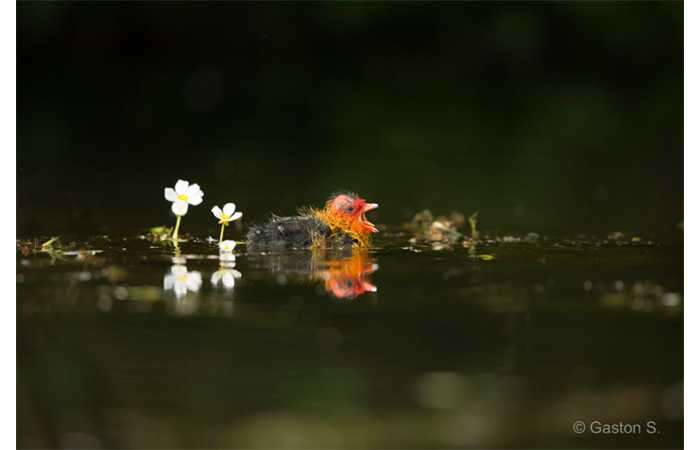
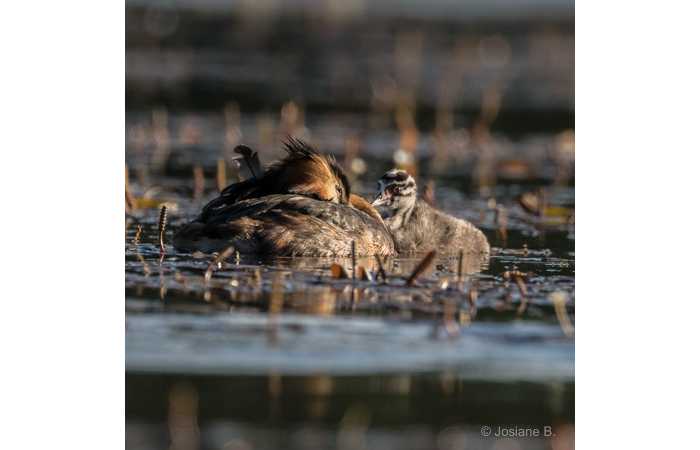
If I had to keep in mind a photo of this workshop, it would be without a doubt a Grebe’s chick. I had never been able to get so close to one. He is among the flowers and I find him magnificent.

James
James.

My impressions about this wildlife photography workshop are totally positive. I am by the way coming back next year. I just spent eight days in a countryside just how I like them.

I learned how to use a floating blind. It was new for me. Plus, I photographed some animals that I didn’t know. It was pretty frankly quite interesting.

When I’m in a floating blind, I really feel close to nature (You can’t get any closer). I hadn’t known that I could take such sensational photos. We are completely integrated within the surrounding nature. It’s an extraordinary experience because we’ve got water all the way to the torso.

I didn’t know the Dombes. I just discovered this region. In watching a panorama, I saw all these thousands of ponds and I was surprised. I knew nothing but Bresse chicken and that was it.

At the start, I was slightly afraid of being tired or devolving into all sorts of uncomfortable positions but that wasn’t the case in any way. When I was a little tired I’d go to a slightly shallower bottom and rest. Plus, we didn’t ever truly feel any heat. It was perfect.

Concerning the ambiance, it was excellent. I noticed that there were only good photographers. That’s not always the case in these kinds of groups.

I learned a lot during the technical exposes. I was immediately able to ably everything that you’d explained to me. The rhythm was like that for six days.

If I had to hold onto photo for this workshop, it would be difficult. But I’ll keep in mind that with the Heron dancing with a large Carp in his beak. I also have in my head another Heron whose neck is bent a bit like how the giraffes do.

Francis
Francis.

I am happy about having participated in this workshop. I knew a lot of emotions. I’m coming back next year.

I didn’t know the technique using floating blinds. It’s incredible but it permits for being at the heart of the action. We are surrounded by birds who don’t see us. We listen to them. It’s something fabulous. It’s indescribable for someone who’s never seen this before. I witness scenes of baby chicks feeding time. It’s emotional. I really inserted myself within the birds’ privacy.

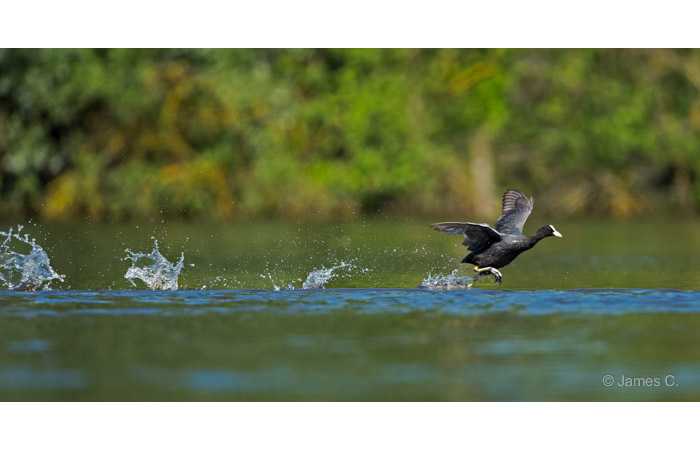
I shot a lot of good photos this week. Those that touched me the most were when the adults fed their children whether it be Grebes or Coots.

I didn’t know the Dombes. It’s a fabulous region be it in its wealth in birds or its landscapes. I’m in the countryside. It’s a universe I can appreciate. I was happy here in the middle of all this nature.

I’m used to going on trips with groups reaching ten people tops. This time it was a bit more intimate as we were less numerous. I didn’t know anybody in this workshop. The ambiance was excellent. I’m glad that everything went very well. Everybody was really cool.

Your technical exposes and image reviews were a real plus for me. I learned a lot on my camera’s adjustments and on birds. For example, I’d never realized a tracking shot of birds’ flights. Now I know how to do it. I discovered my 500mm. I couldn’t imagine realizing such pictures with such a high zoom.

I’d add the fact that the image reviews are a real bonus because we can see what the other photographers realized. We can then copy them and inspire ourselves from their approach.

Gaston
Gaston.

My impressions on this workshop are very good. With you, Amar, I was expecting that it’d be top notch especially on the human and emotional elements. For me it’s an important aspect because we live as a group. I was expecting something nice and comfortable. I’m always searching for a little liveliness after days on the ground. This workshop really answered my expectations. Even the meals were excellent. You had everything well prepared and organized.

I came on this workshop to learn how to use floating blinds. For me it’s an ideal way to approach birds from very up close and to meet them in intimacy. I enjoyed it a lot because I caught onto some of their attitudes. They are always full of confidence with their children even when we aren’t far with the floating blind. We wouldn’t be able to get so up close in any other conditions. I’d already realized photos from the shore but it’s not at all the same type of atmosphere.

During this workshop, I felt myself symbiotic to nature. I was really touched. He answered all of my expectations. What was surprising and just like you’d said in the begging, you have got to be very patient. It’s just like being at the theatre. There’s the stage to our front and were waiting for the show.

The next two days were for me a true eye opener. I had the impression that the animals were accepting me into their universe. I had the impression of being part of the environment. It’s an incredible sensation. It took me a bit of time to understand that you had to be patient to be accepted by the animals and melt into the background. Once that you’ve understood, it’s magnificent.

I was rather surprised by the technical level of the photographers. The image reviews showed some beautiful takes. I learned quite a bit on the technical side during this workshop. I always worked in graphic design. It’s a world very close to that of photography. It was interesting to see our two universes come closer to one another with a different approach. That the workshop’s whole purpose.

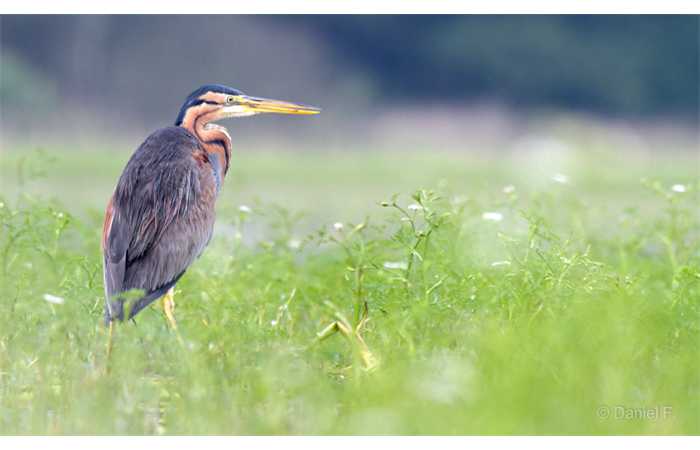
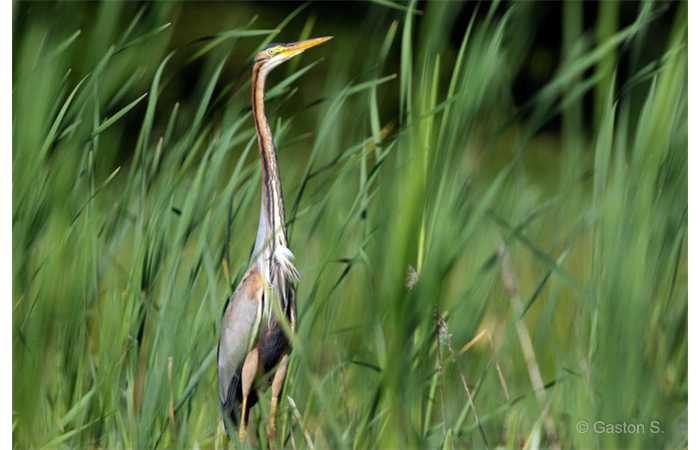
If I had to preserve a memory from this workshop, it would be that of the Purple Heron I photographed yesterday afternoon. He was in the middle of catching a Carp. It was an incredible and magical act.

Daniel
Daniel.

I just spent a fantastic trip. I discovered the floating blind that I didn’t know of. The problem is that once you’ve discovered this technique, you don’t want to do anything else. Photographing aquatic animals from the shore from the top-down now longer present any interest. With the pictures shot from the floating blind we really show all three dimensions. From the shore, everything gets flattened.

Once again, your teaching method was exceptional. I’m not trying in any way to flatter you. I’ve got forty years in the photography business behind me and with you I’m still learning. You carry out courses in a manner where all of the concepts pass through alone and without difficulty. I’ve never seen that by the way. Don’t be bothered it’s just reality. I don’t know any coaches that work like you do. You are easy to talk to and especially very structured in order to demonstrate your suggestion. I’m trying within the heart of my club to use your remarks and your method and I’ve still got works to go.

During this week, I must have taken to kilos as we ate well. The workshop’s organization was very good. The ambiance was friendly. You feel yourself at home. It’s familial. I knew none other of the participants except Josiane who is my companion and by the hour, everyone knew each other. The appetizers’ and meals’ preparations are a way to get to better get to know one another. Just like if we were a band of friends.

I knew the Dombes in reputation only in terms of it’s great restaurants. It’s a marvelous corner as everything is serene. We are at the heart of nature. The little villages are quite and typical with plenty of charm.

When we walk in a pond with a floating blind we are in the heart of the water and of nature. It’s physical, it has to be said. It’s within everyone’s reach. I’m 73 years old and I didn’t have any problems. In a blind, you feel yourself like a hunter without a rifle. We’re hunting for the photographer’s prey. We can photograph scenes that would be otherwise impossible like the Heron who catches a Carp bigger than himself. We’re at the heart of the scene and the action.

If I had to keep in memory a photo, it’s that of the Purple Heron just barely visible among the grasses. For me it’s a snapshot approaching photography in a poetic manner.

Wildlife Photography Workshop with Floating Blinds: The Dombes in the May of 2016

This wildlife photography workshop was unique in more ways than one. All of the participants were friends whom were used to traveling with one another. They requested us to organize this photography workshop, tailor made for the usage and incorporation of floating blinds, just for themselves.
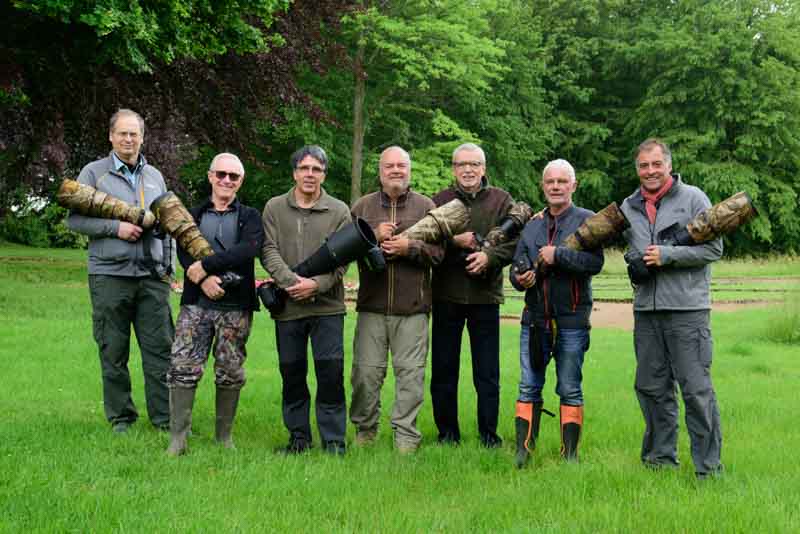
The participants in the  photography workshop dedicated to the floating blinds in La Dombes in France.
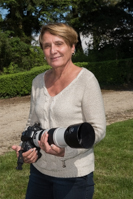
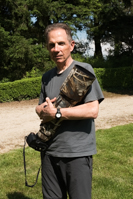
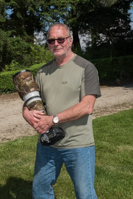
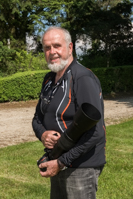
The participants in the photography workshop (from left to right): Geoffroy, André, Jean-Pierre, Michel, Guy, Philippe, and Amar.

6 Friends for an Exceptional Gathering in the Dombes

Two participants, André and Philippe, had already sojourned in 2015. It was these two who persuaded Guy, Jean – Pierre, Geoffroy and Michel to come over and meet us. We’d like to thank them once again for the trust they’ve placed in us. For 7 days, we’ve enjoyed a very pleasant and creative experience. The quality of the snapshots were exceptional.

All of the photographers were equipped with Nikon brand equipment. This is the first time such an event has occurred. We have nothing against brands which produce quality cameras and lenses, yet this rare circumstance deserved being mentioned.

The Dombes: A Paradise for Wetland Birds

The region of the Dombes plays host to numerous species of birds. Nearly 130 different species annually visit so as to both mate and nest. 30 000 individuals regularly spend the winter season in the area.

The region of the Dombes is covered by over 1000 ponds. These ponds are of human origin. They are both shallow and used for pisciculture. Their particularity are that their bottoms are lightly inclined so as to allow their waters to slowly and regularly flow into the emissary. These fish filled ponds attract numerous types of birds. It is a zone of national important for migratory birds of the tropics.

During the months of May, June and July, it is possible to observe a few species emblematic of the region: Great Crested Grebe, Little Grebe, Black – Necked Grebe, Red Crested Pochard, Whiskered Tern, Black – Crowned Night Heron, Purple Heron, Grey Heron, Squacco Heron, Little Egret, Great Egret, Cattle Egret, Comoran, Eurasian Coot, Eurasian Reed Warbler, Sedge Warbler, Common Kingfisher, Warbler, Western Marsh Harrier, Red Kite.

The Dombes does not exclusively attract birds. The Muskrats and the Nutrias are also mammals that we often come across on the ponds. Dragonflies, green frogs and grass snakes are also part of the animal landscape.

The lights which flood the Dombes are exceptional. In the spring and beginning of summer, the early mornings are often bathed by warm and felted lights. What joy to observe the ducks or grebes moving themselves along the ponds in this magical setting.

Acquiring a Solid Technical Expertise and Developing Creativity

For this workshop, all of the photographers were of an advanced level. However, some of them are not well versed in wildlife photography and even less in the usage of a floating blind. We had therefore prepared an instructive progression adapted to the group. We devoted a large portion to photographic creativity while all the while revisiting certain fundamentals yet without staying stuck on the basics. The act of unveiling the numerous secrets that makes our photography so successful was a real plus in the eyes of the participants.

A Strange Weather for Exceptional Snapshots

This year of 2016 will remain within the memories for all photographers as the weather was tremendously varied. During the first week of the workshop we never saw the sun emerge from behind the cloud cover. It was the first time since we’ve been to the Dombes that we experience such rainfall. In the beginning, the participants were a little worried that we would not have enough light in order to accurately capture the birds while in midair flight. However, we explained to them that cloudy weather are more certainly the best of times for wildlife photography as the contrasts of light are less extreme. In addition it renders the colors all the more apparent and places the subjects into the proverbial spotlight.

Once again, all of the participants placed their trust in us and despite the atmospheric conditions that were at certain times terrible along with torrential rainfall, the images that were captured were of an exceptional quality. We believed that without these incredible conditions, the quality of the clichés would not have attained this level. The slideshow of the participants that we included in our report will serve as testimony to this fact.

A Friendly and Relaxed Ambience for 7 Days

For us, a photography workshop is made up of three elements: Technical education, the discovery of hidden treasures within a region and good humor and conviviality.

Yet again, the recipe worked. We have chosen two locations for bed and breakfast were each participant had access to their bedroom and its commodities. The afternoon, we went to lunch in one of the restaurants typical of the region. Each village of the Dombes possess at least one restaurant. We were apple to taste at least one regional specialty per day. Breakfast and dinner were taken care of at the locations we stayed at for the night. Each participant brought along a regional specialty. We did not have enough time throughout the week so as to eat everything.

Finally, it was a great week in a both friendly and amicable atmosphere.

Some photos taken by the participants

stage-photo-animaliere-affut-flottant-en-dombes-andre-1
stage-photo-animaliere-affut-flottant-en-dombes-andre-2
stage-photo-animaliere-affut-flottant-en-dombes-andre-3
stage-photo-animaliere-affut-flottant-en-dombes-andre-4
stage-photo-animaliere-affut-flottant-en-dombes-andre-5
stage-photo-animaliere-affut-flottant-en-dombes-andre-6
stage-photo-animaliere-affut-flottant-en-dombes-andre-7
stage-photo-animaliere-affut-flottant-en-dombes-andre-8
stage-photo-animaliere-affut-flottant-en-dombes-andre-9
stage-photo-animaliere-affut-flottant-en-dombes-geoffroy-1
stage-photo-animaliere-affut-flottant-en-dombes-geoffroy-2
stage-photo-animaliere-affut-flottant-en-dombes-geoffroy-3
stage-photo-animaliere-affut-flottant-en-dombes-geoffroy-4
stage-photo-animaliere-affut-flottant-en-dombes-geoffroy-5
stage-photo-animaliere-affut-flottant-en-dombes-geoffroy-6
stage-photo-animaliere-affut-flottant-en-dombes-geoffroy-7
stage-photo-animaliere-affut-flottant-en-dombes-geoffroy-8
stage-photo-animaliere-affut-flottant-en-dombes-geoffroy-9
stage-photo-animaliere-affut-flottant-en-dombes-guy-1
stage-photo-animaliere-affut-flottant-en-dombes-guy-2
stage-photo-animaliere-affut-flottant-en-dombes-guy-3
stage-photo-animaliere-affut-flottant-en-dombes-guy-4
stage-photo-animaliere-affut-flottant-en-dombes-guy-5
stage-photo-animaliere-affut-flottant-en-dombes-guy-6
stage-photo-animaliere-affut-flottant-en-dombes-guy-7
stage-photo-animaliere-affut-flottant-en-dombes-guy-8
stage-photo-animaliere-affut-flottant-en-dombes-jean-pierre-1
stage-photo-animaliere-affut-flottant-en-dombes-jean-pierre-2
stage-photo-animaliere-affut-flottant-en-dombes-jean-pierre-3
stage-photo-animaliere-affut-flottant-en-dombes-jean-pierre-4
stage-photo-animaliere-affut-flottant-en-dombes-jean-pierre-5
stage-photo-animaliere-affut-flottant-en-dombes-michel-1
stage-photo-animaliere-affut-flottant-en-dombes-michel-2
stage-photo-animaliere-affut-flottant-en-dombes-michel-3
stage-photo-animaliere-affut-flottant-en-dombes-michel-4
stage-photo-animaliere-affut-flottant-en-dombes-michel-5
stage-photo-animaliere-affut-flottant-en-dombes-michel-6
stage-photo-animaliere-affut-flottant-en-dombes-philippe-1
stage-photo-animaliere-affut-flottant-en-dombes-philippe-2
stage-photo-animaliere-affut-flottant-en-dombes-philippe-3
stage-photo-animaliere-affut-flottant-en-dombes-philippe-4

Testimonies of the Dombes Wildlife Photography Workshop – May 2016

Philip
Philip.

This was my second workshop with you in the Dombes. Last year I was enchanted by the beauty of birds, the lights out on the ponds. I learned a great deal of photography related techniques on these magnificent ponds. This year, I took photos that were completely different from last year’s.

I just lived through a new experience. This year, I applied everything that you had explained to me last year. For example, I tried to transcribe the beauty of nature in the manner of décor, to give my images space to then introduce the birds as secondary elements. I worked a lot on the composition of the decors. I tried to better manage the colors. I really worked on the framing.

Concerning the ambiance, this year was a bit special because I brought along some friends who were also photographers with me following last year’s workshop’s success. I’ve known them for a long time. I traveled with them. The ambiance was therefore very friendly. We were sharing an experience. For me it was a real pleasure to have them discover the region of the Dombes and photography through the use of a floating blind.

I greatly appreciated your kindness and friendliness. I thank you for the technical exhibitions as I once again learned a quite a few things.

If I had to preserve by memory a photo of this week it would be that made a few days ago by a beautiful morning despite the clouds and slight amounts of rain. To my left there were these sort of pink colored rings. All of a sudden I saw the head of heron that was emerging from the flowers. I realized the portrait of the bird. It was truly a beautiful photo filled with emotion.

This workshop is once again a beautiful experience in a French region not too far off from home. There’s no need to go off far away so as to realize beautiful images.

Andrew
Andrew.

No need to go to the other side of the Earth so as to experience culture shock and make exceptional shots.

The Dombes is a particular area with its 800 ponds, its little villages, its very good rural restaurants, plenty of wildlife, numerous birds. It’s really worth the act of coming here, in particular for photography. I love it.

Contrary to what we could think, we benefited from the cloudy weather, prone to rain and storms. The light being disseminated allowed for some beautiful view takes. And the rain ruined nothing, to the contrary.

The floating blind permits one to approach the birds from very up close and the light reflected by the water is unique, very exceptional.

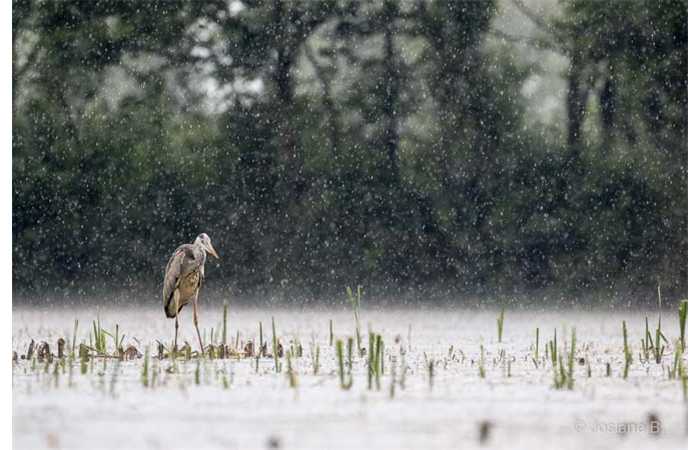
One afternoon, in the pond, on my floating blind, all of a sudden an enormous thunderstorm, torrents of rainfall. At 30 meters, a grey heron, soaked, waiting for the downpour to pass.

I was able to slowly approach it until reaching the minimal distance need for lens focus and took a series of pictures under this unrelenting rain. Incredible memories!!

I want to thank Amar for his friendliness, his implication, his availability and his knack for teaching. He made us all progress.

The workshop participants of whom many return from one year to the next form a band of friends, happy to meet each other again and experience an enjoyable week together.

By the way, I’ll return next year, with other regulars, and for the fifth time…

So a really good atmosphere. And with each having brought a few specialties from their region, good drink and good chow…

In general, yet another excellent workshop. Thank you Amar and thank you to my photographer friends.

Until next time.

Michel
Michael.

I really enjoyed this wildlife photography workshop. It was my first time. I’ll come back next year. I really appreciated the technical instruction whether it be on the handling of backgrounds or the calibration of the camera’s enclosure. I am very satisfied.

By coming to this workshop, my goal was to realize photos from my floating blind. I had never done any. I’d do it again. The conditions for image captures are exceptional. We’re always at the birds’ eye level, in water. There is no better alternative to choose a good point of view.

This wildlife photography workshop will have taught me to pay closer attention to the décor and especially the framing. I am a sports photographer. I am more geared towards athletes. Now I’ll pay closer attention to what you call spatial awareness.

I had already come to the Dombes but for the avian park. This time, I was able to appreciate the region in greater depth. I hold nothing but pros coming out of this experience. I don’t know what else to say. I wasn’t cold in the water. It was really great.

The photo expositions and revues were very good. Plus I was with friends. I have no complaints. We experienced a great atmosphere.

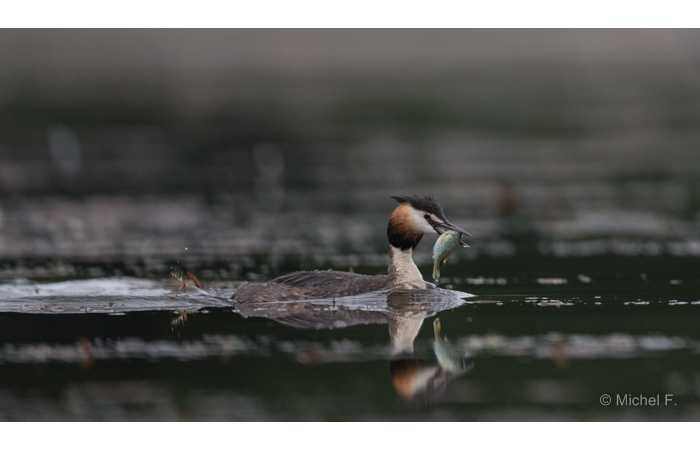
If I had to hold onto a photo in memory only for the week it would be a grebe with a fish in its beak and its perfect reflection on the water’s surface. It may not be the most beautiful of the week but it’s the one that struck me the most.

Guy
Guy.

This wildlife photography workshop was a revelation for me. First and foremost photographic in nature as I was not expecting to discover this world of animals of which I had no knowledge. I encountered wildlife at a new level. I waddled in water like a duck. There was a host of subjects to photograph in motion in their natural habitat. And the whole backed by technical and photographic support on your part which is exceptional.

In coming on this workshop, I had no particular expectations. I enjoy going with the flow. I don’t enjoy predicting what is going to happen. I really enjoy the unknown. I thought I’d be meeting photographers far more technically adept than myself: That was the case. I wanted to learn. And I learned a great deal whether it was among the friends I was accompanying and especially from you. You have a real artistic and technical dimension. You communicated to me many lessons. I extracted much education from it. It’s very positive.

Shooting from a floating blind is a crazy experience. We are always at the birds’ level. I’m pretty tall because I measure more than 1.81 meters. When I look at a pond from the bank, everything is always in a diver’s point of view. With a floating blind, we’re at the water’s surface level. We really have a duck’s viewpoint, a grebe’s. We truly are in the animals’ we’re photographing’s place. I get the impression that I’m dissolving into the earth and into the water. I wanted to be even smaller so that I could slip into the reeds. It was absolutely extraordinary. It’s a true discovery. We really get into the ecology through this bias. It’s incredible to observe these familial scenes, these predators.

I came with friends who are people I like. It was fabulous. There is a lot of simplicity, of complexity, of laughs, of provocation. There is no setup. Everything is natural. We shared nothing but good times.

This workshop was intense. The organization was good. I have nothing to repeat. I brought a book; I didn’t turn a single page. I didn’t listen to any music. I was completely immersed in the photography, in the group. Time flew by very quickly. It was very well organized.

If I had to preserve one photo of the week it would be that from last night. For 5 days I heard talk of purple herons but was unable to capture one on camera. Yesterday, I saw one on the lookout. He had flattened himself to the limit in order to dive and brought back within his beak a perch that must have a kilogram. It was huge. He shock himself and then flew towards the reeds to savor his catch. It really is incredible.

Geoffroy
Geoffroy.

My impressions on this photography workshop are very positive. I really appreciated the area. I really appreciated your didactic character when it came to teaching your techniques, for your accompaniment.

Taking photographs from a floating blind permits one to relate with the birds directly at their eye level. It allows being in the middle of the fauna and the flora, truly in the middle of nature. We cannot realize these types of photos from a bank. The floating blind makes it possible to carry out silent approaches, softly towards the animals. It’s an enjoyable sensation.

I did not know the Dombes. It’s an extraordinary region whether it be for its avian fauna, its ponds. It’s magnificent.

I did not think that this photographic technique made it possible to approach the animals so closely. We do not bother the birds. It’s a noninvasive technique.

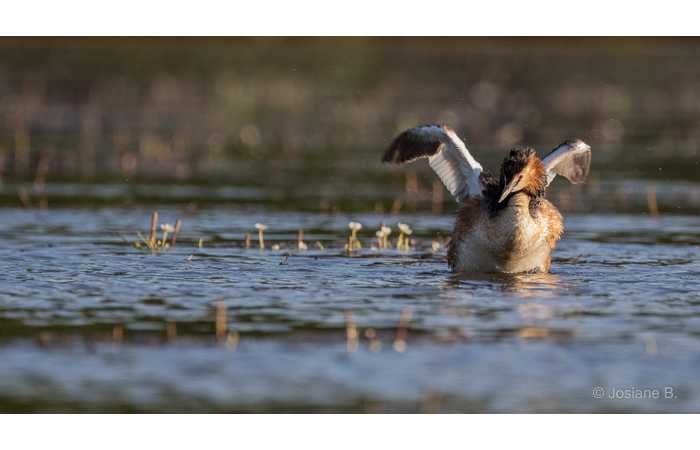
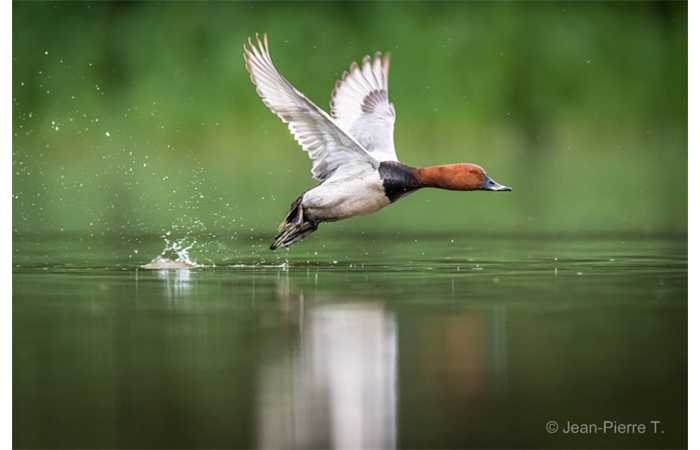
To describe what I experienced, here is the photo that I will remember for long after. It’s a parade of common pochards. The duck hen has displayed an extraordinary aquatic show. She had ash freckled beige plumage. She lifts her wings towards the sky in finally upon a pond covered in a light fog. It was an extraordinary moment.

I came on this photo workshop with friends. The ambience was very good. It was very friendly between the exposes and revues of photos. But it’s also very intense and very challenging because we invest ourselves a lot in the photos. When we are in a pong, we try to melt into the middle. We try to find the best setting to capture the best image. There is also the learning experience which is a little difficult for a first workshop. You have to come back.

I appreciated the organization of the workshop as we live as a community. We are isolated from the world. We talk only of the ponds in which we are 7 or 8 hours per day.

Peter
Peter.

I am very satisfied with this photography workshop in Dombes. I made photos in the middle of nature as closest I could to the birds. It’s really an experience very interesting to live through.

What surprised me when we’re in a stand, we hear nothing but the sounds of nature like the clapping of the water, the singing of the birds, the sound of the wind. We play witness to scenes of feeding, fights and the like at only a few meters. It was truly exceptional to live.

I am always interested to learn new techniques, new methods and to take the know – how of other photographers. This week I learned many new techniques that will be useful for my next images. For example this week, I learned to use the AF – ON button on my camera’s enclosure. It’s a technique I had heard of but had never put into practice.

The atmosphere in the group was excellent. I like finding myself with people who share in the same passion as me. This environment of photographers is truly inspiring. It was a real pleasure.

The photography workshop was very well organized. We had a one photography session in the morning and in the afternoon. There are the technical exposes and the photo revues. Everything was covered.

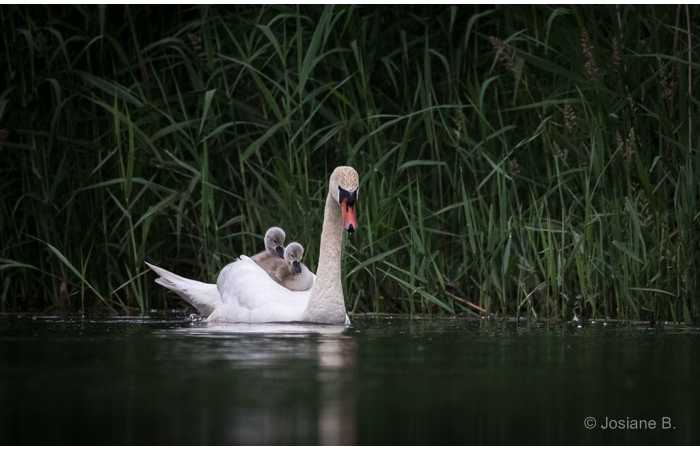
If I had to conserve into memory one photo, it would be that of a grebe carrying his chick on his back. He passed by 3 or 4 meters from my lens. It was really close. I experienced this moment in an intense manner. I wasn’t aware that birds could carry their young in this manner on their back. It was a grand moment.

  1. Wildlife Photography Workshop in Ethiopia – February 2016
  2. Wildlife photography workshop during the rutting season – October 2015
  3. Wildlife photo workshop from floating Blinds in La Dombes-June 2015
  4. Report on a July 2015 wildlife photography workshop focusing on deer

Page 4 of 6

  • 1
  • 2
  • 3
  • 4
  • 5
  • 6
Copyright © 2003 - 2026 Guillen Photo LLC - All rights reserved. Amar Guillen, professional photographer since 2003.
  • Blog
  • Calibration
  • Legal Information
  • Sitemap
  • Accessibility
  • Contact Me
  • Updates of the Website

Select your language

  • English (United Kingdom)
  • Français (France)

Contact Me By Email

8 + 7 =

Office Address:
3512 Robin Road
Plano Texas 75075
USA

Office phone: (+1)214-769-6825