• The Art of ChoosingHome page
  • Fine Art Prints3 Editions
  • CollectionsAll Collections
  • AboutAmar Guillen
  • Customer Space & Contact
  • Select your language

    • English (United Kingdom)
    • Français (France)
  • All You Need to Select Your Fine Art Print
    • How to Choose a Fine Art Print - Q&A - FAQ
    • New Creations
    • Explore Some Interiors
    • Fine Art Print Blog
  • Browse by Edition
    • All Fine Art Prints
    • Unique Edition
    • Limited Edition
    • Open Edition
  • Browse by Style
    • Black and White
    • Color
    • Fusion
    • Impression
    • Back to Black
    • Landscapes in Black and White
    • Landscapes in Color
    • Animals in Black and White
    • Animals in Color
  • Browse by Theme
    • Landscape
    • Wildlife
    • Underwater
    • Abstract
    • Symbolic
    • Landscapes of the United States
    • Landscapes of France
    • Landscapes of Scotland
    • Seascapes
    • Relaxing
    • Energizing
    • Playful
  • Browse by Format
    • Rectangular
    • Square
    • Panoramic
  • Contact Me
    • Contact Me by Email or Phone
  • Collections
    • New Collections
    • All Collections
  • Browse by Theme
    • Landscapes
    • Wildlife
    • Underwater
    • Abstract
    • Symbolic
    • Landscapes of France
    • Landscapes of the United States
  • Browse by Style
    • Black and White
    • Color
    • Impression
    • Back to Black
    • Fusion
  • Contact Me
    • Contact Me by Email or Phone
  • Discover More About Me
    • Discover Who is Amar Guillen
    • Artistic and Photographic Statement
  • Galleries
    • Photo Galleries
    • Abstract Portfolio in Color
    • Black and White Landscape Photography Portfolio
    • Color Landscape Photography Portfolio
    • Black and White Wildlife Photography Portfolio
    • Color Wildlife Photography Portfolio
    • Underwater Photography Portfolio
  • Contact Me
    • Contact Me by Email or Phone
  • Your Customer Space
    • Create or Manage your Account
    • Your Download Space
    • Your Orders
  • Contact Me
    • Contact Me by Email or Phone

You are in that section: Home > Blog > Blog of the Photographic Creation Approach

Why and How It is Important to Choose the Right floating blind for Wildlife Photography

Taking a picture from water’s level requires the use of a floating blind. The choice of this tool is essential for the realization of interesting and creative photos. For years, I used handcrafted floating blinds. Recently, I discovered the company "Mr. Jan Gear" which designs and manufactures floating hides that perfectly meet my requirements and needs as professional photographer.

As a rule, I normally do not use my blog to talk about materials and equipment that are used in the creation of my photos, but this time I will make an exception. I decided to deviate from this rule because this product is simply unique and extraordinary for wildlife photographers who are passionate about photo sessions in wet areas. My experience with the floating blind has helped me to create truly exceptional photos, and I would like to share this knowledge with you.

Choosing a floating blind is not easy. I found a manufacturer who created an interesting product.

Sommaire de l'article

  • The Utility and Importance of a floating blind
  • Mr. Jan Gear's floating blinds
  • First Observation: The Package and Structure is Impeccable
  • Second Observation: It is Impressively Lightweight
  • Third Observation: I Am Truly Close to the Water’s Surface
  • Another Advantage: It Can Be Used in Wet or Windy Weather
  • A Huge Advantage: Photographing in 5 Centimeters (2 inches) of Water
  • “Mr. Jan Gear” floating blinds are Solid
  • Finally
  • Some pictures taken from the floating blinds made by "Mr Jan Gear"

The Utility and Importance of a floating blind

A floating blind allows photographs to be taken in wet areas while walking in water with the camera attached to a ball head or a gimbal. It is covered by a tent to hide the photographer from the animals. A floating blind can be used in ponds or at sea on shores of the beach. The photographer only needs to walk and use a pair of waders to avoid getting wet.

Even its name, “floating blind” indicates its function, that it “hides”. The photographer is hidden from the eyes of the animals. But unlike the fixed hide that is used to photograph animals on the ground, it allows the photographer to move around the subjects allowing to make photographs with unique points of view. The photographer can thus better manage the scenery and the light to compose and frame the scenes.

The floating blind support provides the ability to photograph subjects at eye level. It avoids the visible high angle photography effect when the photo is taken from a bank. The shots have a lot of impact and a very great strength in the compositions.

In addition, a floating blind is mobile. It provides the closest access to live birds, insects, and mammals in wetlands. The photographer can thus vary his framing by making wide shots or tighter shots, such as portraits.

In general, if the photographer respects the safety distances and calmly carries out techniques of approach in the greatest silence, the animals do not escape. I have often approached herons, grebes, or coypu a few yards away without ever arousing the slightest suspicion. The animals photographed do not show any signs of stress, fear, or worry. For example, I have often captured scenes of feeding or complicity between chicks and adults.

But I always abide by one essential rule: never enter an animal's safety zone. This limit is very easy to determine. Just observe the animal in the camera's viewfinder. When it begins to show signs of feverishness movements with its body or head, I stop my progression and begin to slowly retreat. Sometimes it is too late because the bird flies away or the coypu dives. But often it is enough to reassure the animal. Once I am out of the limit of the security zone, I wait a few minutes before making my first pictures. Always give the animal a little time to integrate the floating blind into its environment.

A floating blind is an indispensable accessory for the wildlife photographer who wants to make unique and creative photographs of live animals in wetlands. But the choice of a good one is not as simple as it seems.

Mr. Jan Gear's floating blinds

For years, I used artisanal floating blinds made with polystyrene parts on which a tent was mounted. I always thought it was the only possible solution because I did not imagine that a company could invest in the research and development for an equipment not very often used.

It was by researching on the web that I discovered the floating blind created by the company "Mr. Jan Gear". The company was created by a Belgian, Jan Goddefroy whose passion is to create equipment for outdoor photography and for difficult environments. His passion for this trade inspired him to create photo bags that can be used regularly in so-called hostile environments where it is very cold or very wet. The quality of the zippers and the tightness allows me to perfectly protect my cameras and my lenses. I no longer fear rain, mud or even very low temperatures. I will come back to these photo bags of "Mr. Jan Gear" in another blog.

I contacted Jan Godeffroy by e-mail to learn more about the characteristics of his floating blinds. After some exchanges, I was convinced and I ordered two of them. After a few weeks of use, I am presenting my review.

First Observation: The Package and Structure is Impeccable

My first two floating blinds were each delivered in a thick bag. I was initially very surprised because the complete equipment weighs only 3 kilograms (6 pounds). I am very far from the 20 kilograms (40 pounds) of the artisanal hide I used before. Once unpacked, I had an inflatable part, an epoxy plate to fix the gimbal, a tent, and two hoops. The set can fit very well in a medium size travel suitcase. This opens interesting doors for future trips to Romania, Ukraine or regions with beautiful wetlands.

The flange is inflated with a pump in two minutes. A high-quality anti-return valve prevents it from deflating.

The epoxy plate that will support the ball will require 7 minutes to be mounted. The system based on rot-proof tips is ingenious.

The hoops are mounted in less than one minute.

The tent is fixed on the hoops in three minutes.

Finally, the floating blind is assembled in 12 minutes. Surprisingly, the assembly of my old one required me more time. The whole design of this new floating blind is very aesthetic, and the size of the structure is small. The fabric composing the dome is of excellent quality, as it resists bramble thorns and does not fade in sunlight.

Second Observation: It is Impressively Lightweight

After mounting the blind on the mainland, I grab it with two inside handles to place it in the water. I fixed my gimbal head, which has a weight of two kilograms (4 pounds). The whole setup is light. I can move easily while walking. Now I can get out of the ponds where I want. In the event of a thunderstorm, I will be able to leave immediately and return to my car without having to cross the pond in the hide. The floating blind’s lightweight feature is an important safety advantage.

Third Observation: I Am Truly Close to the Water’s Surface

Once the camera is attached to the gimbal head, I find that I am much lower to the water’s surface than when I used my previous blinds. I am almost at the water’s level. Although I was satisfied with my old floating blinds, I have come to value the closeness of the new floating blinds, because I can shoot at the eye level of the animals, including ducks and grebes. Even for photographers whose size is more than 1.80 meters (6 feet), the shooting is relatively easy.

The first movements in the pond are impressive because the whole system is easily maneuvered. Being perfectly silent, it does not create waves.

My only regret is that it does not have a small box to store the keys of my car. But this problem will be solved in a few days with the use of a small waterproof bag fixed onto a hoop.

The small windows are perfectly designed for a photographer to see the animals without being seen. Small nets on each window protect the photographer. On each net, there is a small piece of fabric that can be attached with Velcro. In my old blinds, I was obliged to use safety pins to fasten the protections. The design of the blind was excellently crafted.

Mr Jan Gear's floating blinds are at the water's edge and easy to maneuver.

Another Advantage: It Can Be Used in Wet or Windy Weather

During my weeks of shooting, I was subjected to many climatic hazards. Some days I experienced strong winds. The dome shape of the blind resists weather conditions well. Even though it is very light, my floating blind never glided away. I had no problems resisting the wind.

On other days, I had rain. Fortunately, I never had any water inside the blind because the dome shape immediately evacuates any water that collects on the tent. It is very waterproof.

Normally, I experienced sunny days with heavy heat. The windows were wonderfully designed as well because after opening them, I experienced slight drafts of air which were very refreshing.

Finally, Mr. Jean Gear's floating blind was perfect in all the climatic conditions I encountered.

A Huge Advantage: Photographing in 5 Centimeters (2 inches) of Water

The craft blinds I used for years were built with very bulky polystyrene parts. The submerged part of the carriage was about 15 to 20 centimeters (8 inches). It was virtually impossible to move when the depth of water became less than 20 centimeters. Moreover, the weight prevented me from transporting them easily on a mudflat.

I was pleasantly surprised to discover that with the blinds of “Mr. Jean Gear” I could advance over areas of barely 5 centimeters (2 inches) of water. Indeed, this year the drought has been significant and many ponds’ water levels have drastically fallen. Sometimes I had to move on my knees on some interesting mudflats to make photos.

The adaptability of the floating blind was a huge advantage. I could approach shorebirds like the northern lapwings and make exceptional photos, even when the water levels were shallow. This kind of approach was not possible for me when using my old floating blinds.

MMr Jan Gear's floating blinds are light but very robust.
Mr Jan Gear's floating blinds are light but very robust.

“Mr. Jan Gear” floating blinds are Solid

To conclude this review of “Mr. Jan Gear” floating blinds, I must admit that despite its low weight and its construction with inflated bladders, I was surprised by the robustness of the materials used. I have no problems during all these weeks of intense use.
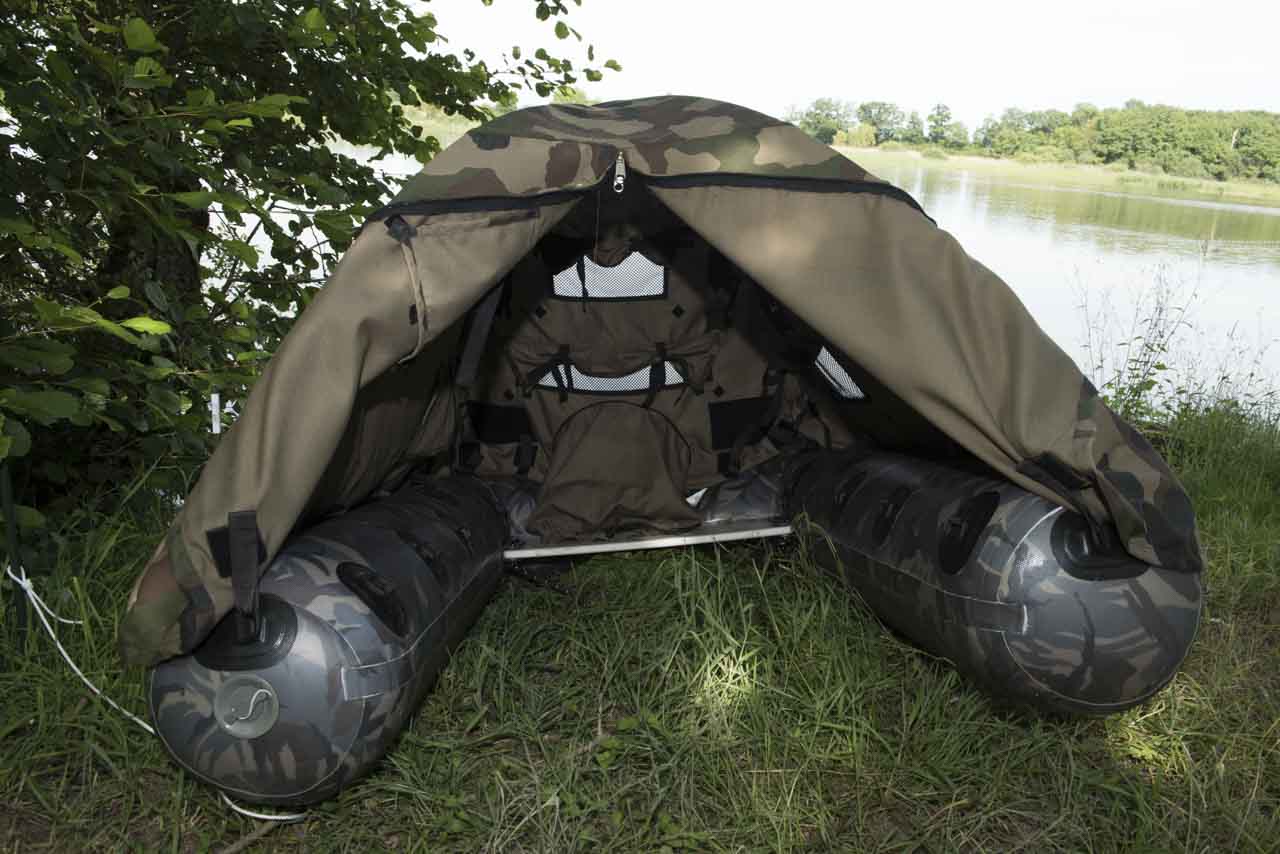
The Jan Gear's floating blind consists of an inflatable part and a tent fixed on two hoops.
The entry into the water is easily done using two handles attached to the inflatable bladder.

Finally

The floating blinds made by the company "Mr. Jan Gear" have become indispensable accessories for me. They are quick to assemble, easy to utilize, very maneuverable, adaptable to all weather conditions, robust, and solid. The icing on the cake is that they are compact and can easily fit into a medium size suitcase. I am completely satisfied with my choice. I look forward to my next photo sessions in the ponds using this equipment.

Some pictures taken from the floating blinds made by "Mr Jan Gear"

A black kite photographed from a floating blind.
A gray heron photographed from a floating blind.
A swan on takeoff photographed from a floating blind.
An Eurasian spoonbill photographed from a floating blind.

July 2017. Wildlife Photography Project Dedicated to Fawns and to Red Deer with Velvet Antlers

During the month of July 2017, after spending four weeks to photograph birds in the wetlands of La Dombes, we went to the department of Charente-Maritime to photograph fawns, as well as red deer with velvet antlers.

As wildlife professional photographers, we have a deep passion for deer. Every year, we spend several weeks photographing the rut of the deer. Even though this show evokes many emotions against the backdrop of the meadows and forests of Charente-Maritime, the end of spring offers even more beautiful opportunities to create interesting animal photographs. The months of May and June mark the birthing period of fawns and piglets. It is also the season when the antlers of the deer grow back. These antlers are covered with a velvet-like texture.

Red deer in Europe have antlers that fall annually between February and May. While the elder red deer’s antlers fall between February and March, the younger red deer’s antlers fall between April and May. As soon as the antlers have dropped, new ones begin to grow, eventually reaching full development at the time of the rut, also known as the slab of the stag. These new bony antlers are surrounded with a velvet-like texture that nourishes the new antlers through many blood vessels. For a wildlife photographer, the velvet season in spring is as important as the fall season when the antlers are dry. Indeed, the coat of the deer is more vibrantly orange in spring time than in the fall period of the slab. Also, in spring, the deer are in full health, whereas in the rut season of the fall, they can lose up to a third of their weight.

Spring is synonymous with greenery, flowering trees, and meadows covered with dewy grasses. These are ideal surroundings for high-quality environments to highlight the animals. It's also one of the reasons why we spend a few days of spring each year photographing deer with velvet antlers.

The spring of this year, 2017, was particularly hot with temperatures often exceeding 35 degrees Celsius (90 degrees Fahrenheit). These temperatures are hard to bear when searching for deer, but they allow us to make dreamy pictures when both deer and does come to bathe in the fresh cool water of ponds. During the day, the deer and does find shelter from the sun’s rays in the woods. In the late afternoon, when the sun is lower on the horizon, they journey to ponds to bathe. The main difficulty is to know which pond they will choose. It is luck that will decide. If we have chosen a bad area to set up our blind, we cannot immortalize this extraordinary moment. However, if we chose the right place, then it is a jackpot. In wildlife photography, luck is a major factor in making photographs worthy of interest.

Spring, as we have said, is the birthing period of fawns. It is often difficult to observe a birth because the hinds (female deer) move away from the herds to find quiet places. Also, being artistic photographers, we have found photographs of births to be irrelevant. We believe that these photographs are more relevant for photo reports or a naturalist’s perspective. Nevertheless, fawns are exciting and interesting subjects after their birth when they begin to discover their environment. We experienced very strong emotions in front of a fawn that watched a bee foraging a flower. His erect ears and his large eyes intricately narrated his astonishment when contemplating the insect.

Fawns are not the only ones born in spring. It is also the birthing period for piglets. Piglets are more difficult to observe since their miniature size is hidden by the tall meadow grasses. When walking, it is necessary to look for the black backs of the female wild boar, who plow up patches of land in search of tender roots. In general, piglets are located relatively close to their mothers. Wild boars are easier to observe in prairie lands during springtime rather than in autumn. During autumn, wild boars seek safe refuge in the woods, away from the slab period of the stags, thus avoiding encounters with deer antlers. Indeed, deer are very excited and unpredictable during their rise of testosterone. Approaching a company of wild boars to photograph them is easy enough when you are in good wind and you approach silently. If the sun is to our back, then we have a good chance to create excellent photos. Wild boars have sharp hearing and a strong sense of smell. The wind is certainly their best ally because it carries all odors. Once a photographer is near a company of wild boars, the ideal position is to stand still while making a blind. Indeed, piglets are small. They are often masked by tall vegetation. It's best to remain silent and hidden while waiting for the piglets to venture out of the tall grass.

Spring is a beautiful season for photographing deer, does, and wild boars. The decors have strikingly deep green colors, nicely contrasting with the red coats of the deer. Nevertheless, we must carefully choose our environments, because the abundance of foliage can easily hinder the construction of the scene and the reading of the photo. It is for this reason that when we are on the field at this time of the year, we take great care in choosing our sets.

2017 was not the best in terms of creativity because of the excessive heat. Despite this, we will take some interesting photos that will be added to our collections of art photographs, whether in the theme "shades of blacks and whites" or in the theme "lights and colors".

All these photographs come directly from the cameras. Post processing and framing were done with the tools of the cameras. These photos will be developed more finely to feed the collections of art photographs.

Wildlife photo project on deer with velvet antlers in Charente-Maritime in France in July 2017.


Wildlife photo project on deer with velvet antlers in Charente-Maritime in France in July 2017.


Wildlife photo project on deer with velvet antlers in Charente-Maritime in France in July 2017.


Wildlife photo project on deer with velvet antlers in Charente-Maritime in France in July 2017.


Wildlife photo project on deer with velvet antlers in Charente-Maritime in France in July 2017.


Wildlife photo project on deer with velvet antlers in Charente-Maritime in France in July 2017.


Wildlife photo project on deer with velvet antlers in Charente-Maritime in France in July 2017.


Wildlife photo project on deer with velvet antlers in Charente-Maritime in France in July 2017.


Wildlife photo project on deer with velvet antlers in Charente-Maritime in France in July 2017.


Wildlife photo project on deer with velvet antlers in Charente-Maritime in France in July 2017.


  1. June 2017. Wildlife Photo Project Using Floating Blinds in La Dombes.
  2. May 2017. Wildlife Photo Project. Birds of the Danube Delta.
  3. Using the Bokeh technique to Create Minimalist Photos
  4. 8 Techniques for Creating Minimalist Photos

Page 109 of 201

  • 104
  • 105
  • 106
  • 107
  • 108
  • 109
  • 110
  • 111
  • 112
  • 113
  1. You are here:  
  2. Home
  3. Blog Photographic Approach

Share on Social Media

Post
Share
Share
E-mail
WhatsApp
Text

Join Me on Social Networks

Join Me on Facebook  Join Me on Instagram  Join Me on LinkedIn

Claim your free guide to make your photo impactful and meaningful

Claim Your Free Guide '50 Pages of Tips to Give Impact and Meaning to Your Photos'.

4 + 8 =

Click Here To Discover All My Chronicles About the Photographic Approach.

Treat Yourself to a Fine Art Print That Matches your Personality

Example of a vacation home interior with a black and white fine photo art displayed on the wall.

Fine Art Print Collections in Black and White

Fine Art Print Collections in Black and White Black and white photography is a suitable technique for many nature scenes. It requires a particular frame of mind. A black and white photograph should be prepared and planned from the framing to the…
11999
Fine Art Print Collections in Black and White
An abstract art photo displayed in a contemporary living room decor.

Fine Art Print Collections in Color

Collections of Fine Art Prints in Color Color photographs allow digressions and take the audience to the message by secondary ways. The world around us, especially nature, is colorful. A color image can show the way our surroundings really are. Of course, it…
10445
Fine Art Print Collections in Color
Example of a home interior with fine art prints in my style back to black displayed on the wall. These photos are a part of my collection 'Wild beauties of Kenya'.

Fine Art Print Collections in Back to Black

Fine Art Print Collections in Back to Black I want to share my fine art prints of nature in a personal style that I call "back to black." "Back to Black" was developed to embody a sharp and clean style for artistic photos that can be hung in your living room,…
9984
Fine Art Print Collections in Back to Black
A waiting room with a photo in the style Fusion displayed on the wall. Grey Heron in Fusion.

Fine Art Print Collections with the Fusion Style

Fine Art Print Collections with the Fusion Style I would like to share a very creative and modern photography style to represent Nature in a very different way. I call it "Fusion." I created the style to offer dynamic photos, allowing you to start a good day…
7916
Fine Art Print Collections with the Fusion Style
A living room with a photo in the style 'Impression' exposed on the wall. Rising sun in impression

Fine Art Print Collections with the ‘Impression’ Style

Fine Art Print Collections with the ‘Impression’ Style The objective of this photographic style is to create the ephemeral blurs. That's why I named it 'Impression.' Photography, as an art form, is a powerful means of expressing reality from different…
5830
Fine Art Print Collections with the ‘Impression’ Style
Fine art prints from the style back to black displayed on a wall. Amar Guillen, photographer artist

New Collections of Fine Art Prints Dedicated to the Wonders of Nature

New and Updated Fine Art Print Collections Dedicated to the Wonders of Nature Fine art prints from the style back to black displayed on a wall.
11450
New Collections of Fine Art Prints Dedicated to the Wonders of Nature

Themes of the Blog Articles

Landscape of Arches National Park in Utah in black and white.

Blog Articles Dedicated to Artist Statement

Blog Articles Dedicated to Artist Statement
Dunes of death Valley in Black and White

Blog Articles Dedicated to Black and White Photography

Blog Articles Dedicated to Black and White Photography
Abstract photo or trees reflection on water

Blog Articles Dedicated to Photographic Mindset

Blog Articles Dedicated to Photographic Mindset
Abstract photo of ridles on water

Blog Articles Dedicated to Artistic Photography

Blog Articles Dedicated to Artistic Photography
Abstract photo of Yellowstone

Blog Articles Dedicated to Photographic Language

Blog Articles Dedicated to Photographic Language
Pronghorn in Yellowstone

Blog Articles Dedicated to Wildlife Photography

Blog Articles Dedicated to Wildlife Photography
Landscape of Bryce Canyon

Blog Articles Dedicated to Photographing United States

Blog Articles Dedicated to Photographing United States
Underwater waves in the Red Sea

Blog Articles Dedicated to Photographic Techniques

Blog Articles Dedicated to Photographic Techniques
Tree of Black Canyon in Black and White

Blog Articles Dedicated to Landscape Photography

Blog Articles Dedicated to Landscape Photography
Manta Ray in Maldives in Black and White

Blog Articles Dedicated to Underwater Photography

Blog Articles Dedicated to Underwater Photography
Red Deer stag during the rut of the deer

Blog Articles Dedicated to Photographic Judgement

Blog Articles Dedicated to Photographic Judgement
Great Crested Greb and his chick

Unclassified Blog Articles

Unclassified Blog Articles

You Might Be Interested By One of These Photographic Approach Articles

We waited a week before creating this photograph. We wanted the sun at this particular place. We proceeded by method.

7 Tips to Create your Photos in a Methodical Way

5217
7 Tips to Create your Photos in a Methodical Way
This photograph was created for the collection 'Musical notes on water'.

Why and How Creating Fine Art Photos

8719
Why and How Creating Fine Art Photos
Seascape of the Northern of Sutherland in Scotland.

Storytelling, Copywriting, Script and Narration

4701
Storytelling, Copywriting, Script and Narration
Photo sous-marine d'un nudibranche. En photographie sous-marine, la technique du bokeh est très intéressante en gros plan pour mettre des sujets en valeur.

Why and How Creating a Bokeh in Nature Photography

6342
Why and How Creating a Bokeh in Nature Photography

Receive Free Tips On How to Give Impact and Meaning to Your Photos. Subscribe to Receive Regular Articles.

2 + 7 =

Contact Me By Email

10 + 9 =
This site is protected by reCAPTCHA and the Google Privacy Policy and Terms of Service apply.

About Amar Guillen, Creator of Fine Art Prints of Nature
As a photographer capturing the artistic essence for several decades, I have mastered the art of crafting an authentic experience for art enthusiasts and collectors of visual art.
When I observe my surroundings, be it friends, family, relationships, or professional contacts, I see souls in perpetual motion. Every moment of their existence is engulfed by daily hassles, work concerns, social media, online or televised information streams, and videos on the web.
Every minute, they strive to accomplish something, fearing losing ground and feeling marginalized in this frenzied society. Imprisoned by an oppressive schedule, the essential eludes them, drowned in the tumult of daily life. Is it really crucial to watch yet another cat video on the internet? Is it necessary to post twenty daily messages on social media?
Despite this, they remain constantly stressed and anxious about the challenges of the world, without being able to influence these monumental problems. It is at this moment that my artistic nature photographs come into play. Those who have had the privilege of hanging one of my works in their personal or professional space have expressed a radical transformation in their lives.
Every day, contemplating these works of art immerses them in tranquility, inner peace, and rediscovered serenity. They then understand that nature has the power to unravel tensions, to encourage reflection on the essential. Artistic photographs thus become open windows to the wonders of nature.
I have chosen to share the best of myself by helping others discover their identity, personality, style, all while reconnecting with nature. Take the time to explore my artistic photographs if you wish to reveal your true essence. Once hung in your space, your view of the world will be transformed.
Amar Guillen is a creator of fine art prints of nature.
I am Amar Guillen, creator of nature art photographs. I have a deep conviction that contemplating nature has the power to transform human beings. If everyone learned to know, respect, and preserve nature, our world would be transformed into a haven of peace where everyone would find their place.
Copyright © 2003 - 2026 Guillen Photo LLC - All rights reserved. Amar Guillen, professional photographer since 2003.
  • Blog
  • Calibration
  • Legal Information
  • Sitemap
  • Accessibility
  • Contact Me
  • Updates of the Website
I Want to Help You to Create Interesting Photos

How Can I Help You To Create More Interesting Photos?

Ask Me a Technical Question.
Subscribe to my Newsletter. The Inspiration Behind Guillen Photo.

Select your language

  • English (United Kingdom)
  • Français (France)
Claim your free guide to make your photo impactful and meaningful

Claim Your Free Guide '50 Pages of Tips to Give Impact and Meaning to Your Photos'.

10 + 1 =

Contact Me By Email

3 + 7 =

Office Address:
3512 Robin Road
Plano Texas 75075
USA

Office phone: (+1)214-769-6825