• The Art of ChoosingHome page
  • Fine Art Prints3 Editions
  • CollectionsAll Collections
  • AboutAmar Guillen
  • Customer Space & Contact
  • Select your language

    • English (United Kingdom)
    • Français (France)
  • All You Need to Select Your Fine Art Print
    • How to Choose a Fine Art Print - Q&A - FAQ
    • New Creations
    • Explore Some Interiors
    • Fine Art Print Blog
  • Browse by Edition
    • All Fine Art Prints
    • Unique Edition
    • Limited Edition
    • Open Edition
  • Browse by Style
    • Black and White
    • Color
    • Fusion
    • Impression
    • Back to Black
    • Landscapes in Black and White
    • Landscapes in Color
    • Animals in Black and White
    • Animals in Color
  • Browse by Theme
    • Landscape
    • Wildlife
    • Underwater
    • Abstract
    • Symbolic
    • Landscapes of the United States
    • Landscapes of France
    • Landscapes of Scotland
    • Seascapes
    • Relaxing
    • Energizing
    • Playful
  • Browse by Format
    • Rectangular
    • Square
    • Panoramic
  • Contact Me
    • Contact Me by Email or Phone
  • Collections
    • New Collections
    • All Collections
  • Browse by Theme
    • Landscapes
    • Wildlife
    • Underwater
    • Abstract
    • Symbolic
    • Landscapes of France
    • Landscapes of the United States
  • Browse by Style
    • Black and White
    • Color
    • Impression
    • Back to Black
    • Fusion
  • Contact Me
    • Contact Me by Email or Phone
  • Discover More About Me
    • Discover Who is Amar Guillen
    • Artistic and Photographic Statement
  • Galleries
    • Photo Galleries
    • Abstract Portfolio in Color
    • Black and White Landscape Photography Portfolio
    • Color Landscape Photography Portfolio
    • Black and White Wildlife Photography Portfolio
    • Color Wildlife Photography Portfolio
    • Underwater Photography Portfolio
  • Contact Me
    • Contact Me by Email or Phone
  • Your Customer Space
    • Create or Manage your Account
    • Your Download Space
    • Your Orders
  • Contact Me
    • Contact Me by Email or Phone

You are in that section: Home > Blog > Blog of the Photographic Creation Approach

Social Networks Are Reinventing the Way We Photograph

Have you ever wondered about the impact that social media has on your photos?

Have you ever wondered if photography in general is influenced by social media or vice versa?

I asked myself these questions a few weeks ago when defining a new photo project.

In this article, I will share with you the conclusions I came to. I think that you will be surprised to see that networks are completely changing the very concept of photography.
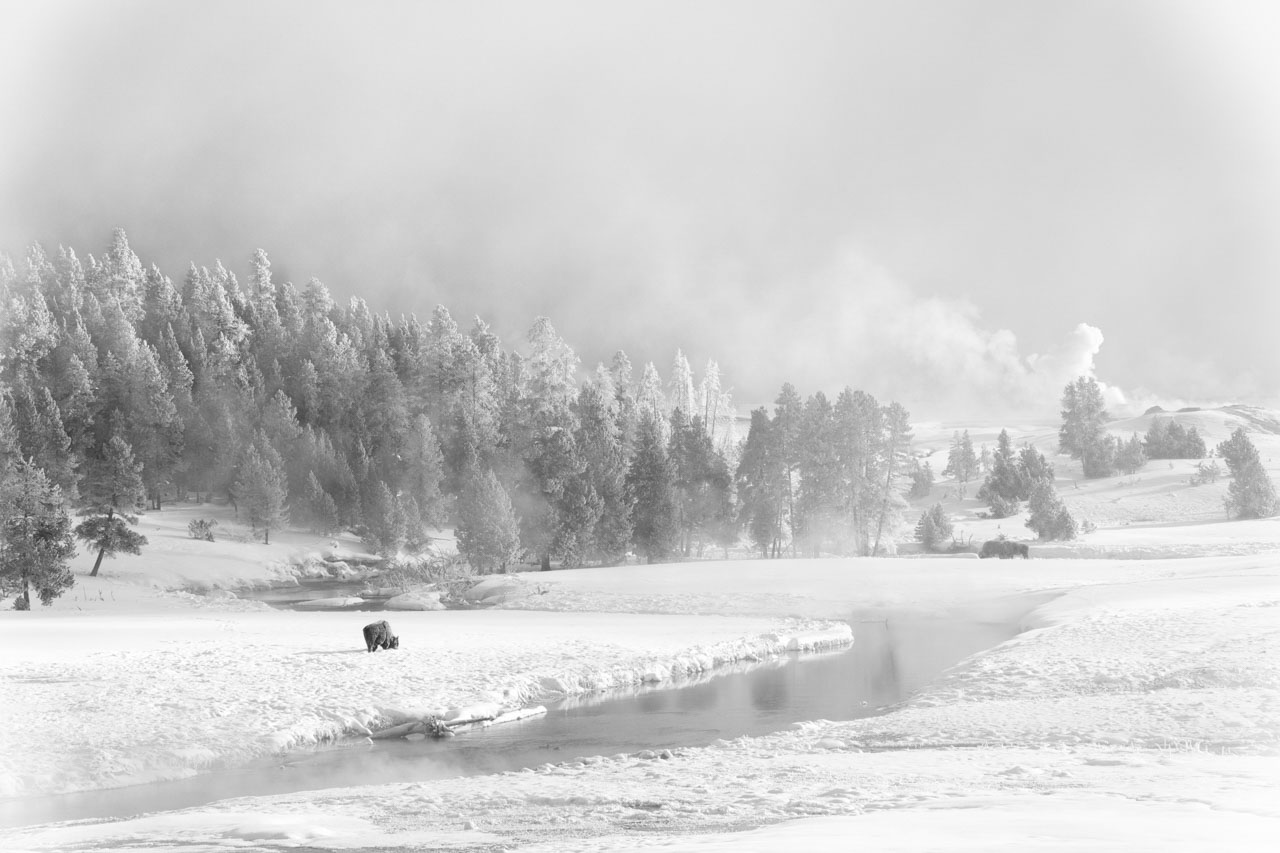
Black and white environmental wildlife photo of a bison in the snow in Yellowstone National Park in Wyoming, USA.
An environmental wildlife photo that has little chance of being noticed on social networks. The tones are soft. The scene is quiet. The opposite of a photo that is noticed on social networks.

Table of Contents

    Page 1

  • The Dawn of the Digital Age
  • The Story Behind This Article
  • Why It Is Important to Understand Social Media’s Impact on Photography
  • Before the Era of Social Media, a Photo Always Delivered the Truth of the Photographer
  • The Definition of a Social Media Networ
  • Social Media Is Essential for Photography
  • Page 2

  • With Social Media, Photography Becomes Only Informative
  • With Social Media, Photography Is Not Attached to the Photographic Sense
  • With Social Networks, Photography Is Reduced to Proof of Existence
  • Photographing for Social Media Makes Photos Commonplace
  • Our Loneliness Creates an Urgency for Low-Quality Photos
  • Page 3

  • Social Media’s Trivialization of Photos Is a Great Danger to Photography
  • Social Networks Impair Our Photographic Judgment
  • Is This Evolution of Photography a Good Thing?
  • Diamonds in the Rough
  • Should We Use Social Networks to Show Our Photos?
  • And If This Revolution Also Applied to Other Art Forms
  • Finally

The Dawn of the Digital Age

After more than twenty years of using different generations of digital cameras, I have come to understand that the real photographic revolution is not about the use of modern technology, but rather, about the way pictures are used.

Digital cameras have made photography available to everyone. Personally, I think this is great because everyone can express themselves in a broader way. But these cameras remain only a means. In my opinion, there is nothing revolutionary even if technically, the advances are remarkable.

I believe that social networks are a real photographic revolution. They are the ones that are shaking up the photographic paradigm.

Nothing will ever be the same again. Is it good, is it bad? I have an idea of the answer. After reading this article, you may come to a different conclusion. Regardless of whether you agree with me or not, my aim in authoring this article is to help you understand this photographic revolution. I hope it will help you to see the future of photography.

20 Tips to Help You to Find Inspiration in Nature Photography

The Story Behind This Article

As part of my grand photo project about the natural landscapes of the United States, I decided to photograph the Saguaro National Park in the state of Arizona in the Southwest.

This is my first trip to this park. I conducted a lot of research and prepared my project. I have already seen many artistic photos made in Saguaro. I knew that I wanted to photograph scenes that corresponded to my style, and which were coherent with my photographic approach.

A few weeks ago, I decided to scour social networks for inspiring and creative ideas. I spent more than 5 hours looking for original photos with different keywords. But I found very few. They all looked the same. Many of the pictures were just selfies without any interest. In the end, I kept about 30 of them, which was not so bad.

But if you think about the fact that I looked at thousands of them, the ratio of these saved photos is extremely low. This little digital escapade got me thinking a lot about how photographers use social media.

Do they have an impact on the way we photograph? Do they influence our photographic vision?

The conclusions I have reached are rewarding.

Why It Is Important to Understand Social Media’s Impact on Photography

Understanding the impact of social media is essential for you. On the one hand, they have become inescapable. Each new generation and all professions use social media.

If you want to use them to highlight your photos, utilize them for advertisement or marketing a business, or browse for inspiration, it is in your best interest to understand them and know what you are going to find.

If you do not make the effort to understand how photography is being turned upside down with this new media, you are going to fit into the mold of those who do not ask questions. You will look like the others. Your photos will become normal, banal, and without much interest. If you want to start creating interesting and meaningful photos or if you want to continue to do so, you must master social networks and their contents. This is the price you will pay to achieve photographic excellence.

2 Methods for Judging a Photo

Before the Era of Social Media, a Photo Always Delivered the Truth of the Photographer

Before discussing the role of social networks in photography, I thought it would be interesting to look back at the role of photography in general and how it has been practiced for decades.

This is how I learned to shoot with a film camera that did not yet have automatic autofocus (an Olympus OM40).

Before this photographic revolution linked to networks appeared, photography had a precise goal: to tell your own truth.

I have always thought that when a person, whether a photographer or not, takes a picture, they are capturing their vision of reality and then sharing that truth.

The word truth is an extraordinarily complex word to explain.

There are many definitions. I have chosen one that seems appropriate for this topic.

Truth is the adequacy between reality and the person who thinks it.

In applying this definition to photography, when we make a photo, it is to share reality as we see and think. For example, when I photograph nature, I always do it in the same way. It is what I think. My thoughts guide what I see.

That is why a photo always delivers our truth.

When you create or take photos, you combine reality with your imagination.

In my opinion, this could be a new definition of photography.

When you took a picture, you captured a fraction of the time that passes, and you edited or processed it in such a way that your imagination saw fit.

Once that fraction of time is immortalized, you can keep it indefinitely on a digital storage device or on paper.

From time to time, you will look at it, then you will leave it in a drawer. Then you will look at it again. Little by little, the photographed scene becomes reality, even if it is the result of your imagination at the time of the shooting.

Each time you look at it, you will discover further details, like little secrets kept in a safe for which you are the only one to have the combination code.

Looking at your photos means reading them differently from one time to the next. You decipher them.

Looking at your photos means constantly analyzing them to better understand their truth and learn from them.

This is one of the reasons why you should make precise editing of your photo projects. You must keep only the best and the essentials. You must keep only the material that will make you ask yourself questions, about yourself, about your photographic why, and about the reasons for your very existence.

Photography is also a way to express yourself. Your photos tell the truth! I think this art form is extraordinary because everyone can practice it.

But the most amazing thing is when other people look at your photos and give you feedback. Then you develop your intentionality. Other people open up new avenues and new paths for you.

Photography can become an extraordinary source of sharing and exchange.

Each person, whether it is you or your audience, will tell their truth and their testimony. Each photograph will create a relationship with the others. Stories will be built. Imaginary bridges will be created. Each story will be different and interesting. Each one will open new horizons.

Photography allows us to express ourselves, to show our differences.

Everyone can share their experiences by creating a photo and posting it.

As you can understand, taking pictures is not simply pressing the release button of a camera or a cell phone. To photograph is to question yourself, to wonder, to reflect, and also, to marvel.

To photograph is to deliver your truth. But there is no one truth.

I find photography to be an extraordinary form of communication because it transcends languages. It has its own language. If you master the rules and codes, I want you to imagine everything you can share, and I want you to think of how many people you might impact. You will still be surprised.

Welcome to a world without limits!

Two Steps to Fully Understanding a Photo

The Definition of a Social Media Network

Before getting into the heart of this article, I thought it would be interesting to clarify an expression that we all use every day: the social media network.

By its definition, social media is a service that brings together various people on a particular subject or not.

In the virtual world, social media is a website that allows users, professionals, or individuals to share or exchange information.

The word “information” is particularly important in this definition because it will allow you to understand the direction that photography is heading towards.

Social Media Is Essential for Photography

This article is not a slam against social networks. On the contrary, I think that in general, they are great tools that allow many people to communicate, exchange, and share ideas and information.

I think they are a particularly crucial step forward in digital communication. I use them to show my photos. I admit that I do use it not necessarily because it is my chosen tool, but because I sometimes go to great lengths when I think a subject is important.

However, I must say the way in which some people use social media must be pointed out.

In this article, I will share with you why I think that some drifts are detrimental to photography instead of strengthening its basic principles of communication, exchange and sharing.

Make no mistake. Social networks used constructively and intelligently are a real source of creativity.

The problem we face today is the photographic noise to which we are subjected. This noise scrambles the signal of creativity. Interesting photographers who have important messages to convey are no longer audible. Photographic social networks have become a vast photographic hubbub.
4 Steps to Analyze a Nature Photograph

With Social Media, Photography Becomes Only Informative

A Bad Photo Is Just Done for an Incorrect Purpose

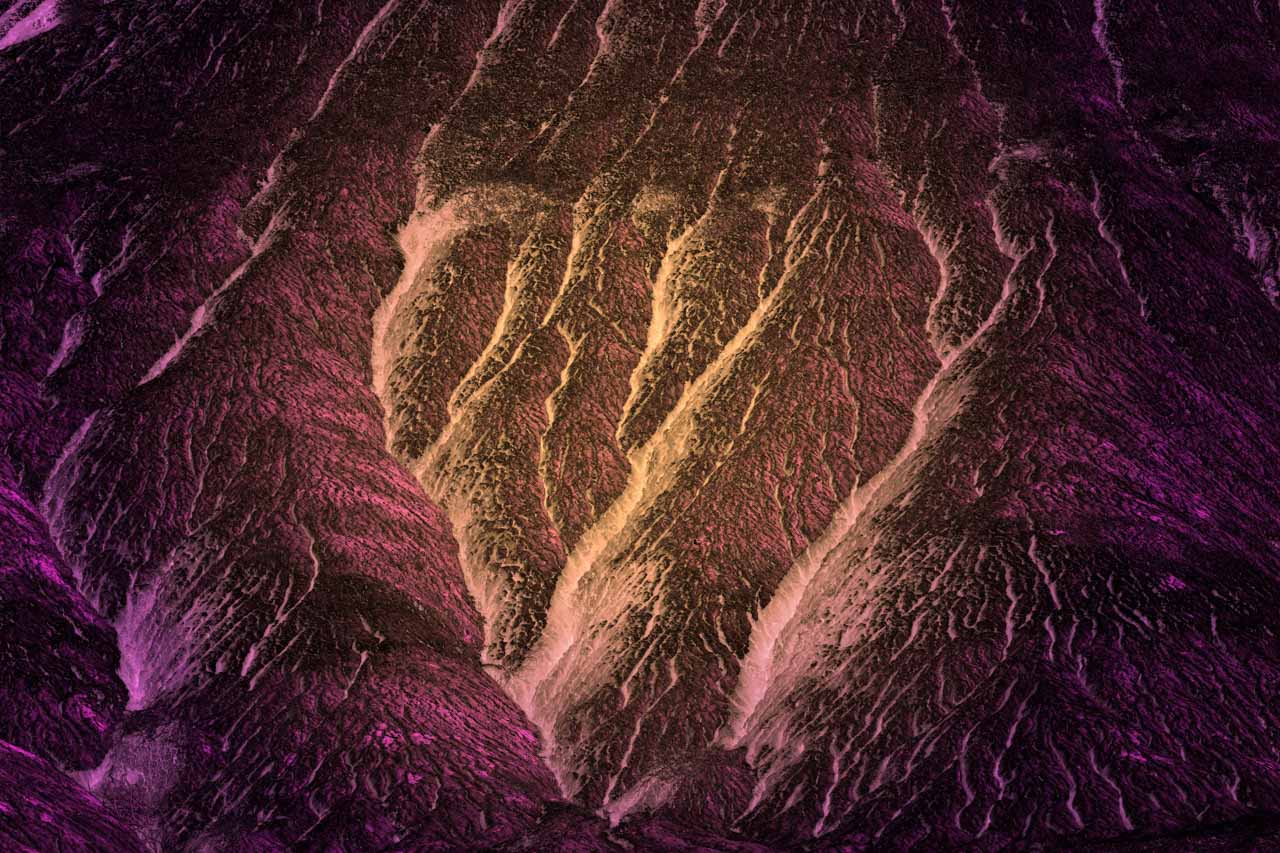
UA conceptual abstract photo created in a landscape of Petrified Forest in Arizona.
A conceptual abstract photo created in a landscape of Petrified Forest in Arizona.

Why Do You Think Some of the Known Photos Are Bad?

You are probably like me. You may sometimes wonder how well-known photos can be so praised, when there is nothing special about them.

It took me years to understand this phenomenon. When a well-known photographer makes photographs, he has a large and diverse audience: journalists, art critics, and celebrities. Most of them have access to media in all forms: audiovisual, magazines, television, etc.

When these influencers participate in joining the photographer's audience, it means that they appreciate his photographic activity. Even if the recent photos are of average quality for you, or for me, they will seem interesting to these people. They will talk about it in the media. Many people will look at these pictures.

They will be attracted, and in turn may share these pictures with others, thus they will come to increase the audience.

Either they will think that since the media is being talked about it, it must be a good picture, thus they will like and share it.

In both cases, the audience will grow, and these photos will become known.

The important thing is not that you do not like these pictures taken by someone famous. The important thing is that they are known. It is all about intentionality and the image you give.

Do You Think Your Photos Are Good or Not?

I often meet amateur or professional photographers.

I ask them to show me some of their latest photos.

Fans often say to me when they show them to me: "But mine are not very good!”

Professionals often tell me, "I could have done better."

Some people do not want to show their photos to me because they think their pictures are bad.

Finally, I meet a lot of photographers who think their photos are no good.

And yet when I look at them, I find most of them interesting. Not all, but most. The ones I do not like may not correspond to my taste and my photographic approach.

But if I put aside my emotions and stay objective, they are still interesting. I think that for most photographers, this finding will hold true. Most photos are interesting when viewed objectively.

I recommend that you do not judge your photos subjectively. Give yourself time. Show them. You will be surprised at the comments that will receive. Do not hesitate to share your photos with others. You will see how you will evolve, change, become different. Never forget that we are social animals. We exist by surrounding ourselves with other people.

Photos for Competitions, Exhibitions, Reports

I often repeat it during my photo courses or my conferences: every photo has a use.

If you create a photo for a particular purpose then it will be good for that purpose. It may become bad or inappropriate for another use.

If you reread the little story in this article, you will now understand that the photos I had chosen for the contest and the festival were poorly suited for those two purposes. But for some of my clients, they are good photos. I have found their use.

Always remember that there are strict rules for contest photos. I have drafted an article about this subject. The same is true for exhibition photos, for reportage photos, for stock photos, for family photos. Every photo should be made with a purpose in mind. From then on, it is good for that use and becomes bad for the others.

As always, this rule is not absolute. There are exceptions to the rule. There are photos that are good for different purposes. It is chance or luck. But these photos are rare. I have thought a lot about this. I realized that most of the time, these photos were marked by a very great photographic intentionality whether it was wanted by the photographer or lent by others.

If you must remember anything important, it is to always shoot with a specific purpose and for a specific use. Your photos will always be good.

Do not think you are making bad photos. The real problem is that your photos have not found the audience. Because of this, you have not developed a photographic intentionality, or you have no intentionality lent. These are all reasons why many photographers think their photos are no good.

How to Make and Prepare your Images for Photo Contests.

It Is All About Luck and Timing

It often happens that a photo or collections are not immediately understood. It happened to me. It will happen again. It has certainly happened to you. Maybe these photos arrived too early or maybe they were just unlucky.

However, perseverance, pugnacity, and time will prove that these photos are eventually recognized as good. Their status as “bad photos” will fade.

The experience of rejection showed me how photos can be suited for different purposes, but not all. I learned that one should always give a chance to create photos that one believes in. Sometimes all it takes is a little help from fate for them to be recognized and admired.

If people tell you that your photos are bad, but you are convinced that they are not, hang in there. Do not give up. Keep promoting them. Find another story for them. Develop your intentionality. Be persistent in your choices. Your luck is changing!

3 Tips to Develop Your Photographic Intentionality.

Are the Photos We Discard From a Project Truly Bad?

This is a totally legitimate question. The answer is simple. Yes, they are bad if they do not fit the purpose you have set for your photo project.

They are bad because they do not meet the criteria you have set for the realization of your project photos.

Maybe they are not in focus, not well framed or maybe they are duplicated. There are many reasons. But maybe these photos are good for other photographers who do not have the same level of requirements as you.

Personally, when I demonstrate editing one of my photo projects during an internship, I often hear from interns who say when I delete a photo, "You're still not going to delete it. It's very good." And yet, I still delete it because my selection criteria are different from theirs.

So, if you put your personal photos in a particular context and delete them, they can still be bad for you despite others seeing their good.

Do Not Reduce Your Photo’s Identity to “Good” or “Bad”

At this stage of the article, you may ask, “What is the point of judging if all the pictures are good?” This question is legitimate.

Your answer is simple. When you judge, you do so in a particular context that imposes criteria.

For example, if you are judging wildlife photos, you are doing it in a wildlife context. If the goal is to analyze wildlife photos and you see a pet photo, you are going to judge it as bad. Yet, in a pet contest, it might win the first prize.

If you are judging natural landscape photos and in one photo you have an urban landscape, it will become bad in context.

What about the technically blurry or poorly framed photos? The author may have found them interesting and of excellent quality. They will certainly have their audience. They may be people who know nothing about photographic technique, but who are touched by the subjects.

Everything is completely subjective. There are no bad pictures. There are just photos that did not find their audience. And if you find bad photos, it is because they do not meet your aesthetic criteria, or you do not know how to look at them from another perspective.

Why It Is So Difficult to Judge a Fine Art Photograph.

Finally

I hope this article has opened a new way of seeing your photos and those of others.

There is no such thing as a bad photo. There are just photos that did not find their audience. The judgment of a photo is always done in a particular context. If a photo is bad in one context, it can become exceptionally good in another context. Everything is so subjective.

If you think your pictures are bad, do not hesitate to show them to several people. Eventually you will find someone who likes them. There are no exceptions to the rule.

Do not try to be consensual. Never forget that being average does not equate to striving to live out a quest for excellence.

Be humble, patient, constant, persevering, and persistent because the road to excellence is long.

  1. Bad Photos Do Not Exist
  2. 3 Tips to Develop Your Photographic Intentionality
  3. Why and How: Creating Isolation Photos
  4. Enhancing Black and White Photos with Shades of Grey, Low-Key, and High-Key

Page 19 of 201

  • 14
  • 15
  • 16
  • 17
  • 18
  • 19
  • 20
  • 21
  • 22
  • 23
  1. You are here:  
  2. Home
  3. Blog Photographic Approach

Share on Social Media

Post
Share
Share
E-mail
WhatsApp
Text

Join Me on Social Networks

Join Me on Facebook  Join Me on Instagram  Join Me on LinkedIn

Claim your free guide to make your photo impactful and meaningful

Claim Your Free Guide '50 Pages of Tips to Give Impact and Meaning to Your Photos'.

4 + 8 =

Click Here To Discover All My Chronicles About the Photographic Approach.

Treat Yourself to a Fine Art Print That Matches your Personality

Example of a vacation home interior with a black and white fine photo art displayed on the wall.

Fine Art Print Collections in Black and White

Fine Art Print Collections in Black and White Black and white photography is a suitable technique for many nature scenes. It requires a particular frame of mind. A black and white photograph should be prepared and planned from the framing to the…
11991
Fine Art Print Collections in Black and White
An abstract art photo displayed in a contemporary living room decor.

Fine Art Print Collections in Color

Collections of Fine Art Prints in Color Color photographs allow digressions and take the audience to the message by secondary ways. The world around us, especially nature, is colorful. A color image can show the way our surroundings really are. Of course, it…
10440
Fine Art Print Collections in Color
Example of a home interior with fine art prints in my style back to black displayed on the wall. These photos are a part of my collection 'Wild beauties of Kenya'.

Fine Art Print Collections in Back to Black

Fine Art Print Collections in Back to Black I want to share my fine art prints of nature in a personal style that I call "back to black." "Back to Black" was developed to embody a sharp and clean style for artistic photos that can be hung in your living room,…
9980
Fine Art Print Collections in Back to Black
A waiting room with a photo in the style Fusion displayed on the wall. Grey Heron in Fusion.

Fine Art Print Collections with the Fusion Style

Fine Art Print Collections with the Fusion Style I would like to share a very creative and modern photography style to represent Nature in a very different way. I call it "Fusion." I created the style to offer dynamic photos, allowing you to start a good day…
7908
Fine Art Print Collections with the Fusion Style
A living room with a photo in the style 'Impression' exposed on the wall. Rising sun in impression

Fine Art Print Collections with the ‘Impression’ Style

Fine Art Print Collections with the ‘Impression’ Style The objective of this photographic style is to create the ephemeral blurs. That's why I named it 'Impression.' Photography, as an art form, is a powerful means of expressing reality from different…
5827
Fine Art Print Collections with the ‘Impression’ Style
Fine art prints from the style back to black displayed on a wall. Amar Guillen, photographer artist

New Collections of Fine Art Prints Dedicated to the Wonders of Nature

New and Updated Fine Art Print Collections Dedicated to the Wonders of Nature Fine art prints from the style back to black displayed on a wall.
11446
New Collections of Fine Art Prints Dedicated to the Wonders of Nature

Themes of the Blog Articles

Landscape of Arches National Park in Utah in black and white.

Blog Articles Dedicated to Artist Statement

Blog Articles Dedicated to Artist Statement
Dunes of death Valley in Black and White

Blog Articles Dedicated to Black and White Photography

Blog Articles Dedicated to Black and White Photography
Abstract photo or trees reflection on water

Blog Articles Dedicated to Photographic Mindset

Blog Articles Dedicated to Photographic Mindset
Abstract photo of ridles on water

Blog Articles Dedicated to Artistic Photography

Blog Articles Dedicated to Artistic Photography
Abstract photo of Yellowstone

Blog Articles Dedicated to Photographic Language

Blog Articles Dedicated to Photographic Language
Pronghorn in Yellowstone

Blog Articles Dedicated to Wildlife Photography

Blog Articles Dedicated to Wildlife Photography
Landscape of Bryce Canyon

Blog Articles Dedicated to Photographing United States

Blog Articles Dedicated to Photographing United States
Underwater waves in the Red Sea

Blog Articles Dedicated to Photographic Techniques

Blog Articles Dedicated to Photographic Techniques
Tree of Black Canyon in Black and White

Blog Articles Dedicated to Landscape Photography

Blog Articles Dedicated to Landscape Photography
Manta Ray in Maldives in Black and White

Blog Articles Dedicated to Underwater Photography

Blog Articles Dedicated to Underwater Photography
Red Deer stag during the rut of the deer

Blog Articles Dedicated to Photographic Judgement

Blog Articles Dedicated to Photographic Judgement
Great Crested Greb and his chick

Unclassified Blog Articles

Unclassified Blog Articles

You Might Be Interested By One of These Photographic Approach Articles

Photograph in black and white of the Grand Canyon from Arizona State in USA.

Why and How Mastering the Steps of Creating an Art Photograph

3603
Why and How Mastering the Steps of Creating an Art Photograph
An example of a narrative photo. Landscape of Island in the Sky in the Canyonlands in Utah in United States. Photo in black and white by Amar Guillen.

Why and How: Creating Impactful Narrative Photos

4118
Why and How: Creating Impactful Narrative Photos
Snowy landscape of Yellowstone during winter.

3 Steps for Giving Meaning to Your Photos

8750
3 Steps for Giving Meaning to Your Photos
Two lions in Kenya. Photographed in black and white. Photograph by Amar Guillen, photographer artist.

To Create Aesthetics Photos, Print your Images

4238
To Create Aesthetics Photos, Print your Images

Receive Free Tips On How to Give Impact and Meaning to Your Photos. Subscribe to Receive Regular Articles.

2 + 7 =

Contact Me By Email

10 + 9 =
This site is protected by reCAPTCHA and the Google Privacy Policy and Terms of Service apply.

About Amar Guillen, Creator of Fine Art Prints of Nature
As a photographer capturing the artistic essence for several decades, I have mastered the art of crafting an authentic experience for art enthusiasts and collectors of visual art.
When I observe my surroundings, be it friends, family, relationships, or professional contacts, I see souls in perpetual motion. Every moment of their existence is engulfed by daily hassles, work concerns, social media, online or televised information streams, and videos on the web.
Every minute, they strive to accomplish something, fearing losing ground and feeling marginalized in this frenzied society. Imprisoned by an oppressive schedule, the essential eludes them, drowned in the tumult of daily life. Is it really crucial to watch yet another cat video on the internet? Is it necessary to post twenty daily messages on social media?
Despite this, they remain constantly stressed and anxious about the challenges of the world, without being able to influence these monumental problems. It is at this moment that my artistic nature photographs come into play. Those who have had the privilege of hanging one of my works in their personal or professional space have expressed a radical transformation in their lives.
Every day, contemplating these works of art immerses them in tranquility, inner peace, and rediscovered serenity. They then understand that nature has the power to unravel tensions, to encourage reflection on the essential. Artistic photographs thus become open windows to the wonders of nature.
I have chosen to share the best of myself by helping others discover their identity, personality, style, all while reconnecting with nature. Take the time to explore my artistic photographs if you wish to reveal your true essence. Once hung in your space, your view of the world will be transformed.
Amar Guillen is a creator of fine art prints of nature.
I am Amar Guillen, creator of nature art photographs. I have a deep conviction that contemplating nature has the power to transform human beings. If everyone learned to know, respect, and preserve nature, our world would be transformed into a haven of peace where everyone would find their place.
Copyright © 2003 - 2026 Guillen Photo LLC - All rights reserved. Amar Guillen, professional photographer since 2003.
  • Blog
  • Calibration
  • Legal Information
  • Sitemap
  • Accessibility
  • Contact Me
  • Updates of the Website
I Want to Help You to Create Interesting Photos

How Can I Help You To Create More Interesting Photos?

Ask Me a Technical Question.
Subscribe to my Newsletter. The Inspiration Behind Guillen Photo.

Select your language

  • English (United Kingdom)
  • Français (France)
Claim your free guide to make your photo impactful and meaningful

Claim Your Free Guide '50 Pages of Tips to Give Impact and Meaning to Your Photos'.

1 + 5 =

Contact Me By Email

5 + 9 =

Office Address:
3512 Robin Road
Plano Texas 75075
USA

Office phone: (+1)214-769-6825