• The Art of ChoosingHome page
  • Fine Art Prints3 Editions
  • CollectionsAll Collections
  • AboutAmar Guillen
  • Customer Space & Contact
  • Select your language

    • English (United Kingdom)
    • Français (France)
  • All You Need to Select Your Fine Art Print
    • How to Choose a Fine Art Print - Q&A - FAQ
    • New Creations
    • Explore Some Interiors
    • Fine Art Print Blog
  • Browse by Edition
    • All Fine Art Prints
    • Unique Edition
    • Limited Edition
    • Open Edition
  • Browse by Style
    • Black and White
    • Color
    • Fusion
    • Impression
    • Back to Black
    • Landscapes in Black and White
    • Landscapes in Color
    • Animals in Black and White
    • Animals in Color
  • Browse by Theme
    • Landscape
    • Wildlife
    • Underwater
    • Abstract
    • Symbolic
    • Landscapes of the United States
    • Landscapes of France
    • Landscapes of Scotland
    • Seascapes
    • Relaxing
    • Energizing
    • Playful
  • Browse by Format
    • Rectangular
    • Square
    • Panoramic
  • Contact Me
    • Contact Me by Email or Phone
  • Collections
    • New Collections
    • All Collections
  • Browse by Theme
    • Landscapes
    • Wildlife
    • Underwater
    • Abstract
    • Symbolic
    • Landscapes of France
    • Landscapes of the United States
  • Browse by Style
    • Black and White
    • Color
    • Impression
    • Back to Black
    • Fusion
  • Contact Me
    • Contact Me by Email or Phone
  • Discover More About Me
    • Discover Who is Amar Guillen
    • Artistic and Photographic Statement
  • Galleries
    • Photo Galleries
    • Abstract Portfolio in Color
    • Black and White Landscape Photography Portfolio
    • Color Landscape Photography Portfolio
    • Black and White Wildlife Photography Portfolio
    • Color Wildlife Photography Portfolio
    • Underwater Photography Portfolio
  • Contact Me
    • Contact Me by Email or Phone
  • Your Customer Space
    • Create or Manage your Account
    • Your Download Space
    • Your Orders
  • Contact Me
    • Contact Me by Email or Phone

You are in that section: Home > Blog > Blog of the Photographic Creation Approach

The 2 Genres of Photography: Illustrative Photography and Artistic Photography

Photo de paysage en noir et blanc du Dôme prise à Capitol Reef dans l'état de l'Utah. Photo en noir et blanc par Amar Guillen.
Black and white photo of the Dome in Capitol Reef in Utah in United States. This photo has to be classified in the artistic genre because it is an interpretation of a the landscape.

Classification #5: Philippe Halsman's classification (1961)

For Philippe Halsman, there are two kinds of photographs:

  • The ones we take. These are the photos taken on the spot. This is for example photojournalism. These are the action photos, intuitive, immediate.
  • The ones we make. These are the prepared photos, to make. They are the photos of studio or then the photos of setting in scene. The preparation time is long, time-consuming.

Philippe Halsman's classification of photographic genres is interesting, because it is based on the instinct of the human being. It does not consider the content and its meaning, the construction, or the technique. It is a model that I know, but that I do not use, because it does not correspond to my way of photographing.

3 Tips to Develop Your Photographic Intentionality.

Classification #6 : Amar Guillen's Classification (My Personal Classification)

Since no model satisfied me, I made my own. For a few years, I have been using my personal classification to organize the photographic genres.

This classification classifies two genera:

  • Illustrative photography.

    The purpose is to illustrate, or to show. It is neutral. The photographer takes a photo to illustrate an article for a magazine, a book of identification, historical, geographical. The viewer does not interpret the photo. He takes it as it is. It is there to reinforce the text and the subject.
    It is also in this genre that I classify fashion photography and photography for advertising. There is no dialogue between the photographer and the viewer. There is just a proposal of images. It involves an exchange with few communication.
  • Artistic photography.

    It allows the photographer to express himself, to communicate feelings and emotions, to transmit messages to a viewer.
    For me, artistic photography is a true means of expression and exchange between the photographer and the viewer.

In this genre, I have two themes:

  • Figurative photography.

    It is representative. The scenes and the subjects are perfectly identifiable. It is animal photography, or landscape photography. It can be symbolic. But in any case, the viewer is always able to put into words what he sees. He is able to describe. The photographer transmits messages, translates emotions, shows his feelings. He shares them with the viewer. It is a real dialogue. Both parties agree on what they see.
  • Abstract photography.

    In abstract photography, scenes and subjects are not identifiable. The photographer says something. The viewer can see something else. This is the magic of abstraction: each person says what he or she has to say according to his or her personality.

This is the classification model I use when I do photo projects.

The big advantage is that photographic themes are transversal. Documentary or reportage photography can either be classified as artistic or illustrative photography. Wildlife photography can be classified in both genres.

It is the photographer's approach that makes the difference.

For example, it is possible that a photographer defines himself as a documentary wildlife photographer or as an artistic wildlife photographer.

My model is based on the photographic process of the photo and not on the themes. This is one of the reasons why I am always browsing and analyzing the work of other photographers who are not in my field. I love fashion photographers or street photographers. With my model, I feel like I am not wasting my time when I am looking for inspiration in other photographic fields,

I think that the important thing for a photographer is the definition of a clear and precise photographic approach and not the field.

Of course, I often find it strange that a photographer shoots fashion and wildlife. That is something I will not do, because technically they are different fields. Each of them requires complex and difficult learning. It is hard enough to master one area of photography without trying to add more difficulties.

I hope that my personal classification has helped you understand my point of view on the photographic approach. That is the purpose of these columns.

What Is the Best Classification?

I believe that there is no good single classification of photography genres.

It all depends on your photographic awareness and especially on who you are talking to.

Indeed, most of the time, you must justify your photographic genre by following a question. If your interlocutor has a good photographic culture and artistic knowledge, you can use an intellectualized classification with the evocation of concepts. He will perfectly understand your point of view and arouse interest.

If your interlocutor is unknown to you or if he does not have a particularly important artistic knowledge, a classification like the one by photographic theme will be more adapted. As always, we must adapt to our interlocutors, and we must speak their language.

How About Defining Your Own Classification of Photography Genres?

This is a legitimate question. Indeed, the important thing is to be able to situate yourself, to explain who you are and what you do when you are asked.

For me, the important thing is to explain to others and to share. If your interlocutor understands what you do with your own scale of values, he will adhere to your project. Isn't that the most important thing?

Defining Your Photographic Testament to Refine and Strengthen Your Photographic Approach.

Finally

I hope this article has helped you understand the different classifications of photographic genres.

My goal is to help you identify which genre you fall into so that you can continue to progress towards excellence.

The most important thing to remember is that knowing the classifications is essential for you to develop your skills, but more importantly, you can use it to explain to others what you do in photography.

Be humble, patient, constant, persevering, and persistent because the road to excellence is long.
6 Genres of Photography

Have you ever wondered what kind of photography you do?

I am sure that the answer is yes. Indeed, we all need the formal framework for our photographic activity. We need to know in which direction we are going. But the definition of photographic genres is not as simple as it seems. There are many classifications.

This is what I will share with you in this article. With this summary, I that you can better situate yourself.

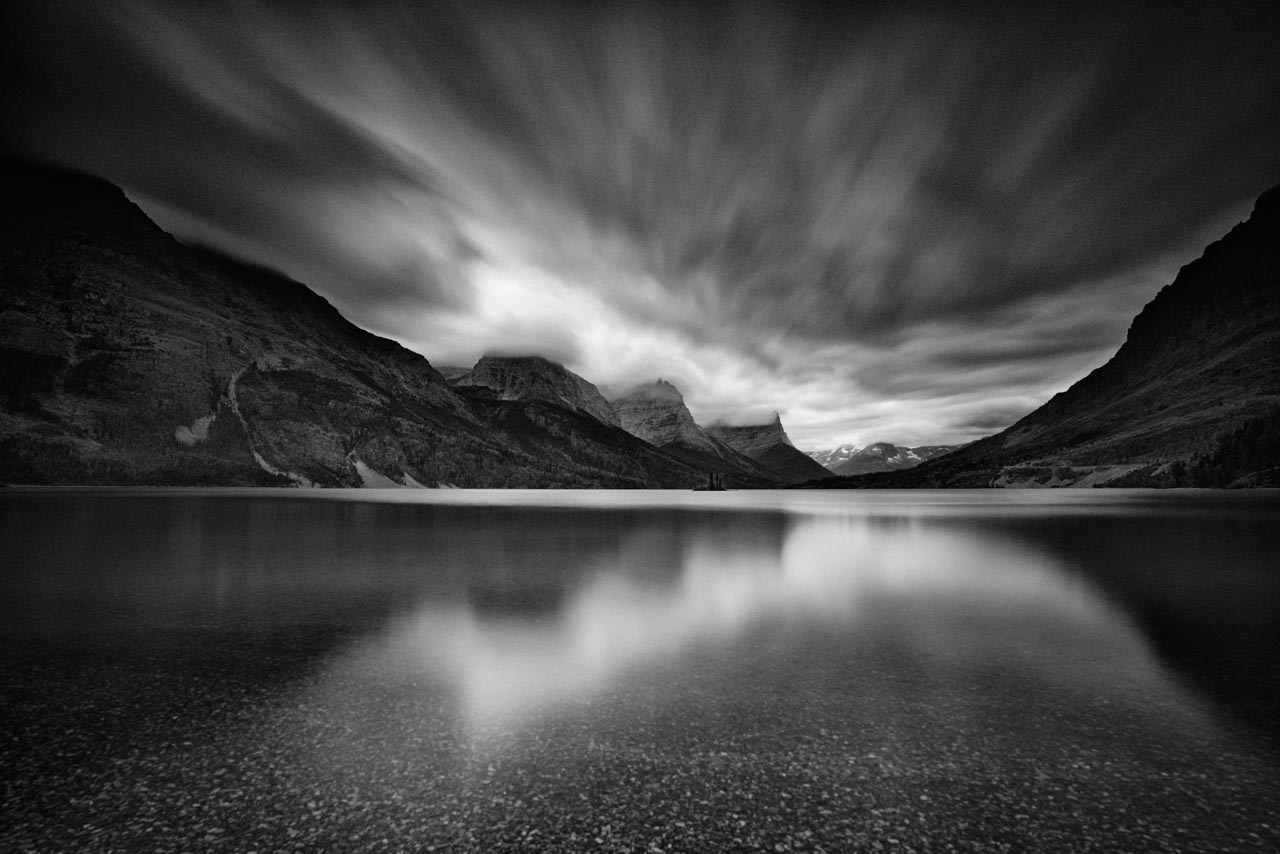
Une photo d'un paysage en noir et blanc dans le parc national des Glaciers dans le Montana aux Etats-Unis.
Landscape in black and white of Glacier National Park in Montan in United States. In what genre do you classify that photo?

Table of Contents

    Page 1

  • The Story Behind This Article
  • Why You Should Establish a Classification of Genres
  • Classification #1: Photographic Theme
  • Classification #2: Specialty
  • Classification #3 : The Plécy Classification of 1960
  • Classification #4: The Classification of Sébastien Raymond
  • Page 2

  • Classification #5: Philippe Halsman's classification (1961)
  • Classification #6 : Amar Guillen's Classification (My Personal Classification)
  • What Is the Best Classification?
  • How About Defining Your Own Classification of Photography Genres?
  • Finally

The Story Behind This Article

When I search or look for inspiration on social networks, photographers' websites, or blogs, I apply one efficient method. Indeed, the number of photos available and the number of sites is very numerous, and I cannot spend all my time on the internet. I must concentrate and be as efficient as possible.

The classification of photographic genres makes my life easier.

Over the years, as I have refined my knowledge and skills, I developed my own classification. I will explain it a little further in this article.

Do not be fooled. The classification of photography genres is quite complex. It is not as simple as it seems.

In order to save you some time, I thought it would be interesting to give you a list of the classifications of the photographic genres.

I will share with you my knowledge on the subject. I will also share my honest opinion on this very practical method at the end of this article, and

I think that I might surprise you.

Why You Should Establish a Classification of Genres

If you want to create interesting and meaningful photographs, you need to know your “photographic why,” define your photographic approach, develop a photographic consciousness, and know what kind of photography you are practicing. The more you define the boundaries of your photographic activity, the better you will become.

The more you specialize, the more skills you acquire and the more you move towards excellence.

If you dabble, you will acquire notions or bits of skills, but you will not develop a solid foundation to build your photographic profile.

By defining your photographic genre, you will explore creative avenues to find inspiration. You will truly progress.

This is what happened to me. When in 2010, I chose the path of artistic photography, I specialized. I learned techniques little by little to improve and progress. Without the knowledge of genres and without this specialization, I would not be where I am today.

5 Tips to Improve Your Narrative Photos and Their Impact.

Classification #1: Photographic Theme

  • Nature.
  • Experience.
  • Artistic.
  • Street.
  • Architectural.
  • Photojournalism.
  • Travel.
  • Illustration.
  • Reproduction.

As you can see, this classification lists the different themes of photography by field action. It can be handy and easy to remember, as it is very compartmentalized.

The problem is that a theme can be transversal. For example, street or architectural photos can also be artistic, or travel.

This first classification by photographic theme is useful, but not explicit enough.

This is what I call “natural classification.” If someone asks you what kind of photography you do, it is extremely easy to put yourself in one of these genres. Your interviewer will immediately understand what you mean. In his mind, he will immediately have an idea of what kind of pictures you can make.

Classification #2: Specialty

  • Photojournalism.
  • Social Media & Advertisement.
  • Fashion Marketing.

Although this classification is centered on professions, it does not consider animal and landscape photographers. It is, in my opinion, very reductive even if it can be used in certain very precise cases.

Classification #3 : The Plécy Classification of 1960

This is an attempt at classification made in 1960 by Albert Plécy who was a French journalist, photographer, painter, and filmmaker.

In this classification, he proposes a classification to help young photographers find their way in photography. He considers the purpose of photography.

  • Witness photos. These are photos that serve to testify or to report an event or a situation. In this kind, we can integrate the photo of reproduction, the scientific photo, the photo report, the photojournalism¬, the photo of fashion, or the photo of sport.
  • Art photos. These are the result of the creation of artists. This genre includes portrait photography.
  • Language photos. This is the domain of the writers of the image. These are photos in which a photographer transmits words, poetry, humor.

Although this interesting classification chooses to explain the purpose of a photograph from an intellectual point of view, it is rather impractical in everyday life.

For example, if someone asks you what kind of photos you take, you may likely would not respond with “language photos” “or witness photos.” I do not think the person you are talking to will know much more than that. You will give the impression that you are talking down to them.

Personally, I like this classification. I keep it in mind to create my photo projects, but I never talk about it, because it is too intellectualized for my taste.

3 Techniques to Enhance Your Photos in Black and White.

Classification #4: The Classification of Sébastien Raymond

Sébastien Raymond is a photographic journalist, portraitist and set photographer.

He proposes a classification of photography into 3 genres:

  • Aesthetic photography. This is made to please the eye. For Sébastien Raymond, aesthetic photography has no content.

    An aesthetic photographer is for him an image that has captured a wonderful moment that everyone will love. It is the valorization of the photographer by the accessibility of his images. As he says in the subtext: "when a photographer makes aesthetic photos, it is that he went to the facility. It is not his talent that spoke, but his malice. He knew that with this subject, he was going to get the most approval possible. For him, aesthetic photos are not life changing. They are photos that evaporate very quickly, immediately replaced by others.

    For Sébastien Raymond, this type of photography has no life and no reason to exist. It is just a photographic lie in the same way that an advertisement never tells the truth. For him, aesthetic photography is a purely self-centered act. It says "Love me. I have nothing to say or give to you."
  • Vernacular photography. It has no artistic pretensions. It testifies to moments in time. It shares truth in the most basic of terms. It is a photograph of vacations, of memories. It does not seek to please. It serves to share and remember. For Sébastien Raymond "vernacular photography allows us not to forget. The photographer wishes to communicate to others what he has loved. It is the photography of good memories.”
  • Conceptual photography.

    It emphasizes visual strength and realistic content.

This classification of Sebastien Raymond is a bit extreme. I have the impression that for him a beautiful animal or landscape photo has no meaning that cannot be exposed.

He only gives importance to photography when human beings appear. Moreover, conceptual photography is photography that is based on the notion of an idea. I do not agree with the meaning he gives to the word conceptual. A conceptual photograph can be symbolic or abstract. It can make you dream, provoking one to escape one’s own mind.

This is not a model I use in my photographic approach. It is much too restrictive.

Classification #5: Philippe Halsman's Classification (1961)

  1. Social Media Alters Our Photographic Judgment and Analysis Skills
  2. Social Media Make Us Lose the True Meaning of “Photography”
  3. Social Networks Are Reinventing the Way We Photograph
  4. A Bad Photo Is Just Done For an Incorrect Purpose

Page 17 of 201

  • 12
  • 13
  • 14
  • 15
  • 16
  • 17
  • 18
  • 19
  • 20
  • 21
  1. You are here:  
  2. Home
  3. Blog Photographic Approach

Share on Social Media

Post
Share
Share
E-mail
WhatsApp
Text

Join Me on Social Networks

Join Me on Facebook  Join Me on Instagram  Join Me on LinkedIn

Claim your free guide to make your photo impactful and meaningful

Claim Your Free Guide '50 Pages of Tips to Give Impact and Meaning to Your Photos'.

4 + 8 =

Click Here To Discover All My Chronicles About the Photographic Approach.

Treat Yourself to a Fine Art Print That Matches your Personality

Example of a vacation home interior with a black and white fine photo art displayed on the wall.

Fine Art Print Collections in Black and White

Fine Art Print Collections in Black and White Black and white photography is a suitable technique for many nature scenes. It requires a particular frame of mind. A black and white photograph should be prepared and planned from the framing to the…
11991
Fine Art Print Collections in Black and White
An abstract art photo displayed in a contemporary living room decor.

Fine Art Print Collections in Color

Collections of Fine Art Prints in Color Color photographs allow digressions and take the audience to the message by secondary ways. The world around us, especially nature, is colorful. A color image can show the way our surroundings really are. Of course, it…
10440
Fine Art Print Collections in Color
Example of a home interior with fine art prints in my style back to black displayed on the wall. These photos are a part of my collection 'Wild beauties of Kenya'.

Fine Art Print Collections in Back to Black

Fine Art Print Collections in Back to Black I want to share my fine art prints of nature in a personal style that I call "back to black." "Back to Black" was developed to embody a sharp and clean style for artistic photos that can be hung in your living room,…
9980
Fine Art Print Collections in Back to Black
A waiting room with a photo in the style Fusion displayed on the wall. Grey Heron in Fusion.

Fine Art Print Collections with the Fusion Style

Fine Art Print Collections with the Fusion Style I would like to share a very creative and modern photography style to represent Nature in a very different way. I call it "Fusion." I created the style to offer dynamic photos, allowing you to start a good day…
7908
Fine Art Print Collections with the Fusion Style
A living room with a photo in the style 'Impression' exposed on the wall. Rising sun in impression

Fine Art Print Collections with the ‘Impression’ Style

Fine Art Print Collections with the ‘Impression’ Style The objective of this photographic style is to create the ephemeral blurs. That's why I named it 'Impression.' Photography, as an art form, is a powerful means of expressing reality from different…
5827
Fine Art Print Collections with the ‘Impression’ Style
Fine art prints from the style back to black displayed on a wall. Amar Guillen, photographer artist

New Collections of Fine Art Prints Dedicated to the Wonders of Nature

New and Updated Fine Art Print Collections Dedicated to the Wonders of Nature Fine art prints from the style back to black displayed on a wall.
11446
New Collections of Fine Art Prints Dedicated to the Wonders of Nature

Themes of the Blog Articles

Landscape of Arches National Park in Utah in black and white.

Blog Articles Dedicated to Artist Statement

Blog Articles Dedicated to Artist Statement
Dunes of death Valley in Black and White

Blog Articles Dedicated to Black and White Photography

Blog Articles Dedicated to Black and White Photography
Abstract photo or trees reflection on water

Blog Articles Dedicated to Photographic Mindset

Blog Articles Dedicated to Photographic Mindset
Abstract photo of ridles on water

Blog Articles Dedicated to Artistic Photography

Blog Articles Dedicated to Artistic Photography
Abstract photo of Yellowstone

Blog Articles Dedicated to Photographic Language

Blog Articles Dedicated to Photographic Language
Pronghorn in Yellowstone

Blog Articles Dedicated to Wildlife Photography

Blog Articles Dedicated to Wildlife Photography
Landscape of Bryce Canyon

Blog Articles Dedicated to Photographing United States

Blog Articles Dedicated to Photographing United States
Underwater waves in the Red Sea

Blog Articles Dedicated to Photographic Techniques

Blog Articles Dedicated to Photographic Techniques
Tree of Black Canyon in Black and White

Blog Articles Dedicated to Landscape Photography

Blog Articles Dedicated to Landscape Photography
Manta Ray in Maldives in Black and White

Blog Articles Dedicated to Underwater Photography

Blog Articles Dedicated to Underwater Photography
Red Deer stag during the rut of the deer

Blog Articles Dedicated to Photographic Judgement

Blog Articles Dedicated to Photographic Judgement
Great Crested Greb and his chick

Unclassified Blog Articles

Unclassified Blog Articles

You Might Be Interested By One of These Photographic Approach Articles

Photograph in black and white of the Grand Canyon from Arizona State in USA.

Why and How Mastering the Steps of Creating an Art Photograph

3603
Why and How Mastering the Steps of Creating an Art Photograph
An example of a narrative photo. Landscape of Island in the Sky in the Canyonlands in Utah in United States. Photo in black and white by Amar Guillen.

Why and How: Creating Impactful Narrative Photos

4118
Why and How: Creating Impactful Narrative Photos
Snowy landscape of Yellowstone during winter.

3 Steps for Giving Meaning to Your Photos

8750
3 Steps for Giving Meaning to Your Photos
Two lions in Kenya. Photographed in black and white. Photograph by Amar Guillen, photographer artist.

To Create Aesthetics Photos, Print your Images

4238
To Create Aesthetics Photos, Print your Images

Receive Free Tips On How to Give Impact and Meaning to Your Photos. Subscribe to Receive Regular Articles.

2 + 7 =

Contact Me By Email

10 + 9 =
This site is protected by reCAPTCHA and the Google Privacy Policy and Terms of Service apply.

About Amar Guillen, Creator of Fine Art Prints of Nature
As a photographer capturing the artistic essence for several decades, I have mastered the art of crafting an authentic experience for art enthusiasts and collectors of visual art.
When I observe my surroundings, be it friends, family, relationships, or professional contacts, I see souls in perpetual motion. Every moment of their existence is engulfed by daily hassles, work concerns, social media, online or televised information streams, and videos on the web.
Every minute, they strive to accomplish something, fearing losing ground and feeling marginalized in this frenzied society. Imprisoned by an oppressive schedule, the essential eludes them, drowned in the tumult of daily life. Is it really crucial to watch yet another cat video on the internet? Is it necessary to post twenty daily messages on social media?
Despite this, they remain constantly stressed and anxious about the challenges of the world, without being able to influence these monumental problems. It is at this moment that my artistic nature photographs come into play. Those who have had the privilege of hanging one of my works in their personal or professional space have expressed a radical transformation in their lives.
Every day, contemplating these works of art immerses them in tranquility, inner peace, and rediscovered serenity. They then understand that nature has the power to unravel tensions, to encourage reflection on the essential. Artistic photographs thus become open windows to the wonders of nature.
I have chosen to share the best of myself by helping others discover their identity, personality, style, all while reconnecting with nature. Take the time to explore my artistic photographs if you wish to reveal your true essence. Once hung in your space, your view of the world will be transformed.
Amar Guillen is a creator of fine art prints of nature.
I am Amar Guillen, creator of nature art photographs. I have a deep conviction that contemplating nature has the power to transform human beings. If everyone learned to know, respect, and preserve nature, our world would be transformed into a haven of peace where everyone would find their place.
Copyright © 2003 - 2026 Guillen Photo LLC - All rights reserved. Amar Guillen, professional photographer since 2003.
  • Blog
  • Calibration
  • Legal Information
  • Sitemap
  • Accessibility
  • Contact Me
  • Updates of the Website
I Want to Help You to Create Interesting Photos

How Can I Help You To Create More Interesting Photos?

Ask Me a Technical Question.
Subscribe to my Newsletter. The Inspiration Behind Guillen Photo.

Select your language

  • English (United Kingdom)
  • Français (France)
Claim your free guide to make your photo impactful and meaningful

Claim Your Free Guide '50 Pages of Tips to Give Impact and Meaning to Your Photos'.

6 + 8 =

Contact Me By Email

2 + 5 =

Office Address:
3512 Robin Road
Plano Texas 75075
USA

Office phone: (+1)214-769-6825