• The Art of ChoosingHome page
  • Fine Art Prints3 Editions
  • CollectionsAll Collections
  • AboutAmar Guillen
  • Customer Space & Contact
  • Select your language

    • English (United Kingdom)
    • Français (France)
  • All You Need to Select Your Fine Art Print
    • How to Choose a Fine Art Print - Q&A - FAQ
    • New Creations
    • Explore Some Interiors
    • Fine Art Print Blog
  • Browse by Edition
    • All Fine Art Prints
    • Unique Edition
    • Limited Edition
    • Open Edition
  • Browse by Style
    • Black and White
    • Color
    • Fusion
    • Impression
    • Back to Black
    • Landscapes in Black and White
    • Landscapes in Color
    • Animals in Black and White
    • Animals in Color
  • Browse by Theme
    • Landscape
    • Wildlife
    • Underwater
    • Abstract
    • Symbolic
    • Landscapes of the United States
    • Landscapes of France
    • Landscapes of Scotland
    • Seascapes
    • Relaxing
    • Energizing
    • Playful
  • Browse by Format
    • Rectangular
    • Square
    • Panoramic
  • Contact Me
    • Contact Me by Email or Phone
  • Collections
    • New Collections
    • All Collections
  • Browse by Theme
    • Landscapes
    • Wildlife
    • Underwater
    • Abstract
    • Symbolic
    • Landscapes of France
    • Landscapes of the United States
  • Browse by Style
    • Black and White
    • Color
    • Impression
    • Back to Black
    • Fusion
  • Contact Me
    • Contact Me by Email or Phone
  • Discover More About Me
    • Discover Who is Amar Guillen
    • Artistic and Photographic Statement
  • Galleries
    • Photo Galleries
    • Abstract Portfolio in Color
    • Black and White Landscape Photography Portfolio
    • Color Landscape Photography Portfolio
    • Black and White Wildlife Photography Portfolio
    • Color Wildlife Photography Portfolio
    • Underwater Photography Portfolio
  • Contact Me
    • Contact Me by Email or Phone
  • Your Customer Space
    • Create or Manage your Account
    • Your Download Space
    • Your Orders
  • Contact Me
    • Contact Me by Email or Phone

You are in that section: Home > Blog > Blog of the Photographic Creation Approach

Why and How: Creating Isolation Photos

In a previous article, I shared with you some techniques to inspire and improve your narrative photos.

In the following article, I will share some tips on how to build your isolation photos.

Keep in mind that the narrative practice and the isolation practice are two techniques at your disposal to build and create your photos.

This article will help you understand how to implement a new tool in your photography toolbox. By implementing it, you will make your photos even more interesting and instill in them true meaning.

An example of isolation photo: a bluethroat bird on its branch. The white background has been done with the bokeh technique.

Table of Contents

  • The Definition of an Isolation Photo
  • Some Examples of Isolation Photos
  • Why You Should Create Isolation Photos
  • Materials You Will Need
  • Incorporating Bokeh
  • Identifying the Visual Majority
  • The Shooting Phase
  • Finally
 

The Definition of an Isolation Photo

A photo is said to be isolated when the main photographic element (the subject) is isolated from the background.

The sharpness is limited to this one element. All other parts of the picture are blurred.

An isolation photo is constructed either in the shooting phase using the choice of the aperture, or in the development phase using an editing software on a computer.

Why and How: Creating Impactful Narrative Photos.
 

Some Examples of Isolation Photos

I share with some isoation photos.

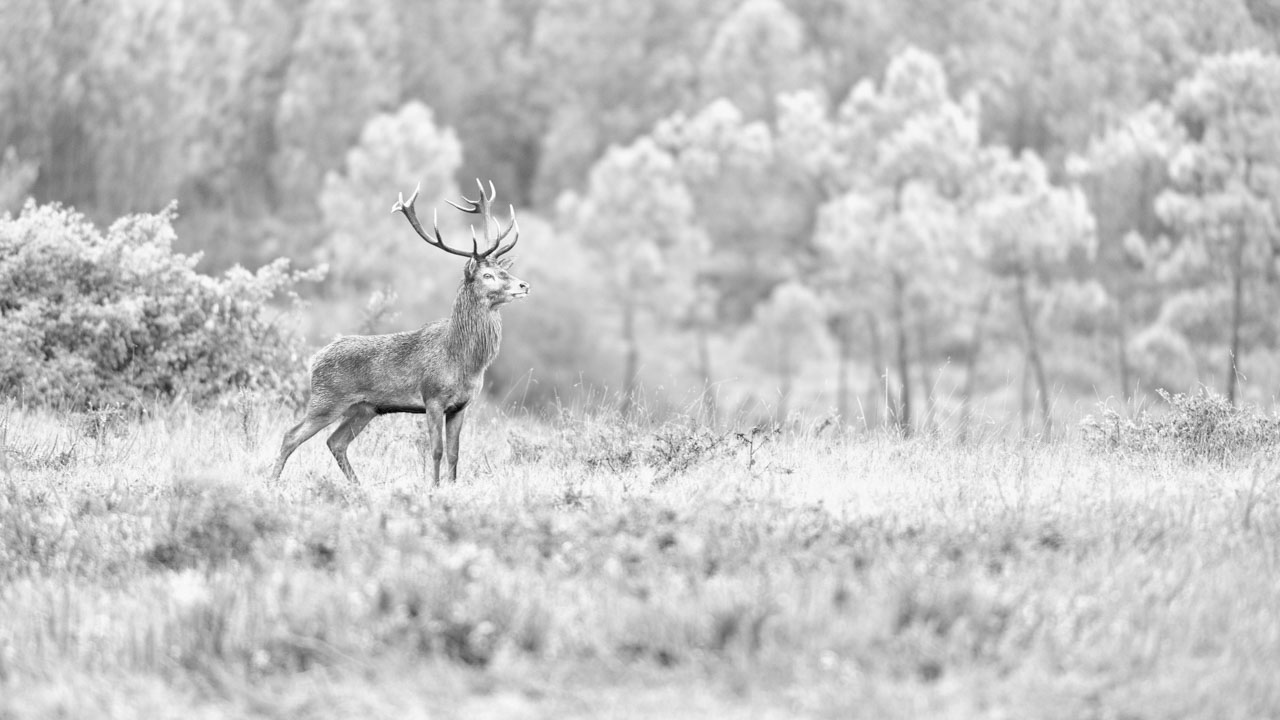
Example of an isolation photo: red deer stag during the rut.
Example of an isolation photo: stakes planted in a pond.
Example of an isolation photo: trees in the snow.
Example of an isolation photo: grey heron.
 

Why You Should Create Isolation Photos

The purpose of creating an isolation photo is to form a singular photographic composition.

It is a creative technique that allows you to refine a photographic style.

If you decide to make isolation photos solely for the purpose of having an isolated photo, you will waste your time. Your photos will not be interesting. This technique must be used to transmit your emotions, your messages, or your personal aesthetic. It will help you to reinforce your photographic approach with a style that is your own.

The goal of an isolation photo is to have the subject in focus and to blur the unimportant or irrelevant photographic elements existing as noisy background space.

If you want to show only the subject, it is because it has something special. Its intrinsic qualities will carry the photo, attract the eye, and impart meaning to the photo.

When you create an isolation photo, it is because the photographic elements other than the main subject are not of great interest. You are profiling them rather than showing them. They function as disruptive elements that you cannot remove in your framing and composition.

Why and How : Defining Your Photographic Why.
 

Materials You Will Need

The choice of equipment is important when striving to create isolation photos during the shooting phase.

You can also achieve isolation photos in post-development with editing software and a computer, but you will need additional skills. To achieve a realistic result, you may need even more time. Creating an isolated photo during the shooting phase is still the best way for you to approach this technique, as it is the fastest and easiest way to gain realistic results.

First, you need to choose a sensor that is large enough. For example, the sensors of mobile cameras or bridges are too small to create nice, blurred shots.

The larger the sensor, the easier it will be to take an isolation picture, because you will have a smaller depth of field using the same focal length.

However, the longer the focal length, the better the result will be.

Taking an isolation picture with a camera equipped with a 24×36 mm sensor and a 600mm lens will certainly be easier than a camera with an APS-C body equipped with a 300mm.

But in general, I recommend the telephoto lens. It has a narrow angle of view and a limited depth of field.

Shooting at the maximum aperture, whether f/2.8, f/4, or f/5.6, will greatly reduce the depth of field on both sides of your focus area.

It is possible to take isolation pictures with a wide-angle lens. But you must place your photographic elements in a particular way. Do not include a foreground. The background should be as far behind your subject as possible. The result is less spectacular than with a telephoto lens, but you will be able to obtain striking compositions.

Also, do not forget that you can edit your photos with a computer to enhance the effects.

If you want to take high-impact isolation photos, choose a large sensor and a long focal length.

Few photographers know this, but there is an interesting feature on cameras. It is the depth of the field test button. It is often located on the front of the camera, to the right of where the lens attaches.

Its function is simple: to show you the size of the depth of field; in other words, the area of sharpness around your focus area. If you are at full aperture of your lens, like f/2.8, f/4, or f/5.6 and you press the button, you will not see anything special in your viewfinder eye. However, the more you close your aperture, the specific depth area will darken as you continue to press the depth of field test button.

Why? Because you see in real time the light received by your camera. If you are opened to f/13 for example, you can see the light entering through this opening.

You should be well-acquainted to this darkness in your eyepiece to analyze what is sharp and what is not. This is how you will determine the size of the focus area. It is not easy at first. But believe me, with a little practice, analyzing the depth of field becomes easy.

I use this function all the time in the field. For me, it is vital.


Incorporating Bokeh

You probably know this. The bokeh technique allows you to take pictures with only the subject in focus. This technique is mostly used in macro or telephoto photography.

This is one way to make isolation photos. But it is not the only way. It does not apply to wide-angle lenses, and it does not work in the post-development.

Why and How Creating a Bokeh in Nature Photography.
 

Identifying the Visual Majority

Creating an isolation photo means focusing on the main subject while blurring the other photographic elements.

Before discussing this further in this article, I think it is important to define a particularly crucial element that concerns all of us as human beings. It is the visual majority.

It is important to understand this concept because it exists beyond photographic technique and influences our daily life.

Visual salience is a concept of human physiology; it defines that which stands out as important in any scene in our daily life. For a human being looking at a scene, let alone a photo, his vision system assigns clarity and sharpness to that which is important. For example, a couple may look at their kitchen and each see different perspectives, one may immediately notice the pile of dirty dishes in the sink that need to be washed, and the other may be drawn to the sight of a cake that is half-decorated. Each is looking at the same scene, but each one has assigned a certain part of that scene as their visual majority, and that is what they notice first.

This behavior can be explained by the fact that our distant ancestors constantly had to identify potential dangers, such as ferocious and hungry beasts, to survive living in the wild. To navigate tasks and dangers, they would examine what was in focus in the scene in front of them to distinguish where the danger might come from. Today, we have retained this ability to pay attention to that which is sharp and clearly defined in our vision, just not for the same reasons.

So, if you want to build and create interesting and impactful plates, you should better define your area of focus and construct it as the visual majority in your photo. That way, you can be sure that your audience's eyes will be focused on the subject you have chosen.


The Shooting Phase

To take an isolation photo in the field, you need to choose a particular scene.

The subject, i.e., the place where you are going to focus, must be alone in the plane of sharpness.

For example, if you choose to photograph an animal, avoid having a tree, rock, or other elements in the same picture.

Next, focus on the subject by selecting the correct focus point on your camera. Try to have the background as far away from your subject as possible. Since you will be shooting at full aperture, your area of focus will be reduced. Since your background will be far away, it will become blurred. If you shoot with a wide-angle lens, you will not have a totally blurred background. Details will remain. Do not forget that wide-angle lenses, also called short focal lengths, have very wide areas of sharpness, unlike telephoto lenses.

To obtain a good isolation photo, avoid integrating a foreground. If you cannot do otherwise, choose the lightest possible background.

Simply put, an isolation photo is often composed of a subject and a background.

Personally, I use this technique a lot in my wildlife photos when I compose environmental wildlife photos. My animal is quite small in the picture. It is integrated in its environment. I then use the high-hey or low-key technique to highlight my subject.

When I compose and frame an isolation wide-angle shot, I often use the close-up wide-angle technique. This is my favorite technique for underwater atmospheric photography. I integrate my main subject in the foreground. I focus as close as possible. Sometimes I even get to the minimum focusing distance so that the background is as blurred as possible. Then I release the shutter.

When I use a wide-angle lens to take isolation pictures, I do not hesitate to shoot low angle to add an oversized version of my subject in relation to the scene.

Remember that the purpose of an isolation photo is to create an impact in your photo using a strong subject.


Finally

I hope that this article has given you the keys to creating isolation photos. The main point of this technique is to highlight the subject by isolating it from the rest of the scene.

You need to take particular care with the focus and aperture.

Isolation photography is a powerful technique for creating impactful photos.

Be humble, patient, constant, persevering, and persistent because the road to excellence is long.

Enhancing Black and White Photos with Shades of Grey, Low-Key, and High Key

Landscape in black and white of Grand Canyon in Arizona in USA. Photo in black and white by Amar Guillen.
Landscape in black and white of Grand Canyon in Arizona in USA.
 

The Photographic Language of Black and White

You may believe that the photographic language is universal. It can be applicable to color or black and white.

Although this is true, it is not quite right. Black and white has its own specificities.

Light, which is one of the three fundamental elements of photography, defines forms and lines. It calls out the textures and determines the colors. Light is your medium.

In black and white photography, there is no color. You must focus on shapes, textures, and volumes. These are the essential elements that you must consider.

Black and white is also a timeless technique. To properly construct and frame your black and white photos, you must know how to use the following photographic elements:

  • Negative space.
  • Contrast.
  • Repetition.
  • Symmetry.
  • Abstraction.
  • Silhouette.
  • Separation of tones.

If you want more details, I invite you to discover the following article I wrote on this subject.


Technique #1 to Discover Photos in Black and White: Shades of Gray

In a black and white photo, you only have 256 possible shades of grey. They go from the purest white to the darkest possible black. In between these two extremes, you have the midtones.

An example of a black and white photograph in shades of gray.

If you take a black and white photo where midtones are dominant, you have what is called a black and white grayscale photo. The term is a bit confusing, but it is the one all photographers use.

In this photographic style, pure black photos and pure whites are rare.

The main difficulty with shades of grey is to obtain harmonious tonal values. Indeed, the viewer will look for subtle relationships in the photo. He will not look for a dramatic effect. He will look for simplicity. He will look for subtlety, softness, and finesse.

When photographing a scene intended for a black and white grayscale photo, be sure not to overexpose or underexpose it. You need to have an overall light that is even.

Your entire photo should be soft and without emphasis. The tone of this style of photo is medium.

If you must remember only one word for this style, it should be the word subtle.

In the development phase, you should focus on lowering the most exposed areas and increasing the exposure of the darkest areas. The goal is to have a photo made up only of medium tones. That is, with light values between 60 and 180.


Technique #2 to Discover Photos in Black and White: Low-Key

Low-key photography is a creative technique that consists of photographing rather dark scenes.

In a low-key photo, the light tones meet the dark tones without any real gradation.

A low-key photo is characterized by deep blacks, dark tones, and many shadows.

An example of low-key black and white photo.

The low-key technique allows you to:

  • Create photos that have style and impact.
  • Create a dramatic and intimate atmosphere.
  • Emphasize the graphic forms.

Low-key photography requires a rigorous management of the light. Indeed, the viewer's eyes will focus on the bright areas of your photos. They will impart a mysterious aspect to your images.

Black and white is perfectly suited to low-key, as human beings tend to place mystery scenes in rather dark environments. Since our childhood, our imaginations have been captivated by mystery scenes in dark and stuffy places.

What could be more ideal than black and white to accentuate the low-key rendering. In the field, you should look for rather dark scenes. The light should be focused on the main photographic element, in other words, the subject.

Therefore, I like to shoot in the undergrowth. The backgrounds are darker.

To take beautiful low-key photos, I recommend that you choose the spotlight metering on your camera. You calculate the light on the subject. If you choose a global calculation mode for the whole scene (matrix mode to evaluative mode), I recommend you underexpose by -2 or -3 EV.

This also happens to me when I bracket my scenes on 3 or 5 photos. Then when I develop the final photo on the computer, I mask the lighter areas with darker areas from the bracketed images.

When you develop a photo in low-key, your goal is to isolate your subject. You need to plunge all unnecessary details into the shadows. The ideal in developing tools is to use the brush tool.

Low Key Photography: A Creative Photographic Technique to Make Your Photos Unique.
 

Technique #3 to Discover Photos in Black and White: High-Key

The high-key is a creative photo technique. It consists of lightening the midtones and shadows by overexposing them.

It is a choice of exposure and light. Just like the low-key technique, the high-key technique allows you to create intriguing, mysterious photos.

Black and white is therefore perfectly suited to high-key.

An example of high-key black and white photo.

In the field you should choose rather bright subjects. They must be abundantly illuminated. Unfortunately, few subjects have this property in the field.

In high-key, the shapes must be simple and evocative.

Be very careful when naming high-key. Just because a scene is overexposed does not mean it is high-key. For example, having a very dark subject and the rest of the scene overexposed is not a high-key photo. The subject should reflect the light. Many photographers make this confusion.

I advise you to use the high-key at the time of the shooting. You just must overexpose the scene. Do not hesitate to bracket your shots by taking for example 3 pictures. The first one with a correct exposure, the second one overexposed by +1 EV. The third one underexposed by 1 EV (-1 EV).

When developing, you can easily combine the three photos with software to get the desired effect. Even if you take great care to make the high-key in the field, post-production will help you to strengthen your images.

Remember that in a black and white high-key photo, the contrasts are soft and suggested. The shades of grey must be delicate.

How Creating Wildlife Photos in High Key and Black and White.
 

Finally

I hope that this article about three techniques to realize that your black and white photos have opened new creative doors for you.

Think carefully about viewing black and white on the ground, thinking about lines, shapes, tone separation. Then you will adjust your camera to get a low-key, grayscale or high-key effect.

Post-production will enhance your effects. Black and white allows you to make interesting photos that will last because it is timeless.

Be humble, patient, constant, persevering, and persistent because the road to excellence is long.

  1. 3 Techniques to Enhance Your Photos in Black and White
  2. 4 Tips to Help You Define Your Photographic Statement and Pursue Efficiency
  3. 5 Reasons to Define your Photographic Statement and Become Identifiable
  4. Why and How: Defining Your Photographic Statement to Improve Your Photos

Page 21 of 201

  • 16
  • 17
  • 18
  • 19
  • 20
  • 21
  • 22
  • 23
  • 24
  • 25
  1. You are here:  
  2. Home
  3. Blog Photographic Approach

Share on Social Media

Post
Share
Share
E-mail
WhatsApp
Text

Join Me on Social Networks

Join Me on Facebook  Join Me on Instagram  Join Me on LinkedIn

Claim your free guide to make your photo impactful and meaningful

Claim Your Free Guide '50 Pages of Tips to Give Impact and Meaning to Your Photos'.

4 + 8 =

Click Here To Discover All My Chronicles About the Photographic Approach.

Treat Yourself to a Fine Art Print That Matches your Personality

Example of a vacation home interior with a black and white fine photo art displayed on the wall.

Fine Art Print Collections in Black and White

Fine Art Print Collections in Black and White Black and white photography is a suitable technique for many nature scenes. It requires a particular frame of mind. A black and white photograph should be prepared and planned from the framing to the…
11991
Fine Art Print Collections in Black and White
An abstract art photo displayed in a contemporary living room decor.

Fine Art Print Collections in Color

Collections of Fine Art Prints in Color Color photographs allow digressions and take the audience to the message by secondary ways. The world around us, especially nature, is colorful. A color image can show the way our surroundings really are. Of course, it…
10440
Fine Art Print Collections in Color
Example of a home interior with fine art prints in my style back to black displayed on the wall. These photos are a part of my collection 'Wild beauties of Kenya'.

Fine Art Print Collections in Back to Black

Fine Art Print Collections in Back to Black I want to share my fine art prints of nature in a personal style that I call "back to black." "Back to Black" was developed to embody a sharp and clean style for artistic photos that can be hung in your living room,…
9980
Fine Art Print Collections in Back to Black
A waiting room with a photo in the style Fusion displayed on the wall. Grey Heron in Fusion.

Fine Art Print Collections with the Fusion Style

Fine Art Print Collections with the Fusion Style I would like to share a very creative and modern photography style to represent Nature in a very different way. I call it "Fusion." I created the style to offer dynamic photos, allowing you to start a good day…
7908
Fine Art Print Collections with the Fusion Style
A living room with a photo in the style 'Impression' exposed on the wall. Rising sun in impression

Fine Art Print Collections with the ‘Impression’ Style

Fine Art Print Collections with the ‘Impression’ Style The objective of this photographic style is to create the ephemeral blurs. That's why I named it 'Impression.' Photography, as an art form, is a powerful means of expressing reality from different…
5827
Fine Art Print Collections with the ‘Impression’ Style
Fine art prints from the style back to black displayed on a wall. Amar Guillen, photographer artist

New Collections of Fine Art Prints Dedicated to the Wonders of Nature

New and Updated Fine Art Print Collections Dedicated to the Wonders of Nature Fine art prints from the style back to black displayed on a wall.
11446
New Collections of Fine Art Prints Dedicated to the Wonders of Nature

Themes of the Blog Articles

Landscape of Arches National Park in Utah in black and white.

Blog Articles Dedicated to Artist Statement

Blog Articles Dedicated to Artist Statement
Dunes of death Valley in Black and White

Blog Articles Dedicated to Black and White Photography

Blog Articles Dedicated to Black and White Photography
Abstract photo or trees reflection on water

Blog Articles Dedicated to Photographic Mindset

Blog Articles Dedicated to Photographic Mindset
Abstract photo of ridles on water

Blog Articles Dedicated to Artistic Photography

Blog Articles Dedicated to Artistic Photography
Abstract photo of Yellowstone

Blog Articles Dedicated to Photographic Language

Blog Articles Dedicated to Photographic Language
Pronghorn in Yellowstone

Blog Articles Dedicated to Wildlife Photography

Blog Articles Dedicated to Wildlife Photography
Landscape of Bryce Canyon

Blog Articles Dedicated to Photographing United States

Blog Articles Dedicated to Photographing United States
Underwater waves in the Red Sea

Blog Articles Dedicated to Photographic Techniques

Blog Articles Dedicated to Photographic Techniques
Tree of Black Canyon in Black and White

Blog Articles Dedicated to Landscape Photography

Blog Articles Dedicated to Landscape Photography
Manta Ray in Maldives in Black and White

Blog Articles Dedicated to Underwater Photography

Blog Articles Dedicated to Underwater Photography
Red Deer stag during the rut of the deer

Blog Articles Dedicated to Photographic Judgement

Blog Articles Dedicated to Photographic Judgement
Great Crested Greb and his chick

Unclassified Blog Articles

Unclassified Blog Articles

You Might Be Interested By One of These Photographic Approach Articles

Photograph in black and white of the Grand Canyon from Arizona State in USA.

Why and How Mastering the Steps of Creating an Art Photograph

3603
Why and How Mastering the Steps of Creating an Art Photograph
An example of a narrative photo. Landscape of Island in the Sky in the Canyonlands in Utah in United States. Photo in black and white by Amar Guillen.

Why and How: Creating Impactful Narrative Photos

4118
Why and How: Creating Impactful Narrative Photos
Snowy landscape of Yellowstone during winter.

3 Steps for Giving Meaning to Your Photos

8750
3 Steps for Giving Meaning to Your Photos
Two lions in Kenya. Photographed in black and white. Photograph by Amar Guillen, photographer artist.

To Create Aesthetics Photos, Print your Images

4238
To Create Aesthetics Photos, Print your Images

Receive Free Tips On How to Give Impact and Meaning to Your Photos. Subscribe to Receive Regular Articles.

2 + 7 =

Contact Me By Email

10 + 9 =
This site is protected by reCAPTCHA and the Google Privacy Policy and Terms of Service apply.

About Amar Guillen, Creator of Fine Art Prints of Nature
As a photographer capturing the artistic essence for several decades, I have mastered the art of crafting an authentic experience for art enthusiasts and collectors of visual art.
When I observe my surroundings, be it friends, family, relationships, or professional contacts, I see souls in perpetual motion. Every moment of their existence is engulfed by daily hassles, work concerns, social media, online or televised information streams, and videos on the web.
Every minute, they strive to accomplish something, fearing losing ground and feeling marginalized in this frenzied society. Imprisoned by an oppressive schedule, the essential eludes them, drowned in the tumult of daily life. Is it really crucial to watch yet another cat video on the internet? Is it necessary to post twenty daily messages on social media?
Despite this, they remain constantly stressed and anxious about the challenges of the world, without being able to influence these monumental problems. It is at this moment that my artistic nature photographs come into play. Those who have had the privilege of hanging one of my works in their personal or professional space have expressed a radical transformation in their lives.
Every day, contemplating these works of art immerses them in tranquility, inner peace, and rediscovered serenity. They then understand that nature has the power to unravel tensions, to encourage reflection on the essential. Artistic photographs thus become open windows to the wonders of nature.
I have chosen to share the best of myself by helping others discover their identity, personality, style, all while reconnecting with nature. Take the time to explore my artistic photographs if you wish to reveal your true essence. Once hung in your space, your view of the world will be transformed.
Amar Guillen is a creator of fine art prints of nature.
I am Amar Guillen, creator of nature art photographs. I have a deep conviction that contemplating nature has the power to transform human beings. If everyone learned to know, respect, and preserve nature, our world would be transformed into a haven of peace where everyone would find their place.
Copyright © 2003 - 2026 Guillen Photo LLC - All rights reserved. Amar Guillen, professional photographer since 2003.
  • Blog
  • Calibration
  • Legal Information
  • Sitemap
  • Accessibility
  • Contact Me
  • Updates of the Website
I Want to Help You to Create Interesting Photos

How Can I Help You To Create More Interesting Photos?

Ask Me a Technical Question.
Subscribe to my Newsletter. The Inspiration Behind Guillen Photo.

Select your language

  • English (United Kingdom)
  • Français (France)
Claim your free guide to make your photo impactful and meaningful

Claim Your Free Guide '50 Pages of Tips to Give Impact and Meaning to Your Photos'.

8 + 9 =

Contact Me By Email

9 + 7 =

Office Address:
3512 Robin Road
Plano Texas 75075
USA

Office phone: (+1)214-769-6825