• The Art of ChoosingHome page
  • Fine Art Prints3 Editions
  • CollectionsAll Collections
  • AboutAmar Guillen
  • Customer Space & Contact
  • Select your language

    • English (United Kingdom)
    • Français (France)
  • All You Need to Select Your Fine Art Print
    • How to Choose a Fine Art Print - Q&A - FAQ
    • New Creations
    • Explore Some Interiors
    • Fine Art Print Blog
  • Browse by Edition
    • All Fine Art Prints
    • Unique Edition
    • Limited Edition
    • Open Edition
  • Browse by Style
    • Black and White
    • Color
    • Fusion
    • Impression
    • Back to Black
    • Landscapes in Black and White
    • Landscapes in Color
    • Animals in Black and White
    • Animals in Color
  • Browse by Theme
    • Landscape
    • Wildlife
    • Underwater
    • Abstract
    • Symbolic
    • Landscapes of the United States
    • Landscapes of France
    • Landscapes of Scotland
    • Seascapes
    • Relaxing
    • Energizing
    • Playful
  • Browse by Format
    • Rectangular
    • Square
    • Panoramic
  • Contact Me
    • Contact Me by Email or Phone
  • Collections
    • New Collections
    • All Collections
  • Browse by Theme
    • Landscapes
    • Wildlife
    • Underwater
    • Abstract
    • Symbolic
    • Landscapes of France
    • Landscapes of the United States
  • Browse by Style
    • Black and White
    • Color
    • Impression
    • Back to Black
    • Fusion
  • Contact Me
    • Contact Me by Email or Phone
  • Discover More About Me
    • Discover Who is Amar Guillen
    • Artistic and Photographic Statement
  • Galleries
    • Photo Galleries
    • Abstract Portfolio in Color
    • Black and White Landscape Photography Portfolio
    • Color Landscape Photography Portfolio
    • Black and White Wildlife Photography Portfolio
    • Color Wildlife Photography Portfolio
    • Underwater Photography Portfolio
  • Contact Me
    • Contact Me by Email or Phone
  • Your Customer Space
    • Create or Manage your Account
    • Your Download Space
    • Your Orders
  • Contact Me
    • Contact Me by Email or Phone

You are in that section: Home > Blog > Blog of the Photographic Creation Approach

Why and How: Photographing the Bugle of Deer with a Cloth Photo Blind

The bugle of the deer is an inevitable event for wildlife photographers that occurs in the autumn season. Depending on where you live, you may have heard deer bugling near your home. However, photographing deer during this period is a real challenge in the wilderness.

To help photograph discreetly, I propose the use of a technique involving a cloth photo blind to hide you from the deer’s sight. This accessory allows you to capture interesting images of deer stags and deer does without being seen.
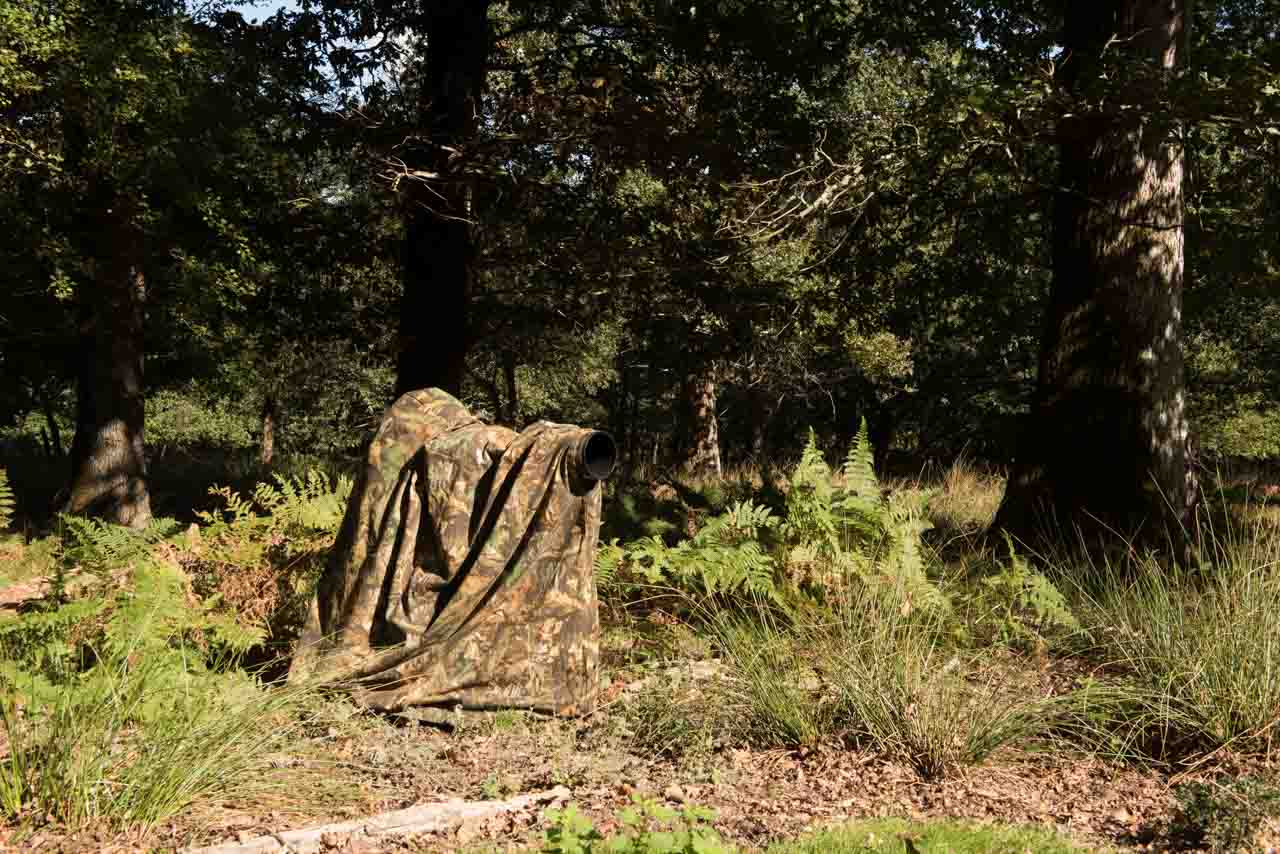
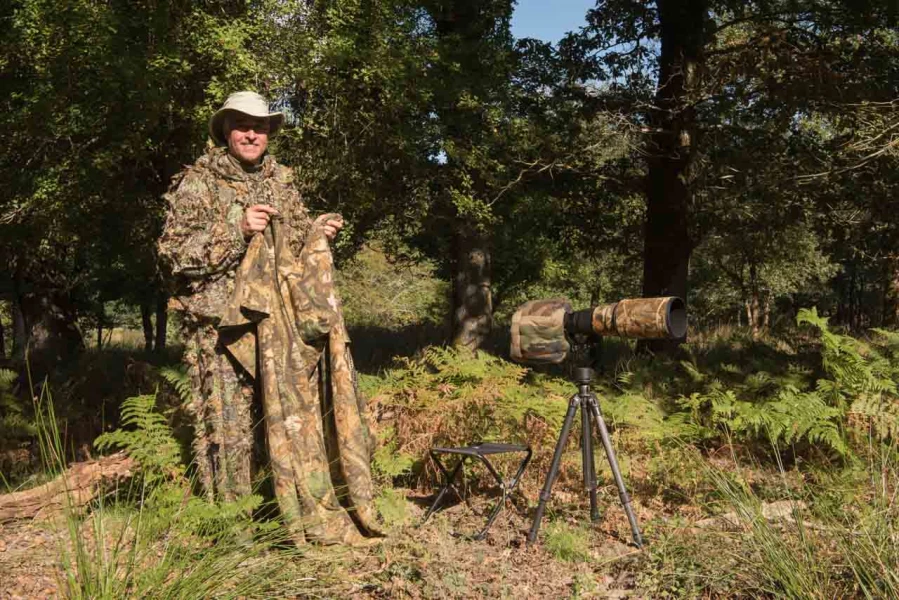
A cloth camera blind is very suitable to photograph deer during the rut.
"A cloth camera blind is very suitable to photograph deer during the rut.

Table of Contents

    Page 1

  • The Principle of the Cloth Photo Blind
  • Why: Using a Cloth Photo Blind for the Bugle of the Deer?
  • Step 1: You Must Ensure That Your Background Camouflages You
  • Step 2: Choose a Comfortable Foldable Seat
  • Step 3: Properly Install Your Tripod and Your Camera
  • Step 4: Wear a Hat or Cap
  • Step 5: Putting on the Cloth Blind
  • Do Not Move with a Cloth Photo Blind
  • The Use of a Cloth Blind Follows Certain Rules
  • Finally

The Principle of the Cloth Photo Blind

Before I expand on this subject further, it is important to explain to you what a cloth photo blind is.

A cloth photo blind is a piece of cloth that allows you to camouflage yourself from the sight of animals. You cannot be spotted.

In general, the color of the blind is khaki. The color should be chosen according to the environments you are planning on visiting.

I recommend that you choose a waterproof cloth photo blind. They will not keep you perfectly dry in heavy rain, but if you set up your blind under a tree, you will be nearly dry.

Read also: Three techniques to take pictures during the rut of deer.

Why: Using a Cloth Photo Blind for the Bugle of the Deer?

In previous articles, I explained to you that to photograph the deer's slab, it was interesting to practice photo-walking, the approach with the static blind. These techniques depend on the terrain, weather conditions, and your own physical condition.

Each technique has its advantages and disadvantages.

  • Photo-walking allows you to move in search of deer but in this case, you are visible from far away. The advantage is that you can play on the surprise effect. With the camera handheld, you can more easily take pictures without being prepared.
  • The approach allows you to move closer to the deer. The disadvantage is that it requires a good physical condition because it is often necessary that you crawl on the soil
  • The static blind gives you an advantage of not tiring as easily. The disadvantage is that even if you know the field well, you are never certain whether a stag or a doe will appear directly in front of your photo lens.

The cloth photo blind is a hybrid solution. It allows you to move and stop to set up a blind for a few hours. If no animal shows up, you can easily change places again.

The cloth photo blind allows to be mobile with discretion.

To use it, you must follow these steps.

Step 1: You Must Ensure That Your Background Camouflages You

The goal of the cloth photo blind is to make yourself invisible to deer stags or deer does.

You must choose a background that easily blends in with your cloth blind. In fact, even the shape you are creating with your body under the cloth must not be detectable. For example, there is no point in using a cloth photo blind in the middle of the meadow, you will easily be noticed by animals.

Wild animals like deer have an excellent photographic memory. As they move through the wild, they learn to memorize all the places through which they pass. If they realize that something has changed in their immediate environment, they will immediately become suspicious. I have already tested this way of proceeding. A stag once remained motionless for several minutes watching me hiding in my cloth blind. After 2 or 3 minutes, he went back exactly by the way he had come.

I advise you to choose as a background a large tree, a thicket, or undergrowth. The more you blend yourself with your immediate environment the better.

A cloth photo blind must completely camouflage you, allowing you to blend in with the background.
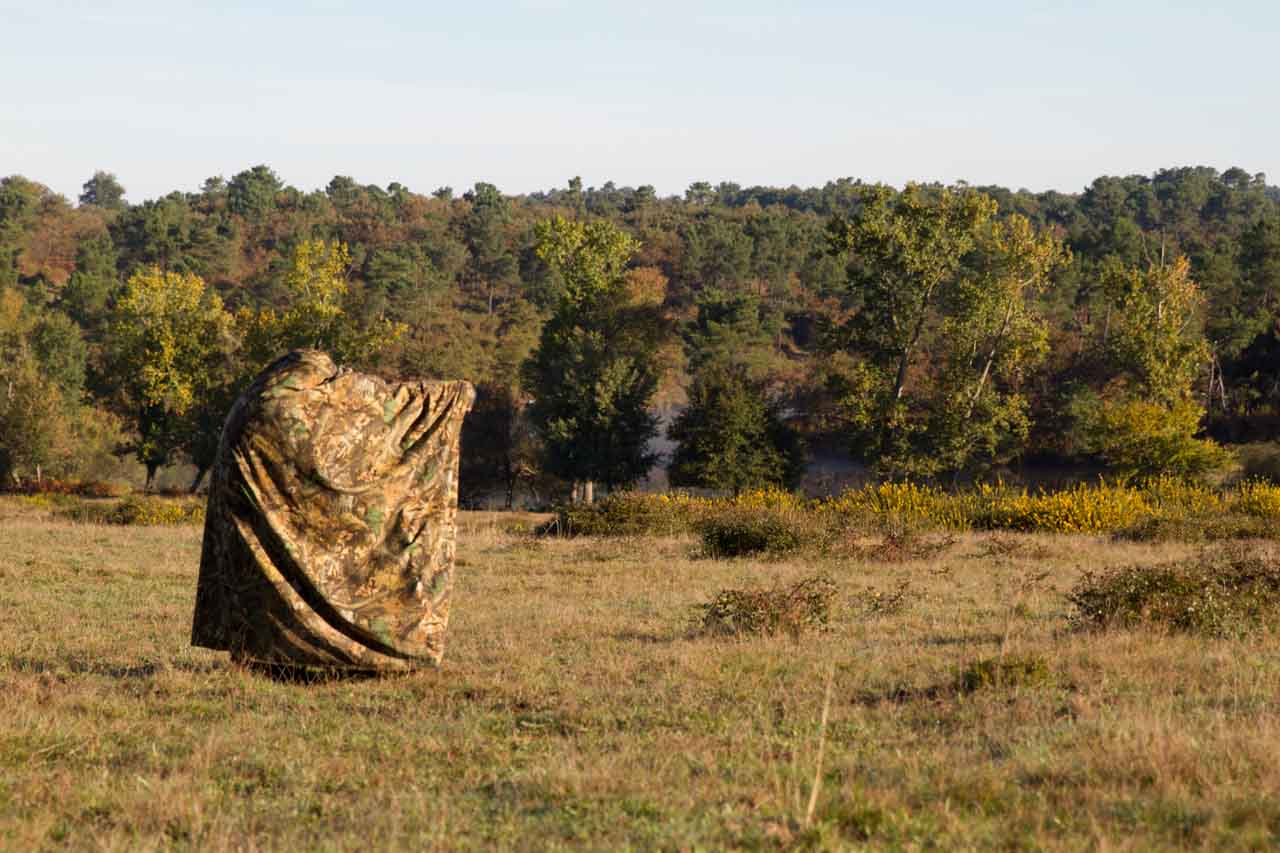
You must not stand out in any small way from your environment.
A cloth camera blind should not be used in a meadow because it is to visible.

Step 2: Choose a Comfortable Foldable Seat

Once you have carefully selected your background, you must install your foldable seat.

Since your blind will last several hours, I advise you to choose a comfortable seat. Personally, I opted for a rectangular camping seat to support my size and my weight. When I first started using a blind, I had a tripod seat. However, over time, I found that it was not comfortable at all, the seating surface was insufficient.

Step 3: Properly Install Your Tripod and Your Camera

This step is crucial. You must use a tripod to place your camera. You could very well take photos with a handheld camera, but the movement caused by your arms when you lift the device will be immediately be detected by the stag or doe.

Once your tripod is placed in front of you, place your camera on the gimbal tripod head.

To adjust the height of your tripod, I recommend having the chin at the height of the hot shoe.*

Thus, you will avoid generating movement when you pass from direct vision through the mesh to the viewfinder. The transition from one to the other will be discreet, and you are less likely to attract the attention of the animal that came in front of you.

Step 4: Wear a Hat or Cap

Before wearing your cloth photo blind, I recommend you wearing a hat with edges or a cap. If your head remains naked, the fabric will slip on your head.

When you go from direct vision through the mesh to the viewfinder, you may notice that the fabric that bothers you. You may also create slight movements which will be noticed by the animal you are trying to photograph.

Step 5: Putting on the Cloth Blind

This step is somewhat simple. All you must do is place the cloth blind over yourself. You must first adjust the photo lens so that it has a clear view through the slot provided for this purpose.

Then you must adjust your eyes and face to the small window designed for this reason. Initially, it is not very easy. But after a few minutes, you will be able to accomplish this part quickly.

You will quickly find that the viewing angle is limited to 120 degrees, which is the equivalent of a 14mm lens. You will find that it is not enough when you are in the field. However, you must absolutely avoid moving while turning your head.

The cloth blind amplifies the movements. Deer can easily detect this.

Be as motionless as possible.

Read also: Why using a static blind to photograph deer during the rut.

Click on a thumbnail to enlarge it.

  • Using a cloth camera blind for rut of the deer by Amar Guillen, photographer artist.
    Using a cloth camera blind for rut of the deer by Amar Guillen,
    Using a cloth camera blind for rut of the deer by Amar Guillen,
  • Using a cloth camera blind for rut of the deer by Amar Guillen, photographer artist.
    Using a cloth camera blind for rut of the deer by Amar Guillen,
    Using a cloth camera blind for rut of the deer by Amar Guillen,
  • Using a cloth camera blind for rut of the deer by Amar Guillen, photographer artist.
    Using a cloth camera blind for rut of the deer by Amar Guillen,
    Using a cloth camera blind for rut of the deer by Amar Guillen,
  • Using a cloth camera blind for rut of the deer by Amar Guillen, photographer artist.
    Using a cloth camera blind for rut of the deer by Amar Guillen,
    Using a cloth camera blind for rut of the deer by Amar Guillen,
  • Using a cloth camera blind for rut of the deer by Amar Guillen, photographer artist.
    Using a cloth camera blind for rut of the deer by Amar Guillen,
    Using a cloth camera blind for rut of the deer by Amar Guillen,
  • Using a cloth camera blind for rut of the deer by Amar Guillen, photographer artist.
    Using a cloth camera blind for rut of the deer by Amar Guillen,
    Using a cloth camera blind for rut of the deer by Amar Guillen,
  • Using a cloth camera blind for rut of the deer by Amar Guillen, photographer artist.
    Using a cloth camera blind for rut of the deer by Amar Guillen,
    Using a cloth camera blind for rut of the deer by Amar Guillen,
  • Using a cloth camera blind for rut of the deer by Amar Guillen, photographer artist.
    Using a cloth camera blind for rut of the deer by Amar Guillen,
    Using a cloth camera blind for rut of the deer by Amar Guillen,
  • Using a cloth camera blind for rut of the deer by Amar Guillen, photographer artist.
    Using a cloth camera blind for rut of the deer by Amar Guillen,
    Using a cloth camera blind for rut of the deer by Amar Guillen,
Using a cloth camera blind for rut of the deer by Amar Guillen,
    • Using a cloth camera blind for rut of the deer by Amar Guillen,
    • Using a cloth camera blind for rut of the deer by Amar Guillen,
    • Using a cloth camera blind for rut of the deer by Amar Guillen,
    • Using a cloth camera blind for rut of the deer by Amar Guillen,
    • Using a cloth camera blind for rut of the deer by Amar Guillen,
    • Using a cloth camera blind for rut of the deer by Amar Guillen,
    • Using a cloth camera blind for rut of the deer by Amar Guillen,
    • Using a cloth camera blind for rut of the deer by Amar Guillen,
    • Using a cloth camera blind for rut of the deer by Amar Guillen,

    Do Not Move with a Cloth Photo Blind

    The function of the cloth blind is to allow you to be discreet. It saves you from having to break branches and ferns to prepare a natural lookout.

    Do not try to move while on the edge of a wood. Deer have a piercing view. The slightest abnormal movement will cause them to flee at once.

    The cloth blind is made with a piece of cloth that is wide. If you try to walk, you may tangle your feet in it, causing yourself to trip and fall. This could damage your camera, your equipment, and the blind itself, not to mention that you may sustain injury.

    When you move, simply fold your cloth blind. Store it in a bag. Then move to another place to wait. The cloth blind is designed as an easy accessory to store and transport.

    The Use of a Cloth Blind Follows Certain Rules

    The cloth blind is an easy-to-use accessory that allows you to capture more unique and higher-quality photos. Nevertheless, you must respect certain essential rules to take good pictures with a cloth blind:

    • Know the habits of wild animals.
    • Identify the flows of passage.
    • Notice and use the right wind to your advantage.
    • Choose the light well.
    • Respect the environment and the nature while you wait.
    • Never choose a boar passage area.

    Finally

    I hope that this article about using a cloth camera blind to photograph deer during the rut will help you to make the right choice for yourself.

    Personally, I use this accessory every year to take pictures. The results are always beyond my expectations.

    I am a fervent practitioner of the approach. However, doing two approaches per photo session is a maximum for me, because it is exhausting both physically and mentally. I do not hesitate to choose an undergrowth to stop and hide under my cloth camera blind, so that I can rest for an hour or two.

    When creating interesting animal photos in an environment that you do not yet know very well, the cloth camera blind is the best tool to use.
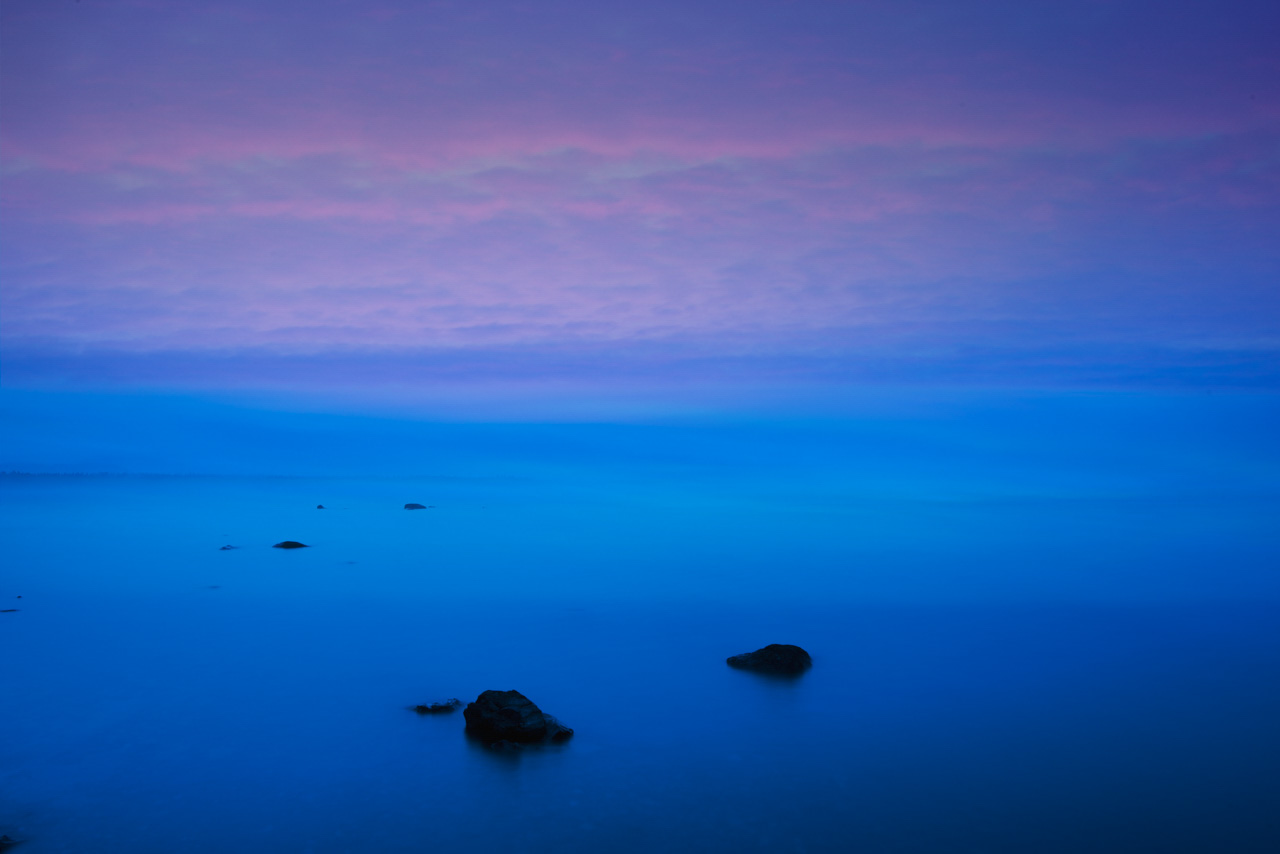
    A Photographic Consciousness Allows to Situate Yourself in Photography

    The magic of dawn when the blue hour fades away.
    The magic of dawn when the blue hour fades away.

    A Definition of Photographic Consciousness

    Above all, it is necessary to define the word “consciousness”.

    By definition, “consciousness” is the ability to perceive oneself, to identify oneself, to think and to behave appropriately. It is what we feel, what we know about others and the world.

    The goal of consciousness is to know how to define oneself in relation to others.

    If we extrapolate this to photography, we can say that

    the photographic consciousness is to be able to situate oneself in relation to other photographers.

    Why: Developing a Photographic Consciousness

    If you want to create interesting photos, you need to create different pictures than other photographers. This is an essential condition.

    Take the case of all photographers who simply copy or reproduce a style that another photographer has created or developed. Their photos are destined to be pale copies of original works.

    When they are going to show or exhibit their photographs, they will hear that it is déjà vu. They will not even be watched or analyzed by critics. Copies will have been seen before, thus they lack the spark of interest.

    Emotionally, these photographers will be affected. They will quickly become discouraged. Finally, they may stop photographing altogether. I think it is a shame because some of these photographers have great talent. However, they did not take the time to develop it. They wanted to proceed quickly in their work by creating fashionable photos, which unfortunately, did not last.

    If they took photographic time into consideration by analyzing the photographic approach of other photographers, they could have better defined themselves and asserted their own style.

    Developing a photographic awareness allows you to define your own photographic personality, your signature and your artistic approach.

    Read Also: Why and how you need to define a photographic identity to create interesting photos.

    The Consequences on Your Artistic Creativity

    If you take the time to develop a photographic awareness, the following consequences will become visible to you:

    • You will see that your nature photographs are becoming more and more interesting.
    • You will focus more on your own personal photo projects.
    • You will not waste time making photos that sit on your computer without ever being shown to an audience.
    • You will create photographic works with an authentic meaning that is consistent throughout the series.
    • You will create interesting photographs.
    • Some people will praise you on your artistic approach.
    • Your motivation will increase.
    • You will want to please you audience.
    • You will continue to create interesting photos.
    • You will have a solid role to play.
    • You will use your creativity to set your own little brick in the building of humanity, which will be useful to others.

    It is this virtuous circle that I apply in my photographic process. It is a true pleasure.

    Read Also: Why some photographers have a hard time defining themselves as artists.

    How to Develop a Photographic Consciousness

    Once you understand why you need to develop photographic awareness, it is necessary to give yourself the means to define it.

    Different solutions are available to you:

    • The first solution is to document about other photographers who are in your field of artistic and photographic activity. To accomplish this, browse websites and purchase books that they have published. Read all the writings related to these photographers.
    • The second solution is to visit all museums dedicated to photography or all photo exhibitions. I think that this is an amazing way to progress in the development of photographic consciousness. For my part, I often extend this field of investigation to national museums which exhibit painters, draftsmen, and sculptors. It is a very important and rich source of inspiration.
    • The third solution is to participate in photo workshops. Personally, I participate in one or two classes a year. This allows me to confront photographers who have better skills than mine in certain areas. Workshops are unique moments to meet and exchange points of view. I always look for workshops with a good atmosphere in which the tutor is primarily a facilitator who shares his own knowledge, but also promotes the exchange of ideas between participants. Classes, in my opinion, are a great way to develop a photographic awareness in relation to others.
    • The fourth solution is contests. You must search for contests where you will receive feedback on your photos. Contests for which you receive a letter telling you that your photos have been selected or not selected are useless fo the development of a photographic consciousness. You must look for contests or competitions which will give you an in-depth critical review of your work(s). Personally, I participate in four competitions a year. I present four photographs each time. Fees are required, but I gain a video from the jury commenting on my photos. These fees are nothing compared to the interests of those remarks. This is a real plus for me.

    Tools for Developing a Photographic Consciousness

    You are certainly wondering what sort of tools should be used to develop a photographic consciousness.

    They are very simple to find. You have them all at your disposal.

    • Mind.
    • Topic.
    • Time.

    My Method

    Personally, I use a notebook and a pen. Every morning I wake up at 6 o'clock. I take my book, and I prop myself against two pillows to be as comfortable as possible in my bed. Then I write. All the columns you read on the blog are written this way.

    At first, I write the idea that I wish to develop into the form of a title. Later, I will write several sentences and ideas that I have dwelled on for some time. Finally, I write the body of the text itself. I refrain from implementing a word limit.

    Although I do not abide by a word limit, I do adhere to a time limit when writing. Every morning, I give myself 45 minutes to develop my photographic consciousness. Then I take 45 minutes to develop my marketing actions.

    For some mornings, I have found that a pause in brainstorming is the best way to rephrase specific ideas, formalize them, and develop them.

    I also sometimes revise texts already written. I correct them. I modify them. I update texts according to any new information that I have encountered.

    My photographic consciousness evolves with time. Nothing is fixed. When I meet new photographers or new people, I question myself, and new ideas constantly arise.

    This is what I call the plasticity of photographic consciousness.

    Photographic plasticity is the ability to adapt and to change according to encounters and events while maintaining your own photographic approach.

    My Advice for You

    If I had any advice to give you, it would be to define a fixed time slot every day or every other day, where you can isolate yourself and take time to develop your photographic consciousness.

    Think, think, think. Disregard the outside world. Develop your ideas.

    Define your photographic artistic approach. Decide what you like in photography. For example, specify exactly what you most enjoy composing and what methods work for you. In short, everything that sparks your artistic creativity is worth continuing.

    Write a text for each point. Do not try to make a long text that summarizes information that has already been stated. This would be a waste of time and a mistake. Be fragmented in your approach, and you will experience greater productivity.

    Finally

    I hope this article has opened your mind to a new way of approaching photography. If you feel that you have reached your limits in artistic creativity, I guarantee you that this way of looking at photography will allow you to expand your horizons. Your imagination alone is your limit. This is one of the ways to create photographs that make sense and are interesting.

    Be humble, patient, constant, persevering, and persistent because the road to excellence is long.

    1. Why and How: Developing a Photographic Consciousness
    2. 3 Steps for Reading and Appreciating a Photograph
    3. Why and How: Judging a Photograph
    4. The Contextualization Is an Important Step to Analyze a photograph

    Page 69 of 201

    • 64
    • 65
    • 66
    • 67
    • 68
    • 69
    • 70
    • 71
    • 72
    • 73
    1. You are here:  
    2. Home
    3. Blog Photographic Approach

    Share on Social Media

    Post
    Share
    Share
    E-mail
    WhatsApp
    Text

    Join Me on Social Networks

    Join Me on Facebook  Join Me on Instagram  Join Me on LinkedIn

    Claim your free guide to make your photo impactful and meaningful

    Claim Your Free Guide '50 Pages of Tips to Give Impact and Meaning to Your Photos'.

    4 + 8 =

    Click Here To Discover All My Chronicles About the Photographic Approach.

    Treat Yourself to a Fine Art Print That Matches your Personality

    Example of a vacation home interior with a black and white fine photo art displayed on the wall.

    Fine Art Print Collections in Black and White

    Fine Art Print Collections in Black and White Black and white photography is a suitable technique for many nature scenes. It requires a particular frame of mind. A black and white photograph should be prepared and planned from the framing to the…
    12004
    Fine Art Print Collections in Black and White
    An abstract art photo displayed in a contemporary living room decor.

    Fine Art Print Collections in Color

    Collections of Fine Art Prints in Color Color photographs allow digressions and take the audience to the message by secondary ways. The world around us, especially nature, is colorful. A color image can show the way our surroundings really are. Of course, it…
    10448
    Fine Art Print Collections in Color
    Example of a home interior with fine art prints in my style back to black displayed on the wall. These photos are a part of my collection 'Wild beauties of Kenya'.

    Fine Art Print Collections in Back to Black

    Fine Art Print Collections in Back to Black I want to share my fine art prints of nature in a personal style that I call "back to black." "Back to Black" was developed to embody a sharp and clean style for artistic photos that can be hung in your living room,…
    9987
    Fine Art Print Collections in Back to Black
    A waiting room with a photo in the style Fusion displayed on the wall. Grey Heron in Fusion.

    Fine Art Print Collections with the Fusion Style

    Fine Art Print Collections with the Fusion Style I would like to share a very creative and modern photography style to represent Nature in a very different way. I call it "Fusion." I created the style to offer dynamic photos, allowing you to start a good day…
    7917
    Fine Art Print Collections with the Fusion Style
    A living room with a photo in the style 'Impression' exposed on the wall. Rising sun in impression

    Fine Art Print Collections with the ‘Impression’ Style

    Fine Art Print Collections with the ‘Impression’ Style The objective of this photographic style is to create the ephemeral blurs. That's why I named it 'Impression.' Photography, as an art form, is a powerful means of expressing reality from different…
    5831
    Fine Art Print Collections with the ‘Impression’ Style
    Fine art prints from the style back to black displayed on a wall. Amar Guillen, photographer artist

    New Collections of Fine Art Prints Dedicated to the Wonders of Nature

    New and Updated Fine Art Print Collections Dedicated to the Wonders of Nature Fine art prints from the style back to black displayed on a wall.
    11451
    New Collections of Fine Art Prints Dedicated to the Wonders of Nature

    Themes of the Blog Articles

    Landscape of Arches National Park in Utah in black and white.

    Blog Articles Dedicated to Artist Statement

    Blog Articles Dedicated to Artist Statement
    Dunes of death Valley in Black and White

    Blog Articles Dedicated to Black and White Photography

    Blog Articles Dedicated to Black and White Photography
    Abstract photo or trees reflection on water

    Blog Articles Dedicated to Photographic Mindset

    Blog Articles Dedicated to Photographic Mindset
    Abstract photo of ridles on water

    Blog Articles Dedicated to Artistic Photography

    Blog Articles Dedicated to Artistic Photography
    Abstract photo of Yellowstone

    Blog Articles Dedicated to Photographic Language

    Blog Articles Dedicated to Photographic Language
    Pronghorn in Yellowstone

    Blog Articles Dedicated to Wildlife Photography

    Blog Articles Dedicated to Wildlife Photography
    Landscape of Bryce Canyon

    Blog Articles Dedicated to Photographing United States

    Blog Articles Dedicated to Photographing United States
    Underwater waves in the Red Sea

    Blog Articles Dedicated to Photographic Techniques

    Blog Articles Dedicated to Photographic Techniques
    Tree of Black Canyon in Black and White

    Blog Articles Dedicated to Landscape Photography

    Blog Articles Dedicated to Landscape Photography
    Manta Ray in Maldives in Black and White

    Blog Articles Dedicated to Underwater Photography

    Blog Articles Dedicated to Underwater Photography
    Red Deer stag during the rut of the deer

    Blog Articles Dedicated to Photographic Judgement

    Blog Articles Dedicated to Photographic Judgement
    Great Crested Greb and his chick

    Unclassified Blog Articles

    Unclassified Blog Articles

    You Might Be Interested By One of These Photographic Approach Articles

    Mustangs in a meadow near Grand Teton in the national park in Wyoming.

    Use a Slideshow to Tell a Story with your Photos

    4915
    Use a Slideshow to Tell a Story with your Photos
    A photo of a gelada, taken on a cliff in Ethiopia. This picture was taken during a photo walk.

    Photographing at Eye Level to Improve your Wildlife Photos

    4441
    Photographing at Eye Level to Improve your Wildlife Photos
    Photograph in black and white of a manta ray in Maldives during a night dive. Photograph by Amar Guillen, photographer artist.

    Why and How Judging a Photograph Subjectively

    4233
    Why and How Judging a Photograph Subjectively
    Landscape in black and white of the Sand Dunes in Death Valley. Photograph by Amar Guillen, photographer artist.

    15 Steps to Improve Your Photos

    3448
    15 Steps to Improve Your Photos

    Receive Free Tips On How to Give Impact and Meaning to Your Photos. Subscribe to Receive Regular Articles.

    2 + 7 =

    Contact Me By Email

    10 + 9 =
    This site is protected by reCAPTCHA and the Google Privacy Policy and Terms of Service apply.

    About Amar Guillen, Creator of Fine Art Prints of Nature
    As a photographer capturing the artistic essence for several decades, I have mastered the art of crafting an authentic experience for art enthusiasts and collectors of visual art.
    When I observe my surroundings, be it friends, family, relationships, or professional contacts, I see souls in perpetual motion. Every moment of their existence is engulfed by daily hassles, work concerns, social media, online or televised information streams, and videos on the web.
    Every minute, they strive to accomplish something, fearing losing ground and feeling marginalized in this frenzied society. Imprisoned by an oppressive schedule, the essential eludes them, drowned in the tumult of daily life. Is it really crucial to watch yet another cat video on the internet? Is it necessary to post twenty daily messages on social media?
    Despite this, they remain constantly stressed and anxious about the challenges of the world, without being able to influence these monumental problems. It is at this moment that my artistic nature photographs come into play. Those who have had the privilege of hanging one of my works in their personal or professional space have expressed a radical transformation in their lives.
    Every day, contemplating these works of art immerses them in tranquility, inner peace, and rediscovered serenity. They then understand that nature has the power to unravel tensions, to encourage reflection on the essential. Artistic photographs thus become open windows to the wonders of nature.
    I have chosen to share the best of myself by helping others discover their identity, personality, style, all while reconnecting with nature. Take the time to explore my artistic photographs if you wish to reveal your true essence. Once hung in your space, your view of the world will be transformed.
    Amar Guillen is a creator of fine art prints of nature.
    I am Amar Guillen, creator of nature art photographs. I have a deep conviction that contemplating nature has the power to transform human beings. If everyone learned to know, respect, and preserve nature, our world would be transformed into a haven of peace where everyone would find their place.
    Copyright © 2003 - 2026 Guillen Photo LLC - All rights reserved. Amar Guillen, professional photographer since 2003.
    • Blog
    • Calibration
    • Legal Information
    • Sitemap
    • Accessibility
    • Contact Me
    • Updates of the Website
    I Want to Help You to Create Interesting Photos

    How Can I Help You To Create More Interesting Photos?

    Ask Me a Technical Question.
    Subscribe to my Newsletter. The Inspiration Behind Guillen Photo.

    Select your language

    • English (United Kingdom)
    • Français (France)
    Claim your free guide to make your photo impactful and meaningful

    Claim Your Free Guide '50 Pages of Tips to Give Impact and Meaning to Your Photos'.

    9 + 5 =

    Contact Me By Email

    8 + 5 =

    Office Address:
    3512 Robin Road
    Plano Texas 75075
    USA

    Office phone: (+1)214-769-6825