• The Art of ChoosingHome page
  • Fine Art Prints3 Editions
  • CollectionsAll Collections
  • AboutAmar Guillen
  • Customer Space & Contact
  • Select your language

    • English (United Kingdom)
    • Français (France)
  • All You Need to Select Your Fine Art Print
    • How to Choose a Fine Art Print - Q&A - FAQ
    • New Creations
    • Explore Some Interiors
    • Fine Art Print Blog
  • Browse by Edition
    • All Fine Art Prints
    • Unique Edition
    • Limited Edition
    • Open Edition
  • Browse by Style
    • Black and White
    • Color
    • Fusion
    • Impression
    • Back to Black
    • Landscapes in Black and White
    • Landscapes in Color
    • Animals in Black and White
    • Animals in Color
  • Browse by Theme
    • Landscape
    • Wildlife
    • Underwater
    • Abstract
    • Symbolic
    • Landscapes of the United States
    • Landscapes of France
    • Landscapes of Scotland
    • Seascapes
    • Relaxing
    • Energizing
    • Playful
  • Browse by Format
    • Rectangular
    • Square
    • Panoramic
  • Contact Me
    • Contact Me by Email or Phone
  • Collections
    • New Collections
    • All Collections
  • Browse by Theme
    • Landscapes
    • Wildlife
    • Underwater
    • Abstract
    • Symbolic
    • Landscapes of France
    • Landscapes of the United States
  • Browse by Style
    • Black and White
    • Color
    • Impression
    • Back to Black
    • Fusion
  • Contact Me
    • Contact Me by Email or Phone
  • Discover More About Me
    • Discover Who is Amar Guillen
    • Artistic and Photographic Statement
  • Galleries
    • Photo Galleries
    • Abstract Portfolio in Color
    • Black and White Landscape Photography Portfolio
    • Color Landscape Photography Portfolio
    • Black and White Wildlife Photography Portfolio
    • Color Wildlife Photography Portfolio
    • Underwater Photography Portfolio
  • Contact Me
    • Contact Me by Email or Phone
  • Your Customer Space
    • Create or Manage your Account
    • Your Download Space
    • Your Orders
  • Contact Me
    • Contact Me by Email or Phone

You are in that section: Home > Blog > Blog of the Photographic Creation Approach

4 Steps to Analyze a Nature Photograph

Every day, you will certainly search for photographic inspiration by browsing websites or by turning the pages of photography books.

You analyze and judge each photograph you see, trying to determine why you like certain pictures and not others.

Do you have a methodology with systematic evaluation criteria that allow you to perform the same analysis every time? I propose a tried-and-true method of photographic analysis that I have used for years.
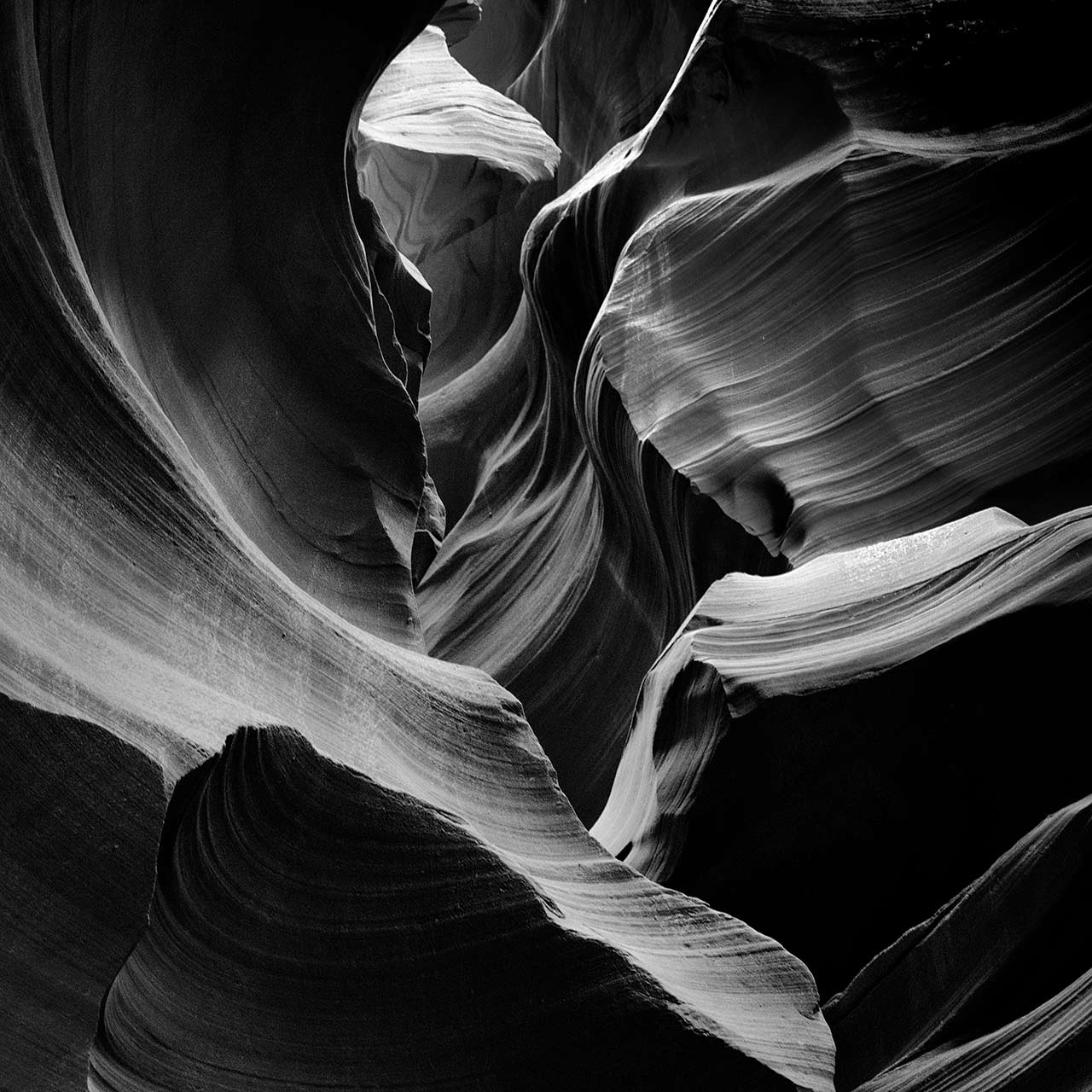
Photograph in black and white of Upper Antelop Canyon in Arizona.

Table of Contents

    Page 1

  • The Meaning of the Expression of “Photographic Analysis”
  • Analyzing a Photograph Does Not Mean Judging It
  • Why You Should Know How to Properly Analyze Photographs
  • The 4 Main Steps of the Analysis of a Photograph
  • Step #1: Visually Describe What You See
  • Step #3: The Contextualization of Photographs
  • Page 2

  • Step #3: The Contextualization of Photographs
  • Step #4: The Interpretation
  • An Example of the Analysis of a Photograph
  • Finally

The Meaning of the Expression of “Photographic Analysis”

The word “analysis” has several definitions. The one I will use in this blog post is:

An analysis is an intellectual operation of breaking down each miniscule element and its relationship among others in the image.

Analyzing an artistic photograph will consist of studying the various elements which compose it to detect the emotional sense, the message transmitted or to identify aesthetic qualities.

Analyzing a Photograph Does Not Mean Judging It

Analyzing a photograph is an objective action on your part. Judging a photograph is a subjective action.

You can judge a photograph in parallel among others or after an individual analysis. For my part, during my workshops dedicated to nature photography, I always analyze the photographs that are proposed to me by the trainees and only after my careful analysis, I provide my judgment.

To propose a judgment of a photograph without having provided a coherent, systematic analysis never amounts to much.

It is neither constructive for you, nor for the photographer who created the photo. It is completely counterproductive. On the other hand, a relevant judgment of a photographer is fed by objective elements of a correct analysis. This can be very beneficial.

In this article, I listed some criteria for judging an artistic photograph of nature.

During all these years in which I built my ACANP method to animate photo courses, I have utilized this photographic analytical method.

Correctly analyzing a photograph is an essential act for a nature photographer who wants to create artistic photos.

Read Also: Why and How: Judging a Photograph.

Why You Should Know How to Properly Analyze Photographs

If you take the time to develop a method of analyzing the photographs you are looking at, you will develop personal qualities that will greatly help you in your future photographic endeavors.

Being able to correctly analyze a nature photograph will help you to:

  • Better identify your own artistic style.
  • Define, improve, or enrich your artistic approach.
  • Outline precise criteria to better identify and limit your creativity. You will not become lost while meandering through your creative mind.
  • Understand why you like certain photographs or series.

By knowing how to analyze a photograph in a systematic way, you will better determine your sources of inspiration. You will save time when you do research for your photo projects.

As a professional nature photographer, having created a good methodology has saved me countless hours of creative time. When I search for a client project or for personal photos, I always look at what has been done on the subject so that I do not repeat images. My applied methodology allows me to write a scenario with clear and precise ideas, thus sparking the creation of interesting photos that will stand out among others.

My method of analyzing a photograph is based on four successive steps.

Read Also: Why and How: Developing a Photographic Consciousness.

The 4 Main Steps of the Analysis of a Photograph

When you find yourself facing a photograph or a series, here is what I advise you to do:

  • Visually describe the different elements you see. This is an objective step.
  • Perform a technical analysis of each element you see.
  • Contextualize the photograph or series in a narrative way with all the elements of which you are aware. This is also an objective step.
  • Interpret the photograph or series based on how you feel. It's a subjective step. Be careful because I am not talking about judgment or criticism. This step arises from your personal feelings.

Step #1: Visually Describe What You See

This first step should allow you to answer the simple question "What do I see?”.

You must be able to distinguish if the photo is a landscape, terrestrial, or underwater photograph, or if it represents an animal. You must be able to describe in a few simple words what you see.

Remember that photography is a visual art discipline.

For example, when you look at a photograph printed on paper, broaden your perspective by physically stepping back a few feet. I recommend placing yourself at three times the length of the diagonal. This very empirical method works well. You will better distinguish all the elements that make up the photograph.

The first vision of a photo must always be comprehensive. During this first phase, try not to look at the details by sticking your nose on the work.

Describe mentally all the different elements that you distinguish. Try to define the different relationships that exist between each of them.

Once you have answered the question "What do I see?”, you should be interested in the following points:

  • What is the name of the photographer?
  • What is the title of the photograph?
  • What is the title of the series?
  • What is the relationship between the title and what you are watching?
  • What is the nature of photography: illustrative, artistic, conceptual?

This first step is a visual inventory of what you see. It is always done mentally. It is objective.

Step #2: Technical Analysis

This second step will allow you to dissect the different components of the photograph. It requires a certain photographic skill and some technical knowledge because you must name specific points of the photo. Without this technical knowledge, you will lose yourself in useless details. The foundations of photography have been established over decades. All photographers agree on these terms.

Here is a non-exhaustive list of components:

  • The impact. It is certainly the most important component for me. This is the famous "Wow" effect. The impact is described as the “shock” you feel immediately after the first look, caused by the visual effects of the photo. This is the essential component for an interesting photograph.
  • The foreground.
  • The background.
  • The negative space.
  • The centers of interest.
  • The elements of reading reinforcement.
  • The attributes.
  • The light.
  • The colors.
  • The management of the masses.
  • Harmony and balance of forms.
  • The framing.
  • The composition.
  • The format.
  • The sharpness.
  • The contrast.
  • Modeling management.
  • Creativity.
  • Etc. There are more aspects that could be explained for quite some time, but for now, this is a brief list.

All these components are part of a list that is my own. You must add your own criteria. But do not forget to stay simple and concise.

A technical analysis is always completed mentally. It is objective.

If you apply a complex system, you will forget some components that may be very important.
Step #3: The Contextualization of Photographs

6 Tips to Create Great Storytelling with Your Photos

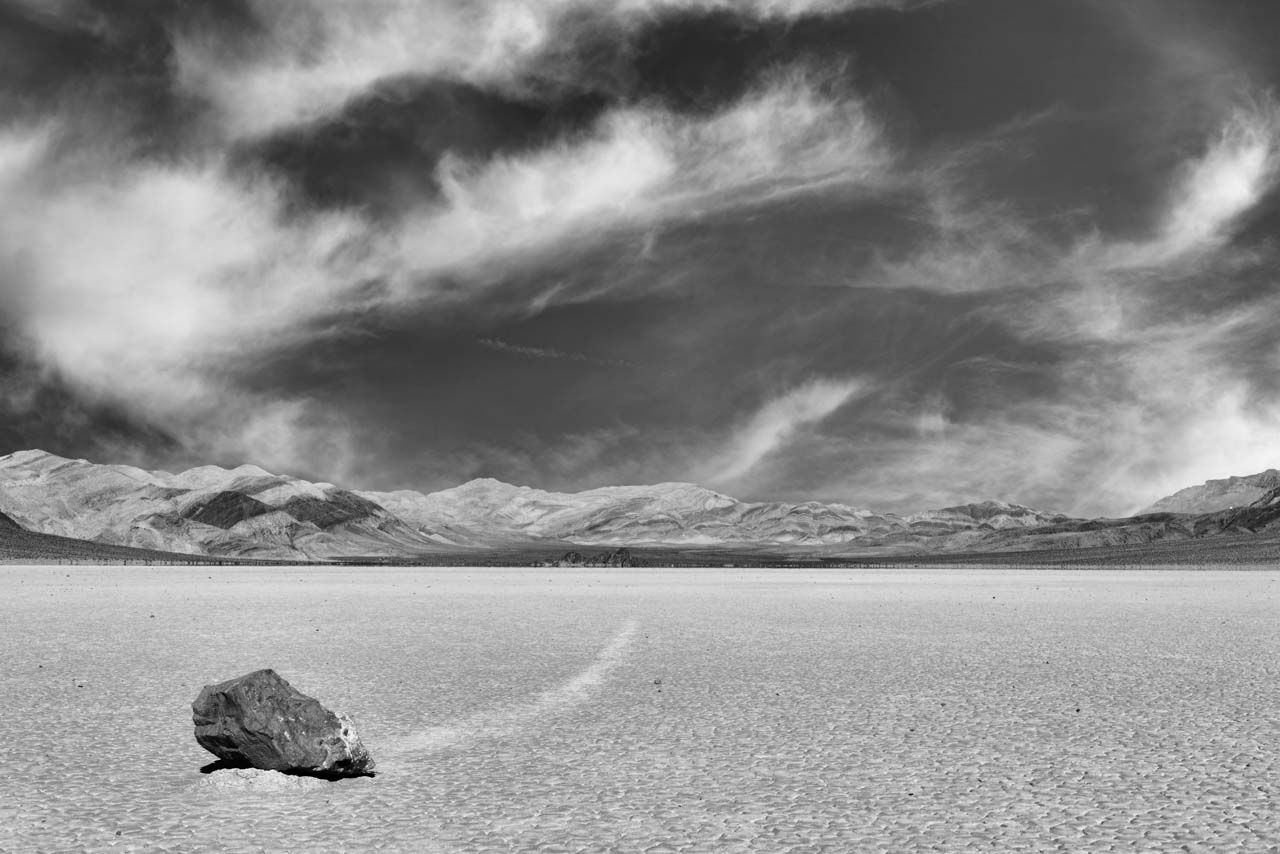
Photograph of a sailing stone in Death Valley. Two days were needed to create it.

An Example of Photographic Storytelling

Photograph of a young Ibex in the Simien Mountains in Ethiopia at 5000 meters altitude (15,000 feet).

I was present in the highlands of Simien in northern Ethiopia. I had been dreaming for years of photographing wildlife and landscapes in that part of the world, and finally I had my chance.

For the first trip, I went with my two best friends, Philip and Andrew. They had agreed to share this extraordinary journey because they were also fond of new experiences and extraordinary photographs.

We started our journey at an altitude of 2000 meters (6,000 feet). We climbed little by little until we reached 5000 meters (15,000 feet). We were looking for Ibex, which are endemic to that region of the world. They were very rare and difficult to find. We had to walk on the slopes of the mountains to find them.

The slightest step or climb made us be out of breath. We had to carry our camera equipped with a 500mm and our tripod. We decided that every 200 meters (600 feet) of walking, we would take a break. Oxygen is limited, and we would gasp for breath if we traveled 10,000 meters. We are exhausted by these small efforts.

Suddenly, down below, at the bend of a trail, we saw the Holy Grail of photography. A family of Ibex: two adults and a young one. It was so unexpected, and the surrounding decors were superb, as well as the soft morning light.

We only had to go down 50 meters (150 feet) to meet them. It was our first meeting, and we took our time for fear of frightening them. Although they had spotted us, they peacefully continued to graze and didn’t move. After some consideration, we decided to remain at a distance of 30 meters (90 feet) from the group, since there was no way to approach closer without startling them.

Suddenly, the young ibex decides to venture from his parents a few feet away, to a spot that was the perfect dreamy backdrop. Fortunately, we were prepared, and our cameras were already installed on the tripods. We captured some shots, not thinking that they would be exceptional. We triggered to show the beautiful creatures that we had spotted them. For the next twenty minutes, the little one played hide and seek with us, by nodding off, waking up, and teasing us. It got on our nerves. Meanwhile, the adults are grazing, but not in a beautiful attitude.

What the heck! We have Ibex in front of us. They accept us in their circle of security, but the attitudes displayed are not desirable. We began to feel cold because a light icy breeze flowed through our clothes.

Suddenly, the young Ibex, looks up and gives us a look and a smile that we will remember all our lives. The position of the head on the body is perfect. He charmed us with his playful smile, as if he understood that we were beginning to despair and wanted to give us a special photographic opportunity as a gift.

Thus, we created the photo we wanted.

A Beautiful Story Never Uses Technique as the Subject

I often meet photographers who talk to me about their photographs regarding the technique used.

They tell me about focal length, aperture, depth of field, sensitivity, converters, or noise reduction. I listen patiently and attentively because I am also passionate about technique. However, I never talk about technique except in my photography courses where it is important to understand how to effectively create successful photographs.

Listening to these photographers who are focused on technique, I try to place myself in the head of those who only use a mobile phone to take pictures. I tell myself that the person will be bored for many minutes if they politely resist.

You have to know that a good photo story is never about the technique. A good photo story must always encourage the audience to dream and wander in their imagination.

For example, you can explain the origins and purpose of a photo project. You can expand upon why it is so important to you and what sparked your desire to create the photos. You can detail the events that occurred on the field before and after the trigger is pressed. If you unexpectedly met an animal, give concrete examples of the situation. If you have experienced extraordinary emotions in a given light, describe them in detail.

When you tell a story, never forget to mention detailed facts so that the viewer can put himself in your place. If he cannot imagine the scene itself, how can he put himself in your shoes? How can he remember anything that you are telling him if there is no impact, no connection?

A good story is always carried deeper to an emotional level.

Humor is also an added bonus for the audience.

A Beautiful Story Is Always Short

If you decide to tell a story about a photo or a series of photographs, be brief.

Never lose sight of the fact that photography is a visual art.

The story must only enhance the impact of your photography. You are not defending an oral text but a photographic work.

Your story should not exceed one minute. Beyond this time, you will lose your audience.

A Beautiful Story Is a Lived Story

When telling a photographic story, I advise you to report only facts that you have actually experienced on the field.

If you start embellishing the truth and adding details that did not happen, you will lose yourself in your story. Moreover, if you retell your story, your story will have different versions, which will be confusing.

If you lie, even if you believe yourself to be an inventor who enhances stories, your reputation will be tarnished. Never forget that it takes years to build a good reputation. Becoming an authority in a field requires years of labor. Losing a reputation only takes a few days.

I advise you to always adopt a frank and honest attitude.

A Good Story Must Be Prepared

In my career as a professional photographer, I am always a picky perfectionist. I conscientiously prepare my photo projects, workshops, and conferences.

I strive to limit the field of chance where a disaster could occur. I know that whatever I do, I will never reach perfection. Perfection is impossible to attain, and there will always be hazards and unforeseen events. Nevertheless, some disasters can be prevented.

When I go to galleries or meet collectors, I prepare the stories I am going to share. I write them and repeat them in front of a camera. Then I review the footage and measure the duration of the story. I can also check myself to make sure that I am not moving away from my subject. I must never forget that I must present and defend a photograph with my story.

I know that in front of my audience, I will have to adapt my story. Indeed, each audience is different. I retain the general structure and honesty of the event, but I may improvise by adopting a different tone or specifying some facts more than others.

I also have to improvise because the questions asked by the viewers will force you to change the angle of attack in your story. Nevertheless, your improvisation must remain credible. The quality and honesty of your story will not change if you prepare your story beforehand.

Knowing How to Precisely Stop Is a Major Asset

In one of the previous paragraphs, you read that a story must be short, as you do not want to annoy an audience.

This is not all. If you present a series of photographs and each requires a story, you must know to stop at the right time. Too many stories can kill your photographic approach. You or the audience may become bored. People may shy away from your photos.

Stay simple and concise to provoke the little spark that will make the viewers wander in their imagination. Once this spark has been triggered, stop. Do not go further. You have achieved your goal by enhancing the impact of your photographs.

If You Do Not Have a Beautiful Story to Tell

When I asked them to tell me the story of the photos, they were unable to talk about them. Often, I found that they had something to say but that their natural timidity prevented them from speaking. You cannot imagine how many times this has happened to me. It is absolutely incredible that so many photographers have struggled with not being able to tell their story.

If you have this problem of not being able to confidently defend a creation, practice in front of your mirror or in front of a camera. It is not easy if you are shy, but with practice, you will obtain results.

Never forget that an interesting photo always has a beautiful story to tell. What a pity it is to reserve that story for you alone.

Never forget that you create beautiful nature photos to share your vision of the world!

Finally

Nature photography is not just about camera mastery and technique.

Telling a beautiful story will always reinforce the impact of your photos or series.

My experience has taught me much in the last ten years. Never neglect the oral aspect of explaining a photo to an audience. It is a great way to convince others and share your passion for nature photography.

Be humble, patient, constant, persevering, and persistent because the road to excellence is long.

  1. Storytelling Can Enhance the Impact of your Photos
  2. Why and How Mastering Masses in Nature Photography
  3. A Photo Book is a Good Idea for Finalizing your Fine Art Photos
  4. 6 Tips for Finalizing the Creation of you Fine Art Photos

Page 72 of 201

  • 67
  • 68
  • 69
  • 70
  • 71
  • 72
  • 73
  • 74
  • 75
  • 76
  1. You are here:  
  2. Home
  3. Blog Photographic Approach

Share on Social Media

Post
Share
Share
E-mail
WhatsApp
Text

Join Me on Social Networks

Join Me on Facebook  Join Me on Instagram  Join Me on LinkedIn

Claim your free guide to make your photo impactful and meaningful

Claim Your Free Guide '50 Pages of Tips to Give Impact and Meaning to Your Photos'.

4 + 8 =

Click Here To Discover All My Chronicles About the Photographic Approach.

Treat Yourself to a Fine Art Print That Matches your Personality

Example of a vacation home interior with a black and white fine photo art displayed on the wall.

Fine Art Print Collections in Black and White

Fine Art Print Collections in Black and White Black and white photography is a suitable technique for many nature scenes. It requires a particular frame of mind. A black and white photograph should be prepared and planned from the framing to the…
12004
Fine Art Print Collections in Black and White
An abstract art photo displayed in a contemporary living room decor.

Fine Art Print Collections in Color

Collections of Fine Art Prints in Color Color photographs allow digressions and take the audience to the message by secondary ways. The world around us, especially nature, is colorful. A color image can show the way our surroundings really are. Of course, it…
10448
Fine Art Print Collections in Color
Example of a home interior with fine art prints in my style back to black displayed on the wall. These photos are a part of my collection 'Wild beauties of Kenya'.

Fine Art Print Collections in Back to Black

Fine Art Print Collections in Back to Black I want to share my fine art prints of nature in a personal style that I call "back to black." "Back to Black" was developed to embody a sharp and clean style for artistic photos that can be hung in your living room,…
9987
Fine Art Print Collections in Back to Black
A waiting room with a photo in the style Fusion displayed on the wall. Grey Heron in Fusion.

Fine Art Print Collections with the Fusion Style

Fine Art Print Collections with the Fusion Style I would like to share a very creative and modern photography style to represent Nature in a very different way. I call it "Fusion." I created the style to offer dynamic photos, allowing you to start a good day…
7917
Fine Art Print Collections with the Fusion Style
A living room with a photo in the style 'Impression' exposed on the wall. Rising sun in impression

Fine Art Print Collections with the ‘Impression’ Style

Fine Art Print Collections with the ‘Impression’ Style The objective of this photographic style is to create the ephemeral blurs. That's why I named it 'Impression.' Photography, as an art form, is a powerful means of expressing reality from different…
5831
Fine Art Print Collections with the ‘Impression’ Style
Fine art prints from the style back to black displayed on a wall. Amar Guillen, photographer artist

New Collections of Fine Art Prints Dedicated to the Wonders of Nature

New and Updated Fine Art Print Collections Dedicated to the Wonders of Nature Fine art prints from the style back to black displayed on a wall.
11451
New Collections of Fine Art Prints Dedicated to the Wonders of Nature

Themes of the Blog Articles

Landscape of Arches National Park in Utah in black and white.

Blog Articles Dedicated to Artist Statement

Blog Articles Dedicated to Artist Statement
Dunes of death Valley in Black and White

Blog Articles Dedicated to Black and White Photography

Blog Articles Dedicated to Black and White Photography
Abstract photo or trees reflection on water

Blog Articles Dedicated to Photographic Mindset

Blog Articles Dedicated to Photographic Mindset
Abstract photo of ridles on water

Blog Articles Dedicated to Artistic Photography

Blog Articles Dedicated to Artistic Photography
Abstract photo of Yellowstone

Blog Articles Dedicated to Photographic Language

Blog Articles Dedicated to Photographic Language
Pronghorn in Yellowstone

Blog Articles Dedicated to Wildlife Photography

Blog Articles Dedicated to Wildlife Photography
Landscape of Bryce Canyon

Blog Articles Dedicated to Photographing United States

Blog Articles Dedicated to Photographing United States
Underwater waves in the Red Sea

Blog Articles Dedicated to Photographic Techniques

Blog Articles Dedicated to Photographic Techniques
Tree of Black Canyon in Black and White

Blog Articles Dedicated to Landscape Photography

Blog Articles Dedicated to Landscape Photography
Manta Ray in Maldives in Black and White

Blog Articles Dedicated to Underwater Photography

Blog Articles Dedicated to Underwater Photography
Red Deer stag during the rut of the deer

Blog Articles Dedicated to Photographic Judgement

Blog Articles Dedicated to Photographic Judgement
Great Crested Greb and his chick

Unclassified Blog Articles

Unclassified Blog Articles

You Might Be Interested By One of These Photographic Approach Articles

Mustangs in a meadow near Grand Teton in the national park in Wyoming.

Use a Slideshow to Tell a Story with your Photos

4915
Use a Slideshow to Tell a Story with your Photos
A photo of a gelada, taken on a cliff in Ethiopia. This picture was taken during a photo walk.

Photographing at Eye Level to Improve your Wildlife Photos

4441
Photographing at Eye Level to Improve your Wildlife Photos
Photograph in black and white of a manta ray in Maldives during a night dive. Photograph by Amar Guillen, photographer artist.

Why and How Judging a Photograph Subjectively

4233
Why and How Judging a Photograph Subjectively
Landscape in black and white of the Sand Dunes in Death Valley. Photograph by Amar Guillen, photographer artist.

15 Steps to Improve Your Photos

3448
15 Steps to Improve Your Photos

Receive Free Tips On How to Give Impact and Meaning to Your Photos. Subscribe to Receive Regular Articles.

2 + 7 =

Contact Me By Email

10 + 9 =
This site is protected by reCAPTCHA and the Google Privacy Policy and Terms of Service apply.

About Amar Guillen, Creator of Fine Art Prints of Nature
As a photographer capturing the artistic essence for several decades, I have mastered the art of crafting an authentic experience for art enthusiasts and collectors of visual art.
When I observe my surroundings, be it friends, family, relationships, or professional contacts, I see souls in perpetual motion. Every moment of their existence is engulfed by daily hassles, work concerns, social media, online or televised information streams, and videos on the web.
Every minute, they strive to accomplish something, fearing losing ground and feeling marginalized in this frenzied society. Imprisoned by an oppressive schedule, the essential eludes them, drowned in the tumult of daily life. Is it really crucial to watch yet another cat video on the internet? Is it necessary to post twenty daily messages on social media?
Despite this, they remain constantly stressed and anxious about the challenges of the world, without being able to influence these monumental problems. It is at this moment that my artistic nature photographs come into play. Those who have had the privilege of hanging one of my works in their personal or professional space have expressed a radical transformation in their lives.
Every day, contemplating these works of art immerses them in tranquility, inner peace, and rediscovered serenity. They then understand that nature has the power to unravel tensions, to encourage reflection on the essential. Artistic photographs thus become open windows to the wonders of nature.
I have chosen to share the best of myself by helping others discover their identity, personality, style, all while reconnecting with nature. Take the time to explore my artistic photographs if you wish to reveal your true essence. Once hung in your space, your view of the world will be transformed.
Amar Guillen is a creator of fine art prints of nature.
I am Amar Guillen, creator of nature art photographs. I have a deep conviction that contemplating nature has the power to transform human beings. If everyone learned to know, respect, and preserve nature, our world would be transformed into a haven of peace where everyone would find their place.
Copyright © 2003 - 2026 Guillen Photo LLC - All rights reserved. Amar Guillen, professional photographer since 2003.
  • Blog
  • Calibration
  • Legal Information
  • Sitemap
  • Accessibility
  • Contact Me
  • Updates of the Website
I Want to Help You to Create Interesting Photos

How Can I Help You To Create More Interesting Photos?

Ask Me a Technical Question.
Subscribe to my Newsletter. The Inspiration Behind Guillen Photo.

Select your language

  • English (United Kingdom)
  • Français (France)
Claim your free guide to make your photo impactful and meaningful

Claim Your Free Guide '50 Pages of Tips to Give Impact and Meaning to Your Photos'.

2 + 10 =

Contact Me By Email

6 + 9 =

Office Address:
3512 Robin Road
Plano Texas 75075
USA

Office phone: (+1)214-769-6825