• The Art of ChoosingHome page
  • Fine Art Prints3 Editions
  • CollectionsAll Collections
  • AboutAmar Guillen
  • Customer Space & Contact
  • Select your language

    • English (United Kingdom)
    • Français (France)
  • All You Need to Select Your Fine Art Print
    • How to Choose a Fine Art Print - Q&A - FAQ
    • New Creations
    • Explore Some Interiors
    • Fine Art Print Blog
  • Browse by Edition
    • All Fine Art Prints
    • Unique Edition
    • Limited Edition
    • Open Edition
  • Browse by Style
    • Black and White
    • Color
    • Fusion
    • Impression
    • Back to Black
    • Landscapes in Black and White
    • Landscapes in Color
    • Animals in Black and White
    • Animals in Color
  • Browse by Theme
    • Landscape
    • Wildlife
    • Underwater
    • Abstract
    • Symbolic
    • Landscapes of the United States
    • Landscapes of France
    • Landscapes of Scotland
    • Seascapes
    • Relaxing
    • Energizing
    • Playful
  • Browse by Format
    • Rectangular
    • Square
    • Panoramic
  • Contact Me
    • Contact Me by Email or Phone
  • Collections
    • New Collections
    • All Collections
  • Browse by Theme
    • Landscapes
    • Wildlife
    • Underwater
    • Abstract
    • Symbolic
    • Landscapes of France
    • Landscapes of the United States
  • Browse by Style
    • Black and White
    • Color
    • Impression
    • Back to Black
    • Fusion
  • Contact Me
    • Contact Me by Email or Phone
  • Discover More About Me
    • Discover Who is Amar Guillen
    • Artistic and Photographic Statement
  • Galleries
    • Photo Galleries
    • Abstract Portfolio in Color
    • Black and White Landscape Photography Portfolio
    • Color Landscape Photography Portfolio
    • Black and White Wildlife Photography Portfolio
    • Color Wildlife Photography Portfolio
    • Underwater Photography Portfolio
  • Contact Me
    • Contact Me by Email or Phone
  • Your Customer Space
    • Create or Manage your Account
    • Your Download Space
    • Your Orders
  • Contact Me
    • Contact Me by Email or Phone

You are in that section: Home > Blog > Blog of the Photographic Creation Approach

A Photo Book is a Good Idea for Finalizing your Fine Art Photos
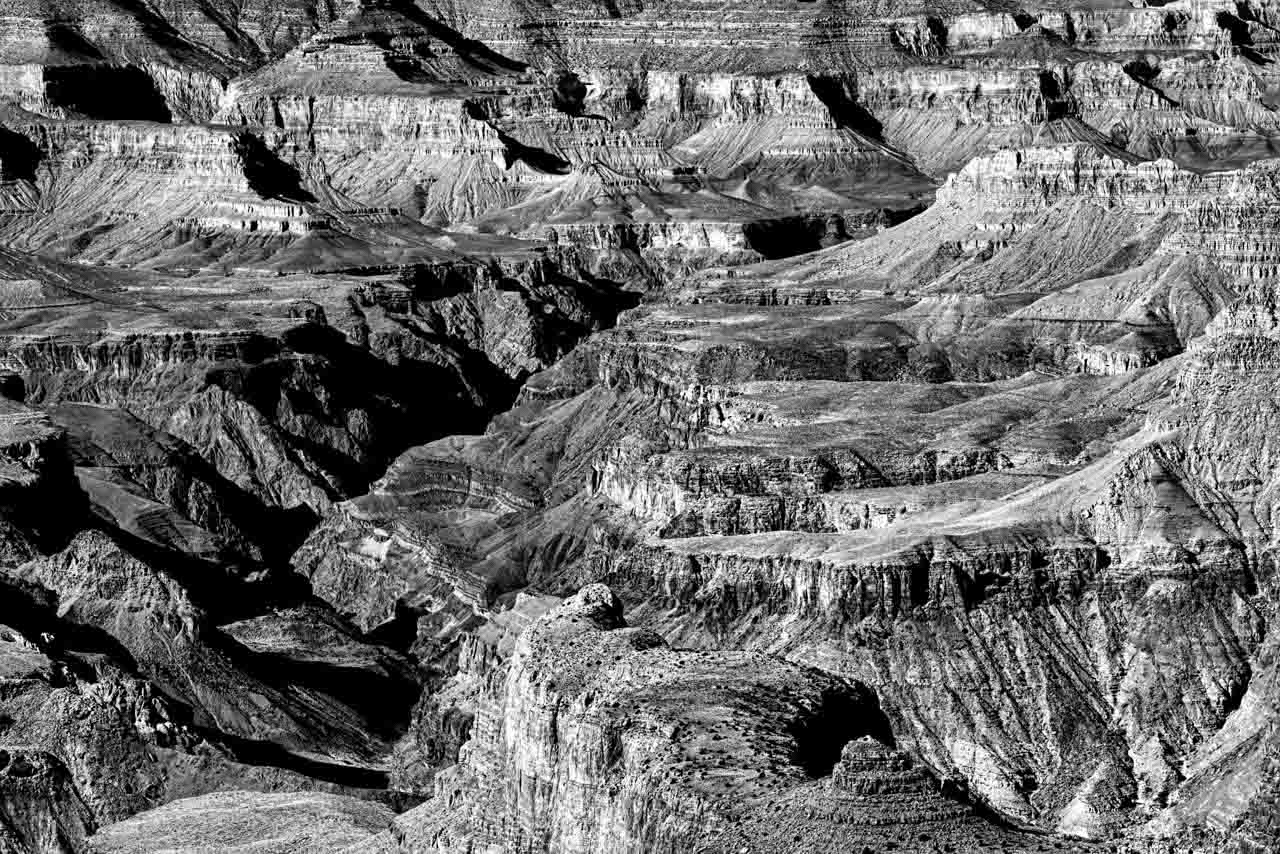
Landscape in black and white of the Grand Canyon in Arizona.

Do Not Hesitate to Frame Your Works

The third phase for the preparation of a photo exhibition concerns the choice of frames. A frame is not needed to showcase a work. For an exhibition at a festival that lasts only a few days, it is not worth the expense to frame. In addition, an exhibition at a festival generates few sales, if any. Most visitors come to walk around and appreciate the photos but are not interested in buying them. Thus, there is no need to spend money on framing because the return on investment is almost zero for most exhibitors.

However, for an exhibition in a gallery, it is essential to frame your works correctly. The frame is like a case that surrounds a sparkling jewel. It highlights the artwork, increasing its appeal and value.

I attach great importance to the framing of my photographic artworks. A poorly chosen frame will not interest or attract anyone to the photo within. Thus, it will not sell.

Choosing a beautiful frame requires experience. You must consider the tones of the photograph. If you exhibit a series, all of your photos should share the same tones. Indeed, all frames should be identical, to ensure consistency.

If you do not possess skills in the area of framing, it is better to contact a professional framer, who can advise you and help you choose the best frames. For example, the more lightweight a frame, the more expensive it is. Today, wooden frames are very expensive, but they are elegant. Most photographers choose resin frames. They have less character than a wooden frame, but they are cheaper.

The Benefits of Choosing a Large Format

The finalization of a photo can occur through an exhibition, paper prints, a book, or a slide show.

I prefer paper. Because it lasts a long time, I believe that is the best medium for photographs.

For your prints, do not hesitate to think big with a size of at least 24 by 36 inches (60 by 90 centimeters). The viewers will be encouraged to look at your work from a distance. The bigger a work is in size, the more a viewer will take a step back to appreciate it in awe.

A printed work with a small size forces the viewer to get very close. In this case, he will observe the details and forget to look at the work as a whole.

Book: A Potential Option for Finalizing a Series

The creation of a book is a very interesting solution for producing a material work of photographs. Today, many online services allow you to create a book of photos with excellent paper quality. Should you choose to assemble a book, do not hesitate to place a high price on it, for its value has increased.

While a low price guarantees a choice of layout and minimal color management, a high price guarantees an adept management of colors and lights, beautiful binding, and a more personalized work.

Ideally, you should test several services to find the one that suits you best. If you are lucky to have a laboratory located near you, take the opportunity to meet with the technicians because you can better explain your expectations for your book. In general, a book of 24 photos is worth a hundred dollars (a hundred euros) if it is a quality piece.

The first step in creating a book is determining the format: square, rectangular, and the ratio between height and length. This is crucial because the format is the case of the photos in the book.

The second step is the choice of layout. In general, online publishing services offer proprietary software for creating the book. An advantage is that they are simple to use. The disadvantage is a digital book created with one service cannot be exported to be printed with a competing service. For my part, I use specialized software that allows me to generate valid PDF files that are compatible with any publisher.

The third step is choosing the title and fonts that will be used for the text. This is critical. A well-chosen font will attract many viewers because it is an easy and enjoyable read.

Finally, you must choose the cover. A good cover immediately attracts potential readers. Thus, it must be carefully chosen. /p>

Competition: A Potential Option for Finalizing a Series

Participating in a photo contest is another option for finalizing a photo or photo series.

I only consider competitions that require a print on paper and the presentation of a finalized work.

Contests with digitally formatted works may be interesting, but they do not reflect the culmination of a work. For me, a photo only exists as a completed project if it is printed.

As I described in this article, a photographer should be interested in participating in competitions. It is an enhanced way to evaluate your skills among other photographers. Personal growth is achieved through participation in a competition, where the focus is placed more on your abilities as a photographer rather than your photo’s ability to convey messages or express emotions.

Before entering a contest, you must always read the rules to properly meet the selection criteria.

You must make sure of your personal rights when submitting a proposed photograph. Over time, competitions have become a way for many communities to create a stock of photographs at a lower cost. You must preserve your work as your own.

Often you must give your permission to the organization, allowing them to use your photos for an unlimited period. The photos may then be used for advertising. In return, the competitions offer an initial price that is limited to a pubic exhibition. This process can be very profitable for the organizers but not especially for the photographer.

Nevertheless, a competition allows you to show your vision of the world and share your messages with a large number of people. Be sure you choose the right one. Research and estimate if the public will appreciate your artworks at its value. You must decide whether or not your work is suited for a specific competition.

I think that more and more competitions flatter the ego of the participating photographers without really providing the magical touch procured in writing the photographic language.

Finally

The finalization of a photographic project is a necessity for you. This is the culmination of a long process that began with the definition of your photographic consciousness, an artistic approach, and then a real project.

Realize that completing a photo project through either an exhibition or a book is a great source of satisfaction that will motivate you to advance in your field. Even though we are artists, we need recognition and motivation to keep moving forward.

Be humble, patient, constant, persevering, and persistent because the road to excellence is long.

6 Tips for Finalizing the Creation of you Fine Art Photos

Let’s say you have begun working on an exciting new photographic project. You have now established the first installment of an interesting series. Through this work, you have defined and applied your artistic approach.

Perhaps you may want to convey messages, translate emotions, or reveal aesthetic works. Before you can complete these projects, you must finalize your photographic approach. This process occurs through participation in either an exhibition or in a photo contest.

Landscape in black and white of Island in the Sky in Canyon Lands in Utah.

Table of Contents

    Page 1

  • Editing: An Essential Step to Finalize the Writing of a Photographic Series
  • Exhibition: An Alternative Destination for Your Work
  • Choose Your Paper with Care
  • Page 2

  • Do Not Hesitate to Frame Your Works
  • The Benefits of Choosing a Large Format
  • Book: A Potential Option for Finalizing a Series
  • Competition: A Potential Option for Finalizing a Series
  • Finally

Editing: An Essential Step to Finalize the Writing of a Photographic Series

All the photos you create exist in digital form. You discover them with your photographic conscience. Currently, these photographs are only accessible to you because you are the author.

Now is the time to ask yourself a question: “How can I propose my work to viewers in an effective way so that they might fully understand my message.” The answer to this question lies in the creation of a unique method that makes your work accessible to others.

As a photographic author, you have had many unique creative options to choose from. You created your photographs on the field, taking care to utilize those natural elements available to you. When framing and composing, you meticulously fashioned harmonious pictures in distinct tones, colors, and shapes. You balanced masses and technique with precision.

You certainly created your photographs with great care, thus defining a solid photographic consciousness. You adopted a precise artistic approach by defining your artistic vision and your photographic style. You chose a photo project, and then expanded it to a homogeneous series so that it better reflects all the messages you wished to convey.

Perhaps, you have accomplished all of these things, only to arrive at a crucial stage where you come back from a photographic session, trip, or series. Where should you go next?

You must begin the editing step as I described in this article.

The editing is the reading phase of the photographs. It allows you to thoroughly read each shot, verifying it to see if it corresponds to the artistic approach chosen for a project.

Editing is a lonely stage for you, as it is for all photographers. All the photos were made in the field. You most likely used all the natural elements and tools at your disposal to create your photos. You transmitted messages and reflected your emotions with your camera.

You already downloaded tens or even hundreds of photos from your camera onto your computer, now you must identify the singularity of your artistic approach. You will determine which pictures to include in your series, website, exhibition, or book.

Your series must be consistent. All of your photos should have the same atmosphere. You must find a balance point between the photos to create a harmonious suite to colorfully and eloquently tell a story.

Editing is a phase that will cause you to doubt yourself and your abilities enormously. Thus, you should consider several tracks and choose the most appropriate choice for your artistic path before beginning a project. This phase of questioning is very time consuming, which signifies its importance. Masterful editing will always save you time during the development phase. Indeed, if editing is poorly completed, you will develop a whole set of photos that will not be interesting. Time spent on editing will enable you to proceed more quickly later on. You will be able to spot the inconsistencies of photos that have been edited well and those that are not. You can then choose which ones to include in your series and which ones to leave out.

The editing phase is essential because it determines the photos that you wish to permanently retain in your project.

Editing is the first phase in the photographic writing process of an artistic photo project. It must conform to the photographer's vision. It determines the final direction of your artistic work.

This phase refines the eyes, reinforces the artistic vision, and teaches your mind to think maturely from a photographic perspective. It helps you to decide which photo is most appropriate for a specific project, so that it might bring value and meaning to a photographic series.to reinforce the artistic vision, to learn to think in photography, to mature. It will help to find the most appropriate form and give full value to a photographic series.

Editing has a very precise methodology.

Once your editing is complete, you will begin the development phase. In this article, I explained the reasons for this very important phase, and how it reinforces the photographer’s vision.

Once your photos have been developed with your vision, you will print them. I often say that a photograph only exists when it is printed. The digital form is an unfinished form of the work. It is not the end. Printing is a difficult step that requires experience, time, patience, and many other skills. A photo can be printed in many different ways. You must choose that which best suits your needs.

Exhibition: An Alternative Destination for Your Work

For most photographers, the exhibition of photographs is the true destination for an artistic project. Regardless of whether the project was created for a festival or for a gallery, your project deserves to be recognized. It holds a great importance.

Creating a photographic exhibition is quite difficult because you need enough photographs to accurately and masterfully tell a story. Your photographs must be technically perfect. Once it is printed, any defects such as noise, or errors in framing or composition, will be magnified in front of the viewer.

Keep in mind that the crucial phase for an exhibition is the choice of order in which they will be presented. Every story has a beginning, a development in plot, and a conclusion. You must model a similar rhythm when exhibiting so that viewers can be carried through the flow of the story you have chosen. This allows you to share your artistic photographic approach.

Remember, your photos are a two-dimensional representation of a three-dimensional space. Shooting on the field with modeling accounts for the three-dimensional space of reality.

Setting up an exhibition with scenography accentuates the 3D effect that both you and your viewers are looking for.

Choose Your Paper with Care

The second phase is the choice of paper. Few photographers can distinguish when to use a certain kind of paper for specific photos. For example, a work in color should not be printed like an artwork in black and white.

The best solution is to go to a laboratory and establish a relationship with a specialist. Explain your artistic approach, the desired rendering, and the lighting that will be used during the exhibition. The specialist can better assist you when your explanation is detailed. The more exhibitions you participate in, the more experience you will gain in choosing printing papers.

Do Not Hesitate to Frame Your Works

  1. For your Black and White Landscape Photos Watch Out for the Masses
  2. Why and How: Photographing Landscapes in Black and White
  3. The Catchlight is Important When Photographing the Expression of an Animal
  4. How Photographing the Expression of a Wild Animal

Page 74 of 201

  • 69
  • 70
  • 71
  • 72
  • 73
  • 74
  • 75
  • 76
  • 77
  • 78
  1. You are here:  
  2. Home
  3. Blog Photographic Approach

Share on Social Media

Post
Share
Share
E-mail
WhatsApp
Text

Join Me on Social Networks

Join Me on Facebook  Join Me on Instagram  Join Me on LinkedIn

Claim your free guide to make your photo impactful and meaningful

Claim Your Free Guide '50 Pages of Tips to Give Impact and Meaning to Your Photos'.

4 + 8 =

Click Here To Discover All My Chronicles About the Photographic Approach.

Treat Yourself to a Fine Art Print That Matches your Personality

Example of a vacation home interior with a black and white fine photo art displayed on the wall.

Fine Art Print Collections in Black and White

Fine Art Print Collections in Black and White Black and white photography is a suitable technique for many nature scenes. It requires a particular frame of mind. A black and white photograph should be prepared and planned from the framing to the…
12004
Fine Art Print Collections in Black and White
An abstract art photo displayed in a contemporary living room decor.

Fine Art Print Collections in Color

Collections of Fine Art Prints in Color Color photographs allow digressions and take the audience to the message by secondary ways. The world around us, especially nature, is colorful. A color image can show the way our surroundings really are. Of course, it…
10448
Fine Art Print Collections in Color
Example of a home interior with fine art prints in my style back to black displayed on the wall. These photos are a part of my collection 'Wild beauties of Kenya'.

Fine Art Print Collections in Back to Black

Fine Art Print Collections in Back to Black I want to share my fine art prints of nature in a personal style that I call "back to black." "Back to Black" was developed to embody a sharp and clean style for artistic photos that can be hung in your living room,…
9987
Fine Art Print Collections in Back to Black
A waiting room with a photo in the style Fusion displayed on the wall. Grey Heron in Fusion.

Fine Art Print Collections with the Fusion Style

Fine Art Print Collections with the Fusion Style I would like to share a very creative and modern photography style to represent Nature in a very different way. I call it "Fusion." I created the style to offer dynamic photos, allowing you to start a good day…
7917
Fine Art Print Collections with the Fusion Style
A living room with a photo in the style 'Impression' exposed on the wall. Rising sun in impression

Fine Art Print Collections with the ‘Impression’ Style

Fine Art Print Collections with the ‘Impression’ Style The objective of this photographic style is to create the ephemeral blurs. That's why I named it 'Impression.' Photography, as an art form, is a powerful means of expressing reality from different…
5831
Fine Art Print Collections with the ‘Impression’ Style
Fine art prints from the style back to black displayed on a wall. Amar Guillen, photographer artist

New Collections of Fine Art Prints Dedicated to the Wonders of Nature

New and Updated Fine Art Print Collections Dedicated to the Wonders of Nature Fine art prints from the style back to black displayed on a wall.
11451
New Collections of Fine Art Prints Dedicated to the Wonders of Nature

Themes of the Blog Articles

Landscape of Arches National Park in Utah in black and white.

Blog Articles Dedicated to Artist Statement

Blog Articles Dedicated to Artist Statement
Dunes of death Valley in Black and White

Blog Articles Dedicated to Black and White Photography

Blog Articles Dedicated to Black and White Photography
Abstract photo or trees reflection on water

Blog Articles Dedicated to Photographic Mindset

Blog Articles Dedicated to Photographic Mindset
Abstract photo of ridles on water

Blog Articles Dedicated to Artistic Photography

Blog Articles Dedicated to Artistic Photography
Abstract photo of Yellowstone

Blog Articles Dedicated to Photographic Language

Blog Articles Dedicated to Photographic Language
Pronghorn in Yellowstone

Blog Articles Dedicated to Wildlife Photography

Blog Articles Dedicated to Wildlife Photography
Landscape of Bryce Canyon

Blog Articles Dedicated to Photographing United States

Blog Articles Dedicated to Photographing United States
Underwater waves in the Red Sea

Blog Articles Dedicated to Photographic Techniques

Blog Articles Dedicated to Photographic Techniques
Tree of Black Canyon in Black and White

Blog Articles Dedicated to Landscape Photography

Blog Articles Dedicated to Landscape Photography
Manta Ray in Maldives in Black and White

Blog Articles Dedicated to Underwater Photography

Blog Articles Dedicated to Underwater Photography
Red Deer stag during the rut of the deer

Blog Articles Dedicated to Photographic Judgement

Blog Articles Dedicated to Photographic Judgement
Great Crested Greb and his chick

Unclassified Blog Articles

Unclassified Blog Articles

You Might Be Interested By One of These Photographic Approach Articles

Mustangs in a meadow near Grand Teton in the national park in Wyoming.

Use a Slideshow to Tell a Story with your Photos

4915
Use a Slideshow to Tell a Story with your Photos
A photo of a gelada, taken on a cliff in Ethiopia. This picture was taken during a photo walk.

Photographing at Eye Level to Improve your Wildlife Photos

4441
Photographing at Eye Level to Improve your Wildlife Photos
Photograph in black and white of a manta ray in Maldives during a night dive. Photograph by Amar Guillen, photographer artist.

Why and How Judging a Photograph Subjectively

4233
Why and How Judging a Photograph Subjectively
Landscape in black and white of the Sand Dunes in Death Valley. Photograph by Amar Guillen, photographer artist.

15 Steps to Improve Your Photos

3448
15 Steps to Improve Your Photos

Receive Free Tips On How to Give Impact and Meaning to Your Photos. Subscribe to Receive Regular Articles.

2 + 7 =

Contact Me By Email

10 + 9 =
This site is protected by reCAPTCHA and the Google Privacy Policy and Terms of Service apply.

About Amar Guillen, Creator of Fine Art Prints of Nature
As a photographer capturing the artistic essence for several decades, I have mastered the art of crafting an authentic experience for art enthusiasts and collectors of visual art.
When I observe my surroundings, be it friends, family, relationships, or professional contacts, I see souls in perpetual motion. Every moment of their existence is engulfed by daily hassles, work concerns, social media, online or televised information streams, and videos on the web.
Every minute, they strive to accomplish something, fearing losing ground and feeling marginalized in this frenzied society. Imprisoned by an oppressive schedule, the essential eludes them, drowned in the tumult of daily life. Is it really crucial to watch yet another cat video on the internet? Is it necessary to post twenty daily messages on social media?
Despite this, they remain constantly stressed and anxious about the challenges of the world, without being able to influence these monumental problems. It is at this moment that my artistic nature photographs come into play. Those who have had the privilege of hanging one of my works in their personal or professional space have expressed a radical transformation in their lives.
Every day, contemplating these works of art immerses them in tranquility, inner peace, and rediscovered serenity. They then understand that nature has the power to unravel tensions, to encourage reflection on the essential. Artistic photographs thus become open windows to the wonders of nature.
I have chosen to share the best of myself by helping others discover their identity, personality, style, all while reconnecting with nature. Take the time to explore my artistic photographs if you wish to reveal your true essence. Once hung in your space, your view of the world will be transformed.
Amar Guillen is a creator of fine art prints of nature.
I am Amar Guillen, creator of nature art photographs. I have a deep conviction that contemplating nature has the power to transform human beings. If everyone learned to know, respect, and preserve nature, our world would be transformed into a haven of peace where everyone would find their place.
Copyright © 2003 - 2026 Guillen Photo LLC - All rights reserved. Amar Guillen, professional photographer since 2003.
  • Blog
  • Calibration
  • Legal Information
  • Sitemap
  • Accessibility
  • Contact Me
  • Updates of the Website
I Want to Help You to Create Interesting Photos

How Can I Help You To Create More Interesting Photos?

Ask Me a Technical Question.
Subscribe to my Newsletter. The Inspiration Behind Guillen Photo.

Select your language

  • English (United Kingdom)
  • Français (France)
Claim your free guide to make your photo impactful and meaningful

Claim Your Free Guide '50 Pages of Tips to Give Impact and Meaning to Your Photos'.

2 + 9 =

Contact Me By Email

4 + 10 =

Office Address:
3512 Robin Road
Plano Texas 75075
USA

Office phone: (+1)214-769-6825