• The Art of ChoosingHome page
  • Fine Art Prints3 Editions
  • CollectionsAll Collections
  • AboutAmar Guillen
  • Customer Space & Contact
  • Select your language

    • English (United Kingdom)
    • Français (France)
  • All You Need to Select Your Fine Art Print
    • How to Choose a Fine Art Print - Q&A - FAQ
    • New Creations
    • Explore Some Interiors
    • Fine Art Print Blog
  • Browse by Edition
    • All Fine Art Prints
    • Unique Edition
    • Limited Edition
    • Open Edition
  • Browse by Style
    • Black and White
    • Color
    • Fusion
    • Impression
    • Back to Black
    • Landscapes in Black and White
    • Landscapes in Color
    • Animals in Black and White
    • Animals in Color
  • Browse by Theme
    • Landscape
    • Wildlife
    • Underwater
    • Abstract
    • Symbolic
    • Landscapes of the United States
    • Landscapes of France
    • Landscapes of Scotland
    • Seascapes
    • Relaxing
    • Energizing
    • Playful
  • Browse by Format
    • Rectangular
    • Square
    • Panoramic
  • Contact Me
    • Contact Me by Email or Phone
  • Collections
    • New Collections
    • All Collections
  • Browse by Theme
    • Landscapes
    • Wildlife
    • Underwater
    • Abstract
    • Symbolic
    • Landscapes of France
    • Landscapes of the United States
  • Browse by Style
    • Black and White
    • Color
    • Impression
    • Back to Black
    • Fusion
  • Contact Me
    • Contact Me by Email or Phone
  • Discover More About Me
    • Discover Who is Amar Guillen
    • Artistic and Photographic Statement
  • Galleries
    • Photo Galleries
    • Abstract Portfolio in Color
    • Black and White Landscape Photography Portfolio
    • Color Landscape Photography Portfolio
    • Black and White Wildlife Photography Portfolio
    • Color Wildlife Photography Portfolio
    • Underwater Photography Portfolio
  • Contact Me
    • Contact Me by Email or Phone
  • Your Customer Space
    • Create or Manage your Account
    • Your Download Space
    • Your Orders
  • Contact Me
    • Contact Me by Email or Phone

You are in that section: Home > Blog > Blog of the Photographic Creation Approach

The Universal Photographic Language Does Not Exist
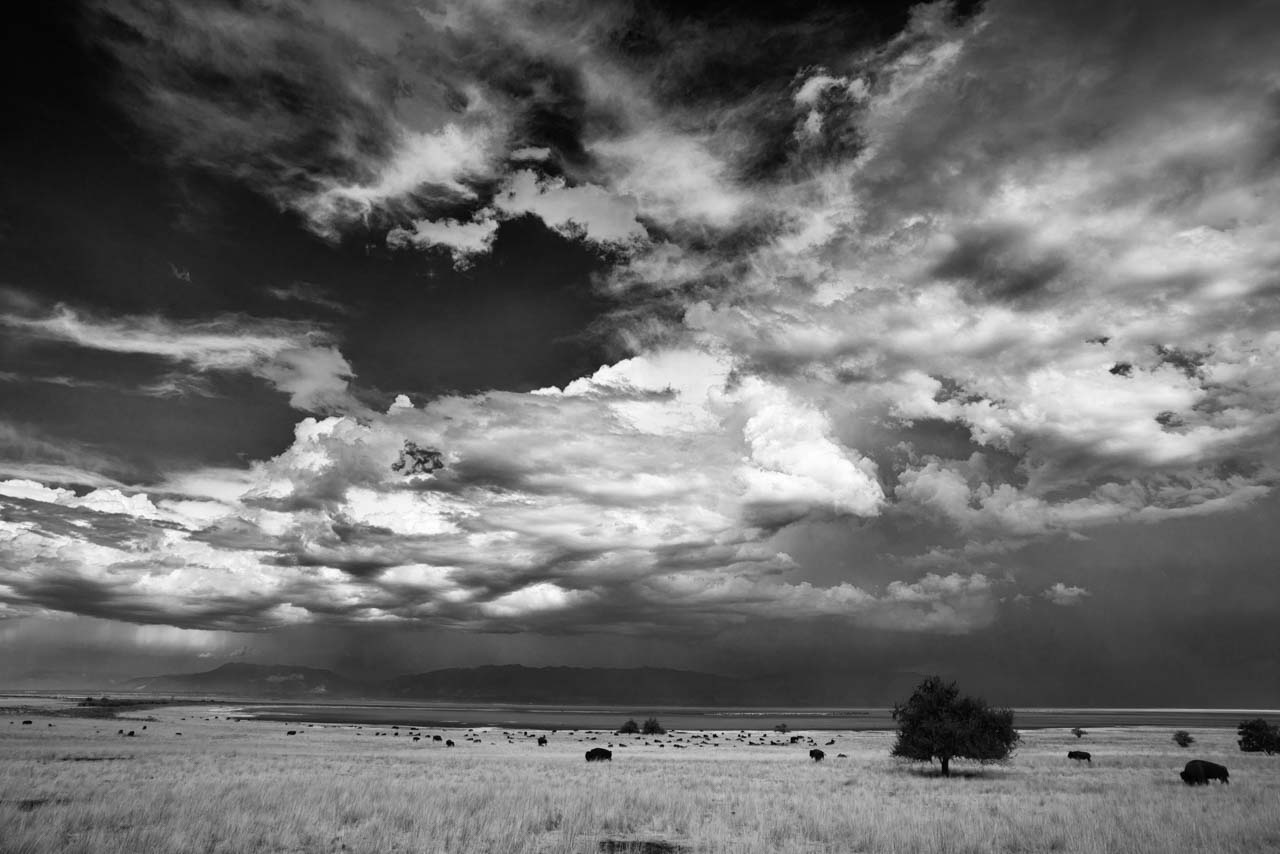
Landscape photography requires great mastery to use photographic language (bisons in a meadow under a cloudy sky).

Artistic Photography Has Two Dimensions

Artistic photographs have two very distinct dimensions:

  • The vision: here, we focus on visual sociology. Works created in time, space, or in a given environment can be placed in a certain order. For example, photographs created in Dombes are identifiable by the medium because the species and environment are so unique. The vision is an approach that focuses more on ethnography because we identify the scenes.
  • The look: here, we focus on the sociology of the gaze. We focus on the effects of perception, reception, and production of content. The content itself is not analyzed, rather, it is the effect produced on the viewer that is interesting. The look is an approach that is more psychoanalytical because both photographer and viewer are included in the analysis.

By considering these two dimensions, one can easily set up a language to express oneself with a given writing.

However, the photographic language has the distinction of being understood in a multitude of ways. Each viewer can decrypt photos in multiple ways. I encounter this problem as soon as I create a new artistic collection. I propose them to a circle of very close acquaintances. I trust their judgments. They know me. They know what I expect from them. However, their impressions always vary from person to person. Next, I propose the photos to our family circle, which is smaller. The meanings and reactions are always more figurative. Often, people in the family circle take precautions before giving me their comments. They know my requirement and know that the words used are very important. However, these individuals’ perspective is always from a descriptive point of view, and each judgment given may be very different. This does not bother me, because some collectors who buy my photographic works do so from a criterion. They are present in the register of thought more than in the register of emotion.

During all these years, I learned that the photographic language is not universal but that it challenges each viewer in a different way. The important thing is the language used by the photographer. We must not forget that photography is an artistic discipline. The author feels the need to express messages and emotions, but he is limited by a given writing and his own language. Time will tell whether this language has been decrypted correctly or not by the author.

I think it is the viewers who ultimately make the photographs come alive.

The photographic language is in no way scientific. It is not like a spoken or written language that has specific rules. The photographic language is spoken both by the photographer who creates the work and the viewer who contemplates the work. This process is complicated and complex, which illuminates the beauty of artistic photography.

A Universal Photographic Language Does Not Exist

Over time, I came to understand that a universal photographic language did not exist. Even if we wanted to create one, it would not be possible, mainly because it is not scientific, due to its psychoanalytic dimension. The photographer symbolically places his neuroses, his emotions, and transmitted messages into his image. However, these symbols are uniquely characteristic to him alone, and thus can be interpreted differently by his viewers.

The construction of a photograph relies upon the experience of the photographer. Reading a photograph also appeals to the viewer's experience.

Concretely, this means that the photographer will be in phase with some viewers because the language used will be the same. But it will be rejected by others because the language and interpretation will be totally different, due to a collection of different experiences.

Is this even important? I do not think so. It is impossible to achieve unanimity in an artistic discipline. If an artist chooses to be unanimous in creating his works, he will no longer deliver messages because his artistic activity will be watered down, smoothed over. Mediocrity will prevail. This is a general rule when one wants to address the masses. The messages are so different that ultimately, the authority does not know what else to deliver to the people, and the people may not even know what it is that they want. Thus, platitude reigns in general consumption. We as professional photographers strive to veer from this dangerous path, by delivering art that is different.

Although I do not believe that there is one universal photographic language, I do believe that there are several photographic languages. I will not go so far as to say that there is a language only understood by photographers, but that this is almost entirely true. Real photographers have the gift of harmoniously organizing the signs of writing to allow true sentences to flow smoothly without ever being spoken orally.

Creating your own language takes a very long time, but when you have found the codes, the words will fall into place. All that is needed after this stage is experience and practice.

But how can one write in photography? What tools are available for photographic writing? How can you prepare to develop the photographic language? These are the questions I will answer in the next blog posts.

If you want to continue discovering other facets of the photographic language, I recommend the following article.

Using the 7 Elements of Art to Capture and Create Your Photos.

Be humble, patient, constant, persevering, and persistent because the road to excellence is long.

Why and How Speaking in the Language of Photography

As I said in this article, photography is a means of artistic expression. It has a language. Like with any language, the author must be able to precisely wield the grammar rules.

Underwater photography requires great mastery to use the photographic language (goby on a hard coral).

Table of Contents

    Page 1

  • Photographic Writing Has Its Own Language
  • Adeptly Wielding Semantics of the Photographic Language
  • Page 2

  • Artistic Photography Has Two Dimensions
  • A Universal Photographic Language Does Not Exist

Photographic Writing Has Its Own Language

Mastering the photographic language allows photographers to write easily but especially to be well understood by those who will look at the photos.

By definition, a language is the function of the expression of thought and communication. Language is a system of signs that allows communication to occur. One method of communication is writing.

Previously, we saw that photography presented a number of signs through photographic writing. For a photographer to express himself through his personal photographic style, he or she must perfect the photographic language.

The language of photography involves aligning signs, which, when assembled together through photographic writing, allows the author to express his desires and purpose of the photograph. This process opens the door for the viewer to understand the photograph’s meaning. The photographic language allows both entities –the author and viewer – to understand each other.

However, everything is not as it seems. The main reason for this is that photography has a very important psychoanalytical dimension.

From my experience, I have come to believe that the photographic language can be broken down into four very distinct points.

First of all, this language considers the aesthetics of photography: the harmony of colors or shades of gray, the different balances between masses, exposures, shapes, and etc.

Next, this language must consider the technique of the exposure, sharpness, depth of field, noise, etc.

This photographic language must also consider the elements used to compose a scene. For example, in a nature photograph, it is unwise to include a city, or houses, or any sign of human presence. If this were to be done, it would not make sense.

Finally, this language must contain certain tools for translating messages, especially for the emotions that the author wishes to convey to the viewer. For example, we would not use the same tools to translate tormented, restless emotions as we would for a peaceful, tranquil spirit. This would be what is called a counter sense. For example, a photo that reflects a tormented state will most likely be created in black and white with strong contrasts. An image translating a happy state will most likely include soft and cheerful colors.

If one of these points is not utilized properly by the artistic photographer, the sentence will not be complete, and the viewer of the photograph will not understand it.

For example, a photo could be technically perfect. It may be sharp, well contrasted, well exposed, and manages colors and shades creatively. However, that same photo’s elements might fail in defining the state of mind, causing the photographer’s intentions to be overlooked by the viewer.

Another example is that of a technically perfect photo which only contains good aesthetic qualities, but whose photographic items have no connection with the main subject of the image. This would not be an interesting picture, as it would fail to convey messages, except that of confusion, to the viewer.

Adeptly Wielding Semantics of the Photographic Language

The knowledge of the photographic language is not enough.

Indeed, let's take the example of learning a foreign language. We learn vocabulary, grammar, and the rules of conjugation. We will then visit the country associated with this language.

We may decide to talk to someone. If we repeat the words we have learned while respecting the grammatical rules, but these words have no semantic meaning in the context of the discussion, certainly our native friend will not understand us. The same applies to the photographic language. If you wish to address an audience with your photographs, you must define the subject of your message or the emotions you want to translate. Then you must use the right semantic elements, or you will not be understood correctly.

I met many photographers who made photos, but only considered the technical aspect. Their photos were excellent from a technical perspective, but no semantics emerged.

Knowing the photographic language is an essential first step for a photographer wishing to create beautiful nature photos of landscapes, underwater scenes, or animals. Knowing how to speak the language correctly is certainly the most difficult step to master.

Wanting to show a personal perspective of the world is quite commendable, however, this cannot be improvised. It takes time and patience. Nevertheless, a strong focus for learning will result in the improvement of personal qualities and a good dose of general culture, both of which will encourage the individual to continue to learn, thus creating a cycle.

Artistic Photography Has Two Dimensions

  1. Photographing the Atmosphere of Yellowstone in Winter
  2. How Photographing Yellowstone in Winter
  3. How Creating and Succeeding Fine Art Photos with Snow
  4. How Photographing and Succeeding Your Photo with Snow

Page 77 of 201

  • 72
  • 73
  • 74
  • 75
  • 76
  • 77
  • 78
  • 79
  • 80
  • 81
  1. You are here:  
  2. Home
  3. Blog Photographic Approach

Share on Social Media

Post
Share
Share
E-mail
WhatsApp
Text

Join Me on Social Networks

Join Me on Facebook  Join Me on Instagram  Join Me on LinkedIn

Claim your free guide to make your photo impactful and meaningful

Claim Your Free Guide '50 Pages of Tips to Give Impact and Meaning to Your Photos'.

4 + 8 =

Click Here To Discover All My Chronicles About the Photographic Approach.

Treat Yourself to a Fine Art Print That Matches your Personality

Example of a vacation home interior with a black and white fine photo art displayed on the wall.

Fine Art Print Collections in Black and White

Fine Art Print Collections in Black and White Black and white photography is a suitable technique for many nature scenes. It requires a particular frame of mind. A black and white photograph should be prepared and planned from the framing to the…
12004
Fine Art Print Collections in Black and White
An abstract art photo displayed in a contemporary living room decor.

Fine Art Print Collections in Color

Collections of Fine Art Prints in Color Color photographs allow digressions and take the audience to the message by secondary ways. The world around us, especially nature, is colorful. A color image can show the way our surroundings really are. Of course, it…
10448
Fine Art Print Collections in Color
Example of a home interior with fine art prints in my style back to black displayed on the wall. These photos are a part of my collection 'Wild beauties of Kenya'.

Fine Art Print Collections in Back to Black

Fine Art Print Collections in Back to Black I want to share my fine art prints of nature in a personal style that I call "back to black." "Back to Black" was developed to embody a sharp and clean style for artistic photos that can be hung in your living room,…
9987
Fine Art Print Collections in Back to Black
A waiting room with a photo in the style Fusion displayed on the wall. Grey Heron in Fusion.

Fine Art Print Collections with the Fusion Style

Fine Art Print Collections with the Fusion Style I would like to share a very creative and modern photography style to represent Nature in a very different way. I call it "Fusion." I created the style to offer dynamic photos, allowing you to start a good day…
7917
Fine Art Print Collections with the Fusion Style
A living room with a photo in the style 'Impression' exposed on the wall. Rising sun in impression

Fine Art Print Collections with the ‘Impression’ Style

Fine Art Print Collections with the ‘Impression’ Style The objective of this photographic style is to create the ephemeral blurs. That's why I named it 'Impression.' Photography, as an art form, is a powerful means of expressing reality from different…
5831
Fine Art Print Collections with the ‘Impression’ Style
Fine art prints from the style back to black displayed on a wall. Amar Guillen, photographer artist

New Collections of Fine Art Prints Dedicated to the Wonders of Nature

New and Updated Fine Art Print Collections Dedicated to the Wonders of Nature Fine art prints from the style back to black displayed on a wall.
11451
New Collections of Fine Art Prints Dedicated to the Wonders of Nature

Themes of the Blog Articles

Landscape of Arches National Park in Utah in black and white.

Blog Articles Dedicated to Artist Statement

Blog Articles Dedicated to Artist Statement
Dunes of death Valley in Black and White

Blog Articles Dedicated to Black and White Photography

Blog Articles Dedicated to Black and White Photography
Abstract photo or trees reflection on water

Blog Articles Dedicated to Photographic Mindset

Blog Articles Dedicated to Photographic Mindset
Abstract photo of ridles on water

Blog Articles Dedicated to Artistic Photography

Blog Articles Dedicated to Artistic Photography
Abstract photo of Yellowstone

Blog Articles Dedicated to Photographic Language

Blog Articles Dedicated to Photographic Language
Pronghorn in Yellowstone

Blog Articles Dedicated to Wildlife Photography

Blog Articles Dedicated to Wildlife Photography
Landscape of Bryce Canyon

Blog Articles Dedicated to Photographing United States

Blog Articles Dedicated to Photographing United States
Underwater waves in the Red Sea

Blog Articles Dedicated to Photographic Techniques

Blog Articles Dedicated to Photographic Techniques
Tree of Black Canyon in Black and White

Blog Articles Dedicated to Landscape Photography

Blog Articles Dedicated to Landscape Photography
Manta Ray in Maldives in Black and White

Blog Articles Dedicated to Underwater Photography

Blog Articles Dedicated to Underwater Photography
Red Deer stag during the rut of the deer

Blog Articles Dedicated to Photographic Judgement

Blog Articles Dedicated to Photographic Judgement
Great Crested Greb and his chick

Unclassified Blog Articles

Unclassified Blog Articles

You Might Be Interested By One of These Photographic Approach Articles

Mustangs in a meadow near Grand Teton in the national park in Wyoming.

Use a Slideshow to Tell a Story with your Photos

4915
Use a Slideshow to Tell a Story with your Photos
A photo of a gelada, taken on a cliff in Ethiopia. This picture was taken during a photo walk.

Photographing at Eye Level to Improve your Wildlife Photos

4441
Photographing at Eye Level to Improve your Wildlife Photos
Photograph in black and white of a manta ray in Maldives during a night dive. Photograph by Amar Guillen, photographer artist.

Why and How Judging a Photograph Subjectively

4233
Why and How Judging a Photograph Subjectively
Landscape in black and white of the Sand Dunes in Death Valley. Photograph by Amar Guillen, photographer artist.

15 Steps to Improve Your Photos

3448
15 Steps to Improve Your Photos

Receive Free Tips On How to Give Impact and Meaning to Your Photos. Subscribe to Receive Regular Articles.

2 + 7 =

Contact Me By Email

10 + 9 =
This site is protected by reCAPTCHA and the Google Privacy Policy and Terms of Service apply.

About Amar Guillen, Creator of Fine Art Prints of Nature
As a photographer capturing the artistic essence for several decades, I have mastered the art of crafting an authentic experience for art enthusiasts and collectors of visual art.
When I observe my surroundings, be it friends, family, relationships, or professional contacts, I see souls in perpetual motion. Every moment of their existence is engulfed by daily hassles, work concerns, social media, online or televised information streams, and videos on the web.
Every minute, they strive to accomplish something, fearing losing ground and feeling marginalized in this frenzied society. Imprisoned by an oppressive schedule, the essential eludes them, drowned in the tumult of daily life. Is it really crucial to watch yet another cat video on the internet? Is it necessary to post twenty daily messages on social media?
Despite this, they remain constantly stressed and anxious about the challenges of the world, without being able to influence these monumental problems. It is at this moment that my artistic nature photographs come into play. Those who have had the privilege of hanging one of my works in their personal or professional space have expressed a radical transformation in their lives.
Every day, contemplating these works of art immerses them in tranquility, inner peace, and rediscovered serenity. They then understand that nature has the power to unravel tensions, to encourage reflection on the essential. Artistic photographs thus become open windows to the wonders of nature.
I have chosen to share the best of myself by helping others discover their identity, personality, style, all while reconnecting with nature. Take the time to explore my artistic photographs if you wish to reveal your true essence. Once hung in your space, your view of the world will be transformed.
Amar Guillen is a creator of fine art prints of nature.
I am Amar Guillen, creator of nature art photographs. I have a deep conviction that contemplating nature has the power to transform human beings. If everyone learned to know, respect, and preserve nature, our world would be transformed into a haven of peace where everyone would find their place.
Copyright © 2003 - 2026 Guillen Photo LLC - All rights reserved. Amar Guillen, professional photographer since 2003.
  • Blog
  • Calibration
  • Legal Information
  • Sitemap
  • Accessibility
  • Contact Me
  • Updates of the Website
I Want to Help You to Create Interesting Photos

How Can I Help You To Create More Interesting Photos?

Ask Me a Technical Question.
Subscribe to my Newsletter. The Inspiration Behind Guillen Photo.

Select your language

  • English (United Kingdom)
  • Français (France)
Claim your free guide to make your photo impactful and meaningful

Claim Your Free Guide '50 Pages of Tips to Give Impact and Meaning to Your Photos'.

9 + 9 =

Contact Me By Email

9 + 1 =

Office Address:
3512 Robin Road
Plano Texas 75075
USA

Office phone: (+1)214-769-6825