• The Art of ChoosingHome page
  • Fine Art Prints3 Editions
  • CollectionsAll Collections
  • AboutAmar Guillen
  • Customer Space & Contact
  • Select your language

    • English (United Kingdom)
    • Français (France)
  • All You Need to Select Your Fine Art Print
    • How to Choose a Fine Art Print - Q&A - FAQ
    • New Creations
    • Explore Some Interiors
    • Fine Art Print Blog
  • Browse by Edition
    • All Fine Art Prints
    • Unique Edition
    • Limited Edition
    • Open Edition
  • Browse by Style
    • Black and White
    • Color
    • Fusion
    • Impression
    • Back to Black
    • Landscapes in Black and White
    • Landscapes in Color
    • Animals in Black and White
    • Animals in Color
  • Browse by Theme
    • Landscape
    • Wildlife
    • Underwater
    • Abstract
    • Symbolic
    • Landscapes of the United States
    • Landscapes of France
    • Landscapes of Scotland
    • Seascapes
    • Relaxing
    • Energizing
    • Playful
  • Browse by Format
    • Rectangular
    • Square
    • Panoramic
  • Contact Me
    • Contact Me by Email or Phone
  • Collections
    • New Collections
    • All Collections
  • Browse by Theme
    • Landscapes
    • Wildlife
    • Underwater
    • Abstract
    • Symbolic
    • Landscapes of France
    • Landscapes of the United States
  • Browse by Style
    • Black and White
    • Color
    • Impression
    • Back to Black
    • Fusion
  • Contact Me
    • Contact Me by Email or Phone
  • Discover More About Me
    • Discover Who is Amar Guillen
    • Artistic and Photographic Statement
  • Galleries
    • Photo Galleries
    • Abstract Portfolio in Color
    • Black and White Landscape Photography Portfolio
    • Color Landscape Photography Portfolio
    • Black and White Wildlife Photography Portfolio
    • Color Wildlife Photography Portfolio
    • Underwater Photography Portfolio
  • Contact Me
    • Contact Me by Email or Phone
  • Your Customer Space
    • Create or Manage your Account
    • Your Download Space
    • Your Orders
  • Contact Me
    • Contact Me by Email or Phone

You are in that section: Home > Blog > Blog of the Photographic Creation Approach

Why and How Telling a Story through A Photo

Creating photographs of nature is an extraordinary way to communicate, convey messages, or arouse certain emotions in the viewer. In my article on editing in photography, I said that the first step in a project is to define a story for a series. However, a nature photographer knows that a story is not just for a series, but for a single photograph.

It is important to know how to create a nature photo that can stand alone and yet still tell an interesting story. For example, when creating a cover photo for a book, the photographer must convey the book’s overall message to the audience in a single photo. In the opening of a photo exhibition, the first picture presented must captivate the audience and “set the stage” by presenting the general theme. It is possible to choose a strong photograph which tells a story when viewed by itself. For me, as always, this process must follow certain rules.

Animal behaviors are interesting subjects for telling stories in artistic photographs.

Table of Contents

    Page 1

  • Storytellers and Their Audience
  • Telling a Story is Telling My Own Vision of the World
  • Artistic Photography is a Narrative
  • Technique: Necessary, but not Sufficient
  • Page 2

  • Some Basic Rules for Building a Photo Story
  • Page 3

  • What, When, Where and Why?
  • My Method of Telling Photographic Stories
  • Identifying Interesting Themes
  • Completing Multiple Tests
  • Building Stories
  • Finally

Storytellers and Their Audience

It is a well-known fact that everyone loves to listen to beautiful stories. No one is insensitive to a well-told story. What do a film, novel, song, or poem all have in common? Each has the power to communicate a message or channel certain emotions in the audience. Photography is another way to achieve this, whether it is through a documentary or artistic collection.

Another fact is that all those who practice photography pursue one of the following goals: exchanging ideas with others, or discovering ideas within themselves. In both cases, communication is essential.

For example, in my case, I cannot draw; I cannot paint; I do not know how to sculpt; I do not know how to write long romance novels or sonnets. But I still want to present my vision of this world. How can I do this? The answer lies within photography. It allows me to express myself in a unique way, conveying messages of serenity, tranquility, and joy. To transmit my messages and my passion for nature, I have chosen to show the wonders of nature through photography.

When the audience meets the storyteller, symbiosis occurs. The link between two universes is created. Photography has the magic of gathering even for a few moments people who have nothing in common. It connects the photographer and the person viewing the photo, and for a moment, they may share the same messages and emotions. However, in order to accomplish this, it is necessary for the photographer to know how to narrate a story with a photo effectively and efficiently.

Telling a Story is Telling My Own Vision of the World

Like all photographers, I want to convey my vision of the world. Photography is an art that is meant to be shared. I am used to saying that “photography is never chosen by chance”. If someone chooses photography for fame, money, or any other reason than to communicate, then he will not last long in practicing this discipline. The photographer is missing the motivation of passion. Thus, this chapter of photography in his life will be fleeting.

Communicating with others is telling a story. In photography, I do not talk with written or spoken words. The story is told by putting photographic elements of a three-dimensional universe into a two-dimensional space. This is what a photo truly is.

Many people often think that to tell a story, a photographer must make documentary-type photos.

It is true that telling a story with an animal behavior, an attitude or even an expression is easy. Similarly in photographing landscapes, a photograph showing a storm, or the elements unleashed during a tornado, is enough to tell a story. The spectators will easily put themselves in the place of the poor inhabitants who evacuated their house to flee before the furious natural elements attacked. The suggestive and narrative power of these images is undoubtedly very strong.

A documentary picture often does not need words to be described. The only explanation necessary is the location and date, the “where” and “when” the moment the shot was taken. Each viewer will create his own story by operating his imagination. Documentary photography is certainly the simplest path chosen by many photographers to tell stories.

The narration in documentary photography is often raw and descriptive. It appeals to the very primary senses of the spectator. Documentary photography makes possible to show, to denounce, or to highlight a fact to the eyes of the world. It is a rugged beauty.

Artistic Photography is a Narrative

Artistic photography can be just as descriptive and expressive as a photo documentary. But it is much more complex to implement. Artistic photography is more suggestive. In my artistic photographs, I not only try to convey emotions and feelings, but I also strive to provoke questions on important subjects such as happiness, or the reason for existence. In both types of photography, I always try to tell stories.

The narration in artistic photography is much more intimate, much more suggestive. It appeals to the senses and the imagination, rather than actual facts or the primary senses of the spectator. The challenge is more complex than in documentary photography. The photographer must transmit emotions, feelings or personal messages in such a way as to provoke further wonder.

From my point of view, it is simpler to tell stories through a series than a single photo. Creating a story with a single photo is complicated but it is possible if you know the tricks to efficiently tell the story.

Technique: Necessary, but not Sufficient

Whether in documentary photography or in artistic photography, telling a story with a nature photograph requires plenty of both experience and time. Sometimes, it will take years for a photographer to achieve this goal.

The beginner photographers are often obsessed only by the photo technique such as how to use the camera’s settings, how to adeptly compose the subject or setting, or how to frame the scene. For example, some photographers only think about the management of sharpness or noise. Others have only one idea in mind: respect the rule of thirds. I am used to saying that as long as a photographer thinks of technique, he does not think of the wonder and beauty of the photo he will create. As a result, the pictures will be “technically correct”, but not very interesting.

Choosing only to think of technique is like knowing how to write sentences without spelling or grammar mistakes, but saying nothing important or unique. The author’s sentences may be grammatically correct, but the meaning behind the words is pointless. Knowing how to tell a story with a photograph is to make the picture interesting to the sight of the others.

To create a photo with a story, the photographer must answer some essential questions and respect some basic rules of communication.
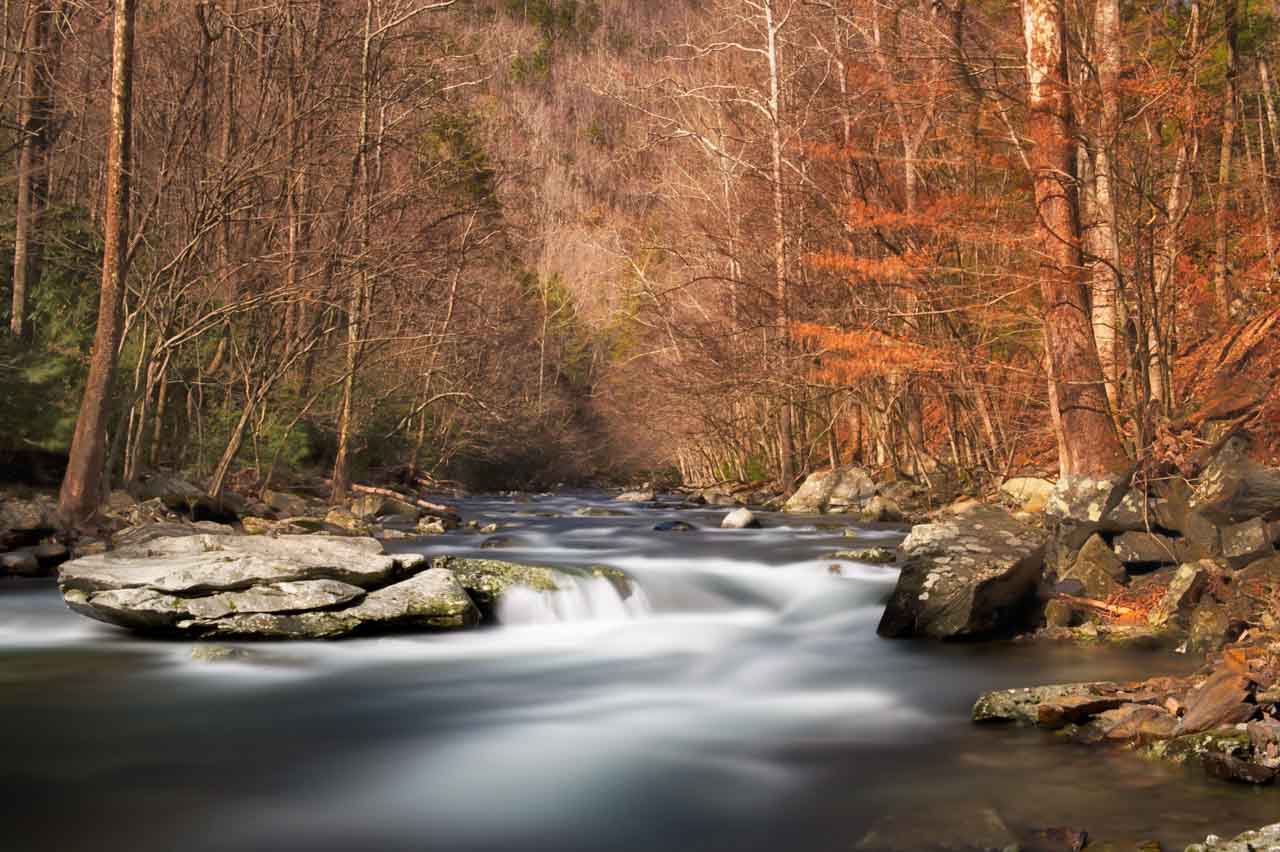
Some Basic Rules for Building a Photo Story

3 Steps for Realizing a Good Photo Editing

Image editing is the phase of selecting a series of photographs that will be used as part of a photo project. This essential step makes it possible to isolate photographs which will tell a story.

For a photographer, it is a very difficult task; he must decide which images to put aside for the moment, and which images to save for the specific project.

Photographs that were interesting at the time of the shooting might have no relationship with the current project. It is often heart-wrenching, but image editing is necessary to develop the photographer’s artistic sense.

To make this picture, we photographed the waterfall for 3 days. 150 pictures in total.
To make this picture, I photographed the waterfall for 3 days. 150 pictures in total.

Table of Contents

    Page 1

  • The Different Steps of the Creation of a Photographic Project
  • A Definition of Image Editing
  • Editing Photographs is a Real Job
  • “Well Done” Image Editing: High Quality Photosé
  • Editing is a Personal Work of the Photographer
  • Editing Photos Can Take Months of Work
  • Bad Photos for a Project Can Become Good Photos for Another One
  • Avoid Showing Photos Too Quickly
  • Finally

The Different Steps of the Creation of a Photographic Project

During the time of film, photography was limited to shooting. Since the arrival of digital cameras, it has become easier to create technically correct photographs. In fact, the creation of a photographic project can be done by most photographers.

The creation of a photographic project involves many steps:

  • Definition. A good series of photographs usually passes by the clear definition of a good story told by images. The definition of the project is its story-telling quality
  • Technique. The recognition of the areas where the photographer finds the right frames and the good lights for the comprehension of the images.

  • Shooting.
  • Image editing. This is the step of selecting the pictures that will constitute the series.
  • Processing. The processing of the photos with software on a computer.
  • Exhibiting. If the photo project is intended for an exhibition, the photographs will be printed. If the project is for a book, they will prepared for the layout. If the project is a video slideshow, the photos will be prepared in the correct format according to the pages.

In this list, editing is an essential step. Although it can be very time consuming and long, it is absolutely necessary.

A Definition of Image Editing

Editing photographs enables the reproduction, publication, and distribution of all printed images. To be very precise we say that editing occurs by "sorting pictures".

To correctly define editing, we say that this is the stage where pictures are chosen as part of a specific photo project.

Editing Photographs is a Real Job

Even if most photographers realize this step themselves, editing is a real job. People who specialize in this search for illustrations and images of a publication are iconographers. Today, it is a job in full expansion because the number of photos available in stocks or agencies or social networks is astronomical. Magazines or advertising agencies no longer have time to research. This work is outsourced to iconographers.

The iconographers work from a specification provided by the client. Then they look for the photos corresponding to the project. Then they submit them for approval.

“Well Done” Image Editing: High Quality Photos

During our nature photography courses, we often say: it is necessary to make quality photos when shooting. Ultimately, the photographer must be an excellent technician. Framing and composition must be “well done”. In the same way, the choice of the depth of field or the work on lighting must be perfectly mastered.

The better the photos are from the moment of shooting, the less time a photographer has to take when selecting his pictures later. Because the “tedious work” has already been completed, the photographer will be able to concentrate on the choice of images corresponding to the project defined at the outset.

For example, in a wildlife photo project, it is not uncommon to make thousands of photos. Indeed, we often photograph in burst mode to freeze a unique attitude or a captivating animal expression. Often, a single scene equates to more than 40 pictures. If our photos were blurry or badly exposed, we would spend a very long time removing the bad photos according to their technique. It is for this reason that we are very demanding with the quality of the photos taken at the time of the shots.

Editing is a Personal Work of the Photographer

Editing photographs consists of selecting photos which correspond to a specific project. If the photographer chooses to do this step himself, he will have to focus on the parameters of his project. The pictures chosen might not necessarily be the ones he would have chosen normally.

Often, having to ignore some photos for a specific project is a real heartbreak. Many photographers are unable to correctly select photos because they are attached to the emotions they have felt on the field. Making the picture took a lot of time and effort. And yet another photo that took less time will supplant it. It is for this reason that a photographer with good photo editing skills must take into account the specific photo project when selecting photos.

Editing Photos Can Take Months of Work

Editing is not a task that the photographer will do in one sitting. The first analysis makes possible the elimination of the technically bad pictures even if the photographs pertain to the specific project.

A second analysis will be made a few days after the shooting. The photographer must forget the shooting conditions on the field. He must disregard the way he made the photos. After these few days of decantation, the photographer will be less involved and will be able to stand back and refine his selection. Just a few days might provide the photographer with a new perspective.

A third analysis will definitively help the photographer to choose the photos in relation to the definition of the photo project. As part of our photo projects, this analysis takes several months or even years after the shooting. It is for us the certainty of choosing the essential substance of images without getting lost. We do not hesitate to leave projects for long periods of time.

Bad Photos for a Project Can Become Good Photos for Another One

The main difficulty of editing good photos is that it is necessary not only to select photos destined for a precise photo project, but also to avoid deleting pictures too quickly. These pictures may be interesting in the context of another project.

When we started shooting with digital cameras, we thought that our collection had too many photos. Often, we would delete pictures that could have been interesting. In our defense, the price of the hard drives was very high and their capacities were greatly reduced by storing less photos. We began to store our digital photos on 100 gigabyte discs. Experience has shown us that it is necessary to keep the maximum number of photos because some can be reused for other projects. Of course it is not possible to keep thousands of photos. However, an important part of editing is to find photos interesting for possible future projects. While the photographer may be selecting photos for a present project, he is also preparing photos for future projects.

We agree that it is very difficult. Only experience allows us to perform this prospective task.

Avoid Showing Photos Too Quickly

When we finish shooting sessions, we avoid showing our pictures immediately to other people. On one hand the judgment of some images could distort the choice in our selection. On the other hand, not all audiences are able to make judgments on an immediate work that has not yet been corrected with a computer. Moreover, the public certainly does not know the specification of the project; to give a just aesthetic opinion would not be interesting or helpful for us.

We think that it is necessary to wait until the end of the second stage or better the end of the third stage to begin to show a rigorous selection of photographs which have meaning.

Finally

Photo editing is an important step in the work of an artistic photographer. It is a personal job that requires a lot of time, work, and skill. To correctly edit photos, the photographer is required to have a lot of experience and insight. Photo editing also depends enormously on the purpose of the undertaken project: book, exhibition or video. It is a demanding step, difficult, sometimes ungrateful, but it is the guarantee of a successful photo project.

  1. 5 Steps to Create Interesting Photos
  2. November 2016. Landscape Photo Project in Bryce Canyon, Utah
  3. November 2016. Landscape Photo Project in the Valley of Fire in Nevada
  4. November 2016. Landscape Photo Project about Grand Canyon

Page 116 of 201

  • 111
  • 112
  • 113
  • 114
  • 115
  • 116
  • 117
  • 118
  • 119
  • 120
  1. You are here:  
  2. Home
  3. Blog Photographic Approach

Share on Social Media

Post
Share
Share
E-mail
WhatsApp
Text

Join Me on Social Networks

Join Me on Facebook  Join Me on Instagram  Join Me on LinkedIn

Claim your free guide to make your photo impactful and meaningful

Claim Your Free Guide '50 Pages of Tips to Give Impact and Meaning to Your Photos'.

4 + 8 =

Click Here To Discover All My Chronicles About the Photographic Approach.

Treat Yourself to a Fine Art Print That Matches your Personality

Example of a vacation home interior with a black and white fine photo art displayed on the wall.

Fine Art Print Collections in Black and White

Fine Art Print Collections in Black and White Black and white photography is a suitable technique for many nature scenes. It requires a particular frame of mind. A black and white photograph should be prepared and planned from the framing to the…
11996
Fine Art Print Collections in Black and White
An abstract art photo displayed in a contemporary living room decor.

Fine Art Print Collections in Color

Collections of Fine Art Prints in Color Color photographs allow digressions and take the audience to the message by secondary ways. The world around us, especially nature, is colorful. A color image can show the way our surroundings really are. Of course, it…
10442
Fine Art Print Collections in Color
Example of a home interior with fine art prints in my style back to black displayed on the wall. These photos are a part of my collection 'Wild beauties of Kenya'.

Fine Art Print Collections in Back to Black

Fine Art Print Collections in Back to Black I want to share my fine art prints of nature in a personal style that I call "back to black." "Back to Black" was developed to embody a sharp and clean style for artistic photos that can be hung in your living room,…
9982
Fine Art Print Collections in Back to Black
A waiting room with a photo in the style Fusion displayed on the wall. Grey Heron in Fusion.

Fine Art Print Collections with the Fusion Style

Fine Art Print Collections with the Fusion Style I would like to share a very creative and modern photography style to represent Nature in a very different way. I call it "Fusion." I created the style to offer dynamic photos, allowing you to start a good day…
7914
Fine Art Print Collections with the Fusion Style
A living room with a photo in the style 'Impression' exposed on the wall. Rising sun in impression

Fine Art Print Collections with the ‘Impression’ Style

Fine Art Print Collections with the ‘Impression’ Style The objective of this photographic style is to create the ephemeral blurs. That's why I named it 'Impression.' Photography, as an art form, is a powerful means of expressing reality from different…
5828
Fine Art Print Collections with the ‘Impression’ Style
Fine art prints from the style back to black displayed on a wall. Amar Guillen, photographer artist

New Collections of Fine Art Prints Dedicated to the Wonders of Nature

New and Updated Fine Art Print Collections Dedicated to the Wonders of Nature Fine art prints from the style back to black displayed on a wall.
11448
New Collections of Fine Art Prints Dedicated to the Wonders of Nature

Themes of the Blog Articles

Landscape of Arches National Park in Utah in black and white.

Blog Articles Dedicated to Artist Statement

Blog Articles Dedicated to Artist Statement
Dunes of death Valley in Black and White

Blog Articles Dedicated to Black and White Photography

Blog Articles Dedicated to Black and White Photography
Abstract photo or trees reflection on water

Blog Articles Dedicated to Photographic Mindset

Blog Articles Dedicated to Photographic Mindset
Abstract photo of ridles on water

Blog Articles Dedicated to Artistic Photography

Blog Articles Dedicated to Artistic Photography
Abstract photo of Yellowstone

Blog Articles Dedicated to Photographic Language

Blog Articles Dedicated to Photographic Language
Pronghorn in Yellowstone

Blog Articles Dedicated to Wildlife Photography

Blog Articles Dedicated to Wildlife Photography
Landscape of Bryce Canyon

Blog Articles Dedicated to Photographing United States

Blog Articles Dedicated to Photographing United States
Underwater waves in the Red Sea

Blog Articles Dedicated to Photographic Techniques

Blog Articles Dedicated to Photographic Techniques
Tree of Black Canyon in Black and White

Blog Articles Dedicated to Landscape Photography

Blog Articles Dedicated to Landscape Photography
Manta Ray in Maldives in Black and White

Blog Articles Dedicated to Underwater Photography

Blog Articles Dedicated to Underwater Photography
Red Deer stag during the rut of the deer

Blog Articles Dedicated to Photographic Judgement

Blog Articles Dedicated to Photographic Judgement
Great Crested Greb and his chick

Unclassified Blog Articles

Unclassified Blog Articles

You Might Be Interested By One of These Photographic Approach Articles

Landscape in black and white of the Sand Dunes in Death Valley. Photograph by Amar Guillen, photographer artist.

15 Steps to Improve Your Photos

3448
15 Steps to Improve Your Photos
Coyote in the snow in Yellowstone in winter.. Photograph in color by Amar Guillen, artist photographer.

Six Tips for Managing the Criticism of Your Photos Well

3106
Six Tips for Managing the Criticism of Your Photos Well
Landscapes are perfect scenes to suggest emotions and questioning. Landscape in southern Texas along the Rio Grande.

Some Essential Rules for Telling a Story with a Photo

5993
Some Essential Rules for Telling a Story with a Photo
The magic of conceptual photography. A photo from the 'Illusions' art prints collection.

Why and How: Developing a Photographic Consciousness

3707
Why and How: Developing a Photographic Consciousness

Receive Free Tips On How to Give Impact and Meaning to Your Photos. Subscribe to Receive Regular Articles.

2 + 7 =

Contact Me By Email

10 + 9 =
This site is protected by reCAPTCHA and the Google Privacy Policy and Terms of Service apply.

About Amar Guillen, Creator of Fine Art Prints of Nature
As a photographer capturing the artistic essence for several decades, I have mastered the art of crafting an authentic experience for art enthusiasts and collectors of visual art.
When I observe my surroundings, be it friends, family, relationships, or professional contacts, I see souls in perpetual motion. Every moment of their existence is engulfed by daily hassles, work concerns, social media, online or televised information streams, and videos on the web.
Every minute, they strive to accomplish something, fearing losing ground and feeling marginalized in this frenzied society. Imprisoned by an oppressive schedule, the essential eludes them, drowned in the tumult of daily life. Is it really crucial to watch yet another cat video on the internet? Is it necessary to post twenty daily messages on social media?
Despite this, they remain constantly stressed and anxious about the challenges of the world, without being able to influence these monumental problems. It is at this moment that my artistic nature photographs come into play. Those who have had the privilege of hanging one of my works in their personal or professional space have expressed a radical transformation in their lives.
Every day, contemplating these works of art immerses them in tranquility, inner peace, and rediscovered serenity. They then understand that nature has the power to unravel tensions, to encourage reflection on the essential. Artistic photographs thus become open windows to the wonders of nature.
I have chosen to share the best of myself by helping others discover their identity, personality, style, all while reconnecting with nature. Take the time to explore my artistic photographs if you wish to reveal your true essence. Once hung in your space, your view of the world will be transformed.
Amar Guillen is a creator of fine art prints of nature.
I am Amar Guillen, creator of nature art photographs. I have a deep conviction that contemplating nature has the power to transform human beings. If everyone learned to know, respect, and preserve nature, our world would be transformed into a haven of peace where everyone would find their place.
Copyright © 2003 - 2026 Guillen Photo LLC - All rights reserved. Amar Guillen, professional photographer since 2003.
  • Blog
  • Calibration
  • Legal Information
  • Sitemap
  • Accessibility
  • Contact Me
  • Updates of the Website
I Want to Help You to Create Interesting Photos

How Can I Help You To Create More Interesting Photos?

Ask Me a Technical Question.
Subscribe to my Newsletter. The Inspiration Behind Guillen Photo.

Select your language

  • English (United Kingdom)
  • Français (France)
Claim your free guide to make your photo impactful and meaningful

Claim Your Free Guide '50 Pages of Tips to Give Impact and Meaning to Your Photos'.

3 + 1 =

Contact Me By Email

10 + 1 =

Office Address:
3512 Robin Road
Plano Texas 75075
USA

Office phone: (+1)214-769-6825