• The Art of ChoosingHome page
  • Fine Art Prints3 Editions
  • CollectionsAll Collections
  • AboutAmar Guillen
  • Customer Space & Contact
  • Select your language

    • English (United Kingdom)
    • Français (France)
  • All You Need to Select Your Fine Art Print
    • How to Choose a Fine Art Print - Q&A - FAQ
    • New Creations
    • Explore Some Interiors
    • Fine Art Print Blog
  • Browse by Edition
    • All Fine Art Prints
    • Unique Edition
    • Limited Edition
    • Open Edition
  • Browse by Style
    • Black and White
    • Color
    • Fusion
    • Impression
    • Back to Black
    • Landscapes in Black and White
    • Landscapes in Color
    • Animals in Black and White
    • Animals in Color
  • Browse by Theme
    • Landscape
    • Wildlife
    • Underwater
    • Abstract
    • Symbolic
    • Landscapes of the United States
    • Landscapes of France
    • Landscapes of Scotland
    • Seascapes
    • Relaxing
    • Energizing
    • Playful
  • Browse by Format
    • Rectangular
    • Square
    • Panoramic
  • Contact Me
    • Contact Me by Email or Phone
  • Collections
    • New Collections
    • All Collections
  • Browse by Theme
    • Landscapes
    • Wildlife
    • Underwater
    • Abstract
    • Symbolic
    • Landscapes of France
    • Landscapes of the United States
  • Browse by Style
    • Black and White
    • Color
    • Impression
    • Back to Black
    • Fusion
  • Contact Me
    • Contact Me by Email or Phone
  • Discover More About Me
    • Discover Who is Amar Guillen
    • Artistic and Photographic Statement
  • Galleries
    • Photo Galleries
    • Abstract Portfolio in Color
    • Black and White Landscape Photography Portfolio
    • Color Landscape Photography Portfolio
    • Black and White Wildlife Photography Portfolio
    • Color Wildlife Photography Portfolio
    • Underwater Photography Portfolio
  • Contact Me
    • Contact Me by Email or Phone
  • Your Customer Space
    • Create or Manage your Account
    • Your Download Space
    • Your Orders
  • Contact Me
    • Contact Me by Email or Phone

You are in that section: Home > Blog > Blog of the Photographic Creation Approach

Why and How Composing A Nature Photograph Well

Knowing how to compose a nature photograph is just as important as knowing how to frame it, or choose a point of view, or manage the negative space. It is difficult, and requires a lot of experience and maturity. To be able to compose a photo well, a nature photographer must have a clear vision. Here are some things that I think are necessary for creating compositions that have impact.
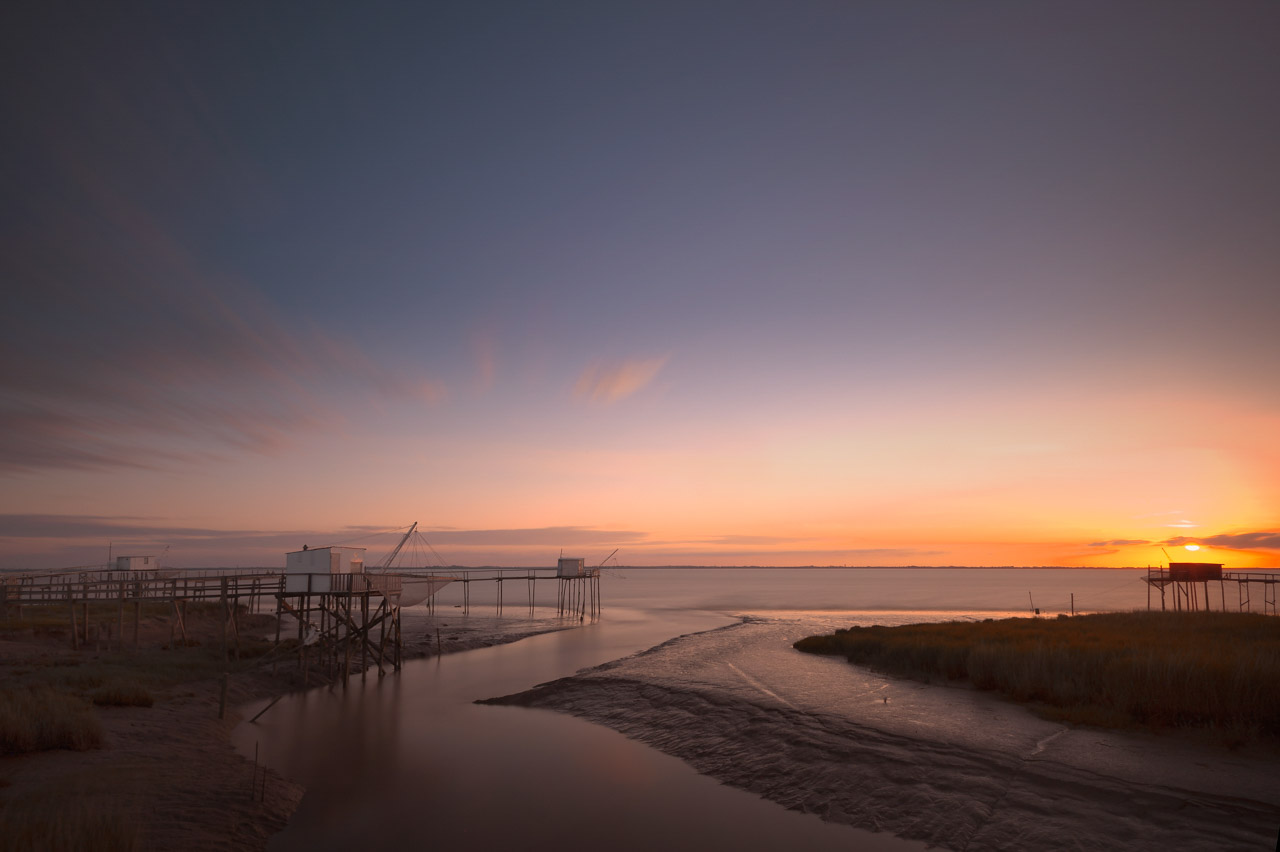
Pour composer cette photo de paysage, nous avons longtemps chercher le meilleur point de vue pour arranger tous les éléments.
To compose this landscape photograph, it took me a long time to look for the best point of view to arrange all the elements.

Table of Contents

    Page 1

  • The Meaning of «Compose Well»
  • What Goes Into a Photograph
  • The Debate Over Whether to Center the Subject
  • Finally

The Meaning of «Compose Well»

A viewer’s eyes scan a photograph from left to right first, then along the diagonal. That is how you read things. Composing a photograph is arranging the visual elements in order to create unity in the scene.

What Goes Into a Photograph

A photograph is composed of the following elements:

  • The photographic elements: the points of interest.
  • The attributes: shapes, masses, shadows, and light. These reinforce the photographic elements.
  • The reading reinforcements: guidelines and optical surfaces. These make the photo dynamic and give it rhythm.
  • The emotional reinforcements.

The photographic elements should be simple. They must ensure that the scene is unique. If there are two points of interest in the composition, the viewer’s eyes will move back and forth between them. It is essential for there to be a relationship between them. Otherwise, there will be a rift in the photograph.

If there are two points of interest, the construction of the scene must be coherent. The subjects must be on strong points. Some techniques you can use are the rule of thirds, having the subject reference something that is off-screen, or having the subject off-center.

For attributes, you can use masses, but pay attention to the balance between them.

For reinforcing elements, the guidelines should lead the eye to the subject. Oblique lines have more impact and make the photo more dynamic. The shapes give rhythm to the image.

  • Diagonal lines convey power.
  • Horizontal lines convey depth, calm, and rest.
  • Vertical lines are widely used in action photos. They convey strength and tranquility.
  • Vertical or horizontal framing can either strengthen or counteract the effect produced by the lines.
  • Optical surfaces are combinations of lines and angles.
  • When a triangle is pointing up, it elevates the photo spiritually. When it points down, it causes imbalance.
  • A square balances the photo and gives the impression of stiffness.
  • Ovals and curves give an impression of softness and femininity.

Stylistic "figures of speech":

  • Alliteration: the repetition of signs, or "visual rhymes". It enables the photograph to catch the viewer’s eye and attention, and strengthens the aesthetic of the photo.
  • Metaphor: allusions and formal or symbolic comparisons (e.g. using brain coral as a symbol for the brain).
  • Hyperbole: for example, using a wide angle lens for a close-up to exaggerate everything.
  • Zeugma: a mirror effect.
  • Synecdoche: using part of a subject to stand for the whole (showing just a crocodile fish’s eye to tell you what kind of fish it is, for example).

A good composition, is above all, a collection of visual data organized according to a scheme that invites the audience’s gaze to follow the photographer’s approach well. There is no universal answer because the choices are endless.

The Debate Over Whether to Center the Subject

A centered point of interest produces:

  • A normal point of view.
  • An easily-read photograph.
  • A stable photograph.
  • An emphasis on a unique point of interest.
  • An emphasis on simple patterns on a plain background.

However, centered subjects lead to boredom and limit the reading of a picture.

An off-center point of interest produces:

  • An unstable position.
  • A dynamic photo.
  • A stimulating image that causes the viewer to search for a new balance.
  • An image that holds the attention of an audience better.
  • Better transmission of a message or emotion.
  • An opportunity to use the rule of thirds.

Finally

A photographer needs time and experience to be able to compose and create a harmonious photograph. He also should also have a lot of sensitivity to the way an audience will look at the picture. To bring his gaze to bear properly, a photographer must above all learn to look all around him, not just through his viewfinder. Knowing how to compose a photo is knowing how to transmit what you feel.

Be humble, patient, constant, persevering, and persistent because the road to excellence is long.
Why and How it is important to manage the negative space in nature photography

In a photograph, the negative space is essential because it helps to highlight the points of interest of the photo. Good management and good mastery of the negative space improve not only the reading of a photograph but also the transmission of the message the photographer wants to send.

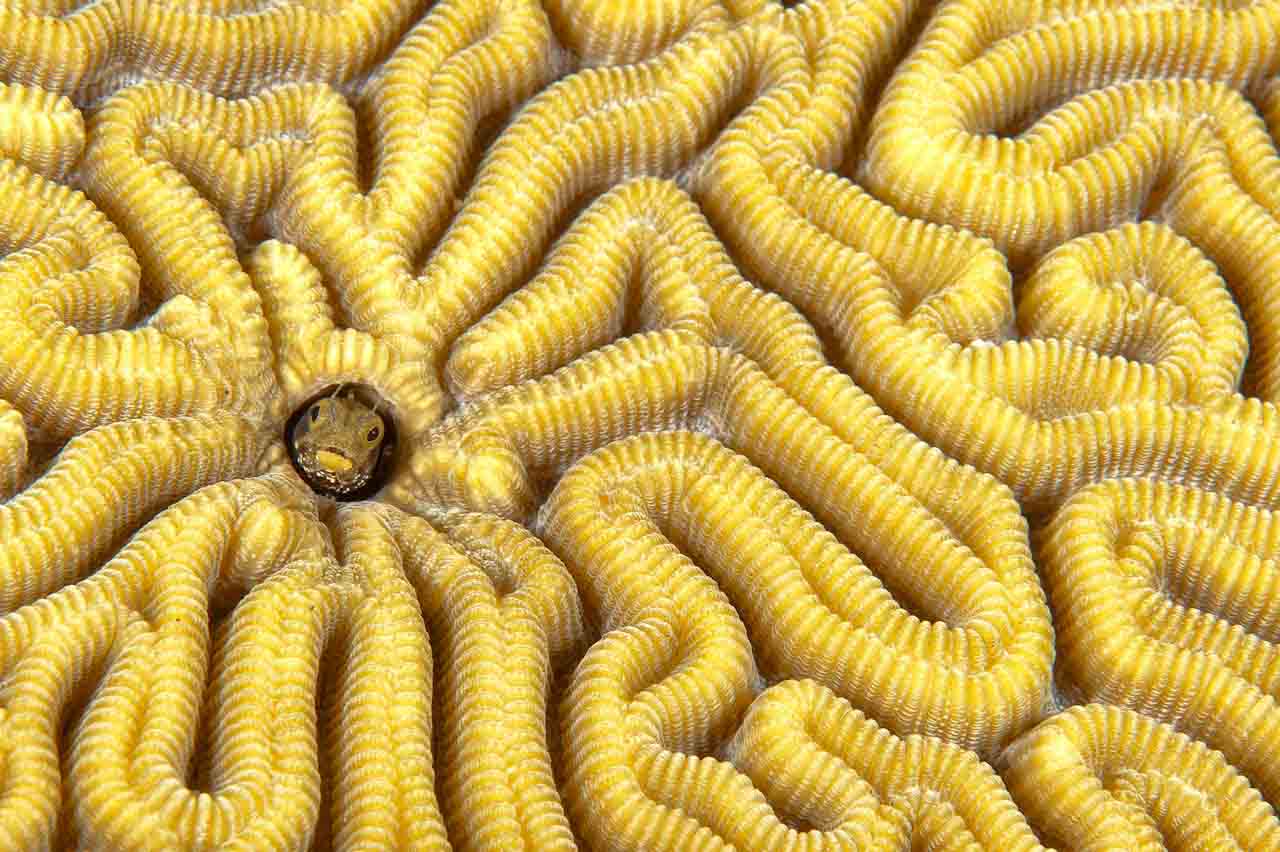
The negative space in this picture consists of the coral around the blenny. In this case, the negative space is the fish’s environment.

Table of Contents

    Page 1

  • Positive Space and Negative Space
  • How to Identify the Negative Space in a Photograph
  • Negative Space Is an Integral Part of a Photograph
  • Strengthen the Active Elements of a Photo
  • Create Separations Between Elements of a Photo
  • Let the Essential Elements Breathe
  • Do Not Hesitate to Get Rid of Some of The Positive Space
  • Finally

Positive Space and Negative Space

The positive space in a photograph is the space which contains the active elements of the photograph. Placed in relation to each other, all these elements will create a harmonious composition as I explained in this article.

The opposite of the positive space, the negative space is the space which contains all the non-active elements.

Creating harmonious coexistence between the two types of space can also define the framing more strongly, as I explained in a previous article.

Many photographers have trouble identifying the different spaces. To overcome this problem, they include all the elements they can find, and they make the scene totally incomprehensible. The message they want to convey cannot be heard.

Often, photographers think that a virtually empty photograph shows a lack of creativity. In reality, it is often the opposite because it takes years of practice and experience to master using the negative space. Personally, I judge the quality of a photographer based on the amount of negative space in his photographs.

How to Identify the Negative Space in a Photograph

Negative space may consist of empty areas. In that case, it merges with the background.

Negative space may be the emptiness around the photographic elements. For example, the gap between two trees is part of the negative space.

In general, the negative space can be identified by finding all the elements of the photo which are not active. For example, for a photograph of a deer, the negative space can be a wood or a meadow. For an underwater photo of a blenny, the negative space can be the sponge in which it lives.

In wildlife photography, underwater photography or landscape photography, the negative space is often what I call the animal's environment.

However, it is important to remember that the negative space does not in any way replace the foreground, if it is present, or the background. In some cases, it may be confused with these two photographic elements, but the foreground, the background, the points of interest, and the negative space are all always present.

The negative space in this picture consists of the coral around the blenny. In this case, the negative space is the fish’s environment.
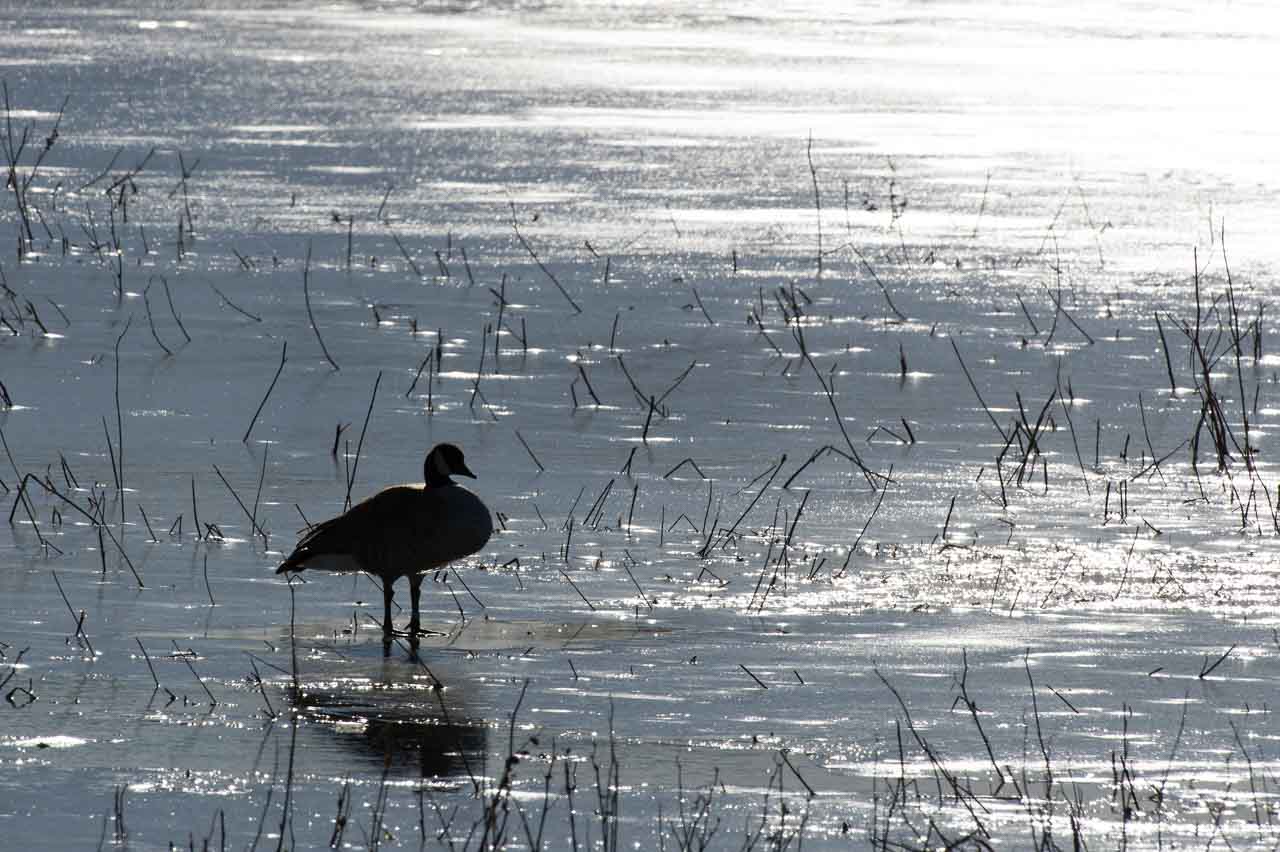
The negative space in this picture consists of the frozen lake around the Canada goose. I chose to create a silhouette to isolate the subject and use large spaces to highlight the animal.

Negative Space Is an Integral Part of a Photograph

When a photographer composes a photograph, he chooses his perspective first, as I described in this article. Then he chooses the elements that will appear in the scene, as I described in this article. Finally, he chooses his framing, as I described in this article.

A photograph is composed of the background, the foreground, the points of interest and the negative space. These four elements will combine into a harmonious whole and convey the message that the photographer wants to send. Someone who looks at a photograph never decides whether or not he is interested in it by looking at the details. The viewer’s first reaction is based on the combination of all the elements. This is how the human brain works. Once the overall message is understood, the brain will go back to look at the details and use them to refine its understanding.

For this reason, it is essential that the 4 elements that I have just mentioned be coherent and well-chosen.

The negative space is an important part of a photograph because a bad choice regarding it can cause an imbalance in the photo and destroy the message that the photographer wants to convey.

Strengthen the Active Elements of a Photo

A nature photographer must use negative space to showcase the points of interest either by means of a contrasting light or color.

The negative space enables a photographer to highlight the shapes in a photo. For example, when a photographer takes a photo of an animal, its shape, its muscles, and all its attributes will be highlighted well if the photographer is able to create space around it. If the framing is too tight, the subject will not be highlighted.

A photographer who wants to use negative space to strengthen the elements of a photograph uses the space around them to supply the form and the meaning of the picture.

Create Separations Between Elements of a Photo

A photographer who has experience in managing negative space well can create separations between elements of a photo or even transitions between different lights. This is an essential technique for emphasizing the main subjects.

Separations and transitions enable the photographer to guide the viewer’s glance to the points of interest in a picture, so they ensure that the message will be delivered more clearly.

Let the Essential Elements Breathe

The main goal of the negative space is to let the positive space breathe. The photographer must create ways of escape, or clearances, around the points of interest to highlight them better and to give life and vigor to the photograph. The airier the scene is, the more identifiable the composition is and the more viewer will be interested in the photograph. Avoid putting points of interest into confined spaces that will obstruct the reading of the photo.

Do Not Hesitate to Get Rid of Some of The Positive Space

If it becomes difficult to highlight the negative space in a photograph because the positive space with the active elements takes up too much room, do not hesitate to get rid of some of the positive space. Simply select the most important active elements and add room around them to let them breathe. The photograph will have more impact and be better balanced. As I pointed out earlier, many photographers think that a photograph is a suitcase in which they have to pack the maximum number of objects to save space. This is a fundamental error because the human brain needs to be able to identify the scene quickly. It unravels the scene by going back to the details after the first glance. If the first impression fails to interest him, the viewer will not go further.

Remember to get rid of some positive space if necessary.

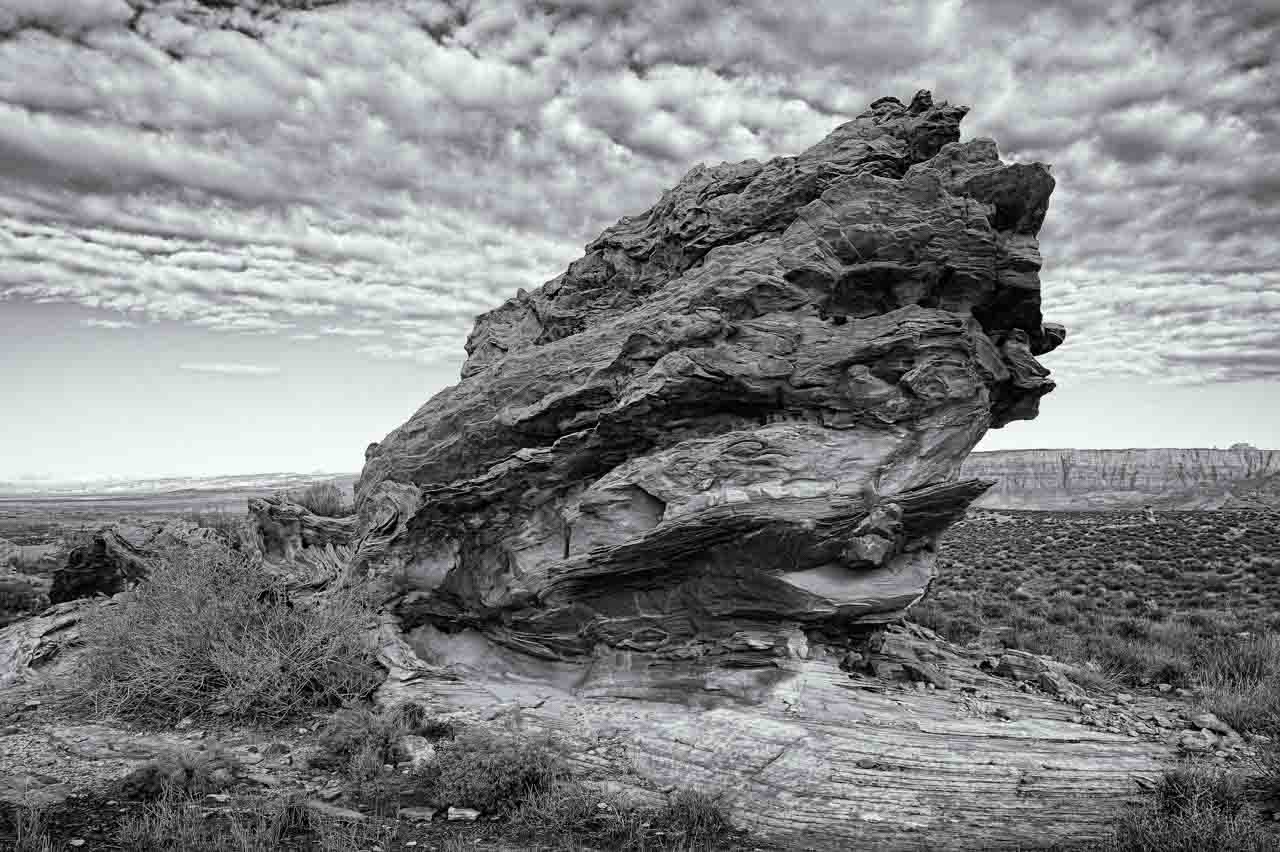
The negative space in this picture consists of the  space that we have created on either side of the rock. This technique enables  us to make the scene airy and let the composition breathe.
The negative space in this picture consists of the space that I have created on either side of the rock. This technique enables us to make the scene airy and let the composition breathe.

Finally

A nature photographer must understand what the negative space is. It is a separate element of the photograph. It is just as important as the foreground, the background, and the points of interest. Negative space enables the photographer to highlight the points of interest either by means of the empty space or of a contrasting light or color.

If a nature photograph seems inharmonious or unbalanced, it is because the negative space was mishandled.

Be humble, patient, constant, persevering, and persistent because the road to excellence is long.
  1. Photographing at Eye Level to Improve your Wildlife Photos
  2. Adjust the Settings of your Camera to Improve your Wildlife Photos
  3. 10 Tips for Creating Interesting Wildlife Photographs
  4. 6 Essential Elements for Your Black and White Photos

Page 128 of 201

  • 123
  • 124
  • 125
  • 126
  • 127
  • 128
  • 129
  • 130
  • 131
  • 132
  1. You are here:  
  2. Home
  3. Blog Photographic Approach

Share on Social Media

Post
Share
Share
E-mail
WhatsApp
Text

Join Me on Social Networks

Join Me on Facebook  Join Me on Instagram  Join Me on LinkedIn

Claim your free guide to make your photo impactful and meaningful

Claim Your Free Guide '50 Pages of Tips to Give Impact and Meaning to Your Photos'.

4 + 8 =

Click Here To Discover All My Chronicles About the Photographic Approach.

Treat Yourself to a Fine Art Print That Matches your Personality

Example of a vacation home interior with a black and white fine photo art displayed on the wall.

Fine Art Print Collections in Black and White

Fine Art Print Collections in Black and White Black and white photography is a suitable technique for many nature scenes. It requires a particular frame of mind. A black and white photograph should be prepared and planned from the framing to the…
11991
Fine Art Print Collections in Black and White
An abstract art photo displayed in a contemporary living room decor.

Fine Art Print Collections in Color

Collections of Fine Art Prints in Color Color photographs allow digressions and take the audience to the message by secondary ways. The world around us, especially nature, is colorful. A color image can show the way our surroundings really are. Of course, it…
10440
Fine Art Print Collections in Color
Example of a home interior with fine art prints in my style back to black displayed on the wall. These photos are a part of my collection 'Wild beauties of Kenya'.

Fine Art Print Collections in Back to Black

Fine Art Print Collections in Back to Black I want to share my fine art prints of nature in a personal style that I call "back to black." "Back to Black" was developed to embody a sharp and clean style for artistic photos that can be hung in your living room,…
9980
Fine Art Print Collections in Back to Black
A waiting room with a photo in the style Fusion displayed on the wall. Grey Heron in Fusion.

Fine Art Print Collections with the Fusion Style

Fine Art Print Collections with the Fusion Style I would like to share a very creative and modern photography style to represent Nature in a very different way. I call it "Fusion." I created the style to offer dynamic photos, allowing you to start a good day…
7908
Fine Art Print Collections with the Fusion Style
A living room with a photo in the style 'Impression' exposed on the wall. Rising sun in impression

Fine Art Print Collections with the ‘Impression’ Style

Fine Art Print Collections with the ‘Impression’ Style The objective of this photographic style is to create the ephemeral blurs. That's why I named it 'Impression.' Photography, as an art form, is a powerful means of expressing reality from different…
5827
Fine Art Print Collections with the ‘Impression’ Style
Fine art prints from the style back to black displayed on a wall. Amar Guillen, photographer artist

New Collections of Fine Art Prints Dedicated to the Wonders of Nature

New and Updated Fine Art Print Collections Dedicated to the Wonders of Nature Fine art prints from the style back to black displayed on a wall.
11446
New Collections of Fine Art Prints Dedicated to the Wonders of Nature

Themes of the Blog Articles

Landscape of Arches National Park in Utah in black and white.

Blog Articles Dedicated to Artist Statement

Blog Articles Dedicated to Artist Statement
Dunes of death Valley in Black and White

Blog Articles Dedicated to Black and White Photography

Blog Articles Dedicated to Black and White Photography
Abstract photo or trees reflection on water

Blog Articles Dedicated to Photographic Mindset

Blog Articles Dedicated to Photographic Mindset
Abstract photo of ridles on water

Blog Articles Dedicated to Artistic Photography

Blog Articles Dedicated to Artistic Photography
Abstract photo of Yellowstone

Blog Articles Dedicated to Photographic Language

Blog Articles Dedicated to Photographic Language
Pronghorn in Yellowstone

Blog Articles Dedicated to Wildlife Photography

Blog Articles Dedicated to Wildlife Photography
Landscape of Bryce Canyon

Blog Articles Dedicated to Photographing United States

Blog Articles Dedicated to Photographing United States
Underwater waves in the Red Sea

Blog Articles Dedicated to Photographic Techniques

Blog Articles Dedicated to Photographic Techniques
Tree of Black Canyon in Black and White

Blog Articles Dedicated to Landscape Photography

Blog Articles Dedicated to Landscape Photography
Manta Ray in Maldives in Black and White

Blog Articles Dedicated to Underwater Photography

Blog Articles Dedicated to Underwater Photography
Red Deer stag during the rut of the deer

Blog Articles Dedicated to Photographic Judgement

Blog Articles Dedicated to Photographic Judgement
Great Crested Greb and his chick

Unclassified Blog Articles

Unclassified Blog Articles

You Might Be Interested By One of These Photographic Approach Articles

Photograph in black and white of the Grand Canyon from Arizona State in USA.

Why and How Mastering the Steps of Creating an Art Photograph

3603
Why and How Mastering the Steps of Creating an Art Photograph
An example of a narrative photo. Landscape of Island in the Sky in the Canyonlands in Utah in United States. Photo in black and white by Amar Guillen.

Why and How: Creating Impactful Narrative Photos

4118
Why and How: Creating Impactful Narrative Photos
Snowy landscape of Yellowstone during winter.

3 Steps for Giving Meaning to Your Photos

8750
3 Steps for Giving Meaning to Your Photos
Two lions in Kenya. Photographed in black and white. Photograph by Amar Guillen, photographer artist.

To Create Aesthetics Photos, Print your Images

4238
To Create Aesthetics Photos, Print your Images

Receive Free Tips On How to Give Impact and Meaning to Your Photos. Subscribe to Receive Regular Articles.

2 + 7 =

Contact Me By Email

10 + 9 =
This site is protected by reCAPTCHA and the Google Privacy Policy and Terms of Service apply.

About Amar Guillen, Creator of Fine Art Prints of Nature
As a photographer capturing the artistic essence for several decades, I have mastered the art of crafting an authentic experience for art enthusiasts and collectors of visual art.
When I observe my surroundings, be it friends, family, relationships, or professional contacts, I see souls in perpetual motion. Every moment of their existence is engulfed by daily hassles, work concerns, social media, online or televised information streams, and videos on the web.
Every minute, they strive to accomplish something, fearing losing ground and feeling marginalized in this frenzied society. Imprisoned by an oppressive schedule, the essential eludes them, drowned in the tumult of daily life. Is it really crucial to watch yet another cat video on the internet? Is it necessary to post twenty daily messages on social media?
Despite this, they remain constantly stressed and anxious about the challenges of the world, without being able to influence these monumental problems. It is at this moment that my artistic nature photographs come into play. Those who have had the privilege of hanging one of my works in their personal or professional space have expressed a radical transformation in their lives.
Every day, contemplating these works of art immerses them in tranquility, inner peace, and rediscovered serenity. They then understand that nature has the power to unravel tensions, to encourage reflection on the essential. Artistic photographs thus become open windows to the wonders of nature.
I have chosen to share the best of myself by helping others discover their identity, personality, style, all while reconnecting with nature. Take the time to explore my artistic photographs if you wish to reveal your true essence. Once hung in your space, your view of the world will be transformed.
Amar Guillen is a creator of fine art prints of nature.
I am Amar Guillen, creator of nature art photographs. I have a deep conviction that contemplating nature has the power to transform human beings. If everyone learned to know, respect, and preserve nature, our world would be transformed into a haven of peace where everyone would find their place.
Copyright © 2003 - 2026 Guillen Photo LLC - All rights reserved. Amar Guillen, professional photographer since 2003.
  • Blog
  • Calibration
  • Legal Information
  • Sitemap
  • Accessibility
  • Contact Me
  • Updates of the Website
I Want to Help You to Create Interesting Photos

How Can I Help You To Create More Interesting Photos?

Ask Me a Technical Question.
Subscribe to my Newsletter. The Inspiration Behind Guillen Photo.

Select your language

  • English (United Kingdom)
  • Français (France)
Claim your free guide to make your photo impactful and meaningful

Claim Your Free Guide '50 Pages of Tips to Give Impact and Meaning to Your Photos'.

6 + 3 =

Contact Me By Email

10 + 1 =

Office Address:
3512 Robin Road
Plano Texas 75075
USA

Office phone: (+1)214-769-6825