• The Art of ChoosingHome page
  • Fine Art Prints3 Editions
  • CollectionsAll Collections
  • AboutAmar Guillen
  • Customer Space & Contact
  • Select your language

    • English (United Kingdom)
    • Français (France)
  • All You Need to Select Your Fine Art Print
    • How to Choose a Fine Art Print - Q&A - FAQ
    • New Creations
    • Explore Some Interiors
    • Fine Art Print Blog
  • Browse by Edition
    • All Fine Art Prints
    • Unique Edition
    • Limited Edition
    • Open Edition
  • Browse by Style
    • Black and White
    • Color
    • Fusion
    • Impression
    • Back to Black
    • Landscapes in Black and White
    • Landscapes in Color
    • Animals in Black and White
    • Animals in Color
  • Browse by Theme
    • Landscape
    • Wildlife
    • Underwater
    • Abstract
    • Symbolic
    • Landscapes of the United States
    • Landscapes of France
    • Landscapes of Scotland
    • Seascapes
    • Relaxing
    • Energizing
    • Playful
  • Browse by Format
    • Rectangular
    • Square
    • Panoramic
  • Contact Me
    • Contact Me by Email or Phone
  • Collections
    • New Collections
    • All Collections
  • Browse by Theme
    • Landscapes
    • Wildlife
    • Underwater
    • Abstract
    • Symbolic
    • Landscapes of France
    • Landscapes of the United States
  • Browse by Style
    • Black and White
    • Color
    • Impression
    • Back to Black
    • Fusion
  • Contact Me
    • Contact Me by Email or Phone
  • Discover More About Me
    • Discover Who is Amar Guillen
    • Artistic and Photographic Statement
  • Galleries
    • Photo Galleries
    • Abstract Portfolio in Color
    • Black and White Landscape Photography Portfolio
    • Color Landscape Photography Portfolio
    • Black and White Wildlife Photography Portfolio
    • Color Wildlife Photography Portfolio
    • Underwater Photography Portfolio
  • Contact Me
    • Contact Me by Email or Phone
  • Your Customer Space
    • Create or Manage your Account
    • Your Download Space
    • Your Orders
  • Contact Me
    • Contact Me by Email or Phone

You are in that section: Home > Blog > Blog of the Photographic Creation Approach

Knowing How to Manage Light is the Secret of Successful Underwater Photos

Since 2002, when digital cameras became widely available, a camera has become an essential accessory for most recreational divers. It is almost part of their diving equipment. As professional underwater photographers, I have decided to share a few secrets and tips for taking beautiful underwater photos.
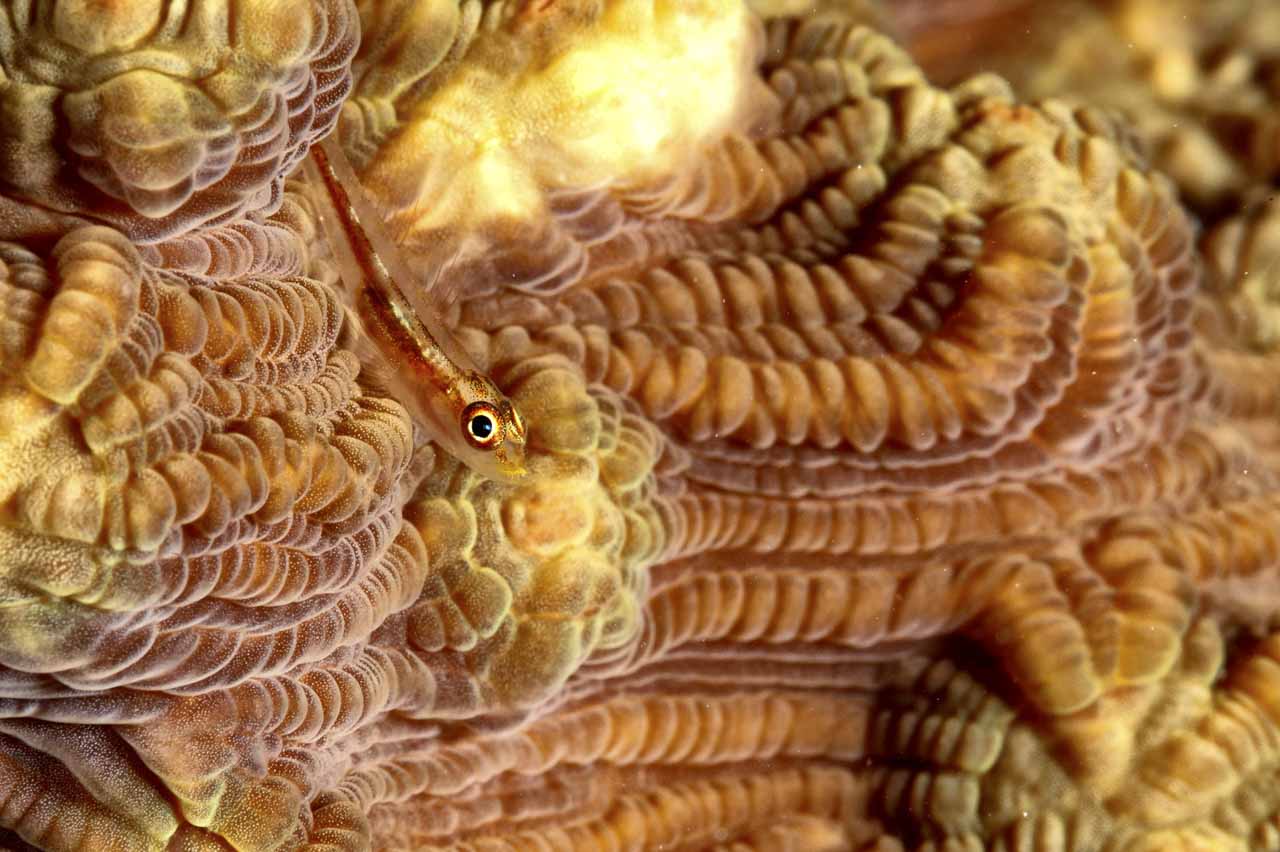
A goby on a hard coral colony in the Red Sea, Egypt.

Table of Contents

    Page 1

  • The Basics: Diving Techniques
  • Know Your Equipment
  • The Great Secret: Lighting
  • Page 2

  • Go Closer, a Little Closer, Even Closer
  • Creating a Photograph Vs. Taking a Photo
  • What Makes a Sharp Picture?
  • Using Editing Software for a WOW Effect
  • Another Secret: Sharing Photographs With Others
  • Underwater Photography: an Art, not a Pastime
 

The Basics: Diving Techniques

Knowing the essentials of safe diving is not enough for successful underwater photography. When an underwater photographer needs to make fine adjustments to his buoyancy, he should not have to rely on his buoyancy compensator. He should have mastered the ballast lung technique, which allows for very fine adjustments.

Mastering buoyancy techniques helps a photographer avoid damaging the seabed and disturbing the animals he is trying to photograph. When using artificial light, the photographer will only be a few inches away from his subject, and the last thing he wants to do is crash into it or frighten it away.

A perfect mastery of buoyancy also enables a photographer to take very sharp pictures. Motion, even if it is only shaking hands or a mistimed breath, often causes blurry photos.

On an ideal diving trip, the first two dives should be in less than 50 feet of water. At that depth, there is more time to readjust the settings and learn good breathing habits.


Know Your Equipment

In order to take good underwater photos, a photographer should know the basic functions of his camera by heart. Even 60 feet underwater, his ability to make judgements and decisions will be altered. No one is quite as alert underwater as they would be on land. Whatever adjustments he needs to make to the camera should be instinctive, whether it is setting the speed, aperture, or sensitivity. He should be able to make any adjustment to the camera without having to look at the buttons or the menu.

For example, when photographing a fish, a photographer must be able to react immediately or the fish will be gone before the picture is taken. I often recommend that beginning photographers take a few hundred pictures on land before they try going underwater. Knowledge of every single function on the camera, of course, is not essential, but knowing all the basics is very useful.


The Great Secret: Lighting

The key to creating a beautiful photograph is mastery of light, whether natural or artificial.

Natural light is used to photograph large animals, such as dolphins or whales. As they are often relatively far away from the lens, a flash is useless because the light does not reach the subjects. Large animals often swim close enough to the surface for natural light to be used. Natural light is also used in caves where there are skylights, such as the caves in the Red Sea or the Cenotes in the Yucatan Peninsula.

Underwater strobes are the best form of artificial lighting, since they give the best rendering of the subjects. Artificial light can freeze the movement of highly mobile fish and show the natural colors of the seabed. For artificial light to be effective, a photographer needs to be very close to his subject. The closer he is to his subject, the more light from the strobe will actually reach the subject.

Whether natural or artificial, light must be used correctly. If a photographer does not understand how to use light, he will never be able to take beautiful underwater photographs. Mastery of light is an essential skill, even though it is not easy to learn.

Most underwater strobes use TTL, which means that the camera body controls the speed of the strobe. However, TTL takes some of the control over the light away from the photographer. It can keep a good shot from being really beautiful. When the camera is the one in control, the result is not a great creative work.

Mastering natural light is a challenge because underwater photographers have to know how to use the sun and how to adapt the camera’s settings to make the best use of the light. It is also essential to wait until the subject is in exactly the right place. This is the only way to create pictures that look “modeled”. The same thing has to be done for pictures which use a mixture of natural and artificial light. Learning these techniques requires time and practice. Once a photographer has mastered light, he often does not recognize his own photos.
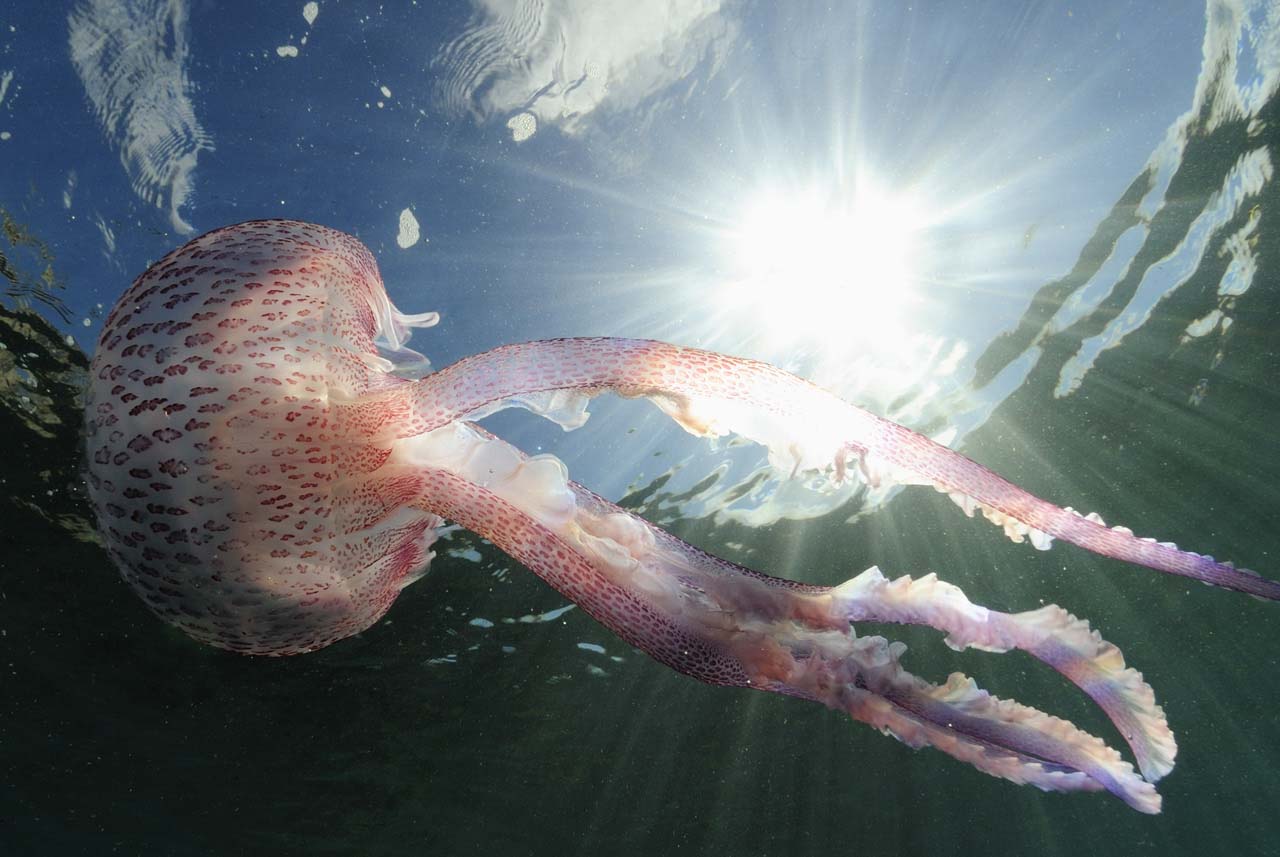
A jellyfish in the Mediterranean sea off the coast of Monaco.

Go Closer, a Little Closer, Even Closer

The “10-10-10-30-40 rule” in Photography

How do you make a great and memorable photo? How do the great photographers do it? I hear these questions at some point during every photo workshop. To answer them, I eventually came up with “the rule of 10-10-10-30-40”.

Hummingbird in flight foraging a flower.
The sailfish sardine run off the coast of Mexico, Isla Mujeres.

Table of Contents

  • The Equipment Is Not as Important as Some People Think
  • Developing Your Own Photographic Artistry
  • Post-processing Is Essential
  • Luck, Chance, Destiny: The Holy Grail of Photography
  • My 10-10-10-30-40 Rule in Photography

The Equipment Is Not as Important as Some People Think

With the advent of digital technology, camera manufacturers immediately understood that people were always interested in the newest model. But the problem with this is that people who constantly race for the newest, “best” model are never satisfied.

When the marketing is effective, you may end up believing that you must have the new gadget to take good pictures.

People buy the thing believing that it will solve all their problems. The equipment is important, but it cannot make you into a photographer.

I have met many people who thought that they could take the photo of the century just because they had new equipment. Big mistake!

Once you have a good camera, there is no need to get another one for quite a long time.

Photographers who know how to use their camera properly have no problem can take good pictures with any reasonably good-quality camera. In 2004, the American photographer Doug Perrine won the scuba class of the prestigious BBC World Life contest with a simple Canon EOS 60D that he had owned for several years.

Developing Your Own Photographic Artistry

When they spend too much time looking at others’ work, many photographers forget their personal style and try to copy what they have seen.

Although I often recommend this approach as a starting point for finding inspiration, it is not where you should stop. You should develop a style which reflects your own interests and motivations. In short, everyone needs a personal photographic artistry.

Once you know the basic techniques of composition, managing depth of field, setting the exposure, and managing light, you can begin to develop your own style.

You can begin to show other people aspects of the world that they have not seen. That style is the one that will allow your to be recognized by others. Choose themes that you like, and do not try to make your photos perfect. For example, you can focus on close up photography in general, or taking pictures of species living in cold countries.

Most photographers move in the same universe, and they often face the same issues in choosing their specialty. Sometimes, what you think you want may not be what you actually like to do: why try to specialize in Asian photography when you take 90% of your photos in Brittany?

Post-processing Is Essential

I believe that it is now essential to know how to use specialized software to develop photos. This software can adjust the exposure, white balance, contrast, and lighting, remove particles, crop the photo if necessary, saturate the colors a little, and adjust the sharpness...

All these techniques are designed to correct imperfections caused by digital cameras that are not calibrated to take a particular type of photographs.

Each subject has its own unique mood, and sometimes what the camera sees is a little different from what you see. Post-processing simply allows you to make sure that the photograph portrays what you actually saw during the shoot.

My intention is not to defend or use the technique of photo composition as many people do. I am not interested in creating imaginary scenes cobbled together from multiple photographs. For me, this is not “photography” in the strict sense but “photographic art”.

Compositing is an art form that was born with the advent of image processing software. Computer post-processing, however, uses the same techniques used in the laboratory before the digital age. New technologies have made it simple and accessible to everyone.

Hummingbird in flight foraging a flower.

Luck, Chance, Destiny: The Holy Grail of Photography

This is the only factor that cannot be quantified or programmed, and therefore it is essential for the creation of a great picture.

Luck, destiny, chance, call it what you will, but no one, not even the best photographers in the world, can do without it.

It is the unexpected moment when an extraordinary scene will appear in front of the lens and you will capture it. It is this memorable moment that you have often waited for years to see. These are the moments that I call “magical". On many of my trips, I do not take any really good pictures, simply because the evasive luck was not there. Other times, my patience has been rewarded and I have taken wonderful, beautiful photos.

All great photos happened in part because the photographer had "luck", but I always remind my students of the truism so well known by gamers: "100% of winners have tried."

Keep this maxim in mind, and sooner or later you will find luck. Imagine you have a simple point and shoot camera and you happen to find a pair of rare sharks mating while one of your friends is photographing nudibranchs in Lembeh Strait, with the last generation SLR camera. Which one will take the great photo? Without this factor of chance, it is impossible to take a picture worthy of winning a contest or becoming well-known.

My 10-10-10-30-40 Rule in Photography

Create a great photograph takes:

  • 10% technical skills,
  • 10% mastery of the camera,
  • 10% mastery of software,
  • 30% photographic vision,
  • 40 % luck.

Be humble, patient, constant, persevering, and persistent because the road to excellence is long.

  1. The Wild Boar in Charente-Maritime, West of France
  2. Encounter with a very angry wild boar sow in Charente-Maritime, France
  3. The Bugle of the Red Deer in Charente-Maritime, West of France
  4. The Wreck of "Recoin" off the Island of Oleron

Page 152 of 201

  • 147
  • 148
  • 149
  • 150
  • 151
  • 152
  • 153
  • 154
  • 155
  • 156
  1. You are here:  
  2. Home
  3. Blog Photographic Approach

Share on Social Media

Post
Share
Share
E-mail
WhatsApp
Text

Join Me on Social Networks

Join Me on Facebook  Join Me on Instagram  Join Me on LinkedIn

Claim your free guide to make your photo impactful and meaningful

Claim Your Free Guide '50 Pages of Tips to Give Impact and Meaning to Your Photos'.

4 + 8 =

Click Here To Discover All My Chronicles About the Photographic Approach.

Treat Yourself to a Fine Art Print That Matches your Personality

Example of a vacation home interior with a black and white fine photo art displayed on the wall.

Fine Art Print Collections in Black and White

Fine Art Print Collections in Black and White Black and white photography is a suitable technique for many nature scenes. It requires a particular frame of mind. A black and white photograph should be prepared and planned from the framing to the…
11991
Fine Art Print Collections in Black and White
An abstract art photo displayed in a contemporary living room decor.

Fine Art Print Collections in Color

Collections of Fine Art Prints in Color Color photographs allow digressions and take the audience to the message by secondary ways. The world around us, especially nature, is colorful. A color image can show the way our surroundings really are. Of course, it…
10440
Fine Art Print Collections in Color
Example of a home interior with fine art prints in my style back to black displayed on the wall. These photos are a part of my collection 'Wild beauties of Kenya'.

Fine Art Print Collections in Back to Black

Fine Art Print Collections in Back to Black I want to share my fine art prints of nature in a personal style that I call "back to black." "Back to Black" was developed to embody a sharp and clean style for artistic photos that can be hung in your living room,…
9980
Fine Art Print Collections in Back to Black
A waiting room with a photo in the style Fusion displayed on the wall. Grey Heron in Fusion.

Fine Art Print Collections with the Fusion Style

Fine Art Print Collections with the Fusion Style I would like to share a very creative and modern photography style to represent Nature in a very different way. I call it "Fusion." I created the style to offer dynamic photos, allowing you to start a good day…
7908
Fine Art Print Collections with the Fusion Style
A living room with a photo in the style 'Impression' exposed on the wall. Rising sun in impression

Fine Art Print Collections with the ‘Impression’ Style

Fine Art Print Collections with the ‘Impression’ Style The objective of this photographic style is to create the ephemeral blurs. That's why I named it 'Impression.' Photography, as an art form, is a powerful means of expressing reality from different…
5827
Fine Art Print Collections with the ‘Impression’ Style
Fine art prints from the style back to black displayed on a wall. Amar Guillen, photographer artist

New Collections of Fine Art Prints Dedicated to the Wonders of Nature

New and Updated Fine Art Print Collections Dedicated to the Wonders of Nature Fine art prints from the style back to black displayed on a wall.
11446
New Collections of Fine Art Prints Dedicated to the Wonders of Nature

Themes of the Blog Articles

Landscape of Arches National Park in Utah in black and white.

Blog Articles Dedicated to Artist Statement

Blog Articles Dedicated to Artist Statement
Dunes of death Valley in Black and White

Blog Articles Dedicated to Black and White Photography

Blog Articles Dedicated to Black and White Photography
Abstract photo or trees reflection on water

Blog Articles Dedicated to Photographic Mindset

Blog Articles Dedicated to Photographic Mindset
Abstract photo of ridles on water

Blog Articles Dedicated to Artistic Photography

Blog Articles Dedicated to Artistic Photography
Abstract photo of Yellowstone

Blog Articles Dedicated to Photographic Language

Blog Articles Dedicated to Photographic Language
Pronghorn in Yellowstone

Blog Articles Dedicated to Wildlife Photography

Blog Articles Dedicated to Wildlife Photography
Landscape of Bryce Canyon

Blog Articles Dedicated to Photographing United States

Blog Articles Dedicated to Photographing United States
Underwater waves in the Red Sea

Blog Articles Dedicated to Photographic Techniques

Blog Articles Dedicated to Photographic Techniques
Tree of Black Canyon in Black and White

Blog Articles Dedicated to Landscape Photography

Blog Articles Dedicated to Landscape Photography
Manta Ray in Maldives in Black and White

Blog Articles Dedicated to Underwater Photography

Blog Articles Dedicated to Underwater Photography
Red Deer stag during the rut of the deer

Blog Articles Dedicated to Photographic Judgement

Blog Articles Dedicated to Photographic Judgement
Great Crested Greb and his chick

Unclassified Blog Articles

Unclassified Blog Articles

You Might Be Interested By One of These Photographic Approach Articles

Photograph in black and white of the Grand Canyon from Arizona State in USA.

Why and How Mastering the Steps of Creating an Art Photograph

3603
Why and How Mastering the Steps of Creating an Art Photograph
An example of a narrative photo. Landscape of Island in the Sky in the Canyonlands in Utah in United States. Photo in black and white by Amar Guillen.

Why and How: Creating Impactful Narrative Photos

4118
Why and How: Creating Impactful Narrative Photos
Snowy landscape of Yellowstone during winter.

3 Steps for Giving Meaning to Your Photos

8750
3 Steps for Giving Meaning to Your Photos
Two lions in Kenya. Photographed in black and white. Photograph by Amar Guillen, photographer artist.

To Create Aesthetics Photos, Print your Images

4238
To Create Aesthetics Photos, Print your Images

Receive Free Tips On How to Give Impact and Meaning to Your Photos. Subscribe to Receive Regular Articles.

2 + 7 =

Contact Me By Email

10 + 9 =
This site is protected by reCAPTCHA and the Google Privacy Policy and Terms of Service apply.

About Amar Guillen, Creator of Fine Art Prints of Nature
As a photographer capturing the artistic essence for several decades, I have mastered the art of crafting an authentic experience for art enthusiasts and collectors of visual art.
When I observe my surroundings, be it friends, family, relationships, or professional contacts, I see souls in perpetual motion. Every moment of their existence is engulfed by daily hassles, work concerns, social media, online or televised information streams, and videos on the web.
Every minute, they strive to accomplish something, fearing losing ground and feeling marginalized in this frenzied society. Imprisoned by an oppressive schedule, the essential eludes them, drowned in the tumult of daily life. Is it really crucial to watch yet another cat video on the internet? Is it necessary to post twenty daily messages on social media?
Despite this, they remain constantly stressed and anxious about the challenges of the world, without being able to influence these monumental problems. It is at this moment that my artistic nature photographs come into play. Those who have had the privilege of hanging one of my works in their personal or professional space have expressed a radical transformation in their lives.
Every day, contemplating these works of art immerses them in tranquility, inner peace, and rediscovered serenity. They then understand that nature has the power to unravel tensions, to encourage reflection on the essential. Artistic photographs thus become open windows to the wonders of nature.
I have chosen to share the best of myself by helping others discover their identity, personality, style, all while reconnecting with nature. Take the time to explore my artistic photographs if you wish to reveal your true essence. Once hung in your space, your view of the world will be transformed.
Amar Guillen is a creator of fine art prints of nature.
I am Amar Guillen, creator of nature art photographs. I have a deep conviction that contemplating nature has the power to transform human beings. If everyone learned to know, respect, and preserve nature, our world would be transformed into a haven of peace where everyone would find their place.
Copyright © 2003 - 2026 Guillen Photo LLC - All rights reserved. Amar Guillen, professional photographer since 2003.
  • Blog
  • Calibration
  • Legal Information
  • Sitemap
  • Accessibility
  • Contact Me
  • Updates of the Website
I Want to Help You to Create Interesting Photos

How Can I Help You To Create More Interesting Photos?

Ask Me a Technical Question.
Subscribe to my Newsletter. The Inspiration Behind Guillen Photo.

Select your language

  • English (United Kingdom)
  • Français (France)
Claim your free guide to make your photo impactful and meaningful

Claim Your Free Guide '50 Pages of Tips to Give Impact and Meaning to Your Photos'.

6 + 5 =

Contact Me By Email

6 + 3 =

Office Address:
3512 Robin Road
Plano Texas 75075
USA

Office phone: (+1)214-769-6825