• The Art of ChoosingHome page
  • Fine Art Prints3 Editions
  • CollectionsAll Collections
  • AboutAmar Guillen
  • Customer Space & Contact
  • Select your language

    • English (United Kingdom)
    • Français (France)
  • All You Need to Select Your Fine Art Print
    • How to Choose a Fine Art Print - Q&A - FAQ
    • New Creations
    • Explore Some Interiors
    • Fine Art Print Blog
  • Browse by Edition
    • All Fine Art Prints
    • Unique Edition
    • Limited Edition
    • Open Edition
  • Browse by Style
    • Black and White
    • Color
    • Fusion
    • Impression
    • Back to Black
    • Landscapes in Black and White
    • Landscapes in Color
    • Animals in Black and White
    • Animals in Color
  • Browse by Theme
    • Landscape
    • Wildlife
    • Underwater
    • Abstract
    • Symbolic
    • Landscapes of the United States
    • Landscapes of France
    • Landscapes of Scotland
    • Seascapes
    • Relaxing
    • Energizing
    • Playful
  • Browse by Format
    • Rectangular
    • Square
    • Panoramic
  • Contact Me
    • Contact Me by Email or Phone
  • Collections
    • New Collections
    • All Collections
  • Browse by Theme
    • Landscapes
    • Wildlife
    • Underwater
    • Abstract
    • Symbolic
    • Landscapes of France
    • Landscapes of the United States
  • Browse by Style
    • Black and White
    • Color
    • Impression
    • Back to Black
    • Fusion
  • Contact Me
    • Contact Me by Email or Phone
  • Discover More About Me
    • Discover Who is Amar Guillen
    • Artistic and Photographic Statement
  • Galleries
    • Photo Galleries
    • Abstract Portfolio in Color
    • Black and White Landscape Photography Portfolio
    • Color Landscape Photography Portfolio
    • Black and White Wildlife Photography Portfolio
    • Color Wildlife Photography Portfolio
    • Underwater Photography Portfolio
  • Contact Me
    • Contact Me by Email or Phone
  • Your Customer Space
    • Create or Manage your Account
    • Your Download Space
    • Your Orders
  • Contact Me
    • Contact Me by Email or Phone

You are in that section: Home > Blog > Blog of the Photographic Creation Approach

Joining a Photo Workshop Allows You to Develop your Technique

Deciding to participate in a nature photography workshop is taking a special step. Many nature photographers consider this decision. Some of them will probably never go for it because they believe that their photography skills are complete or sufficient.

Others understand that taking a nature photography course is a good way to continue developing their technical expertise while opening new creative doors. It is also a way to meet other photographers who share their passion. Even though I are professional photographers, I take two courses per year.
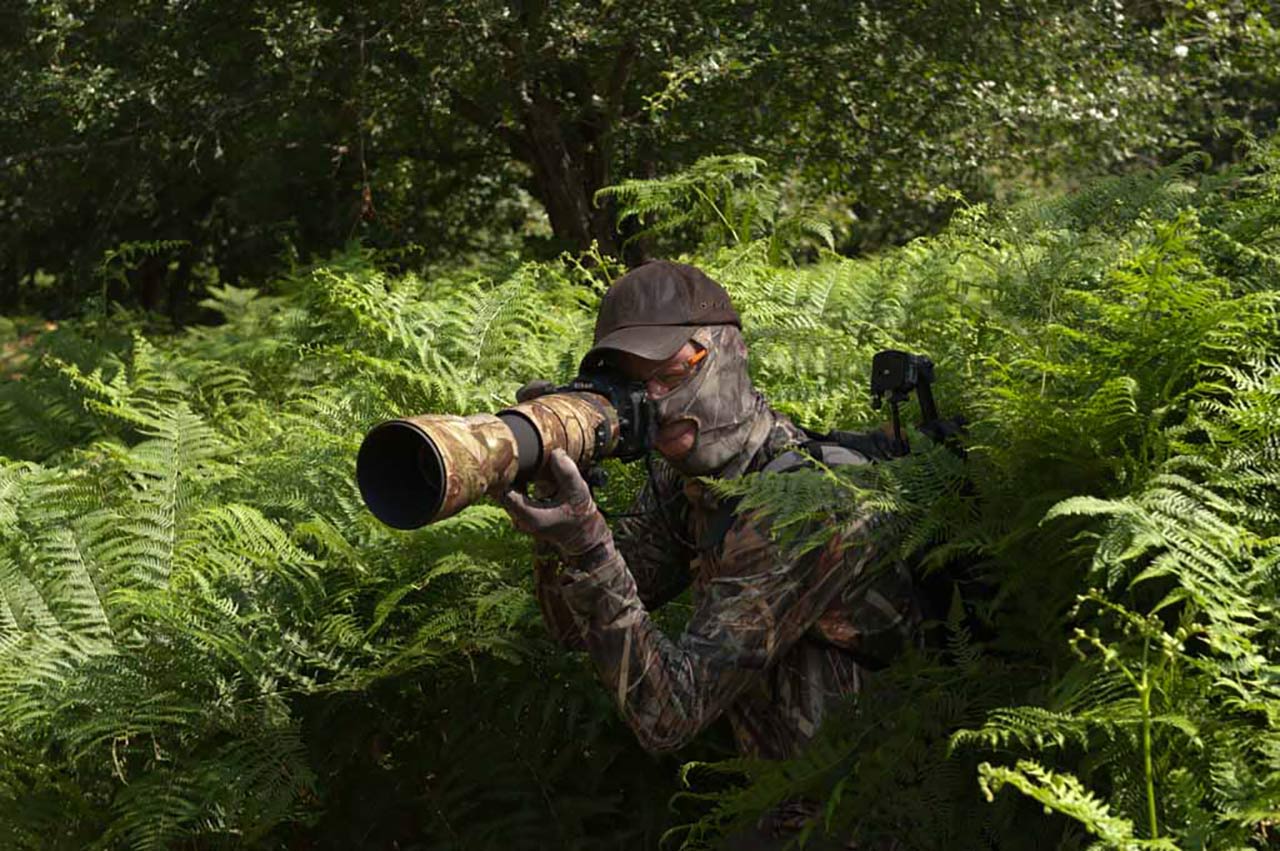
Amar Guillen en train de donner des explications à un stagiaire sous l'eau pendant un stage de photo sous-marine.
Robin, a participant in one of my workshops dedicated to the rutting season, in action..

Table of Contents

    Page 1

  • What a Nature Photography Workshop Is
  • Sharing a Passion for the Wonders of Nature
  • Sharing and Exchanging Views on Technology and Nature
  • Continuing to Develop Technical Expertise
  • Opening New Creative Doors
  • Page 2

  • My Teaching Method: ACANP
  • I Take Two Classes Per Year Myself
  • Meeting Other Enthusiasts About Photography and Nature
  • Discovering Hidden Treasures and Having Adventures in Distant Places
  • Relaxing and Thinking of Different Things
  • Sharing, Motivating, Inspiring
  • Finally

What a Nature Photography Workshop Is

First of all, a photography workshop is a time of training. It is a special time during which a photographer acquires new technical or creative skills.

I always meet two types of participants in my courses. Some come with specific goals they want to achieve before the end of the class. Others have started getting bored when they are out in the field taking pictures. They do not have specific goals. They just want to open new creative doors. In both cases, I always adapt to the needs of each photographer. My teaching progressions are designed to adapt in order to meet individual needs.

I am well aware that a workshop is a significant investment for many people. However, because I want to meet the best expectations of each participant, a lot of preparation is necessary. I often say that everything depends on the price that the participants set on their training.

All the participants who have been taking my classes for years have told me that they became winners after taking a class with me. Many of them had tried to train themselves via forums or websites. Things are quite different out in the field. It is difficult to put theories into practice, and there was nobody with them to correct them or explain what they needed to do.

A nature photography workshop is a time of training during which photographers work with a trainer to hone their skills in applying theoretical concepts while out in the field.

Sharing a Passion for the Wonders of Nature

A photography workshop is primarily technical. However, both the participants and the trainers must be passionate about the wonders of nature. If the whole group, including the trainer, is in agreement, and everyone shares the same ethical and moral values, then the trainer will be able to transmit knowledge to the students well.

For my part, I am always amazed by the richness of nature, whether I have observed an animal behavior or the light that bathes a landscape. Observing the world always gives me joy and inimitable, constantly renewed feelings.

The trainer’s goal is for the participants to be able to focus all their attention on the wonders of nature during the course. He should provide all the technical knowledge that the students need to be able to create beautiful photographs. They should avoid asking unnecessary questions or missing the sceneries in front of them.

This is why a nature photography workshop should only be composed of photographers who share a passion for nature. This is an essential condition for the most effective transmission of photographic skills and knowledge.

Sharing and Exchanging Views on Technology and Nature

A nature photography workshop is based on photos, examples and practice. The leaders should reveal their tricks to the participants to enable them to take better photos. They are not there to create their own photos.

For that reason, no abstract technical jargon should be used during a course. The goal of the trainers should be to guide the participants in refining their vision. The participants should have fun while they create photographs.

Personally, I like to convey my messages using emotions or stories. I talk about artistic sensitivity, framing, lighting, and color. I have extensive experience as professional photographers. I have trained hundreds of photographers. My teaching is all based on experience and practice. I always remember to return to the fundamentals of photography.

Continuing to Develop Technical Expertise

The advent of digital photography has enabled many people to discover a wonderful world where it is possible to create successful photos quickly. Cameras have so many great features that 90% of photographers do not need anything else to create good photos.

However, for the remaining 10%, it is necessary to read the technical documents more deeply in order to understand how to make the right adjustments for extreme situations. This is the case in wildlife photography, where animals move quickly in action scenes. The automatic mode is insufficient in this case. This is also the case in underwater photography, where cameras often have to be adjusted manually to ensure that the artificial light is managed as well as possible. Even in landscape photography, where the scenes are static and only natural light is used, it is essential to set up the camera properly for long exposures or for night photography.

However, as always when computers become involved with something, everything becomes more complex. The settings become incomprehensible and the technical terms become an esoteric language of their own.

The software used for post-processing nature photographs has also become increasingly complex and difficult to use. In addition, it has become indispensable in the digital workflow, whether for viewing, sorting, selecting, developing, or printing photographs, or for creating slideshows. Even if a picture is 95% successful when it is taken, the remaining 5%, which is created on a computer, will produce the impact that the photographer is entitled to expect from his photos.

Nature photography workshops are a way to continue learning to understand the technology that is rapidly changing both cameras and software. As professional photographers, I spend a lot of time in front of a computer processing my photos. I always use the best products in my business. As professional photographers, I cannot compromise in my work. I must always produce high quality pictures.

Opening New Creative Doors

Over the years in which I have taught nature photography, I have met many photographers who have lost the pleasure of going out in the field with a camera. They had often visited many countries, photographed the most beautiful landscapes in the world, and observed the rarest animals on earth.

And yet, despite all these rich experiences, they have lost the desire to take pictures. A photography workshop is often the last experience they want to try.

I fully understand that loss of interest in photography because I also went through this phase. It happens to all photographers who do not find an answer to one crucial question: why?

To answer this question, I have developed a teaching method. The acronym which I use for it is "ACANP".

My teaching method: ACANP

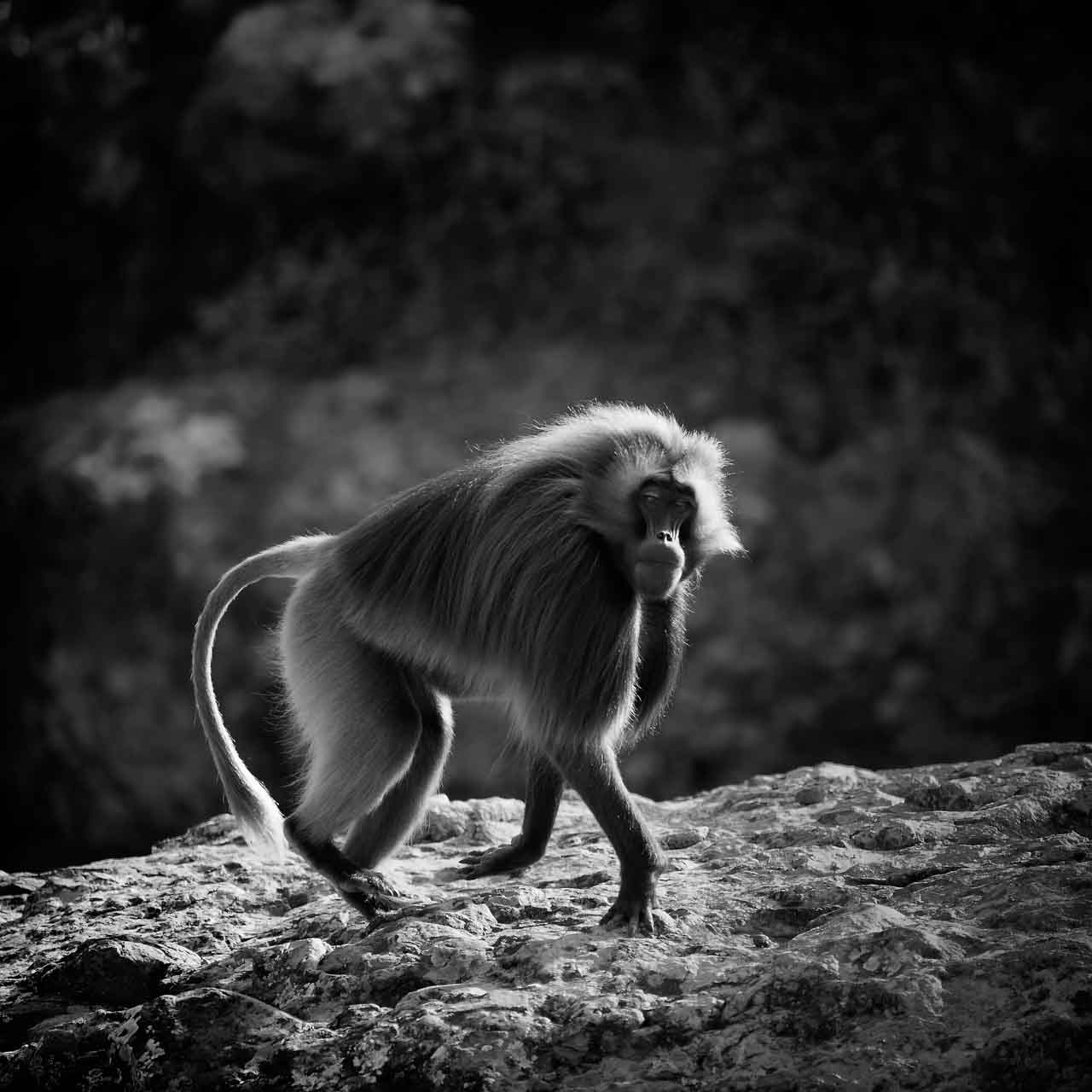
Why and How Photographing Gelada Monkeys In Ethiopia

Gelada are monkeys that live only in the highlands of Ethiopia, where I had the chance to observe and photograph and some of them. They are very interesting animals to photograph, because their attitudes and expressions are very close to those of human beings. In addition, they are very aesthetically beautiful with their imposing manes and pink chests.

I spent several days in Ethiopia photographing some of them. I have never felt such closeness to an animal. While I was photographing gelada, I had the most intense experience that I have had in wildlife photography.

Photographing gelada in Ethiopia is one of the best experiences I have had in wildlife photography.

Table of Contents

    Page 1

  • Gelada Are Only Found in Ethiopia
  • Very Anthropomorphic Apes
  • One of My Best Encounters With An Animal
  • A Good Guide Is Essential
  • Always Leave a Way of Escape When Approaching Gelada
  • The Best Technique: Backlighting
  • Finally

Gelada Are Only Found in Ethiopia

The gelada is only found in Ethiopia. The last census indicates a population of about 50,000 individuals. These monkeys live high in the cliffs where they hide at night to avoid predators. Photographing them is difficult because their dwelling places are not easy to access. They are quite rare and rather timid, especially in the presence of their young.

Gelada live in small groups. Each group is composed of a male, several females and their young. I saw groups of 20 to 30 individuals. Males are unable to reproduce until they are about 8 or 10 years old. Females are sexually mature at 3, and can have a baby at 4.

Gelada are herbivores. To feed, they gather grass in their hands before moving it gently to their mouths. This gesture, as well as their other movements, is pretty amazing. Their gestures are very close to those of humans.

Very Anthropomorphic Apes

What immediately struck me when I observed gelada was how similar their behaviors are to human behaviors. I have already mentioned the delicate manner in which they feed. The way that they looked at me while I was photographing them suggested that they fully understood what I was doing there.

Their eyes were full of curiosity and surprise.

Observing the life of a group of gelada is like observing a miniature human society. There is a group leader. He is a large male who protects and manages the colony. He takes care of the females who take care of the young. Tasks are shared and strongly prioritized. The leader must also fight other males who try to seduce the females. The females do not hesitate to leave the group if they think that the leader is too old.

Young gelada are like real children. They only enjoy playing together. They bicker and shout, and if there is conflict, they are quick to find their mother’s comforting arms.

I was surprised by the sounds that the gelada make. I had the impression of hearing sounds made by humans. It sounded to me as though the animals were speaking a real language. It was a big surprise.

One of My Best Encounters With An Animal

One of the best encounters with wildlife that I have had happened during a photo session when I was looking for a group of gelada. One day, I left very early in the morning, before sunrise. I wanted to surprise the monkeys by climbing up the cliffs. Usually, they come out of the cliffs as the sun heats the atmosphere.

That day, I saw no monkeys for two hours. The group had moved the previous day. I decided to keep looking anyway.

I walked along the top of the cliffs contemplating the rift valley, over six thousand feet below. This walk was a wonderful time of solitary contemplation. The Ethiopian highlands are an invitation to introspection.

The temperature rose from 10 to 25 degrees Celcius (50 to 77 degrees Fahrenheit).

Suddenly, just at the corner of a gravel path, I saw a male gelada sitting on a stone. He was contemplating the rift valley. He did not move. He just looked into the distance, with one arm beside his body and the other resting on his leg. Time stood still. The only motion came from a light breeze that moved the leaves of the bushes around me. The gelada was thoughtful. He seemed to be enjoying the scenery in front of him. No doubt he was wondering about the meaning of his life. At that moment, I believed that some animals may have the exact same questions that humans do. I had no doubt that he was enjoying that morning that looked like the beginning of the world.

Quietly, and without making any sudden movements, I set up my tripod to capture this scene. I would not have disturbed this magical moment for anything in the world.

After a few minutes, he turned toward me. He watched me with an air of saying, "I also can think and appreciate what is given to me".

Slowly, he turned and moved along the cliff.

I remained stunned and silent for several minutes after this gift of contemplative humanity.

A Good Guide Is Essential

Observing and photographing gelada requires a good guide who knows exactly where to find them. At night, they sleep in steep cliffs that are several hundred yards high. These cliffs are their best protection against predators, such as leopards. They are located very high up on plateaus which can only be accessed on foot.

These cliffs are very long. Only an experienced guide who knows the ground well knows where a group spent the night. The groups of gelada are very mobile. Over the course of a day, they may move several hundred yards in order to find more food.

When I go to Ethiopia, I always use a local guide who knows the area and the habits of the monkeys. On my first trip, I only used the general guide who looked after me throughout the trip. He was not able to find the gelada.

Always Leave a Way of Escape When Approaching Gelada

When photographing gelada, it is crucial to always leave them an exit so that they can escape if danger threatens them. I was able to get very close to some groups without disturbing them, even though I was always visible, with my tripod at the lowest position. I even sang without disturbing them. However, I once moved to get a better light and blocked the exit to the cliff. The whole group disappeared in seconds. Then I understood that it is always necessary to leave them the well-known exit.

Other groups did not tolerate my presence. Each time, there were young present. The mothers are very protective. The safe distance is always at least 60 to 80 meters (180 to 240 feet). If I got any closer, they called their young to climb on their backs, and escaped by ways where I could not follow.

The Best Technique: Backlighting

The best way to photograph gelada is to use backlighting. Their very long hair creates very artistic iridescent effects. To get the light behind your subject, you have to move around the subject to find the best light. It is not always easy, and you have to be very careful not to obstruct their exits.

When photographing gelada, it is also important to pay attention to the environment. They are herbivores that feed in grasslands or near small bushes. You must be careful not to include disruptive elements, like dead branches or trees that are in poor condition, in your scenes. Gelada are such beautiful animals that it would be unfortunate to make them unsightly by including damaged natural elements.

The texture and fullness of the gelada’s mane are showcased by the backlighting, which makes the hair iridescent.

Finally

Photographing gelada is a unique experience for a wildlife photographer. They are not easy to find. A photographer must make a long trip to observe them. But with a good nature guide, it is possible. Gelada are such anthropomorphic animals that it is easy to create good photos as long as you know the right time of day to photograph them and how to use good lighting.

It is easy to make gelada look anthropomorphic. They are fascinating animals to photograph.
  1. The Choice of the Decor is Essential for Your Wildlife Photos
  2. Questions to Ask Yourself When Taking Wildlife Photos
  3. June 2016. Photography trip to the Dombes in France
  4. May 2016. Wildlife photo conference in Paris

Page 125 of 201

  • 120
  • 121
  • 122
  • 123
  • 124
  • 125
  • 126
  • 127
  • 128
  • 129
  1. You are here:  
  2. Home
  3. Blog Photographic Approach

Share on Social Media

Post
Share
Share
E-mail
WhatsApp
Text

Join Me on Social Networks

Join Me on Facebook  Join Me on Instagram  Join Me on LinkedIn

Claim your free guide to make your photo impactful and meaningful

Claim Your Free Guide '50 Pages of Tips to Give Impact and Meaning to Your Photos'.

4 + 8 =

Click Here To Discover All My Chronicles About the Photographic Approach.

Treat Yourself to a Fine Art Print That Matches your Personality

Example of a vacation home interior with a black and white fine photo art displayed on the wall.

Fine Art Print Collections in Black and White

Fine Art Print Collections in Black and White Black and white photography is a suitable technique for many nature scenes. It requires a particular frame of mind. A black and white photograph should be prepared and planned from the framing to the…
11991
Fine Art Print Collections in Black and White
An abstract art photo displayed in a contemporary living room decor.

Fine Art Print Collections in Color

Collections of Fine Art Prints in Color Color photographs allow digressions and take the audience to the message by secondary ways. The world around us, especially nature, is colorful. A color image can show the way our surroundings really are. Of course, it…
10440
Fine Art Print Collections in Color
Example of a home interior with fine art prints in my style back to black displayed on the wall. These photos are a part of my collection 'Wild beauties of Kenya'.

Fine Art Print Collections in Back to Black

Fine Art Print Collections in Back to Black I want to share my fine art prints of nature in a personal style that I call "back to black." "Back to Black" was developed to embody a sharp and clean style for artistic photos that can be hung in your living room,…
9980
Fine Art Print Collections in Back to Black
A waiting room with a photo in the style Fusion displayed on the wall. Grey Heron in Fusion.

Fine Art Print Collections with the Fusion Style

Fine Art Print Collections with the Fusion Style I would like to share a very creative and modern photography style to represent Nature in a very different way. I call it "Fusion." I created the style to offer dynamic photos, allowing you to start a good day…
7908
Fine Art Print Collections with the Fusion Style
A living room with a photo in the style 'Impression' exposed on the wall. Rising sun in impression

Fine Art Print Collections with the ‘Impression’ Style

Fine Art Print Collections with the ‘Impression’ Style The objective of this photographic style is to create the ephemeral blurs. That's why I named it 'Impression.' Photography, as an art form, is a powerful means of expressing reality from different…
5827
Fine Art Print Collections with the ‘Impression’ Style
Fine art prints from the style back to black displayed on a wall. Amar Guillen, photographer artist

New Collections of Fine Art Prints Dedicated to the Wonders of Nature

New and Updated Fine Art Print Collections Dedicated to the Wonders of Nature Fine art prints from the style back to black displayed on a wall.
11446
New Collections of Fine Art Prints Dedicated to the Wonders of Nature

Themes of the Blog Articles

Landscape of Arches National Park in Utah in black and white.

Blog Articles Dedicated to Artist Statement

Blog Articles Dedicated to Artist Statement
Dunes of death Valley in Black and White

Blog Articles Dedicated to Black and White Photography

Blog Articles Dedicated to Black and White Photography
Abstract photo or trees reflection on water

Blog Articles Dedicated to Photographic Mindset

Blog Articles Dedicated to Photographic Mindset
Abstract photo of ridles on water

Blog Articles Dedicated to Artistic Photography

Blog Articles Dedicated to Artistic Photography
Abstract photo of Yellowstone

Blog Articles Dedicated to Photographic Language

Blog Articles Dedicated to Photographic Language
Pronghorn in Yellowstone

Blog Articles Dedicated to Wildlife Photography

Blog Articles Dedicated to Wildlife Photography
Landscape of Bryce Canyon

Blog Articles Dedicated to Photographing United States

Blog Articles Dedicated to Photographing United States
Underwater waves in the Red Sea

Blog Articles Dedicated to Photographic Techniques

Blog Articles Dedicated to Photographic Techniques
Tree of Black Canyon in Black and White

Blog Articles Dedicated to Landscape Photography

Blog Articles Dedicated to Landscape Photography
Manta Ray in Maldives in Black and White

Blog Articles Dedicated to Underwater Photography

Blog Articles Dedicated to Underwater Photography
Red Deer stag during the rut of the deer

Blog Articles Dedicated to Photographic Judgement

Blog Articles Dedicated to Photographic Judgement
Great Crested Greb and his chick

Unclassified Blog Articles

Unclassified Blog Articles

You Might Be Interested By One of These Photographic Approach Articles

Photograph in black and white of the Grand Canyon from Arizona State in USA.

Why and How Mastering the Steps of Creating an Art Photograph

3603
Why and How Mastering the Steps of Creating an Art Photograph
An example of a narrative photo. Landscape of Island in the Sky in the Canyonlands in Utah in United States. Photo in black and white by Amar Guillen.

Why and How: Creating Impactful Narrative Photos

4118
Why and How: Creating Impactful Narrative Photos
Snowy landscape of Yellowstone during winter.

3 Steps for Giving Meaning to Your Photos

8750
3 Steps for Giving Meaning to Your Photos
Two lions in Kenya. Photographed in black and white. Photograph by Amar Guillen, photographer artist.

To Create Aesthetics Photos, Print your Images

4238
To Create Aesthetics Photos, Print your Images

Receive Free Tips On How to Give Impact and Meaning to Your Photos. Subscribe to Receive Regular Articles.

2 + 7 =

Contact Me By Email

10 + 9 =
This site is protected by reCAPTCHA and the Google Privacy Policy and Terms of Service apply.

About Amar Guillen, Creator of Fine Art Prints of Nature
As a photographer capturing the artistic essence for several decades, I have mastered the art of crafting an authentic experience for art enthusiasts and collectors of visual art.
When I observe my surroundings, be it friends, family, relationships, or professional contacts, I see souls in perpetual motion. Every moment of their existence is engulfed by daily hassles, work concerns, social media, online or televised information streams, and videos on the web.
Every minute, they strive to accomplish something, fearing losing ground and feeling marginalized in this frenzied society. Imprisoned by an oppressive schedule, the essential eludes them, drowned in the tumult of daily life. Is it really crucial to watch yet another cat video on the internet? Is it necessary to post twenty daily messages on social media?
Despite this, they remain constantly stressed and anxious about the challenges of the world, without being able to influence these monumental problems. It is at this moment that my artistic nature photographs come into play. Those who have had the privilege of hanging one of my works in their personal or professional space have expressed a radical transformation in their lives.
Every day, contemplating these works of art immerses them in tranquility, inner peace, and rediscovered serenity. They then understand that nature has the power to unravel tensions, to encourage reflection on the essential. Artistic photographs thus become open windows to the wonders of nature.
I have chosen to share the best of myself by helping others discover their identity, personality, style, all while reconnecting with nature. Take the time to explore my artistic photographs if you wish to reveal your true essence. Once hung in your space, your view of the world will be transformed.
Amar Guillen is a creator of fine art prints of nature.
I am Amar Guillen, creator of nature art photographs. I have a deep conviction that contemplating nature has the power to transform human beings. If everyone learned to know, respect, and preserve nature, our world would be transformed into a haven of peace where everyone would find their place.
Copyright © 2003 - 2026 Guillen Photo LLC - All rights reserved. Amar Guillen, professional photographer since 2003.
  • Blog
  • Calibration
  • Legal Information
  • Sitemap
  • Accessibility
  • Contact Me
  • Updates of the Website
I Want to Help You to Create Interesting Photos

How Can I Help You To Create More Interesting Photos?

Ask Me a Technical Question.
Subscribe to my Newsletter. The Inspiration Behind Guillen Photo.

Select your language

  • English (United Kingdom)
  • Français (France)
Claim your free guide to make your photo impactful and meaningful

Claim Your Free Guide '50 Pages of Tips to Give Impact and Meaning to Your Photos'.

4 + 9 =

Contact Me By Email

2 + 2 =

Office Address:
3512 Robin Road
Plano Texas 75075
USA

Office phone: (+1)214-769-6825