• The Art of ChoosingHome page
  • Fine Art Prints3 Editions
  • CollectionsAll Collections
  • AboutAmar Guillen
  • Customer Space & Contact
  • Select your language

    • English (United Kingdom)
    • Français (France)
  • All You Need to Select Your Fine Art Print
    • How to Choose a Fine Art Print - Q&A - FAQ
    • New Creations
    • Explore Some Interiors
    • Fine Art Print Blog
  • Browse by Edition
    • All Fine Art Prints
    • Unique Edition
    • Limited Edition
    • Open Edition
  • Browse by Style
    • Black and White
    • Color
    • Fusion
    • Impression
    • Back to Black
    • Landscapes in Black and White
    • Landscapes in Color
    • Animals in Black and White
    • Animals in Color
  • Browse by Theme
    • Landscape
    • Wildlife
    • Underwater
    • Abstract
    • Symbolic
    • Landscapes of the United States
    • Landscapes of France
    • Landscapes of Scotland
    • Seascapes
    • Relaxing
    • Energizing
    • Playful
  • Browse by Format
    • Rectangular
    • Square
    • Panoramic
  • Contact Me
    • Contact Me by Email or Phone
  • Collections
    • New Collections
    • All Collections
  • Browse by Theme
    • Landscapes
    • Wildlife
    • Underwater
    • Abstract
    • Symbolic
    • Landscapes of France
    • Landscapes of the United States
  • Browse by Style
    • Black and White
    • Color
    • Impression
    • Back to Black
    • Fusion
  • Contact Me
    • Contact Me by Email or Phone
  • Discover More About Me
    • Discover Who is Amar Guillen
    • Artistic and Photographic Statement
  • Galleries
    • Photo Galleries
    • Abstract Portfolio in Color
    • Black and White Landscape Photography Portfolio
    • Color Landscape Photography Portfolio
    • Black and White Wildlife Photography Portfolio
    • Color Wildlife Photography Portfolio
    • Underwater Photography Portfolio
  • Contact Me
    • Contact Me by Email or Phone
  • Your Customer Space
    • Create or Manage your Account
    • Your Download Space
    • Your Orders
  • Contact Me
    • Contact Me by Email or Phone

You are in that section: Home > Blog > Blog of the Photographic Creation Approach

Tarpon Sardine Run in Bonaire in the Southern Caribbean Sea

A Unique Underwater Show for Photographers

Tarpon sardines run in Bonaire in the southern Caribbean Sea
Tarpon sardines run in Bonaire in the southern Caribbean Sea.

During our last trip to the island of Bonaire off the coast of Venezuela, we had the opportunity and the privilege to attend a unique and extraordinary event: a tarpon sardine run. We stayed for an hour, the time it took to empty our scuba tanks, as we watched the hunt organized by these marine predators.

A soft and sandy beach welcomes us

We were staying in Bonaire for a week for an underwater photo safari with a group of other photographers. Near the end of our stay, when we were diving to sites located north of the island, we decided to take the group to a site which is largely inaccessible and not very well known to most scuba divers. Earlier in the trip, we had already had the opportunity to dive to the site. We had found the drop off very interesting for wide angle photography, so everyone was equipped with a wide angle lens.

As we got ready to dive, a beautiful, soft beach welcomed us. As always in Bonaire, the atmosphere was calm and serene. Life there moves to the rhythm of the waves of the Caribbean Sea. But, before we go any farther in our story, it is good to understand the location of Bonaire.

A paradise for underwater photographers

Bonaire is an island in the group of the Leeward Islands in the Lesser Antilles. It is located east of Curacao off the coast of Venezuela. The capital is the town of Kralendijk. Bonaire has a Dutch special status since October 10, 2010 (BES Islands) following the dissolution of the former autonomous state “The Federation of the Netherlands Antilles,” to which it originally belonged.

Its highest point is Brandaris, which rises to 241 yards above sea level. The island’s origin is volcanic, but all the traces of volcanic activity are gone now, because the island was flooded 70 million years ago. The soil today is made from the remnants of ancient coral reefs. The island is divided into the Windward area (the east coast), and the Leeward area (the west coast). It has 12,000 residents living in an area of approximately 111 square miles.

A coral reef surrounds the island and is renowned around the world as an exceptional site for scuba diving (many sites in Bonaire carry the English logo “Diver's Paradise”). The waters surrounding the island are considered a marine sanctuary, so fishing is strictly prohibited.

Almost everyone who dives in Bonaire goes to an underwater canyon along the leeward side. The average depth of the canyon is 40 yards. It is bordered by two cliffs, and is anywhere from 10 to 20 yards wide. The island has over 80 dive sites listed. It is not uncommon to find two sites just 100 yards apart. Yet, despite this close proximity, the topography and the topology, the fish species and the species of sponges, are often completely different from one site to another. Each one is unique.

The absence of pollution, caused by the island’s low population, along with the prohibition of fishing, make Bonaire a place where fish species can grow easily.

We had already explored many of the best dive sites south of the island. It was time to go north, even if it the northern dive sites are harder to get to.

We had heard of the legend of tarpon sardine runs

During our stay on the island, we had heard that a legendary tarpon sardine run was possible in some places in the north, but we had not had the opportunity to see or photograph one. We also knew that the site was suitable for such an event because a school of sardines could easily come and hide along the cliff wall. The currents along the northern side are not too strong for them.

When we arrive on the beach, we have already gotten the hang of diving from the shore. We park our cars in the parking lot and gear up on the pavement. All dives in Bonaire are done from the beach. Nobody talks — everyone is already thinking about the pictures they are planning to take. We think about wide angle photography, and the appropriate framing and composition for our pictures. Our minds are already wandering through the maze of the drop off between the large, tubular sponges.

As it often happens when we make plans, nothing goes as planned.

The school of sardines is huge, but my scuba tank is closed

We are entering the water while walking from the sandy beach. We swim along the surface until we reach the drop off, 50 yards from the shore. I look down to the bottom below, and I see a huge school of sardines 10 yards under the water. I feel the adrenaline rush start — this is a wonderful opportunity. I alert everyone at the surface. All the divers quickly descend towards the bottom.

At this point, we do not know that it is a tarpon sardine run, but the school of fish on its own is a great opportunity to take beautiful photos.

I deflate my BCD vest to go down. I take two breaths, then I no longer feel the air get into my regulator: I forgot to open my scuba tank. Everyone else has already gone down to the school of sardines. I am alone on the surface with my big housing in both hands, and my scuba tank is still closed. I am very upset. I think that the school will swim away as soon as the first underwater strobe fires. Unable to open the cylinder valve with the housing in my hands, I only have one solution: remove the BCD at the surface. I swim back to the surface to open my tank. After three minutes that seem like an eternity, I'm finally ready to go back down. I have no hope: the school must have gone already. It’s really frustrating, when I think that this is my third trip and I finally had the school of sardines so close.

20 yards down, I meet all my teammates who did not care about me. I could go to the beach, no one noticed my absence. I think I would have done the same thing in their place. They are forgiven!

The good news is that the school of sardines is not gone. And because it is framed by a school of huge tarpons that make a royal feast. We're living the legend.

A simple but very effective strategy

We have already had the opportunity to attend a dolphin sardine run and a sailfish sardine run, but tarpons use a totally different hunting strategy. The tarpon’s mouth slants upwards. He has to attack his prey from below. This is why we did not see them from the surface. The tarpons are underneath the school of sardines.

To keep the school of sardines contained, a number of tarpons swim around the school while others feed. The tarpon, even if it is a lively and powerful fish does not have the speed of a dolphin or a sailfish. They wait for the food to come close to them before attacking. We are witnessing a wonderful show.

The school of sardines is so compact and so huge that we are in near-complete darkness underneath them. The strobes are needed. The flashing light frightens the sardines even more. We have the impression that the tarpons stay close to us to take advantage of the sardine’s terror.

The whole group of photographers is in a trance. We do not know what to photograph. Everyone tries to find the best angle and the best framing to make the most beautiful picture of this wonderful event.

As we use up the air in our scuba tanks, we have to bring the dive to a close. Even though we are not far underwater, we still have to breathe. After an hour of photography, the group goes to the beach. The show is over.

During the return to the beach, everyone is buried in their thoughts. Did this really happen? Nobody talks. It was amazing and incredible.

We all look at each other to make sure it was not a dream. Our relaxed smiles and joy prove that it was real.

Tarpon sardines run in Bonaire in the southern Caribbean Sea.

Tarpon sardines run in Bonaire in the southern Caribbean Sea

Tarpon sardines run in Bonaire in the southern Caribbean Sea.

Tarpon sardines run in Bonaire in the southern Caribbean Sea

Tarpon sardines run in Bonaire in the southern Caribbean Sea.

Tarpon sardines run in Bonaire in the southern Caribbean Sea

Tarpon sardines run in Bonaire in the southern Caribbean Sea.

Tarpon sardines run in Bonaire in the southern Caribbean Sea

Tarpon sardines run in Bonaire in the southern Caribbean Sea.

Tarpon sardines run in Bonaire in the southern Caribbean Sea
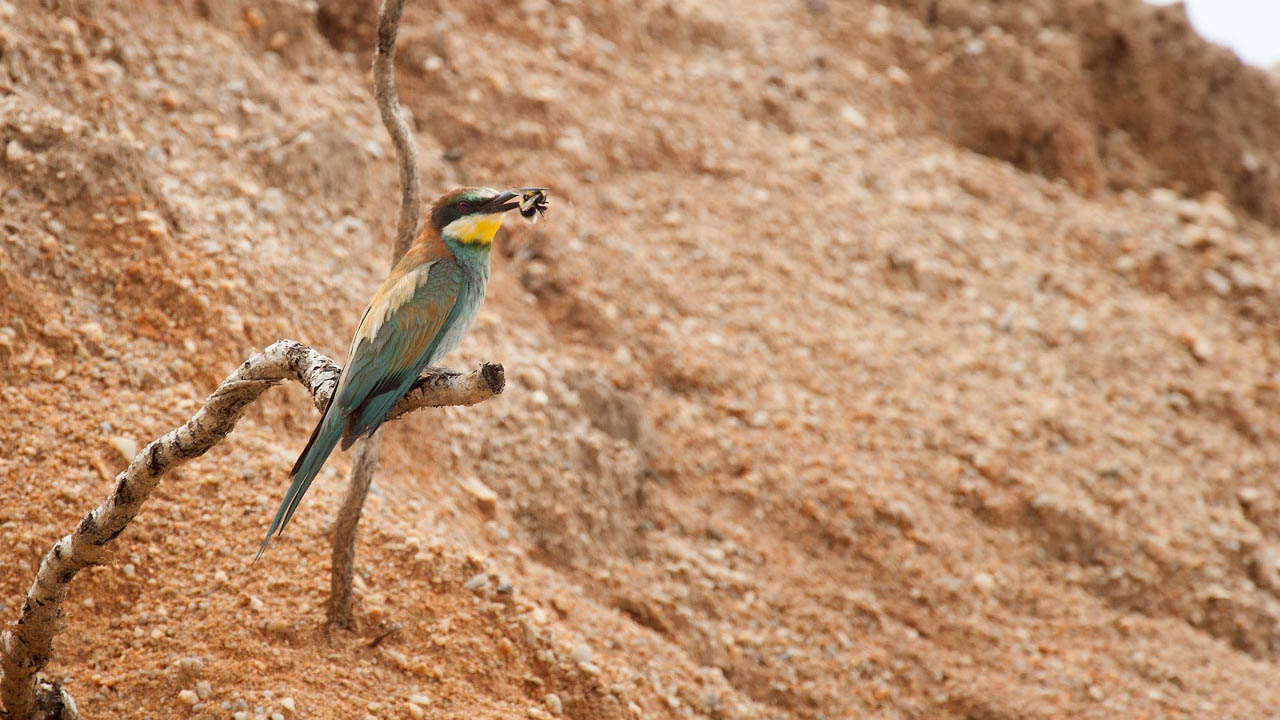
Photographing European bee-eaters in Charente-Maritime, France

For a photographic project in the Charente-Maritime department in France, which will end in 2014, I needed a photograph of a European bee-eater. I knew that the habits of this beautiful bird make it very photogenic. But, before I could take pictures of the birds, I had to find them, and that turned out to be harder than it sounds.

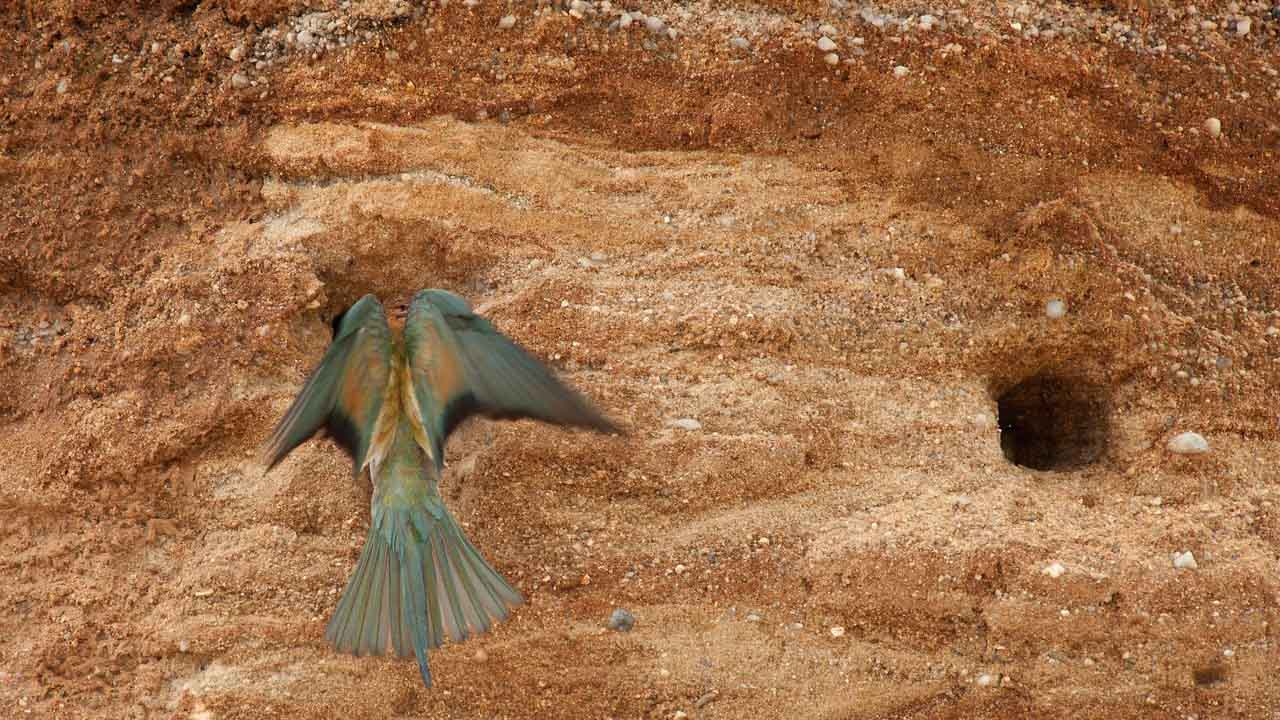
European bee eater with a bee in its beak.

Table of Contents

  • A Migratory Bird Which Nests in Sandy Banks
  • The Nightmare of Trying to Get Permission to Photograph the Birds
  • Our Tenacity Finally Pays Off
  • Wildlife Photography Is a Very Difficult Area

A Migratory Bird Which Nests in Sandy Banks

The European bee-eater, Merops apiaster, is a bird that feeds on insects. Bees are its main food source, but it also eats wasps, hornets, flies, dragonflies, etc. It usually catches insects while flying, the same way that swallows do.

During the European winter, bees stay in their hives, depriving European bee-eaters of their favorite food, so the birds migrate to West Africa. Because of their migration patterns, European bee-eaters can be found in Charente-Maritime in the late spring through summer.

Usually, European bee-eaters dig their burrow-like nests in sandy riverbanks. After mating, the female will deposit five eggs in the burrow. They will be incubated for three weeks by the both adults. Then, the adults care for the juveniles for four weeks.  At the end of those four weeks, the adults force the juveniles to fly.

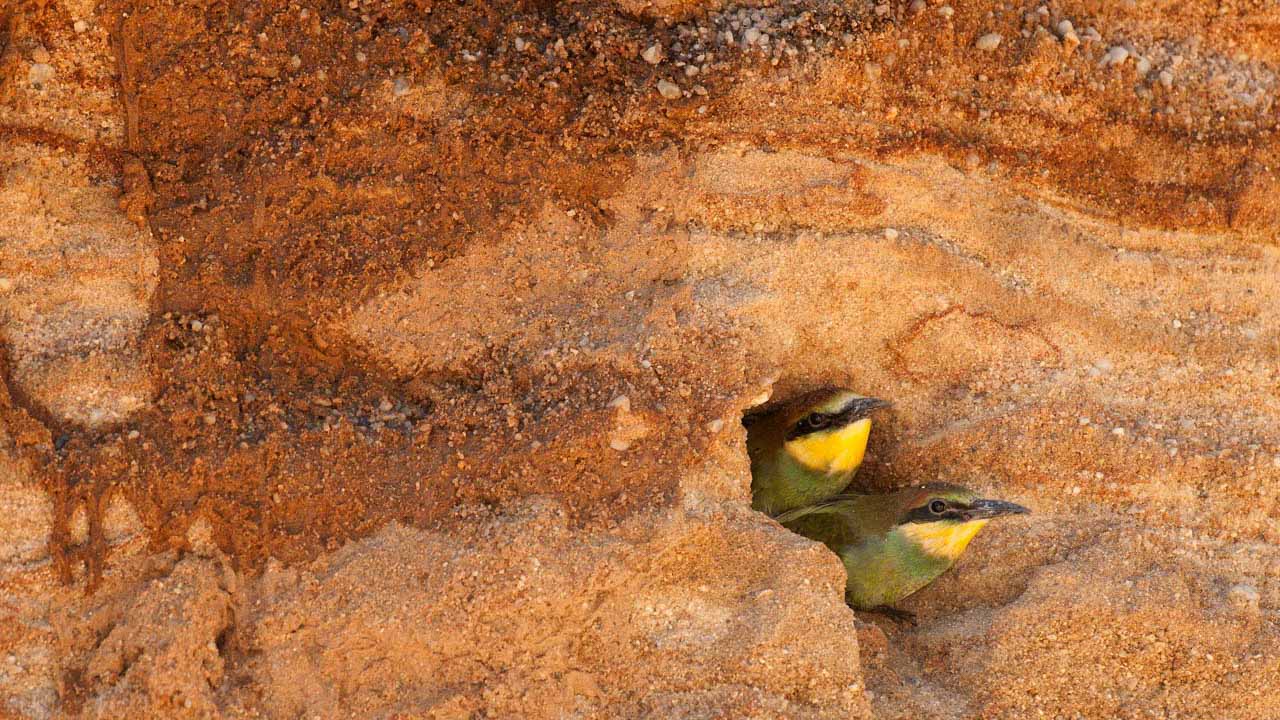
The way that the adults teach the juveniles to fly is highly unusual. They force the juveniles to fast before flying. Adults weigh, on average, about 2 ounces, and they have a wingspan of almost 20 inches. The little ones are so well-fed and fat that they can weigh up to 2½ ounces. This extra weight is a burden which could prevent them from being able to fly easily, so the parents stop feeding the juveniles so that they will lose enough weight to be able to fly. I was able to observe and photograph the chicks as they screamed for hours at the entrance to the nest, begging for food. In the end, they get so hungry that they fly to find food. It is an extraordinary behavior that I do not forget.

In the Charente-Maritime department, European bee-eaters usually nest in sand quarries. Unfortunately for us, most of the quarries are privately owned.

European Bee-eater feeding juveniles in his burrow in a sand quarry.

The Nightmare of Trying to Get Permission to Photograph the Birds

To find sand quarries in Charente-Maritime, I used mapping software online. Once I spotted a quarry on a map, I went to visit it.

In the first five quarries which I found, I was unsuccessful in our hunt for a place to take pictures. In the first two quarries, could not find any European bird-eaters or any signs that they had ever been there. I could not get to the third quarry. I was denied access to the fourth because it was still in operation. The owners of the fifth site politely refused our request to take pictures on their property, since I was just a photographer, not member of a birding association.

With our binoculars I sighted two pairs of European bee-eaters flying to the tops of the trees around the quarry. I had to find the nests. After a couple hours of waiting, lurking in the tall grass away from the eyes of the wary birds, I saw the nests, but there was no way for us to install our blinds or take pictures without the owners’ permission.

Our Tenacity Finally Pays Off

As soon I am back, I start looking for a new quarry. They are not many in the region. I will soon spot all the good sites. I find a new quarry in the south of Charente-Maritime.

I must visit the sand quarry soon, as the time is going fast. The chicks will quickly grow to the size where they can fly. Soon, I will no longer find any birds in a nest. The migration to Africa is coming soon.  Mercifully, the owners of this quarry allow us to take pictures on their property.

I hide behind small shrubs and look to the sky, searching for European bee-eaters. I am worried and stressed because there were very few quarries to begin with, and now, if this one does not work out, there may not be enough time to find another one before the birds migrate to Africa. After twenty minutes, I hear the expected scream from one of the chicks. I see the adults flying high. The birds are there. Now, all I have to do is wait for the adults to show me where the nest is.

I do not know yet, but the juveniles are already very big. They are almost ready for their first flight. The parents have stopped feeding them. I wait all day before I see a chick coming out of the hole to beg for food. However, by this time, the sun is going down, and the light is not good enough to take pictures. I need to come back again, but at least I saw my first birds.

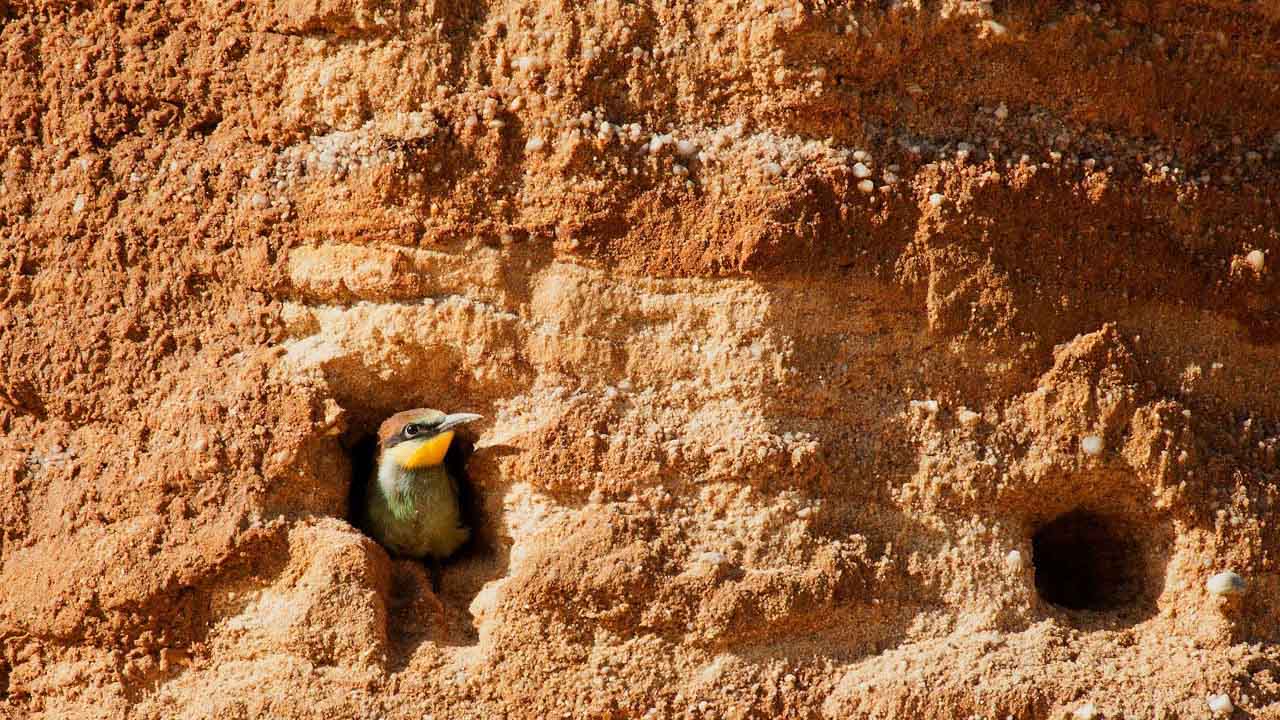
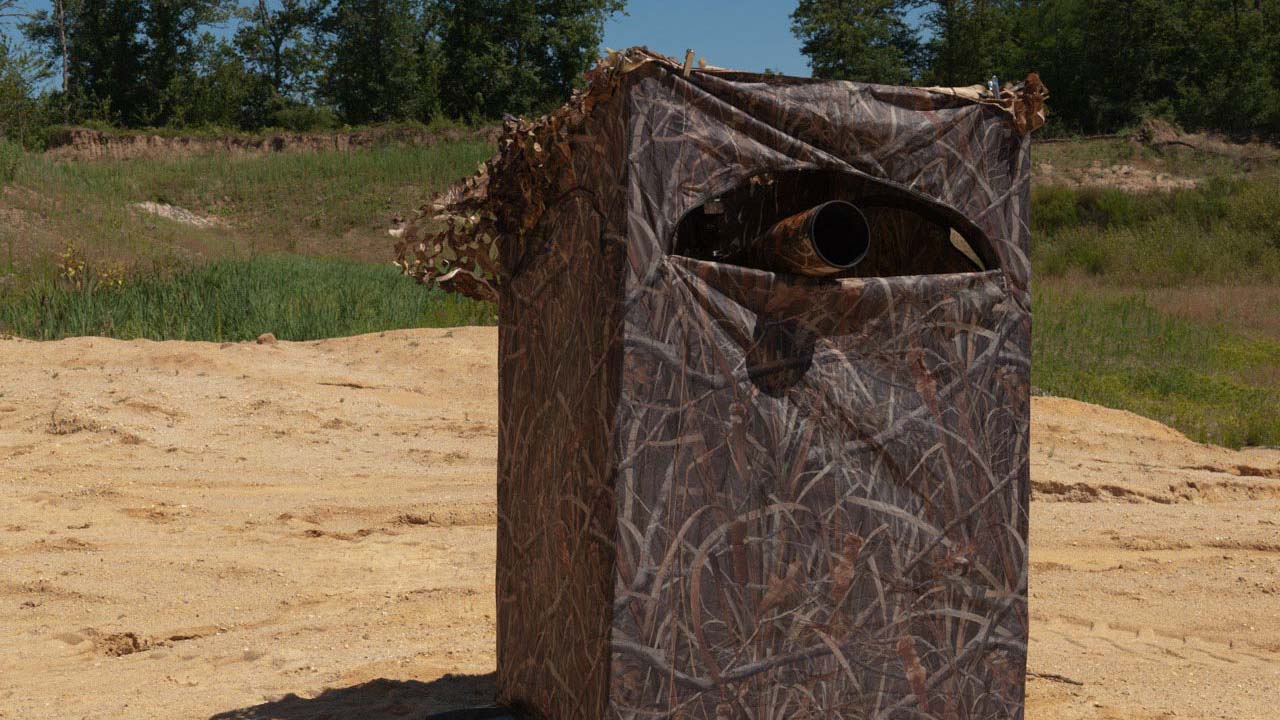
I am lucky. The next day, the weather looks great with lots of sunshine. I arrive early. The site’s geography requires us to set up our blinds in the middle of the quarry. It is impossible to settle on the banks because there is a ditch bordering the property. The parents do not show up today. I just take pictures of the juveniles at the entrance to the burrow. Nevertheless, I am satisfied with the photographs.

The next day I return, hoping this time to see the adults. Our wishes come true after a morning of waiting. An adult alights near the nest with a bee in its beak. I just have time to focus our cameras and shoot the picture, since the cameras were focused on the burrow.

I came back home very satisfied with the happy ending of our research. I finally met someone who understands our needs. But our joy was short-lived. Consulting the weather forecast, I saw that the weather for the next four days was going to be rainy. By the time the weather turns sunny again and I can take pictures, the birds will be gone. I will not be able to get any more photos this year. Still, at least I have some good pictures from our two days of photography.

I call the manager of the sand quarry, explaining that I will not be able to come again this year. He invites us to come back next year and continue taking pictures. Our project will be over by then, but I will still come to take pictures of these incredible birds.

European Bee-eater juvenile in his burrow in a sand quarry.
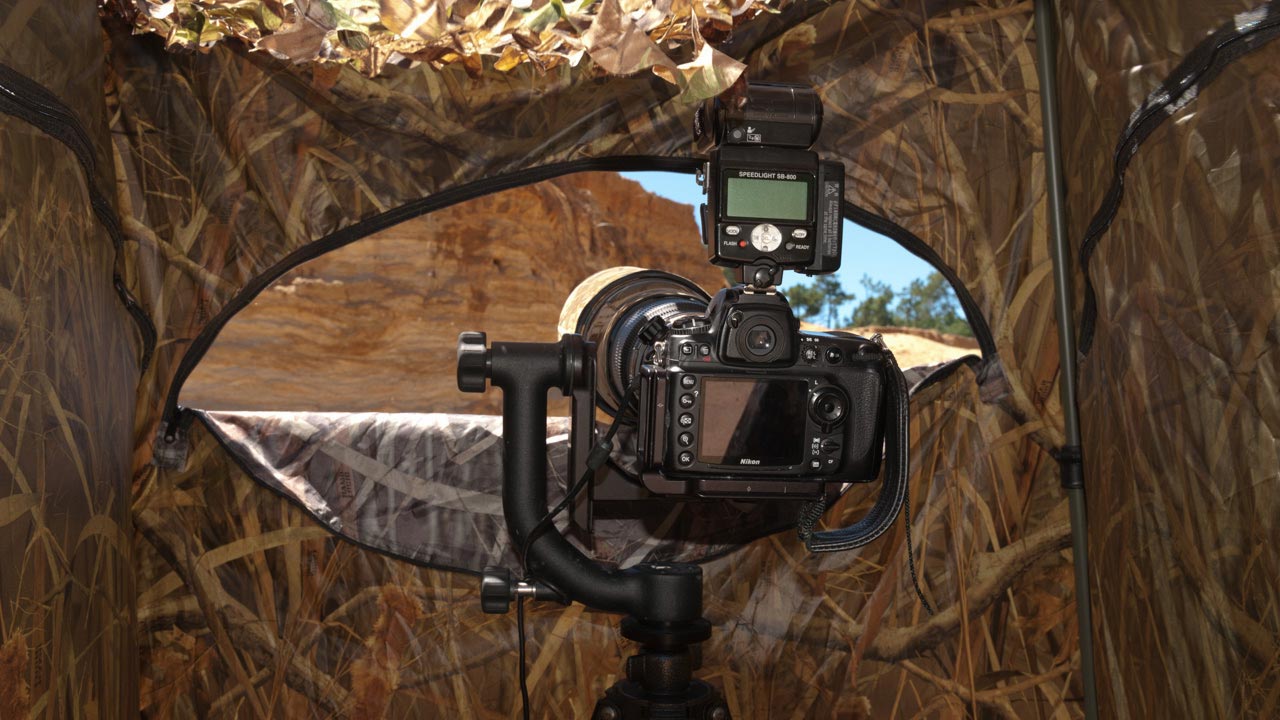
Blind to photograph european bee-eaters in a sand quarry in Charente-Maritime in France.

Wildlife Photography Is a Very Difficult Area

This project taught us never to commit to having pictures of wildlife that I am not sure of being able to find. Nothing is more difficult than nature photography. Nothing is predictable. Everything is random. Patience and tenacity are necessary, but often insufficient.

  1. The European Fallow Deer in the Charente-Maritime Region, France
  2. The Wreck of Sauerland off the Coast of France in Atlantic Ocean
  3. France. Department of Ain. La Dombes
  4. Aquatic Warbler Photographed in Charente-Maritime, France

Page 155 of 201

  • 150
  • 151
  • 152
  • 153
  • 154
  • 155
  • 156
  • 157
  • 158
  • 159
  1. You are here:  
  2. Home
  3. Blog Photographic Approach

Share on Social Media

Post
Share
Share
E-mail
WhatsApp
Text

Join Me on Social Networks

Join Me on Facebook  Join Me on Instagram  Join Me on LinkedIn

Claim your free guide to make your photo impactful and meaningful

Claim Your Free Guide '50 Pages of Tips to Give Impact and Meaning to Your Photos'.

4 + 8 =

Click Here To Discover All My Chronicles About the Photographic Approach.

Treat Yourself to a Fine Art Print That Matches your Personality

Example of a vacation home interior with a black and white fine photo art displayed on the wall.

Fine Art Print Collections in Black and White

Fine Art Print Collections in Black and White Black and white photography is a suitable technique for many nature scenes. It requires a particular frame of mind. A black and white photograph should be prepared and planned from the framing to the…
11991
Fine Art Print Collections in Black and White
An abstract art photo displayed in a contemporary living room decor.

Fine Art Print Collections in Color

Collections of Fine Art Prints in Color Color photographs allow digressions and take the audience to the message by secondary ways. The world around us, especially nature, is colorful. A color image can show the way our surroundings really are. Of course, it…
10440
Fine Art Print Collections in Color
Example of a home interior with fine art prints in my style back to black displayed on the wall. These photos are a part of my collection 'Wild beauties of Kenya'.

Fine Art Print Collections in Back to Black

Fine Art Print Collections in Back to Black I want to share my fine art prints of nature in a personal style that I call "back to black." "Back to Black" was developed to embody a sharp and clean style for artistic photos that can be hung in your living room,…
9980
Fine Art Print Collections in Back to Black
A waiting room with a photo in the style Fusion displayed on the wall. Grey Heron in Fusion.

Fine Art Print Collections with the Fusion Style

Fine Art Print Collections with the Fusion Style I would like to share a very creative and modern photography style to represent Nature in a very different way. I call it "Fusion." I created the style to offer dynamic photos, allowing you to start a good day…
7908
Fine Art Print Collections with the Fusion Style
A living room with a photo in the style 'Impression' exposed on the wall. Rising sun in impression

Fine Art Print Collections with the ‘Impression’ Style

Fine Art Print Collections with the ‘Impression’ Style The objective of this photographic style is to create the ephemeral blurs. That's why I named it 'Impression.' Photography, as an art form, is a powerful means of expressing reality from different…
5827
Fine Art Print Collections with the ‘Impression’ Style
Fine art prints from the style back to black displayed on a wall. Amar Guillen, photographer artist

New Collections of Fine Art Prints Dedicated to the Wonders of Nature

New and Updated Fine Art Print Collections Dedicated to the Wonders of Nature Fine art prints from the style back to black displayed on a wall.
11446
New Collections of Fine Art Prints Dedicated to the Wonders of Nature

Themes of the Blog Articles

Landscape of Arches National Park in Utah in black and white.

Blog Articles Dedicated to Artist Statement

Blog Articles Dedicated to Artist Statement
Dunes of death Valley in Black and White

Blog Articles Dedicated to Black and White Photography

Blog Articles Dedicated to Black and White Photography
Abstract photo or trees reflection on water

Blog Articles Dedicated to Photographic Mindset

Blog Articles Dedicated to Photographic Mindset
Abstract photo of ridles on water

Blog Articles Dedicated to Artistic Photography

Blog Articles Dedicated to Artistic Photography
Abstract photo of Yellowstone

Blog Articles Dedicated to Photographic Language

Blog Articles Dedicated to Photographic Language
Pronghorn in Yellowstone

Blog Articles Dedicated to Wildlife Photography

Blog Articles Dedicated to Wildlife Photography
Landscape of Bryce Canyon

Blog Articles Dedicated to Photographing United States

Blog Articles Dedicated to Photographing United States
Underwater waves in the Red Sea

Blog Articles Dedicated to Photographic Techniques

Blog Articles Dedicated to Photographic Techniques
Tree of Black Canyon in Black and White

Blog Articles Dedicated to Landscape Photography

Blog Articles Dedicated to Landscape Photography
Manta Ray in Maldives in Black and White

Blog Articles Dedicated to Underwater Photography

Blog Articles Dedicated to Underwater Photography
Red Deer stag during the rut of the deer

Blog Articles Dedicated to Photographic Judgement

Blog Articles Dedicated to Photographic Judgement
Great Crested Greb and his chick

Unclassified Blog Articles

Unclassified Blog Articles

You Might Be Interested By One of These Photographic Approach Articles

Photograph in black and white of the Grand Canyon from Arizona State in USA.

Why and How Mastering the Steps of Creating an Art Photograph

3603
Why and How Mastering the Steps of Creating an Art Photograph
An example of a narrative photo. Landscape of Island in the Sky in the Canyonlands in Utah in United States. Photo in black and white by Amar Guillen.

Why and How: Creating Impactful Narrative Photos

4118
Why and How: Creating Impactful Narrative Photos
Snowy landscape of Yellowstone during winter.

3 Steps for Giving Meaning to Your Photos

8750
3 Steps for Giving Meaning to Your Photos
Two lions in Kenya. Photographed in black and white. Photograph by Amar Guillen, photographer artist.

To Create Aesthetics Photos, Print your Images

4238
To Create Aesthetics Photos, Print your Images

Receive Free Tips On How to Give Impact and Meaning to Your Photos. Subscribe to Receive Regular Articles.

2 + 7 =

Contact Me By Email

10 + 9 =
This site is protected by reCAPTCHA and the Google Privacy Policy and Terms of Service apply.

About Amar Guillen, Creator of Fine Art Prints of Nature
As a photographer capturing the artistic essence for several decades, I have mastered the art of crafting an authentic experience for art enthusiasts and collectors of visual art.
When I observe my surroundings, be it friends, family, relationships, or professional contacts, I see souls in perpetual motion. Every moment of their existence is engulfed by daily hassles, work concerns, social media, online or televised information streams, and videos on the web.
Every minute, they strive to accomplish something, fearing losing ground and feeling marginalized in this frenzied society. Imprisoned by an oppressive schedule, the essential eludes them, drowned in the tumult of daily life. Is it really crucial to watch yet another cat video on the internet? Is it necessary to post twenty daily messages on social media?
Despite this, they remain constantly stressed and anxious about the challenges of the world, without being able to influence these monumental problems. It is at this moment that my artistic nature photographs come into play. Those who have had the privilege of hanging one of my works in their personal or professional space have expressed a radical transformation in their lives.
Every day, contemplating these works of art immerses them in tranquility, inner peace, and rediscovered serenity. They then understand that nature has the power to unravel tensions, to encourage reflection on the essential. Artistic photographs thus become open windows to the wonders of nature.
I have chosen to share the best of myself by helping others discover their identity, personality, style, all while reconnecting with nature. Take the time to explore my artistic photographs if you wish to reveal your true essence. Once hung in your space, your view of the world will be transformed.
Amar Guillen is a creator of fine art prints of nature.
I am Amar Guillen, creator of nature art photographs. I have a deep conviction that contemplating nature has the power to transform human beings. If everyone learned to know, respect, and preserve nature, our world would be transformed into a haven of peace where everyone would find their place.
Copyright © 2003 - 2026 Guillen Photo LLC - All rights reserved. Amar Guillen, professional photographer since 2003.
  • Blog
  • Calibration
  • Legal Information
  • Sitemap
  • Accessibility
  • Contact Me
  • Updates of the Website
I Want to Help You to Create Interesting Photos

How Can I Help You To Create More Interesting Photos?

Ask Me a Technical Question.
Subscribe to my Newsletter. The Inspiration Behind Guillen Photo.

Select your language

  • English (United Kingdom)
  • Français (France)
Claim your free guide to make your photo impactful and meaningful

Claim Your Free Guide '50 Pages of Tips to Give Impact and Meaning to Your Photos'.

3 + 7 =

Contact Me By Email

7 + 10 =

Office Address:
3512 Robin Road
Plano Texas 75075
USA

Office phone: (+1)214-769-6825