• The Art of ChoosingHome page
  • Fine Art Prints3 Editions
  • CollectionsAll Collections
  • AboutAmar Guillen
  • Customer Space & Contact
  • Select your language

    • English (United Kingdom)
    • Français (France)
  • All You Need to Select Your Fine Art Print
    • How to Choose a Fine Art Print - Q&A - FAQ
    • New Creations
    • Explore Some Interiors
    • Fine Art Print Blog
  • Browse by Edition
    • All Fine Art Prints
    • Unique Edition
    • Limited Edition
    • Open Edition
  • Browse by Style
    • Black and White
    • Color
    • Fusion
    • Impression
    • Back to Black
    • Landscapes in Black and White
    • Landscapes in Color
    • Animals in Black and White
    • Animals in Color
  • Browse by Theme
    • Landscape
    • Wildlife
    • Underwater
    • Abstract
    • Symbolic
    • Landscapes of the United States
    • Landscapes of France
    • Landscapes of Scotland
    • Seascapes
    • Relaxing
    • Energizing
    • Playful
  • Browse by Format
    • Rectangular
    • Square
    • Panoramic
  • Contact Me
    • Contact Me by Email or Phone
  • Collections
    • New Collections
    • All Collections
  • Browse by Theme
    • Landscapes
    • Wildlife
    • Underwater
    • Abstract
    • Symbolic
    • Landscapes of France
    • Landscapes of the United States
  • Browse by Style
    • Black and White
    • Color
    • Impression
    • Back to Black
    • Fusion
  • Contact Me
    • Contact Me by Email or Phone
  • Discover More About Me
    • Discover Who is Amar Guillen
    • Artistic and Photographic Statement
  • Galleries
    • Photo Galleries
    • Abstract Portfolio in Color
    • Black and White Landscape Photography Portfolio
    • Color Landscape Photography Portfolio
    • Black and White Wildlife Photography Portfolio
    • Color Wildlife Photography Portfolio
    • Underwater Photography Portfolio
  • Contact Me
    • Contact Me by Email or Phone
  • Your Customer Space
    • Create or Manage your Account
    • Your Download Space
    • Your Orders
  • Contact Me
    • Contact Me by Email or Phone

You are in that section: Home > Blog > Blog of the Photographic Creation Approach

Wildlife Photography in Black and White to Create Unique Photos

Photograph in black and white of a waterbuck in Kenya. Photograph by Amar Guillen, photographer artist.
This photograph of a waterbuck in Kenya is well-suited for the use of black and white.

Why: Creating Animal Photographs in Black and White

Creating animal photos in black and white has many advantages. I will list some of the most important reasons, and I invite you to memorize them so that you can recall them in the field.

  • Black and white allows you to create unique photos that convey emotions that cannot be found in color. This technique evokes more mystery and contemplation.

    Since reality is always in color, black and white becomes an interpretation of what you see. It is an artistic form. As the color is removed, the viewer is forced to add his own emotions to the photographs.
  • Using color in photography is like writing a novel. You describe each element, each detail precisely.

    Black and white is like poetry : its strength does not come from what it is said but from everything that is suggested.
  • Using color in photography is like writing a novel. You describe each element and each detail precisely.

    Black and white is like poetry: its strength does not come from what is said but from that which is suggested.
  • In black and white, the impact of wildlife photos is increased tenfold. The animal truly becomes the master of the game. The black and white technique places animal at the center of all the attention of the viewer: we solely notice him. The black and white technique places the animal at the center of the attention of the viewer: we solely notice him.

    On the contrary, color is very distracting for a viewer. Natural environments like foliage or blue skies will attract the gaze of the audience, since it is more saturated and has more intense colors than the animal. In the absence of color, the gaze will be attracted to what is essential: the animal.
  • Black and white is a perception, an interpretation of reality. Color, on the contrary, is adapted to the descriptive scenes.

    Since it is an interpretation of what you see, you can more easily express your emotions and send messages. Of course, black and white can be descriptive. Art photography in general may be descriptive. You can display exceptional animal behavior. But you must always have a good reason. You must justify it with your photographic vision.
  • Black and white makes it possible to highlight the animal, which is the main photographic element. The space around him is less important.
  • Black and white emphasizes details and light. This is what you are looking to do in wildlife photography. Do not forget that in black and white, you must favor lines, shapes, textures, and contrasts.
  • Black and white is timeless. It is always difficult to date a black and white photograph, unless external elements reveal the decade. Color is often linked to a time or an era.
  • Black and white photographs can be captured at any time of day, even if the sun is at its peak. To capture the best color photographs, the early morning or twilight is ideal, unless the skies are covered. Color does not favor strong highlights.
  • The cloudy and dark skies can produce beautiful black and white photos. These atmospheres enhance the textures and details of the plumage or coat.

    This is not the case for color photographs, because you need a grazing light to highlight these elements.
  • Today, most cameras allow you to view black and white photos either before shooting or after. All it takes is a simple setting change.

    Although it is true that this preview image has a lower quality than the image you can see on your computer, it still certainly provides you with an excellent idea of the final result. Do not forget to check if you have that feature when you buy a new camera body.
Read also: Why and How: Photographing the Bugle of Deer in Black and White.

How: Creating Wildlife Photographs in Black and White

Whether you are on the field or in post-production, you should always think in black and white.

I will give you a small, non-exhaustive list of tips for getting the most out of creative black and white wildlife photography.

  • Photographing in RAW mode. In the early post processing stage, you will always accurately adjust the white balance and the exposure of your images. If your photo is in JPEG format, you will still need to adjust these two parameters, but you will not have the precision you have in RAW format.

    The RAW format is a format which exploits all the possibilities of your camera's sensor. JPEG is a compressed format, causing some of the details to be lost.

    The RAW format will always give more depth to your wildlife photographs.
  • You should always have a plan before you begin your photo project or your photo session. You must know what you want to do and how you are going to do it. Never forget that if you do not know where you want to go, it will be nearly impossible to reach a satisfactory product. Mental preparation is essential.
  • Your compositions should be as simple as possible. They must highlight the animal. Remember that black and white is made to showcase the subjects, which are the main photographic elements. It is a technique that does not distract the eyes. I advise you to also utilize the bokeh technique, which will allow you to isolate the main subject even more from the background.
  • When possible, use either the high key or low-key technique to create special atmospheres and mood.

    The two techniques can be used in shooting by overexposing the highlights for the high key and under-exposing low lights for low-key.

    The development on your computer will allow you to accentuate each of the two effects. The high key and the low-key photography are processes which intervene throughout the creation of an animal photograph in black and white.
  • When selecting decor for the background of black and white wildlife photographs, use green background, and be sure to capture the wild animal in good lighting.

    During the post-processing, you will lower the brightness of the green layer: the background will become dark. This is one of the techniques I use for the low-key. Then, you bring out the details in the dark areas to give depth to your photographs.

How to Create Wildlife Photos in Black and White

Have you ever wanted to create wildlife photographs that have impact and convey authentic emotions? Have you ever wanted to go beyond a simple descriptive photo of an animal living in the wild?

In this article, I propose some tips and recipes for creating meaningful black and white photos.

If you are already using this creative technique, the ideas developed in this article will supplement your current practice or provide some new alternative creative paths.

If you are not a fan of black and white, you will discover an extraordinary universe without limit of creativity.

Young walia ibex photographed in black and white in Ethiopia. Photograph by Amar Guillen, photographer artist.
Young walia ibex photographed in black and white in Ethiopia.

Table of Contents

    Page 1

  • The Little Story Behind This Article
  • Qualities to Develop to Become a Wildlife Photographer
  • Some Pictures of Wild Animals in Black and White
  • Page 2

  • Why: Creating Animal Photographs in Black and White
  • How: Creating Wildlife Photographs in Black and White
  • Page 3

  • How Creating Wildlife Photographs in Black and White? (The End)
  • Finally

The Little Story Behind This Article

My passion for the technique of black and white photography began with landscape photography. Since I live in the United States, I often travel the mineral landscapes of Texas, New Mexico, Utah, Arizona, California, and Nevada.

With the use of black and white, the details, the shapes, and the structures are quite easy and natural. With extensive practice of capturing images of these landscapes, I was able to develop my expertise in black and white.

In the fall of 2013, I decided to spend, like I do every year, three weeks in France to photograph the rut of the deer.

This year, the season of summer lasted several weeks longer than usual. At the end of September, the foliage and the ferns were still a beautiful bright color. I was also fortunate to have been granted special permission to capture photos on the Hennessy domain in Charente-Maritime.

Since hunting was conducted on specific dates, I could move freely on the “off-days” without fear of being mistaken for a wild animal.

I had spotted a rather large clearing surrounded by hardwoods, which is quite rare for that region. The decor was perfect.

After several waiting sessions, I had the chance to photograph a solitude red deer stag that came to bugle. Well hidden in my blind, I was able to capture a magnificent series. He stayed more than three hours to bugle, graze, and sleep. It was an unexpected pleasure to witness such a sight.

When I decided to develop the photos, I naturally chose to use color.

The developed photos were interesting. They were well-constructed, with magnificent décor, and had a beautiful light. But they were all classic photos, and it felt as if I had already seen them hundreds of times.

The series of six photos was spread out in front of me. I was somewhat satisfied, but I could not feel the emotions generated by the power and the beauty of the animal. I felt as if I had returned to illustrative photography, which I had abandoned three years ago.

It was then that I decided to convert them to black and white. I realized that I could darken the green color of the leaves in the background to enhance the shape of the animal.

I could easily highlight the dark orange coat of the deer stag by overexposing it a little more and creating a better contrast.

The dodge and burn that I applied to the eyes allowed me to accentuate a fierce, wild and determined glance.

By applying a dark and gradual vignette around the deer stag, I accentuated the contrasts even more. The red deer was very highlighted.

I applied the same development to the collection of six photos. Once finished, I had in front of me a set of coherent and consistent pictures. The photos were creative, different, and unique. I had finally been able to photograph the bugle of the deer as I wanted. I finally had captured the emotions I had experienced in the field. The wild beauty and the natural power of the animal were accentuated in the black and white.

The technique of black and white had allowed me to create interesting and different pictures which communicated to the soul of the viewer. That was the beginning of my work in black and white wildlife photography. The years that followed have proved to me that I had made the right choice, because I had found a way to express myself in wildlife photography. In the rest of this article, I will explain the elements of black and white photography which propelled me to success.

Qualities to Develop to Become a Wildlife Photographer

Before giving you tips for creating animal photos in black and white, it seems especially important to me to list some qualities necessary to make exceptional photos of wild animals in the field.

  • First of all, you must have a real passion for wildlife and its diversity. Never forget that you are taking good pictures of that which you know well. Be curious! Read books on species that inspire you. Watch all the animal reports concerning specific fields or areas that interest you. The more you know about key behaviors and animal habits, the better your photographic creations will be.
  • Never forget that a wild animal is unpredictable. Even if you are well prepared, even if you have learned as much as you can about a species, you will always encounter surprises. Nothing will ever match your expectations. A wild animal always reacts according to its primary instincts which are surviving, reproducing, and eating. Try to anticipate as much as you can.
  • Be a good observer. We live in cities and towns in which our collective life is organized according to our needs as human beings. Our senses have been developed for this urban environment.

    In nature, everything is different. You must relearn to observe the signs of wildlife. The smells, the direction of the wind, the morning dew, the shape of the clouds, a bird's cry are some signs that can provide precious indications of what is going to happen. You must learn to practice mindfulness.
  • Learn how to improvise. You must be ready to face the unpredictable once you are on the ground, but you must also be prepared to improvise.

    For example, knowing how to create a blind in the field with leaves and a few branches is an elementary act to discover photos of red deer or bear in Europe. Improvisation management can be learned. You should always practice these skills, even if you find yourself in a situation where you believe you are becoming a master.
  • Always ask about the weather. Knowledge of the weather is a real asset for you. If it is raining, you must prepare your clothes and the blind accordingly. The knowledge of the wind direction is essential. Wild animals always walk facing the wind to detect predators or a danger. Therefore, you must position yourself so that they do not smell your presence. Poor knowledge of weather conditions can lead to a disastrous photo session once in the field.
  • Respect nature and wild animals. In my opinion, these are the two essential qualities of a good wildlife photographer. The more you respect nature and the animals you photograph, the more likely you are to blend in with the surroundings and become a part of your environment.

    The more you show respect, the more you will anticipate the details of nature and blend in with the landscapes. This attention to detail is reflected in the quality of your photographs. Never disturb an animal to take a photo. Indeed, the frightened or constrained look of a wild animal never produces a good photo. When the attitude is more natural, the finished picture is more beautiful.
  • Be patient. Underwater and terrestrial wildlife photography is one of the most difficult photographic fields to master. When creating interesting pictures, time is not measured in days, weeks or months. It is measured in years.
  • Knowing how to take sharp, well-composed, and well-framed photos takes just a few days. However, creating meaningful animal photos requires a great deal of self-knowledge, humility, and patience.
Read also: Why and How: Seeing in Black and White for Photography in 8 tips.

Some Pictures of Wild Animals in Black and White

  • Gelada male in Ethiopia in black and White. Amar Guillen, Photographer.
    Gelada male in Ethiopia in black and White.
    Gelada male in Ethiopia in black and White.
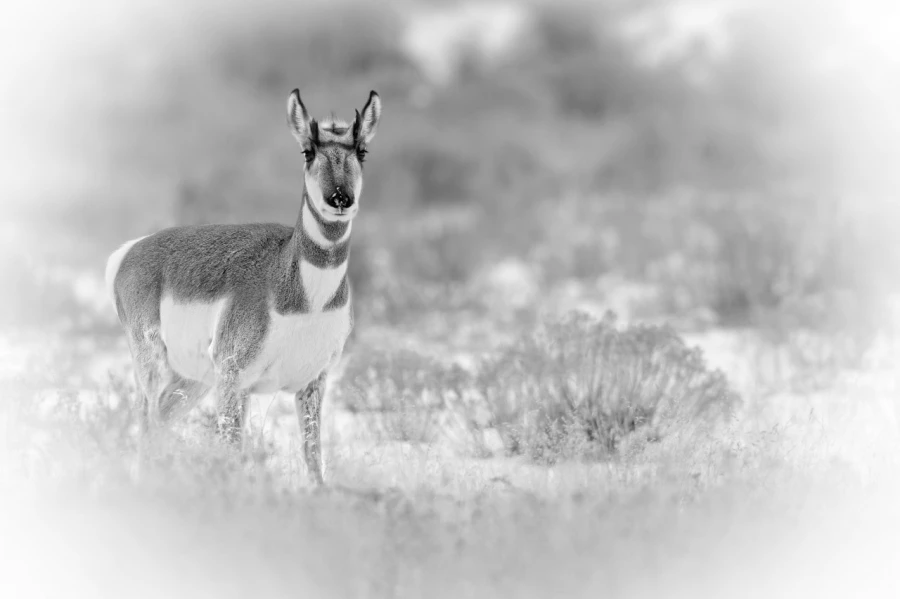
  • Pronghorn female in Wyoming in black and White. Amar Guillen, Photographer.
    Pronghorn female in Wyoming in black and White.
    Pronghorn female in Wyoming in black and White.
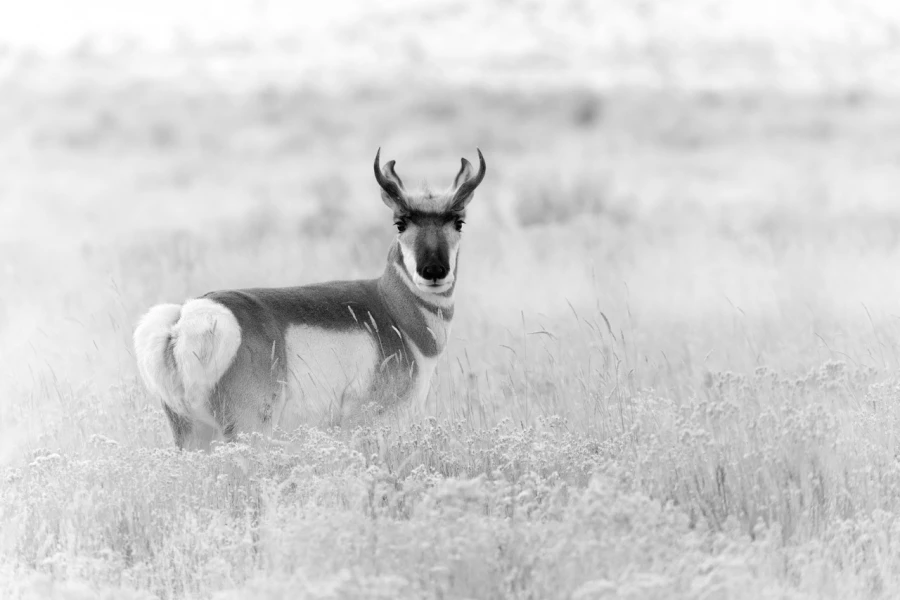
  • Pronghorn male in Wyoming in black and White. Amar Guillen, Photographer.
    Pronghorn male in Wyoming in black and White.
    Pronghorn male in Wyoming in black and White.
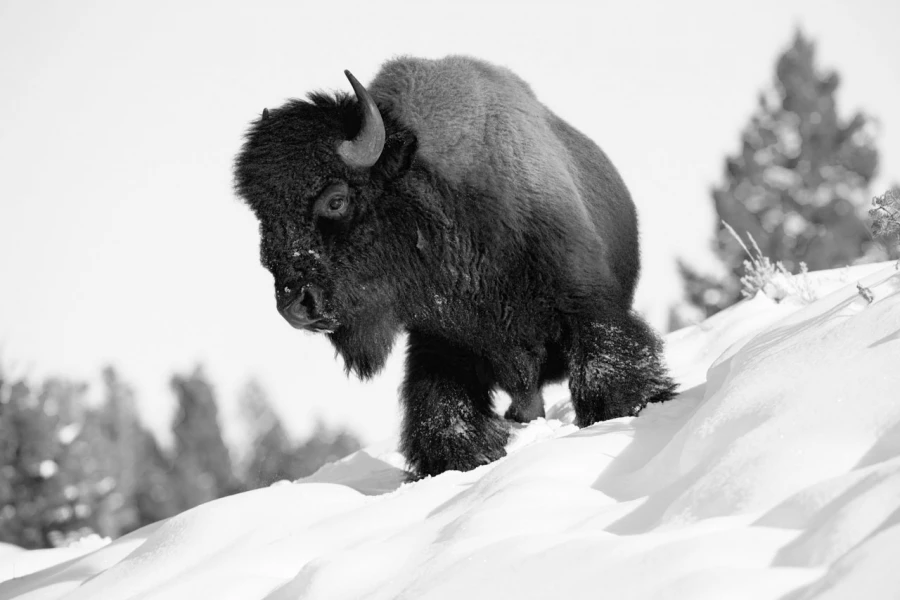
  • Bison in Yellowstone in the snow in black and White. Amar Guillen, Photographer.
    Bison in Yellowstone in the snow in black and White.
    Bison in Yellowstone in the snow in black and White.
  • Bison in Yellowstone in the snow in black and White. Amar Guillen, Photographer.
    Bison in Yellowstone in the snow in black and White.
    Bison in Yellowstone in the snow in black and White.
  • Coyote in Yellowstone in the snow in black and White. Amar Guillen, Photographer.
    Coyote in Yellowstone in the snow in black and White.
    Coyote in Yellowstone in the snow in black and White.
  • Elk in Yellowstone in the snow in black and White. Amar Guillen, Photographer.
    Elk in Yellowstone in the snow in black and White.
    Elk in Yellowstone in the snow in black and White.
  • Bighorn sheep in Yellowstone in the snow in black and White. Amar Guillen, Photographer.
    Bighorn sheep in Yellowstone in the snow in black and White.
    Bighorn sheep in Yellowstone in the snow in black and White.
  • Walia ibex in black and White. Amar Guillen, Photographer.
    Walia ibex in black and White.
    Walia ibex in black and White.
  • Bisons in Yellowstone in the snow in black and White. Amar Guillen, Photographer.
    Bisons in Yellowstone in the snow in black and White.
    Bisons in Yellowstone in the snow in black and White.
  • Ethiopian wolf in Ethiopia in black and White. Amar Guillen, Photographer.
    Ethiopian wolf in Ethiopia in black and White.
    Ethiopian wolf in Ethiopia in black and White.
  • Ethiopian wolf in Ethiopia in black and White. Amar Guillen, Photographer.
    Ethiopian wolf in Ethiopia in black and White.
    Ethiopian wolf in Ethiopia in black and White.
  • Whiskered tern in Danube Delta in Black and White. Amar Guillen, Photographer.
    Whiskered tern in Danube Delta in Black and White.
    Whiskered tern in Danube Delta in Black and White.
  • Eurasian spoonbill in Dombes in black and white. Amar Guillen, Photographer.
    Eurasian spoonbill in Dombes in black and white.
    Eurasian spoonbill in Dombes in black and white.
  • Baby gelada in Ethiopia in black and white. Amar Guillen, Photographer.
    Baby gelada in Ethiopia in black and white.
    Baby gelada in Ethiopia in black and white.
  • Female gelada in Ethiopia in black and white. Amar Guillen, Photographer.
    Female gelada in Ethiopia in black and white.
    Female gelada in Ethiopia in black  and white.
  • Serval in Kenya in black and white. Amar Guillen, Photographer.
    Serval in Kenya in black and white.
    Serval in Kenya in black and white.
  • Jackal in Kenya in black and white. Amar Guillen, Photographer.
    Jackal in Kenya in black and white.
    Jackal in Kenya in black and white.
  • Lioness in Kenya in black and white. Amar Guillen, Photographer.
    Lioness in Kenya in black and white.
    Lioness in Kenya in black and white.
  • Young lion in Kenya in black and white. Amar Guillen, Photographer.
    Young lion in Kenya in black and white.
    Young lion in Kenya in black and white.
  • Lion in Kenya in black and white. Amar Guillen, Photographer.
    Lion in Kenya in black and white.
    Lion in Kenya in black and white.
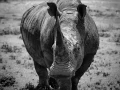
  • White rhinoceros in Kenya in black and white. Amar Guillen, Photographer.
    White rhinoceros in Kenya in black and white.
    White rhinoceros in Kenya in black and white.
  • Male Gelada in Ethiopia in black and white. Amar Guillen, Photographer.
    Male Gelada in Ethiopia in black and white.
    Male Gelada in Ethiopia in black and white.
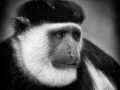
  • Mantled guereza in Ethiopia in black and white. Amar Guillen, Photographer.
    Mantled guereza in Ethiopia in black and white.
    Mantled guereza in Ethiopia in black and white.
  • Red deer stag in France in black and white. Amar Guillen, Photographer.
    Red deer stag in France in black and white.
    Red deer stag in France in black and white.
  • Red deer stag in France in black and white. Amar Guillen, Photographer.
    Red deer stag in France in black and white.
    Red deer stag in France in black and white.
  • Great crested grebe in Dombes in black and white. Amar Guillen, Photographer.
    Great crested grebe in Dombes in black and white.
    Great crested grebe in Dombes in black and white.
  • Mute swan in Dombes in black and white. Amar Guillen, Photographer.
    Mute swan in Dombes in black and white.
    Mute swan in Dombes in black and white.
  • Silhouette of a red deer stag in France in black and white. Amar Guillen, Photographer.
    Silhouette of a red deer stag in France in black and white.
    Silhouette of a red deer stag in France in black and white.
  • Silhouette of a red deer stag in France in black and white. Amar Guillen, Photographer.
    Silhouette of a red deer stag in France in black and white.
    Silhouette of a red deer stag in France in black and white.
Gelada male in Ethiopia in black and White.
Pronghorn female in Wyoming in black and White.
Pronghorn male in Wyoming in black and White.
Bison in Yellowstone in the snow in black and White.
Coyote in Yellowstone in the snow in black and White.
Elk in Yellowstone in the snow in black and White.
Bighorn sheep in Yellowstone in the snow in black and White.
Walia ibex in black and White.
Bisons in Yellowstone in the snow in black and White.
Ethiopian wolf in Ethiopia in black and White.
Whiskered tern in Danube Delta in Black and White.
Eurasian spoonbill in Dombes in black and white.
Baby gelada in Ethiopia in black and white.
Female gelada in Ethiopia in black  and white.
Serval in Kenya in black and white.
Jackal in Kenya in black and white.
Lioness in Kenya in black and white.
Young lion in Kenya in black and white.
Lion in Kenya in black and white.
White rhinoceros in Kenya in black and white.
Male Gelada in Ethiopia in black and white.
Mantled guereza in Ethiopia in black and white.
Red deer stag in France in black and white.
Great crested grebe in Dombes in black and white.
Mute swan in Dombes in black and white.
Silhouette of a red deer stag in France in black and white.
    • Gelada male in Ethiopia in black and White.
    • Pronghorn female in Wyoming in black and White.
    • Pronghorn male in Wyoming in black and White.
    • Bison in Yellowstone in the snow in black and White.
    • Bison in Yellowstone in the snow in black and White.
    • Coyote in Yellowstone in the snow in black and White.
    • Elk in Yellowstone in the snow in black and White.
    • Bighorn sheep in Yellowstone in the snow in black and White.
    • Walia ibex in black and White.
    • Bisons in Yellowstone in the snow in black and White.
    • Ethiopian wolf in Ethiopia in black and White.
    • Ethiopian wolf in Ethiopia in black and White.
    • Whiskered tern in Danube Delta in Black and White.
    • Eurasian spoonbill in Dombes in black and white.
    • Baby gelada in Ethiopia in black and white.
    • Female gelada in Ethiopia in black  and white.
    • Serval in Kenya in black and white.
    • Jackal in Kenya in black and white.
    • Lioness in Kenya in black and white.
    • Young lion in Kenya in black and white.
    • Lion in Kenya in black and white.
    • White rhinoceros in Kenya in black and white.
    • Male Gelada in Ethiopia in black and white.
    • Mantled guereza in Ethiopia in black and white.
    • Red deer stag in France in black and white.
    • Red deer stag in France in black and white.
    • Great crested grebe in Dombes in black and white.
    • Mute swan in Dombes in black and white.
    • Silhouette of a red deer stag in France in black and white.
    • Silhouette of a red deer stag in France in black and white.

    Why: Creating Animal Photographs in Black and White

    1. For Seeing your Photos in Black and White, Look at the Tones
    2. 8 Tips for Seeing your Photos in Black and White
    3. Why and How: Using the Photographic Language of Black and White
    4. 3 Techniques for Photographing Fawns

    Page 56 of 201

    • 51
    • 52
    • 53
    • 54
    • 55
    • 56
    • 57
    • 58
    • 59
    • 60
    1. You are here:  
    2. Home
    3. Blog Photographic Approach

    Share on Social Media

    Post
    Share
    Share
    E-mail
    WhatsApp
    Text

    Join Me on Social Networks

    Join Me on Facebook  Join Me on Instagram  Join Me on LinkedIn

    Claim your free guide to make your photo impactful and meaningful

    Claim Your Free Guide '50 Pages of Tips to Give Impact and Meaning to Your Photos'.

    4 + 8 =

    Click Here To Discover All My Chronicles About the Photographic Approach.

    Treat Yourself to a Fine Art Print That Matches your Personality

    Example of a vacation home interior with a black and white fine photo art displayed on the wall.

    Fine Art Print Collections in Black and White

    Fine Art Print Collections in Black and White Black and white photography is a suitable technique for many nature scenes. It requires a particular frame of mind. A black and white photograph should be prepared and planned from the framing to the…
    12004
    Fine Art Print Collections in Black and White
    An abstract art photo displayed in a contemporary living room decor.

    Fine Art Print Collections in Color

    Collections of Fine Art Prints in Color Color photographs allow digressions and take the audience to the message by secondary ways. The world around us, especially nature, is colorful. A color image can show the way our surroundings really are. Of course, it…
    10448
    Fine Art Print Collections in Color
    Example of a home interior with fine art prints in my style back to black displayed on the wall. These photos are a part of my collection 'Wild beauties of Kenya'.

    Fine Art Print Collections in Back to Black

    Fine Art Print Collections in Back to Black I want to share my fine art prints of nature in a personal style that I call "back to black." "Back to Black" was developed to embody a sharp and clean style for artistic photos that can be hung in your living room,…
    9987
    Fine Art Print Collections in Back to Black
    A waiting room with a photo in the style Fusion displayed on the wall. Grey Heron in Fusion.

    Fine Art Print Collections with the Fusion Style

    Fine Art Print Collections with the Fusion Style I would like to share a very creative and modern photography style to represent Nature in a very different way. I call it "Fusion." I created the style to offer dynamic photos, allowing you to start a good day…
    7917
    Fine Art Print Collections with the Fusion Style
    A living room with a photo in the style 'Impression' exposed on the wall. Rising sun in impression

    Fine Art Print Collections with the ‘Impression’ Style

    Fine Art Print Collections with the ‘Impression’ Style The objective of this photographic style is to create the ephemeral blurs. That's why I named it 'Impression.' Photography, as an art form, is a powerful means of expressing reality from different…
    5831
    Fine Art Print Collections with the ‘Impression’ Style
    Fine art prints from the style back to black displayed on a wall. Amar Guillen, photographer artist

    New Collections of Fine Art Prints Dedicated to the Wonders of Nature

    New and Updated Fine Art Print Collections Dedicated to the Wonders of Nature Fine art prints from the style back to black displayed on a wall.
    11451
    New Collections of Fine Art Prints Dedicated to the Wonders of Nature

    Themes of the Blog Articles

    Landscape of Arches National Park in Utah in black and white.

    Blog Articles Dedicated to Artist Statement

    Blog Articles Dedicated to Artist Statement
    Dunes of death Valley in Black and White

    Blog Articles Dedicated to Black and White Photography

    Blog Articles Dedicated to Black and White Photography
    Abstract photo or trees reflection on water

    Blog Articles Dedicated to Photographic Mindset

    Blog Articles Dedicated to Photographic Mindset
    Abstract photo of ridles on water

    Blog Articles Dedicated to Artistic Photography

    Blog Articles Dedicated to Artistic Photography
    Abstract photo of Yellowstone

    Blog Articles Dedicated to Photographic Language

    Blog Articles Dedicated to Photographic Language
    Pronghorn in Yellowstone

    Blog Articles Dedicated to Wildlife Photography

    Blog Articles Dedicated to Wildlife Photography
    Landscape of Bryce Canyon

    Blog Articles Dedicated to Photographing United States

    Blog Articles Dedicated to Photographing United States
    Underwater waves in the Red Sea

    Blog Articles Dedicated to Photographic Techniques

    Blog Articles Dedicated to Photographic Techniques
    Tree of Black Canyon in Black and White

    Blog Articles Dedicated to Landscape Photography

    Blog Articles Dedicated to Landscape Photography
    Manta Ray in Maldives in Black and White

    Blog Articles Dedicated to Underwater Photography

    Blog Articles Dedicated to Underwater Photography
    Red Deer stag during the rut of the deer

    Blog Articles Dedicated to Photographic Judgement

    Blog Articles Dedicated to Photographic Judgement
    Great Crested Greb and his chick

    Unclassified Blog Articles

    Unclassified Blog Articles

    You Might Be Interested By One of These Photographic Approach Articles

    Mustangs in a meadow near Grand Teton in the national park in Wyoming.

    Use a Slideshow to Tell a Story with your Photos

    4915
    Use a Slideshow to Tell a Story with your Photos
    A photo of a gelada, taken on a cliff in Ethiopia. This picture was taken during a photo walk.

    Photographing at Eye Level to Improve your Wildlife Photos

    4441
    Photographing at Eye Level to Improve your Wildlife Photos
    Photograph in black and white of a manta ray in Maldives during a night dive. Photograph by Amar Guillen, photographer artist.

    Why and How Judging a Photograph Subjectively

    4233
    Why and How Judging a Photograph Subjectively
    Landscape in black and white of the Sand Dunes in Death Valley. Photograph by Amar Guillen, photographer artist.

    15 Steps to Improve Your Photos

    3448
    15 Steps to Improve Your Photos

    Receive Free Tips On How to Give Impact and Meaning to Your Photos. Subscribe to Receive Regular Articles.

    2 + 7 =

    Contact Me By Email

    10 + 9 =
    This site is protected by reCAPTCHA and the Google Privacy Policy and Terms of Service apply.

    About Amar Guillen, Creator of Fine Art Prints of Nature
    As a photographer capturing the artistic essence for several decades, I have mastered the art of crafting an authentic experience for art enthusiasts and collectors of visual art.
    When I observe my surroundings, be it friends, family, relationships, or professional contacts, I see souls in perpetual motion. Every moment of their existence is engulfed by daily hassles, work concerns, social media, online or televised information streams, and videos on the web.
    Every minute, they strive to accomplish something, fearing losing ground and feeling marginalized in this frenzied society. Imprisoned by an oppressive schedule, the essential eludes them, drowned in the tumult of daily life. Is it really crucial to watch yet another cat video on the internet? Is it necessary to post twenty daily messages on social media?
    Despite this, they remain constantly stressed and anxious about the challenges of the world, without being able to influence these monumental problems. It is at this moment that my artistic nature photographs come into play. Those who have had the privilege of hanging one of my works in their personal or professional space have expressed a radical transformation in their lives.
    Every day, contemplating these works of art immerses them in tranquility, inner peace, and rediscovered serenity. They then understand that nature has the power to unravel tensions, to encourage reflection on the essential. Artistic photographs thus become open windows to the wonders of nature.
    I have chosen to share the best of myself by helping others discover their identity, personality, style, all while reconnecting with nature. Take the time to explore my artistic photographs if you wish to reveal your true essence. Once hung in your space, your view of the world will be transformed.
    Amar Guillen is a creator of fine art prints of nature.
    I am Amar Guillen, creator of nature art photographs. I have a deep conviction that contemplating nature has the power to transform human beings. If everyone learned to know, respect, and preserve nature, our world would be transformed into a haven of peace where everyone would find their place.
    Copyright © 2003 - 2026 Guillen Photo LLC - All rights reserved. Amar Guillen, professional photographer since 2003.
    • Blog
    • Calibration
    • Legal Information
    • Sitemap
    • Accessibility
    • Contact Me
    • Updates of the Website
    I Want to Help You to Create Interesting Photos

    How Can I Help You To Create More Interesting Photos?

    Ask Me a Technical Question.
    Subscribe to my Newsletter. The Inspiration Behind Guillen Photo.

    Select your language

    • English (United Kingdom)
    • Français (France)
    Claim your free guide to make your photo impactful and meaningful

    Claim Your Free Guide '50 Pages of Tips to Give Impact and Meaning to Your Photos'.

    8 + 7 =

    Contact Me By Email

    3 + 5 =

    Office Address:
    3512 Robin Road
    Plano Texas 75075
    USA

    Office phone: (+1)214-769-6825