• The Art of ChoosingHome page
  • Fine Art Prints3 Editions
  • CollectionsAll Collections
  • AboutAmar Guillen
  • Customer Space & Contact
  • Select your language

    • English (United Kingdom)
    • Français (France)
  • All You Need to Select Your Fine Art Print
    • How to Choose a Fine Art Print - Q&A - FAQ
    • New Creations
    • Explore Some Interiors
    • Fine Art Print Blog
  • Browse by Edition
    • All Fine Art Prints
    • Unique Edition
    • Limited Edition
    • Open Edition
  • Browse by Style
    • Black and White
    • Color
    • Fusion
    • Impression
    • Back to Black
    • Landscapes in Black and White
    • Landscapes in Color
    • Animals in Black and White
    • Animals in Color
  • Browse by Theme
    • Landscape
    • Wildlife
    • Underwater
    • Abstract
    • Symbolic
    • Landscapes of the United States
    • Landscapes of France
    • Landscapes of Scotland
    • Seascapes
    • Relaxing
    • Energizing
    • Playful
  • Browse by Format
    • Rectangular
    • Square
    • Panoramic
  • Contact Me
    • Contact Me by Email or Phone
  • Collections
    • New Collections
    • All Collections
  • Browse by Theme
    • Landscapes
    • Wildlife
    • Underwater
    • Abstract
    • Symbolic
    • Landscapes of France
    • Landscapes of the United States
  • Browse by Style
    • Black and White
    • Color
    • Impression
    • Back to Black
    • Fusion
  • Contact Me
    • Contact Me by Email or Phone
  • Discover More About Me
    • Discover Who is Amar Guillen
    • Artistic and Photographic Statement
  • Galleries
    • Photo Galleries
    • Abstract Portfolio in Color
    • Black and White Landscape Photography Portfolio
    • Color Landscape Photography Portfolio
    • Black and White Wildlife Photography Portfolio
    • Color Wildlife Photography Portfolio
    • Underwater Photography Portfolio
  • Contact Me
    • Contact Me by Email or Phone
  • Your Customer Space
    • Create or Manage your Account
    • Your Download Space
    • Your Orders
  • Contact Me
    • Contact Me by Email or Phone

You are in that section: Home > Blog > Blog of the Photographic Creation Approach

Why and How: Using the Photographic Language of Black and White

If you are currently working on a project that involves black and white photos, or if you have attempted to create black and white photographs, you will have certainly noticed that the simple conversion of a color image is not enough.

If you want to create interesting black and white photos for an audience, you must master the photographic language associated with it. This crucial step is essential. How else can you transmit emotions and messages eloquently if you do not speak the language?
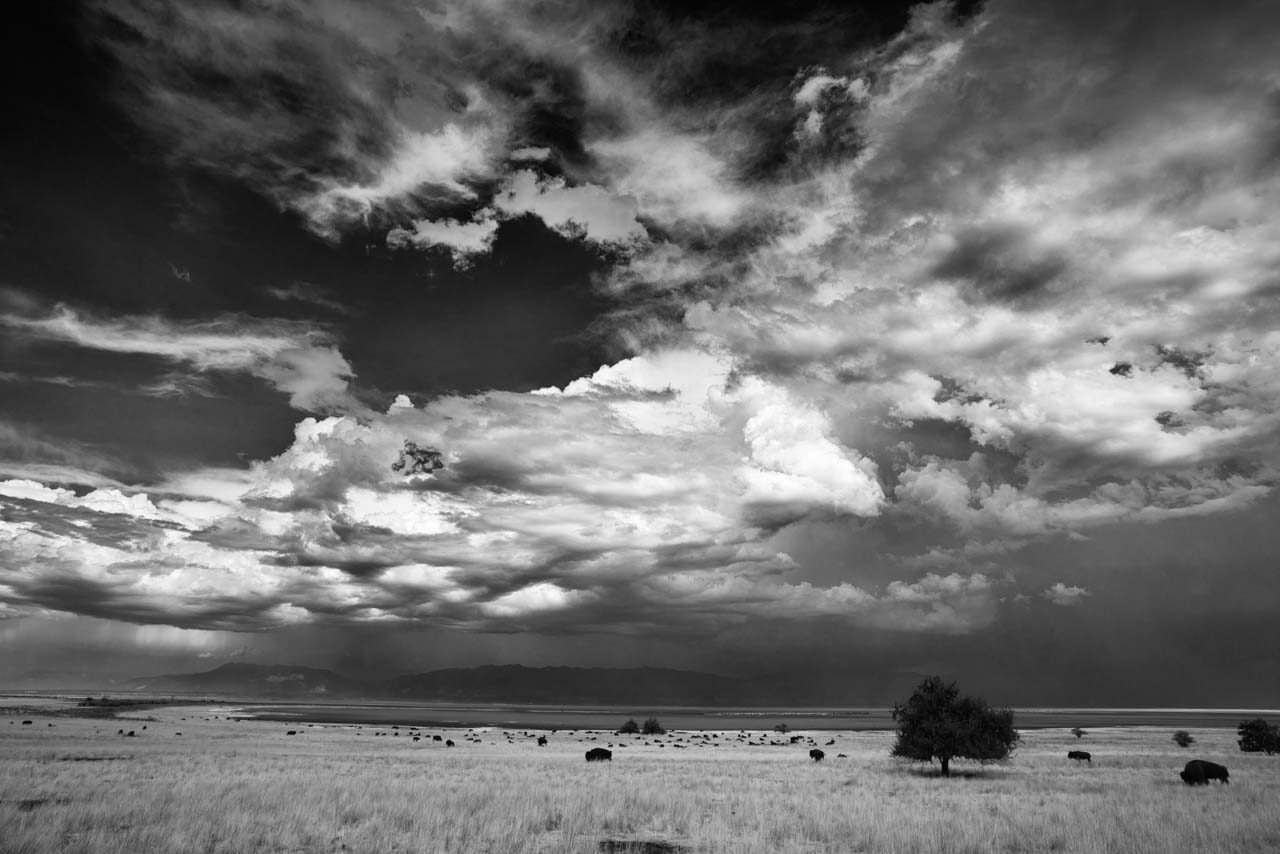
Herd of bisons in Antelop Island under a storm in 'Utah'.
Herd of bisons in Antelop Island in 'Utah'. The gathering clouds herald a thunderstorm. This photo uses many black and white photography language codes.

Table of Contents

    Page 1

  • The Little Story Behind This Article
  • The Use of Color in Photography
  • The Use of Black and White in Photography
  • The Photographic Language of Black and White
  • Finally

The Little Story Behind This Article

Black and white photography was not always a focus for me.

When I began my career as a professional photographer in 2003, my work resembled that of many other photographers. I limited myself to ordinary illustrative photography for magazines and stock photos.

In the stock photo realm of photography, only color is used. One reason is that illustrative photography must document and illustrate. It can be creative in compositions and framing. But it cannot be interpretative. It must remain objectively neutral. Rather than being used as a subjective source, photography reinforces and illustrates writing. Therefore, it must display what is clearly presented in the accompanying word.

In 2010, when I decided to become a photographer artist, I started to create color works. In 2011, a client asked me to create a collection of landscape photographs from the Big Bend region in South Texas.

I left for seven days to take the six photographs ordered. The specifications were precise. The client wanted color photos in horizontal format. The pictures were to show wide shots of nature. There should be no roads or human constructions visible.

The purpose of this collection was to decorate a main meeting room to create an atmosphere of calm, tranquility, and serenity by illuminating the wonders of Texas.

A few weeks later, I completed the project I had created. I proposed three collections, each with six photos. I also included a collection of three black and white photos.

I quickly shared the black and white collection at the end of my presentation. My client had already expressed interest in one of the color collections.

However, when they saw the black and white collection, both the client and the designer were immediately interested. They studied the three black and white photos printed in small format. Then they looked at me. They spoke to each other in a low voice. Finally, they told me that they would like to change their plan.

They found that the black and white photos generated more emotional impact and presented a deeper level of meaning. It exactly aligned with the tone they wished to present in the meeting room.

I asked them what these pictures meant to them. They described them to me in terms of emotions, sensations, and memories.

It was then that I realized that black and white speaks a different interpretative technique, it speaks its own photographic language.

I decided to retreat for seven days, this time to create a real collection in black and white.

It was from this project that I understood the power of black and white and the impact it could generate.

It was from this project that I began to decipher the photographic language of black and white.

In the rest of the article I will explain the outline of my formative years of understanding this technique.

The Use of Color in Photography

Color in photography portrays a natural and concrete representation of reality. In our environment, everything is in color.

The use of color is very dynamic. Most people love color photography because they can easily associate the photos with experiences from their own life. For example, warm tones in color are welcoming. They evoke memories of family and friends. Cool tones are reminiscent of distance in those relationship circles.

Color photography is rarely timeless. Indeed, it is often attached to an era, a fashion. Personally, when I look at color photos, I am often able to locate their origin in time. For example, a photo circa 1980 will not look the same as one taken today. With each decade comes new trends in color photography, and even if one tries to avoid these trends, it is exceedingly difficult to do so when using color.

Read also: Why and How Mastering the Semiology in Photography.

The Use of Black and White in Photography

Light is one of the three essential elements to consider when creating a photograph.

In a previous article, I explained that light defines the shapes, lines, textures, and color range.

Light is your medium.

When you opt out of colors, you rely solely on black and white. You must then favor the forms, the lines, and the textures. These are the essentials that you must consider.

Black and white adds mystery to abstract shapes because it provides a strong visual contrast.

Black and white is timeless. It is often impossible to locate black and white photos in time unless you identify particular elements describing the era.

For me, it is this difference with the color that represents all the power of the black and white technique.

For me, black and white represents the French Touch.

Read also: Why and How Taking Pictures in Black and White.

The Photographic Language of Black and White

During all these years spent creating black and white photos, I have identified a number of characteristics of the language.

I will list some of them for you in this article. You must remember that these are only elements of a language. You must still assemble them, by using what I refer to as the “grammar” of photographic language. That is another story for a different day.

Let us review some elements of black and white photographic language:

  • Negative space.
  • Choice of point of view.
  • The size of photographic elements.
  • Contrast.
  • Symbolism.
  • Repetition.
  • Symmetry.
  • Minimalism.
  • The use of high key.
  • The use of low key.
  • Long exposure.
  • Associations.
  • Abstraction.
  • Silhouettes.
  • Separation of tones.

Some of these may appear to you as techniques. Try to dive deeper in your visualization. You will realize that they are much more profound than just a technique.

Take for example the silhouette. Try to look beyond the fact that it is a technique. Ask yourself what it can represent, what its meaning may be. You will then understand that it is a real element of black and white photographic language

Read also: Why and How Mastering the Photographic Writing.
Read also: Why and How Speaking in the Language of Photography.

Finally

Black and white photography has its own language and grammar. It is insufficient to simply imagine what a scene will look like in black and white. You must also master these codes to build black and white photos that provide impactful and interesting meanings to the public.

I hope that this article has allowed you to demystify the technique of black and white and that it has provided you with a new perspective on how to incorporate it into your work.

Click Here To See Black and White Fine Art Print Collections.

3 Techniques for Photographing Fawns

Have you ever had the opportunity to photograph fawns of deer, roe deer or fallow deer? Annually, during the months of June and July, I have had the chance to search for hinds, does, and goats who are nurturing their fawns and kids. For me, it is a spectacle that is as extraordinary as the rut of the deer.

In this article, I am going to explain some techniques for taking extraordinary pictures of fawns.

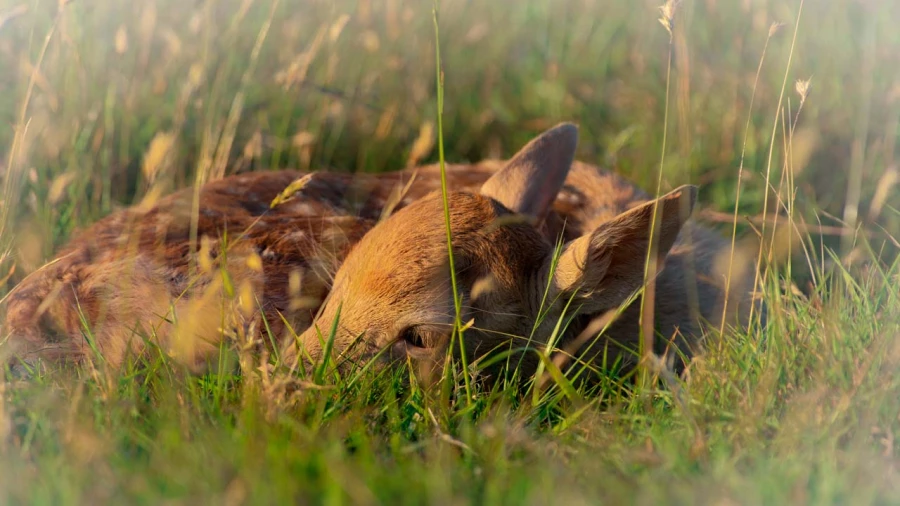
Photograph of a red deer fawn in a meadow.

Table of Contents

    Page 1

  • The Little Story Behind This Article
  • The Definition of a Fawn
  • Before Going Further
  • The Birthing Period of Red Deer Fawns
  • The Birthing Period of Roe Deer Fawns
  • The Birthing Period of Fallow Deer Fawns
  • Page 2

  • Why Photograph Fawns?
  • How to Photograph Fawns
  • The Choice of Lenses
  • Finally

The Little Story Behind This Article

My passion for deer started with the rut of the red deer in Europe, especially in France. Ever since I was a child, I have always watched countless television programs on this subject.

For me, photographs of deer were invariably associated with their behaviors during the fall. By being more interested in this species, I learned that although a deer loses its antlers in the spring, they eventually grow back to become velvet antlers once again, in the first phase.

Many years ago, I decided to visit France to photograph red deer with their velvet antlers. One day, as I approached a small clearing hidden in the forest of La Coubre in Charente-Maritime in west of France, I encountered a surprising spectacle.

A doe circled around a fixed point and then stopped from time to time as if she wanted to graze.

There seemed to be nothing unusual in this scene, which I had already photographed many times in the past. However, this doe was not just grazing. She continually circled around the same point.

The grasses were rather tall. I did not understand what was going on. She had not seen me because I was hidden away by the pine trees in the forest. I decided to install my tripod and my camera to capture some pictures.

After an hour of waiting I suddenly saw a little ball of orange hair slowly rise to its feet. It was a red deer fawn. It was a magical and extraordinary moment that I will always remember. He was so frail, so fragile, so small.

It was my first photo session with a fawn. Every year, I look back on this breathtaking moment. I always look forward to dedicating a few days in June and July to photograph fawns.

Read also: Why and How: Photographing the Bugle of Deer in Black and White.

The Definition of a Fawn

By definition, a fawn is the pup of a deer doe, a roe deer goat, or a fallow deer hind.

Generally, a fawn is a small deer. A deer has an even number of fingers. The males carry antlers.

If it is a male deer, it is called “fawn” from the time of birth until it is six months.

If it is a female, it is called “fawn” from the time birth until it is one year old.

Before Going Further

Before I give you some helpful photographic tricks to photograph fawns, it seems important to explain some behaviors specific to each species. Indeed, for wildlife photography, you will not generally create interesting pictures of animals if you do not have a wide understanding of the behaviors and habits of each species.

Never forget that the secret of wildlife photography is to learn and prepare for the photo session before arriving on the field.

The learning does not stop before the session though. Once you arrive, you must learn to see, listen, smell, and touch the world around you. The wind, the sun, the clouds, the meadows, the trees, the flows, and the marks left by the animals are many natural elements that you must anticipate and use to understand what is happening. Be careful. While in nature, you must always respect the animals. It is under these essential conditions that you will take good photos.

Click on a thumbnail to enlarge it.

  • Fawn and doe in the undergrowth in France. Amar Guillen, Photographer.
    Fawn and doe in the undergrowth in France
    Fawn and doe in the undergrowth in France
  • Fawn in a meadow in France. Amar Guillen, Photographer.
    red deer fawn in open prairie grasslands of Charente-Maritime, France
    red deer fawn in open prairie grasslands of Charente-Maritime, France
  • Fawn in a meadow in France. Amar Guillen, Photographer.
    red deer fawn in open prairie grasslands of Charente-Maritime, France
    red deer fawn in open prairie grasslands of Charente-Maritime, France
  • Fallow deer fawn in a meadow in France. Amar Guillen, photographer.
    Fallow deer fawn in a meadow in France.
    Fallow deer fawn in a meadow in France.
  • Fawn in a meadow in France. Amar Guillen, Photographer.
    red deer fawn in open prairie grasslands of Charente-Maritime, France
    red deer fawn in open prairie grasslands of Charente-Maritime, France
  • Fawn in a meadow in France. Amar Guillen, Photographer.
    red deer fawn in open prairie grasslands of Charente-Maritime, France
    red deer fawn in open prairie grasslands of Charente-Maritime, France
  • Fallow deer fawn in a meadow in France. Amar Guillen, photographer.
    Fallow deer fawn in a meadow in France.
    Fallow deer fawn in a meadow in France.
  • Fallow deer fawn in a meadow in France. Amar Guillen, photographer.
    Fallow deer fawn in a meadow in France.
    Fallow deer fawn in a meadow in France.
  • Fallow deer fawn in a meadow in France. Amar Guillen, photographer.
    Fallow deer fawn in a meadow in France.
    Fallow deer fawn in a meadow in France.
  • Fawn in a meadow in France. Amar Guillen, Photographer.
    Fawn in a meadow in France
    Fawn in a meadow in France
  • Fallow deer fawn in ferns in France. Amar Guillen, photographer.
    Fallow deer fawn in ferns in France.
    Fallow deer fawn in ferns in France.
  • Fallow deer fawn in ferns in France. Amar Guillen, photographer.
    Fallow deer fawn in ferns in France.
    Fallow deer fawn in ferns in France.
  • Fallow deer fawn in ferns in France. Amar Guillen, photographer.
    Fallow deer fawn in ferns in France.
    Fallow deer fawn in ferns in France.
  • Fallow deer fawn in ferns in France. Amar Guillen, photographer.
    Fallow deer fawn in ferns in France.
    Fallow deer fawn in ferns in France.
  • Fawn in the undergrowth in France. Amar Guillen, Photographer.
    Fawn in the undergrowth in France
    Fawn in the undergrowth in France
Fawn and doe in the undergrowth in France
red deer fawn in open prairie grasslands of Charente-Maritime, France
Fallow deer fawn in a meadow in France.
red deer fawn in open prairie grasslands of Charente-Maritime, France
Fallow deer fawn in a meadow in France.
Fawn in a meadow in France
Fallow deer fawn in ferns in France.
Fawn in the undergrowth in France
    • Fawn and doe in the undergrowth in France
    • red deer fawn in open prairie grasslands of Charente-Maritime, France
    • red deer fawn in open prairie grasslands of Charente-Maritime, France
    • Fallow deer fawn in a meadow in France.
    • red deer fawn in open prairie grasslands of Charente-Maritime, France
    • red deer fawn in open prairie grasslands of Charente-Maritime, France
    • Fallow deer fawn in a meadow in France.
    • Fallow deer fawn in a meadow in France.
    • Fallow deer fawn in a meadow in France.
    • Fawn in a meadow in France
    • Fallow deer fawn in ferns in France.
    • Fallow deer fawn in ferns in France.
    • Fallow deer fawn in ferns in France.
    • Fallow deer fawn in ferns in France.
    • Fawn in the undergrowth in France

    The Birthing Period of Red Deer Fawns

    Deer fawns are born from the end of May to the beginning of July.

    The red deer doe has a gestation of eight months. The does show during the rut period, which is between the months of September and October. As the slab lasts about eight weeks, the period of birth spans the same length of time.

    When born, the fawn weighs between 5 and 8 kg. He remains in bed for a few days then begins to follow his mother. The doe swallows the placental envelope to avoid attracting predators.

    The doe suckles the fawn for six months. It is common during the rut period to photograph fawns suckling. A doe can give birth every year or every two years.

    The Birthing Period of Roe Deer Fawns

    The roe deer hind is a fascinating animal to study, specifically about its reproduction. The hinds are covered during the period of July 15 to August 15. After mating, the female blocks the development of the embryo until the end of December or the beginning of January.

    This phase is called the embryonic diapause.

    The birth of a roe deer fawn takes place during the months of May and June. At this time of year, food is plentiful. In total, gestation lasts nine and a half months. For four months, nothing happens.

    The Birthing Period of Fallow Deer Fawns

    The fallow deer rutting season takes place in October and November. The gestation of the doe lasts eight months. Fallow deer fawns are born during June and July when there is plenty of food.

    Why Photograph Fawns?

    1. To Give Meaning to your Photos, Define the Message You Want to Convey
    2. 3 Steps for Giving Meaning to Your Photos
    3. Using a Blind Is a Good Technique for Photographing Fawns
    4. 5 Steps for Developing a Photographic Mindset

    Page 58 of 201

    • 53
    • 54
    • 55
    • 56
    • 57
    • 58
    • 59
    • 60
    • 61
    • 62
    1. You are here:  
    2. Home
    3. Blog Photographic Approach

    Share on Social Media

    Post
    Share
    Share
    E-mail
    WhatsApp
    Text

    Join Me on Social Networks

    Join Me on Facebook  Join Me on Instagram  Join Me on LinkedIn

    Claim your free guide to make your photo impactful and meaningful

    Claim Your Free Guide '50 Pages of Tips to Give Impact and Meaning to Your Photos'.

    4 + 8 =

    Click Here To Discover All My Chronicles About the Photographic Approach.

    Treat Yourself to a Fine Art Print That Matches your Personality

    Example of a vacation home interior with a black and white fine photo art displayed on the wall.

    Fine Art Print Collections in Black and White

    Fine Art Print Collections in Black and White Black and white photography is a suitable technique for many nature scenes. It requires a particular frame of mind. A black and white photograph should be prepared and planned from the framing to the…
    12004
    Fine Art Print Collections in Black and White
    An abstract art photo displayed in a contemporary living room decor.

    Fine Art Print Collections in Color

    Collections of Fine Art Prints in Color Color photographs allow digressions and take the audience to the message by secondary ways. The world around us, especially nature, is colorful. A color image can show the way our surroundings really are. Of course, it…
    10448
    Fine Art Print Collections in Color
    Example of a home interior with fine art prints in my style back to black displayed on the wall. These photos are a part of my collection 'Wild beauties of Kenya'.

    Fine Art Print Collections in Back to Black

    Fine Art Print Collections in Back to Black I want to share my fine art prints of nature in a personal style that I call "back to black." "Back to Black" was developed to embody a sharp and clean style for artistic photos that can be hung in your living room,…
    9987
    Fine Art Print Collections in Back to Black
    A waiting room with a photo in the style Fusion displayed on the wall. Grey Heron in Fusion.

    Fine Art Print Collections with the Fusion Style

    Fine Art Print Collections with the Fusion Style I would like to share a very creative and modern photography style to represent Nature in a very different way. I call it "Fusion." I created the style to offer dynamic photos, allowing you to start a good day…
    7917
    Fine Art Print Collections with the Fusion Style
    A living room with a photo in the style 'Impression' exposed on the wall. Rising sun in impression

    Fine Art Print Collections with the ‘Impression’ Style

    Fine Art Print Collections with the ‘Impression’ Style The objective of this photographic style is to create the ephemeral blurs. That's why I named it 'Impression.' Photography, as an art form, is a powerful means of expressing reality from different…
    5831
    Fine Art Print Collections with the ‘Impression’ Style
    Fine art prints from the style back to black displayed on a wall. Amar Guillen, photographer artist

    New Collections of Fine Art Prints Dedicated to the Wonders of Nature

    New and Updated Fine Art Print Collections Dedicated to the Wonders of Nature Fine art prints from the style back to black displayed on a wall.
    11451
    New Collections of Fine Art Prints Dedicated to the Wonders of Nature

    Themes of the Blog Articles

    Landscape of Arches National Park in Utah in black and white.

    Blog Articles Dedicated to Artist Statement

    Blog Articles Dedicated to Artist Statement
    Dunes of death Valley in Black and White

    Blog Articles Dedicated to Black and White Photography

    Blog Articles Dedicated to Black and White Photography
    Abstract photo or trees reflection on water

    Blog Articles Dedicated to Photographic Mindset

    Blog Articles Dedicated to Photographic Mindset
    Abstract photo of ridles on water

    Blog Articles Dedicated to Artistic Photography

    Blog Articles Dedicated to Artistic Photography
    Abstract photo of Yellowstone

    Blog Articles Dedicated to Photographic Language

    Blog Articles Dedicated to Photographic Language
    Pronghorn in Yellowstone

    Blog Articles Dedicated to Wildlife Photography

    Blog Articles Dedicated to Wildlife Photography
    Landscape of Bryce Canyon

    Blog Articles Dedicated to Photographing United States

    Blog Articles Dedicated to Photographing United States
    Underwater waves in the Red Sea

    Blog Articles Dedicated to Photographic Techniques

    Blog Articles Dedicated to Photographic Techniques
    Tree of Black Canyon in Black and White

    Blog Articles Dedicated to Landscape Photography

    Blog Articles Dedicated to Landscape Photography
    Manta Ray in Maldives in Black and White

    Blog Articles Dedicated to Underwater Photography

    Blog Articles Dedicated to Underwater Photography
    Red Deer stag during the rut of the deer

    Blog Articles Dedicated to Photographic Judgement

    Blog Articles Dedicated to Photographic Judgement
    Great Crested Greb and his chick

    Unclassified Blog Articles

    Unclassified Blog Articles

    You Might Be Interested By One of These Photographic Approach Articles

    Mustangs in a meadow near Grand Teton in the national park in Wyoming.

    Use a Slideshow to Tell a Story with your Photos

    4915
    Use a Slideshow to Tell a Story with your Photos
    A photo of a gelada, taken on a cliff in Ethiopia. This picture was taken during a photo walk.

    Photographing at Eye Level to Improve your Wildlife Photos

    4441
    Photographing at Eye Level to Improve your Wildlife Photos
    Photograph in black and white of a manta ray in Maldives during a night dive. Photograph by Amar Guillen, photographer artist.

    Why and How Judging a Photograph Subjectively

    4233
    Why and How Judging a Photograph Subjectively
    Landscape in black and white of the Sand Dunes in Death Valley. Photograph by Amar Guillen, photographer artist.

    15 Steps to Improve Your Photos

    3448
    15 Steps to Improve Your Photos

    Receive Free Tips On How to Give Impact and Meaning to Your Photos. Subscribe to Receive Regular Articles.

    2 + 7 =

    Contact Me By Email

    10 + 9 =
    This site is protected by reCAPTCHA and the Google Privacy Policy and Terms of Service apply.

    About Amar Guillen, Creator of Fine Art Prints of Nature
    As a photographer capturing the artistic essence for several decades, I have mastered the art of crafting an authentic experience for art enthusiasts and collectors of visual art.
    When I observe my surroundings, be it friends, family, relationships, or professional contacts, I see souls in perpetual motion. Every moment of their existence is engulfed by daily hassles, work concerns, social media, online or televised information streams, and videos on the web.
    Every minute, they strive to accomplish something, fearing losing ground and feeling marginalized in this frenzied society. Imprisoned by an oppressive schedule, the essential eludes them, drowned in the tumult of daily life. Is it really crucial to watch yet another cat video on the internet? Is it necessary to post twenty daily messages on social media?
    Despite this, they remain constantly stressed and anxious about the challenges of the world, without being able to influence these monumental problems. It is at this moment that my artistic nature photographs come into play. Those who have had the privilege of hanging one of my works in their personal or professional space have expressed a radical transformation in their lives.
    Every day, contemplating these works of art immerses them in tranquility, inner peace, and rediscovered serenity. They then understand that nature has the power to unravel tensions, to encourage reflection on the essential. Artistic photographs thus become open windows to the wonders of nature.
    I have chosen to share the best of myself by helping others discover their identity, personality, style, all while reconnecting with nature. Take the time to explore my artistic photographs if you wish to reveal your true essence. Once hung in your space, your view of the world will be transformed.
    Amar Guillen is a creator of fine art prints of nature.
    I am Amar Guillen, creator of nature art photographs. I have a deep conviction that contemplating nature has the power to transform human beings. If everyone learned to know, respect, and preserve nature, our world would be transformed into a haven of peace where everyone would find their place.
    Copyright © 2003 - 2026 Guillen Photo LLC - All rights reserved. Amar Guillen, professional photographer since 2003.
    • Blog
    • Calibration
    • Legal Information
    • Sitemap
    • Accessibility
    • Contact Me
    • Updates of the Website
    I Want to Help You to Create Interesting Photos

    How Can I Help You To Create More Interesting Photos?

    Ask Me a Technical Question.
    Subscribe to my Newsletter. The Inspiration Behind Guillen Photo.

    Select your language

    • English (United Kingdom)
    • Français (France)
    Claim your free guide to make your photo impactful and meaningful

    Claim Your Free Guide '50 Pages of Tips to Give Impact and Meaning to Your Photos'.

    2 + 5 =

    Contact Me By Email

    4 + 4 =

    Office Address:
    3512 Robin Road
    Plano Texas 75075
    USA

    Office phone: (+1)214-769-6825