• The Art of ChoosingHome page
  • Fine Art Prints3 Editions
  • CollectionsAll Collections
  • AboutAmar Guillen
  • Customer Space & Contact
  • Select your language

    • English (United Kingdom)
    • Français (France)
  • All You Need to Select Your Fine Art Print
    • How to Choose a Fine Art Print - Q&A - FAQ
    • New Creations
    • Explore Some Interiors
    • Fine Art Print Blog
  • Browse by Edition
    • All Fine Art Prints
    • Unique Edition
    • Limited Edition
    • Open Edition
  • Browse by Style
    • Black and White
    • Color
    • Fusion
    • Impression
    • Back to Black
    • Landscapes in Black and White
    • Landscapes in Color
    • Animals in Black and White
    • Animals in Color
  • Browse by Theme
    • Landscape
    • Wildlife
    • Underwater
    • Abstract
    • Symbolic
    • Landscapes of the United States
    • Landscapes of France
    • Landscapes of Scotland
    • Seascapes
    • Relaxing
    • Energizing
    • Playful
  • Browse by Format
    • Rectangular
    • Square
    • Panoramic
  • Contact Me
    • Contact Me by Email or Phone
  • Collections
    • New Collections
    • All Collections
  • Browse by Theme
    • Landscapes
    • Wildlife
    • Underwater
    • Abstract
    • Symbolic
    • Landscapes of France
    • Landscapes of the United States
  • Browse by Style
    • Black and White
    • Color
    • Impression
    • Back to Black
    • Fusion
  • Contact Me
    • Contact Me by Email or Phone
  • Discover More About Me
    • Discover Who is Amar Guillen
    • Artistic and Photographic Statement
  • Galleries
    • Photo Galleries
    • Abstract Portfolio in Color
    • Black and White Landscape Photography Portfolio
    • Color Landscape Photography Portfolio
    • Black and White Wildlife Photography Portfolio
    • Color Wildlife Photography Portfolio
    • Underwater Photography Portfolio
  • Contact Me
    • Contact Me by Email or Phone
  • Your Customer Space
    • Create or Manage your Account
    • Your Download Space
    • Your Orders
  • Contact Me
    • Contact Me by Email or Phone

You are in that section: Home > Blog > Blog of the Photographic Creation Approach

Using a Blind Is a Good Technique for Photographing Fawns
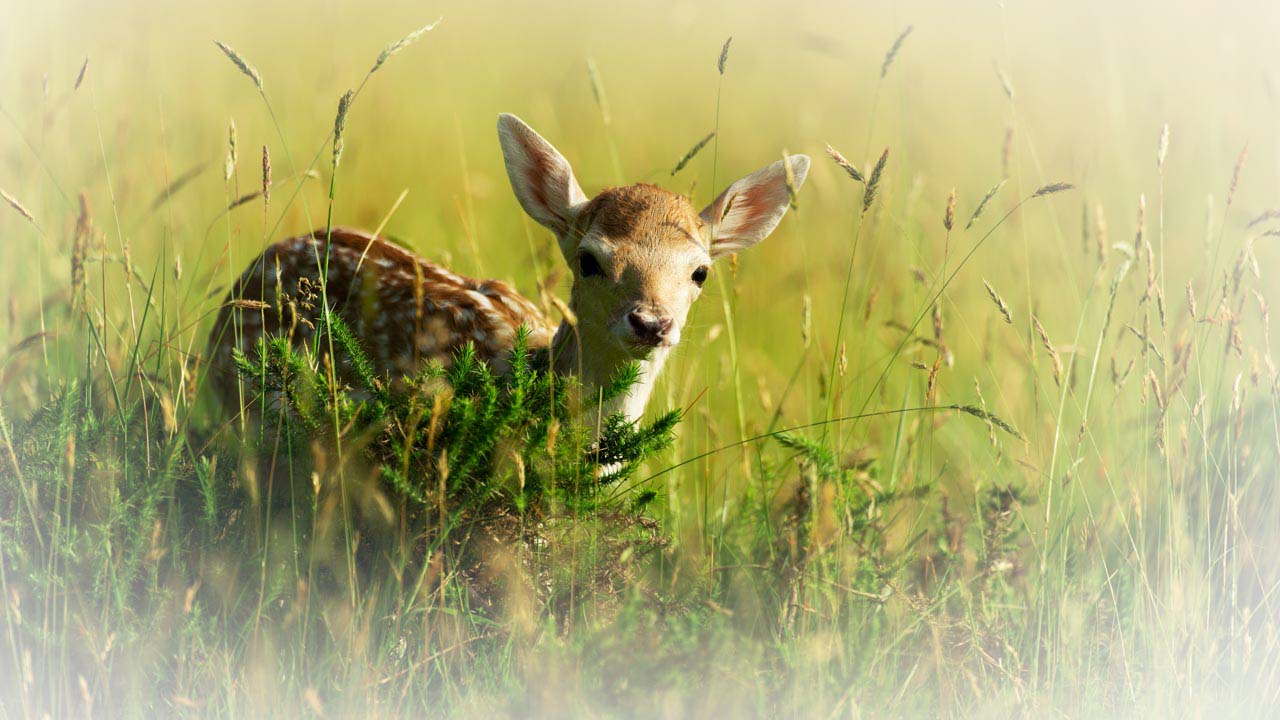
Photograph of a fallow deer fawn in a meadow.

Why Photograph Fawns?

This essential question has several answers.

  • The first reason involves the “thrill” that comes with the difficulty of capturing the photos. If you enjoy attempting a real photographic challenge, if you like to experience intense emotions, and if you like to photograph rare animals, then you will enjoy photographing fawns.

    The main difficulty is to find them. One reason is that not all females give birth to a fawn every year. This is true for all deer, whether red deer doe, roe deer hind, or fallow deer goat.

    Another reason is that the females tend to move away from their fellows when they give birth.

    You must locate them, follow them, and patiently wait for the right time, whether you want to capture the moment of birth or the first steps of the fawn discovering its environment.
  • For me, seeing a fawn discovering nature is the main reason for my photographs. The fawns like to play, frolic, and discover the environment.

    I have had the chance to observe a fawn look curiously at a bee or a butterfly. The expressions he showed were extraordinary. These are incredible moments to freeze in time with photographs.
  • I believe that the third reason arises with the emotions you will encounter when the fawn gazes at you. Even genetically, a fawn is programmed to be afraid of human beings. Even so, he retains a child-like curiosity that is specific to the innocence of living beings who have just begun their life.

    During several photo session, I had the opportunity to use a blind to surprise a doe that passed by with her fawn. When she detected a suspicious presence, the doe fled quickly. The fawn did not hesitate to stay a minute or two to look in the direction of the blind to try to understand what was happening. It is at this precise moment that I was able to create images of a very great emotional depth.
  • The fourth reason is the unique qualities of the fawn. They are figures of beauty, the elegance, the finesse, and the fragility of the fawns. They are often small, frail, and insecure. Photographically speaking, the fawn represents a marvelous animal subject.
  • Finally, to give you a fifth reason to photograph fawns, it may be the fulfillment of a childhood dream. Moreover, I attach enormous importance to symbolism.

    During our childhood, we eagerly watched the film “Bambi”. We also may have read children's books whose main characters involved a fawn.

    The fawn is a symbol of childhood and of nature. It also evokes fragility. The fawn represents the child within each of us. Photographing fawns also represents the learning of wisdom. The fawn is dependent on its mother, it must learn wisdom from her.
Read also: Three techniques for photographing the bugle of the red deer.

How to Photograph Fawns

I previously wrote that photographing a fawn is difficult because you need to locate him. You should already note that the best period to do this is in the months of June, July, and August.

I use three techniques, like those used for the rut of the deer season.

  • Photo walking is the easiest way. You just need to know an area populated by red deer doe, roe deer hind or fallow deer goats. Then you must walk in search of animals. It is a fairly effective way to find animals because you can travel 10 or 20 km ( 6 to 12 miles) per day. You are placing the odds on your side.

    Unfortunately, you are going to run into two problems. The females have excellent hearing. If you have a heavy footfall, if you crush a twig, or if you make the slightest noise, your presence will be detected long before you spot them.

    On the other hand, with photo walking, even if you choose your location correctly according to the flow of the wind and the position of the sun, you may not have the chance to have a beautiful setting to highlight your scene . This is one of the foundations of my ACANP method for creating interesting photos. The decor is one of the three essential components to choose to make a good photo.
  • The approach is the second way for photographing fawns.

    The idea is to find a fawn with binoculars from a remarkable point. Then you will progress by crawling in the meadows or undergrowth until you find yourself at a sufficient distance to take your photographs. It is a technique that I love and that I practice often because it is effective. Sadly, it also has its downside: it is exhausting.

    Generally, I can do two approaches maximum per photo session. After that, my energy dwindles. Sometimes, I make approaches over 500 m (0.3 mile) that last more than an hour. The main advantage to this technique is that you can choose your distance from the animal. Depending on your photographic style and your framing, you can adjust and assess this distance.
  • The third way to photograph fawns is with the technique of the blind. You must know the terrain which you will cover. You should also know the habits of the animals.

    The blind remains a particularly good technique for wildlife photography. It has the advantage of making you almost invisible. It also allows you to rest and to choose your decor. Its main drawback is that you cannot choose the distance at which you will photograph the animals. If you take purely illustrative photos, then this does not matter. Indeed, in this case, only the representation of the animal is important.

    However, if you want to take artistic photographs as part of a photo project that has constraints, you will have no adjustment parameters.

All three methods have advantages and disadvantages. Personally, I use all three for different situations. I prefer the approach method. But when I am tired, I choose the blind method so that I can rest.

During the photo workshops that I organize when the fawns are born, I explain these three techniques.

The Choice of Lenses

For photographing the fawns, I recommend using a focal length greater than 300 mm, and whatever the format is for your camera's sensor. Fawns are difficult to approach because the mothers go away if they see or if they sense your presence.

Finally

Photographing fawns is a real challenge because they are difficult to find. In addition, not many are born each year.

To make interesting photos, I recommend the photo walking method, the approach method, and the blind method. I recommend that you get to know the terrain and the animals well before setting off on the field for a photo session.

Each year, I organize a photo workshop dedicated to the birth of fawns. Do not hesitate to contact me for information on this subject if you are interested.
5 Steps for Developing a Photographic Mindset

You may think that creating creative and artistic photographs only requires a camera, lens, technical skills, and a photographic culture.

It is a good start.

You must add an essential element: the photographic mindset.

In this article, I am going to explain why and how to develop it using 5 steps.

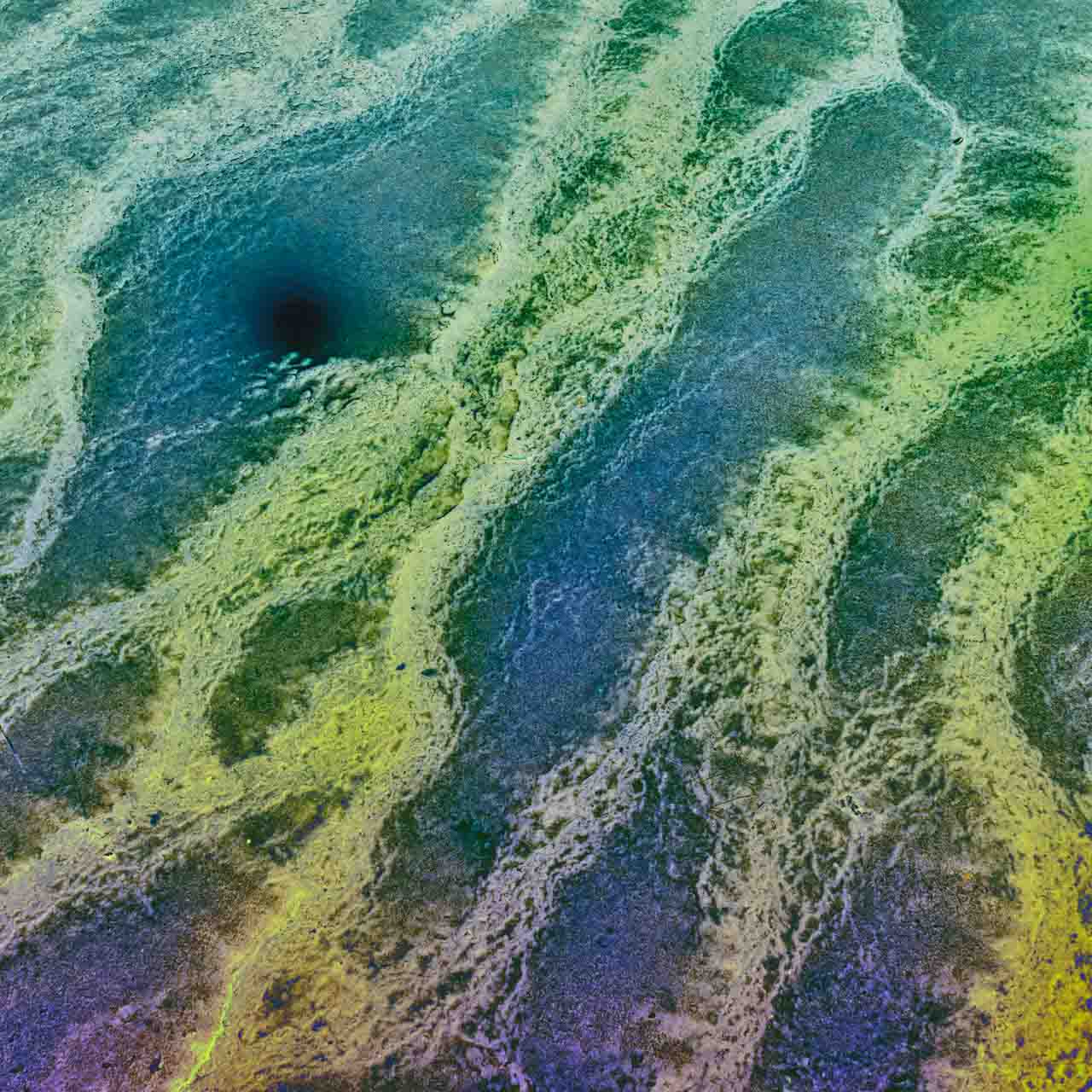
Photograph created in Yellowstone for the fine art collection 'Paths of Mind'.

Table of Contents

    Page 1

  • Definition of the Term "Mindset"
  • Applying “Mindset” to Photography
  • Why Should You Develop a Photographic Mindset ?
  • Step 1: Understanding Why You Are Practicing Photography
  • Step 2: Creating Photographs by Passion
  • Step 3: Learning How to Create Photographs That Resemble You
  • Step 4: Defining Uour Photographic Consciousness
  • Step 5: Using Photography as a Means of Expression
  • Finally

Definition of the Term "Mindset"

In areas related to emotions and human nature, there are many definitions for "mindset".

I chose the one that seems to me the most suitable for this article.

The mindset is the mentality that a person has. It is a psychic state of emotions and moods. A person's mindset is an inner attitude.

Applying “Mindset” to Photography

I believe that photography is an artistic form allowing you and I to express our emotions and feelings, to convey messages, and even to represent a personal aesthetic.

To express yourself with photography, you must develop and use a photographic language. With this language, you can translate what you feel and who you are through your personality. In other words, you can transmit your mindset through your photographic creations.

It is for this reason that you must develop and maintain your photographic mindset.

When you are in the field during photo sessions, you can translate moods without getting lost.

Like me, if you feel this need, this desire to express yourself without using speech, you must adopt an interior attitude through photography.

In the rest of this article, I will explain how to accomplish this using my uniquely crafted method. It has proven itself in my professional activity and in my photo workshops. This is one of the goals of my ACANP method.

Read Also: ACANP: Discover How to Create Different and Inspiring Photographs.

Why Should You Develop a Photographic Mindset ?

The answer to this question is very simple.

The quality of your photographs depends entirely on the quality of your photographic mindset. The better you define it, the more it will be structured. As a result of your clear outline, your photographs will make sense and will be more interesting for an audience of people who appreciate your photographic approach.

Step 1: Understanding Why You Are Practicing Photography

To develop a solid, lasting, coherent, and consistent photographic mindset, I advise you to answer an essential question. Why do you practice photography?

Likewise, if you use photography as an art form, why do you practice this photographic art?

By answering these essential questions, you have taken an essential first step. Your answer provides insight into your photographic mindset, allowing you to limit your photographic activity.

By setting limits, you will not get lost in the twists and turns of creativity. You will be consistent in the creation of your photographs.

If you know why you are taking photos, you will always know how to react on the field. You will know how to develop your photographs. Finally, you will know how to present and display them.

Clearly defining your goals and objectives is the basis of the process of creating a photographic mindset.

Read Also: Why Are you Taking Photographs?

Step 2: Creating Photographs by Passion

I also recommend that you take photographs with passion and not with envy.

Today, with the intensive development of digital and social networks, it has become fashionable for many photographers to show off. I do not mean to show selfies, but to brag that they travelled to such and such country, that they participated in this event and that they met that personality. All these photographs have no interest because they have no meaning. They simply serve to flatter the ego of the photographers who took them. Publishing these photos simply shows that these photographers exist. They take photos to spark envy rather than taking photos as a product of passion.

If you decide to create photographs with passion and refrain from “bragging” about your daily life or vacation, you are going to take a second important step in the development of your photographic mindset.

Read Also: Why you Should Have a Photographic Identity.

Step 3: Learning How to Create Photographs That Resemble You

Even if you apply step 2 and you have decided to create photos with passion, it is not enough to create a true photographic mindset.

For me, an essential point is creating photos that look like you. “Why?” you may ask.

The answer is simple: because you are unique.

If you take photographs that look like you, you will create unique images that will interest a certain number of people. There is only one you. Others will begin to appreciate your photographic activity. They will encourage you. You will be motivated. You will continue to be creative and take interesting photos. It is this virtuous circle which is at the base of the creation of interesting photos.

You will thus strengthen your photographic mindset.

Step 4: Defining Uour Photographic Consciousness

I have already addressed this subject of photographic consciousness in another article. Knowing how to situate yourself in relation to other photographers, not on a scale of values but in terms of artistic positioning, is essential.

You can take inspiration from the photographic approach of other photographers, but you should never copy. You are unique. You are an exception. Be yourself.

The development of a photographic consciousness allows you to remove doubts about the creative axes that you choose. It allows you to follow your objectives and achieve the goals you have set.

Read Also: Why and How Developing a Photographic Consciousness.

Step 5: Using Photography as a Means of Expression

As far as I am concerned, photography is an art form that evokes a meditative state. When I start a photographic project or when I am on the field creating new images, I always answer this question: why am I photographing?

Photography reveals a quest. Mine is to understand the role I have in this world. It allows me to define my place in what is called humanity. What is my role? Why am I here?

You may think that my answer sounds a little strange and has nothing to do with photography. However, I think it is just the opposite. It is precisely the fact of having answered these questions that I found a meaning to give to my life.

I chose nature as a photographic theme. It is an intimate echo of my revealed unconscious, it answers my questions, my doubts, and my expectations.

Photography forced me to see the world differently. The photographic works that I create are like a mirror of the world around me.

If you want to develop a strong photographic mindset with a deep sense of self-expression, you must make images that reveal your deepest moods. These are the ones that are buried in your subconscious.

I really believe that one way to use photography is to think of it as a catalyst that brings together your deepest and most secret thoughts. I am talking about the thoughts that we cannot formulate.

The silence of photographs speaks invisible words.

It is for all these reasons that photography finally reveals a quest for the meaning of life.

Read Also: Why Photography is a Real Mean of Expression.

Finally

Taking photographs is more than just pressing a camera button or an icon on a mobile device. It is a mechanical gesture that is the purpose of everything you wish to express and transmit.

My advice for you is to take time to develop a true photographic mindset. This will help you to take photographs that resemble yourself, and as a result, you will better express yourself through the means of photography.

  1. Lasting in Photography Means Building your Photographic Structure
  2. Why and How: Defining a Photograph
  3. 9 Steps for You to Last in Photography
  4. Why and How: Controlling Natural Light in Nature Photography

Page 60 of 201

  • 55
  • 56
  • 57
  • 58
  • 59
  • 60
  • 61
  • 62
  • 63
  • 64
  1. You are here:  
  2. Home
  3. Blog Photographic Approach

Share on Social Media

Post
Share
Share
E-mail
WhatsApp
Text

Join Me on Social Networks

Join Me on Facebook  Join Me on Instagram  Join Me on LinkedIn

Claim your free guide to make your photo impactful and meaningful

Claim Your Free Guide '50 Pages of Tips to Give Impact and Meaning to Your Photos'.

4 + 8 =

Click Here To Discover All My Chronicles About the Photographic Approach.

Treat Yourself to a Fine Art Print That Matches your Personality

Example of a vacation home interior with a black and white fine photo art displayed on the wall.

Fine Art Print Collections in Black and White

Fine Art Print Collections in Black and White Black and white photography is a suitable technique for many nature scenes. It requires a particular frame of mind. A black and white photograph should be prepared and planned from the framing to the…
12004
Fine Art Print Collections in Black and White
An abstract art photo displayed in a contemporary living room decor.

Fine Art Print Collections in Color

Collections of Fine Art Prints in Color Color photographs allow digressions and take the audience to the message by secondary ways. The world around us, especially nature, is colorful. A color image can show the way our surroundings really are. Of course, it…
10448
Fine Art Print Collections in Color
Example of a home interior with fine art prints in my style back to black displayed on the wall. These photos are a part of my collection 'Wild beauties of Kenya'.

Fine Art Print Collections in Back to Black

Fine Art Print Collections in Back to Black I want to share my fine art prints of nature in a personal style that I call "back to black." "Back to Black" was developed to embody a sharp and clean style for artistic photos that can be hung in your living room,…
9987
Fine Art Print Collections in Back to Black
A waiting room with a photo in the style Fusion displayed on the wall. Grey Heron in Fusion.

Fine Art Print Collections with the Fusion Style

Fine Art Print Collections with the Fusion Style I would like to share a very creative and modern photography style to represent Nature in a very different way. I call it "Fusion." I created the style to offer dynamic photos, allowing you to start a good day…
7917
Fine Art Print Collections with the Fusion Style
A living room with a photo in the style 'Impression' exposed on the wall. Rising sun in impression

Fine Art Print Collections with the ‘Impression’ Style

Fine Art Print Collections with the ‘Impression’ Style The objective of this photographic style is to create the ephemeral blurs. That's why I named it 'Impression.' Photography, as an art form, is a powerful means of expressing reality from different…
5831
Fine Art Print Collections with the ‘Impression’ Style
Fine art prints from the style back to black displayed on a wall. Amar Guillen, photographer artist

New Collections of Fine Art Prints Dedicated to the Wonders of Nature

New and Updated Fine Art Print Collections Dedicated to the Wonders of Nature Fine art prints from the style back to black displayed on a wall.
11451
New Collections of Fine Art Prints Dedicated to the Wonders of Nature

Themes of the Blog Articles

Landscape of Arches National Park in Utah in black and white.

Blog Articles Dedicated to Artist Statement

Blog Articles Dedicated to Artist Statement
Dunes of death Valley in Black and White

Blog Articles Dedicated to Black and White Photography

Blog Articles Dedicated to Black and White Photography
Abstract photo or trees reflection on water

Blog Articles Dedicated to Photographic Mindset

Blog Articles Dedicated to Photographic Mindset
Abstract photo of ridles on water

Blog Articles Dedicated to Artistic Photography

Blog Articles Dedicated to Artistic Photography
Abstract photo of Yellowstone

Blog Articles Dedicated to Photographic Language

Blog Articles Dedicated to Photographic Language
Pronghorn in Yellowstone

Blog Articles Dedicated to Wildlife Photography

Blog Articles Dedicated to Wildlife Photography
Landscape of Bryce Canyon

Blog Articles Dedicated to Photographing United States

Blog Articles Dedicated to Photographing United States
Underwater waves in the Red Sea

Blog Articles Dedicated to Photographic Techniques

Blog Articles Dedicated to Photographic Techniques
Tree of Black Canyon in Black and White

Blog Articles Dedicated to Landscape Photography

Blog Articles Dedicated to Landscape Photography
Manta Ray in Maldives in Black and White

Blog Articles Dedicated to Underwater Photography

Blog Articles Dedicated to Underwater Photography
Red Deer stag during the rut of the deer

Blog Articles Dedicated to Photographic Judgement

Blog Articles Dedicated to Photographic Judgement
Great Crested Greb and his chick

Unclassified Blog Articles

Unclassified Blog Articles

You Might Be Interested By One of These Photographic Approach Articles

Mustangs in a meadow near Grand Teton in the national park in Wyoming.

Use a Slideshow to Tell a Story with your Photos

4915
Use a Slideshow to Tell a Story with your Photos
A photo of a gelada, taken on a cliff in Ethiopia. This picture was taken during a photo walk.

Photographing at Eye Level to Improve your Wildlife Photos

4441
Photographing at Eye Level to Improve your Wildlife Photos
Photograph in black and white of a manta ray in Maldives during a night dive. Photograph by Amar Guillen, photographer artist.

Why and How Judging a Photograph Subjectively

4233
Why and How Judging a Photograph Subjectively
Landscape in black and white of the Sand Dunes in Death Valley. Photograph by Amar Guillen, photographer artist.

15 Steps to Improve Your Photos

3448
15 Steps to Improve Your Photos

Receive Free Tips On How to Give Impact and Meaning to Your Photos. Subscribe to Receive Regular Articles.

2 + 7 =

Contact Me By Email

10 + 9 =
This site is protected by reCAPTCHA and the Google Privacy Policy and Terms of Service apply.

About Amar Guillen, Creator of Fine Art Prints of Nature
As a photographer capturing the artistic essence for several decades, I have mastered the art of crafting an authentic experience for art enthusiasts and collectors of visual art.
When I observe my surroundings, be it friends, family, relationships, or professional contacts, I see souls in perpetual motion. Every moment of their existence is engulfed by daily hassles, work concerns, social media, online or televised information streams, and videos on the web.
Every minute, they strive to accomplish something, fearing losing ground and feeling marginalized in this frenzied society. Imprisoned by an oppressive schedule, the essential eludes them, drowned in the tumult of daily life. Is it really crucial to watch yet another cat video on the internet? Is it necessary to post twenty daily messages on social media?
Despite this, they remain constantly stressed and anxious about the challenges of the world, without being able to influence these monumental problems. It is at this moment that my artistic nature photographs come into play. Those who have had the privilege of hanging one of my works in their personal or professional space have expressed a radical transformation in their lives.
Every day, contemplating these works of art immerses them in tranquility, inner peace, and rediscovered serenity. They then understand that nature has the power to unravel tensions, to encourage reflection on the essential. Artistic photographs thus become open windows to the wonders of nature.
I have chosen to share the best of myself by helping others discover their identity, personality, style, all while reconnecting with nature. Take the time to explore my artistic photographs if you wish to reveal your true essence. Once hung in your space, your view of the world will be transformed.
Amar Guillen is a creator of fine art prints of nature.
I am Amar Guillen, creator of nature art photographs. I have a deep conviction that contemplating nature has the power to transform human beings. If everyone learned to know, respect, and preserve nature, our world would be transformed into a haven of peace where everyone would find their place.
Copyright © 2003 - 2026 Guillen Photo LLC - All rights reserved. Amar Guillen, professional photographer since 2003.
  • Blog
  • Calibration
  • Legal Information
  • Sitemap
  • Accessibility
  • Contact Me
  • Updates of the Website
I Want to Help You to Create Interesting Photos

How Can I Help You To Create More Interesting Photos?

Ask Me a Technical Question.
Subscribe to my Newsletter. The Inspiration Behind Guillen Photo.

Select your language

  • English (United Kingdom)
  • Français (France)
Claim your free guide to make your photo impactful and meaningful

Claim Your Free Guide '50 Pages of Tips to Give Impact and Meaning to Your Photos'.

4 + 10 =

Contact Me By Email

9 + 10 =

Office Address:
3512 Robin Road
Plano Texas 75075
USA

Office phone: (+1)214-769-6825