• The Art of ChoosingHome page
  • Fine Art Prints3 Editions
  • CollectionsAll Collections
  • AboutAmar Guillen
  • Customer Space & Contact
  • Select your language

    • English (United Kingdom)
    • Français (France)
  • All You Need to Select Your Fine Art Print
    • How to Choose a Fine Art Print - Q&A - FAQ
    • New Creations
    • Explore Some Interiors
    • Fine Art Print Blog
  • Browse by Edition
    • All Fine Art Prints
    • Unique Edition
    • Limited Edition
    • Open Edition
  • Browse by Style
    • Black and White
    • Color
    • Fusion
    • Impression
    • Back to Black
    • Landscapes in Black and White
    • Landscapes in Color
    • Animals in Black and White
    • Animals in Color
  • Browse by Theme
    • Landscape
    • Wildlife
    • Underwater
    • Abstract
    • Symbolic
    • Landscapes of the United States
    • Landscapes of France
    • Landscapes of Scotland
    • Seascapes
    • Relaxing
    • Energizing
    • Playful
  • Browse by Format
    • Rectangular
    • Square
    • Panoramic
  • Contact Me
    • Contact Me by Email or Phone
  • Collections
    • New Collections
    • All Collections
  • Browse by Theme
    • Landscapes
    • Wildlife
    • Underwater
    • Abstract
    • Symbolic
    • Landscapes of France
    • Landscapes of the United States
  • Browse by Style
    • Black and White
    • Color
    • Impression
    • Back to Black
    • Fusion
  • Contact Me
    • Contact Me by Email or Phone
  • Discover More About Me
    • Discover Who is Amar Guillen
    • Artistic and Photographic Statement
  • Galleries
    • Photo Galleries
    • Abstract Portfolio in Color
    • Black and White Landscape Photography Portfolio
    • Color Landscape Photography Portfolio
    • Black and White Wildlife Photography Portfolio
    • Color Wildlife Photography Portfolio
    • Underwater Photography Portfolio
  • Contact Me
    • Contact Me by Email or Phone
  • Your Customer Space
    • Create or Manage your Account
    • Your Download Space
    • Your Orders
  • Contact Me
    • Contact Me by Email or Phone

You are in that section: Home > Blog > Blog of the Photographic Creation Approach

For Seeing your Photos in Black and White, Look at the Tones
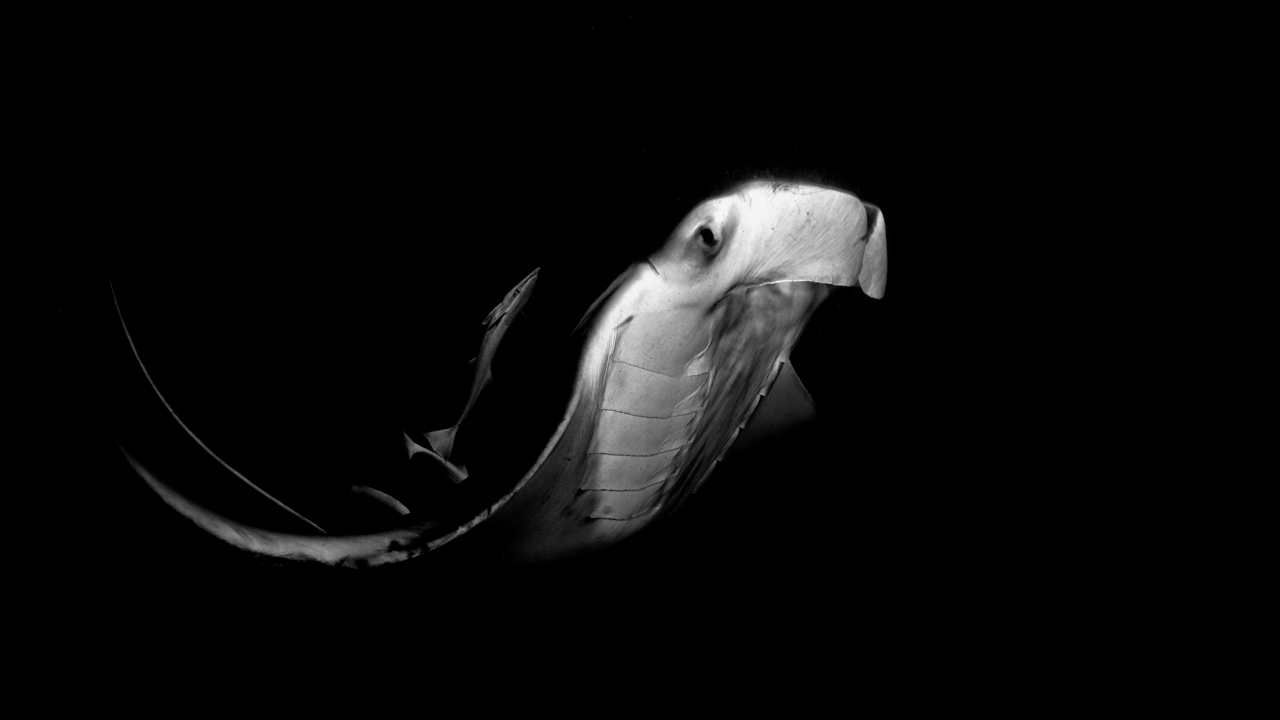
Black and white photo of a manta ray in Maldives.
This black and white photo of a manta ray is part of an underwater photo project dedicated to black and white.

Keep in Mind the Definition of a Photograph

In a previous article, I defined a photograph as having two components:

  • Its aspect. This is the visible component, or what I call the “container”.
  • Its meaning. This is the invisible, intangible component, or what I call “content”.

These two components are necessary and sufficient to define a photograph.

If the meaning is missing, you only have a picture. That is to say, a hollow representation of what is real.

Read also: Why and How: Defining a Photograph.

Remember the Purpose of Light in Photography

In a previous article, I explained to you that light is the binder used to combine all the inert materials in a photograph.

Light is the link of all the visual elements of your photograph. With it, you will highlight your composition and your framing.

I have previously explained that:

  • Light defines shapes.
  • Light defines lines.
  • Light creates textures.
  • Light determines colors.

Without light, your compositions and your framing would have no photographic flavor.

In black and white, the colors do not exist. When using light, you must be meticulous with shapes, lines and textures.

Cameras offer an excellent tool for analyzing the tones of your images: the histogram. As I pointed out in another article, there is no ideal histogram. It all depends on the scene you are shooting. However, your histogram should never be pasted to the left as you lose details in the dark areas. It should also not be pasted to the right as you lose detail in the light areas. The histogram should always be perfectly defined between the left and the right of the rectangle.

Tip # 1: Learn to Watch the Tones of Your Scene

In a previous article, I explained to you that the tonality of a photograph is its visual aspect in terms of the distribution of tones and the gradation levels between them.

The different tones at your disposal are a palette that allow you to create interesting and creative photographs.

The tones apply to parts of a photograph. The tonality is the general rendering of the photograph.

There are three main types of tonality:

  • The dark tone: the photograph is rather dark with low lights or dark colors. Low key photos in black and white are dark toned photos.
  • The clear tone: the photograph is rather clear with highlights or bright colors. High key photos are light tone photos.
  • Neutral tone: the photograph is neither dark nor bright. This is called balanced tone.

There is no universal tone. It all depends on what you want to convey.

To take black and white photos, I recommend that you carefully analyze the tones of your scenes. Do not specifically focus on the tone. Pay attention to each of its components.

Cameras offer an excellent tool for analyzing the tones of your images: the histogram. As I pointed out in another article, there is no ideal histogram. It all depends on the scene you are shooting. However, your histogram should never be pasted to the left as you lose details in the dark areas. It should also not be pasted to the right as you lose detail in the light areas. The histogram should always be perfectly defined between the left and the right of the rectangle.

Read also: Why and How: Mastering Tonality in Nature Photography.

Tip # 2: Learn to Look in Color

This advice may seem paradoxical, but to create good black and white photos, you have to learn to look in color.

In a previous article on color in photography, I explained that a color has 3 attributes:

  • Color: red, blue, green. It is the name of the color.
  • Tone: the balance of light and darkness.
  • Saturation: the purity of color. The higher the saturation, the more energy the color has. The lower the saturation, the less energetic the color.

If you want to see a color scene in black and white, I recommend that you pay no attention to the hue and the saturation. They have no impact on the rendering of a black and white photo.

  • Take the following test in your favorite photo editor.
  • Take a color photo. Turn it into black and white. Keep the result.
  • Saturate the colors of your photo. Turn it back to black and white. Keep the result.

Compare the two black and white photos. You will not see any difference.

Never forget that the saturation in a photo gives energy but it has no impact on the color for a transformation in black and white. Be incredibly careful especially with complementary colors. It is just an illusion. The complementary colors give strength to a color photo but have no interest in black and white.

In black and white, only the tones are important. You have to learn to look at colors that have light tones and dark tones.

When analyzing a color photo, study the shadows, highlights and mid-tones. Do not look at the energy of the colors.

Read also: Why and How: Enhancing Colors in Nature Photography.

Tip # 3: Learn to Look at Textures, Shapes, Patterns and Lines

In a black and white photo, the colors are absent. They are useless. It is for this reason that you should pay close attention to the following:

  • Strong lines.
  • Textures.
  • Shapes.
  • Light colors.
  • Sharp areas.
  • Clear areas.
  • High contrast areas.

In a previous article on the definition of a photograph, I discussed how a viewer analyzes a photo. His gaze is attracted to the elements I have just listed.

Photographic language aims to organize photographic elements to express your thoughts.

It is this particular technique that I teach with my ACANP method during my photo workshops.

Read also: Why and How: Using Lines in Nature Photography.
Read also: Why and How: Using the Photographic Language of Black and White.

Tip # 4: Learn to Look at Light and Shadows

Light defines the different elements that can be used in a scene. It is for this reason that it must be understood. It is your medium.

Personally, I really appreciate lights that stem from the side. I find that an asymmetrical light best highlights the textures.

If the scene you are photographing has strong lights, it will be a high-key type.

If the scene you are photographing has strong shadow areas, it will be a low-key type.

Read also: Why and How: Controlling Natural Light in Nature Photography.

Tip # 5: Choose Scenes with Large Tonal Differences

The tonal differences in a scene are judged in color. Choose the widest possible pitch differences. This technique will allow you to define the entire contrast in black and white.

The more you learn to look at the tones in your scenes, the better your black and white photos will be.

Tip # 6: Choose Scenes with Details Visible in Dark Areas

I notice that black and white photos often have very dense blacks without any detail. In photography, it is said that black color has no detail.

When exposing a scene that will become a black and white photo, try to make the details visible in the dark areas. This can be difficult to estimate on the ground, but it has many benefits if accomplished.

By highlighting the details in the dark areas, you will have created an attractive area of your photos. They may not initially attract the eye of the viewer, but the addition of slight detail causes the eye to question an area for a longer period of time. You will also avoid the terrible mass imbalance that happens when details are not captured in the dark areas.

Tip # 7: Choose Scenes with Extreme Contrasts

Black and white photography is a creative technique in which the management of contrasts is crucial.

The contrast of a photograph is the difference between the lightest and the darkest area.

The ideal for black and white is that this contrast is as large as possible. Indeed, the human eye loves contrasts to better decipher the content of a photograph.

When you are in the field, arrange to find a point of view that will give you the most contrast possible.

Tip # 8: Find a High Light Area

In a black and white photo, the eyes of a spectator are always drawn to highlights of an image first, before other areas. It is for this reason that you must integrate at least one high light area in your composition.

A highlight must be located on a strong point or in a place where you want the spectator to look. It is a technique that I use very often in my compositions.

Finally

These eight tips should allow you to exercise your gaze on the field to see in black and white. Remember that this creative technique is challenging to master. You will need time. Once you have learned how to utilize this advice, do not hesitate to practice these techniques permanently, regardless of terrestrial or underwater photography. I advise you to write down on a sheet of paper the points that stand out to you. Skim these points as a refresher before a photo session that is dedicated to creating black and white photos.
Click Here To See Black and White Fine Art Print Collections.

8 Tips for Seeing your Photos in Black and White

When you photograph nature scenes for black and white prints, what do you see?

Do you imagine the scene in color or in black and white ?

The answer to this crucial question can fully determine the quality of your photographic creations.

In this article, I provide you with eight tips to better visualize a scene in black and white. You will create more interesting photos. These are tips that I use to create my art prints.

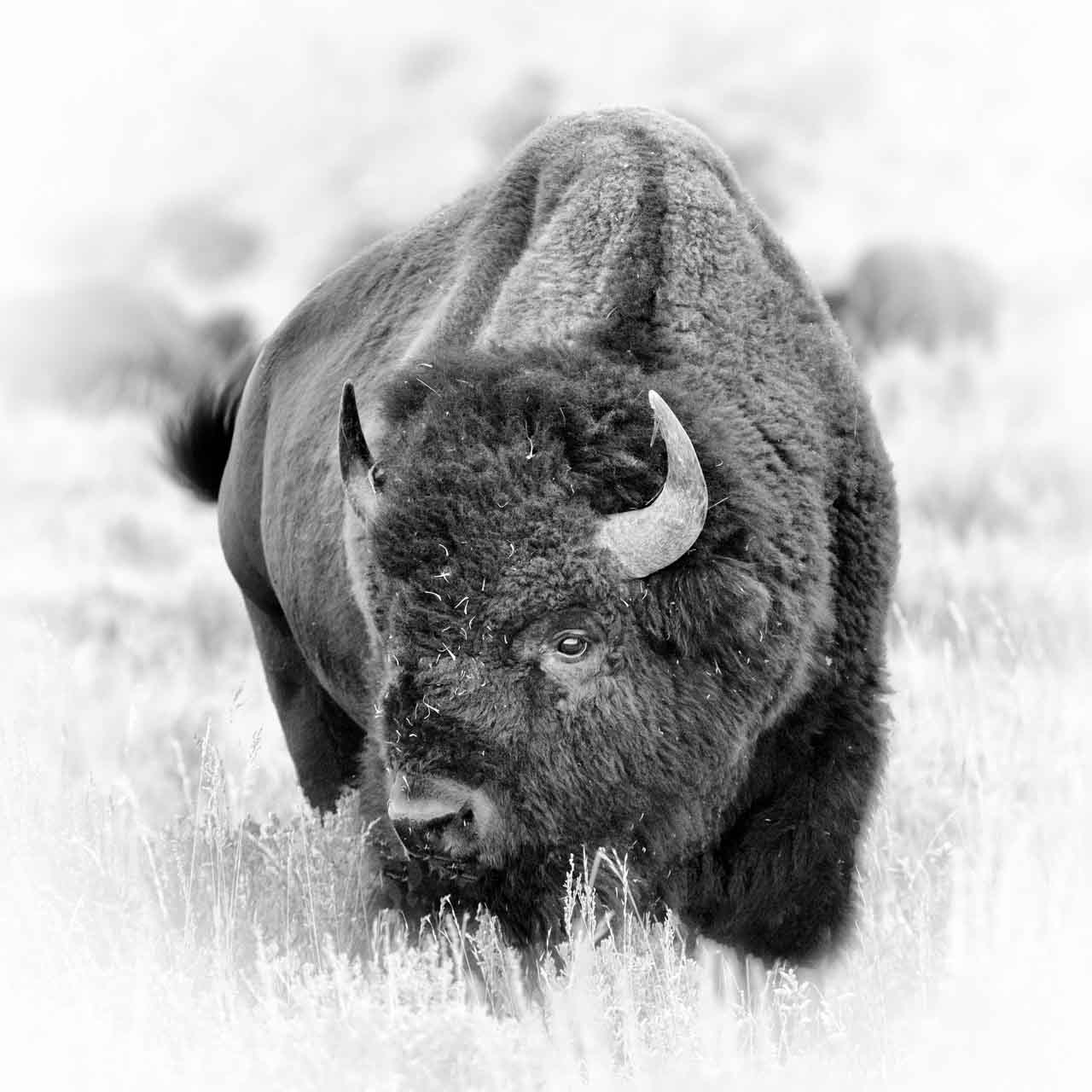
Black and white photograph of a bison in Yellowstone in summer. The details, the form, the structures were necessary to correctly show the scene.
Bison in Yellowstone in summer. It is a difficult animal to highlight in black and white. This photo required preparation.

Table of Contents

    Page 1

  • The Little Story Behind This Article
  • Why: Photographing in Black and White
  • Creating Black and White Photos Is Difficult
  • How to See in Black and White
  • Page 2

  • Keep in Mind the Definition of a Photograph
  • Remember the Purpose of Light in Photography
  • Tip # 1: Learn to Watch the Tones of Your Scene
  • Tip # 2: Learn to Look in Color
  • Tip # 3: Learn to Look at Textures, Shapes, Patterns and Lines
  • Tip # 4: Learn to Look at Light and Shadows
  • Tip # 5: Choose Scenes with Large Tonal Differences
  • Tip # 6: Choose Scenes with Details Visible in Dark Areas
  • Tip # 7: Choose Scenes with Extreme Contrasts
  • Tip # 8: Find a High Light Area
  • Finally

The Little Story Behind This Article

The first time I traveled to the canyons of Antelope in Arizona in the United States, my goal was to create black and white photos.

During the preparation of this photo project, I looked at hundreds of photos. All had one thing in common. They were in color. A large number of them were of excellent technical and creative quality, however, they all looked alike.

They were not identical images, but each photographer was inspired by another’s work, causing the images to appear remarkably similar.

To make a distinction, I decided to create a collection only in black and white. Thus, I booked 4 tours of approximately three hours each with a specific guide to help me. Each session was scheduled at a different time of the day to make sure that the right lights would be present.

During my sessions, the conditions were perfect. I felt as giddy as a small child discovering his Christmas gifts. It was extraordinary.

When I returned to my studio, I sorted, organized, and selected my photos. After few days, I began to develop the collection.

Suddenly, I had one of the biggest shocks of my career as a professional photographer. None of the photos I took could be developed in black and white. The results were not at all up to my expectations. In color everything was perfect. But I was going to create photos that hinted of Deja-vu.

I soon realized my mistake. During the shooting phase, I had visualized how the scenes would appear in color, rather than black and white. I missed this essential point. My photographic time had been wasted.

For me, this experience was a revelation of what black and white represented.

It is not enough to take a color photo and transform it black and white. You have to think in black and white when shooting. But above all, you must see in black and white.

This is what I will explain to you in the rest of this article.

Why: Photographing in Black and White

If you are not yet creating black and white photographs, you are probably wondering why you need to use this photographic style.

Black and white photographs have many positive qualities:

  • The beauty of black and white, simplicity, is emphasized.
  • Black and white offers an alternative medium to color for sharing an artistic interpretation.
  • Black and white is solely an artistic style because it never shows reality, which is always in color.
  • Black and white allows a viewer to focus on the content. Color is a distracting technique.
  • Black and white does not make compromise, it requires perfection. Color, however, can hide defects due to its “visual noise” provided by the many tones and shades.
  • Black and white allows for more homogeneous photographs to be crafted, even in very varied light conditions. The photos are more consistent.
  • Black and white is the foundation of photography. It was explored many years before the rise of color.
  • Black and white is a technique that allows you to create photos with another vision.
  • Black and white adds mystery and promotes the creation of abstract conceptual photos.

For me, the greatest quality of black and white is its timelessness. When I look at color photos, I often find them dated, obeying criteria of a fashion that has long since passed. They are no longer relevant.

Black and white photographic art spans the decades. You can watch them in film or television or admire the classiness and symbolic relevance of prints that were taken 20 or 30 years prior.

It is for this reason that I often say during my photo workshops that black and white offers me the luxury of mastering time.

Read also: Why and How: Take Pictures in Black and White.

Creating Black and White Photos Is Difficult

Black and white is not a photographic field, even though I often hear people claim it to be. It is a technical approach which concerns underwater photography, wildlife photography, and landscape photography.

Black and white is a creative interpretative technique that is exceedingly difficult to master.

The learning process can be tumultuous and long. Many photographers are discouraged when they compare their photos to the ones created by the masters of this technical approach.

The creation of quality black and white photographs is very demanding. It begins with the shooting and ends with printing on paper. The stages of the workflow are completely different from those of color.

In this article, I will only discuss the first step: the field.

Read also: Why and How: Photographing Landscapes in Black and White.

How to See in Black and White

I will give you tips that I use during the creation of my collections to see in black and white. Each of the following paragraphs will give you some advice. But before going further, I would like to share with you this quote which is engraved in my mind. I constantly repeat it to myself while working on a project in black and white.

"In photography, perfection is impossible to achieve. Only the constant search for excellence allows us to approach it".

Black and white is the basis of photography. Since I developed my activity as an artistic photographer of nature, I have realized the importance of this technique and its impact.

Black and white, because it is so difficult to master, allows you to approach perfection in photography.

In black and white, framing and composition errors are immediately visible. The use of color is more flexible since the errors are less visible.

Reminder on the Definition of a Photograph

  1. Why and How: Using the Photographic Language of Black and White
  2. 3 Techniques for Photographing Fawns
  3. To Give Meaning to your Photos, Define the Message You Want to Convey
  4. 3 Steps for Giving Meaning to Your Photos

Page 57 of 201

  • 52
  • 53
  • 54
  • 55
  • 56
  • 57
  • 58
  • 59
  • 60
  • 61
  1. You are here:  
  2. Home
  3. Blog Photographic Approach

Share on Social Media

Post
Share
Share
E-mail
WhatsApp
Text

Join Me on Social Networks

Join Me on Facebook  Join Me on Instagram  Join Me on LinkedIn

Claim your free guide to make your photo impactful and meaningful

Claim Your Free Guide '50 Pages of Tips to Give Impact and Meaning to Your Photos'.

4 + 8 =

Click Here To Discover All My Chronicles About the Photographic Approach.

Treat Yourself to a Fine Art Print That Matches your Personality

Example of a vacation home interior with a black and white fine photo art displayed on the wall.

Fine Art Print Collections in Black and White

Fine Art Print Collections in Black and White Black and white photography is a suitable technique for many nature scenes. It requires a particular frame of mind. A black and white photograph should be prepared and planned from the framing to the…
12004
Fine Art Print Collections in Black and White
An abstract art photo displayed in a contemporary living room decor.

Fine Art Print Collections in Color

Collections of Fine Art Prints in Color Color photographs allow digressions and take the audience to the message by secondary ways. The world around us, especially nature, is colorful. A color image can show the way our surroundings really are. Of course, it…
10448
Fine Art Print Collections in Color
Example of a home interior with fine art prints in my style back to black displayed on the wall. These photos are a part of my collection 'Wild beauties of Kenya'.

Fine Art Print Collections in Back to Black

Fine Art Print Collections in Back to Black I want to share my fine art prints of nature in a personal style that I call "back to black." "Back to Black" was developed to embody a sharp and clean style for artistic photos that can be hung in your living room,…
9987
Fine Art Print Collections in Back to Black
A waiting room with a photo in the style Fusion displayed on the wall. Grey Heron in Fusion.

Fine Art Print Collections with the Fusion Style

Fine Art Print Collections with the Fusion Style I would like to share a very creative and modern photography style to represent Nature in a very different way. I call it "Fusion." I created the style to offer dynamic photos, allowing you to start a good day…
7917
Fine Art Print Collections with the Fusion Style
A living room with a photo in the style 'Impression' exposed on the wall. Rising sun in impression

Fine Art Print Collections with the ‘Impression’ Style

Fine Art Print Collections with the ‘Impression’ Style The objective of this photographic style is to create the ephemeral blurs. That's why I named it 'Impression.' Photography, as an art form, is a powerful means of expressing reality from different…
5831
Fine Art Print Collections with the ‘Impression’ Style
Fine art prints from the style back to black displayed on a wall. Amar Guillen, photographer artist

New Collections of Fine Art Prints Dedicated to the Wonders of Nature

New and Updated Fine Art Print Collections Dedicated to the Wonders of Nature Fine art prints from the style back to black displayed on a wall.
11451
New Collections of Fine Art Prints Dedicated to the Wonders of Nature

Themes of the Blog Articles

Landscape of Arches National Park in Utah in black and white.

Blog Articles Dedicated to Artist Statement

Blog Articles Dedicated to Artist Statement
Dunes of death Valley in Black and White

Blog Articles Dedicated to Black and White Photography

Blog Articles Dedicated to Black and White Photography
Abstract photo or trees reflection on water

Blog Articles Dedicated to Photographic Mindset

Blog Articles Dedicated to Photographic Mindset
Abstract photo of ridles on water

Blog Articles Dedicated to Artistic Photography

Blog Articles Dedicated to Artistic Photography
Abstract photo of Yellowstone

Blog Articles Dedicated to Photographic Language

Blog Articles Dedicated to Photographic Language
Pronghorn in Yellowstone

Blog Articles Dedicated to Wildlife Photography

Blog Articles Dedicated to Wildlife Photography
Landscape of Bryce Canyon

Blog Articles Dedicated to Photographing United States

Blog Articles Dedicated to Photographing United States
Underwater waves in the Red Sea

Blog Articles Dedicated to Photographic Techniques

Blog Articles Dedicated to Photographic Techniques
Tree of Black Canyon in Black and White

Blog Articles Dedicated to Landscape Photography

Blog Articles Dedicated to Landscape Photography
Manta Ray in Maldives in Black and White

Blog Articles Dedicated to Underwater Photography

Blog Articles Dedicated to Underwater Photography
Red Deer stag during the rut of the deer

Blog Articles Dedicated to Photographic Judgement

Blog Articles Dedicated to Photographic Judgement
Great Crested Greb and his chick

Unclassified Blog Articles

Unclassified Blog Articles

You Might Be Interested By One of These Photographic Approach Articles

Mustangs in a meadow near Grand Teton in the national park in Wyoming.

Use a Slideshow to Tell a Story with your Photos

4915
Use a Slideshow to Tell a Story with your Photos
A photo of a gelada, taken on a cliff in Ethiopia. This picture was taken during a photo walk.

Photographing at Eye Level to Improve your Wildlife Photos

4441
Photographing at Eye Level to Improve your Wildlife Photos
Photograph in black and white of a manta ray in Maldives during a night dive. Photograph by Amar Guillen, photographer artist.

Why and How Judging a Photograph Subjectively

4233
Why and How Judging a Photograph Subjectively
Landscape in black and white of the Sand Dunes in Death Valley. Photograph by Amar Guillen, photographer artist.

15 Steps to Improve Your Photos

3448
15 Steps to Improve Your Photos

Receive Free Tips On How to Give Impact and Meaning to Your Photos. Subscribe to Receive Regular Articles.

2 + 7 =

Contact Me By Email

10 + 9 =
This site is protected by reCAPTCHA and the Google Privacy Policy and Terms of Service apply.

About Amar Guillen, Creator of Fine Art Prints of Nature
As a photographer capturing the artistic essence for several decades, I have mastered the art of crafting an authentic experience for art enthusiasts and collectors of visual art.
When I observe my surroundings, be it friends, family, relationships, or professional contacts, I see souls in perpetual motion. Every moment of their existence is engulfed by daily hassles, work concerns, social media, online or televised information streams, and videos on the web.
Every minute, they strive to accomplish something, fearing losing ground and feeling marginalized in this frenzied society. Imprisoned by an oppressive schedule, the essential eludes them, drowned in the tumult of daily life. Is it really crucial to watch yet another cat video on the internet? Is it necessary to post twenty daily messages on social media?
Despite this, they remain constantly stressed and anxious about the challenges of the world, without being able to influence these monumental problems. It is at this moment that my artistic nature photographs come into play. Those who have had the privilege of hanging one of my works in their personal or professional space have expressed a radical transformation in their lives.
Every day, contemplating these works of art immerses them in tranquility, inner peace, and rediscovered serenity. They then understand that nature has the power to unravel tensions, to encourage reflection on the essential. Artistic photographs thus become open windows to the wonders of nature.
I have chosen to share the best of myself by helping others discover their identity, personality, style, all while reconnecting with nature. Take the time to explore my artistic photographs if you wish to reveal your true essence. Once hung in your space, your view of the world will be transformed.
Amar Guillen is a creator of fine art prints of nature.
I am Amar Guillen, creator of nature art photographs. I have a deep conviction that contemplating nature has the power to transform human beings. If everyone learned to know, respect, and preserve nature, our world would be transformed into a haven of peace where everyone would find their place.
Copyright © 2003 - 2026 Guillen Photo LLC - All rights reserved. Amar Guillen, professional photographer since 2003.
  • Blog
  • Calibration
  • Legal Information
  • Sitemap
  • Accessibility
  • Contact Me
  • Updates of the Website
I Want to Help You to Create Interesting Photos

How Can I Help You To Create More Interesting Photos?

Ask Me a Technical Question.
Subscribe to my Newsletter. The Inspiration Behind Guillen Photo.

Select your language

  • English (United Kingdom)
  • Français (France)
Claim your free guide to make your photo impactful and meaningful

Claim Your Free Guide '50 Pages of Tips to Give Impact and Meaning to Your Photos'.

6 + 5 =

Contact Me By Email

3 + 5 =

Office Address:
3512 Robin Road
Plano Texas 75075
USA

Office phone: (+1)214-769-6825