• The Art of ChoosingHome page
  • Fine Art Prints3 Editions
  • CollectionsAll Collections
  • AboutAmar Guillen
  • Customer Space & Contact
  • Select your language

    • English (United Kingdom)
    • Français (France)
  • All You Need to Select Your Fine Art Print
    • How to Choose a Fine Art Print - Q&A - FAQ
    • New Creations
    • Explore Some Interiors
    • Fine Art Print Blog
  • Browse by Edition
    • All Fine Art Prints
    • Unique Edition
    • Limited Edition
    • Open Edition
  • Browse by Style
    • Black and White
    • Color
    • Fusion
    • Impression
    • Back to Black
    • Landscapes in Black and White
    • Landscapes in Color
    • Animals in Black and White
    • Animals in Color
  • Browse by Theme
    • Landscape
    • Wildlife
    • Underwater
    • Abstract
    • Symbolic
    • Landscapes of the United States
    • Landscapes of France
    • Landscapes of Scotland
    • Seascapes
    • Relaxing
    • Energizing
    • Playful
  • Browse by Format
    • Rectangular
    • Square
    • Panoramic
  • Contact Me
    • Contact Me by Email or Phone
  • Collections
    • New Collections
    • All Collections
  • Browse by Theme
    • Landscapes
    • Wildlife
    • Underwater
    • Abstract
    • Symbolic
    • Landscapes of France
    • Landscapes of the United States
  • Browse by Style
    • Black and White
    • Color
    • Impression
    • Back to Black
    • Fusion
  • Contact Me
    • Contact Me by Email or Phone
  • Discover More About Me
    • Discover Who is Amar Guillen
    • Artistic and Photographic Statement
  • Galleries
    • Photo Galleries
    • Abstract Portfolio in Color
    • Black and White Landscape Photography Portfolio
    • Color Landscape Photography Portfolio
    • Black and White Wildlife Photography Portfolio
    • Color Wildlife Photography Portfolio
    • Underwater Photography Portfolio
  • Contact Me
    • Contact Me by Email or Phone
  • Your Customer Space
    • Create or Manage your Account
    • Your Download Space
    • Your Orders
  • Contact Me
    • Contact Me by Email or Phone

You are in that section: Home > Blog > Blog of the Photographic Creation Approach

5 Good Reasons to Choose Fine Art Photography for your Photos

I started working as professional photographer in June 2003 when I was in the United States for two years. I evolved drastically when my focus turned to artistic photography in 2010. Since then, I have gained great experience.

This article will help you understand how to implement a new tool in your photography toolbox. By implementing it, you will make your photos even more interesting and instill in them true meaning.
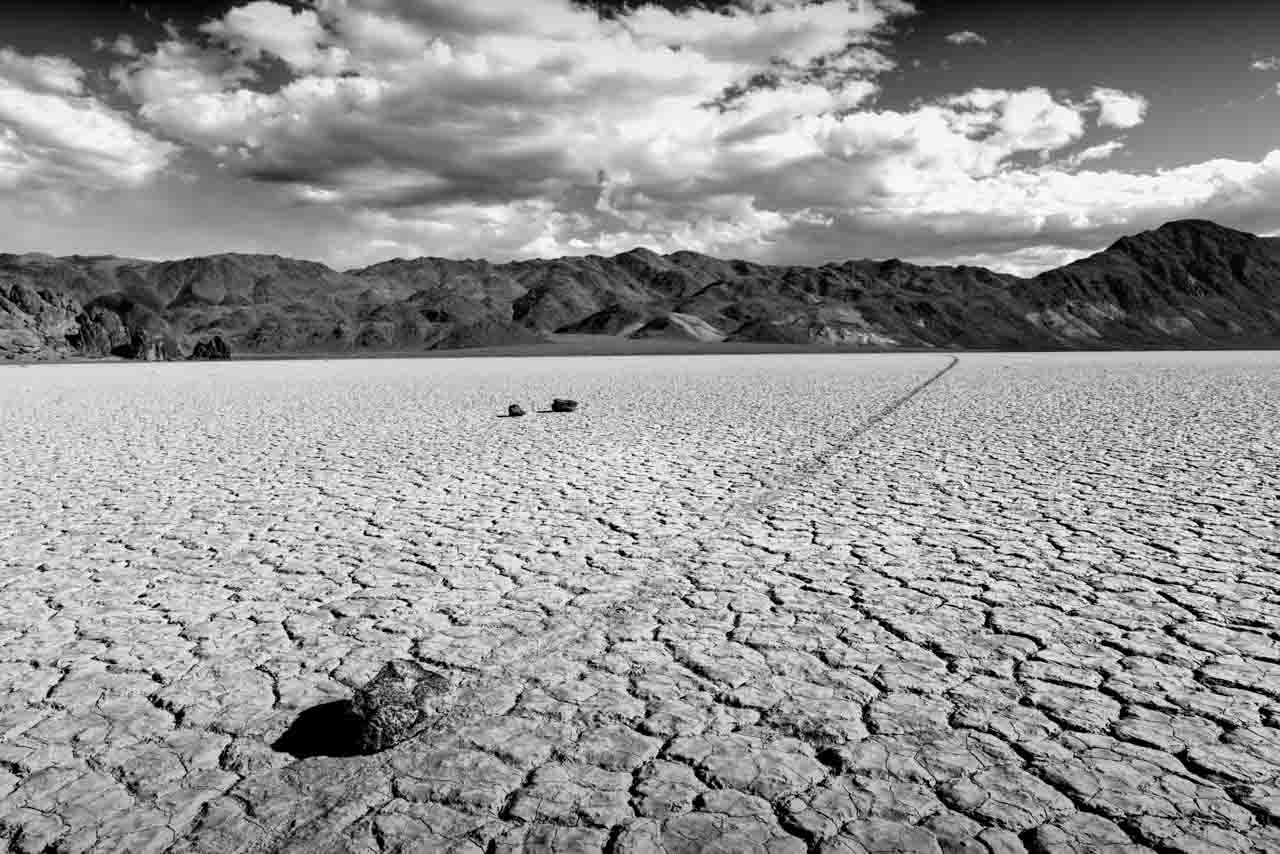
A sailing stone in Race Track Playa in Death Valley in California.

Table of Contents

    Page 1

  • Once Upon a Time …
  • The Revelation
  • Reason #1: The Need and the Desire to Express Myself
  • Reason #2: TThe Need to Build Sustainable Foundations
  • Page 2

  • Reason #3: The Need for Calm and Serenity in an Introspective Search
  • Reason #4: The Desire to Leave My Footprint in the World
  • Reason #5: The Need to Create Beautiful "Things"
  • Finally

Once Upon a Time …

I began my career as professional photographers by selling photographs for magazines which specialized in underwater photography. I also wrote bilingual texts in French and English.

Naturally, this approach led me to publish technical books on photography as well as produce images, commonly referred to as “stocks”, for photo agencies. Today, I have thousands of images on sale in different international stocks.

After seven years of demanding work, I realized that the days dragged longer and longer, and yet my financial income stagnated. Competition between other photographers became harder and harder as their numbers expanded. Moreover, I lacked joy when creating photos, because each work seemed to be nearly identical to the next.

Motivation gradually disappeared, giving way to an immense weariness that weighed down my spirit. I could not think of exciting new goals that I wished to achieve. I limited myself to the production of new images of illustration, which wasn’t even interesting to me, and nothing more.

The Revelation

While I was in a state of fatigue and intense overwork, I decided to return to my foundations. I traveled to the coast of Charente-Maritime In France where I had previously visited before coming to the United States.

It was the winter of 2010. During this journey, I experienced a revelation.

I chose to photograph the Atlantic Ocean in hopes that I might relax, refresh my mind, and recharge my spirits. Seeking calm and serenity, I was hoping for something more. From my first session, I began to feel alive. It was as if I could suddenly inhale fresh air through new lungs that had previously been blocked. Despite the icy northern winds and my frozen hands, I stayed outside with my cameras until nightfall. For several days, I repeated this experiment. I allowed myself to view my activities from a leisurely perspective instead of a business orientation.

During each photo session, I only made one or two photographs. I spent hours contemplating the ocean, watching the waves, and feeling the sea air which is quite extraordinary in that region. My state of mind ventured away from repetitive, drab shootings for agencies and magazines. For the first time in years, I patiently took my time while creating photographs. I shot simply for artistry and creativity rather than for technical reasons, which had previously enslaved me as professional. I greatly pondered the purpose and structure of each photograph. Focusing on the process rather than the end result gave me an indefinable pleasure. Instead of making descriptive photos and testimonials, I was creating pictures that reflected my state of mind and my way of being.

It was during this winter trip of 2010 at Charente-Maritime in France, that I decided to focus more on fine art photography. I realized that if I wanted to keep my passion for photography intact, I would need to completely change my state of mind.

Reason #1: The Need and the Desire to Express Myself

This trip resulted in the creation of a beautiful collection of 9 printed and framed photographs. When I looked at the final products, I realized that I had an irrepressible need to convey personal messages, emotions, and experiences. I wanted to be in tune with the photographs I was making rather than be present as witnesses to ordinary scenes that would be used as illustrations for magazines or technical books.

I understood that nature would become a real vector through which I could better express myself. I chose to live each day by believing in a purpose: to show the wonders of nature through a contemplative and artistic interpretation. I wanted to transmit tranquility, peace, and serenity away from the hubbub of major cities. It is for this reason that my artistic approach is focused towards dreamlike and minimalist scenes with ethereal atmospheres.

Reason #2: The Need to Build Sustainable Foundations

After the winter of 2010, I gradually undertook several photo projects including the great mineral landscapes of the western United States, which is not too far from where I live. As great as these landscapes were, they more importantly offered me beautiful opportunities in relation to my emotions and my photographic vision.

My artistic approach was strengthened by the fact that I finally wanted to build solid foundations for my professional, personal, and artistic life. These three points joined together naturally.

Each photo project became one of the pillars of my foundation that would support a much larger building. I strived to share my passion for the wonders of nature with the greatest number of people possible. In order to achieve this goal, I needed to leave an imprint in history by crafting timeless pieces of work. I finally understood where my artistic, ethical, and moral values were. I had found my lifeline.

Reason #3: The Need for Calm and Serenity in an Introspective Search

Why and How Mastering the Steps of Creating an Art Photograph

Creating an art photograph is not merely about shooting in the field. This creative process requires five distinct steps that any author photographer must master in order to produce quality works.

Photograph in black and white of the Grand Canyon from Arizona State in USA.

Table of Contents

  • The First Step in the Creation of an Art photograph: The Shooting
  • The Second Step in the Creation of an Art Photograph: the Development
  • The Third Step in the Creation of an Art Photograph: The Printing
  • The Fourth Step in the Creation of an Art Photograph: The Framing
  • Finally

The First Step in the Creation of an Art photograph: The Shooting

In nature photography, the principles of shooting are identifiable and universal. The first recommendation I always make during my photography classes is to create a methodology, which I have described in this article.

The application of a rigorous method allows the photographer to develop his creativity by avoiding wasted time. He can focus entirely on his photographs.

Then comes the time of recognition on the field, the weather conditions, and the knowledge of animal habits if it is a wildlife session. In the case of underwater photography, it is even more complicated because the time is limited, and the currents can be strong and interfere with the creation.

Then comes the choice of the point of view for the scene. The photographer must also take care of the framing and the composition of the photograph.

When creating an artistic photograph, one must never forget that one try to establish an emotional relationship with the scenes.

The photographer must become involved in the photograph and must show that he is present behind the viewfinder of the camera. Every photographic element must be planned out. Each element must give meaning to the image so that the photographer can transmit a message.

When shooting a nature photo, the photographer must be in harmony with the world around him. He must feel the power of the natural elements. He must be at peace with everything he sees. An artistic photographer is not present on the stage just to document events, but to express himself and show his vision of the world.

During my photo workshops, I always make all the arrangements for my participants so that they might forget their everyday life and its hassles. I immerse them in photographic activity. I apply this method to myself when I create photos for a collection.

This step of shooting requires a great concentration to disregard everyday life. Only the scene in the viewfinder must be important.

For us, during the shooting step in a landscape session, the tripod is an essential accessory. Indeed, it allows to modify the points of view, the framing and the compositions in precise and subtle ways.

The tripod also allows adjustment of the exposure parameters, without having to change the positioning of the case, when a scene is poorly exposed.

When shooting, the photographer uses accessories such as a tripod, remote shutter, filters, camera, and lenses. All this material must be mastered and perfectly understood by its user.

Once on the field, it is too late to try and learn how to utilize the equipment. Natural conditions change quickly, and time is wasted when it is spent on equipment and not on capturing a certain moment on the field. Thus, learning how to use equipment must be done before the session.

Shooting is the first step in creating a fine art photo. It is the basis of the creative process. To not master it is a mistake. I must never forget that a missed photo will be missed even with the development.

The Second Step in the Creation of an Art Photograph: the Development

The shooting of an artistic photo makes it possible to freeze a scene of a landscape, an animal or underwater event. This scene will serve as support for the transmission of a message, an emotion, or the feelings of the photographer.

The author of the photo will use the framing and composition to achieve the desired composition. Development will serve two purposes:

  • Tackle technical limitations of cameras such as noise reduction or sharpening.
  • Reinforce the artistic vision of the photographer with the adjustment of the tones, the colors, the management of the light, and the removal of potentially disturbing elements.

Post processing is essential to creating a beautiful photograph. A photographer must master all the techniques accordingly.

I am seeing more and more photographers calling on professional developers and designers to process their photos. It has become commonplace. They do so either because they are not literate in the computer programs or because of a lack of time to perform these time-consuming tasks.

I can understand the motives for their choice, but I do not share their beliefs. I develop my own pictures fully knowing that the results would be even more perfect if I hired an expert.

However, I must not forget that artists like Michelangelo, Raphael or da Vinci had at their service students who painted for them. These artists placed the final touches, for example, the hands on the figures in the paintings.

I believe that in artistic photography, even if the photographer gives precise directions, the result will not be in keeping with his artistic approach. Another being can never fully capture what the artist himself would have completed.

I often think of Ansel Adams, the American photographer made famous by his photographs of landscapes, who spends very long periods of time developing his own shots in his dark room. For him, it was a personal and essential step to his creativity.

A photographer must learn how to use the tools at his disposal to showcase his artistic approach. It's not easy, and I must always question myself in order to learn new ways. Nothing is ever won. The creation of high-quality photographs is a real challenge.

The Third Step in the Creation of an Art Photograph: The Printing

Once a photograph is made in the field, and developed with a computer, the photographer places all his creativity in its realization. He has in his possession, a photograph that corresponds to his artistic approach.

But it's not an artistic work yet. To become one, the picture must now to be printed. It is a delicate work because the paper must be chosen with discernment. The texture must match the rendering of the photo.

Printing is a very difficult job that requires many skills and knowledge. As far as I am concerned, I always work in collaboration with professional printers working in specialized laboratories.

Many tests are necessary because the results significantly vary from one paper to another or even from one ink to another.

When I print photos, I always keep PSD files containing all the settings of the development. Usually, I come back to the main file to change some of them, especially light and contrast. Depending on the type of printer and the type of paper, the adjustments vary. That's why I have digital files based on the printers and labs I work with.

For us, a photograph only exists from the moment it is printed. This is the purpose of my artistic work. Digital media are only for communication or marketing purposes.

The Fourth Step in the Creation of an Art Photograph: The Framing

Once a photo has been printed, it can be framed. This is an option that should be considered with interest because it highlights the piece of art, which I think is necessary.

I work with experts in this field. Precise rules exist according to the colors and the tones. Similarly, the thickness of the frame must be chosen wisely. Nothing is improvised. It is essential for a photographer to develop skills in this area.

Finally

Creating an art photograph of nature is not just about shooting. The photographer must complete these four steps. He must develop skills to affirm and reinforce his artistic approach. This is why it takes time, work, energy, and many failures before mastering this extraordinary artistic field.

Be humble, patient, constant, persevering, and persistent because the road to excellence is long.

  1. Processing a Fine Art Photo Correctly Is Time Consuming
  2. February 2018. Underwater Photo Project in the Cenotes in Mexico
  3. Processing a Fine Art Photo Is Not an Act of Cheating
  4. January 2018. Landscape Photo Project in Death Valley in the USA

Page 98 of 201

  • 93
  • 94
  • 95
  • 96
  • 97
  • 98
  • 99
  • 100
  • 101
  • 102
  1. You are here:  
  2. Home
  3. Blog Photographic Approach

Share on Social Media

Post
Share
Share
E-mail
WhatsApp
Text

Join Me on Social Networks

Join Me on Facebook  Join Me on Instagram  Join Me on LinkedIn

Claim your free guide to make your photo impactful and meaningful

Claim Your Free Guide '50 Pages of Tips to Give Impact and Meaning to Your Photos'.

4 + 8 =

Click Here To Discover All My Chronicles About the Photographic Approach.

Treat Yourself to a Fine Art Print That Matches your Personality

Example of a vacation home interior with a black and white fine photo art displayed on the wall.

Fine Art Print Collections in Black and White

Fine Art Print Collections in Black and White Black and white photography is a suitable technique for many nature scenes. It requires a particular frame of mind. A black and white photograph should be prepared and planned from the framing to the…
11999
Fine Art Print Collections in Black and White
An abstract art photo displayed in a contemporary living room decor.

Fine Art Print Collections in Color

Collections of Fine Art Prints in Color Color photographs allow digressions and take the audience to the message by secondary ways. The world around us, especially nature, is colorful. A color image can show the way our surroundings really are. Of course, it…
10445
Fine Art Print Collections in Color
Example of a home interior with fine art prints in my style back to black displayed on the wall. These photos are a part of my collection 'Wild beauties of Kenya'.

Fine Art Print Collections in Back to Black

Fine Art Print Collections in Back to Black I want to share my fine art prints of nature in a personal style that I call "back to black." "Back to Black" was developed to embody a sharp and clean style for artistic photos that can be hung in your living room,…
9984
Fine Art Print Collections in Back to Black
A waiting room with a photo in the style Fusion displayed on the wall. Grey Heron in Fusion.

Fine Art Print Collections with the Fusion Style

Fine Art Print Collections with the Fusion Style I would like to share a very creative and modern photography style to represent Nature in a very different way. I call it "Fusion." I created the style to offer dynamic photos, allowing you to start a good day…
7916
Fine Art Print Collections with the Fusion Style
A living room with a photo in the style 'Impression' exposed on the wall. Rising sun in impression

Fine Art Print Collections with the ‘Impression’ Style

Fine Art Print Collections with the ‘Impression’ Style The objective of this photographic style is to create the ephemeral blurs. That's why I named it 'Impression.' Photography, as an art form, is a powerful means of expressing reality from different…
5830
Fine Art Print Collections with the ‘Impression’ Style
Fine art prints from the style back to black displayed on a wall. Amar Guillen, photographer artist

New Collections of Fine Art Prints Dedicated to the Wonders of Nature

New and Updated Fine Art Print Collections Dedicated to the Wonders of Nature Fine art prints from the style back to black displayed on a wall.
11450
New Collections of Fine Art Prints Dedicated to the Wonders of Nature

Themes of the Blog Articles

Landscape of Arches National Park in Utah in black and white.

Blog Articles Dedicated to Artist Statement

Blog Articles Dedicated to Artist Statement
Dunes of death Valley in Black and White

Blog Articles Dedicated to Black and White Photography

Blog Articles Dedicated to Black and White Photography
Abstract photo or trees reflection on water

Blog Articles Dedicated to Photographic Mindset

Blog Articles Dedicated to Photographic Mindset
Abstract photo of ridles on water

Blog Articles Dedicated to Artistic Photography

Blog Articles Dedicated to Artistic Photography
Abstract photo of Yellowstone

Blog Articles Dedicated to Photographic Language

Blog Articles Dedicated to Photographic Language
Pronghorn in Yellowstone

Blog Articles Dedicated to Wildlife Photography

Blog Articles Dedicated to Wildlife Photography
Landscape of Bryce Canyon

Blog Articles Dedicated to Photographing United States

Blog Articles Dedicated to Photographing United States
Underwater waves in the Red Sea

Blog Articles Dedicated to Photographic Techniques

Blog Articles Dedicated to Photographic Techniques
Tree of Black Canyon in Black and White

Blog Articles Dedicated to Landscape Photography

Blog Articles Dedicated to Landscape Photography
Manta Ray in Maldives in Black and White

Blog Articles Dedicated to Underwater Photography

Blog Articles Dedicated to Underwater Photography
Red Deer stag during the rut of the deer

Blog Articles Dedicated to Photographic Judgement

Blog Articles Dedicated to Photographic Judgement
Great Crested Greb and his chick

Unclassified Blog Articles

Unclassified Blog Articles

You Might Be Interested By One of These Photographic Approach Articles

We waited a week before creating this photograph. We wanted the sun at this particular place. We proceeded by method.

7 Tips to Create your Photos in a Methodical Way

5217
7 Tips to Create your Photos in a Methodical Way
This photograph was created for the collection 'Musical notes on water'.

Why and How Creating Fine Art Photos

8719
Why and How Creating Fine Art Photos
Seascape of the Northern of Sutherland in Scotland.

Storytelling, Copywriting, Script and Narration

4701
Storytelling, Copywriting, Script and Narration
Photo sous-marine d'un nudibranche. En photographie sous-marine, la technique du bokeh est très intéressante en gros plan pour mettre des sujets en valeur.

Why and How Creating a Bokeh in Nature Photography

6342
Why and How Creating a Bokeh in Nature Photography

Receive Free Tips On How to Give Impact and Meaning to Your Photos. Subscribe to Receive Regular Articles.

2 + 7 =

Contact Me By Email

10 + 9 =
This site is protected by reCAPTCHA and the Google Privacy Policy and Terms of Service apply.

About Amar Guillen, Creator of Fine Art Prints of Nature
As a photographer capturing the artistic essence for several decades, I have mastered the art of crafting an authentic experience for art enthusiasts and collectors of visual art.
When I observe my surroundings, be it friends, family, relationships, or professional contacts, I see souls in perpetual motion. Every moment of their existence is engulfed by daily hassles, work concerns, social media, online or televised information streams, and videos on the web.
Every minute, they strive to accomplish something, fearing losing ground and feeling marginalized in this frenzied society. Imprisoned by an oppressive schedule, the essential eludes them, drowned in the tumult of daily life. Is it really crucial to watch yet another cat video on the internet? Is it necessary to post twenty daily messages on social media?
Despite this, they remain constantly stressed and anxious about the challenges of the world, without being able to influence these monumental problems. It is at this moment that my artistic nature photographs come into play. Those who have had the privilege of hanging one of my works in their personal or professional space have expressed a radical transformation in their lives.
Every day, contemplating these works of art immerses them in tranquility, inner peace, and rediscovered serenity. They then understand that nature has the power to unravel tensions, to encourage reflection on the essential. Artistic photographs thus become open windows to the wonders of nature.
I have chosen to share the best of myself by helping others discover their identity, personality, style, all while reconnecting with nature. Take the time to explore my artistic photographs if you wish to reveal your true essence. Once hung in your space, your view of the world will be transformed.
Amar Guillen is a creator of fine art prints of nature.
I am Amar Guillen, creator of nature art photographs. I have a deep conviction that contemplating nature has the power to transform human beings. If everyone learned to know, respect, and preserve nature, our world would be transformed into a haven of peace where everyone would find their place.
Copyright © 2003 - 2026 Guillen Photo LLC - All rights reserved. Amar Guillen, professional photographer since 2003.
  • Blog
  • Calibration
  • Legal Information
  • Sitemap
  • Accessibility
  • Contact Me
  • Updates of the Website
I Want to Help You to Create Interesting Photos

How Can I Help You To Create More Interesting Photos?

Ask Me a Technical Question.
Subscribe to my Newsletter. The Inspiration Behind Guillen Photo.

Select your language

  • English (United Kingdom)
  • Français (France)
Claim your free guide to make your photo impactful and meaningful

Claim Your Free Guide '50 Pages of Tips to Give Impact and Meaning to Your Photos'.

7 + 1 =

Contact Me By Email

3 + 4 =

Office Address:
3512 Robin Road
Plano Texas 75075
USA

Office phone: (+1)214-769-6825