• The Art of Choosing
  • Fine Art Prints3 Editions
  • CollectionsAll Collections
  • AboutAmar Guillen
  • Customer Space & Contact
  • Search
  • Select your language

    • English (United Kingdom)
    • Français (France)
  • Just for You
    • Fine Art Prints to Tell Your Story
    • Fine Art Prints to Express Your Difference
    • Fine Art Prints to Shape Your Living Space
    • My Commitments for your Fine Art Prints
    • How to Choose a Fine Art Print - Q&A - FAQ
  • Go Gurther
    • Fine Art Print Blog
    • Explore Some Interiors
  • My Offer
    • 3 Different Editions
    • Different Finishes
  • Visual Journeys
    • New Creations
    • All Fine Art Prints
    • Searching Using Criteria
  • Browse by Edition
    • Unique Edition
    • Limited Edition
    • Open Edition
  • Browse by Style
    • Black and White
    • Color
    • Fusion
    • Impression
    • Back to Black
    • Landscapes in Black and White
    • Landscapes in Color
    • Animals in Black and White
    • Animals in Color
  • Browse by Theme
    • Landscape
    • Wildlife
    • Underwater
    • Abstract
    • Symbolic
    • Landscapes of the United States
    • Landscapes of France
    • Landscapes of Scotland
    • Seascapes
    • Relaxing
    • Energizing
    • Playful
  • Browse by Format
    • Rectangular
    • Square
    • Panoramic
  • Contact Me
    • Contact Me by Email or Phone
  • Collections
    • New Collections
    • All Collections
  • Browse by Theme
    • Landscapes
    • Wildlife
    • Underwater
    • Abstract
    • Symbolic
    • Landscapes of France
    • Landscapes of the United States
  • Browse by Style
    • Black and White
    • Color
    • Impression
    • Back to Black
    • Fusion
  • Contact Me
    • Contact Me by Email or Phone
  • Discover More About Me
    • Discover Who is Amar Guillen
    • Artistic and Photographic Statement
  • Galleries and Portfolios
    • Photo Galleries
    • Portfolios
  • Contact Me
    • Contact Me by Email or Phone
  • Your Customer Space
    • Create or Manage your Account
    • Your Download Space
    • Your Orders
  • Contact Me
    • Contact Me by Email or Phone

You are in that section: Home > Blog > Blog of the Photographic Creation Approach

Processing a Fine Art Photo Is Not an Act of Cheating: It Is a Necessity

My art photographs are processed using specialized software and a computer. For me, this is an essential step in my creative process. The development of a photo (processing) strengthens my artistic approach and my photographic vision.

This article will help you understand how to implement a new tool in your photography toolbox. By implementing it, you will make your photos even more interesting and instill in them true meaning.
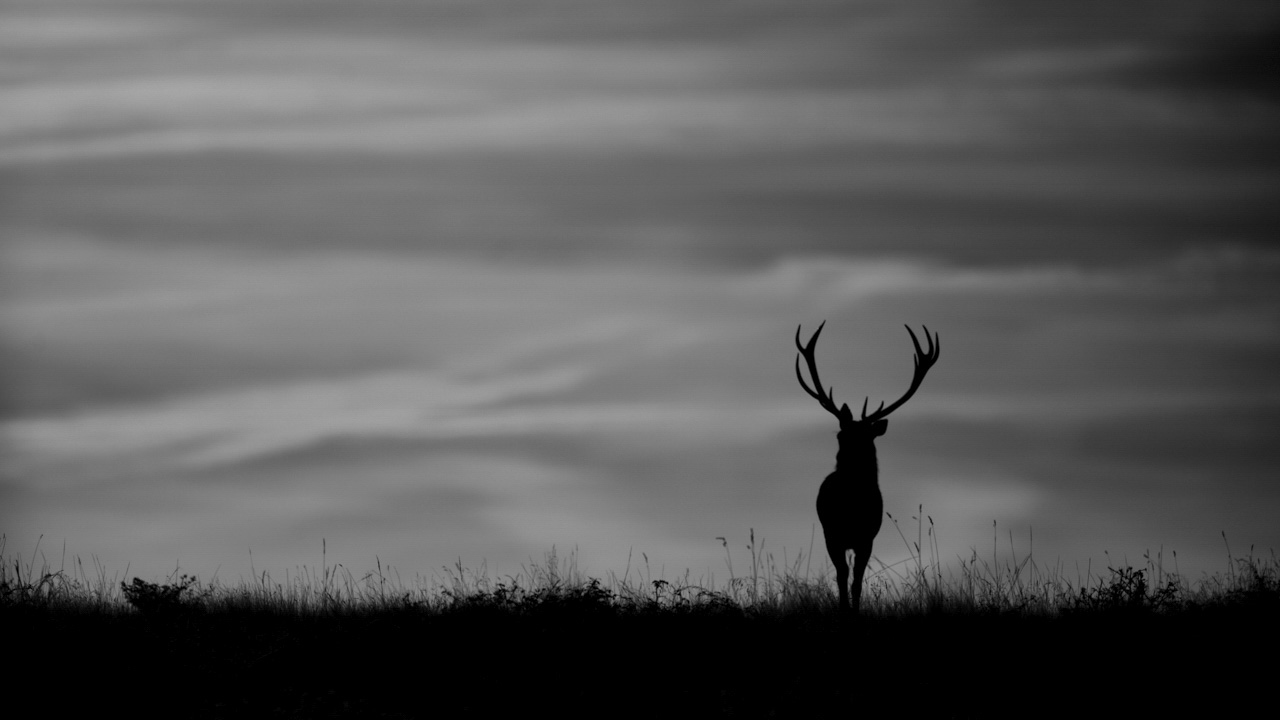
This black and white photograph of a deer has been developed to provoke questioning.

Table of Contents

    Page 1

  • A Camera Does Not See Like the Human Eye
  • Post Processing is the Key to Affirming a Photographic Signature
  • Processing an Art Photo is not Fraud
  • Framing a Photograph Presents Truth
  • Page 2

  • Art Photography is not Compositing
  • Art Photo Development is Very Time-Consuming
  • Art Photo Development Generates Recognition
  • Finally

A Camera Does Not See Like the Human Eye

A camera is a machine designed by humans. It does not think like me. It merely completes the task given by the photographer. The way it records photos in memory is always the same, whether for landscapes, animals, or portraits. Nevertheless, every element of a scene is different. A camera does not distinguish between clouds, the fur of a mammal, or the scales of a fish.

How can one compare the texture of clouds with the Grand Canyon's rock structure? It is not possible. A camera is not able to distinguish differences in the photographic elements. To the camera, all details are similar due to the internal computer processing of the device, which is identical for the entire photo.

The human eye can spot these subtle nuances. The brain will build the final image that will convey the emotions of the scene or plan.

To overcome the weaknesses of digital cameras, a photographer will have to use external tools to paint his emotion into the scene. The only means at his disposal are computers and software. But before going further, it seems important to clarify a crucial point.

I agree that shooting is important in the creation of an artistic photograph. If several photographers are portraying the same scene, it is certain that all the photographs taken will be different because of the choice of the points of view, the framing, and the compositions. But if these same photographers decide upon the same setting for the placement of the camera, all photographs will be similar. The choice of cameras will influence the images created. Indeed, some of them have a better sharpness than others. Some are also more precise in the focus. But overall, the images will be similar.

How then to ensure that each photographer can confirm his photographic signature? The answer is simple. The photographic development makes it possible to affirm its difference.

Post Processing is the Key to Affirming a Photographic Signature

The shooting is the first step in expressing an artistic approach for a photographer. Computer post-processing is the second step that strengthens it. The advantage of development is that if several photographers use the same software, the results will be totally different. They depend completely on the sensitivity of each situation.

Indeed, the techniques and methods of development are so many and varied that the creative palette is infinite.

The development of a photograph for an artistic purpose is merely to reinforce a photographer's emotional response to a scene.

The post processing information of a photo is a guarantee for the creator of artistic photographs to have a unique and very personal signature. The condition is not to reveal development methods.

Processing an Art Photo is not Fraud

Developing an art photograph is in no way an act of cheating if you follow certain ethical rules.

I must not forget that art is above all, a means of expression for an artist. He is displaying his vision of the world to his viewers.

The development of a photograph for an artistic purpose is just to reinforce a photographer's emotional response to a scene.

This is still one of the major differences with documentary photography. As I discussed in the blog post dedicated to the creation of art photography, the two types of photographs are very distinct. Documentary photography is factual, descriptive. It reports a scene and shows an event. Since it is intended to illustrate an article or to be published in a book, the photographer cannot develop it in an artistic way. He must report exactly what he has viewed. The development of a documentary photo is mainly to crop the image, improve its sharpness, and change its exposure and contrast. It cannot go further because it could distort reality, which would be the equivalent of cheating.

Artistic photography also has its limits as I will see in a next paragraph, however, these are limits are defined in broader terms.

Framing a Photograph Presents Truth

For many people, computer post processing is heresy. They consider it nonsense for a picture worthy of the name.

My answer to such accusations is that, at the time of the shooting, a photographer makes a subjective choice by choosing whether or not to integrate photographic elements. This choice specializes the scene itself.

The framing of a photograph does not accurately reflect the scene. By pushing the reasoning, a little further, a photographer is displaying his perception of what he is experiencing. In framing, he cheats.

For us, this is a rearguard debate that no longer needs to occur.

Art Photography is not Compositing

January 2018. Landscape Photo Project in Death Valley

In January 2018, after our trip to the south rim of the Grand Canyon in the state of Arizona, we travelled again to photograph the landscapes of Death Valley in the state of California.

This landscape photography project aimed to create three new collections of artistic photographs in our two themes "Around the Mind" and "Around The World". We decided to use only our style "Shades of blacks and whites".

Death Valley is a large national park. The artistic photographs are very difficult to capture because one must travel great distances to reach the perfect location. As there are very few hotels and most are concentrated in the same place, it is difficult to be at the right time in the right place with the right lights and contrasts. The best example is certainly the site of Race Track Playa where the dry lake with the famous stones sprawls. It takes about three hours of driving on chaotic and dirty roads to get there. It is impossible to ride at night because the roads are dangerous. Similarly, the best site for the dunes takes more than three hours by car to reach from the nearest hotel.

The best solution to photograph Death Valley in a unique perspective is certainly through camping. However, the climatic conditions are very rough in the season of winter.

For this project, we planned all our travels because we know the region immensely. We photographed the dunes of Mesquite Dune. It is a very busy site but after an hour and a half of walking, it is possible to be totally isolated to make good photos. We also photographed the Race Track Playa stones. The lighting conditions were excellent. We have beautiful traces with stones. The place seems unreal. For a landscape photographer, it's an amazing experience.

One of the most interesting aspects of the Valley of Death is the roads that seem to plunge into unlikely and timeless universes. We took the time to photograph them for a new collection that we will call "Leaving". It will evoke the fact that in a trip the important thing is not the destination but the paths that one takes to get there.


Photo project of the landscapes of Death Valley in California

Photo project of the landscapes of Death Valley in California

Photo project of the landscapes of Death Valley in California

Photo project of the landscapes of Death Valley in California

Photo project of the landscapes of Death Valley in California

Photo project of the landscapes of Death Valley in California

Photo project of the landscapes of Death Valley in California

  1. Fine Art Photography Allows an Artist to Express Himself
  2. January 2018. Landscape Photo Project at the Grand Canyon in the USA
  3. A Fine Art Photo is Often Symbolic and Complex to Compose
  4. Why and How Creating Fine Art Photos

Page 100 of 201

  • 95
  • 96
  • 97
  • 98
  • 99
  • 100
  • 101
  • 102
  • 103
  • 104
  1. You are here:  
  2. Home
  3. Blog Photographic Approach

Share on Social Media

Post
Share
Share
E-mail
WhatsApp
Text

Join Me on Social Networks

Join Me on Facebook  Join Me on Instagram  Join Me on LinkedIn

Claim your free guide to make your photo impactful and meaningful

Claim Your Free Guide '50 Pages of Tips to Give Impact and Meaning to Your Photos'.

4 + 8 =

Click Here To Discover All My Chronicles About the Photographic Approach.

Treat Yourself to a Fine Art Print That Matches your Personality

Fine Art Print Collections in Black and White

Fine Art Print Collections in Black and White
12314
Fine Art Print Collections in Black and White

Fine Art Print Collections in Color

Collections of Fine Art Prints in Color
10663
Fine Art Print Collections in Color

Fine Art Print Collections in Back to Black

Fine Art Print Collections in Back to Black
10205
Fine Art Print Collections in Back to Black

Fine Art Print Collections with the Fusion Style

Fine Art Print Collections with the Fusion Style
8189
Fine Art Print Collections with the Fusion Style

Fine Art Print Collections with the ‘Impression’ Style

Fine Art Print Collections with the ‘Impression’ Style
6159
Fine Art Print Collections with the ‘Impression’ Style

New Collections of Fine Art Prints Dedicated to the Wonders of Nature

New and Updated Fine Art Print Collections Dedicated to the Wonders of Nature
11797
New Collections of Fine Art Prints Dedicated to the Wonders of Nature

Themes of the Blog Articles

Landscape of Arches National Park in Utah in black and white.

Blog Articles Dedicated to Artist Statement

Blog Articles Dedicated to Artist Statement
Dunes of death Valley in Black and White

Blog Articles Dedicated to Black and White Photography

Blog Articles Dedicated to Black and White Photography
Abstract photo or trees reflection on water

Blog Articles Dedicated to Photographic Mindset

Blog Articles Dedicated to Photographic Mindset
Abstract photo of ridles on water

Blog Articles Dedicated to Artistic Photography

Blog Articles Dedicated to Artistic Photography
Abstract photo of Yellowstone

Blog Articles Dedicated to Photographic Language

Blog Articles Dedicated to Photographic Language
Pronghorn in Yellowstone

Blog Articles Dedicated to Wildlife Photography

Blog Articles Dedicated to Wildlife Photography
Landscape of Bryce Canyon

Blog Articles Dedicated to Photographing United States

Blog Articles Dedicated to Photographing United States
Underwater waves in the Red Sea

Blog Articles Dedicated to Photographic Techniques

Blog Articles Dedicated to Photographic Techniques
Tree of Black Canyon in Black and White

Blog Articles Dedicated to Landscape Photography

Blog Articles Dedicated to Landscape Photography
Manta Ray in Maldives in Black and White

Blog Articles Dedicated to Underwater Photography

Blog Articles Dedicated to Underwater Photography
Red Deer stag during the rut of the deer

Blog Articles Dedicated to Photographic Judgement

Blog Articles Dedicated to Photographic Judgement
Great Crested Greb and his chick

Unclassified Blog Articles

Unclassified Blog Articles

You Might Be Interested By One of These Photographic Approach Articles

An example of perspective: a road in California in black and white. The depth effect is striking.

Why and How: Mastering Perspective in Nature Photography

8097
Why and How: Mastering Perspective in Nature Photography
Black and white photo of Castle Valley in Utah near Moab

Using Photography to Communicate

8218
Using Photography to Communicate
Photograph in high key and black and white of a pied kingfisher flying.

How Creating Wildlife Photos in High Key and Black and White

12316
How Creating Wildlife Photos in High Key and Black and White
Herd of bisons in Antelop Island under a storm in 'Utah'.

Why and How: Using the Photographic Language of Black and White

3804
Why and How: Using the Photographic Language of Black and White

Receive Free Tips On How to Give Impact and Meaning to Your Photos. Subscribe to Receive Regular Articles.

2 + 7 =

Contact Me By Email

10 + 9 =
This site is protected by reCAPTCHA and the Google Privacy Policy and Terms of Service apply.

About Amar Guillen, Creator of Fine Art Prints of Nature
As a photographer capturing the artistic essence for several decades, I have mastered the art of crafting an authentic experience for art enthusiasts and collectors of visual art.
When I observe my surroundings, be it friends, family, relationships, or professional contacts, I see souls in perpetual motion. Every moment of their existence is engulfed by daily hassles, work concerns, social media, online or televised information streams, and videos on the web.
Every minute, they strive to accomplish something, fearing losing ground and feeling marginalized in this frenzied society. Imprisoned by an oppressive schedule, the essential eludes them, drowned in the tumult of daily life. Is it really crucial to watch yet another cat video on the internet? Is it necessary to post twenty daily messages on social media?
Despite this, they remain constantly stressed and anxious about the challenges of the world, without being able to influence these monumental problems. It is at this moment that my artistic nature photographs come into play. Those who have had the privilege of hanging one of my works in their personal or professional space have expressed a radical transformation in their lives.
Every day, contemplating these works of art immerses them in tranquility, inner peace, and rediscovered serenity. They then understand that nature has the power to unravel tensions, to encourage reflection on the essential. Artistic photographs thus become open windows to the wonders of nature.
I have chosen to share the best of myself by helping others discover their identity, personality, style, all while reconnecting with nature. Take the time to explore my artistic photographs if you wish to reveal your true essence. Once hung in your space, your view of the world will be transformed.
Amar Guillen is a creator of fine art prints of nature.
I am Amar Guillen, creator of nature art photographs. I have a deep conviction that contemplating nature has the power to transform human beings. If everyone learned to know, respect, and preserve nature, our world would be transformed into a haven of peace where everyone would find their place.
Copyright © 2003 - 2026 Guillen Photo LLC - All rights reserved. Amar Guillen, professional photographer since 2003.
  • Blog
  • Calibration
  • Legal Information
  • Sitemap
  • Accessibility
  • Contact Me
  • Updates of the Website
I Want to Help You to Create Interesting Photos

How Can I Help You To Create More Interesting Photos?

Ask Me a Technical Question.
Subscribe to my Newsletter. The Inspiration Behind Guillen Photo.

Select your language

  • English (United Kingdom)
  • Français (France)
Claim your free guide to make your photo impactful and meaningful

Claim Your Free Guide '50 Pages of Tips to Give Impact and Meaning to Your Photos'.

4 + 10 =

Contact Me By Email

3 + 4 =

Office Address:
3512 Robin Road
Plano Texas 75075
USA

Office phone: (+1)214-769-6825