• The Art of ChoosingHome page
  • Fine Art Prints3 Editions
  • CollectionsAll Collections
  • AboutAmar Guillen
  • Customer Space & Contact
  • Select your language

    • English (United Kingdom)
    • Français (France)
  • All You Need to Select Your Fine Art Print
    • How to Choose a Fine Art Print - Q&A - FAQ
    • New Creations
    • Explore Some Interiors
    • Fine Art Print Blog
  • Browse by Edition
    • All Fine Art Prints
    • Unique Edition
    • Limited Edition
    • Open Edition
  • Browse by Style
    • Black and White
    • Color
    • Fusion
    • Impression
    • Back to Black
    • Landscapes in Black and White
    • Landscapes in Color
    • Animals in Black and White
    • Animals in Color
  • Browse by Theme
    • Landscape
    • Wildlife
    • Underwater
    • Abstract
    • Symbolic
    • Landscapes of the United States
    • Landscapes of France
    • Landscapes of Scotland
    • Seascapes
    • Relaxing
    • Energizing
    • Playful
  • Browse by Format
    • Rectangular
    • Square
    • Panoramic
  • Contact Me
    • Contact Me by Email or Phone
  • Collections
    • New Collections
    • All Collections
  • Browse by Theme
    • Landscapes
    • Wildlife
    • Underwater
    • Abstract
    • Symbolic
    • Landscapes of France
    • Landscapes of the United States
  • Browse by Style
    • Black and White
    • Color
    • Impression
    • Back to Black
    • Fusion
  • Contact Me
    • Contact Me by Email or Phone
  • Discover More About Me
    • Discover Who is Amar Guillen
    • Artistic and Photographic Statement
  • Galleries
    • Photo Galleries
    • Abstract Portfolio in Color
    • Black and White Landscape Photography Portfolio
    • Color Landscape Photography Portfolio
    • Black and White Wildlife Photography Portfolio
    • Color Wildlife Photography Portfolio
    • Underwater Photography Portfolio
  • Contact Me
    • Contact Me by Email or Phone
  • Your Customer Space
    • Create or Manage your Account
    • Your Download Space
    • Your Orders
  • Contact Me
    • Contact Me by Email or Phone

You are in that section: Home > Blog > Blog of the Photographic Creation Approach

Why and How: Photographing Valley of the Gods in Utah

IIf on your next trip, you have the opportunity to travel to the southwestern region of the United States to photograph its wonderful landscapes, I advise you to take your camera equipment to a lesser known area: the Valley of the Gods in the state of Utah.

You will discover incredible mineral landscapes located in a desert area.

In this article, I share with you some creative ideas to enhance these red sandstone buttes.
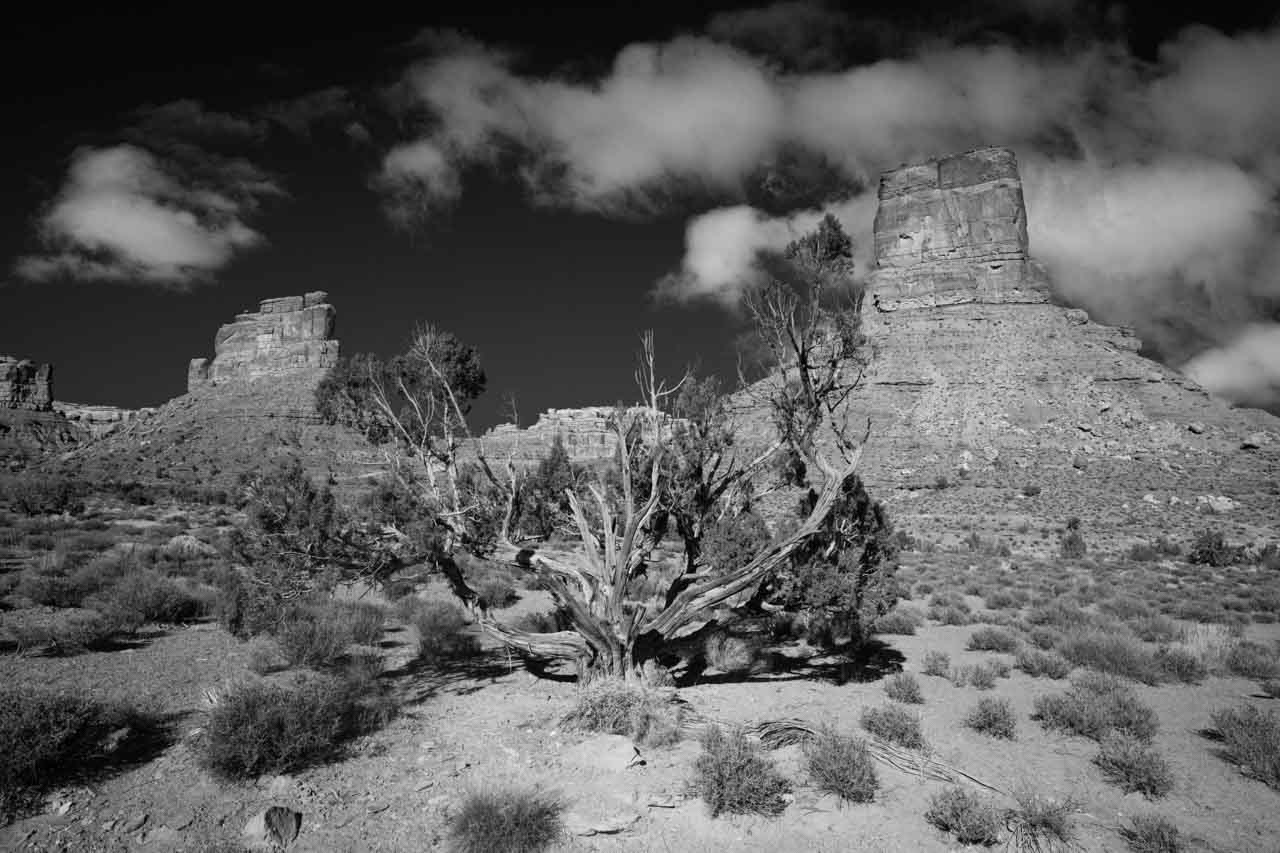
Landscape in black and white of Valley of the Gods in Utah. Photography by Amar Guillen, Photographer Artist
Landscape in black and white of Valley of the Gods in Utah.

Table of Contents

  • The Little Story Behind This Article
  • A Few Words About Valley of the Gods
  • Why: Photographing the Valley of the Gods
  • Some Photos of the Valley of the Gods
  • How: Photographing the Valley of the Gods
  • Showcasing the Valley of the Gods through Framing
  • The Symbolism and Interpretation of the Valley of the Gods

The Little Story Behind This Article

It is with the greatest stroke of luck that I came to know about the Valley of the Gods.

On a trip to the Valley of Fire in Nevada, while I was sitting in my camping chair waiting for clouds to form over a scene, a couple approached me. Nancy and Jack, who were American, had noticed me while they were hiking.

As is the tradition in these arid regions, they came to see if everything was going well for me. As is customary in the United States, they asked me how I was doing. I told them I was fine and explained that I was just waiting for the clouds to form in the scene I had chosen and for the light conditions to improve a little before I took my shot.

Naturally, the conversation flowed. We talked for over an hour about their favorite landscapes in the American Southwest. Nancy mentioned a place that particularly touched her. It was a valley in Utah, known as the Valley of the Gods.

I had never heard of it before. I recorded all the information on my voice recorder. Back at my hotel in the evening, I browsed the internet to discover this valley I had never heard of.

The photos were eloquent. I found similarities with Monument Valley in the formations, but even so, something seemed different. I experienced strong feelings of great curiosity. Through the pictures on my screen, I could only imagine the calm, quietness, and solemnity of the place. The strangest thing was that none of my photographer friends had told me about it. Perhaps they too were also unaware of this place?

I carefully recorded all the information I had gleaned in my travel journal.

It was only a year later, during a trip along I-40, which crosses the United States from coast to coast, that I finally chose to photograph the Valley of the Gods.

I will never forget my first steps on the glowing sunlit paths amidst the hovering clouds of dust. Indeed, this mysterious and strange place revealed to me the true meaning of the word silence.

A Few Words About Valley of the Gods

Before discussing how to photograph the Valley of the Gods, it seems important to me to give you a few facts that will encourage you to embark on your own adventure to photograph these mineral landscapes.

The Valley of the Gods is a golden nugget for landscape photographers. It is a very little-known place. Indeed, it is located an hour drive from the famous Monument Valley. Valley of the Gods lives in the shadow of its prestigious neighbors which capture all the tourists.

But in the end, it is a good thing that it is located close to the larger sites, because you will not meet few if any visitors at this smaller location, and thus you will never be disturbed during your photo sessions.

The Valley of the Gods is located quite far from the nearest towns and building. There is no souvenir store, no gas station, and no store to buy food. There is absolutely nothing. It is best to bring water and a full tank of gas before visiting the valley.

Unlike Monument Valley, which is managed by the Navajo tribe and includes strict rules for visiting hours and entrance fees, the Valley of the Gods is completely free of access. No entrance fee is required to take pictures. It is an enchanting landscape that is completely free to the public.

The Valley of the Gods is crossed by a trail of red gravel and dust. You must traverse it with a four-wheel drive car so that you can stop whenever you want to take pictures. The loops and bends of the track stretch out for 17 miles (27 kilometers) through a desert landscape populated with mesas, buttes, and mushroom formations. The dominant color of the Valley of the Gods is red. However, the most striking thing is the silence that hangs in the air around you. No noise. No birds. The only noise you will hear is that of your camera.

If you ever take a walk on the dusty paths in the Valley of the Gods, you will truly experience the heart of this wilderness far away from the deafening hustle and bustle of the urban cities. You will feel as if you are captured in a place where time stands still.

Why: Photographing the Valley of the Gods

In my opinion, the main reason to photograph Valley of the Gods is that you will be able to choose your scenes and your points of view as you want. You can go wherever you want as long as you respect nature and the environment.

Unlike its large neighbor Monument Valley, you can explore the entire area of Valley of the Gods without a special permit or use a guide who can take you to certain places.

This freedom will allow you to contemplate and construct the creation of your photographs. You will be able to add a juniper tree in the foreground if you wish. You will be able to walk to the foot of the Seven Sailors or the Rooster Butte or even the Castle Butte without having to ask yourself if it is allowed or not.

You will be able to create different nature photos of the great American west because you will choose your scene with precision. This is a definite advantage to avoid taking pictures that have already been taken.

Another advantage is that you can take your photos at the time you want. There is no entrance fee. Access is free. You can even camp in the valley as long as you do not make a campfire.

This freedom of movement and action allows you to choose the best lights for your photos. Since the Valley of Fire is rather flat, the low-angled lights in either morning or twilight are excellent.

These special moments of the mineral formations can be beautifully preserved in colorful photos.

To create black and white photos, it is better to wait for the clouds to appear. They will allow you to furnish your skies while highlighting the textures and structures of the sandstone formations.

Undoubtedly, the Valley of the Gods deserves at least two or three full days of your time to create unique landscape photos.

Why and How: Photographing Valley of Fire in Nevada.
Why and How: Photographing Landscapes in Black and White.

Some Pictures Of Valley of the Gods

Click on a thumbnail to enlarge it.

  • Landscape of Valley of the Gods in Utah in black and white.
    Landscape of Valley of the Gods in Utah in black and white.
    Landscape of Valley of the Gods in Utah in black and white.
  • Landscape of Valley of the Gods in Utah in black and white.
    Landscape of Valley of the Gods in Utah in black and white.
    Landscape of Valley of the Gods in Utah in black and white.
  • Landscape of Valley of the Gods in Utah in black and white.
    Landscape of Valley of the Gods in Utah in black and white.
    Landscape of Valley of the Gods in Utah in black and white.
  • Landscape of Valley of the Gods in Utah in black and white.
    Landscape of Valley of the Gods in Utah in black and white.
    Landscape of Valley of the Gods in Utah in black and white.
  • Landscape of Valley of the Gods in Utah in black and white.
    Landscape of Valley of the Gods in Utah in black and white.
    Landscape of Valley of the Gods in Utah in black and white.
  • Landscape of Valley of the Gods in Utah in black and white.
    Landscape of Valley of the Gods in Utah in black and white.
    Landscape of Valley of the Gods in Utah in black and white.
  • Landscape of Valley of the Gods in Utah in black and white.
    Landscape of Valley of the Gods in Utah in black and white.
    Landscape of Valley of the Gods in Utah in black and white.
  • Landscape of Valley of the Gods in Utah in black and white.
    Landscape of Valley of the Gods in Utah in black and white.
    Landscape of Valley of the Gods in Utah in black and white.
Landscape of Valley of the Gods in Utah in black and white.
    • Landscape of Valley of the Gods in Utah in black and white.
    • Landscape of Valley of the Gods in Utah in black and white.
    • Landscape of Valley of the Gods in Utah in black and white.
    • Landscape of Valley of the Gods in Utah in black and white.
    • Landscape of Valley of the Gods in Utah in black and white.
    • Landscape of Valley of the Gods in Utah in black and white.
    • Landscape of Valley of the Gods in Utah in black and white.
    • Landscape of Valley of the Gods in Utah in black and white.

    How: Photographing the Valley of the Gods

    First of all, as I mentioned in a previous paragraph, the track that will take you on the paths that snake around the mesas and mounds is very dusty and stony.

    I recommend a four-wheel drive with a high clearance to avoid any mechanical incident.

    As far as the photographic equipment is concerned, all lenses are possible: from 14 to 200mm.

    With short focal lengths, you will be able to photograph the mesas and mounds from close up in order to account for their shape and size.

    With medium focal lengths, you will be able to capture wider shots. You will be able to grasp an idea of the immensity of the scenery and landscapes.

    I had the opportunity during some sessions when the weather was clear to see Monument Valley in the distance.

    Personally, I am an avid user of the tripod and gradient filters. Indeed, using a tripod allows me to choose my point of view and make small changes without having to change places. As you will most likely be alone during your trip, you will not be bothered by any tourist who might bump into your tripod. Take advantage of it!

    The best advice I can give you is to take your time in choosing your first plan. Just like in Monument Valley, many junipers grow in the valley. Highlight them in the foreground to illuminate a mound or a mesa in the background. Do not hesitate to do a reconnaissance at least once during one day and note the GPS coordinates of each scene you have selected for the next day.

    Showcasing the Valley of the Gods through Framing

    Just as with the choice of photographic lenses, anything is possible when choosing how to highlight the landscapes of the Valley of the Gods.

    The first frames that will come to mind are horizontal frames such as 3:1, 16:9 or 3:2.

    But the Italian format (vertical) or square is quite possible for a detail or a close-up shot.

    Take the time to think about your framing. Your imagination is powerful. Try to surprise your audience with daring framing that is out of the ordinary. Remember that you have time.

    The Symbolism and Interpretation of the Valley of the Gods

    As always in these mineral regions of the American Southwest, the landscapes evoke the freedom to move and the privilege of taking the time to stop the daily activities of life and simply reflect.

    The Valley of the Gods evokes silence, tranquility, and the passing of time.

    Symbolically, the scenes I photograph evoke the slowness of time, introspection, calmness and quietness. It is in this state of mind that I approached the creation of my art photographs of the region.

    Photographing the Valley of the Gods, as far as I am concerned, is like photographing two doors of time. The first door represents the past, meaning all of the years in which the monument stood still as time progressed and before you and I existed. The second door is the one which opens up to all of the wonderful years that are coming in the future, and in which I will continue to fulfill my dreams. My hope for you is that you can one day experience the magic of this special place known as the Valley of the Gods.

    Click Here To See Black and White Fine Art Print Collections.

    The Method of the Photographic "Why" Applies in All Circumstances

    Landscape in black and white of Red Rock Canyon in Nevada. Photograph by Amar Guillen, photographer artist.
    Landscape in black and white of Red Rock Canyon in Nevada.

    Your Photographic "Why" Is an Image of Your Life

    Once you are aware of the need to set goals for your life, you probably search for the motivation to motivate yourself each morning in an attempt to attain those goals.

    Any reasons you may have thought of when you wake up and get out of bed provide an insight into your reflection on the existence and meaning of life.

    Do you remember that extraordinary day, when you decided that you would not follow the path set by others, but embark on a new chapter? In that moment, you chose to define for yourself parameters for you to move forward and attain the goals you had set for yourself.

    As far as I am concerned, I will always move forward while looking back upon that particular day. I had a big adrenaline rush as a result. It was the day that everything became clear to me.

    For your photographic “why”, it is exactly the same thing. It will give you a reason to practice photography, and it is this reason that you will use to apply to every photo session when create interesting images.

    The funny thing, at least as far as I am concerned, is that my photographic “why” came much later than my purpose for living life.

    I did not understand that I could apply the same principle for finding motivation in my photographic activity.

    The "Why" Method Applies in All Circumstances

    My method is so finely tuned that even for some of my big projects for important clients, I apply it. When a project takes shape, I define a “why” to stay focused until its completion.

    I recognize that the application of this methodology in all the circumstances of my life and professional activity allows me to move forward, to motivate myself and to stay focused.

    What I have understood is that before undertaking anything that will last over time, I must always ask myself the question "why".

    After all of this time, I have only regret. It is that I did not do begin much earlier. If I had found my “why” sooner, than it would have allowed me to waste no time and to reach certain goals that were a priority for me more quickly.

    I invite you in turn to think and to develop a photographic “why” to be used in any and all circumstances.

    Remember, your photographic “why” is not set in stone. Do not make the mistake of thinking it is set forever.

    Read Also: Why and How a Photograph Should Be Beautiful and Useful.

    Your Photographic "Why" May Change Over Time

    Even if the purpose of your photographic activity does not change, some points of detail may be reviewed. These changes allow you to refine the objectives to achieve your goal.

    Do not hesitate to make any adjustments if necessary.

    Depending on the photo projects you carry out, the experiences you live, and the emotions you feel, your life will change. Your photographic why evolves over time.

    Nevertheless, it is always present within you, as it is the guide of your photographic consciousness.

    But you have to know one important thing. You are part of an exceptional group of photographers. You have taken an essential step that few have chosen to take.

    As I said before, few photographers are ready to define their “why”.

    Not All Photographers Are Ready

    During my photography workshops and lectures, I try to explain the importance of the photographic “why” in the life of a photographer. I try to share my experience. My hope is that other people will not repeat my mistakes. I would like to prevent others from years of aimless wandering by sharing my knowledge.

    However, I frequently observe that few photographers are able or willing to define this famous photographic “why.”

    For them, creating a photograph is just using a camera to freeze a moment of time, an attitude, or an atmosphere. They will copy these photos onto the computer, and transfer them to a website, a smartphone, or a tablet without much thought.

    But what good is that if it is not for a cause or a purpose?

    They tell me that the pleasure of looking at the picture is enough for them. I often tell them that if they have come to attend one of my lectures or participate in one of my workshops, it is because they are looking for something else. They seek answers because they want to progress further in their photographic activity. My role is not to force photographers to go in a direction they do not want to go.

    My role, and this is what I continue with this blog, is simply to help photographers who have chosen to take a step further in creating interesting and long-lasting pictures.

    I understand that approach and that attitude. But I have noticed that these photographers quickly become fatigued and bored. After a while, the camera will only come out for a family event or a few days of vacation.

    I have established a statistic about photographers willing to dare to define their photographic “why.” I will not give you the result because it is a data which engages only me. It is not the result of a large-scale statistic.

    But I invite you to play a little game. Ask the photographers you know if they can explain their photographic “why.” I think you will come up with a statistical result close to mine.

    If you read biographies or look at sites about photographers that last over time, you will see that they have a strong photographic “why.” These people will come and impact your stats quite a bit.

    Believe me. If you make the effort to define your photographic “why” you will be part of a photographic population which I perceive as remarkable.

    Welcome to the exclusive club of photographers who have chosen to strive for excellence through a purpose-driven adventure.

    Finally

    I hope this article has convinced you of the importance of defining your photographic “why.”

    This method is an essential tool for you to create interesting and meaningful photos.

    With this new photographic tool, you will add a way to define the purpose of your photographic activity.

    You will be able to set milestones and goals to achieve excellence.

    Remember that if you want to become a good photographer and last over time, this is the most important “first link” in your photographic chain.

    Be humble, patient, constant, persevering, and persistent because the road to excellence is long.

    1. Your Photographic Why Is Essential in Your Photographic Approach
    2. Why and How : Defining Your Photographic Why
    3. Why and How: Photographing Canyon de Chelly In Arizona
    4. 5 Rules to Judge a Photo Subjectively

    Page 42 of 201

    • 37
    • 38
    • 39
    • 40
    • 41
    • 42
    • 43
    • 44
    • 45
    • 46
    1. You are here:  
    2. Home
    3. Blog Photographic Approach

    Share on Social Media

    Post
    Share
    Share
    E-mail
    WhatsApp
    Text

    Join Me on Social Networks

    Join Me on Facebook  Join Me on Instagram  Join Me on LinkedIn

    Claim your free guide to make your photo impactful and meaningful

    Claim Your Free Guide '50 Pages of Tips to Give Impact and Meaning to Your Photos'.

    4 + 8 =

    Click Here To Discover All My Chronicles About the Photographic Approach.

    Treat Yourself to a Fine Art Print That Matches your Personality

    Example of a vacation home interior with a black and white fine photo art displayed on the wall.

    Fine Art Print Collections in Black and White

    Fine Art Print Collections in Black and White Black and white photography is a suitable technique for many nature scenes. It requires a particular frame of mind. A black and white photograph should be prepared and planned from the framing to the…
    11991
    Fine Art Print Collections in Black and White
    An abstract art photo displayed in a contemporary living room decor.

    Fine Art Print Collections in Color

    Collections of Fine Art Prints in Color Color photographs allow digressions and take the audience to the message by secondary ways. The world around us, especially nature, is colorful. A color image can show the way our surroundings really are. Of course, it…
    10440
    Fine Art Print Collections in Color
    Example of a home interior with fine art prints in my style back to black displayed on the wall. These photos are a part of my collection 'Wild beauties of Kenya'.

    Fine Art Print Collections in Back to Black

    Fine Art Print Collections in Back to Black I want to share my fine art prints of nature in a personal style that I call "back to black." "Back to Black" was developed to embody a sharp and clean style for artistic photos that can be hung in your living room,…
    9980
    Fine Art Print Collections in Back to Black
    A waiting room with a photo in the style Fusion displayed on the wall. Grey Heron in Fusion.

    Fine Art Print Collections with the Fusion Style

    Fine Art Print Collections with the Fusion Style I would like to share a very creative and modern photography style to represent Nature in a very different way. I call it "Fusion." I created the style to offer dynamic photos, allowing you to start a good day…
    7908
    Fine Art Print Collections with the Fusion Style
    A living room with a photo in the style 'Impression' exposed on the wall. Rising sun in impression

    Fine Art Print Collections with the ‘Impression’ Style

    Fine Art Print Collections with the ‘Impression’ Style The objective of this photographic style is to create the ephemeral blurs. That's why I named it 'Impression.' Photography, as an art form, is a powerful means of expressing reality from different…
    5827
    Fine Art Print Collections with the ‘Impression’ Style
    Fine art prints from the style back to black displayed on a wall. Amar Guillen, photographer artist

    New Collections of Fine Art Prints Dedicated to the Wonders of Nature

    New and Updated Fine Art Print Collections Dedicated to the Wonders of Nature Fine art prints from the style back to black displayed on a wall.
    11446
    New Collections of Fine Art Prints Dedicated to the Wonders of Nature

    Themes of the Blog Articles

    Landscape of Arches National Park in Utah in black and white.

    Blog Articles Dedicated to Artist Statement

    Blog Articles Dedicated to Artist Statement
    Dunes of death Valley in Black and White

    Blog Articles Dedicated to Black and White Photography

    Blog Articles Dedicated to Black and White Photography
    Abstract photo or trees reflection on water

    Blog Articles Dedicated to Photographic Mindset

    Blog Articles Dedicated to Photographic Mindset
    Abstract photo of ridles on water

    Blog Articles Dedicated to Artistic Photography

    Blog Articles Dedicated to Artistic Photography
    Abstract photo of Yellowstone

    Blog Articles Dedicated to Photographic Language

    Blog Articles Dedicated to Photographic Language
    Pronghorn in Yellowstone

    Blog Articles Dedicated to Wildlife Photography

    Blog Articles Dedicated to Wildlife Photography
    Landscape of Bryce Canyon

    Blog Articles Dedicated to Photographing United States

    Blog Articles Dedicated to Photographing United States
    Underwater waves in the Red Sea

    Blog Articles Dedicated to Photographic Techniques

    Blog Articles Dedicated to Photographic Techniques
    Tree of Black Canyon in Black and White

    Blog Articles Dedicated to Landscape Photography

    Blog Articles Dedicated to Landscape Photography
    Manta Ray in Maldives in Black and White

    Blog Articles Dedicated to Underwater Photography

    Blog Articles Dedicated to Underwater Photography
    Red Deer stag during the rut of the deer

    Blog Articles Dedicated to Photographic Judgement

    Blog Articles Dedicated to Photographic Judgement
    Great Crested Greb and his chick

    Unclassified Blog Articles

    Unclassified Blog Articles

    You Might Be Interested By One of These Photographic Approach Articles

    Photograph in black and white of the Grand Canyon from Arizona State in USA.

    Why and How Mastering the Steps of Creating an Art Photograph

    3603
    Why and How Mastering the Steps of Creating an Art Photograph
    An example of a narrative photo. Landscape of Island in the Sky in the Canyonlands in Utah in United States. Photo in black and white by Amar Guillen.

    Why and How: Creating Impactful Narrative Photos

    4118
    Why and How: Creating Impactful Narrative Photos
    Snowy landscape of Yellowstone during winter.

    3 Steps for Giving Meaning to Your Photos

    8750
    3 Steps for Giving Meaning to Your Photos
    Two lions in Kenya. Photographed in black and white. Photograph by Amar Guillen, photographer artist.

    To Create Aesthetics Photos, Print your Images

    4238
    To Create Aesthetics Photos, Print your Images

    Receive Free Tips On How to Give Impact and Meaning to Your Photos. Subscribe to Receive Regular Articles.

    2 + 7 =

    Contact Me By Email

    10 + 9 =
    This site is protected by reCAPTCHA and the Google Privacy Policy and Terms of Service apply.

    About Amar Guillen, Creator of Fine Art Prints of Nature
    As a photographer capturing the artistic essence for several decades, I have mastered the art of crafting an authentic experience for art enthusiasts and collectors of visual art.
    When I observe my surroundings, be it friends, family, relationships, or professional contacts, I see souls in perpetual motion. Every moment of their existence is engulfed by daily hassles, work concerns, social media, online or televised information streams, and videos on the web.
    Every minute, they strive to accomplish something, fearing losing ground and feeling marginalized in this frenzied society. Imprisoned by an oppressive schedule, the essential eludes them, drowned in the tumult of daily life. Is it really crucial to watch yet another cat video on the internet? Is it necessary to post twenty daily messages on social media?
    Despite this, they remain constantly stressed and anxious about the challenges of the world, without being able to influence these monumental problems. It is at this moment that my artistic nature photographs come into play. Those who have had the privilege of hanging one of my works in their personal or professional space have expressed a radical transformation in their lives.
    Every day, contemplating these works of art immerses them in tranquility, inner peace, and rediscovered serenity. They then understand that nature has the power to unravel tensions, to encourage reflection on the essential. Artistic photographs thus become open windows to the wonders of nature.
    I have chosen to share the best of myself by helping others discover their identity, personality, style, all while reconnecting with nature. Take the time to explore my artistic photographs if you wish to reveal your true essence. Once hung in your space, your view of the world will be transformed.
    Amar Guillen is a creator of fine art prints of nature.
    I am Amar Guillen, creator of nature art photographs. I have a deep conviction that contemplating nature has the power to transform human beings. If everyone learned to know, respect, and preserve nature, our world would be transformed into a haven of peace where everyone would find their place.
    Copyright © 2003 - 2026 Guillen Photo LLC - All rights reserved. Amar Guillen, professional photographer since 2003.
    • Blog
    • Calibration
    • Legal Information
    • Sitemap
    • Accessibility
    • Contact Me
    • Updates of the Website
    I Want to Help You to Create Interesting Photos

    How Can I Help You To Create More Interesting Photos?

    Ask Me a Technical Question.
    Subscribe to my Newsletter. The Inspiration Behind Guillen Photo.

    Select your language

    • English (United Kingdom)
    • Français (France)
    Claim your free guide to make your photo impactful and meaningful

    Claim Your Free Guide '50 Pages of Tips to Give Impact and Meaning to Your Photos'.

    10 + 9 =

    Contact Me By Email

    10 + 4 =

    Office Address:
    3512 Robin Road
    Plano Texas 75075
    USA

    Office phone: (+1)214-769-6825