• The Art of ChoosingHome page
  • Fine Art Prints3 Editions
  • CollectionsAll Collections
  • AboutAmar Guillen
  • Customer Space & Contact
  • Select your language

    • English (United Kingdom)
    • Français (France)
  • All You Need to Select Your Fine Art Print
    • How to Choose a Fine Art Print - Q&A - FAQ
    • New Creations
    • Explore Some Interiors
    • Fine Art Print Blog
  • Browse by Edition
    • All Fine Art Prints
    • Unique Edition
    • Limited Edition
    • Open Edition
  • Browse by Style
    • Black and White
    • Color
    • Fusion
    • Impression
    • Back to Black
    • Landscapes in Black and White
    • Landscapes in Color
    • Animals in Black and White
    • Animals in Color
  • Browse by Theme
    • Landscape
    • Wildlife
    • Underwater
    • Abstract
    • Symbolic
    • Landscapes of the United States
    • Landscapes of France
    • Landscapes of Scotland
    • Seascapes
    • Relaxing
    • Energizing
    • Playful
  • Browse by Format
    • Rectangular
    • Square
    • Panoramic
  • Contact Me
    • Contact Me by Email or Phone
  • Collections
    • New Collections
    • All Collections
  • Browse by Theme
    • Landscapes
    • Wildlife
    • Underwater
    • Abstract
    • Symbolic
    • Landscapes of France
    • Landscapes of the United States
  • Browse by Style
    • Black and White
    • Color
    • Impression
    • Back to Black
    • Fusion
  • Contact Me
    • Contact Me by Email or Phone
  • Discover More About Me
    • Discover Who is Amar Guillen
    • Artistic and Photographic Statement
  • Galleries
    • Photo Galleries
    • Abstract Portfolio in Color
    • Black and White Landscape Photography Portfolio
    • Color Landscape Photography Portfolio
    • Black and White Wildlife Photography Portfolio
    • Color Wildlife Photography Portfolio
    • Underwater Photography Portfolio
  • Contact Me
    • Contact Me by Email or Phone
  • Your Customer Space
    • Create or Manage your Account
    • Your Download Space
    • Your Orders
  • Contact Me
    • Contact Me by Email or Phone

You are in that section: Home > Blog > Blog of the Photographic Creation Approach

Why and How: Creating a Purposeful Photo

Have you ever wondered how some photographers manage to win the most prestigious contests or receive credit at elaborate exhibitions?

The answer is simple. They create photos with a specific purpose in mind. When they want to participate/win a contest, report, or exhibition, they create photos designated for each entry.

When I create art photos in the field, I am intentional with my actions.

In this article, I will share with you why a photo should always be created for a specific purpose. Experience has taught me that this is the only way to create photos that have an impact and meaning.
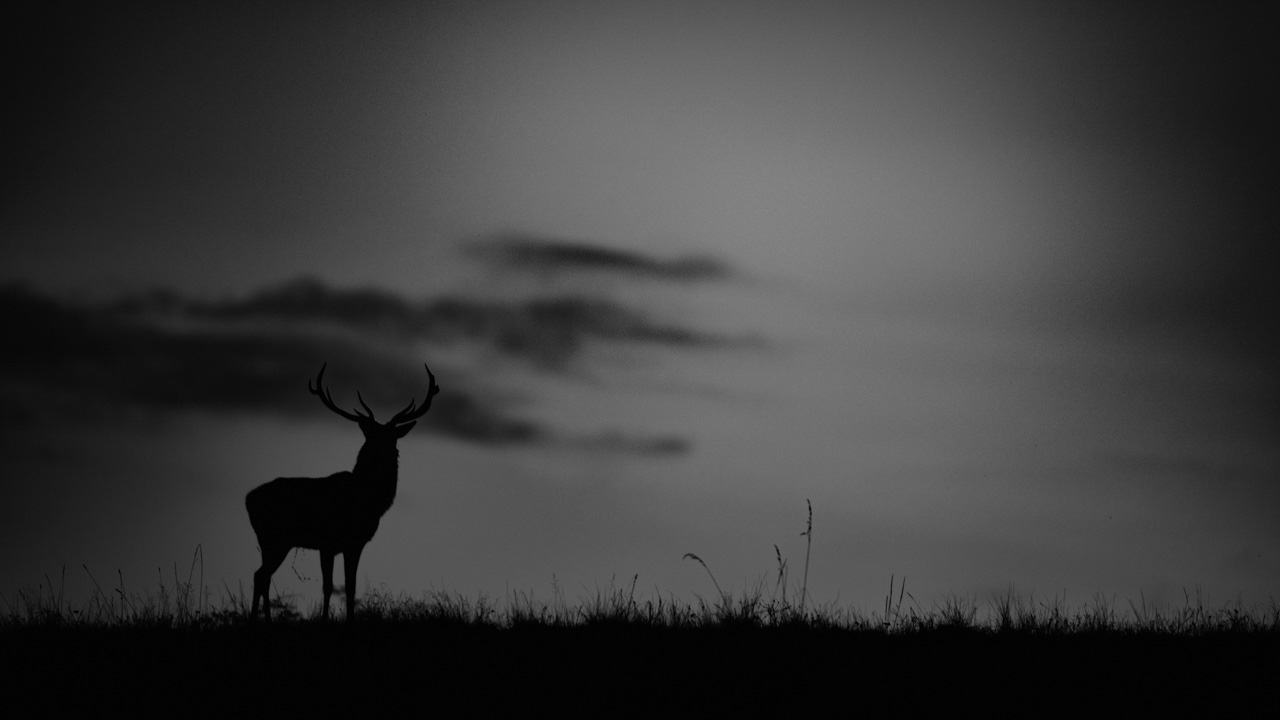
Silhouette of a red deer stag during the rut of the deer. Photo created for an exhibition. Photograph by Amar Guillen, photographer artist.
Silhouette of a red deer stag during the rut of the deer. Photo created for an exhibition.

Table of Contents

    Page 1

  • The Little Story Behind This Article
  • A Photo Is Never Universal
  • Dealing With Insufficient Judgement Criteria
  • Why: Creating a Purposeful Photo
  • Reason #1 for Creating Purposeful Photos: Being Satisfied and Happy
  • Page 2

  • Reason #2 for Creating Purposeful Photos: Pleasing Your Audience
  • How: Creating Purposeful Photos
  • Tip #1: Define Your Photographic Why
  • Tip #2: Define Your Photographic Artistry
  • Case Study: A Masterpiece Photo for an Exhibition
  • Finally

The Little Story Behind This Article

When I started my career as a professional photographer in 2003, I turned to illustrative photography. At the time, I thought that it was an activity in which I could fully blossom. I planned to travel in total freedom and thought that I would have the freedom I needed to take the kinds of pictures I wanted to capture.

I had not done any marketing analysis. It was a field I knew nothing about. It took me seven years of intense work to understand my error of judgment.

In 2004, following underwater photos published in the American magazine Divers, I was contacted by Sue, the manager of the photo agency Seapics.com. She asked me if I wanted to collaborate with the agency. I accepted immediately. The connection quickly became an unexpected treasure. Over the years, Sue and I became friends, and we remained friends until she passed away.

At that time, I was passionate about black and white photography of shipwrecks. I found that the creative technique of black and white made them even more majestic and graceful. I took a lot of time to develop the images.

Then I proposed them to Seapics. Each time, Sue would politely turn them down. After several unsuccessful proposals of subjects that seemed interesting to me, I asked Sue what the reasons for these refusals were. She explained that for magazines and book publishers, black and white was not a good technique.

Black and white simply would not sell for the marketing realm, specifically in advertising. Moreover, magazines and pamphlets were being printed in offset, which made it difficult to correctly calibrate the printing line for color and black and white.

Because of Sue, I better understood why a photo should always be created for a specific purpose in mind. A photo designed for a mainstream magazine is not going to be the same photo presented to a magazine for an art gallery. In addition to the judging criteria, a photo must meet the individual needs of the client.

When I became a photographic artist, my understanding became even more refined.

In the rest of the article, I will share with you my experience and the reasons why you should always consider the purpose of your photos before taking them.

A Photo Is Never Universal

In previous blog posts, I have discussed the definition of a good photo. But I have not mentioned an essential point, which is that a good photo is never universal.

What I mean to say is that a good photo cannot please everyone. I believe that if a picture pleases everyone, it is because it is average.

If you continue to see a certain picture again and again, you may think that it is popular because it is a good one. However, this is not always the case. You may be seeing it everywhere because certain art directors, magazine boards, or publishers think that it is good, when in reality it is simply average. However, mass marketing does its job of increasing popularity.

Since the photo can be seen on billboards, newsstands or in Internet advertisements, you get the impression that everyone finds it beautiful and interesting. Well, they do not. It is appreciated by people who have access to powerful social media and marketing channels circulating to a large number of people.

In my job as a photographic artist, I find that photos that sell for more than $100,000 are unknown to the general public. Moreover, they are often exceptional photos of incredible quality.

You should not confuse the concept of a good photo with a photo that is seen everywhere. Just because a photo is popular does not mean that it is good. These are two totally different things.

I think that when a photo is good, it is good for a specific use.

Why and How A Photographer Should Have a Photographic Identity.

Dealing With Insufficient Judgement Criteria

In several blog posts, I have shared with you some ways for judging photographs. I have developed both objective and subjective methods.

To judge a photo, you must always use a checklist of judging criteria.

However, these judging criteria are insufficient to determine whether a photo is actually good or not.

You must also consider its use. For example, during a trip you will take pictures for a social network to share your experiences and what you have seen. Or you may take photographs for a festival as part of an exhibition or gallery. The number of possibilities for the use of the photo is endless.

Regardless of your wishes or interest in the photo, you will want to find a purpose for it, for having a purpose for the photo increases its value. There will always be an objective or a goal you may want to achieve. If you do not photograph with this state of mind, you will quickly lose your passion, and your photos will become more and more average.

During all these years working as a professional photographer, I have learned one essential thing. Each photo must be made for a particular purpose.

It is in applying a judgment checklist and identifying a specific purpose, that a photo transforms from being an average photo to an exceptional one.

I will give you some reasons for why this is important.

Why and How Defining a Good Photograph.

Why: Creating a Purposeful Photo

A photo must be made for a specific use because each audience is different.

Let me give you a personal example. A few years ago, I proposed an exhibition at the international festival of ‘Montier en Der’ in France which was my collection of art photos "Parallel Universes". Although it was a great commercial success, my proposal was turned down. I had suspected that this might happen.

Even if my photos were all taken in nature on ponds in Dombes, they did not correspond at all to the subjects exposed at ‘Montier en Der’. The festival highlights illustrative photos that are best suited for an audience including those enrolled in an amateur school class or adults unfamiliar with photography. It is a generalist festival. The jury that selects the exhibitions is composed of illustrative photographers and not photographer artists. My exhibition had almost no chance of being selected, but I wanted to test if this event corresponded to my activity as a creator of abstract conceptual photographs. I found my guess to be right.

This personal example explains why a photograph(s) should be made for a particular purpose. For example, a photo for a themed contest will certainly not be commercially successful. Abstract art photographs will not be accepted for amateur exhibitions directed towards the general public who may not possess artistic cultural appreciation.

An art curator will not be interested in reportage photos as part of an art photo exhibition.

Likewise, the editor of a magazine will not be interested in art photos to illustrate an article.

I could multiply these examples ad infinitum. If I had to give you an important piece of advice, it is to remember that a photograph must be made for a specific purpose.

I will now provide some good reasons for why you should heed this advice.

Reason #1 for Creating Purposeful Photos: Being Satisfied and Happy

When one of your photos is selected for a contest or when one of your series is selected for a festival exhibit, you will be overwhelmed with pride and joy. It is pure bliss.

I understand you. I feel these same emotions when my art photos catch the eye of esteemed collectors.

You feel satisfied. The creative energy within you is multiplied tenfold. You have only one desire: to return to the field to photograph again.

You will propose these new photos for contests, exhibitions, or a report. The loop is endless.

To achieve this feeling of fullness because you have reached a personal goal, you must photograph with an idea in mind. Your photos must be created for a specific purpose.
Why and How: Developing a Photographic Consciousness.

Reason #2 for Creating Purposeful Photos: Pleasing Your Audience

Why and How: Photographing Red Deer Stags in Silhouette

If you like to photograph deer, you probably will enjoy photographing red deer stag. Perhaps you will appreciate the opportunity of capturing creative photos of these magnificent mammals to honor their elegance and strength.

Silhouetted photographs of animal scenes evoke mystery and the unknown.

In this article, I will share with you a creative technique that I use in the field: silhouette photography.

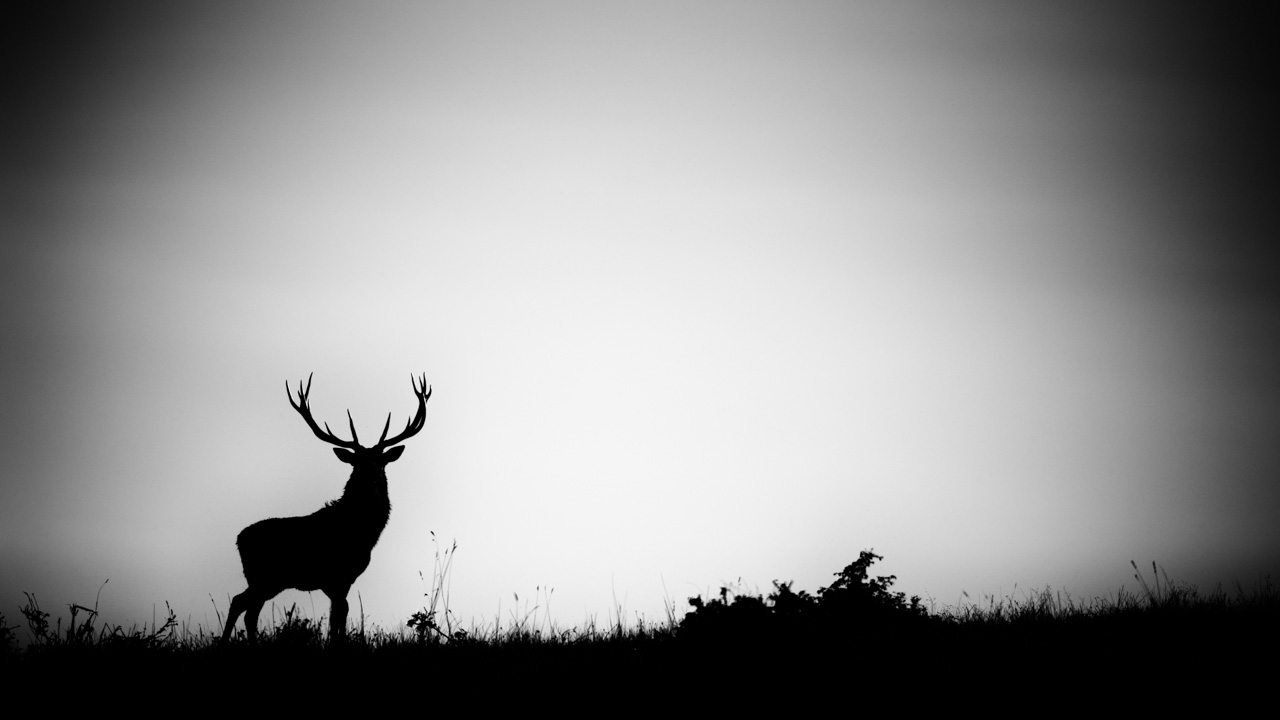
Silhouette of a red deer stag on the top of a hill. Photograph taken in low-angle. Photograph by Amar Guillen, photographer artist
Silhouette of a red deer stag on the top of a hill. Photograph taken in low-angle.

Table of Contents

  • The Little Story Behind This Article
  • The Origin of The Silhouette Technique
  • Application to Photography
  • Some Pictures Of Silhouettes of Red Deer Stags
  • Application to Red Deer Stag Photography
  • Why: Photographing Red Deer Stag in Silhouette
  • How to Photograph Red Deer Stag in Silhouette
  • The Measurement of Light
  • The Focus
  • The Development of Your Photos in Silhouettes
  • Finally

The Little Story Behind this Article

When my passion for red deer and roe deer photography was born, I was crisscrossing the forests of La Coubre and Saint Genis de Saintonge in Charente-Maritime in France. I spent hours looking for traces of the animals so that I would know where to place my blinds. I waited hours, even days to take the pictures that evoked an adrenaline rush.

After several months of research and tracking, I had managed to make some interesting pictures. At that time, I had not yet made the leap to artistic photography. I was working in the field of illustrative photography for magazines and stock photo websites.

Charente-Maritime in the western region of France is a geographically flat region. The territories seem to span straight out for miles and miles. All of my photos had the same perspective: I was photographing deer at eye level.

By chance, not far from Clérac, in the south of Charente-Maritime, I was doing a walk with my camera when suddenly I saw a young deer walking on a hill during the sunset. I was flabbergasted. How beautiful it was. Its silhouette was cut out against a sky colored with warm tones as only the Charente-Maritime can offer. I had just enough time to take a few pictures before the deer spotted me and moved to the other side.

This first experience of a silhouetted deer is engraved forever in my memory. Since then, I often try to shoot close to the ground to gain a unique perspective of deer in silhouette.

I admit that it is not easy. I often return empty-handed.

But the fact remains that the silhouette technique is creative. It gives results that leave no viewer feeling indifferent.

I will now give you some tips to help you to master your own deer pictures.

The Origin of The Silhouette Technique

The silhouette as a creative artistic form, was invented by Monsieur Silhouette, Minister of Finance for King Louis XV in France when he drew people in backlight to capture only the contours of their profile on the walls of his castle of Bry-Sur-Marne. This made it impossible to identify the people.

At the time, the silhouette included naughty or amusing drawings, much different from its use today. I can only direct you to conduct some research on the internet to learn more about its origins.

Application to Photography

Silhouette or backlight photography consists of showing the shape of a subject or a strong photographic element.

The subject must be backlit, meaning that the light source must face you.

Why and How: Photographing Red Deer Stags in the Fog.

Some Pictures Of Silhouettes of Red Deer Stags

Click on a thumbnail to enlarge it.

  • Silhouette of a red Deer Stag during the rut of the deer. Amar Guillen, Photographer.
    Silhouette of a red Deer Stag during the rut of the deer.
    Silhouette of a red Deer Stag during the rut of the deer.
  • Silhouette of a red Deer Stag during the rut of the deer. Amar Guillen, Photographer.
    Silhouette of a red Deer Stag during the rut of the deer.
    Silhouette of a red Deer Stag during the rut of the deer.
  • Silhouette of a red Deer Stag during the rut of the deer. Amar Guillen, Photographer.
    Silhouette of a red Deer Stag during the rut of the deer.
    Silhouette of a red Deer Stag during the rut of the deer.
  • Silhouette of a red Deer Stag during the rut of the deer. Amar Guillen, Photographer.
    Silhouette of a red Deer Stag during the rut of the deer.
    Silhouette of a red Deer Stag during the rut of the deer.
  • Silhouette of a red Deer Stag during the rut of the deer. Amar Guillen, Photographer.
    Silhouette of a red Deer Stag during the rut of the deer.
    Silhouette of a red Deer Stag during the rut of the deer.
  • Silhouette of a red Deer Stag during the rut of the deer. Amar Guillen, Photographer.
    Silhouette of a red Deer Stag during the rut of the deer.
    Silhouette of a red Deer Stag during the rut of the deer.
  • Silhouette of a red Deer Stag during the rut of the deer. Amar Guillen, Photographer.
    Silhouette of a red Deer Stag during the rut of the deer.
    Silhouette of a red Deer Stag during the rut of the deer.
  • Silhouette of a red Deer Stag during the rut of the deer. Amar Guillen, Photographer.
    Silhouette of a red Deer Stag during the rut of the deer.
    Silhouette of a red Deer Stag during the rut of the deer.
  • Silhouette of a red Deer Stag during the rut of the deer. Amar Guillen, Photographer.
    Silhouette of a red Deer Stag during the rut of the deer.
    Silhouette of a red Deer Stag during the rut of the deer.
  • Silhouette of a red Deer Stag during the rut of the deer. Amar Guillen, Photographer.
    Silhouette of a red Deer Stag during the rut of the deer.
    Silhouette of a red Deer Stag during the rut of the deer.
  • Silhouette of a red Deer Stag during the rut of the deer. Amar Guillen, Photographer.
    Silhouette of a red Deer Stag during the rut of the deer.
    Silhouette of a red Deer Stag during the rut of the deer.
  • Silhouette of a red Deer Stag during the rut of the deer. Amar Guillen, Photographer.
    Silhouette of a red Deer Stag during the rut of the deer.
    Silhouette of a red Deer Stag during the rut of the deer.
  • Silhouette of a red Deer Stag during the rut of the deer. Amar Guillen, Photographer.
    Silhouette of a red Deer Stag during the rut of the deer.
    Silhouette of a red Deer Stag during the rut of the deer.
  • Silhouette of a red Deer Stag during the rut of the deer. Amar Guillen, Photographer.
    Silhouette of a red Deer Stag during the rut of the deer.
    Silhouette of a red Deer Stag during the rut of the deer.
  • Silhouette of a red Deer Stag during the rut of the deer. Amar Guillen, Photographer.
    Silhouette of a red Deer Stag during the rut of the deer.
    Silhouette of a red Deer Stag during the rut of the deer.
  • Silhouette of a red Deer Stag during the rut of the deer. Amar Guillen, Photographer.
    Silhouette of a red Deer Stag during the rut of the deer.
    Silhouette of a red Deer Stag during the rut of the deer.
  • Silhouette of a red Deer Stag during the rut of the deer. Amar Guillen, Photographer.
    Silhouette of a red Deer Stag during the rut of the deer.
    Silhouette of a red Deer Stag during the rut of the deer.
Silhouette of a red Deer Stag during the rut of the deer.
    • Silhouette of a red Deer Stag during the rut of the deer.
    • Silhouette of a red Deer Stag during the rut of the deer.
    • Silhouette of a red Deer Stag during the rut of the deer.
    • Silhouette of a red Deer Stag during the rut of the deer.
    • Silhouette of a red Deer Stag during the rut of the deer.
    • Silhouette of a red Deer Stag during the rut of the deer.
    • Silhouette of a red Deer Stag during the rut of the deer.
    • Silhouette of a red Deer Stag during the rut of the deer.
    • Silhouette of a red Deer Stag during the rut of the deer.
    • Silhouette of a red Deer Stag during the rut of the deer.
    • Silhouette of a red Deer Stag during the rut of the deer.
    • Silhouette of a red Deer Stag during the rut of the deer.
    • Silhouette of a red Deer Stag during the rut of the deer.
    • Silhouette of a red Deer Stag during the rut of the deer.
    • Silhouette of a red Deer Stag during the rut of the deer.
    • Silhouette of a red Deer Stag during the rut of the deer.
    • Silhouette of a red Deer Stag during the rut of the deer.

    Application to Red Deer Stag Photography

    The red deer stag is a robust animal with a characteristic shape. If you photograph him in silhouette, his shape will be recognizable among a thousand. The viewer of your photo will not mistake its silhouette when compared to other species. This is much different than with other animals, for example, with silhouettes of different bird species.

    Why: Photographing Red Deer Stag in Silhouette

    Several reasons can be given for answering the question, “Why should I invest time in photographing red deer stag in silhouette?”

    First of all, red deer stag silhouette photography is a creative wildlife photography technique. You will amaze your spectators. I guarantee that you will have many comments and likes when you share your deer pictures.

    Indeed, silhouette photos are often dramatic, graphic, and very spectacular. They are very aesthetic. The eye is always attracted by strong graphic forms.

    Photographs of silhouettes have a strong visual impact.

    On the other hand, the animal silhouettes, and in particular those of deer, are for me very symbolic forms. They can evoke departure, flight, and freedom. They can suggest emotions and feelings. The only limits lie within the imagination of the viewer.

    The eyes of animals are not visible in a silhouette photograph. This fact accentuates even more the mysterious aspect of the scene. The gaze is implied but not visible. Only the shape of the body is important, as it becomes a suggestive form, which evokes the movement and the animal’s attitude.

    Finally, they are simple photos to make from a technical perspective. They do not require a vast array of knowledge.

    You must know that silhouette photography is a unique way to transcend the animal world by showing suggestive shapes that no other technique can replicate.

    Why and How: Creating Wildlife Photographs in Black and White.

    How to Photograph Red Deer Stag in Silhouette

    First of all, you need to know the terrain on which you are going to working. The ideal is to find a place from down below to take a photo from a low angle tilted upwards. This method will allow you to showcase the deer as a dominant figure.

    If you want to take a picture of a silhouette with a deer at eye level, look for a place where the sky will form the background. This is not easy to find.

    Indeed, to take a picture of the silhouette of an animal and a deer in particular, you must obtain a particularly important difference between the subject and the background. Ideally, the sun should be behind your deer. Your camera should not be able to properly expose both shots. You will have to choose either the background or foreground as the focus from which to measure the light.

    Ideally, sunset and sunrise are the best settings to take a silhouette photo. It is in these conditions that you will get the most dramatic shots. Your subject will be either very dark or even black. The background will be illuminated.

    I advise you to properly isolate the deer from its negative space. For example, leave some space under his chest otherwise you will simply have a black mass that lacks aestheticism. Do not forget that the more visible and well defined the shape is, the more impact your photo will have.

    I also recommend that you hide the sun behind your deer (the subject). Indeed, with rare exceptions, if you leave the sun visible in your photo, it is the sun that will attract the viewer's attention. Do not forget that it is a light source, thus it is always the spot which attracts the eye most.

    Incorporate an open space. I consider silhouette photography to be a minimalist technique. You want to focus the viewer's attention on the deer.

    Personally, I avoid including trees in my photographs of silhouettes. They often introduce a mass imbalance in the photos because they are just as dark as the deer. Instead, choose minimalist scenes that will highlight those graphics related to the deer.

    Another trick I often use is to turn the camera to get a horizon that is straight. Skewed horizons are distracting. With a straight horizon, you receive a nice balance of shapes and a harmonious composition.

    Keep a close eye on the size of your foreground. It should not take up a lot of space in the picture. If it does, your photo will be difficult to read because the viewer will struggle to interpret your photograph.

    Once in the field, your blind can be a good solution for hiding and waiting for the right time to shoot. Once you have spotted an area of high passage and once you know the time of sunset, all that is left is to wait for the right moment when a deer comes into focus.

    Walking with your camera is also an excellent way to make animal photographs in silhouettes. If you are mobile, you can easily adapt to the terrain. You will be able to spot the best point of view to photograph deer.

    Why and How: Photographing the Bugle of Deer Using a Cloth Photo Blind.

    The Measurement of Light

    You must take special care when measuring the light.

    The ideal is to set your camera in spot mode.

    Measure the light in the sky. The measurement will be made on an area of 3 to 5% in the center of the image. Once you have made this measurement, you must memorize it and recompose your image so that your composition is as harmonious as possible.

    As you photograph with the sun in front, make sure that the sensitivity of your camera is minimal. If you are shooting in auto ISO mode, make sure that you do not reach the lowest setting. If this is the case, you will not know if it is the right value for the sensitivity of the scene or if your camera is capable of shooting below that point.

    The Focus

    You need to focus on the deer's silhouette. As the scene is very contrasted, you will see that the camera focuses beautifully.

    I recommend that you first focus on your subject. Once the sharpness plane has been defined, you then perform the light measurement.

    Finally, you recompose and trigger your camera.

    The Development of Your Photos in Silhouettes

    The best advice I can give you is to take great care in developing your photos of deer in silhouettes.

    But first of all, as always, I recommend that you photograph in RAW rather than JPEG. You will have much more latitude to correct a possible exposure error in the shot with the FAW format.

    On the one hand you will be able to better define your subject if it is not dark enough.

    You can then crop the foreground as needed.

    Finally, you will be able to use gradient tools to darken your sky or add vignetting to focus the viewer's attention on your subject.

    If your subject lacks sharpness even though the contrast was high at the time of shooting, you can improve it during this crucial stage. This is often the case with zoom lenses used at infinity (more than 100 meters or 300 feet).

    As you have integrated a lot of sky in your photo, remember to remove any possible stains from your sensor for a clear view.

    Finally

    If you want to create deer pictures that are different and interesting for your audience, do not hesitate for a second to try out the silhouette technique.

    The silhouette sprinkles a bit of mystery into photos that are already evocative, thus creating a magical image and unforgettable scene.

    In my opinion, the most difficult point is not the technique, but when and where to use the spot mode of your camera. The main difficulty will come from finding an area to photograph deer in silhouette.

    For this reason, you will have to do some scouting to get to know your terrain before snapping the trigger.

    Click Here To See Black and White Fine Art Print Collections.
    1. 5 Tips to Improve your Abstract Photos
    2. 5 Reasons for You to Create Abstract Photos
    3. Why and How: Creating Abstract Photos
    4. Why and How: Photographing Red Deer Stags in the Fog

    Page 37 of 201

    • 32
    • 33
    • 34
    • 35
    • 36
    • 37
    • 38
    • 39
    • 40
    • 41
    1. You are here:  
    2. Home
    3. Blog Photographic Approach

    Share on Social Media

    Post
    Share
    Share
    E-mail
    WhatsApp
    Text

    Join Me on Social Networks

    Join Me on Facebook  Join Me on Instagram  Join Me on LinkedIn

    Claim your free guide to make your photo impactful and meaningful

    Claim Your Free Guide '50 Pages of Tips to Give Impact and Meaning to Your Photos'.

    4 + 8 =

    Click Here To Discover All My Chronicles About the Photographic Approach.

    Treat Yourself to a Fine Art Print That Matches your Personality

    Example of a vacation home interior with a black and white fine photo art displayed on the wall.

    Fine Art Print Collections in Black and White

    Fine Art Print Collections in Black and White Black and white photography is a suitable technique for many nature scenes. It requires a particular frame of mind. A black and white photograph should be prepared and planned from the framing to the…
    11991
    Fine Art Print Collections in Black and White
    An abstract art photo displayed in a contemporary living room decor.

    Fine Art Print Collections in Color

    Collections of Fine Art Prints in Color Color photographs allow digressions and take the audience to the message by secondary ways. The world around us, especially nature, is colorful. A color image can show the way our surroundings really are. Of course, it…
    10440
    Fine Art Print Collections in Color
    Example of a home interior with fine art prints in my style back to black displayed on the wall. These photos are a part of my collection 'Wild beauties of Kenya'.

    Fine Art Print Collections in Back to Black

    Fine Art Print Collections in Back to Black I want to share my fine art prints of nature in a personal style that I call "back to black." "Back to Black" was developed to embody a sharp and clean style for artistic photos that can be hung in your living room,…
    9980
    Fine Art Print Collections in Back to Black
    A waiting room with a photo in the style Fusion displayed on the wall. Grey Heron in Fusion.

    Fine Art Print Collections with the Fusion Style

    Fine Art Print Collections with the Fusion Style I would like to share a very creative and modern photography style to represent Nature in a very different way. I call it "Fusion." I created the style to offer dynamic photos, allowing you to start a good day…
    7908
    Fine Art Print Collections with the Fusion Style
    A living room with a photo in the style 'Impression' exposed on the wall. Rising sun in impression

    Fine Art Print Collections with the ‘Impression’ Style

    Fine Art Print Collections with the ‘Impression’ Style The objective of this photographic style is to create the ephemeral blurs. That's why I named it 'Impression.' Photography, as an art form, is a powerful means of expressing reality from different…
    5827
    Fine Art Print Collections with the ‘Impression’ Style
    Fine art prints from the style back to black displayed on a wall. Amar Guillen, photographer artist

    New Collections of Fine Art Prints Dedicated to the Wonders of Nature

    New and Updated Fine Art Print Collections Dedicated to the Wonders of Nature Fine art prints from the style back to black displayed on a wall.
    11446
    New Collections of Fine Art Prints Dedicated to the Wonders of Nature

    Themes of the Blog Articles

    Landscape of Arches National Park in Utah in black and white.

    Blog Articles Dedicated to Artist Statement

    Blog Articles Dedicated to Artist Statement
    Dunes of death Valley in Black and White

    Blog Articles Dedicated to Black and White Photography

    Blog Articles Dedicated to Black and White Photography
    Abstract photo or trees reflection on water

    Blog Articles Dedicated to Photographic Mindset

    Blog Articles Dedicated to Photographic Mindset
    Abstract photo of ridles on water

    Blog Articles Dedicated to Artistic Photography

    Blog Articles Dedicated to Artistic Photography
    Abstract photo of Yellowstone

    Blog Articles Dedicated to Photographic Language

    Blog Articles Dedicated to Photographic Language
    Pronghorn in Yellowstone

    Blog Articles Dedicated to Wildlife Photography

    Blog Articles Dedicated to Wildlife Photography
    Landscape of Bryce Canyon

    Blog Articles Dedicated to Photographing United States

    Blog Articles Dedicated to Photographing United States
    Underwater waves in the Red Sea

    Blog Articles Dedicated to Photographic Techniques

    Blog Articles Dedicated to Photographic Techniques
    Tree of Black Canyon in Black and White

    Blog Articles Dedicated to Landscape Photography

    Blog Articles Dedicated to Landscape Photography
    Manta Ray in Maldives in Black and White

    Blog Articles Dedicated to Underwater Photography

    Blog Articles Dedicated to Underwater Photography
    Red Deer stag during the rut of the deer

    Blog Articles Dedicated to Photographic Judgement

    Blog Articles Dedicated to Photographic Judgement
    Great Crested Greb and his chick

    Unclassified Blog Articles

    Unclassified Blog Articles

    You Might Be Interested By One of These Photographic Approach Articles

    Photograph in black and white of the Grand Canyon from Arizona State in USA.

    Why and How Mastering the Steps of Creating an Art Photograph

    3603
    Why and How Mastering the Steps of Creating an Art Photograph
    An example of a narrative photo. Landscape of Island in the Sky in the Canyonlands in Utah in United States. Photo in black and white by Amar Guillen.

    Why and How: Creating Impactful Narrative Photos

    4118
    Why and How: Creating Impactful Narrative Photos
    Snowy landscape of Yellowstone during winter.

    3 Steps for Giving Meaning to Your Photos

    8750
    3 Steps for Giving Meaning to Your Photos
    Two lions in Kenya. Photographed in black and white. Photograph by Amar Guillen, photographer artist.

    To Create Aesthetics Photos, Print your Images

    4238
    To Create Aesthetics Photos, Print your Images

    Receive Free Tips On How to Give Impact and Meaning to Your Photos. Subscribe to Receive Regular Articles.

    2 + 7 =

    Contact Me By Email

    10 + 9 =
    This site is protected by reCAPTCHA and the Google Privacy Policy and Terms of Service apply.

    About Amar Guillen, Creator of Fine Art Prints of Nature
    As a photographer capturing the artistic essence for several decades, I have mastered the art of crafting an authentic experience for art enthusiasts and collectors of visual art.
    When I observe my surroundings, be it friends, family, relationships, or professional contacts, I see souls in perpetual motion. Every moment of their existence is engulfed by daily hassles, work concerns, social media, online or televised information streams, and videos on the web.
    Every minute, they strive to accomplish something, fearing losing ground and feeling marginalized in this frenzied society. Imprisoned by an oppressive schedule, the essential eludes them, drowned in the tumult of daily life. Is it really crucial to watch yet another cat video on the internet? Is it necessary to post twenty daily messages on social media?
    Despite this, they remain constantly stressed and anxious about the challenges of the world, without being able to influence these monumental problems. It is at this moment that my artistic nature photographs come into play. Those who have had the privilege of hanging one of my works in their personal or professional space have expressed a radical transformation in their lives.
    Every day, contemplating these works of art immerses them in tranquility, inner peace, and rediscovered serenity. They then understand that nature has the power to unravel tensions, to encourage reflection on the essential. Artistic photographs thus become open windows to the wonders of nature.
    I have chosen to share the best of myself by helping others discover their identity, personality, style, all while reconnecting with nature. Take the time to explore my artistic photographs if you wish to reveal your true essence. Once hung in your space, your view of the world will be transformed.
    Amar Guillen is a creator of fine art prints of nature.
    I am Amar Guillen, creator of nature art photographs. I have a deep conviction that contemplating nature has the power to transform human beings. If everyone learned to know, respect, and preserve nature, our world would be transformed into a haven of peace where everyone would find their place.
    Copyright © 2003 - 2026 Guillen Photo LLC - All rights reserved. Amar Guillen, professional photographer since 2003.
    • Blog
    • Calibration
    • Legal Information
    • Sitemap
    • Accessibility
    • Contact Me
    • Updates of the Website
    I Want to Help You to Create Interesting Photos

    How Can I Help You To Create More Interesting Photos?

    Ask Me a Technical Question.
    Subscribe to my Newsletter. The Inspiration Behind Guillen Photo.

    Select your language

    • English (United Kingdom)
    • Français (France)
    Claim your free guide to make your photo impactful and meaningful

    Claim Your Free Guide '50 Pages of Tips to Give Impact and Meaning to Your Photos'.

    10 + 7 =

    Contact Me By Email

    2 + 10 =

    Office Address:
    3512 Robin Road
    Plano Texas 75075
    USA

    Office phone: (+1)214-769-6825