• The Art of ChoosingHome page
  • Fine Art Prints3 Editions
  • CollectionsAll Collections
  • AboutAmar Guillen
  • Customer Space & Contact
  • Select your language

    • English (United Kingdom)
    • Français (France)
  • All You Need to Select Your Fine Art Print
    • How to Choose a Fine Art Print - Q&A - FAQ
    • New Creations
    • Explore Some Interiors
    • Fine Art Print Blog
  • Browse by Edition
    • All Fine Art Prints
    • Unique Edition
    • Limited Edition
    • Open Edition
  • Browse by Style
    • Black and White
    • Color
    • Fusion
    • Impression
    • Back to Black
    • Landscapes in Black and White
    • Landscapes in Color
    • Animals in Black and White
    • Animals in Color
  • Browse by Theme
    • Landscape
    • Wildlife
    • Underwater
    • Abstract
    • Symbolic
    • Landscapes of the United States
    • Landscapes of France
    • Landscapes of Scotland
    • Seascapes
    • Relaxing
    • Energizing
    • Playful
  • Browse by Format
    • Rectangular
    • Square
    • Panoramic
  • Contact Me
    • Contact Me by Email or Phone
  • Collections
    • New Collections
    • All Collections
  • Browse by Theme
    • Landscapes
    • Wildlife
    • Underwater
    • Abstract
    • Symbolic
    • Landscapes of France
    • Landscapes of the United States
  • Browse by Style
    • Black and White
    • Color
    • Impression
    • Back to Black
    • Fusion
  • Contact Me
    • Contact Me by Email or Phone
  • Discover More About Me
    • Discover Who is Amar Guillen
    • Artistic and Photographic Statement
  • Galleries
    • Photo Galleries
    • Abstract Portfolio in Color
    • Black and White Landscape Photography Portfolio
    • Color Landscape Photography Portfolio
    • Black and White Wildlife Photography Portfolio
    • Color Wildlife Photography Portfolio
    • Underwater Photography Portfolio
  • Contact Me
    • Contact Me by Email or Phone
  • Your Customer Space
    • Create or Manage your Account
    • Your Download Space
    • Your Orders
  • Contact Me
    • Contact Me by Email or Phone

You are in that section: Home > Blog > Blog of the Photographic Creation Approach

Two Steps to Fully Understanding a Photo

When you look at other photographers' photos for inspiration and new ideas, you analyze every inch to attempt to fully understand the images.

You are looking for meaning in what you see to create your future photographs.

I often do this as well. In order not to get lost and to be as efficient as possible, I have developed a two-step method to understand the photos.

I will share it with you in this article.

This article will help you understand how to implement a new tool in your photography toolbox. By implementing it, you will make your photos even more interesting and instill in them true meaning.
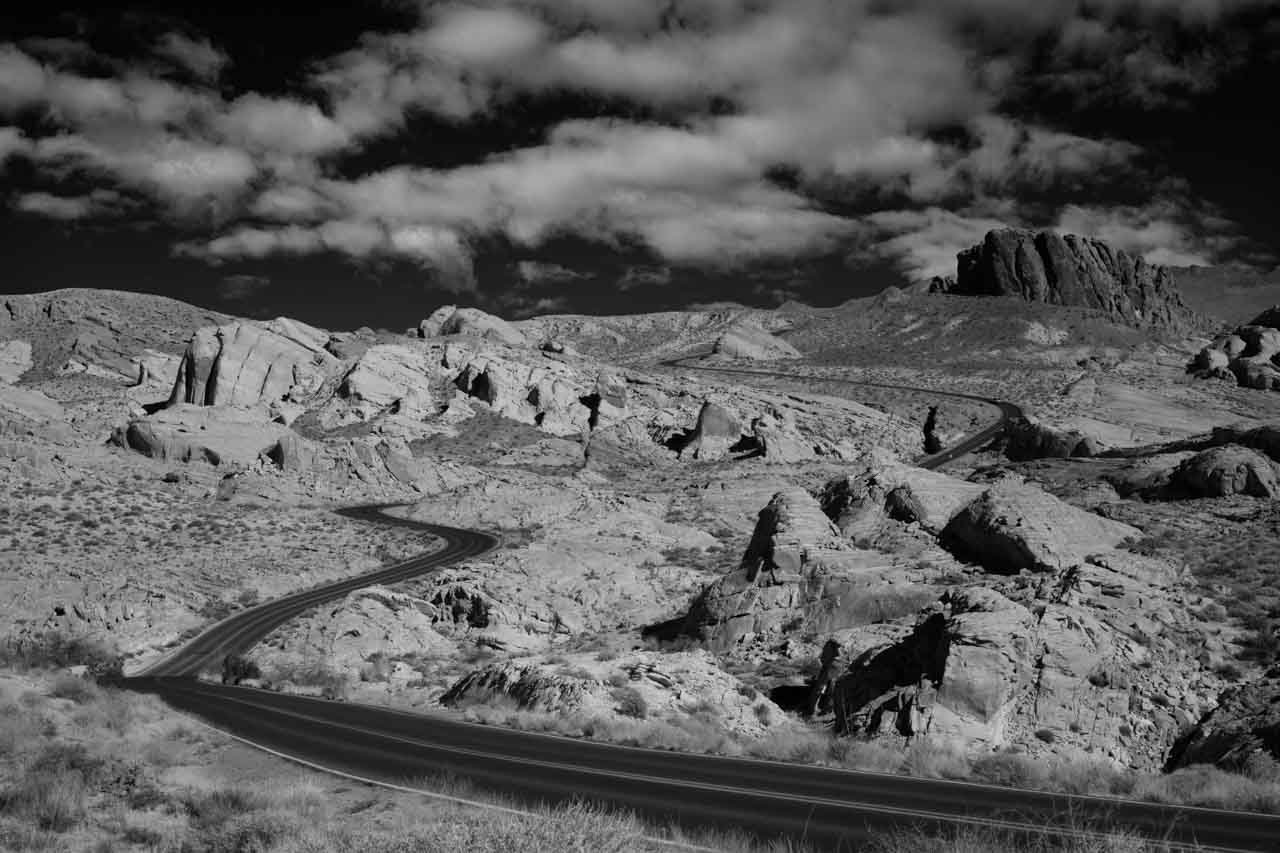
Road crossing Valley of Fire in black and white. Photograph by Amar Guillen, photographer artist.
This road crossing Valley of Fire can be read by differents ways. It is an example of symbolic photograph.

Table of Contents

    Page 1

  • The Short History of This Article
  • Definition of The Word "Understand"
  • Application to Photography
  • Do Not Confuse Understanding and Judging
  • Why You Should Try to Understand a Photo
  • How to Understand a Photo
  • Page 2

  • Step 1: Visual Comprehension
  • Step 2: Semantic Understanding
  • Page 3

  • Case Study: Understanding a Figurative Photo
  • Case Study: Understanding an Abstract Photo
  • Finally

The Short History of This Article

I have always been passionate about experiencing the work of other photographers. I bought books. I consulted magazines. I attended dozens of exhibitions.

Today, I continue this passion for human connection, specifically through photography. I browse the Internet and social networks to look for inspiration.

This photographic and artistic research allows me to avoid reproducing what has already been done, thus, it allows me to preserve my photographic identity. I am unique; therefore, I create photos that look like me. Photographs often reflect my moods, my states of mind, and the emotions I feel and want to share.

When I chose a career as a photographic artist, I watched and analyzed dozens of photos every day to define my photographic and artistic approach. I spent hours thinking, thinking, questioning myself. I lost a lot of time and energy. I realized this after months of intense and hard work. Indeed, I did not have a work methodology.

I was taking notes and analyzing without a clear guideline.

I admit to having lost a lot of time. But as always, I learn more from my failures than from my successes. I have learned to concentrate and become more introspective and analytical.

To understand other photographers' photos, I developed a two-step method.

The most interesting thing is that I use this method to understand my own photos. When I move on to the development phase, I apply this principle to make sure that my photos can be understood by other people.

This is what I will explain in the rest of the article.

Definition of The Word "Understand"

The transitive verb “to understand” has several definitions. I have chosen two of them which I believe are adapted to the photographic art.

  • Definition #1: to understand is to sensitively apprehend from the onset the deep nature of someone or something such as an art, and to keep close to it having an intuitive knowledge of it.
  • Definition #2: to understand is to picture someone or something in a certain way, to have a specific idea of the subject.

Application to Photography

In reference to photography, you must know that understanding a photograph is to understand the vulnerability of the photographer and his deep nature.

It also means representing the photographer by trying to understand his photos.

To understand the photographs taken by a person is to give oneself a representation of who or what they are.

Do Not Confuse Understanding and Judging

In the article devoted to the topic how to judge a photo, I gave you the definition of the word judge applied to photography: "Judging a photo is giving your opinion". You are assigning a non-numerical value to the photo when you judge it.

The understanding of a photo is to apprehend its sensitivity and vulnerability of a photographer and his inner nature.

You are in a more subjective mindset. Generally speaking, a judgment is rather objective, however, the photo itself is subjective. A judgment is made on the basis of a grid of well-defined criteria.

As you can see, the two actions are totally different.

You are probably going to wonder what the right attitude should be. You are perfectly right to ask yourself this legitimate question. But the answer is beyond the scope of this article. I propose to address this subject in a future blog post.

Why and How: Judging a Photo With 5 or 10 Criteria.

Why You Should Try to Understand a Photo

If you want to create interesting pictures that make sense and will appeal to an audience, you need to know how to understand a picture or a series of pictures.

The more you develop this faculty of understanding, the more empathetic you are to your audience.

Understanding a photo will allow you to better choose your points of view, framing, and the composition of your own photos that resemble you.

You will be able to easily convey your moods and emotions by constructively assembling the photographic elements so that your audience receives a representation of who you truly are. Isn't this what you are looking for when showing your photos?

Learning to understand photos, whether they are made by others or by yourself, will allow you to identify mechanisms and ways to translate what you want to show to the rest of the world.

After reading this article, I advise you to apply my method to develop your own.

You will find that understanding photos is above all a way to help you build and improve your own photos.

How to Understand a Photo

If you follow my blog dedicated to the photographic approach on a regular basis, you have certainly noticed that I am passionate about photographic judgment, photographic analysis, photographic semiology, and the photographic language.

In various articles, I have discussed methods for judging, analyzing, and reading of photographs.

How to understand a photo is the logical continuation of all these articles.

Of course, you can apply the different methods. They will only help you in understanding the pictures. But in this article, I want to explain an empirical method based on two axes. It is a personal method. It allows me to progress quickly when initially reading a photo, thus it prevents the waste of time that occurs useless considerations.

Step 1: Visual Comprehension

2 Tips for Creating Purposeful Photos

Landscape in black and white of Monument Valley. Photograph created for a book. Photograph by Amar Guillen, photographer artist.
Landscape in black and white of Monument Valley. Photograph created for a book.

Reason #2 for Creating Purposeful Photos: Pleasing Your Audience

When you create photos, you want them to be seen and appreciated by the people who make up your audience.

Photography is a means of artistic expression. You reveal your true emotions. You convey personal messages. You appreciate having an audience that shares the same values as you. I am exactly like you. I like to please art lovers, collectors, and my own followers.

Making people happy is a fundamental characteristic of the human species. We need to share our joy with others if we are to be recognized.

But to be recognized and to continue captivating an audience, you have to be interested in their expectations. You must respond to their desires. You have to create photos with a specific purpose.

How: Creating Purposeful Photos

You have certainly understood that creating photos for a specific use will make you satisfied and happy in personally impacting your audience.

Since you will be talking to people who share the same values as you do, you will find the motivation to continue in the direction you have chosen.

Why don't you invite other people as well? Why not share your passion for art with people who do not personally know your photographic artistry and artistic approach? These are the two questions that you must ask yourself.

The answer I am going to give you is simple. I finally realized it after years of struggling to convince others of my good faith and artistic ideas.

In the audience that does not know you, there are two categories of people. First, those you will never convince. Second, those who are ready to be part of your audience but who simply do not know you yet.

For the first category, do not waste your time. I learned that no matter what I could do, these people would not try to understand me. I behave this way too. I have specific ideas about how to behave with others. For example, I am not racist or xenophobic. No one will ever be able to change my mind about my fundamental beliefs of human rights. I am firmly rooted in my ethical and moral positions. I think that for photographic art, the same convictions apply. So, I advise you not to waste your time trying to convince people who do not want to be changed.

Instead, focus on your relationship with others. If you want to be appreciated by the second category of people who do not know you, you must send clear, understandable messages about your values. If they share those values, then they will likely become a follower of your work.

Creating photos for a specific purpose is one way to do this. For example, if you like illustrative photography for news stories, then create photos for that use. Do not change the way you are.

I will give you two tips on how to do this.

Tip #1: Define Your Photographic Why

If you want to create photos for a specific use, such as for a report, a contest, a festival, an exhibition in a gallery, or a post on social media, the best advice I can give is to define your photographic why.

I want to remind you that your photographic “why” will allow you to define a goal for your photographs. The photographic “why” outlines your reasons for practicing the art of photography. It is your raison d'être as a photographer. With a strong photographic “why”, you will move quickly in your activity. You will no longer be distracted. You will be focused on a specific goal.

Your photographic “why” allows you to define steps in your photographic projects. This is what I call “intermediate objectives”.

Your photographic “why” defines the rails on which you will move forward as you craft your creations.

As I explained in a previous blog post, it is not always easy to create. You have to invest immense time in introspection. If you crave success, you have to go the distance to reach it.

This is one of the reasons that pushed me to create my photo workshops. At each workshop, I help photographers develop a strong photographic “why” that inspires and motivates them to propel forward and achieve their goals and dreams. My goal is to help other people create interesting pictures that speak to the soul.

To create photos for a specific use, create in a simple way with a strong photographic “why”.

Why and How : Defining Your Photographic Why.

Tip #2: Define Your Photographic Artistry

Once you have defined why you practice photography, all that remains is for you to define your photographic approach. This is also one of the subjects I address during my photography workshops.

I would like to remind you that your photographic approach can be broken down into two points:

  • Your photographic vision.
  • Your photographic signature.

Your photographic vision defines how you see the world around you.

Your photographic signature defines how you show your world to others through images.

When you are going to define your photographic approach, do not try to “copy and paste” other photographers’ vision and signature.

You, my friend, are unique. Your photographic approach belongs only to you, and there is only one you in this world. Thus, it must resemble you alone. You are the only person who can express your emotions and convey your messages. We have a universe surrounding us that is beautiful, intimate, fantastic, and majestic. Only you can share that universe with others through your vision and signature.

When you look at photographic activity in magazines, on websites or especially on social networks, be careful. Take a step back. Most photos that are published are just media noise. Most of these photos have been taken without any particular meaning. They do not follow any particular logic. They were not built on a solid photographic foundation.

These photos will be forgotten as quickly as they were seen.

Avoid media and photographic noise at all costs. Just because a photo is published does not mean it is actually good. It is published because it is used as a support for a written article or because a photographer needs to fill some empty space.

Learn how to judge photos. This is extremely important for your creativity.

To define your photographic approach, analyze yourself and look for inspiration without copying and pasting photographs.

A good photographic approach allows you to create photos for a specific use. As you do this again and again, your photos will become interesting and unique. They will make sense. You will be identifiable. Finally, you will become quite popular and your voice will stand out from the crowd.

Case Study: A Masterpiece Photo for an Exhibition

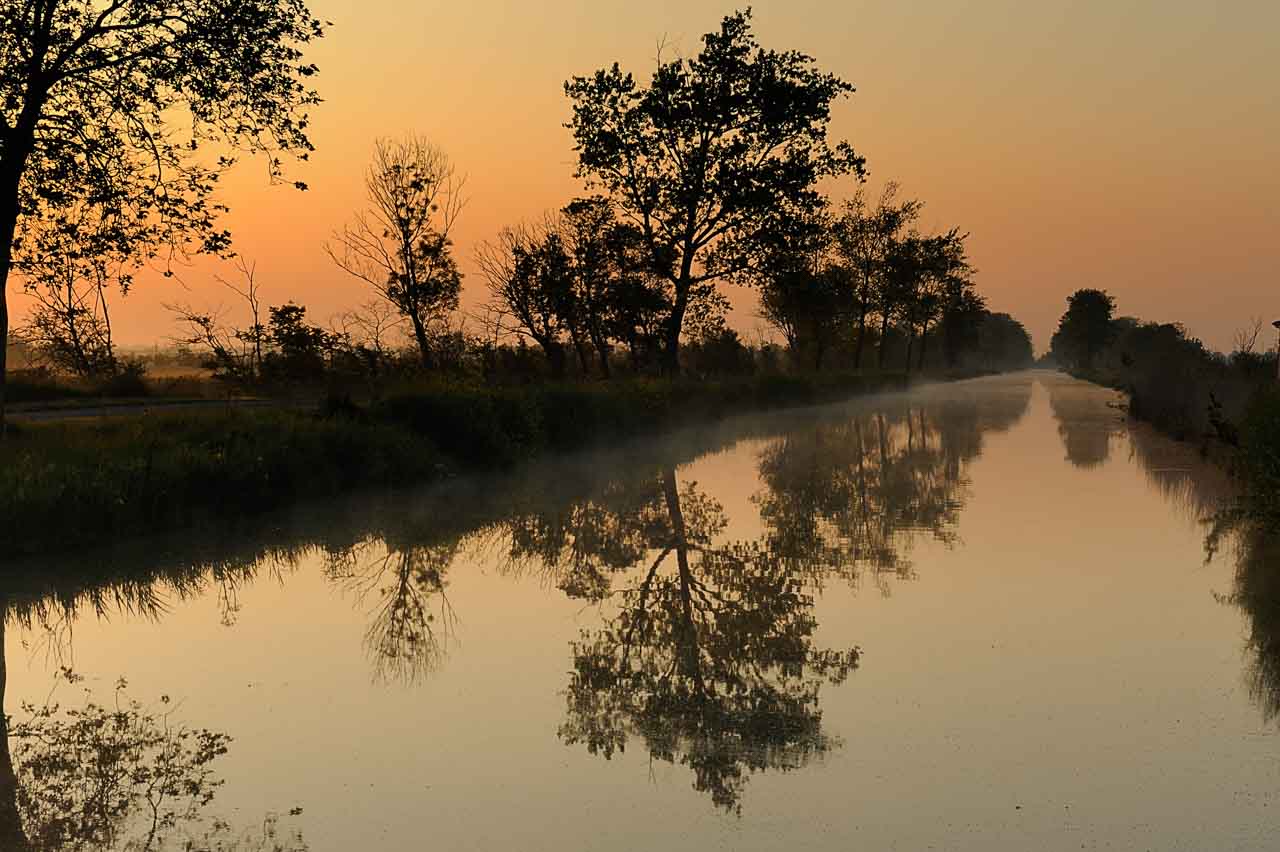
Marsh of Beaugeay in Charente-Maritime in France. Created as a master piece for an exhibition. Photographie créée pour un livre. Photograph by Amar Guillen, photographer arstist.
Marsh of Beaugeay in Charente-Maritime in France. Created as a master piece for an exhibition.

In the previous paragraphs, I explained that if you want to create interesting photos that make sense and look like you, you must do it for a specific purpose. I advised you to define your photographic why and your photographic approach.

These two tools are absolutely necessary. I will now give you a concrete example of the precise use of a photo. It is a personal example.

In 2010, a town hall commissioned me to create an exhibition of 20 photos to showcase the natural wonders of a region. It was my first institutional commission. I worked for six months to create these 20 photos which were placed in a book. 1000 copies were published.

This was my first experience as a photographic artist.

My experience in creating an exhibition was limited. I had informed myself as much as possible, but I had forgotten one essential element: the masterpiece.

The masterpiece is a photo introducing an exhibition. It is the one that will appear on the advertising flyers, on the cover of the book. It is the one that will attract attention.

It was the curator of the exhibition who pointed out to me that all the photos were consistent with the theme of the exhibition but none of them stood out as the pièce de résistance.

What else could I do but return to the field with my photographic equipment, determine to create this famous photo.

It took me almost eight days to make it. It was beautiful. Everyone who laid eyes on it agreed that it was unforgettable. She received nothing but praise. But when I looked back 10 years later, I realized that I had only sold that photo once. Why? Simply because this photo had a specific use: to introduce an exhibition. Many people found it beautiful, but only one person found it suitable for his living space. That is the way things are. Every photograph serves an irreplaceable purpose.

After all these years of work I have learned the lesson well. I hope that this example has helped you to better understand what I am talking about.

Finally

If you need to retain the essential points of this article, remember that each photograph must be made for a particular purpose if it is to be interesting and meaningful.

If you understand this truth, you will fully blossom in your position as a photographer, and you will craft one-of-a-kind photographic creations because you will have the ability to identify and please your audience.

The two best tools at your disposal are your photographic why and your photographic approach.

Do not waste time chasing after multiple versions of yourself. Respect the photographic goals you have set for yourself. You deserve the best in this world, and your photographs and work should illuminate that.

If you have any doubts or if you have some difficulties to achieve your goals, keep in mind that my photo workshops were created to help you. I am here if you need me.

Be humble, patient, constant, persevering, and persistent because the road to excellence is long.

  1. Why and How: Creating a Purposeful Photo
  2. Why and How: Photographing Red Deer Stags in Silhouette
  3. 5 Tips to Improve your Abstract Photos
  4. 5 Reasons for You to Create Abstract Photos

Page 36 of 201

  • 31
  • 32
  • 33
  • 34
  • 35
  • 36
  • 37
  • 38
  • 39
  • 40
  1. You are here:  
  2. Home
  3. Blog Photographic Approach

Share on Social Media

Post
Share
Share
E-mail
WhatsApp
Text

Join Me on Social Networks

Join Me on Facebook  Join Me on Instagram  Join Me on LinkedIn

Claim your free guide to make your photo impactful and meaningful

Claim Your Free Guide '50 Pages of Tips to Give Impact and Meaning to Your Photos'.

4 + 8 =

Click Here To Discover All My Chronicles About the Photographic Approach.

Treat Yourself to a Fine Art Print That Matches your Personality

Example of a vacation home interior with a black and white fine photo art displayed on the wall.

Fine Art Print Collections in Black and White

Fine Art Print Collections in Black and White Black and white photography is a suitable technique for many nature scenes. It requires a particular frame of mind. A black and white photograph should be prepared and planned from the framing to the…
11991
Fine Art Print Collections in Black and White
An abstract art photo displayed in a contemporary living room decor.

Fine Art Print Collections in Color

Collections of Fine Art Prints in Color Color photographs allow digressions and take the audience to the message by secondary ways. The world around us, especially nature, is colorful. A color image can show the way our surroundings really are. Of course, it…
10440
Fine Art Print Collections in Color
Example of a home interior with fine art prints in my style back to black displayed on the wall. These photos are a part of my collection 'Wild beauties of Kenya'.

Fine Art Print Collections in Back to Black

Fine Art Print Collections in Back to Black I want to share my fine art prints of nature in a personal style that I call "back to black." "Back to Black" was developed to embody a sharp and clean style for artistic photos that can be hung in your living room,…
9980
Fine Art Print Collections in Back to Black
A waiting room with a photo in the style Fusion displayed on the wall. Grey Heron in Fusion.

Fine Art Print Collections with the Fusion Style

Fine Art Print Collections with the Fusion Style I would like to share a very creative and modern photography style to represent Nature in a very different way. I call it "Fusion." I created the style to offer dynamic photos, allowing you to start a good day…
7908
Fine Art Print Collections with the Fusion Style
A living room with a photo in the style 'Impression' exposed on the wall. Rising sun in impression

Fine Art Print Collections with the ‘Impression’ Style

Fine Art Print Collections with the ‘Impression’ Style The objective of this photographic style is to create the ephemeral blurs. That's why I named it 'Impression.' Photography, as an art form, is a powerful means of expressing reality from different…
5827
Fine Art Print Collections with the ‘Impression’ Style
Fine art prints from the style back to black displayed on a wall. Amar Guillen, photographer artist

New Collections of Fine Art Prints Dedicated to the Wonders of Nature

New and Updated Fine Art Print Collections Dedicated to the Wonders of Nature Fine art prints from the style back to black displayed on a wall.
11446
New Collections of Fine Art Prints Dedicated to the Wonders of Nature

Themes of the Blog Articles

Landscape of Arches National Park in Utah in black and white.

Blog Articles Dedicated to Artist Statement

Blog Articles Dedicated to Artist Statement
Dunes of death Valley in Black and White

Blog Articles Dedicated to Black and White Photography

Blog Articles Dedicated to Black and White Photography
Abstract photo or trees reflection on water

Blog Articles Dedicated to Photographic Mindset

Blog Articles Dedicated to Photographic Mindset
Abstract photo of ridles on water

Blog Articles Dedicated to Artistic Photography

Blog Articles Dedicated to Artistic Photography
Abstract photo of Yellowstone

Blog Articles Dedicated to Photographic Language

Blog Articles Dedicated to Photographic Language
Pronghorn in Yellowstone

Blog Articles Dedicated to Wildlife Photography

Blog Articles Dedicated to Wildlife Photography
Landscape of Bryce Canyon

Blog Articles Dedicated to Photographing United States

Blog Articles Dedicated to Photographing United States
Underwater waves in the Red Sea

Blog Articles Dedicated to Photographic Techniques

Blog Articles Dedicated to Photographic Techniques
Tree of Black Canyon in Black and White

Blog Articles Dedicated to Landscape Photography

Blog Articles Dedicated to Landscape Photography
Manta Ray in Maldives in Black and White

Blog Articles Dedicated to Underwater Photography

Blog Articles Dedicated to Underwater Photography
Red Deer stag during the rut of the deer

Blog Articles Dedicated to Photographic Judgement

Blog Articles Dedicated to Photographic Judgement
Great Crested Greb and his chick

Unclassified Blog Articles

Unclassified Blog Articles

You Might Be Interested By One of These Photographic Approach Articles

Photograph in black and white of the Grand Canyon from Arizona State in USA.

Why and How Mastering the Steps of Creating an Art Photograph

3603
Why and How Mastering the Steps of Creating an Art Photograph
An example of a narrative photo. Landscape of Island in the Sky in the Canyonlands in Utah in United States. Photo in black and white by Amar Guillen.

Why and How: Creating Impactful Narrative Photos

4118
Why and How: Creating Impactful Narrative Photos
Snowy landscape of Yellowstone during winter.

3 Steps for Giving Meaning to Your Photos

8750
3 Steps for Giving Meaning to Your Photos
Two lions in Kenya. Photographed in black and white. Photograph by Amar Guillen, photographer artist.

To Create Aesthetics Photos, Print your Images

4238
To Create Aesthetics Photos, Print your Images

Receive Free Tips On How to Give Impact and Meaning to Your Photos. Subscribe to Receive Regular Articles.

2 + 7 =

Contact Me By Email

10 + 9 =
This site is protected by reCAPTCHA and the Google Privacy Policy and Terms of Service apply.

About Amar Guillen, Creator of Fine Art Prints of Nature
As a photographer capturing the artistic essence for several decades, I have mastered the art of crafting an authentic experience for art enthusiasts and collectors of visual art.
When I observe my surroundings, be it friends, family, relationships, or professional contacts, I see souls in perpetual motion. Every moment of their existence is engulfed by daily hassles, work concerns, social media, online or televised information streams, and videos on the web.
Every minute, they strive to accomplish something, fearing losing ground and feeling marginalized in this frenzied society. Imprisoned by an oppressive schedule, the essential eludes them, drowned in the tumult of daily life. Is it really crucial to watch yet another cat video on the internet? Is it necessary to post twenty daily messages on social media?
Despite this, they remain constantly stressed and anxious about the challenges of the world, without being able to influence these monumental problems. It is at this moment that my artistic nature photographs come into play. Those who have had the privilege of hanging one of my works in their personal or professional space have expressed a radical transformation in their lives.
Every day, contemplating these works of art immerses them in tranquility, inner peace, and rediscovered serenity. They then understand that nature has the power to unravel tensions, to encourage reflection on the essential. Artistic photographs thus become open windows to the wonders of nature.
I have chosen to share the best of myself by helping others discover their identity, personality, style, all while reconnecting with nature. Take the time to explore my artistic photographs if you wish to reveal your true essence. Once hung in your space, your view of the world will be transformed.
Amar Guillen is a creator of fine art prints of nature.
I am Amar Guillen, creator of nature art photographs. I have a deep conviction that contemplating nature has the power to transform human beings. If everyone learned to know, respect, and preserve nature, our world would be transformed into a haven of peace where everyone would find their place.
Copyright © 2003 - 2026 Guillen Photo LLC - All rights reserved. Amar Guillen, professional photographer since 2003.
  • Blog
  • Calibration
  • Legal Information
  • Sitemap
  • Accessibility
  • Contact Me
  • Updates of the Website
I Want to Help You to Create Interesting Photos

How Can I Help You To Create More Interesting Photos?

Ask Me a Technical Question.
Subscribe to my Newsletter. The Inspiration Behind Guillen Photo.

Select your language

  • English (United Kingdom)
  • Français (France)
Claim your free guide to make your photo impactful and meaningful

Claim Your Free Guide '50 Pages of Tips to Give Impact and Meaning to Your Photos'.

8 + 10 =

Contact Me By Email

3 + 2 =

Office Address:
3512 Robin Road
Plano Texas 75075
USA

Office phone: (+1)214-769-6825