• The Art of ChoosingHome page
  • Fine Art Prints3 Editions
  • CollectionsAll Collections
  • AboutAmar Guillen
  • Customer Space & Contact
  • Select your language

    • English (United Kingdom)
    • Français (France)
  • All You Need to Select Your Fine Art Print
    • How to Choose a Fine Art Print - Q&A - FAQ
    • New Creations
    • Explore Some Interiors
    • Fine Art Print Blog
  • Browse by Edition
    • All Fine Art Prints
    • Unique Edition
    • Limited Edition
    • Open Edition
  • Browse by Style
    • Black and White
    • Color
    • Fusion
    • Impression
    • Back to Black
    • Landscapes in Black and White
    • Landscapes in Color
    • Animals in Black and White
    • Animals in Color
  • Browse by Theme
    • Landscape
    • Wildlife
    • Underwater
    • Abstract
    • Symbolic
    • Landscapes of the United States
    • Landscapes of France
    • Landscapes of Scotland
    • Seascapes
    • Relaxing
    • Energizing
    • Playful
  • Browse by Format
    • Rectangular
    • Square
    • Panoramic
  • Contact Me
    • Contact Me by Email or Phone
  • Collections
    • New Collections
    • All Collections
  • Browse by Theme
    • Landscapes
    • Wildlife
    • Underwater
    • Abstract
    • Symbolic
    • Landscapes of France
    • Landscapes of the United States
  • Browse by Style
    • Black and White
    • Color
    • Impression
    • Back to Black
    • Fusion
  • Contact Me
    • Contact Me by Email or Phone
  • Discover More About Me
    • Discover Who is Amar Guillen
    • Artistic and Photographic Statement
  • Galleries
    • Photo Galleries
    • Abstract Portfolio in Color
    • Black and White Landscape Photography Portfolio
    • Color Landscape Photography Portfolio
    • Black and White Wildlife Photography Portfolio
    • Color Wildlife Photography Portfolio
    • Underwater Photography Portfolio
  • Contact Me
    • Contact Me by Email or Phone
  • Your Customer Space
    • Create or Manage your Account
    • Your Download Space
    • Your Orders
  • Contact Me
    • Contact Me by Email or Phone

You are in that section: Home > Blog > Blog of the Photographic Creation Approach

2 Ways to Photograph the Bluethroat

IIf wildlife photography is your passion and if you are interested in photographing an extraordinary animal species, then the bluethroat is definitely a bird you should be interested in.

In addition to its singular behavior, you will be captivated by its melodious song and its aestheticism.

In this article, I share with you some tips on how to properly photograph the bluethroat in its natural environment.
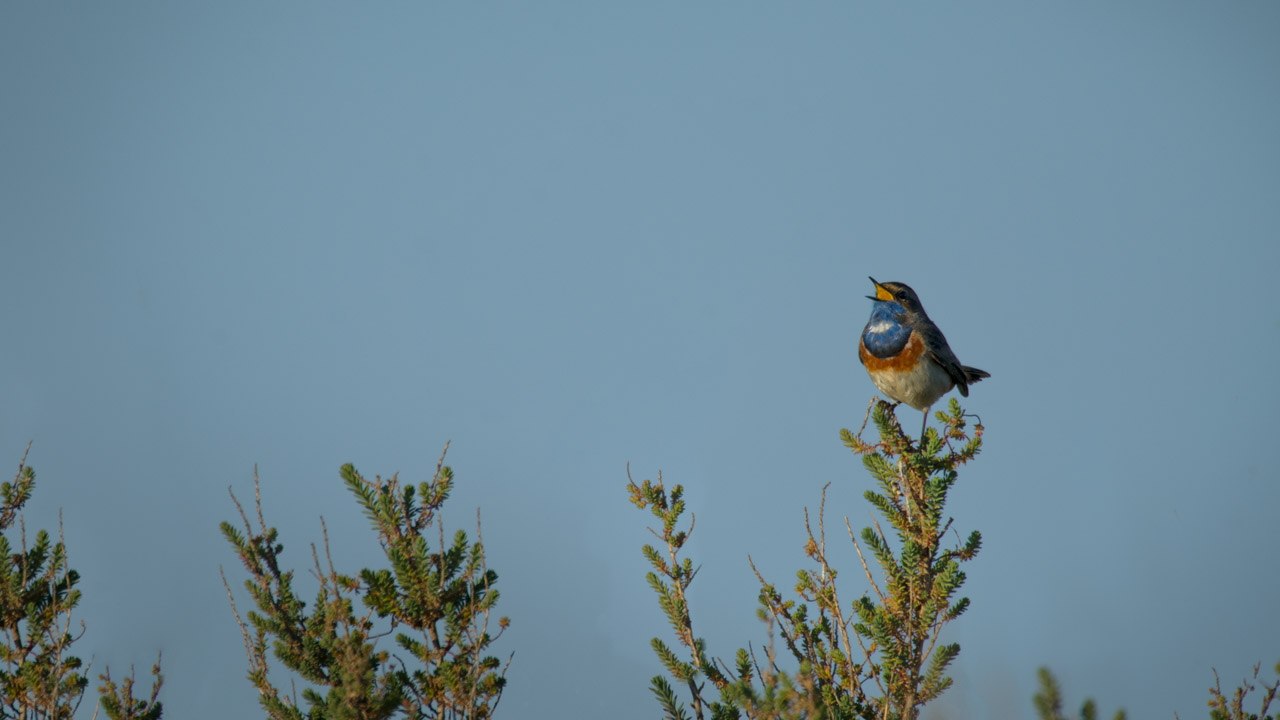
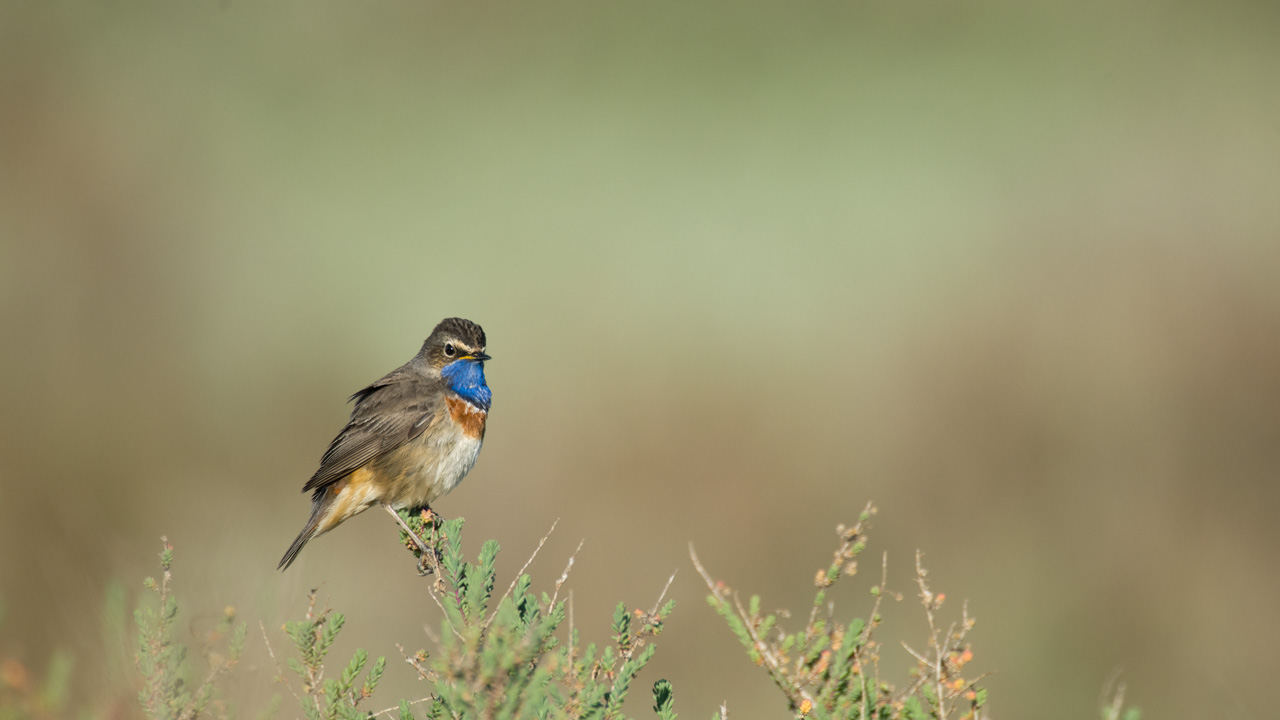
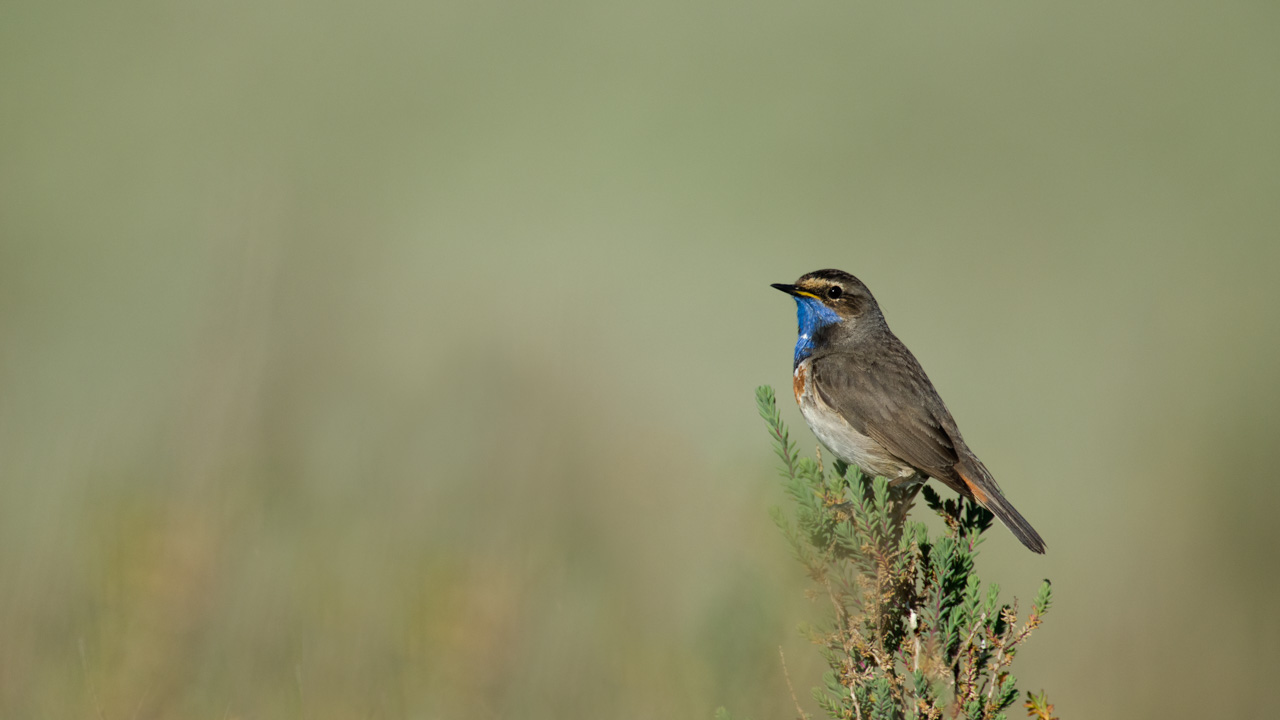
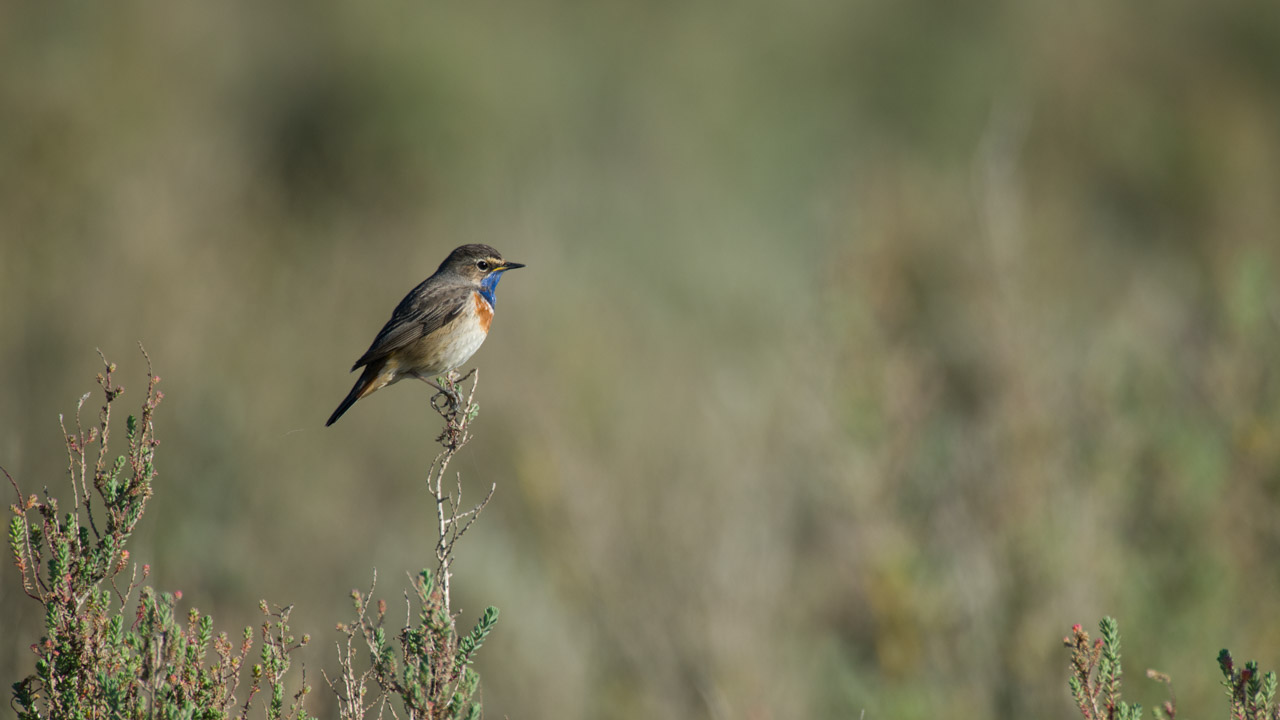
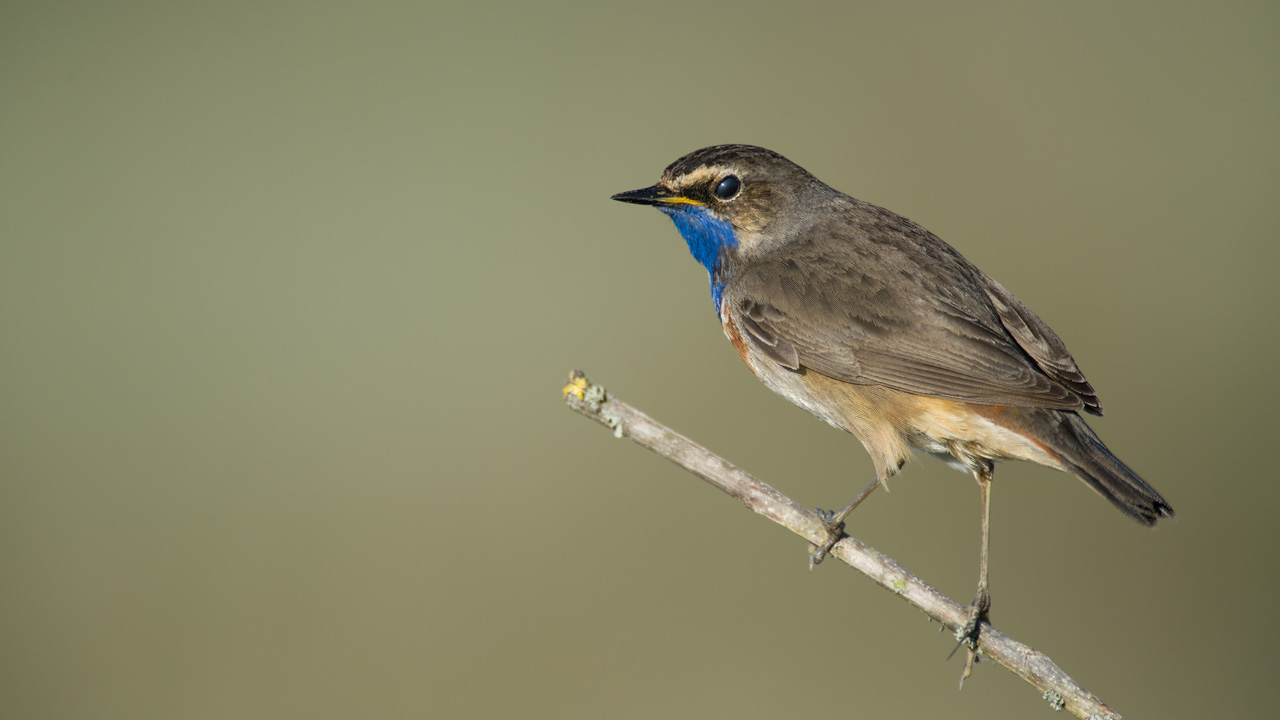
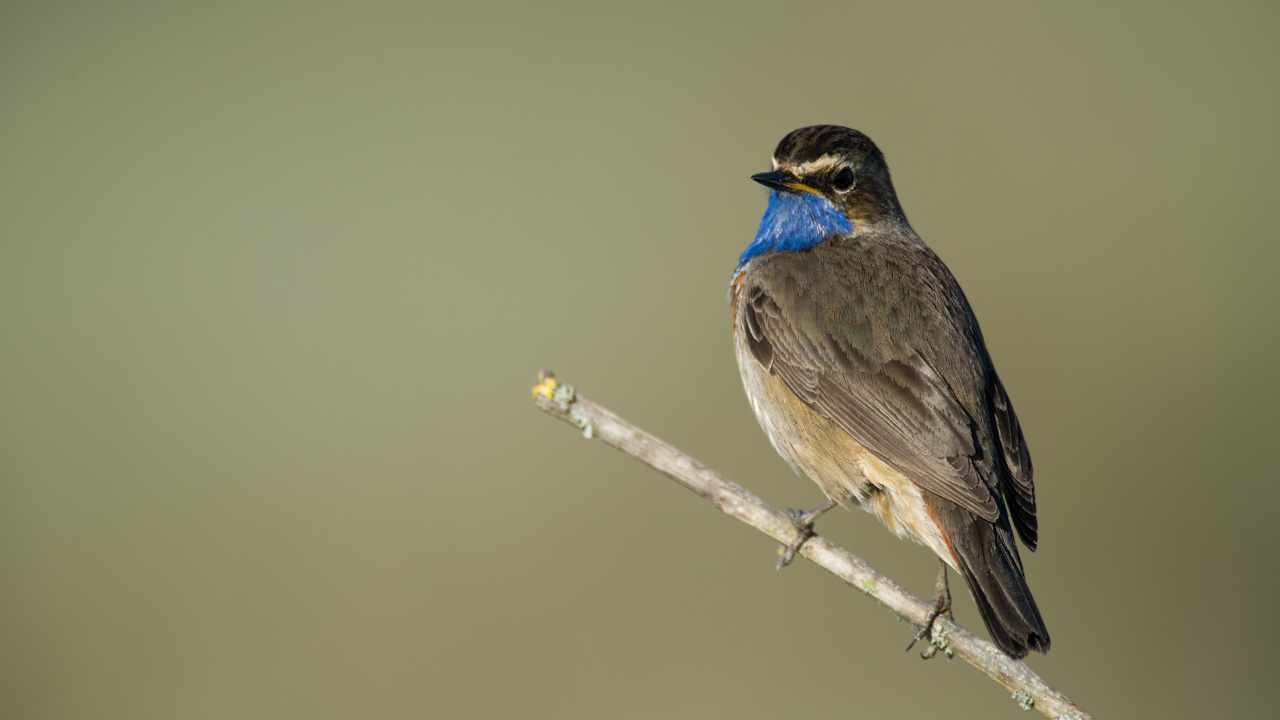
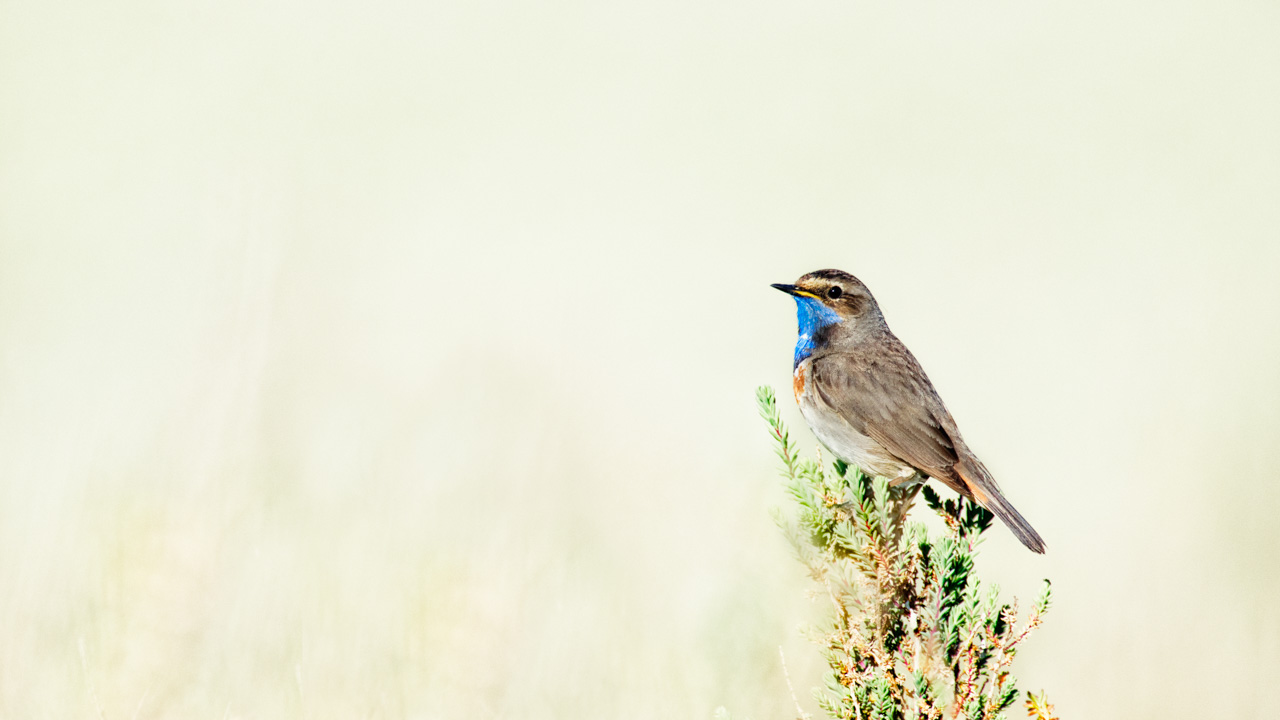
A bluethroat bird singing in a wetland in Charente-Maritime in France.

table of Contents

  • The Story Behind This Article
  • A Migratory Passerine Dwelling in the Wetlands
  • The Bluethroat Is a Protected Species in France
  • Why: Photographing the Bluethroat
  • How to Photograph the Bluethroat
  • The Illustrative Approach to Photographing the Bluethroat
  • The Artistic Approach to Photographing the Bluethroat
  • Finally

The Story Behind This Article

My passion for the bluethroat dates back to 2012. At that time, I had become interested in the Aquatic Warbler, another endangered migratory passerine leaving the wetlands.

My project was commissioned by the General Council of Charente-Maritime in France to showcase the greatest number of animal wonders in the natural areas of the region. My photographs had to be illustrative. They had to show the birds living in their habitat.

My excursions in the reedbeds of the Charente-Maritime estuary allowed me to observe several bluethroats. I was fascinated again and again with their melodious song and lively behavior.

When my project ended, the mating season was over. The males had regained their normal colors. I did not have the time to complete another art project. However, I promised myself that I would complete a real art project to illuminate this wild bird in a different light.

Several years passed before I could return to the wetlands of the Charente-Maritime to create different pictures according to an authentically artistic approach.

In the rest of this article, I will explain my approach. However, I thought it would be interesting to show you the different photographs from both the illustrative approach and the artistic approach.

A Migratory Passerine Dwelling in the Wetlands

The bluethroat is a passerine. A passerine is a small, short-necked, often singing, and nesting bird. Passerines are part of a large order of birds. Bluethroats are 4 to 5 inches long (13 to 14 centimeters long) and weigh 0.5 to 0.9 once (14 to 23 grams).

The passerine is also a migratory bird. Bluethroats travel from their winter home area to their breeding home round trip each year. In winter, it migrates to Spain, in the savanna of Africa. During the breeding season, it broods in the wetlands of northern Europe.

The bluethroat is a wetland bird. It lives mainly on the edges of a marsh or pond.

These pictures of bluethroats were taken in Charente-Maritime in the reedbeds and wetlands of the coast of the Gironde estuary and near the Seudre river.

For a photographer, this habitat can be a problem because mosquitoes are very numerous in humid areas. Personally, I use a mosquito net to protect my face.

The Bluethroat Is a Protected Species in France

In France, the bluethroat species has been completely protected since 1981. It is forbidden to capture it, remove it or disturb it intentionally or to alter its environment.

When you photograph it, you must be careful. The females build their nest at ground level in wet areas. I advise you to locate this place with a pair of binoculars. Do not venture into the area where the birds are present.

To take your pictures, stay on the periphery. As I will explain in a next paragraph, you will need a long focal length.

Why: Photographing the Bluethroat

For a wildlife photographer, the bluethroat is an aesthetic bird. The male has a large blue bib with a hint of white or red depending on the subspecies. He is the principal subject of the photographers. The female also has a plastron, but it is white-greyish, without a reflective, mirror effect. It is much less interesting because it does not sing. She also lacks the colors of her partner.

While wandering in the wetlands, you have probably seen bluethroats without paying attention. Usually, the bluethroat is a passerine bird that goes unnoticed. But the male has a rather extraordinary behavior.

It always arrives a few days earlier on the breeding grounds. He then takes possession of a territory which can reach several hundreds of square meters. It will strongly defend its territory against its competitors. It is during this period that it will perch on the high branches of small shrubs to sing. These melodious songs can last all day. Sometimes, they are also accompanied by a nuptial parade to charm the females.

The song of the male bluethroat is varied with a repertoire of sounds that are very pleasant to listen to. Metallic sounds flow one after another, followed by repeated musical phrases. He often interposes in his vocalization’s imitations of songs of other birds.

It is when he sings that the male is the most beautiful. It is at this moment that you will capture the best photos. When the female has laid her eggs in a nest that is close to the ground, the singing stops. When the chicks are born, the two adults will take care of the clutch. The parents fly constantly in search of insects, spiders, larvae, or berries, as the chicks are very hungry.

If you missed the first clutch in late April or early May, do not worry. A second brood will take place in late May or early June. The singing will then resume. You will again have great opportunities to create beautiful pictures.

How to Photograph the Bluethroat

To photograph bluethroats, you need to ask nearby inhabitants, as they will be more aware of where the nesting area might be located.

Personally, I have always photographed this species in Charente-Maritime in the wetland of Moëze, in Nieulle sur Seudre or in Mornac sur Seudre. You will find on the internet precise information on its migration corridor and nesting areas.

In Charente-Maritime, the first bluethroats arrive in mid-March. The songs take place until the beginning of May, when the first brooding arrives.

Many photographers say that the bluethroat is easy to photograph. Indeed, its characteristic song is easily spotted. Moreover, a bird always circulates in the same general area.

Personally, I think he is difficult to photograph. Even if he is always high up when he sings, it is still difficult to take a good picture. Indeed, the scene must be chosen with care: the background must be clear or homogeneous. The branches where the bluethroat will land must not be broken or damaged.

The main difficulty in photographing the bluethroat is the choice of its environment.

When you photograph birds, you must try to achieve Bokeh. This technique consists in blurring the maximum of the scene to keep only the subject in focus, thus highlighting it. But a beautiful blur of the lens must be accompanied by a beautiful gradation of tones. If you are lucky enough to have a blurred plain green background or a yellow background made up of a broom, you should take advantage of it.

The other difficulty is the position in relation to the sun. Animal photography is based on a great principle: having the light shine in the subject's eye. The bluethroat is no exception to the rule. To get a good picture, the light in one of the bird's eyes must be visible. So you need to find a good position to have the sun on your back or on your side.

The choice of the environment will emphasize the subject and the choice of the light will capture the brightness in the bird’s eye. These are the two main difficulties which you will face to make a good photograph.

Another trick I use is to use the morning time to my full advantage. On the one hand the light is often better in the morning, providing better texture to the plumage. It is also at this time of the day that the contrasts are the best. Finally, I also noticed that the activity of passerines was the most intense. They are always looking for food after a night spent hidden from predators.

Concerning the focal lengths to use, you must have a long focal length. A minimum of 500mm is required. Personally, I always add a focal length multiplier: either 1.4 or better 1.7. This allows me to have focal lengths equivalent to 700 or 850 mm.

To take the best pictures of bluethroats, I advise you to use a fixed blind. First of all, you should scout with binoculars to find out where the male's territory is. Even if he occupies an area of 100 to 200 square meters, the male sings almost always in the same place. You will have to be patient.

I recommend using a net to break away from your human form while waiting. Although bluethroats are not hunted, they are very cautious. If you are upright and visible to them, they will flee from you. They will not approach.

Personally, I use a tripod and a green colored net under which I hide. As for the deer, I also hide my face with a hood and my hands with khaki gloves. The wild animals identify the human beings with their three white spots. The wait can last an hour sometimes. The bird must become used to the presence of a new form in its immediate environment. Once it gets used to your presence and tolerates you, it will return to its normal routine.

But that is not all. In the next part of the article, I propose two ways to photograph the bluethroat.

The Illustrative Approach to Photographing the Bluethroat

The first approach to photographing bluethroats is the illustrative approach. This is the classic photo which is characterized for the following points:

  • The mirror throat must be perfectly clear. Take good care of the eyes and the shine in the eye.
  • The overall contrast of the photo must be managed. The goal is to highlight the bird. The background and the foreground must be chosen with complementary colors.
  • The exposure of the photo must be correct. You should not have any overexposed or underexposed areas.
  • The colors must be harmonious.

If possible, I recommend invoking a creative touch such as a moment in which a behavior or a song is captured.

The purpose of an illustrative photo is to show the bird in its habitat and to highlight all of its morphological characteristics.

Here are some illustrative pictures of bluethroats.
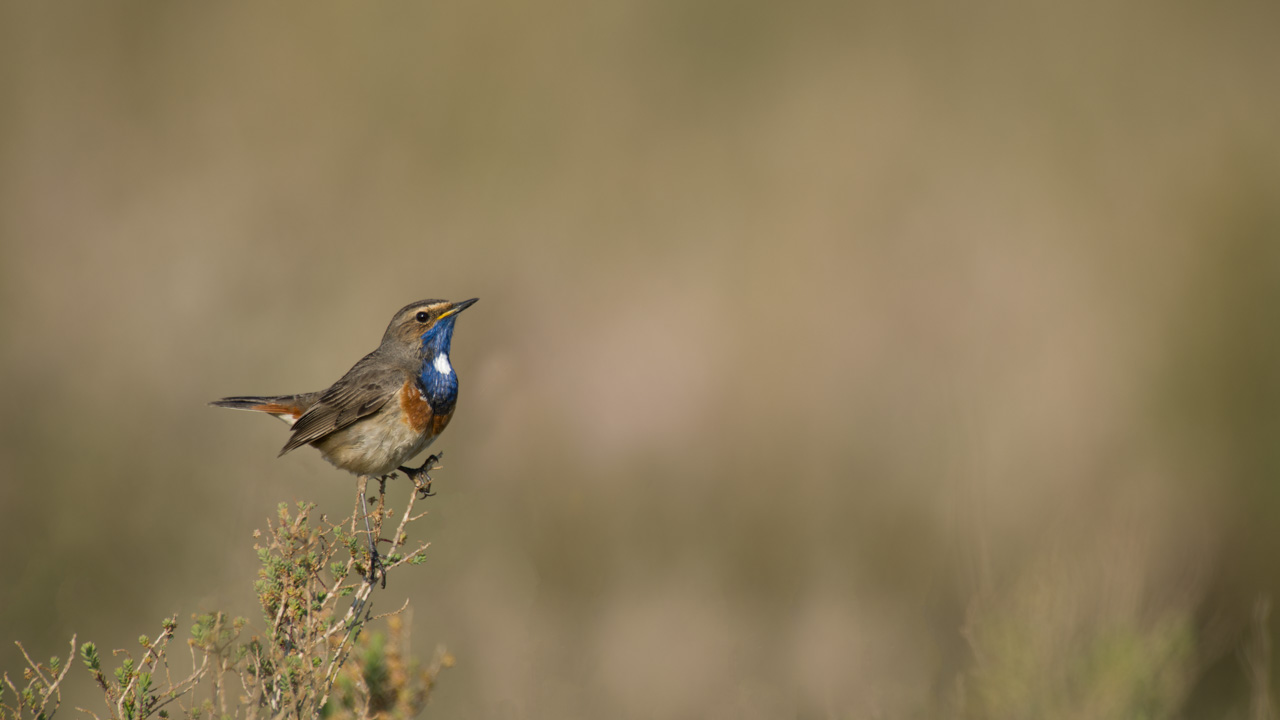
A bluethroat bird in a wetland in Charente-Maritime on the west coast of France.

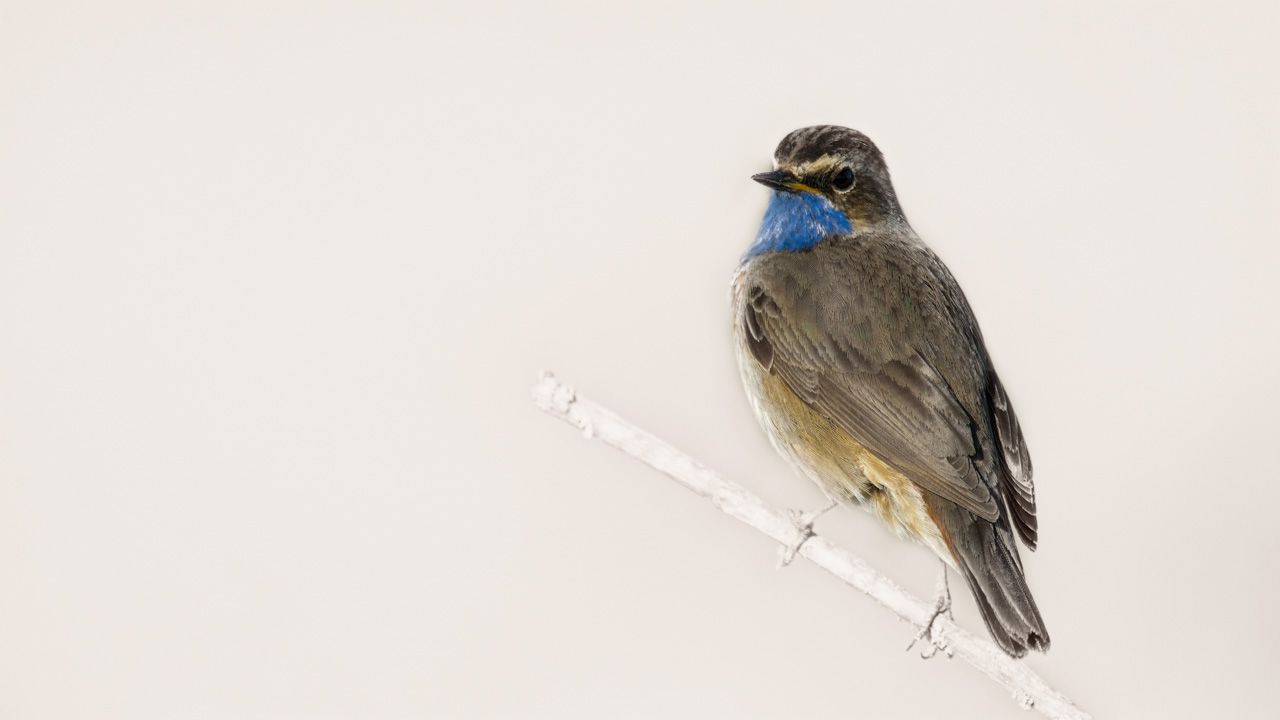
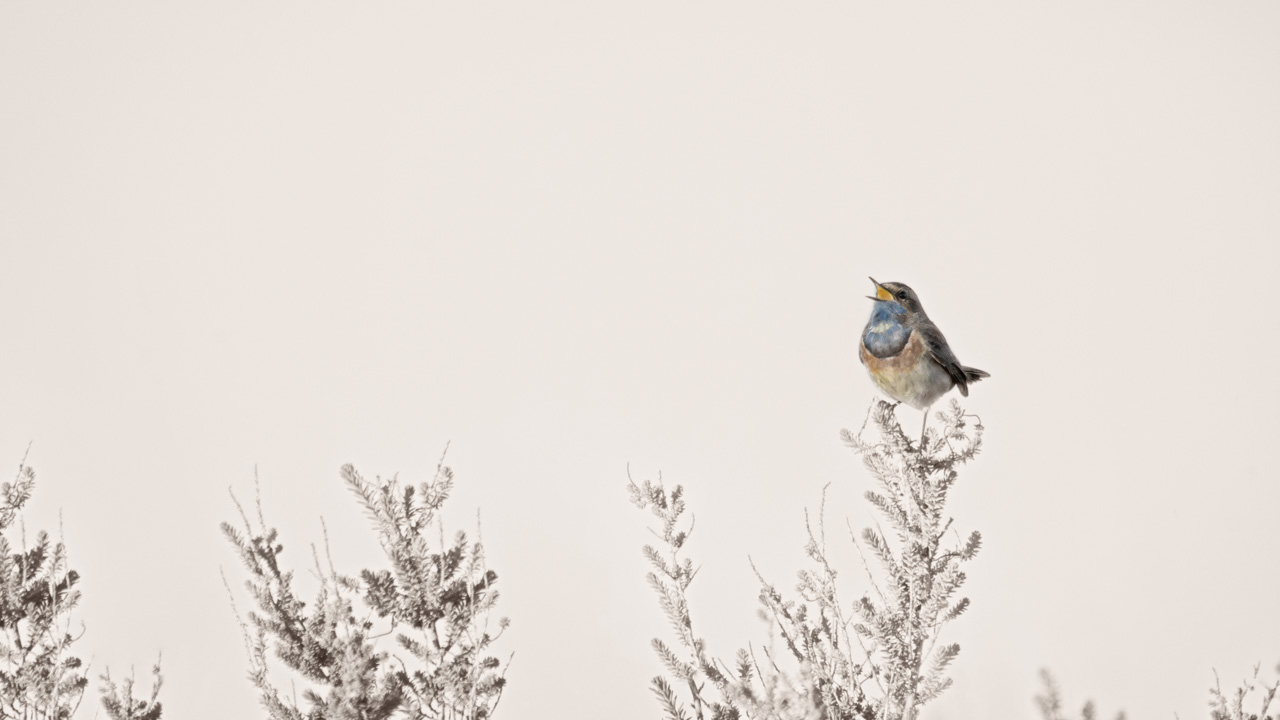
The Artistic Approach to Photographing the Bluethroat

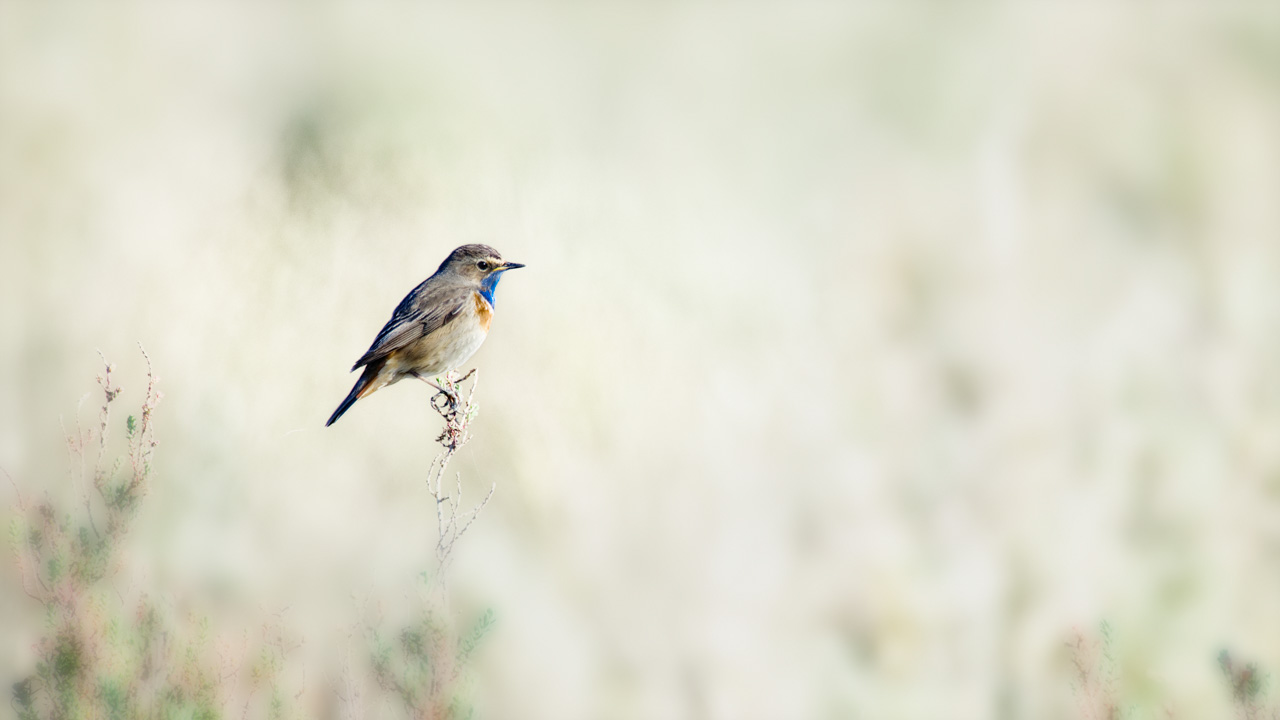
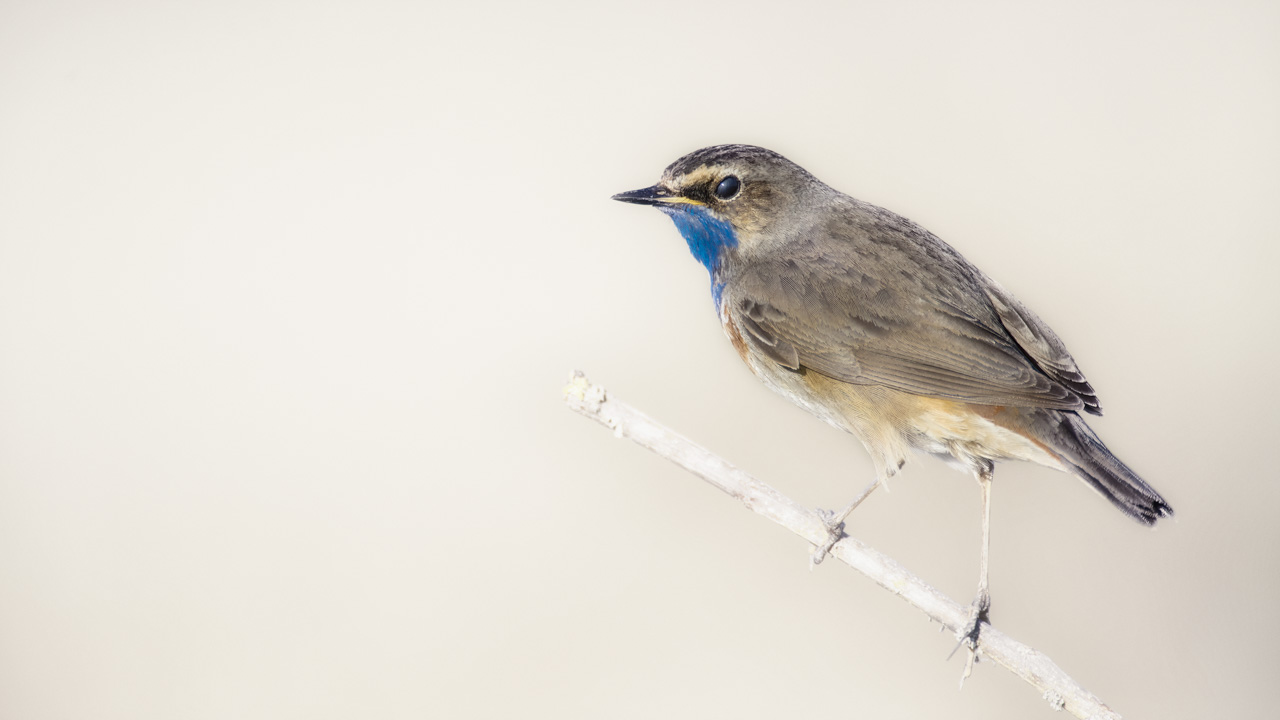
The second approach I propose is artistic. It allows you to show states of mind, emotions, and to transmit messages.

Although the birds remain identifiable, I do not focus on their morphological characteristics as much.

The artistic approach is above all an interpretation. These photos are the result of my imagination.

I chose this specific color because blue is my favorite.

When I started this artistic wildlife photography project, I had set the following conditions:

  • I wanted to evoke the lightness of birds.
  • I wanted to exemplify freedom.
  • I believed that quietness should be at the center of the ambiences.
  • My photos had to be ethereal. The bluethroats are light, fleeting, impalpable, airy.
  • I only wanted one bird per picture because I wanted to evoke a sense of longing and loneliness.
  • I wanted photos that invite the viewer to dream and to escape.

To meet these criteria, I spent a lot of time looking for the best sets. For me, it is an essential and preponderant element.

These photos were taken during 8 photographic sessions in the field. I took about 350 pictures. There are only 7 left that I present to you.
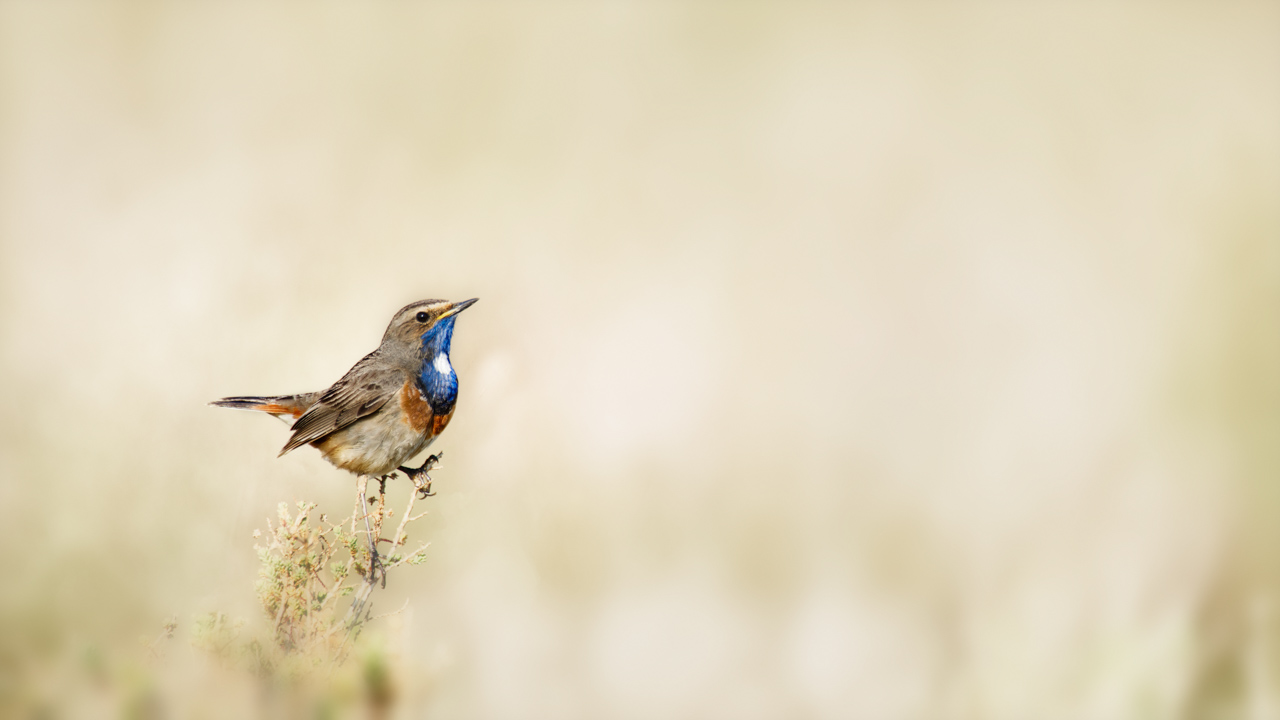
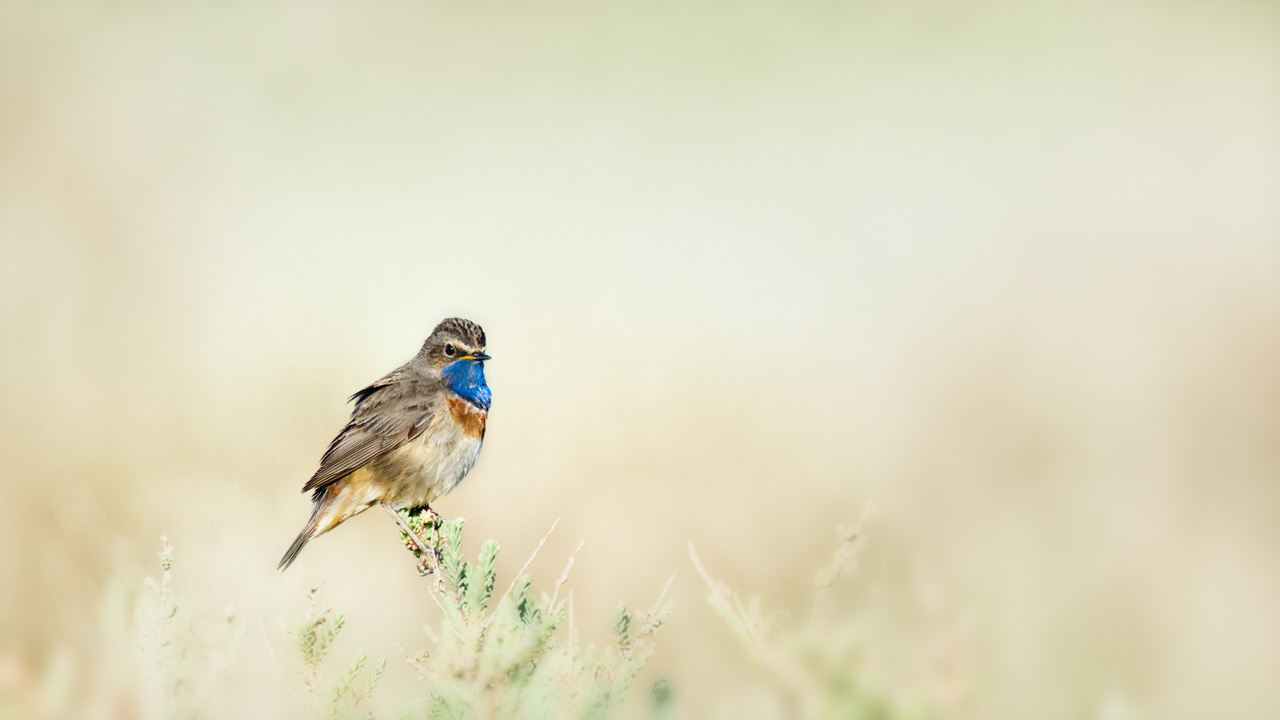
A bluethroat bird photographed with an artistic way in a wetland in Charente-Maritime on the west coast of France.

Finally

I hope that this article will help you to get to know the Bluethroat better. It is a migratory passerine of the wetlands that offers extraordinary photographic possibilities.

You will enjoy studying its behavior and habits. You will not be disappointed with your pictures. I recommend that you to prepare your project well and to be very patient. The animal world is totally worth it.
Click Here To See Wildlife Fine Art Print Collections.

Using Low Key in Wildlife Photography

A low-key black and white photo of a swanling in a pond in Dombes. Photo taken from a floating blind.
A low key black and white photo of a swanling in a pond in Dombes. Photo taken from a floating blind.

Why and How: Photographing Wildlife in Low Key

In the previous article, I shared with you some techniques and ideas to make your landscape photos low key.

In this article, I approach another theme: wildlife photography.

Wild animals are perfect subjects for low key photography. The low key technique allows you to highlight feathers and coats. Remember, as I explained in the first part of this article, low key technique is the domain of textures, shapes, and details.

8 Techniques for Creating Minimalist Photos.

The Story Behind This Article

Wildlife photography is a real passion for me. I started to photograph wild animals in France. The weather conditions are not always excellent. It is not uncommon that the rain begins to fall during my photo sessions or that the sky is covered with clouds.

In addition, I have a passion for large mammals. Being prey, they tend to hide in the woods and forests, where the light conditions are not always ideal.

For a long time, I took pictures of deer in the undergrowth and forests without succeeding in exploiting my images. I accumulated a lot of pictures, until the day I understood how to develop them using the low key technique.

Low lights and shadows have become allies for me, while for others, they are synonymous with dull photos that lack impact.

Today, even if I like to shoot high key photos because they allow me to use the technique of minimalism, I admit that I take more and more pleasure in wielding low key photography.

In the rest of this article, I will explain why that is. I hope to inspire you to do the same.

Why: Photographing Wildlife in Low Key

One of the reasons why you may want to take wildlife photos is to show wild animals in their natural environment. In this case, your photos are descriptive or illustrative. You may be filling the frame of a photo report for a magazine article or for a zoo advertisement.

If the reason that pushes you to photograph wild animals is rather artistic, it is because you want to share your emotions and your feelings through the transmission of the photographic language. In this case, you are in the register of the photographic interpretation. You want to impart a deeper meaning in your photos.

In this second case, the low key technique will suit you perfectly.

The low key photo is very symbolic. The wild animal world is often mysterious to most people. Ask around how many people have actually seen a deer, a bear or even a fox. Everyone can describe these animals to you. But most of these descriptions are based on images and not on reality. For most people, the lives of animals are mysterious.

Using the low key photo enhances the mystery and wonder of the photo.

Low key photography also allows you to highlight the beauty and grace of the animals you photograph. Indeed, as the low key relies on shadows, I recommend you to strengthen the shadows either at the shooting or at the time of development. For example, you will use the spot exposure technique as I will describe in the next paragraph. With a retouching software, you will darken the foliage or the environment of the photographed animal. This will focus the viewer's attention on the animal.

Low key wildlife photography can be like an “eraser” for your image. You can increase shadows in those areas that are less interesting to focus on your subject more. You will emphasize the animals by using only one source of light, like a performer illuminated in a spotlight before a dark stage.

How Creating Wildlife Photos in High Key and Black and White.

The Right Scenes for Low Key Wildlife Photography

Not all scenes are suitable for low key wildlife photography. For example, snow scenes are more suitable for high key, as are open scenes like meadows or sky.

Remember that the low key consists in mixing the clear parts and the parts without real gradient. It is also ideal to choose a single light source to highlight the animal. In this case, the light falls on the coat or feathers. This is why you must learn to master and control the light. Keep in mind that the blacks must be deep, the tones dark, and the shadows should be present.

For example, undergrowth or forests are great scenes for low key wildlife photography. Personally, when I photograph deer in a meadow, I like to choose trees in the background.

Likewise, when I shoot from a floating blind, I know that a nice tall green reedbed will give me excellent backgrounds to showcase the birds. Green is a color that is well suited to low key for both black and white or color.

But be careful. Choosing the right setting is not enough to create a good low key wildlife photo. You have to give it a meaning or convey emotion for it to captivate your audience.

An Easy Technique for the Low Key in Wildlife Photography: Spot Mode

The low key photo technique is a style that you can easily create or enhance with software on your computer. In the field using the spot mode of your camera will allow you to achieve an interesting result.

On your camera, you have several exposure modes.

On your camera, you have several exposure modes.

  • The first mode is to calculate the exposure on the whole scene. With some brands, this mode is called "evaluative". It may also be called "matrix".
  • The second mode consists in calculating the exposure by favoring the center of the photo according to a percentage that you will set. This is the central weighted mode.
  • The third mode uses only the center of the picture or a small area defined around the focus area. This is the spot mode.

When photographing an animal with a light tone or when you want to emphasize the details of feathers or fur, perform the light metering in spot mode. This will ensure that the exposure is calculated on the animal and not on its environment.

If you are photographing an egret, for example, the white plumage should not be overexposed. If the rest of the scene is in the dark or medium tones, it will appear very dark. Your egret will be highlighted. You will naturally create a great contrast, which will inevitably attract your viewer's eyes to the animal.

Personally, this is a technique I use a lot. Even when I photograph a large animal like a deer, I do not hesitate to use the spot mode. I am sure to receive the best rendering of the coat, with enhanced textures and details.

How Photographing the Expression of a Wild Animal.

Analysis of a Low Key Animal Picture

To illustrate the low key technique in wildlife photography, I have chosen a photo of a red deer stag. This picture was taken in France.

A low-key black and white photo of a red deer stag in France. Photo taken from a blind.
A low key black and white photo of a red deer stag in France. Photo taken from a blind.

I have a real passion for this animal species. I find deer to be majestic, graceful, and powerful. These are the morphological characteristics that I always try to illuminate when I photograph them.

But above all, I like their looks. They are curious and attentive animals. They are very fearful because they are hunted. The best way to photograph them is to use the stalking technique or the approach technique.

For this picture I was in a blind near a large oak tree. I have a 500mm lens with a full frame sensor. I am about 230 feet (70 meters) away from the animal, in an area that is covered with brambles.

I chose this scene because the background is made up of tall trees. I wanted a closed scene where I could solely showcase a deer.

Do not think that this picture was taken in a few minutes. It took me several mornings of waiting for the deer to borrow a stream that I had spotted. It circulates between the brambles.

When the deer arrived, I started to trigger my camera. Since I am in a blind, I know that even the slightest noise is amplified. Deer have very acute hearing. When they hear an unusual noise, even a very slight one, they point their heads in the right direction. Their ears are real noise concentrators.

He looks at me carefully because the front lens of my objective is important. It reflects the light, thus creating flashes that a deer will immediately spot. Stalking is not such an easy technique. He stood there watching me for a few seconds. I had time to take several pictures.

I selected this picture because the dewlap is beautifully developed. This is the fur around the neck. It is the period of the slab. The antlers are dry. The muscles are prominent. The morning light rose from the right side of the picture little by little.

All the conditions were perfect to make a low key photo.

The light metering of my camera is set in spot mode. The focus is centered on the eyes. The calculation of the light is made on the coat. The tone of the scene is average. The differences between the different parts of the photo are not obvious at the time.

By using the spot mode, I am sure that the textures and details of the coat will be perfect.

It is during the phase of developing with my computer that I added the vignetting. I chose black and white because it is a technique that is well suited to my mode of expression.

The rest of the retouching consisted in using the dodge and burn tools to increase the light in some areas and to decrease it in others.

My goal was to show the animal beauty in all its splendor. The pride and grace of this red deer stag touched me, and I hope that it impacts you as well.

Finally

I hope that this article dedicated to low key wildlife photography has given you the desire to practice this technique.

Remember that this is only a technique. The important thing is what you wish to say with your photos. Low key should simply serve to express yourself and your emotions, not vice versa.

Be humble, patient, constant, persevering, and persistent because the road to excellence is long.

  1. Low Key Landscape Photography
  2. Photographing in Low Key Is Using a Photographic Language
  3. Why and How: Photographing the Dragon’s Tongue of Black Canyon
  4. Low Key Photography: A Creative Photographic Technique to Make Your Photos Unique

Page 31 of 201

  • 26
  • 27
  • 28
  • 29
  • 30
  • 31
  • 32
  • 33
  • 34
  • 35
  1. You are here:  
  2. Home
  3. Blog Photographic Approach

Share on Social Media

Post
Share
Share
E-mail
WhatsApp
Text

Join Me on Social Networks

Join Me on Facebook  Join Me on Instagram  Join Me on LinkedIn

Claim your free guide to make your photo impactful and meaningful

Claim Your Free Guide '50 Pages of Tips to Give Impact and Meaning to Your Photos'.

4 + 8 =

Click Here To Discover All My Chronicles About the Photographic Approach.

Treat Yourself to a Fine Art Print That Matches your Personality

Example of a vacation home interior with a black and white fine photo art displayed on the wall.

Fine Art Print Collections in Black and White

Fine Art Print Collections in Black and White Black and white photography is a suitable technique for many nature scenes. It requires a particular frame of mind. A black and white photograph should be prepared and planned from the framing to the…
11991
Fine Art Print Collections in Black and White
An abstract art photo displayed in a contemporary living room decor.

Fine Art Print Collections in Color

Collections of Fine Art Prints in Color Color photographs allow digressions and take the audience to the message by secondary ways. The world around us, especially nature, is colorful. A color image can show the way our surroundings really are. Of course, it…
10440
Fine Art Print Collections in Color
Example of a home interior with fine art prints in my style back to black displayed on the wall. These photos are a part of my collection 'Wild beauties of Kenya'.

Fine Art Print Collections in Back to Black

Fine Art Print Collections in Back to Black I want to share my fine art prints of nature in a personal style that I call "back to black." "Back to Black" was developed to embody a sharp and clean style for artistic photos that can be hung in your living room,…
9980
Fine Art Print Collections in Back to Black
A waiting room with a photo in the style Fusion displayed on the wall. Grey Heron in Fusion.

Fine Art Print Collections with the Fusion Style

Fine Art Print Collections with the Fusion Style I would like to share a very creative and modern photography style to represent Nature in a very different way. I call it "Fusion." I created the style to offer dynamic photos, allowing you to start a good day…
7908
Fine Art Print Collections with the Fusion Style
A living room with a photo in the style 'Impression' exposed on the wall. Rising sun in impression

Fine Art Print Collections with the ‘Impression’ Style

Fine Art Print Collections with the ‘Impression’ Style The objective of this photographic style is to create the ephemeral blurs. That's why I named it 'Impression.' Photography, as an art form, is a powerful means of expressing reality from different…
5827
Fine Art Print Collections with the ‘Impression’ Style
Fine art prints from the style back to black displayed on a wall. Amar Guillen, photographer artist

New Collections of Fine Art Prints Dedicated to the Wonders of Nature

New and Updated Fine Art Print Collections Dedicated to the Wonders of Nature Fine art prints from the style back to black displayed on a wall.
11446
New Collections of Fine Art Prints Dedicated to the Wonders of Nature

Themes of the Blog Articles

Landscape of Arches National Park in Utah in black and white.

Blog Articles Dedicated to Artist Statement

Blog Articles Dedicated to Artist Statement
Dunes of death Valley in Black and White

Blog Articles Dedicated to Black and White Photography

Blog Articles Dedicated to Black and White Photography
Abstract photo or trees reflection on water

Blog Articles Dedicated to Photographic Mindset

Blog Articles Dedicated to Photographic Mindset
Abstract photo of ridles on water

Blog Articles Dedicated to Artistic Photography

Blog Articles Dedicated to Artistic Photography
Abstract photo of Yellowstone

Blog Articles Dedicated to Photographic Language

Blog Articles Dedicated to Photographic Language
Pronghorn in Yellowstone

Blog Articles Dedicated to Wildlife Photography

Blog Articles Dedicated to Wildlife Photography
Landscape of Bryce Canyon

Blog Articles Dedicated to Photographing United States

Blog Articles Dedicated to Photographing United States
Underwater waves in the Red Sea

Blog Articles Dedicated to Photographic Techniques

Blog Articles Dedicated to Photographic Techniques
Tree of Black Canyon in Black and White

Blog Articles Dedicated to Landscape Photography

Blog Articles Dedicated to Landscape Photography
Manta Ray in Maldives in Black and White

Blog Articles Dedicated to Underwater Photography

Blog Articles Dedicated to Underwater Photography
Red Deer stag during the rut of the deer

Blog Articles Dedicated to Photographic Judgement

Blog Articles Dedicated to Photographic Judgement
Great Crested Greb and his chick

Unclassified Blog Articles

Unclassified Blog Articles

You Might Be Interested By One of These Photographic Approach Articles

Photograph in black and white of the Grand Canyon from Arizona State in USA.

Why and How Mastering the Steps of Creating an Art Photograph

3603
Why and How Mastering the Steps of Creating an Art Photograph
An example of a narrative photo. Landscape of Island in the Sky in the Canyonlands in Utah in United States. Photo in black and white by Amar Guillen.

Why and How: Creating Impactful Narrative Photos

4118
Why and How: Creating Impactful Narrative Photos
Snowy landscape of Yellowstone during winter.

3 Steps for Giving Meaning to Your Photos

8750
3 Steps for Giving Meaning to Your Photos
Two lions in Kenya. Photographed in black and white. Photograph by Amar Guillen, photographer artist.

To Create Aesthetics Photos, Print your Images

4238
To Create Aesthetics Photos, Print your Images

Receive Free Tips On How to Give Impact and Meaning to Your Photos. Subscribe to Receive Regular Articles.

2 + 7 =

Contact Me By Email

10 + 9 =
This site is protected by reCAPTCHA and the Google Privacy Policy and Terms of Service apply.

About Amar Guillen, Creator of Fine Art Prints of Nature
As a photographer capturing the artistic essence for several decades, I have mastered the art of crafting an authentic experience for art enthusiasts and collectors of visual art.
When I observe my surroundings, be it friends, family, relationships, or professional contacts, I see souls in perpetual motion. Every moment of their existence is engulfed by daily hassles, work concerns, social media, online or televised information streams, and videos on the web.
Every minute, they strive to accomplish something, fearing losing ground and feeling marginalized in this frenzied society. Imprisoned by an oppressive schedule, the essential eludes them, drowned in the tumult of daily life. Is it really crucial to watch yet another cat video on the internet? Is it necessary to post twenty daily messages on social media?
Despite this, they remain constantly stressed and anxious about the challenges of the world, without being able to influence these monumental problems. It is at this moment that my artistic nature photographs come into play. Those who have had the privilege of hanging one of my works in their personal or professional space have expressed a radical transformation in their lives.
Every day, contemplating these works of art immerses them in tranquility, inner peace, and rediscovered serenity. They then understand that nature has the power to unravel tensions, to encourage reflection on the essential. Artistic photographs thus become open windows to the wonders of nature.
I have chosen to share the best of myself by helping others discover their identity, personality, style, all while reconnecting with nature. Take the time to explore my artistic photographs if you wish to reveal your true essence. Once hung in your space, your view of the world will be transformed.
Amar Guillen is a creator of fine art prints of nature.
I am Amar Guillen, creator of nature art photographs. I have a deep conviction that contemplating nature has the power to transform human beings. If everyone learned to know, respect, and preserve nature, our world would be transformed into a haven of peace where everyone would find their place.
Copyright © 2003 - 2026 Guillen Photo LLC - All rights reserved. Amar Guillen, professional photographer since 2003.
  • Blog
  • Calibration
  • Legal Information
  • Sitemap
  • Accessibility
  • Contact Me
  • Updates of the Website
I Want to Help You to Create Interesting Photos

How Can I Help You To Create More Interesting Photos?

Ask Me a Technical Question.
Subscribe to my Newsletter. The Inspiration Behind Guillen Photo.

Select your language

  • English (United Kingdom)
  • Français (France)
Claim your free guide to make your photo impactful and meaningful

Claim Your Free Guide '50 Pages of Tips to Give Impact and Meaning to Your Photos'.

7 + 7 =

Contact Me By Email

9 + 8 =

Office Address:
3512 Robin Road
Plano Texas 75075
USA

Office phone: (+1)214-769-6825