• The Art of ChoosingHome page
  • Fine Art Prints3 Editions
  • CollectionsAll Collections
  • AboutAmar Guillen
  • Customer Space & Contact
  • Select your language

    • English (United Kingdom)
    • Français (France)
  • All You Need to Select Your Fine Art Print
    • How to Choose a Fine Art Print - Q&A - FAQ
    • New Creations
    • Explore Some Interiors
    • Fine Art Print Blog
  • Browse by Edition
    • All Fine Art Prints
    • Unique Edition
    • Limited Edition
    • Open Edition
  • Browse by Style
    • Black and White
    • Color
    • Fusion
    • Impression
    • Back to Black
    • Landscapes in Black and White
    • Landscapes in Color
    • Animals in Black and White
    • Animals in Color
  • Browse by Theme
    • Landscape
    • Wildlife
    • Underwater
    • Abstract
    • Symbolic
    • Landscapes of the United States
    • Landscapes of France
    • Landscapes of Scotland
    • Seascapes
    • Relaxing
    • Energizing
    • Playful
  • Browse by Format
    • Rectangular
    • Square
    • Panoramic
  • Contact Me
    • Contact Me by Email or Phone
  • Collections
    • New Collections
    • All Collections
  • Browse by Theme
    • Landscapes
    • Wildlife
    • Underwater
    • Abstract
    • Symbolic
    • Landscapes of France
    • Landscapes of the United States
  • Browse by Style
    • Black and White
    • Color
    • Impression
    • Back to Black
    • Fusion
  • Contact Me
    • Contact Me by Email or Phone
  • Discover More About Me
    • Discover Who is Amar Guillen
    • Artistic and Photographic Statement
  • Galleries
    • Photo Galleries
    • Abstract Portfolio in Color
    • Black and White Landscape Photography Portfolio
    • Color Landscape Photography Portfolio
    • Black and White Wildlife Photography Portfolio
    • Color Wildlife Photography Portfolio
    • Underwater Photography Portfolio
  • Contact Me
    • Contact Me by Email or Phone
  • Your Customer Space
    • Create or Manage your Account
    • Your Download Space
    • Your Orders
  • Contact Me
    • Contact Me by Email or Phone

You are in that section: Home > Blog > Blog of the Photographic Creation Approach

4 Tips for Successful Moody Wildlife Photography in the Wetlands from a Floating Blind

Are you deeply interested in wildlife photography? Have you realized that even if you mastered the technique, you sometimes have difficulties in categorizing your photos: portrait, close-up, macro, action, behavioral, etc.? It is not always easy to find your way around this complex art.

In this article, I share with you my point of view and my techniques on one of the categories of wildlife photography in natural environment: moody photography. It is a technique that I particularly like because it is in relation with my photographic approach.

Since this is such a broad topic, I have narrowed the focus of my column to wetland techniques with a floating blind. You may think that this is a reductive approach. Do not worry, because I am going to cover the basics of wildlife photography as well.

Moody morning in a wetland: great egret walking in a pond in Dombes. Amar Guillen, Photographer.
Moody morning in a wetland: great egret walking in a pond in Dombes.

table of Contents

  • The Story Behind This Article
  • Definition of the Word "Moody"
  • Application to Wildlife Photography
  • Tip #1 for Creating a Good Wildlife Photo: Choose the Right Decor
  • Tip #2 for Creating a Good Moody Wildlife Photo: Choosing the Light
  • Tip #3 for Creating the Perfect Moody Wildlife Photo: Show the Animal’s Emotion
  • Tip #4 for Creating a Good Moody Wildlife Photo: Take the Time to Mentally Visualize the Scene
  • Moody Wildlife Photography in the Wetlands
  • An Essential Accessory: The Floating Blind
  • Some Pictures of Moody Wildlife Taken in Dombes, France

The Story Behind This Article

When I started wildlife photography, I followed the main photographic rules:

  • To frame my photos, I used the rule of thirds.
  • My compositions integrated a foreground and a background.
  • My negative spaces were used to show the habitat of my animal subjects.
  • I focused on the eye of the animal to have this area very sharp.
  • I strived to capture an unusual behavior or a particular attitude of the animal in my photo, which added a touch of creativity.

These essential rules are the basic foundations of wildlife photography. Today, they are not enough to create interesting pictures that will make you different. Other rules have emerged to create meaningful wildlife photos.

I kept these rules for a few years when I became a professional photographer.

My goal was to provide the best possible photos for stock photography agencies. These photos were then sold to be used in magazines or books.

When I decided to change my status to become a photo artist, everything changed. It became impossible for me to make pictures that were unique. It seemed like most photos I created could be found for a few dollars in a stock or could be easily replicated by other photographers in the field.

Thus, I opted for a field that has not been exploited by most photographers: moody wildlife photography. Two years later, I had the chance to practice photography using floating hides. It was a real shock and an incredible catalyst. I had at my disposal an accessory to create the photos of which I had only dreamed.

In the years that followed, I developed a particular technique that I call "wetland environmental wildlife photography". It can also be called "wetland moody wildlife photography". The difference between the two expressions is subtle. I will explain in the following paragraphs.

20 Tips to Help You to Find Inspiration in Nature Photography.

Definition of the Word "Moody"

By definition, a moody scene is the pervading tone or attitude of a place, situation, or atmosphere of a creative space in which the subject is placed.

Application to Wildlife Photography

By applying this definition to photography, it is possible to define the ambient photo as a set of characteristics defining the context in which a photographed subject is found.

If the subject photographed is an animal, you have the definition of the moody wildlife photography.

Moody photography is a way to incorporate the environment. That is why I like to call my pictures "environmental wildlife photography".

In the rest of the article, I will only use the general term of “moody” that is most used.

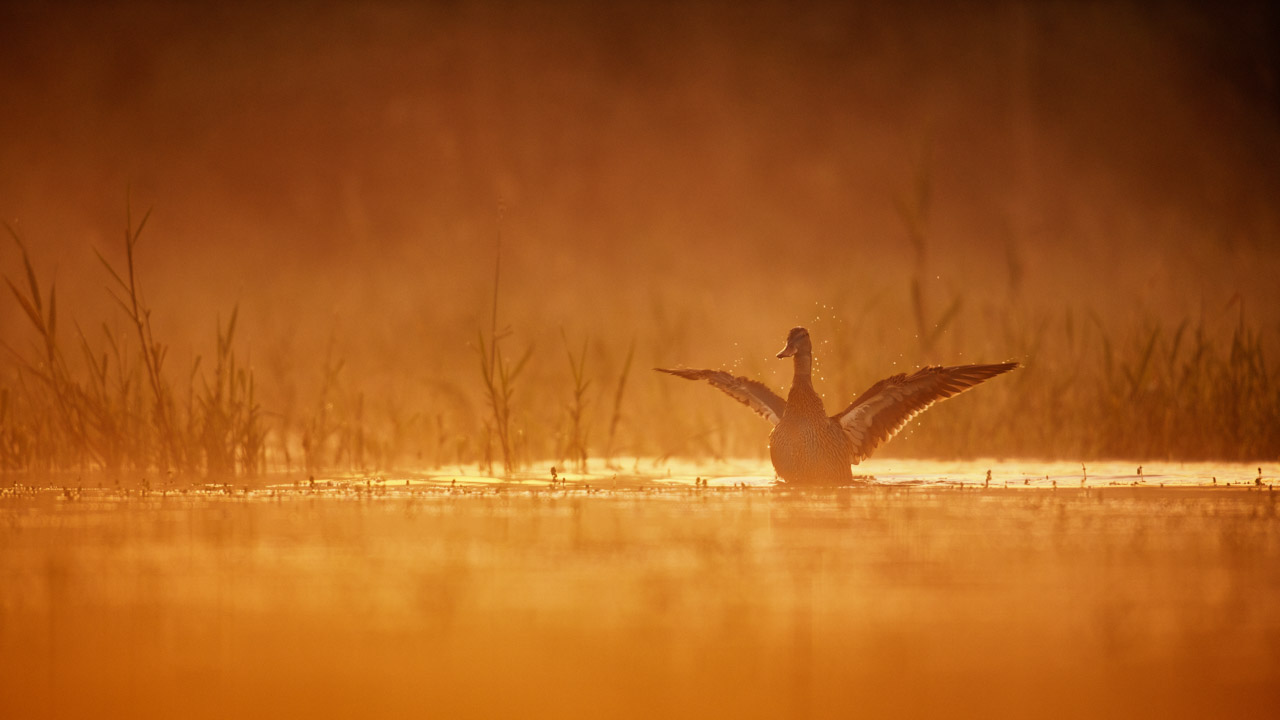
If you are referring to the definition of wildlife mood photography, you need to specify a set of characters. This means that the composition must be large. The animal being photographed must occupy a small area in the photo. It is not a portrait or a close-up. Personally, in a moody wildlife photo, my animals do not occupy more than 10% of the photo's surface. Like all rules, there are sometimes exceptions, but they are rare.

Personally, even if I am enthusiastic about photographing wild animals living in natural environments, they are often only a pretext in my photos. They are used as points of attachment for me. Indeed, my art photos allow me to express myself, to translate emotions or to transmit messages. For me, a photo is a form of self-expression. I do not photograph to show animals. This has already been done millions of times. Photography is for me a channel to reveal some little thing that is present inside of me and you, whether it be wonder, curiosity, loneliness, excitement, pride, etc.

How to Create Wildlife Photos in High Key and Black and White.

Tip #1 for Creating a Good Wildlife Photo: Choose the Right Decor

The mood of a scene is intricately linked to the decor in which the wild animal evolves.

I must remind you that the decor allows you to tell a story and to arouse emotions in the viewer. The decor in photography has an especially important symbolic dimension.

The choice of the decor in a photograph consists in questioning yourself about the symbolism that you want to give to the place.

Here are some questions to ask yourself when choosing your animal photography backgrounds:

  • Do you want to evoke dreams, calm, quietness, and serenity? Many people evoke nature as a place of meditation and introspection far from the material contingencies and bustling noises of urban areas.
  • Do you want to evoke nature as a hostile environment, in which danger is lurking? We often hear that the law in nature is to hunt or be hunted. This can be seen in the glint of a predator’s eye.
  • Do you want to evoke nature as a place full of poetry and softness? There are many ways to capture the rustic beauty of the wilderness. While nature can be harsh and intimidating, it can also be beautiful and fragile.
  • Etc. You may find that there are other questions circling your mind, and this is a good thing, for it means that inspiration is sparking, and you may be considering ideas for your next masterpiece?

Before approaching moody wildlife photography, I advise you to ask yourself questions and find answers to define the scenery you will be looking for in the field.

Never forget that a moody photo must take the viewer to a real scene and make him dream, but you must also make him discover your photographic universe. That is why you must provide elements related to the message you want to transmit.

For example, if you want to create a dreamy scene, use mist or fog.

Be careful with your decors. I recommend you not to put too many elements to not disturb the reading of the photo. Be careful with branches, trees, and stones that would quickly become disturbing elements.

Tip #2 for Creating a Good Moody Wildlife Photo: Choosing the Light

The second element that helps create the mood of a photo is the light.

You must choose the direction of the light. Either it comes from the front, and you will shroud your subject in a mysterious backlight, or it can radiate from the side. The play of shadows will allow you to have beautiful subjective texture.

The light allows you to translate your emotions such as joy, sadness, and melancholy.

Personally, I vary my lights a lot by using warm or cold lights depending on my mood and the messages I want to convey.

Mid-day lights are harsher than morning or late day lights. They have an advantage. You can shoot with extremely fast speeds such as 1/2000th second. You can then photograph action scenes like feeding or flying.

Each light has its advantages and disadvantages.

Why and How: Controlling Natural Light in Nature Photography.

Tip #3 for Creating the Perfect Moody Wildlife Photo: Show the Animal’s Emotion

Do not forget that the purpose of wildlife photography is to highlight wild animals.

Try to capture a particular attitude or behavior. Is the animal hunting or fishing? Are you watching a courtship? Is it snorting?

Remember that your audience often expects the exceptional, the unexpected. Try to surprise them. In our modern world, people are fed with videos or shocking pictures. People want to be curious. If you can, play the unexpected card.

Personally, even if I sometimes photograph them, I am not a huge fan of fight scenes or gory scenes. I am more attracted by elegant attitudes where the animals are proud. In the case of waterfowl, I pay a lot of attention to the head carriage or to the delicate movement of the legs.

Tip #4 for Creating a Good Moody Wildlife Photo: Take the Time to Mentally Visualize the Scene

Before firing your camera, take the time to visualize the scene you want to photograph. Think carefully about the photographic elements that you will integrate into your composition. They must all make sense and be organized together. For example, if you choose to include a tree in the frame, ask yourself what it will bring. If you choose to include reeds, ask yourself what their function will be.

Personally, when I compose a scene of moody wildlife, I use the technique of the hook point. As you will see in the pictures at the end of this article, I often include a small tuft of grass or a plant. The focal point is simply a way to catch the viewer's eye. It is important to pay attention to details rather than generalities. The small original detail that characterizes your photo will have a lot of impact with demanding viewers.

If you do not mentally see the mood scene, your audience will not either. If you can imagine the scene, the audience will interpret it with their own experience and imagination. But you will have given them enough concrete elements to project themselves into it.

Do not bore the viewers of your photographs with unnecessary elements. Put yourself in their shoes. Be simple and direct.

Moody Wildlife Photography in the Wetlands

The wetlands allow for exceptional moody photography because the temperature variations are significant during the same day. It is not uncommon to have beautiful mists in the morning to suggest dreams or mystery.

Even if birds are the main subjects of wetland scenes, mammals are not left out. I have photographed deer, doe, roe deer, wild boar, and muskrats. Everything is possible. It is only a question of perseverance and patience.

An Essential Accessory: The Floating Blind

To photograph wetland wildlife, the floating mount is certainly the best accessory. Indeed, it allows you to photograph the animals at eye level.

If you shoot from the shore, you will get plunging photos. The effect is much less interesting. Your photos will have less impact.

By photographing at eye level, you will avoid the plunging effect which attenuates the contrasts and makes the volumes disappear.

The floating blind will allow you to get up close and personal with birds that are often very fearful and will flee at the sight of a human being.

With a floating blind, you can safely approach and observe the animals. Once they are used to your presence, you can take your pictures.

Thanks to the use of a floating mount, you will be able to photograph nuptial parades, heron hunting, mating, feeding, fighting. Everything is possible if you know the habits of the animals and the environment.

Some Pictures of Moody Wildlife Taken in Dombes, France

The Dombes is certainly one of the best regions in the world for wildlife photography. Most of the ponds are private and perfectly managed by the owners. Fishing and hunting are old Dombes traditions. The owners of the ponds make it a point of honor to maintain them well.

The Dombes is a huge wetland located in the department of Ain in France. It is covered with woods and villages, but it is known for the more than one thousand ponds which welcome nearly 280 species of migratory, wintering, or summering birds.

The wonderful thing is that the backgrounds are absolutely fabulous. I think the reed beds are perfect and create a unique textured background to showcase the birds.

The variety of the biotopes of the ponds is extraordinary. Each pond has its own specificity. On ponds rich in plants, ducks and swans will offer opportunities. On ponds with mud flats, you will find migrating shorebirds that come to seek food.

The ponds are emptied every three years. This technique allows to regenerate the bottom. It also allows to have flowers growing right after a watering. The decorations are breathtakingly beautiful.

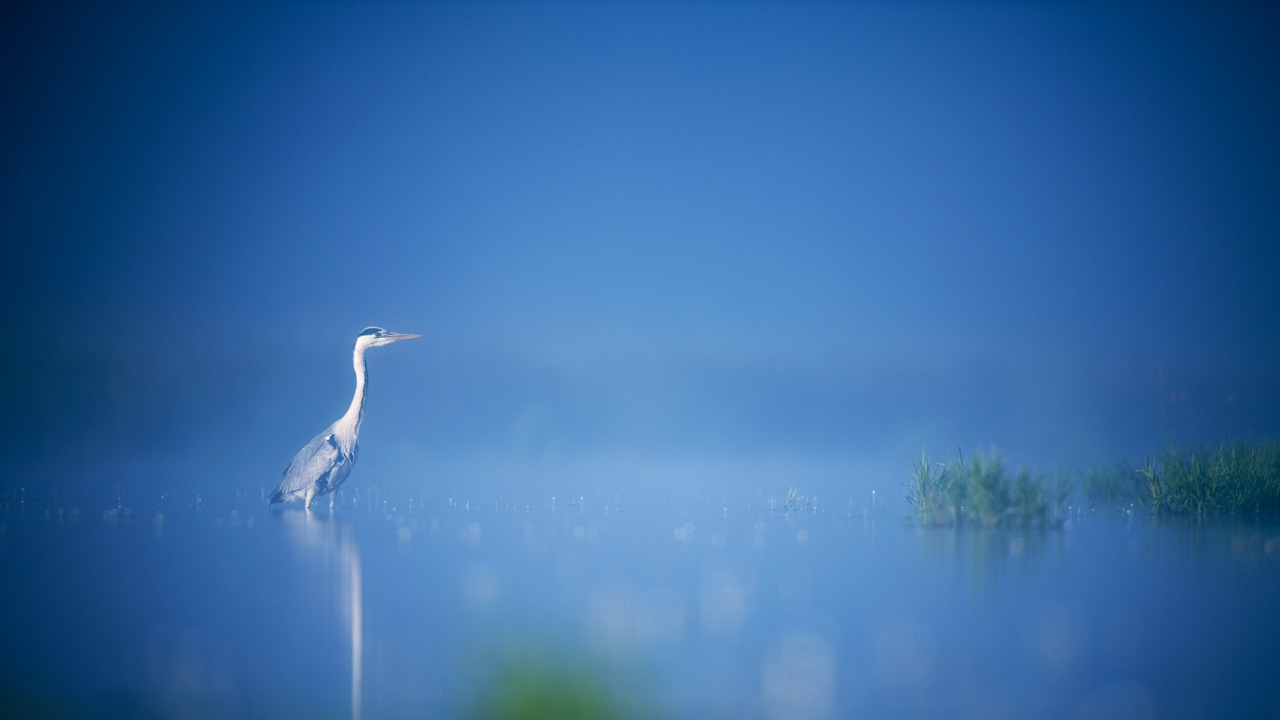
Grey heron in a pond in the mist in Dombes in France. Photo by Amar Guillen, photographer.
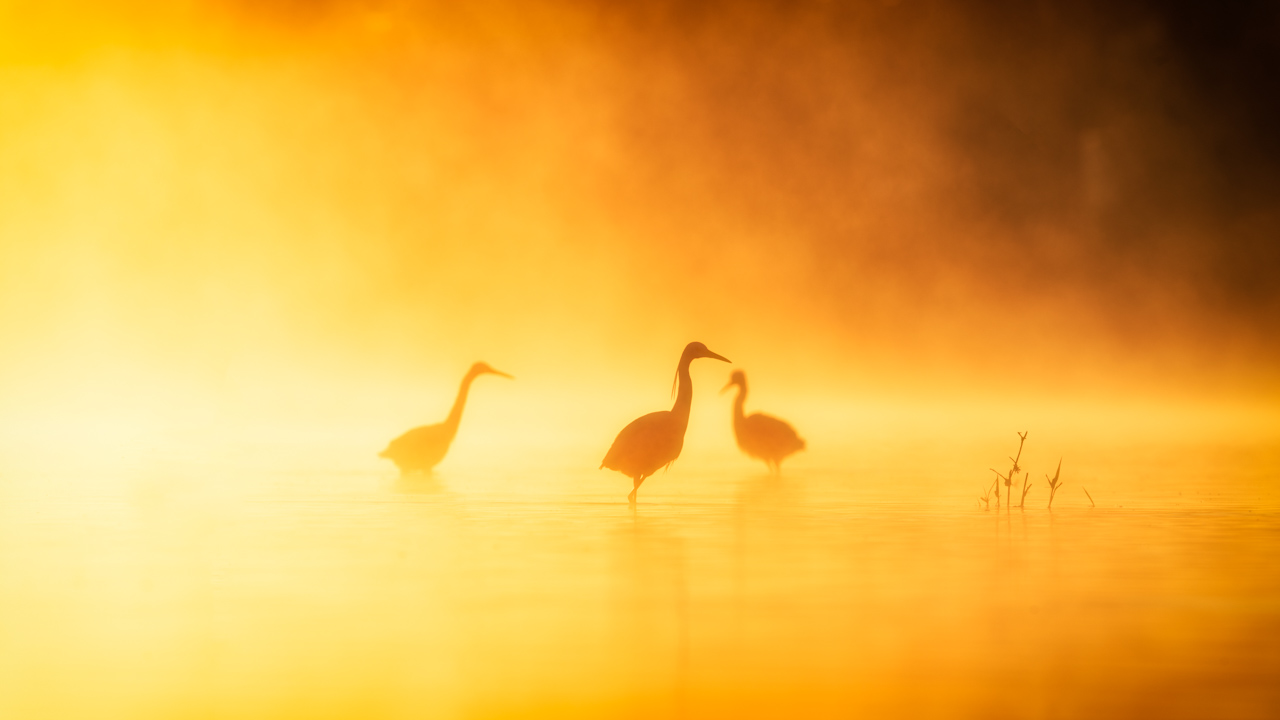
Great egret in a pond in the mist in Dombes in France. Photo by Amar Guillen, photographer.
Common pochard duck in a pond in the mist in Dombes in France. Photo by Amar Guillen, photographer.
Great crested grebe in a pond in the mist in Dombes in France. Photo by Amar Guillen, photographer.
Tufted duck in a pond in the mist in Dombes in France. Photo by Amar Guillen, photographer.
Mating ritual between two great crested grebes in a pond in the mist in Dombes in France. Photo by Amar Guillen, photographer.
Great egret in a pond in the mist in Dombes in France. Photo by Amar Guillen, photographer.
Purple heron in a pond in the mist in Dombes in France. Photo by Amar Guillen, photographer.
Tufted duck in a pond in the mist in Dombes in France. Photo by Amar Guillen, photographer.
Great crested grebe in a pond in the mist in Dombes in France. Photo by Amar Guillen, photographer.
Purple heron in a pond in the mist in Dombes in France. Photo by Amar Guillen, photographer.
Grey heron in a pond in the mist in Dombes in France. Photo by Amar Guillen, photographer.
Little egret in a pond in the mist in Dombes in France. Photo by Amar Guillen, photographer.
Purple heron in a pond in the mist in Dombes in France. Photo by Amar Guillen, photographer.
Little egret in a pond in Dombes in France. Photo by Amar Guillen, photographer.
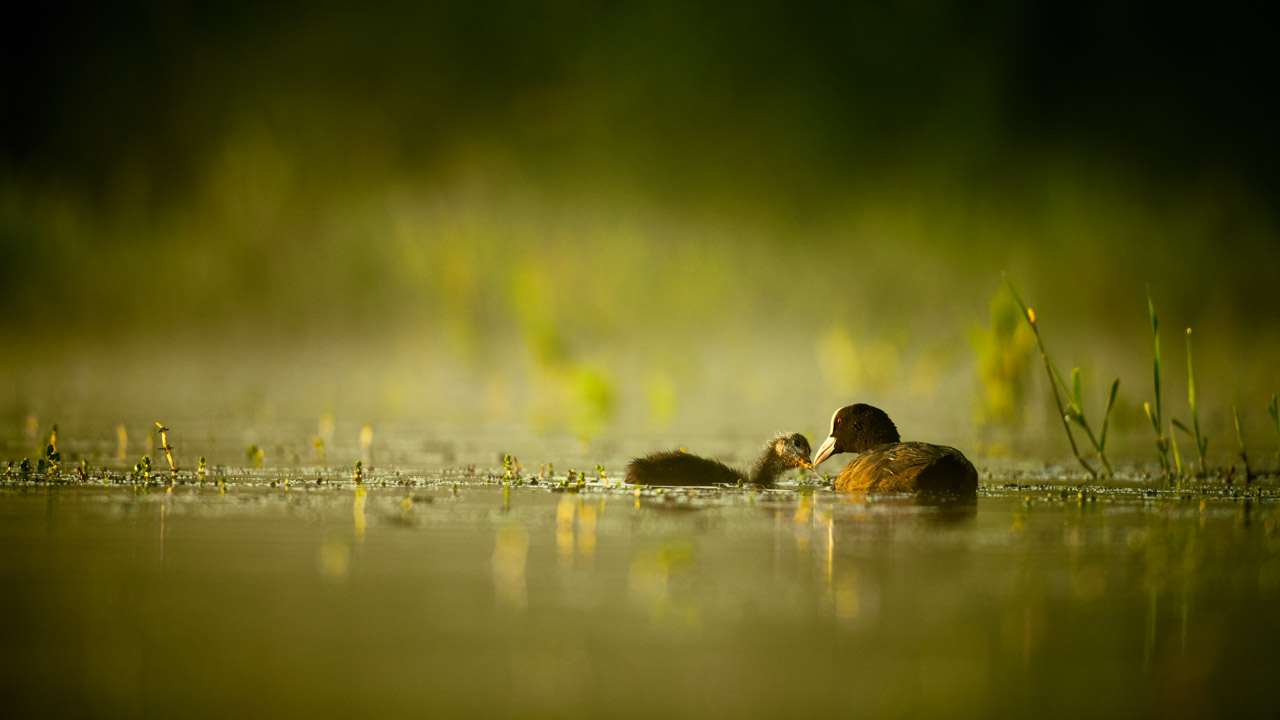
Eurasian coot feeding in a pond in Dombes in France. Photo by Amar Guillen, photographer.
Eurasian spoonbill in a pond in Dombes in France. Photo by Amar Guillen, photographer.
Purple heron in a pond in Dombes in France. Photo by Amar Guillen, photographer.
Grey heron flying over a pond in Dombes in France. Photo by Amar Guillen, photographer.
Little egret in a pond in the mist in Dombes in France. Photo by Amar Guillen, photographer.
Great crested grebe heron in a pond in Dombes in France. Photo by Amar Guillen, photographer.
Grey heron in a pond in Dombes in France. Photo by Amar Guillen, photographer.
Eurasian spoonbill in a pond in Dombes in France. Photo by Amar Guillen, photographer.
Click Here To See Wildlife Fine Art Print Collections.

Define Your Photographic Testament to Refine and Strengthen Your Photographic Approach

Is your chief ambition to create interesting photos? You may want to impart them with a deeper meaning so that your audience can contemplate your photographs, thus sparking a lively discussion.

You have probably realized that this is not easy. Only relying on your camera is not enough. You need other tools.

In this article, I propose an innovative tool that will help you in your photographic process. You will be surprised by its simplicity and efficiency.

This article will help you understand how to implement a new tool in your photography toolbox. By implementing it, you will make your photos even more interesting and instill in them true meaning.

This photograph in black and white of a tree on the heights of the Black Canyon in Colorado will be a part of my photographic testament.

Table of Contents

  • Introduction
  • The Story Behind This Article
  • Your Photographic Why is Fundamental
  • The Elements of Your Photographic Artistry
  • Defining Your Photographic Testament
  • Are You Ready to Create Interesting Photos?

Introduction

Every morning when I wake, I think about the actions I can take for that day which can benefit the earth or humanity. These actions are the small stones of the legacy of my life. It is my personal contribution to the world. I ask myself “What I can do for others?” rather than “What can others do for me?”

Maybe I will call someone to check in. Maybe I will plant a seed or plant a flowering bush to attract butterflies or insects. There are plenty of opportunities to build something beautiful with purpose.

Since I have been living in the United States, I have learned a method of living called the “Compound Effect”. Every day you strive to accomplish one small thing. The repetition of these small actions means that over a long period of time, the effects become visible and measurable. I also apply this method in my work as a professional photographer.

The purpose of all of my small actions is to instill meaning, not only into my life, but also into my photographic activity. I want to leave a trace of myself. I want to be remembered. It is for this reason that I created and developed the concept of “the photographic approach”.

All of the topics of my blog's columns are meant to share my learnings and my knowledge with you, my readers. This column is special because the tool I discovered a short time ago is innovative. It should help you create even more interesting and meaningful photos.

9 Steps for You to Last in Photography.

The Story Behind This Article

Recently, an American art magazine interviewed me.

The editor had discovered my work as an artist photographer. He was surprised by my conceptual art photos and by the articles published on my blog about the photographic approach. He wanted to know more about me. He asked a journalist from the editorial office to contact me.

The interview had to fit on one page of the magazine. The journalist asked me six questions. These are the first five questions he asked me:

  • Can you tell me about your brand?
  • When did you know this was the right path for you?
  • What do you like most about your job?
  • What has been the most challenging part of your career?
  • If the phone were to ring now with the call to fulfill a dream, what would it be?

The most surprising question is undoubtedly the sixth and last one:

  • How do you want people to remember your career?

I was speechless for at least thirty seconds. No one had ever asked me that question. The reporter remained patient. Surely every artist interviewed must have had a similar reaction when they heard that question.

After a moment that seemed like an eternity, I finally answered:

“I would like people to remember me as a person who created photos to help others get better. I would like people to remember me as a photographer who did everything to make his photos not only beautiful but also useful.”

I wondered if this answer was interesting. I had answered frankly, without much thought. I simply stated what I felt in my heart, without considering its impact. After two days of contemplating my answer, I realized that answer was my photographic testament.

As always, I grabbed my notepad and began writing. I realized that writing out my thoughts, my purpose, and the impact of my work, were essential parts of my life as a photographer.

Without meaning to, this magazine had highlighted an essential element to refine my photographic approach. Ultimately, I was grateful for the opportunity to strengthen and redefine my purpose a little more.

I wanted to share my thoughts with you. That is the purpose of the rest of this article. But first, I thought it was important to make some essential reminders.

Your Photographic Why is Fundamental

If you have chosen to create interesting photographs, you have certainly thought about your photographic why. This is the first building block of your photographic approach. It gives you the reason why you practice photography.

The photographic why has exactly the same function as the existential why that gives you the reasons why you live. Your existential why gets you up every day. It defines your role as a human being.

Your photographic why defines why you go out into the field to shoot. It is the guiding light of your photographic approach.

This concept prevents you from getting lost in your projects. I advise you to write it down in only two or three sentences. Learn it by heart so you never forget it.

It can evolve over time. Its nature will not change over time, but you will refine it and make it more precise according to your maturity.

The photographic why is an intellectual and theoretical concept that does not materialize in a visual way in your photographs. However, it is a practical element since it allows you to properly frame your photographic direction.

Once you have defined your photographic why, you have created the markers for your photographic approach.

Let us move on to the second important element of your photographic approach.

Why and How : Defining Your Photographic Why.

The Elements of Your Photographic Artistry

The second element of your photographic approach is the photographic artistry. For me, it is the best way to identify you as a photographer and to make yourself known to others. It is a practical and visual concept.

I advise you to define your photographic artistry, which consists of two elements:

  • Your photographic vision.This is the way you see the world around you. It is unique. It describes your perception of what you are photographing.
  • Your photographic style.This is the way you show the world around you. Personally, I am a fan of defining multiple photographic styles. I have found that photographers who only rely on one style are boring. Even if they are perfectly identifiable, they end up creating the same thing over and over again.

If you have not yet defined your photographic artistry, I recommend that you do so. Do not wait. It will be a precious help as soon as you venture onto the field to take pictures.

It will allow you to choose your scenes, your framing, your compositions.

The development of your photos will also be directed to your approach.

I now give you the new element I added to my toolbox for my photographic approach. It is the logical continuation of the two previous elements.

Why You Should Define Your Photographic Identity.

Defining Your Photographic Testament

This new element of the tools of the photographic approach is called the photographic testament.

Before explaining its function and how to define it, it seems interesting to me to define the word testament.

“A testament is an ultimate message that a writer, a politician, a scholar, an artist, or an author of a work wishes to transmit to posterity.”

During the interview I mentioned in the first paragraph, the last question I was asked imposed itself on me as the definition of my own photographic testament. Finally, the question I had to answer could be translated as “What do I want to leave behind through my photographs?”

I realized that by answering this question, I could strengthen my photographic why and my photographic artistry. If I can imagine the photographs that I want to leave to those who appreciate and are interested in my work, I just have to create them. I had never thought of this photographic tool. It is so simple and so powerful. But as always, doing simple things is difficult and complex.

Why do not you do the same? Simply take a sheet of paper or create a document on your computer and write your photographic testament in a few lines. With words you will define the photos you would like to leave as a testimony of your photographic activity.

I guarantee that all of a sudden, everything will fall into place. Just imagine that you want to leave 50 photos that you created specifically for posterity, to encapsulate your life’s work.

If you think about it, it is not much. When you consider that you can make them in less than an hour with your camera or cell phone. Yet, it will take you weeks, months or maybe years to create those photos that you will bequeath to posterity.

You must imagine your photographic will as a photo album. You are telling a story: the story of your photographic life. You must put yourself in the shoes of those who will look at the photos in your album. They will turn the paper pages one by one thinking about you, your passion, and the way you photograph.

You must think of the spectators moved by your photos, escaping to other universes or to distant horizons only by looking at your photos.

Your photographic will is not your portfolio. The purpose of a portfolio is to present photographic work within a specific framework. You have to demonstrate your knowledge in a given photographic activity. What I propose is much more than that. Your photographic will is much broader than your portfolio. It is the story of your passion for photography.

Creating a testament is a great exercise in style to help you create photos that are meaningful and personal to you.

Personally, I find it an extraordinarily strong and ambitious personal act. Moreover, you have no time limit. You can delete and add photos over the years. The idea that you must keep in mind is that this will always resemble you. It is a trace of your photographic existence.

Are You Ready to Create Interesting Photos?

I hope this article will allow you to approach photography from a new angle. I wanted to show you that defining your photographic testament will strengthen and refine your “photographic why” and your photographic approach.

As far as I am concerned, it is a new tool that appeared to me by the greatest of chances. Nobody had told me about it, but for which I am most grateful. I feel at peace, comforted by my photographic and artistic choices. I hope that you too can experience this peace and sense of gratitude. I will now share with you some personal photos that I will add to my photographic will, my photographic testament.

Fine Art Collections In 1 Click.

I propose you some personal photos that I will add to my photographic will.

A tree in black and white on the heights of Black Canyon in Colorado in USA. Amar Guillen, photographer
Canyon de Chelly in black and white in Arizona in USA. Amar Guillen, photographer
Tree in black and white in Caddo Lake in Texas in USA. Amar Guillen, photographer
Tree in Black and White on the heights of Island in the Sky in Utah in USA. Amar Guillen, photographer
Tree in black and white on the heights of the lake Magadi in Kenya. Amar Guillen, photographer.
Watefall of the Blue Nile in Ethiopia. Amar Guillen, photographer.
Red deer stag in the mist in black and white in France. Amar Guillen, photographer.
Bison in ine the snow in black and white in Yellowstone. Amar Guillen, photographer.
Gelada in black and white in Ethiopia. Amar Guillen, photographer.
Lioness in black and white in Kenya. Amar Guillen, photographer.

Be humble, patient, constant, persevering, and persistent because the road to excellence is long.

  1. 2 Ways to Photograph the Bluethroat: Artistic and Illustrative
  2. Using Low Key in Wildlife Photography
  3. Low Key Landscape Photography
  4. Photographing in Low Key Is Using a Photographic Language

Page 30 of 201

  • 25
  • 26
  • 27
  • 28
  • 29
  • 30
  • 31
  • 32
  • 33
  • 34
  1. You are here:  
  2. Home
  3. Blog Photographic Approach

Share on Social Media

Post
Share
Share
E-mail
WhatsApp
Text

Join Me on Social Networks

Join Me on Facebook  Join Me on Instagram  Join Me on LinkedIn

Claim your free guide to make your photo impactful and meaningful

Claim Your Free Guide '50 Pages of Tips to Give Impact and Meaning to Your Photos'.

4 + 8 =

Click Here To Discover All My Chronicles About the Photographic Approach.

Treat Yourself to a Fine Art Print That Matches your Personality

Example of a vacation home interior with a black and white fine photo art displayed on the wall.

Fine Art Print Collections in Black and White

Fine Art Print Collections in Black and White Black and white photography is a suitable technique for many nature scenes. It requires a particular frame of mind. A black and white photograph should be prepared and planned from the framing to the…
11991
Fine Art Print Collections in Black and White
An abstract art photo displayed in a contemporary living room decor.

Fine Art Print Collections in Color

Collections of Fine Art Prints in Color Color photographs allow digressions and take the audience to the message by secondary ways. The world around us, especially nature, is colorful. A color image can show the way our surroundings really are. Of course, it…
10440
Fine Art Print Collections in Color
Example of a home interior with fine art prints in my style back to black displayed on the wall. These photos are a part of my collection 'Wild beauties of Kenya'.

Fine Art Print Collections in Back to Black

Fine Art Print Collections in Back to Black I want to share my fine art prints of nature in a personal style that I call "back to black." "Back to Black" was developed to embody a sharp and clean style for artistic photos that can be hung in your living room,…
9980
Fine Art Print Collections in Back to Black
A waiting room with a photo in the style Fusion displayed on the wall. Grey Heron in Fusion.

Fine Art Print Collections with the Fusion Style

Fine Art Print Collections with the Fusion Style I would like to share a very creative and modern photography style to represent Nature in a very different way. I call it "Fusion." I created the style to offer dynamic photos, allowing you to start a good day…
7908
Fine Art Print Collections with the Fusion Style
A living room with a photo in the style 'Impression' exposed on the wall. Rising sun in impression

Fine Art Print Collections with the ‘Impression’ Style

Fine Art Print Collections with the ‘Impression’ Style The objective of this photographic style is to create the ephemeral blurs. That's why I named it 'Impression.' Photography, as an art form, is a powerful means of expressing reality from different…
5827
Fine Art Print Collections with the ‘Impression’ Style
Fine art prints from the style back to black displayed on a wall. Amar Guillen, photographer artist

New Collections of Fine Art Prints Dedicated to the Wonders of Nature

New and Updated Fine Art Print Collections Dedicated to the Wonders of Nature Fine art prints from the style back to black displayed on a wall.
11446
New Collections of Fine Art Prints Dedicated to the Wonders of Nature

Themes of the Blog Articles

Landscape of Arches National Park in Utah in black and white.

Blog Articles Dedicated to Artist Statement

Blog Articles Dedicated to Artist Statement
Dunes of death Valley in Black and White

Blog Articles Dedicated to Black and White Photography

Blog Articles Dedicated to Black and White Photography
Abstract photo or trees reflection on water

Blog Articles Dedicated to Photographic Mindset

Blog Articles Dedicated to Photographic Mindset
Abstract photo of ridles on water

Blog Articles Dedicated to Artistic Photography

Blog Articles Dedicated to Artistic Photography
Abstract photo of Yellowstone

Blog Articles Dedicated to Photographic Language

Blog Articles Dedicated to Photographic Language
Pronghorn in Yellowstone

Blog Articles Dedicated to Wildlife Photography

Blog Articles Dedicated to Wildlife Photography
Landscape of Bryce Canyon

Blog Articles Dedicated to Photographing United States

Blog Articles Dedicated to Photographing United States
Underwater waves in the Red Sea

Blog Articles Dedicated to Photographic Techniques

Blog Articles Dedicated to Photographic Techniques
Tree of Black Canyon in Black and White

Blog Articles Dedicated to Landscape Photography

Blog Articles Dedicated to Landscape Photography
Manta Ray in Maldives in Black and White

Blog Articles Dedicated to Underwater Photography

Blog Articles Dedicated to Underwater Photography
Red Deer stag during the rut of the deer

Blog Articles Dedicated to Photographic Judgement

Blog Articles Dedicated to Photographic Judgement
Great Crested Greb and his chick

Unclassified Blog Articles

Unclassified Blog Articles

You Might Be Interested By One of These Photographic Approach Articles

Photograph in black and white of the Grand Canyon from Arizona State in USA.

Why and How Mastering the Steps of Creating an Art Photograph

3603
Why and How Mastering the Steps of Creating an Art Photograph
An example of a narrative photo. Landscape of Island in the Sky in the Canyonlands in Utah in United States. Photo in black and white by Amar Guillen.

Why and How: Creating Impactful Narrative Photos

4118
Why and How: Creating Impactful Narrative Photos
Snowy landscape of Yellowstone during winter.

3 Steps for Giving Meaning to Your Photos

8750
3 Steps for Giving Meaning to Your Photos
Two lions in Kenya. Photographed in black and white. Photograph by Amar Guillen, photographer artist.

To Create Aesthetics Photos, Print your Images

4238
To Create Aesthetics Photos, Print your Images

Receive Free Tips On How to Give Impact and Meaning to Your Photos. Subscribe to Receive Regular Articles.

2 + 7 =

Contact Me By Email

10 + 9 =
This site is protected by reCAPTCHA and the Google Privacy Policy and Terms of Service apply.

About Amar Guillen, Creator of Fine Art Prints of Nature
As a photographer capturing the artistic essence for several decades, I have mastered the art of crafting an authentic experience for art enthusiasts and collectors of visual art.
When I observe my surroundings, be it friends, family, relationships, or professional contacts, I see souls in perpetual motion. Every moment of their existence is engulfed by daily hassles, work concerns, social media, online or televised information streams, and videos on the web.
Every minute, they strive to accomplish something, fearing losing ground and feeling marginalized in this frenzied society. Imprisoned by an oppressive schedule, the essential eludes them, drowned in the tumult of daily life. Is it really crucial to watch yet another cat video on the internet? Is it necessary to post twenty daily messages on social media?
Despite this, they remain constantly stressed and anxious about the challenges of the world, without being able to influence these monumental problems. It is at this moment that my artistic nature photographs come into play. Those who have had the privilege of hanging one of my works in their personal or professional space have expressed a radical transformation in their lives.
Every day, contemplating these works of art immerses them in tranquility, inner peace, and rediscovered serenity. They then understand that nature has the power to unravel tensions, to encourage reflection on the essential. Artistic photographs thus become open windows to the wonders of nature.
I have chosen to share the best of myself by helping others discover their identity, personality, style, all while reconnecting with nature. Take the time to explore my artistic photographs if you wish to reveal your true essence. Once hung in your space, your view of the world will be transformed.
Amar Guillen is a creator of fine art prints of nature.
I am Amar Guillen, creator of nature art photographs. I have a deep conviction that contemplating nature has the power to transform human beings. If everyone learned to know, respect, and preserve nature, our world would be transformed into a haven of peace where everyone would find their place.
Copyright © 2003 - 2026 Guillen Photo LLC - All rights reserved. Amar Guillen, professional photographer since 2003.
  • Blog
  • Calibration
  • Legal Information
  • Sitemap
  • Accessibility
  • Contact Me
  • Updates of the Website
I Want to Help You to Create Interesting Photos

How Can I Help You To Create More Interesting Photos?

Ask Me a Technical Question.
Subscribe to my Newsletter. The Inspiration Behind Guillen Photo.

Select your language

  • English (United Kingdom)
  • Français (France)
Claim your free guide to make your photo impactful and meaningful

Claim Your Free Guide '50 Pages of Tips to Give Impact and Meaning to Your Photos'.

9 + 1 =

Contact Me By Email

9 + 4 =

Office Address:
3512 Robin Road
Plano Texas 75075
USA

Office phone: (+1)214-769-6825