• The Art of ChoosingHome page
  • Fine Art Prints3 Editions
  • CollectionsAll Collections
  • AboutAmar Guillen
  • Customer Space & Contact
  • Select your language

    • English (United Kingdom)
    • Français (France)
  • All You Need to Select Your Fine Art Print
    • How to Choose a Fine Art Print - Q&A - FAQ
    • New Creations
    • Explore Some Interiors
    • Fine Art Print Blog
  • Browse by Edition
    • All Fine Art Prints
    • Unique Edition
    • Limited Edition
    • Open Edition
  • Browse by Style
    • Black and White
    • Color
    • Fusion
    • Impression
    • Back to Black
    • Landscapes in Black and White
    • Landscapes in Color
    • Animals in Black and White
    • Animals in Color
  • Browse by Theme
    • Landscape
    • Wildlife
    • Underwater
    • Abstract
    • Symbolic
    • Landscapes of the United States
    • Landscapes of France
    • Landscapes of Scotland
    • Seascapes
    • Relaxing
    • Energizing
    • Playful
  • Browse by Format
    • Rectangular
    • Square
    • Panoramic
  • Contact Me
    • Contact Me by Email or Phone
  • Collections
    • New Collections
    • All Collections
  • Browse by Theme
    • Landscapes
    • Wildlife
    • Underwater
    • Abstract
    • Symbolic
    • Landscapes of France
    • Landscapes of the United States
  • Browse by Style
    • Black and White
    • Color
    • Impression
    • Back to Black
    • Fusion
  • Contact Me
    • Contact Me by Email or Phone
  • Discover More About Me
    • Discover Who is Amar Guillen
    • Artistic and Photographic Statement
  • Galleries
    • Photo Galleries
    • Abstract Portfolio in Color
    • Black and White Landscape Photography Portfolio
    • Color Landscape Photography Portfolio
    • Black and White Wildlife Photography Portfolio
    • Color Wildlife Photography Portfolio
    • Underwater Photography Portfolio
  • Contact Me
    • Contact Me by Email or Phone
  • Your Customer Space
    • Create or Manage your Account
    • Your Download Space
    • Your Orders
  • Contact Me
    • Contact Me by Email or Phone

You are in that section: Home > Blog > Blog of the Photographic Creation Approach

9 Tips to Master Low Key Photography and Create Good Photos

Black and white low-key photograph of a landscape of Caddo Lake in Texas. Photograph by Amar Guillen, photographer artist.
Black and white low-key photograph of a landscape of Caddo Lake in Texas.

Application to Photography

If you have read the previous paragraph carefully, you hopefully have understood that some Renaissance painters chose to favor the color black and dark tones in their artistic creations.

For me, the important thing is to show you that the low key photo technique is just an application of the chiaroscuro technique for painters.

Low key photography takes up all these principles.

The technique of low key in photography consists in mixing in your images the light and dark parts without real gradation.

This technique makes it possible to create photos with strong contrasts.

In nature photography, you must learn to use natural or artificial light sources to create your contrasts.

You will have to learn to control the light on your subject and the shadows present in the environment. Remember this: In photography, low key is characterized by deep blacks, dark tones, and very present shadows.

Why and How: Defining Your Photographic Why.

The Low Key Is Only a Tool to Express Oneself

Before listing a number of criteria in favor of the use of low key in photography, I would like to emphasize once again that photography is a visual artistic discipline.

I consider it an extraordinary means of non-verbal expression. I think that the main strength of photography, even if it is focused on facts as is the case of photojournalism, fashion, or commercial photography, is that it can be used to express your emotions, to translate feelings, and to convey your messages.

For me, photography reveals my inner beauty of self-expression.

To achieve your goals, you have the choice of tools such as photo styles. Low key is one of these styles. Do not use the low key technique just because it is trendy or because another famous photographer is using it. Low key photography is a tool that you must use wisely to express yourself and express what you are experiencing deep within your spirit.

If you use this technique "just because others do", you will not receive good artistic results.

Remember that you want to create interesting pictures that make sense. This is the price you must pay if you want to be satisfied and happy with your product. You must make decisions regarding technique and style carefully.

Why: Using the Low Key Technique in Photography

After reading the historical foundations of low key and understanding its etymology, you may wonder why to use this technique.

Before I list a number of reasons to convince you to use this technique in your nature photos, let me remind you that this is just a particular photo style. It is just a simple tool that you will use to strengthen your photographic signature.

Do not believe that low key is the end-all solution for making your photos interesting. Only the meaning you impart in your work will identify your photos’ value and increase your credibility with your audience.

With that being said, here is a list of my reasons for favoring the use of low key in photography.

Some Reasons to Use the Low Key in Photography

The low key technique allows you to create images with strong contrasts. It allows the viewer's gaze to be guided towards the main photographic element.

The low key technique allows you to create photos that have style and impact. Indeed, it adds depth. It creates a dramatic and intimate atmosphere.

The low key style is mainly used to evoke mysterious, enigmatic, and sensual atmospheres. It allows you to highlight and contrast graphic forms.

The low key allows the viewer to interpret the scene in a subjective way. The low key encourages emotional expression in the scenes.

Personally, I think that even if low key is an interesting technique for creating intimate scenes with mysterious atmospheres, it is still a real challenge to use.

Indeed, if you have read my article on the reasons to create photographs, you will remember that the definition of photography is to write with light. It implies that the light must be present in all parts of your photos and above all that it must be dominant.

The low key takes this definition at face value. This photographic style highlights black in an iconic and symbolic way. Dark becomes the equivalent of light.

Personally, I have become a true enthusiast of low key photography because the two tones can harmonize beautifully.

For me, this is an incredibly good reason for you to try this photographic style.

Why and How: Creating Abstract Photos.

How to Use the Low Key in your Photographs

A low key photo is dominated by dark tones and the color black. The light comes from only one source. It allows the artist to accentuate the dramatic side of the photographed scenes.

To create a beautiful low key photo, you need to increase the depth of the shadows. The blacks should become deep and rich.

But above all, be careful not to block these black areas. If you do, you will create a feeling of oppression when reading the photo. In addition, you would create a significant mass imbalance.

You need to maintain detail in the dark areas.

I believe that maintaining details in all parts of a photo are the mark of properly exposed photos. This is what I call the hallmark of a good photographer.

Tip #1: Choose Your Environment for Your Low Key Photos

In this article, I will approach low key photography in a general way, but the examples come from nature photography because it is my specialty. Thus, my advice still applies to this theme.

When you choose the scene to be photographed, choose an environment with a dark tone. For example, with a low key photo of a deer, I always choose a background with trees. For a landscape, I choose a closed scene, like a cave.

If you choose an open environment, your photo will be oriented to lighter tones instead. Do not forget that closed environments evoke mystery and drama more easily.

Tip #2: Use Only One Light Source

This is an important tip because you do not want to forget that the sources of low key photography are chiaroscuro and sfumato. The goal is that only the subject is illuminated. The rest of the image should remain dark. The light source should highlight the subject. The idea is to photograph perpendicular to the light source. It should be very directional and fairly concentrated. Personally, morning and evening lights are ideal. One of the techniques I use is that of light filtered by trees. The closer the light is to your subjects, the better the effect will be.

Tip #3: Frame and Compose Well

I will always repeat it. The choice of good framing at the time of the shooting is essential to the success of a photo. This is even more true with a low key photo. Once in the field, think in terms of shadows. All photographic elements that you are going to integrate into your scene must be in dark tones. The entirety of your photo must be harmonious and consistent with the low key.

When you use a style as strong as low key, framing does not just mean choosing the elements of your scene. You must also consider the final result you want to achieve, which is more complex.

This also applies to the composition you are going to make. You must choose to establish relationships between your different elements according to the low key technique.
Tip #4: Measure Light in Spot Mode

Why and How: Photographing Island in the Sky in the Canyonlands of Utah

If you like grandiose mineral landscapes, or if you wish to capture photos that create an impact upon first glance, you will certainly enjoy the opportunity to photograph the Canyonlands.

In this article, I share with you some of the techniques I use to showcase this unique region of the world that is located in the state of Utah in the United States.

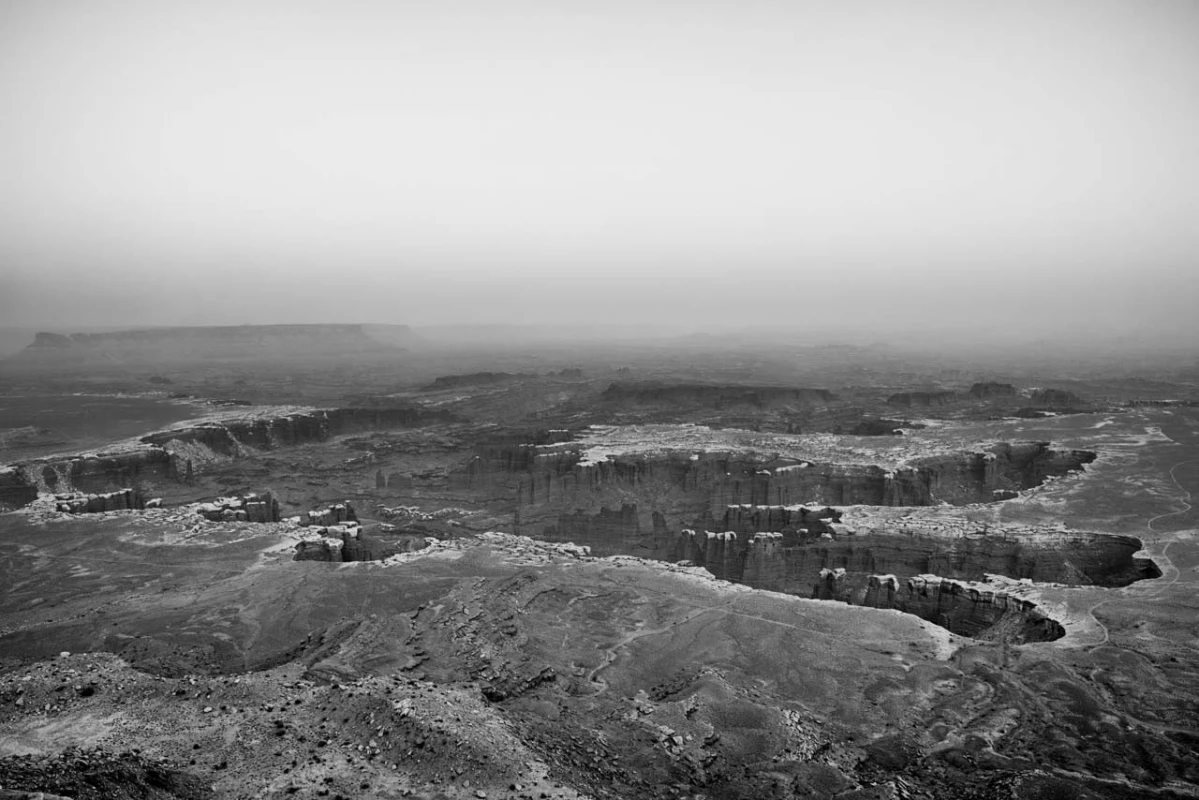
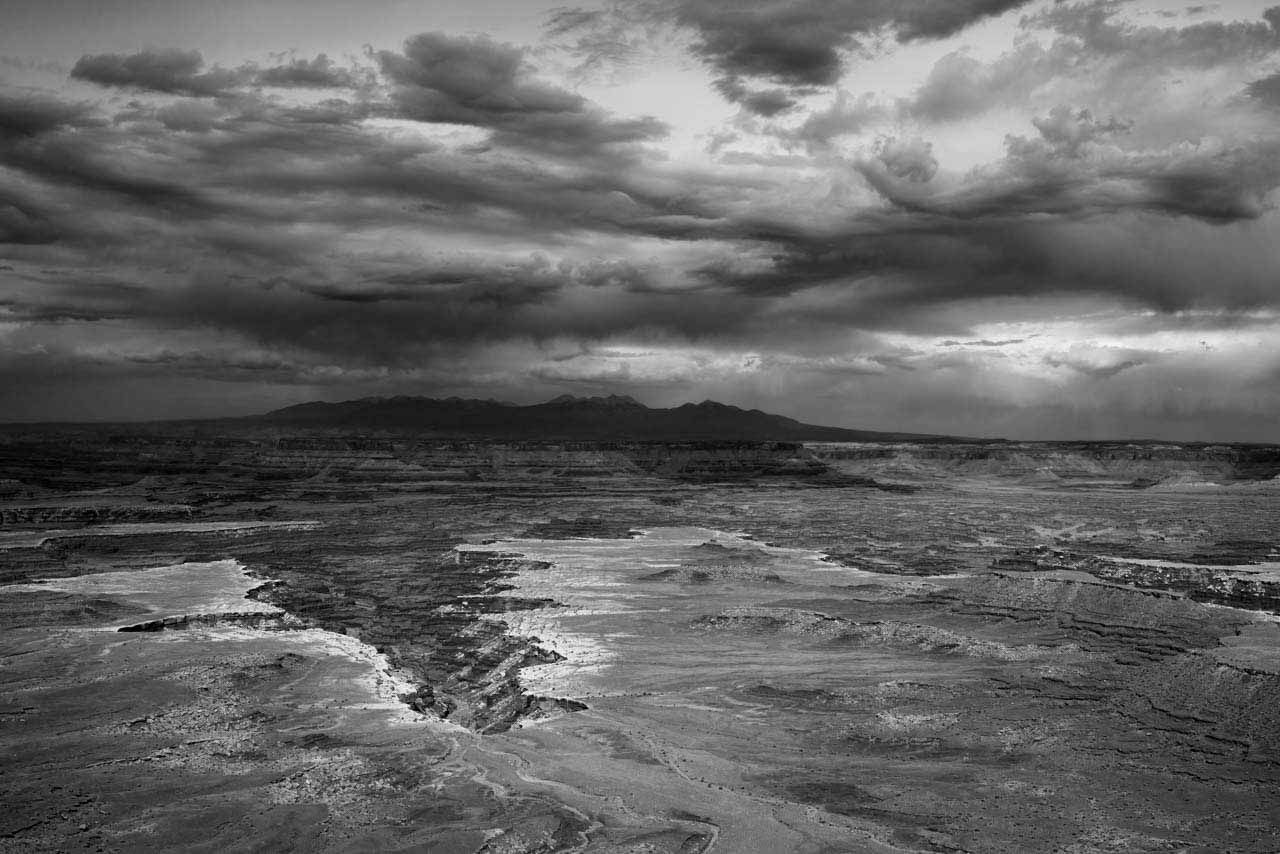
Landscape in black and white of Island in the Sky in the Canyonlands. Photography by Amar Guillen, Photographer Artist
Landscape in black and white of Island in the Sky in the Canyonlands.

Table of Contents

  • The Little Story Behind This Article
  • Geographic Location of the Canyonlands
  • Why You Should Photograph Island in the Sky in the Canyonlands
  • Some Pictures of Island in the Sky in the Canyonlands in Utah
  • How to Photograph Island in the Sky in the Canyonlands
  • Finally

The Little Story Behind This Article

When I arrived in the United States in February 2001, my dream was to photograph iconic places such as the Grand Canyon, Mount Rushmore, and Death Valley.

My photographic culture of American landscapes was limited to the places made famous by Ansel Adams.

In September 2004, I decided to visit and photograph the Arches National Park in Utah. I had carefully prepared my trip.

When I arrived in Moab, which was the city where I had rented a hotel room, I discovered the Canyonlands National Park on a flyer. I had never heard of it.

I had originally decided to spend three days in the Arches National Park. But something about this flyer spoke to me, and I felt encouraged to take an extra day and visit the Canyonlands.

On the fourth day, I arrived early in the morning at the entrance of the park. There was nothing special about the desert expanses. I said to myself then that one day would be more than enough time to capture the beauty of this place in some pictures.

It was when I arrived at the end of the only road in the park that I was shocked. In front of me ran the Green River, and beyond that the landscapes stretched as far as the eye could see, carving into the huge canyons. The mineral landscapes were glowing red under the morning sun.

I had never seen such landscapes before. It was quite different from the Grand Canyon. I found them to be even more beautiful. By the end of that first day, I was hooked. I decided to stay two more days, which was the maximum amount of time I could afford.

This first trip will remain forever engraved in my memory. Since that year, I have returned every two years in May to escape in this unique mineral landscape, and to contemplate its beauty.

Each trip is an opportunity to capture new photos. The Canyonlands have become a place to make different an impactful photos. Few photographers are interested in this place. However, I think it is one of the most beautiful natural sites in the United States.

In the rest of the article, I will share with you the reasons why I think this site is the most beautiful site in the entire country.

Geographic Location of the Canyonlands

The Canyonlands is a national park located in southeastern Utah in the United States. Moab is the closest city.

The Canyonlands are made up of mineral landscapes formed by numerous canyons, mesas, and buttes whose shapes were drawn by the Colorado and the Green River.

The Canyonlands National Park is divided into three main parts:

  • Island in the Sky to the north.
  • The Maze to the south.
  • The Needles in the middle.

In this article I will only deal with the Island in the Sky. The other parts will be the subject of other articles in the blog.

The average elevation is 6100 feet (1850 meters). Only one road crosses the national park. Each stop along the road shows breathtaking views.

The big advantage compared to the Grand Canyon is that it is possible to enter the canyons as long as you drive an off-road car.

Why You Should Photograph Island in the Sky in the Canyonlands

You may be asking yourself, “Why should I photograph the Canyonlands? What is so special about this place?” This was exactly how I felt before I visited this place for the first time. Maybe you have never heard of this region.

And yet, these landscapes are a real gem if you are a photographer looking to photograph different subjects. You will be able to spend 4 or 5 days in this site without ever getting bored.

This region of Utah in the United States is inspiring. You only have to look at the landscapes and the mineral forms to feel the passing of time.

Personally, when I travel by car or on foot in Island in the Sky, which is the northernmost region of the Canyonlands, I feel rejuvenated. I find the energy to continue my projects and start new ones. It is quite inexplicable, but this region is truly a spring of new life, of new beginnings.

On the photographic level, the Canyonlands offer you the possibility to make both very wide shots and very tight shots. Everything is possible. The flowers that appear in May will allow you to make wide shots close together that will create photos with a strong impact.

Another advantage of Island in the Sky is that you can photograph from the top of the canyons. You will have extraordinary breathtaking landscape views. If you have an all-terrain vehicle, you will be able to venture into the canyonlands on stony (but accessible) trails.

You will be able to take pictures of both rivers and capture incredibly close-up shots. Photographically, everything is possible in Island the Sky in the Canyonlands. The only limit will be your imagination. It is truly a place to express yourself fully.

Read Also: Why and How: Photographing Valley of Fire in Nevada.

Some Pictures of Island in the Sky in the Canyonlands in Utah

Click on a thumbnail to enlarge it.

  • Landscape in black and white of Island in the Sky in the Canyonlands in Utah
    Landscape in black and white of Island in the Sky in the Canyonl
    Landscape in black and white of Island in the Sky in the Canyonl
  • Landscape in black and white of Island in the Sky in the Canyonlands in Utah
    Landscape in black and white of Island in the Sky in the Canyonl
    Landscape in black and white of Island in the Sky in the Canyonl
  • Landscape in black and white of Island in the Sky in the Canyonlands in Utah
    Landscape in black and white of Island in the Sky in the Canyonl
    Landscape in black and white of Island in the Sky in the Canyonl
  • Landscape in black and white of Island in the Sky in the Canyonlands in Utah
    Landscape in black and white of Island in the Sky in the Canyonl
    Landscape in black and white of Island in the Sky in the Canyonl
  • Landscape in black and white of Island in the Sky in the Canyonlands in Utah
    Landscape in black and white of Island in the Sky in the Canyonl
    Landscape in black and white of Island in the Sky in the Canyonl
  • Landscape in black and white of Island in the Sky in the Canyonlands in Utah
    Landscape in black and white of Island in the Sky in the Canyonl
    Landscape in black and white of Island in the Sky in the Canyonl
  • Landscape in black and white of Island in the Sky in the Canyonlands in Utah
    Landscape in black and white of Island in the Sky in the Canyonl
    Landscape in black and white of Island in the Sky in the Canyonl
  • Landscape in black and white of Island in the Sky in the Canyonlands in Utah
    Landscape in black and white of Island in the Sky in the Canyonl
    Landscape in black and white of Island in the Sky in the Canyonl
  • Landscape in black and white of Island in the Sky in the Canyonlands in Utah
    Landscape in black and white of Island in the Sky in the Canyonl
    Landscape in black and white of Island in the Sky in the Canyonl
  • Landscape in black and white of Island in the Sky in the Canyonlands in Utah
    Landscape in black and white of Island in the Sky in the Canyonl
    Landscape in black and white of Island in the Sky in the Canyonl
  • Landscape in black and white of Island in the Sky in the Canyonlands in Utah
    Landscape in black and white of Island in the Sky in the Canyonl
    Landscape in black and white of Island in the Sky in the Canyonl
  • Landscape in black and white of Island in the Sky in the Canyonlands in Utah
    Landscape in black and white of Island in the Sky in the Canyonl
    Landscape in black and white of Island in the Sky in the Canyonl
  • Landscape in black and white of Island in the Sky in the Canyonlands in Utah
    Landscape in black and white of Island in the Sky in the Canyonl
    Landscape in black and white of Island in the Sky in the Canyonl
  • Landscape in black and white of Island in the Sky in the Canyonlands in Utah
    Landscape in black and white of Island in the Sky in the Canyonl
    Landscape in black and white of Island in the Sky in the Canyonl
  • Landscape in black and white of Island in the Sky in the Canyonlands in Utah
    Landscape in black and white of Island in the Sky in the Canyonl
    Landscape in black and white of Island in the Sky in the Canyonl
Landscape in black and white of Island in the Sky in the Canyonl
    • Landscape in black and white of Island in the Sky in the Canyonl
    • Landscape in black and white of Island in the Sky in the Canyonl
    • Landscape in black and white of Island in the Sky in the Canyonl
    • Landscape in black and white of Island in the Sky in the Canyonl
    • Landscape in black and white of Island in the Sky in the Canyonl
    • Landscape in black and white of Island in the Sky in the Canyonl
    • Landscape in black and white of Island in the Sky in the Canyonl
    • Landscape in black and white of Island in the Sky in the Canyonl
    • Landscape in black and white of Island in the Sky in the Canyonl
    • Landscape in black and white of Island in the Sky in the Canyonl
    • Landscape in black and white of Island in the Sky in the Canyonl
    • Landscape in black and white of Island in the Sky in the Canyonl
    • Landscape in black and white of Island in the Sky in the Canyonl
    • Landscape in black and white of Island in the Sky in the Canyonl
    • Landscape in black and white of Island in the Sky in the Canyonl
    Read Also: Why and How: Photographing Landscapes in Black and White.

    How to Photograph Island in the Sky in the Canyonlands

    As I mentioned in the paragraph about why, the main way to photograph Island in the Sky is to use a wide angle.

    Focal lengths from 14 to 35 mm are very well suited.

    Focal lengths from 35 to 200mm are also possible. Indeed, the landscapes are often clear. The visibility is often several kilometers. A focal length of 200mm will be particularly useful.

    If you are passionate about macro photography, you can use macro lenses with focal lengths ranging from 50 to 105 mm.

    The most beautiful lights in these mineral landscapes are those of early morning and late afternoon. Filters to densify the skies are also a real asset.

    A tripod and a remote trigger are essential.

    I am an avid user of the tripod because I can take many pictures of the same scene. The tripod allows me to refine the shots of the same shot while keeping the same point of view.

    A general list of the material you will need includes:

    • A camera.
    • A wide-angle lens.
    • A tripod.
    • A remote trigger.
    • Grayscale filters.

    I recommend a stay of four or five days because the number of viewpoints from the top of the canyons is important. Devote two days to journeying inside the canyon with a 4-wheel drive.

    Finally

    I hope that this article about the discovery of Island the Sky in the northern canyons will have made you want to pick up your camera and create images in this unique region of the world.

    The landscapes you will immortalize are different from anything you have photographed so far. You will have total freedom of movement, relying on only your imagination for power when photographing this rejuvenating place.

    Click Here To See Black and White Fine Art Print Collections.
    1. Tips to Understand a Figurative Photo and an Abstract Photo
    2. Understand a Photo Visually and Semantically
    3. Two Steps to Fully Understanding a Photo
    4. 2 Tips for Creating Purposeful Photos

    Page 34 of 201

    • 29
    • 30
    • 31
    • 32
    • 33
    • 34
    • 35
    • 36
    • 37
    • 38
    1. You are here:  
    2. Home
    3. Blog Photographic Approach

    Share on Social Media

    Post
    Share
    Share
    E-mail
    WhatsApp
    Text

    Join Me on Social Networks

    Join Me on Facebook  Join Me on Instagram  Join Me on LinkedIn

    Claim your free guide to make your photo impactful and meaningful

    Claim Your Free Guide '50 Pages of Tips to Give Impact and Meaning to Your Photos'.

    4 + 8 =

    Click Here To Discover All My Chronicles About the Photographic Approach.

    Treat Yourself to a Fine Art Print That Matches your Personality

    Example of a vacation home interior with a black and white fine photo art displayed on the wall.

    Fine Art Print Collections in Black and White

    Fine Art Print Collections in Black and White Black and white photography is a suitable technique for many nature scenes. It requires a particular frame of mind. A black and white photograph should be prepared and planned from the framing to the…
    11991
    Fine Art Print Collections in Black and White
    An abstract art photo displayed in a contemporary living room decor.

    Fine Art Print Collections in Color

    Collections of Fine Art Prints in Color Color photographs allow digressions and take the audience to the message by secondary ways. The world around us, especially nature, is colorful. A color image can show the way our surroundings really are. Of course, it…
    10440
    Fine Art Print Collections in Color
    Example of a home interior with fine art prints in my style back to black displayed on the wall. These photos are a part of my collection 'Wild beauties of Kenya'.

    Fine Art Print Collections in Back to Black

    Fine Art Print Collections in Back to Black I want to share my fine art prints of nature in a personal style that I call "back to black." "Back to Black" was developed to embody a sharp and clean style for artistic photos that can be hung in your living room,…
    9980
    Fine Art Print Collections in Back to Black
    A waiting room with a photo in the style Fusion displayed on the wall. Grey Heron in Fusion.

    Fine Art Print Collections with the Fusion Style

    Fine Art Print Collections with the Fusion Style I would like to share a very creative and modern photography style to represent Nature in a very different way. I call it "Fusion." I created the style to offer dynamic photos, allowing you to start a good day…
    7908
    Fine Art Print Collections with the Fusion Style
    A living room with a photo in the style 'Impression' exposed on the wall. Rising sun in impression

    Fine Art Print Collections with the ‘Impression’ Style

    Fine Art Print Collections with the ‘Impression’ Style The objective of this photographic style is to create the ephemeral blurs. That's why I named it 'Impression.' Photography, as an art form, is a powerful means of expressing reality from different…
    5827
    Fine Art Print Collections with the ‘Impression’ Style
    Fine art prints from the style back to black displayed on a wall. Amar Guillen, photographer artist

    New Collections of Fine Art Prints Dedicated to the Wonders of Nature

    New and Updated Fine Art Print Collections Dedicated to the Wonders of Nature Fine art prints from the style back to black displayed on a wall.
    11446
    New Collections of Fine Art Prints Dedicated to the Wonders of Nature

    Themes of the Blog Articles

    Landscape of Arches National Park in Utah in black and white.

    Blog Articles Dedicated to Artist Statement

    Blog Articles Dedicated to Artist Statement
    Dunes of death Valley in Black and White

    Blog Articles Dedicated to Black and White Photography

    Blog Articles Dedicated to Black and White Photography
    Abstract photo or trees reflection on water

    Blog Articles Dedicated to Photographic Mindset

    Blog Articles Dedicated to Photographic Mindset
    Abstract photo of ridles on water

    Blog Articles Dedicated to Artistic Photography

    Blog Articles Dedicated to Artistic Photography
    Abstract photo of Yellowstone

    Blog Articles Dedicated to Photographic Language

    Blog Articles Dedicated to Photographic Language
    Pronghorn in Yellowstone

    Blog Articles Dedicated to Wildlife Photography

    Blog Articles Dedicated to Wildlife Photography
    Landscape of Bryce Canyon

    Blog Articles Dedicated to Photographing United States

    Blog Articles Dedicated to Photographing United States
    Underwater waves in the Red Sea

    Blog Articles Dedicated to Photographic Techniques

    Blog Articles Dedicated to Photographic Techniques
    Tree of Black Canyon in Black and White

    Blog Articles Dedicated to Landscape Photography

    Blog Articles Dedicated to Landscape Photography
    Manta Ray in Maldives in Black and White

    Blog Articles Dedicated to Underwater Photography

    Blog Articles Dedicated to Underwater Photography
    Red Deer stag during the rut of the deer

    Blog Articles Dedicated to Photographic Judgement

    Blog Articles Dedicated to Photographic Judgement
    Great Crested Greb and his chick

    Unclassified Blog Articles

    Unclassified Blog Articles

    You Might Be Interested By One of These Photographic Approach Articles

    Photograph in black and white of the Grand Canyon from Arizona State in USA.

    Why and How Mastering the Steps of Creating an Art Photograph

    3603
    Why and How Mastering the Steps of Creating an Art Photograph
    An example of a narrative photo. Landscape of Island in the Sky in the Canyonlands in Utah in United States. Photo in black and white by Amar Guillen.

    Why and How: Creating Impactful Narrative Photos

    4118
    Why and How: Creating Impactful Narrative Photos
    Snowy landscape of Yellowstone during winter.

    3 Steps for Giving Meaning to Your Photos

    8750
    3 Steps for Giving Meaning to Your Photos
    Two lions in Kenya. Photographed in black and white. Photograph by Amar Guillen, photographer artist.

    To Create Aesthetics Photos, Print your Images

    4238
    To Create Aesthetics Photos, Print your Images

    Receive Free Tips On How to Give Impact and Meaning to Your Photos. Subscribe to Receive Regular Articles.

    2 + 7 =

    Contact Me By Email

    10 + 9 =
    This site is protected by reCAPTCHA and the Google Privacy Policy and Terms of Service apply.

    About Amar Guillen, Creator of Fine Art Prints of Nature
    As a photographer capturing the artistic essence for several decades, I have mastered the art of crafting an authentic experience for art enthusiasts and collectors of visual art.
    When I observe my surroundings, be it friends, family, relationships, or professional contacts, I see souls in perpetual motion. Every moment of their existence is engulfed by daily hassles, work concerns, social media, online or televised information streams, and videos on the web.
    Every minute, they strive to accomplish something, fearing losing ground and feeling marginalized in this frenzied society. Imprisoned by an oppressive schedule, the essential eludes them, drowned in the tumult of daily life. Is it really crucial to watch yet another cat video on the internet? Is it necessary to post twenty daily messages on social media?
    Despite this, they remain constantly stressed and anxious about the challenges of the world, without being able to influence these monumental problems. It is at this moment that my artistic nature photographs come into play. Those who have had the privilege of hanging one of my works in their personal or professional space have expressed a radical transformation in their lives.
    Every day, contemplating these works of art immerses them in tranquility, inner peace, and rediscovered serenity. They then understand that nature has the power to unravel tensions, to encourage reflection on the essential. Artistic photographs thus become open windows to the wonders of nature.
    I have chosen to share the best of myself by helping others discover their identity, personality, style, all while reconnecting with nature. Take the time to explore my artistic photographs if you wish to reveal your true essence. Once hung in your space, your view of the world will be transformed.
    Amar Guillen is a creator of fine art prints of nature.
    I am Amar Guillen, creator of nature art photographs. I have a deep conviction that contemplating nature has the power to transform human beings. If everyone learned to know, respect, and preserve nature, our world would be transformed into a haven of peace where everyone would find their place.
    Copyright © 2003 - 2026 Guillen Photo LLC - All rights reserved. Amar Guillen, professional photographer since 2003.
    • Blog
    • Calibration
    • Legal Information
    • Sitemap
    • Accessibility
    • Contact Me
    • Updates of the Website
    I Want to Help You to Create Interesting Photos

    How Can I Help You To Create More Interesting Photos?

    Ask Me a Technical Question.
    Subscribe to my Newsletter. The Inspiration Behind Guillen Photo.

    Select your language

    • English (United Kingdom)
    • Français (France)
    Claim your free guide to make your photo impactful and meaningful

    Claim Your Free Guide '50 Pages of Tips to Give Impact and Meaning to Your Photos'.

    8 + 8 =

    Contact Me By Email

    5 + 5 =

    Office Address:
    3512 Robin Road
    Plano Texas 75075
    USA

    Office phone: (+1)214-769-6825