• The Art of ChoosingHome page
  • Fine Art Prints3 Editions
  • CollectionsAll Collections
  • AboutAmar Guillen
  • Customer Space & Contact
  • Select your language

    • English (United Kingdom)
    • Français (France)
  • All You Need to Select Your Fine Art Print
    • How to Choose a Fine Art Print - Q&A - FAQ
    • New Creations
    • Explore Some Interiors
    • Fine Art Print Blog
  • Browse by Edition
    • All Fine Art Prints
    • Unique Edition
    • Limited Edition
    • Open Edition
  • Browse by Style
    • Black and White
    • Color
    • Fusion
    • Impression
    • Back to Black
    • Landscapes in Black and White
    • Landscapes in Color
    • Animals in Black and White
    • Animals in Color
  • Browse by Theme
    • Landscape
    • Wildlife
    • Underwater
    • Abstract
    • Symbolic
    • Landscapes of the United States
    • Landscapes of France
    • Landscapes of Scotland
    • Seascapes
    • Relaxing
    • Energizing
    • Playful
  • Browse by Format
    • Rectangular
    • Square
    • Panoramic
  • Contact Me
    • Contact Me by Email or Phone
  • Collections
    • New Collections
    • All Collections
  • Browse by Theme
    • Landscapes
    • Wildlife
    • Underwater
    • Abstract
    • Symbolic
    • Landscapes of France
    • Landscapes of the United States
  • Browse by Style
    • Black and White
    • Color
    • Impression
    • Back to Black
    • Fusion
  • Contact Me
    • Contact Me by Email or Phone
  • Discover More About Me
    • Discover Who is Amar Guillen
    • Artistic and Photographic Statement
  • Galleries
    • Photo Galleries
    • Abstract Portfolio in Color
    • Black and White Landscape Photography Portfolio
    • Color Landscape Photography Portfolio
    • Black and White Wildlife Photography Portfolio
    • Color Wildlife Photography Portfolio
    • Underwater Photography Portfolio
  • Contact Me
    • Contact Me by Email or Phone
  • Your Customer Space
    • Create or Manage your Account
    • Your Download Space
    • Your Orders
  • Contact Me
    • Contact Me by Email or Phone

You are in that section: Home > Blog > Blog of the Photographic Creation Approach

Tips to Understand a Figurative Photo and an Abstract Photo
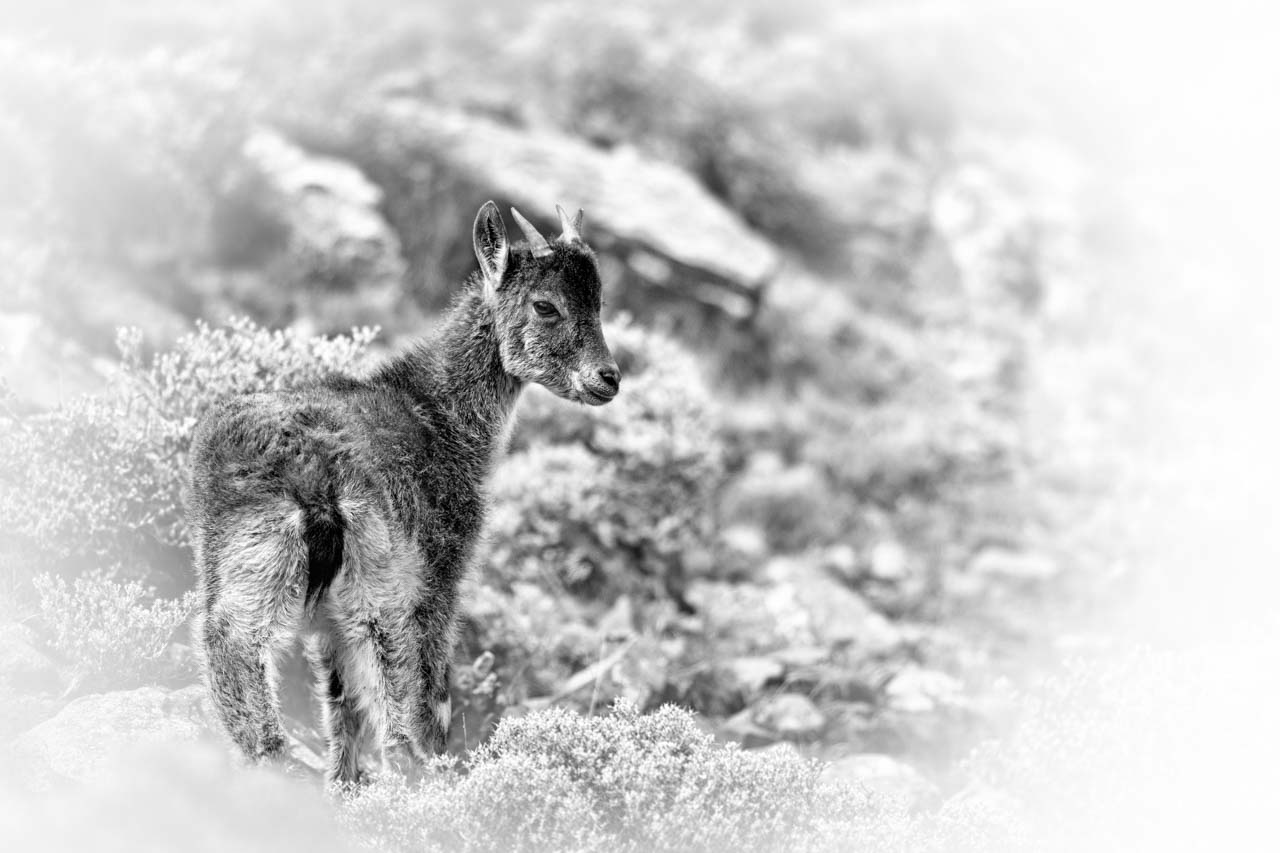
Photograph of a young ibex in Ethiopia in black and white. Photograph by Amar Guillen, photographer artist.
This photograph of a young ibex can be read by different ways.

Case Study: Understanding a Figurative Photo
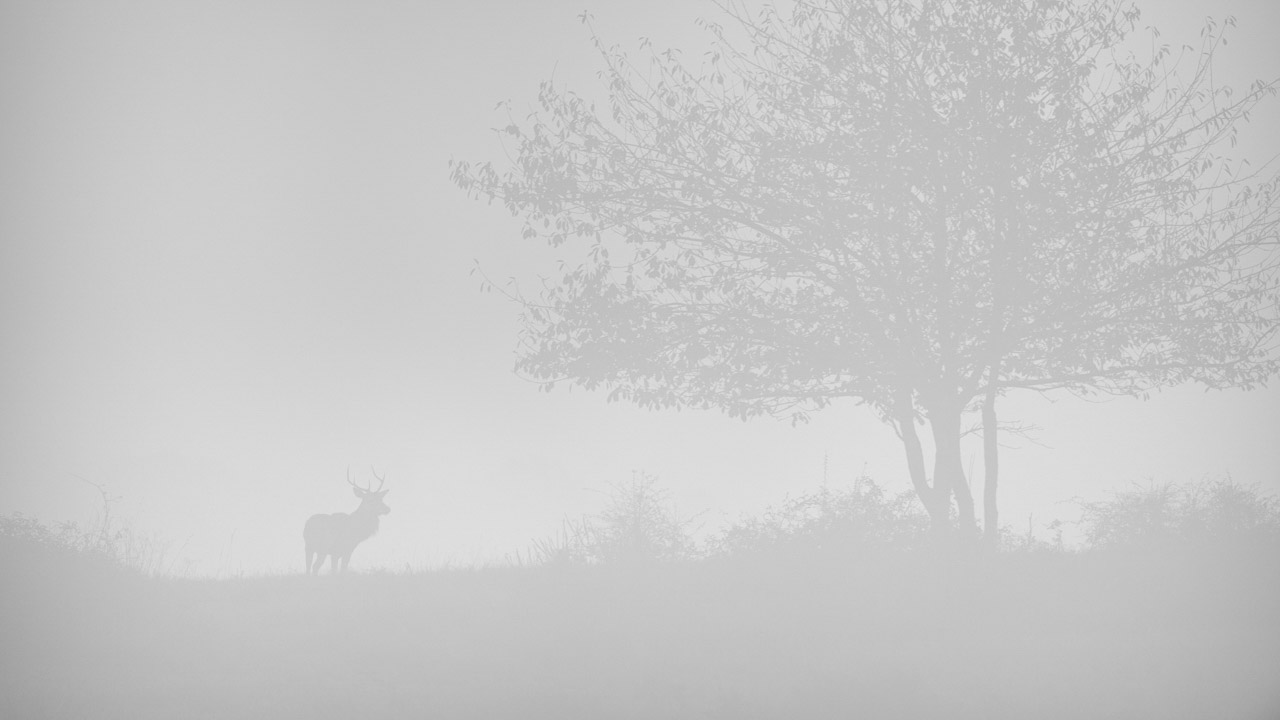
Red deer stag in the fog during the rut of the deer in France.

To illustrate the first example, I chose a photograph taken during the deer slab in France during one morning.

I knew that the deer use this flow under a cherry tree to go from one foreground to another meadow on the other side of the cherry tree (this is the tree on the right of the picture). It is a good place to make a blind because the sun comes from the right. This allows me to photograph with the sun at 90 degrees. It is ideal for me as it illuminates beautiful models.

It is a good place to make a blind because the sun comes from the right. This allows me to photograph with the sun at 90 degrees. It is ideal for me to have beautiful models.

That morning, the fog had its appearance. The sun was totally obscured.

I waited patiently in the shelter of my hiding place in a bramble on the edge of a meadow. A gentle slope led upwards to the tree. It is not apparent because I placed myself high upon the other side of the meadow.

The deer came out of the forest on my left. I took a few pictures, but they were of no interest. The deer were located in the meadow, but the background was very dark.

Luck was with me. One decided to take the path to the left of the cherry tree. This is what I had been waiting for days.

Here is the description of the picture. I am going to apply my method to help people understand this photo and why it is so important to me.

The first step is semiological analysis. This involves analyzing the visual elements of the photograph.

  1. The shooting angle and the point of view. As I already told you, I am positioned slightly higher than the subject. I am located at about 150 meters from the deer. As is often the case with deer, I like photos at eye level so that I appear to be equal.
  2. The framing. I chose a horizontal framing to accentuate the calmness and tranquility of the photo. This very morning, no bird was singing. The silence was overwhelming. My camera was hidden in a noise-cancelling muffle to hold the noise of all the clicks. I chose to integrate a tree to show a safe and steady perspective while assigning a scale for a human reference point. By placing it on the right so as to stick it against the edge of the picture, I force the viewer to be drawn to the deer. The foreground is present without taking too much space. The viewer can easily enter the photo.
  3. The composition. The photographic elements are the tree for the reasons mentioned in the previous paragraph. The foliage in silhouette show that nature is intact, and that I am in a wilderness.
  4. The scale of the plans. I have chosen an overall plan. This is the technique I use most often in my animal photos. I want to show wild animals in their natural environment. Often the scenery is very present in my photos. The animal is small.
  5. Depth. I chose to integrate a foreground to bring the gaze towards the animal. The background is masked by fog.
  6. The off screen. Once again, I used the off screen. The animal is looking ahead. We do not know where he is going and what he is looking at.
  7. The light. It is soft. It accentuates the dreamlike and ethereal aspect of the scene, partly because I developed the photo in high key.
  8. Black and white. I chose this creative technique to allow me to focus the attention on the deer. It is perfectly adapted to the high key.
  9. The tone. My photo has a clear tone. It creates an atmosphere of softness, of quietness, and of dreaminess. It is a beautiful space.

The second step to understanding this picture of a deer taken in the fog and during the deer's bellow, is the semiological understanding. This is the meaning of the photo.

This photo evokes freedom. It reminds me of the paths I take in my travels or in my day-to-day life. I do not always know where I am going. I often make mistakes. I take reference marks (here materialized by a tree which is of good size). But I often make mistakes.

Freedom of movement is essential for me. I do not like being locked up. I crave the ability to wander wherever I wish to go. The high key allows me to accentuate this feeling of evanescence. I like to dream about beautiful projects and beautiful encounters. By closing the photo on the right and a little on the left, I want to reveal that I am not upside down. I like to let myself go during my travels, but I always know what I want.

Photographing the deer from behind allows me to accentuate this feeling of freedom that I wanted to express. I took another picture of the deer looking to the side. It is also beautiful, but it evokes more of a sense of nostalgia, of looking back upon the past. It does not quite fit me. I like to look towards the future and wait for new adventures.

This photo expresses my optimism and my joy of life and the thrill of the unknown.

Case Study: Understanding an Abstract Photo
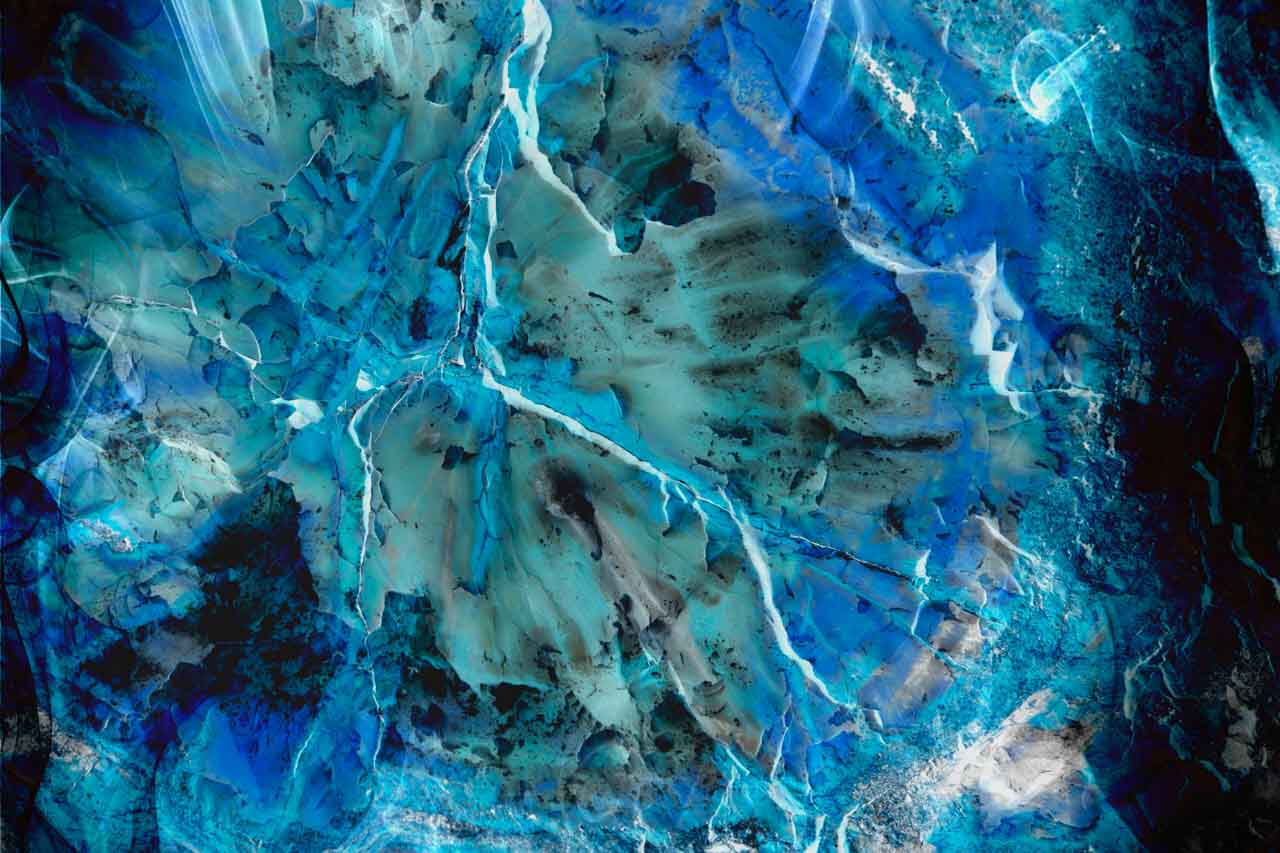
Abstract photograph of Petrified Forest en Arizona. Photograph in color by Amar Guillen, photographer
Why and How: Creating Abstract Photos.

For this second photo, I chose an abstract photo. I made it in the United States on a fossilized tree trunk several million years old. This photo is part of the art photo collection entitled: the energy of time. I applied a personal recipe of filters to accentuate the colors and to radiate light and evanescent effects.

Let us enter the first step of my method: semiological analysis.

  1. The shooting angle and the point of view. The fossilized tree is placed on the ground. I am lying down so that the trunk is directly in my view.
  2. The framing. I chose a horizontal framing to show the strength of the photo. I wanted to show stability and confidence.
  3. The composition. I chose the trunk of the tree, as it is perfectly straight.
  4. The scale of the plans. I chose a close-up angle so that the details would be greatly enhanced.
  5. Depth. The photo is flat because I wanted to evoke an explosion with a lot of energy.
  6. The light. It is strongest in the center. It becomes darker on the sides. This vignetting makes it easier to read.
  7. The color. I chose both warm and cold tones. It is paradoxical enough to evoke energy, but I wanted to go against time.
  8. The tone. My photo has a clear tone.

Let us now move on to semantic analysis: this is the second step of my method to understanding pictures.

Even if the tree is fossilized, the rings are clearly visible. These are the concentric circles that start in the center. This radial effect evokes energy. The streaks show that there can be side effects in the emission of energy.

I chose warm and cold tones to make the viewer wonder. The photo, even if it is bright and stable, is not easy to read and understand. This is the principle of abstraction. Everyone can see what they want. The shape of the trunk and the rings are easily identifiable and readable, but what is beyond? That is the whole question.

Abstract Fine Art Collections.

Finally

I hope that this article has helped you to better understand the subtleties surrounding the way in which you understand a photograph. Keep in mind that understanding an image is a two-step process:

  • A semiological understanding.
  • A semantic understanding.

Remember also that understanding a photograph is above all, connecting you to the photographic world of its creator.

This allows you to enter another world with its unique codes and atmospheres.

For some photos, its meaning can be presented in a few words or thoughts.

Sometimes you will have to face more complex, more subtle, and more constructed universes. In this case, you will have to call upon your photographic culture.

Regardless, you must never confuse understanding a photo with judging it.

Be humble, patient, constant, persevering, and persistent because the road to excellence is long.

Understanding a Photo Semiologically and Semantically

Photograph of Antelop Canyon in black and white. Photograph by Amar Guillen, photographer artist.
This photograph in black and white of Antelop Canyon could be interpreted in different ways.

Step 1: Visual Comprehension

The visual understanding of a photo is called image semiology.

It is organized around 9 very precise criteria.

  1. The shooting angle and the point of view. For me this is the most difficult point with framing. It is the position of the camera in relation to the main photographic element (also called the subject). If you photograph at the level of the subject, you will create a feeling of objectivity because your subject will appear to be positioned on your level. If you photograph in a low angle, the subject will appear to be more important. If you photograph in a higher angle, with your camera placed above the subject, you will crush its demeanor, and the subject will appear inferior. Its importance will decrease because you create the impression that you are dominating it.
  2. The framing. It defines each photographic elements that you integrate in your photograph. You offer your audience or the viewer a window into the scene you want to photograph. The framing can be rectangular or square. It all depends on the type of photos you present. If you choose rectangular framing, it can be:
    - Horizontal. In this case the scene evokes calmness, tranquility, and distance from the main photographic element.
    - Vertical. In this case you show a closer and more personal scene. It is a framing that also favors action shots.
  3. The composition. I remind you that composition is the way in which to organize the photographic elements so that they harmoniously flow within the chosen framing.
  4. The scale of the plans. It is purely descriptive. It allows to give the viewer a common reference point for the photo. It is established by incorporating the human scale of reference.
    - General plan: the landscape.
    - Overall plan: a subject in its environment.
    - Medium shot: one subject in full view.
    - American plan: a subject cut between the knee and the waist.
    - Close-up shot: a living subject showing the waist and the chest.
    - Close-up: the face.
    - Very close-up: details of a face.
  5. Depth. This is a technique that I use a lot in environmental wildlife and landscape photography. It is about the existence of several planes in a photograph: foreground, background, and the reference points which lie between.
  6. The off screen. Off screen is a creative technique that you can use with living beings. The subject is looking in a given direction other than towards you. The object of the subject’s gaze is not in view; thus it is not bound within the chosen frame of the scene.
    The off field evokes questioning, introspection, and suggestion. As for the field itself, it allows you to fix the look of hours in the space you have chosen.
    The field allows you to orientate the gaze of hours by imposing visual limits on it.
    The off screen allows you to create the dream. You give the viewer the opportunity to ask questions. Moreover, it provides a channel through which the subject virtually escapes from the scene and from the photo. It is captivating. Visually, these are two very important elements.
  7. The light. For me, the light is the most important element in the construction of any scene, second only to the decor. Whether it is an underwater or landscape scene, I choose to evoke these three photographic themes because they are the ones I practice. If you are reading this article but you have evolved into other themes, you may have your own priorities. In this paragraph, I evoke natural light as well as artificial light. I use both sources in underwater photography as well as in wildlife photography, especially for passerines.
    The light allows to capture details, textures. But in my opinion, it should be used mainly to create modeling. The light creates shadows which construct the modeling of the relief and the three dimensions. Never forget that you and I, being photographers, always strive to showcase the beautiful, to share our states of mind by freezing a three-dimensional space on a two-dimensional support.
  8. Colors of black and white. Colors are used to represent reality. They allow you to show scenes as faithfully as possible. If you use colors, try to be as objective as possible to the framing and composition.
    Black and white is an artistic technique because you interpret the scene you see. You show gradations of gray. Black and white is a creative technique. It allows you to go straight to the point, to be direct and intentional.
  9. The tone. The general tonality of a photo is its visual aspect in terms of its distribution of tones and gradation levels between them. There are three main types of tonality:
    - The dark tone. In this case the photo is rather dark with low lights and shadows of colors.
    - The clear tone. The photo is illuminated and details and bright colors are enhanced through brightness.
    - The neutral tone. The photo is neither dark nor light. This is also referred to as a “balanced tone.”
    The visual understanding of the tonality allows you to better understand the atmosphere created by a photo. Tonality is one of the elements of the photographic language you use to express yourself.

To summarize this step #1 dedicated to the visual understanding of a photo, I advise you to learn by heart this list of different elements.

So, when you are faced with a picture by another photographer and you are inspired, you will understand exactly what it is that captivates you and how to identify it in your own work.

If you need to analyze one of your photos, you will also be able to better understand and refine your photographic approach.

Once this first step is complete, you simply move on to the second step: the ones I call semantics.

Step 2: Semantic Understanding

By definition, semantics is the study of the meaning of linguistic units and their combination.

If I apply this definition to photography, photographic semantics is the study of photographic meaning and language.

I explained in a previous article that photography has its own language and codes. It allows you to convey your messages and your emotions.

If you really want to understand a photograph you must learn to master the photographic language.

This particular language allows you to build your photos in a more consistent way. They will be interesting because you will have instilled meaning in each one. You will also be able to read the photos of the photographers who inspire you.

To understand the semantics of a photograph is to understand the meaning of its content. It is to understand why the photographer has chosen to assemble the photographic elements in a certain way.

Understanding the semantics of a photograph allows you to better build your own images. When you frame, compose, choose a point of view, you will arrange the photographic elements of your scene to express yourself.

I think that once you begin to perceive the importance of photographic semantics, you can more easily understand the photos you directly encounter.

Why and How Mastering the Semiology in Photography.

Semantic understanding is just as important as semiological (visual) understanding. If I had to simplify my point, I would say that semantic understanding is the container and semiological understanding is the content of a picture.

I recognize that I am not able to establish a link or dialectical relationship between the two elements of analysis. I do not know if this link really exists. In the absence of being able to bring tangible elements to establish a relationship between the two, I will simply propose the two steps separately.

In order to understand a photograph semantically, you need to call upon your life experiences, your emotions, and especially your photographic culture.

It is thanks to this collection of knowledge and tools that you will be able to decipher the meaning of photos.

I am certain that a simply emotional or aesthetic reading of an image can lead to an interesting decoding for a photo. The problem I have found with this method is that it is an empirical analysis. Over time, people who analyze only in this way find themselves confronted with a lack of ideas. Analyses always become identical and redundant.

A broad general photographic culture allows one to refine the semantic understanding and to establish the creative processes that will result in the discovery of future images.

Why General Culture is an Asset For Creating Art Photos.

To conclude this paragraph concerning the semantic understanding of a photo, I advise you to try to be as systematic as possible and to appeal to your photographic consciousness. Ultimately, consider your photographic culture and the context of the photo itself.

Case Study: Understanding a Figurative Photo

  1. Two Steps to Fully Understanding a Photo
  2. 2 Tips for Creating Purposeful Photos
  3. Why and How: Creating a Purposeful Photo
  4. Why and How: Photographing Red Deer Stags in Silhouette

Page 35 of 201

  • 30
  • 31
  • 32
  • 33
  • 34
  • 35
  • 36
  • 37
  • 38
  • 39
  1. You are here:  
  2. Home
  3. Blog Photographic Approach

Share on Social Media

Post
Share
Share
E-mail
WhatsApp
Text

Join Me on Social Networks

Join Me on Facebook  Join Me on Instagram  Join Me on LinkedIn

Claim your free guide to make your photo impactful and meaningful

Claim Your Free Guide '50 Pages of Tips to Give Impact and Meaning to Your Photos'.

4 + 8 =

Click Here To Discover All My Chronicles About the Photographic Approach.

Treat Yourself to a Fine Art Print That Matches your Personality

Example of a vacation home interior with a black and white fine photo art displayed on the wall.

Fine Art Print Collections in Black and White

Fine Art Print Collections in Black and White Black and white photography is a suitable technique for many nature scenes. It requires a particular frame of mind. A black and white photograph should be prepared and planned from the framing to the…
11991
Fine Art Print Collections in Black and White
An abstract art photo displayed in a contemporary living room decor.

Fine Art Print Collections in Color

Collections of Fine Art Prints in Color Color photographs allow digressions and take the audience to the message by secondary ways. The world around us, especially nature, is colorful. A color image can show the way our surroundings really are. Of course, it…
10440
Fine Art Print Collections in Color
Example of a home interior with fine art prints in my style back to black displayed on the wall. These photos are a part of my collection 'Wild beauties of Kenya'.

Fine Art Print Collections in Back to Black

Fine Art Print Collections in Back to Black I want to share my fine art prints of nature in a personal style that I call "back to black." "Back to Black" was developed to embody a sharp and clean style for artistic photos that can be hung in your living room,…
9980
Fine Art Print Collections in Back to Black
A waiting room with a photo in the style Fusion displayed on the wall. Grey Heron in Fusion.

Fine Art Print Collections with the Fusion Style

Fine Art Print Collections with the Fusion Style I would like to share a very creative and modern photography style to represent Nature in a very different way. I call it "Fusion." I created the style to offer dynamic photos, allowing you to start a good day…
7908
Fine Art Print Collections with the Fusion Style
A living room with a photo in the style 'Impression' exposed on the wall. Rising sun in impression

Fine Art Print Collections with the ‘Impression’ Style

Fine Art Print Collections with the ‘Impression’ Style The objective of this photographic style is to create the ephemeral blurs. That's why I named it 'Impression.' Photography, as an art form, is a powerful means of expressing reality from different…
5827
Fine Art Print Collections with the ‘Impression’ Style
Fine art prints from the style back to black displayed on a wall. Amar Guillen, photographer artist

New Collections of Fine Art Prints Dedicated to the Wonders of Nature

New and Updated Fine Art Print Collections Dedicated to the Wonders of Nature Fine art prints from the style back to black displayed on a wall.
11446
New Collections of Fine Art Prints Dedicated to the Wonders of Nature

Themes of the Blog Articles

Landscape of Arches National Park in Utah in black and white.

Blog Articles Dedicated to Artist Statement

Blog Articles Dedicated to Artist Statement
Dunes of death Valley in Black and White

Blog Articles Dedicated to Black and White Photography

Blog Articles Dedicated to Black and White Photography
Abstract photo or trees reflection on water

Blog Articles Dedicated to Photographic Mindset

Blog Articles Dedicated to Photographic Mindset
Abstract photo of ridles on water

Blog Articles Dedicated to Artistic Photography

Blog Articles Dedicated to Artistic Photography
Abstract photo of Yellowstone

Blog Articles Dedicated to Photographic Language

Blog Articles Dedicated to Photographic Language
Pronghorn in Yellowstone

Blog Articles Dedicated to Wildlife Photography

Blog Articles Dedicated to Wildlife Photography
Landscape of Bryce Canyon

Blog Articles Dedicated to Photographing United States

Blog Articles Dedicated to Photographing United States
Underwater waves in the Red Sea

Blog Articles Dedicated to Photographic Techniques

Blog Articles Dedicated to Photographic Techniques
Tree of Black Canyon in Black and White

Blog Articles Dedicated to Landscape Photography

Blog Articles Dedicated to Landscape Photography
Manta Ray in Maldives in Black and White

Blog Articles Dedicated to Underwater Photography

Blog Articles Dedicated to Underwater Photography
Red Deer stag during the rut of the deer

Blog Articles Dedicated to Photographic Judgement

Blog Articles Dedicated to Photographic Judgement
Great Crested Greb and his chick

Unclassified Blog Articles

Unclassified Blog Articles

You Might Be Interested By One of These Photographic Approach Articles

Photograph in black and white of the Grand Canyon from Arizona State in USA.

Why and How Mastering the Steps of Creating an Art Photograph

3603
Why and How Mastering the Steps of Creating an Art Photograph
An example of a narrative photo. Landscape of Island in the Sky in the Canyonlands in Utah in United States. Photo in black and white by Amar Guillen.

Why and How: Creating Impactful Narrative Photos

4118
Why and How: Creating Impactful Narrative Photos
Snowy landscape of Yellowstone during winter.

3 Steps for Giving Meaning to Your Photos

8750
3 Steps for Giving Meaning to Your Photos
Two lions in Kenya. Photographed in black and white. Photograph by Amar Guillen, photographer artist.

To Create Aesthetics Photos, Print your Images

4238
To Create Aesthetics Photos, Print your Images

Receive Free Tips On How to Give Impact and Meaning to Your Photos. Subscribe to Receive Regular Articles.

2 + 7 =

Contact Me By Email

10 + 9 =
This site is protected by reCAPTCHA and the Google Privacy Policy and Terms of Service apply.

About Amar Guillen, Creator of Fine Art Prints of Nature
As a photographer capturing the artistic essence for several decades, I have mastered the art of crafting an authentic experience for art enthusiasts and collectors of visual art.
When I observe my surroundings, be it friends, family, relationships, or professional contacts, I see souls in perpetual motion. Every moment of their existence is engulfed by daily hassles, work concerns, social media, online or televised information streams, and videos on the web.
Every minute, they strive to accomplish something, fearing losing ground and feeling marginalized in this frenzied society. Imprisoned by an oppressive schedule, the essential eludes them, drowned in the tumult of daily life. Is it really crucial to watch yet another cat video on the internet? Is it necessary to post twenty daily messages on social media?
Despite this, they remain constantly stressed and anxious about the challenges of the world, without being able to influence these monumental problems. It is at this moment that my artistic nature photographs come into play. Those who have had the privilege of hanging one of my works in their personal or professional space have expressed a radical transformation in their lives.
Every day, contemplating these works of art immerses them in tranquility, inner peace, and rediscovered serenity. They then understand that nature has the power to unravel tensions, to encourage reflection on the essential. Artistic photographs thus become open windows to the wonders of nature.
I have chosen to share the best of myself by helping others discover their identity, personality, style, all while reconnecting with nature. Take the time to explore my artistic photographs if you wish to reveal your true essence. Once hung in your space, your view of the world will be transformed.
Amar Guillen is a creator of fine art prints of nature.
I am Amar Guillen, creator of nature art photographs. I have a deep conviction that contemplating nature has the power to transform human beings. If everyone learned to know, respect, and preserve nature, our world would be transformed into a haven of peace where everyone would find their place.
Copyright © 2003 - 2026 Guillen Photo LLC - All rights reserved. Amar Guillen, professional photographer since 2003.
  • Blog
  • Calibration
  • Legal Information
  • Sitemap
  • Accessibility
  • Contact Me
  • Updates of the Website
I Want to Help You to Create Interesting Photos

How Can I Help You To Create More Interesting Photos?

Ask Me a Technical Question.
Subscribe to my Newsletter. The Inspiration Behind Guillen Photo.

Select your language

  • English (United Kingdom)
  • Français (France)
Claim your free guide to make your photo impactful and meaningful

Claim Your Free Guide '50 Pages of Tips to Give Impact and Meaning to Your Photos'.

5 + 9 =

Contact Me By Email

9 + 3 =

Office Address:
3512 Robin Road
Plano Texas 75075
USA

Office phone: (+1)214-769-6825