• The Art of ChoosingHome page
  • Fine Art Prints3 Editions
  • CollectionsAll Collections
  • AboutAmar Guillen
  • Customer Space & Contact
  • Select your language

    • English (United Kingdom)
    • Français (France)
  • All You Need to Select Your Fine Art Print
    • How to Choose a Fine Art Print - Q&A - FAQ
    • New Creations
    • Explore Some Interiors
    • Fine Art Print Blog
  • Browse by Edition
    • All Fine Art Prints
    • Unique Edition
    • Limited Edition
    • Open Edition
  • Browse by Style
    • Black and White
    • Color
    • Fusion
    • Impression
    • Back to Black
    • Landscapes in Black and White
    • Landscapes in Color
    • Animals in Black and White
    • Animals in Color
  • Browse by Theme
    • Landscape
    • Wildlife
    • Underwater
    • Abstract
    • Symbolic
    • Landscapes of the United States
    • Landscapes of France
    • Landscapes of Scotland
    • Seascapes
    • Relaxing
    • Energizing
    • Playful
  • Browse by Format
    • Rectangular
    • Square
    • Panoramic
  • Contact Me
    • Contact Me by Email or Phone
  • Collections
    • New Collections
    • All Collections
  • Browse by Theme
    • Landscapes
    • Wildlife
    • Underwater
    • Abstract
    • Symbolic
    • Landscapes of France
    • Landscapes of the United States
  • Browse by Style
    • Black and White
    • Color
    • Impression
    • Back to Black
    • Fusion
  • Contact Me
    • Contact Me by Email or Phone
  • Discover More About Me
    • Discover Who is Amar Guillen
    • Artistic and Photographic Statement
  • Galleries
    • Photo Galleries
    • Abstract Portfolio in Color
    • Black and White Landscape Photography Portfolio
    • Color Landscape Photography Portfolio
    • Black and White Wildlife Photography Portfolio
    • Color Wildlife Photography Portfolio
    • Underwater Photography Portfolio
  • Contact Me
    • Contact Me by Email or Phone
  • Your Customer Space
    • Create or Manage your Account
    • Your Download Space
    • Your Orders
  • Contact Me
    • Contact Me by Email or Phone

You are in that section: Home > Blog > Blog of the Photographic Creation Approach

Why and How: Creating Abstract Photos

Do you want to explore new creative avenues in photography? Do you feel the need to make different photos to convey your emotions and messages?

You may be asking yourself these questions but feel like you do not know where to start.

For my part, I have already experienced this need for renewal. By the greatest of chances, I chose the abstract photo. It was a revelation.

To help you in your choices, in this article, I share my thoughts in hope that it will allow you to enter a new creative dimension. Welcome to a fabulous and exciting universe.

This article will help you understand how to implement a new tool in your photography toolbox. By implementing it, you will make your photos even more interesting and instill in them true meaning.

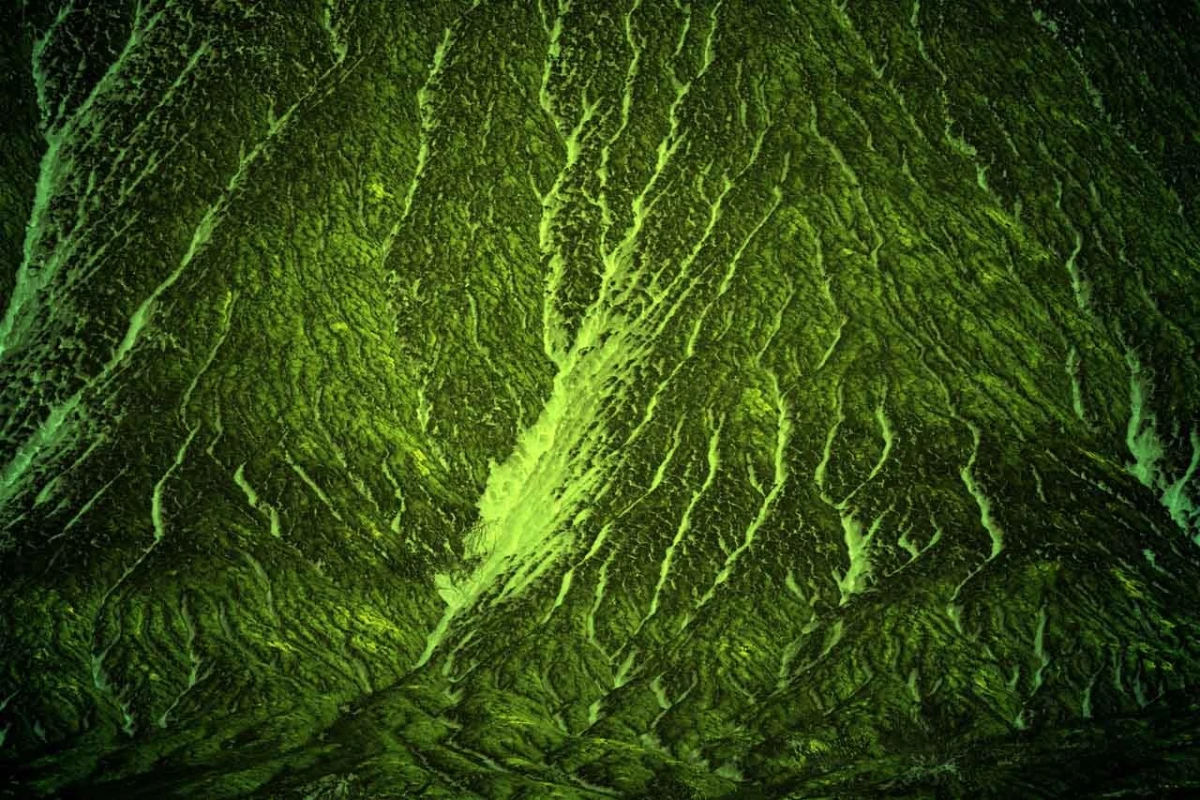
Abstract photo created in Petrified Forest from a natural scene. Photograph from Amar Guillen, photographer artist.
Abstract photo created in Petrified Forest from a natural scene.

Table of Contents

    Page 1

  • The Story Behind This Article
  • Foreword
  • Abstract Photography Is a True Intellectual Creative Process
  • Definition of the Word Abstract
  • Definition of Abstract Art
  • Application to Photography
  • Abstract Photography Is a Theme of Conceptual Photography
  • Some Abstract Photographs
  • Page 2

  • Some Abstract Photographers
  • Why: Creating Abstract Photos
  • Reason #1 For Creating Abstract Photos: Enough of This Photographic "Copy and Paste"
  • Reason #2 For Creating Abstract Photos: It Is a Creative Alternative
  • Reason #3 For Creating Abstract Photos: Tell Your Story
  • Page 3

  • Reason #4 For Creating Abstract Photos: Pushing the Limits of Your Photographic Artistry
  • How: Creating Abstract Photos
  • Tip #1: Learn to Master Certain Creative Techniques
  • Tip #2: Remove All Meaning from the Scene
  • Tip #3: Use Photographic Elements
  • Tip #4: Be Spontaneous
  • Tip #5: Develop Your Abstract Photos with a Computer
  • Finally

The Story Behind This Article

My passion and interest in abstract photography emerged while I was in a pond in a floating blind in Dombes, France.

I was standing in a pond. The day had just dawned. The lights were beautiful. The surface of the water was covered with small waves caused by a light. I was equipped with my 500 mm lens.

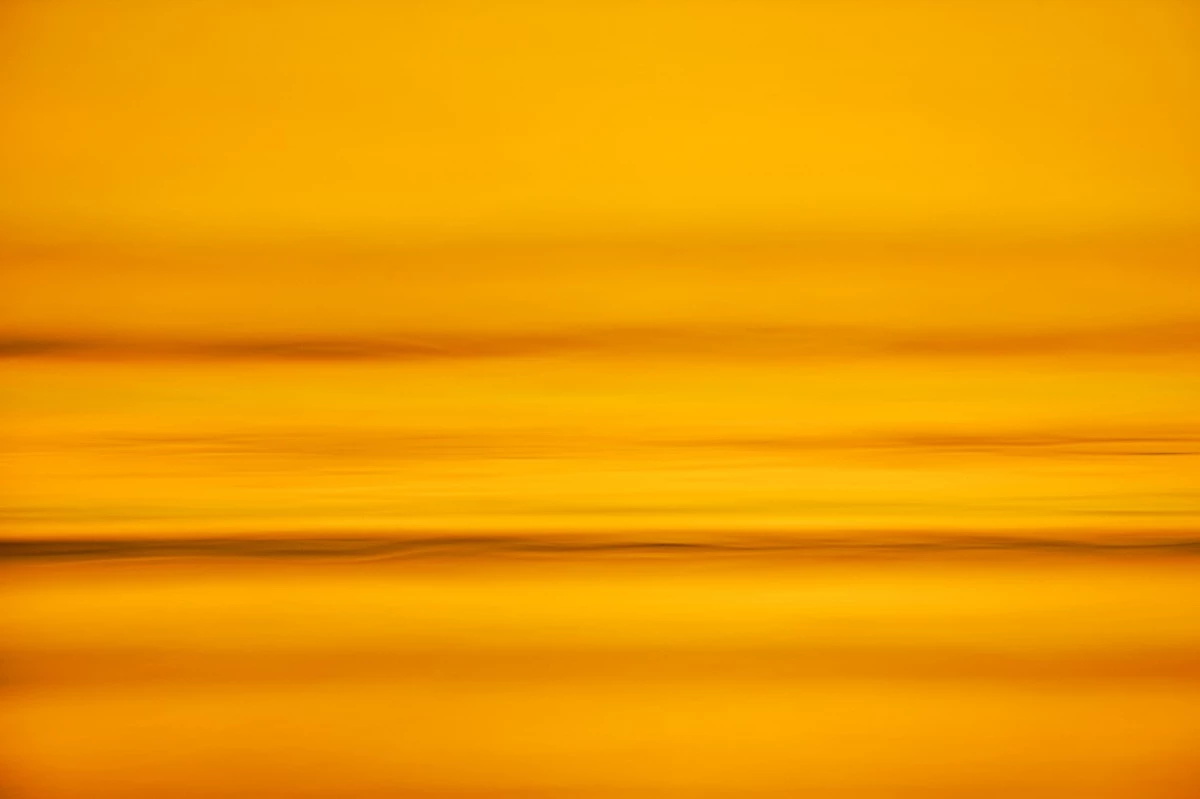
I was hypnotized by the light and the reflections. I remember it like it was yesterday. I began to imagine that every little ripple was a person's life.

I began taking pictures. The photos at first were not extraordinary. When I understood that it was all about light and colorful reflections, I grasped the value and the interest of the scenes that were offered to me. It was the beginning of an extraordinary adventure that continues today.

The collection I created is now called "The Parallel Universes".

That very day made me understand that conceptual photography could be used for something other than symbolic. Abstract photography became a reality for me.

Foreword

In this article devoted to abstract photography, the examples I will give you are related to nature photography. I am passionate about this theme. I photograph landscapes, wild animals, and the underwater world.

But this way of looking at abstract photography can be applied to all fields of photography whether it is street photography, food photography, portraiture, etc. There are no restrictions.

This article is published in a blog dedicated to the photographic approach. I will not explain precisely how to make a bokeh, a long pose, or use zooming technique. These things are good, but they are not my purpose. Other blogs deal with these subjects.

This article focuses on the photographic artistry. This step is well ahead of the realization of the photos. It is certainly one of the most important for creating interesting photos. It is the one that conditions your creativity and promotes the success of interesting photos. For me, it is a cornerstone in the photographic foundation.

Without an appropriate definition of the photographic process and without a photographic why, the creation of interesting photos in the long term is impossible.

With this important clarification, it is time to define what is an abstract photo.

Read Also: Why and How: Defining or Becoming a Good Photographer.

Abstract Photography Is a True Intellectual Creative Process

Often, when I discuss abstract photography with other photographers, the first words they say to me are: "This is nonsense", "I do not see the scene", "I do not understand anything", or "This is not photography".

And yet, the photographers with whom I had this conversation have excellent technical skills. They often create good photos, but they lack a broad open-mindedness, just like the rest of the general public.

After several years of practice, I can affirm that abstract photography is not just any type of photography. It is not absurd. It is not incomprehensible. It is a form of photographic and artistic expression in its own right.

Abstract photography is another way to create photos.

It allows you to explore new horizons. By practicing abstract photography, you will reinvent yourself.

Now it is time to define what an abstract photo is.

Definition of the Word Abstract

To define the essence of an abstract photo, I think it is important to define the word “abstract.”

“Abstract” can be used as an adjective or as a common noun.

By definition, “abstract” is used as an adjective to define "the result of abstraction.” Now we must define what “abstraction” is and is difficult to understand because it lacks reference to concrete reality.

The abstract word used as a common noun is defined as "that which is concretely opposed".

Let us now define abstract art.

Definition of Abstract Art

Abstract art is a current of the graphic and plastic arts of the 20th century which rejects the representation of tangible reality. For example, questioning why or how a photo was taken in a particular way is one aspect that could be discussed through a photo’s abstraction. The methods and purpose are similar to an abstract painting. Part of appreciating and recognizing a painting is trying to understand the mental and physical state in which the artist was coming from when they began designing the piece.

From this definition, you understand that abstract art is a form of artistic expression. It is characterized by the non-representation of the subject. The use of color and shapes are at the heart of this artistic movement.

In abstract art, the important thing is not the subject of the scene or its form.

Abstract art is an art form that does not represent the visible appearances of the outside world. It is a contraction of reality.

To create abstract works, the model does not have to be represented. It just serves as a support for an artistic creation that will free itself from visual fidelity.

Abstract art does not represent concrete subjects of real or natural world objects. It only depicts unknown shapes and colors.

Application to Photography

As I have already mentioned in other blog posts, photography is divided into two domains:

  • The domain of illustrative photography.
  • The domain of artistic photography.

One of the themes of artistic photography is conceptual photography.

Conceptual photography itself is divided into two parts:

  • Symbolic conceptual photography.
  • Abstract conceptual photography.

Abstract photography communicates ideas and concepts without visual reference to the world as we really see it.

Abstract photography focuses on textures, shapes, and colors rather than the whole scene.

Abstract photography is a true artistic form because it allows you to convey messages, to communicate, and to express your emotions.

Abstract photography and the removal of the obvious immediate meaning of a subject opens the door to new ideas and interpretations.

In short, an abstract photo is a creative technique that shows a scene in which the viewer cannot clearly identify the subject(s). The goal is to remove the context of the scene.

Abstract Photography Is a Theme of Conceptual Photography

I have often found that people classify long exposure photos or architectural details in the abstract photo because it is not considered reality. For example, I often saw black and white photos of bridge details which were considered abstract photos only because the entire structure was not seen. I have often heard people say that a picture of a body of water taken in a long exposure with a fog effect was an abstract picture. This is not at all the case. These scenes remain identifiable as they contextualize the present moment.

Symbolic conceptual photos represent a visibly concrete idea or reality from the moment you create them, either by showing part of the scene or by using a filter to create an effect. The photo concretely represents a symbol or an idea, and because the context is identifiable, these images are not abstract. This is a mistake that many people make.

Keep in mind that an abstract photo removes the natural appearance of a scene. The subjects are not recognizable.

Read Also: Why and How: Creating Conceptual Photographs.

Some Abstract Photographs

Click on a thumbnail to enlarge it.

  • Abstract photo created with a naturel scene.
    Abstract photo created with a naturel scene.
  • Abstract photo created with a naturel scene.
    Abstract photo created with a naturel scene.
  • Abstract photo created with a naturel scene.
    Abstract photo created with a naturel scene.
  • Abstract photo created with a naturel scene.
    Abstract photo created with a naturel scene.
  • Abstract photo created with a naturel scene.
    Abstract photo created with a naturel scene.
  • Abstract photo created with a naturel scene.
    Abstract photo created with a naturel scene.
  • Abstract photo created with a naturel scene.
    Abstract photo created with a naturel scene.
  • Abstract photo created with a naturel scene.
    Abstract photo created with a naturel scene.
  • Abstract photo created with a naturel scene.
    Abstract photo created with a naturel scene.
  • Abstract photo created with a naturel scene.
    Abstract photo created with a naturel scene.
  • Abstract photo created with a naturel scene.
    Abstract photo created with a naturel scene.
  • Abstract photo created with a naturel scene.
    Abstract photo created with a naturel scene.
  • Abstract photo created with a naturel scene.
    Abstract photo created with a naturel scene.
  • Abstract photo created with a naturel scene.
    Abstract photo created with a naturel scene.
  • Abstract photo created with a naturel scene.
    Abstract photo created with a naturel scene.
  • Abstract photo created with a naturel scene.
    Abstract photo created with a naturel scene.
  • Abstract photo created with a naturel scene.
    Abstract photo created with a naturel scene.
  • Abstract photo created with a naturel scene.
    Abstract photo created with a naturel scene.
  • Abstract photo created with a naturel scene.
    Abstract photo created with a naturel scene.
  • Abstract photo created with a naturel scene.
    Abstract photo created with a naturel scene.
  • Abstract photo created with a naturel scene.
    Abstract photo created with a naturel scene.
  • Abstract photo created with a naturel scene.
    Abstract photo created with a naturel scene.
  • Abstract photo created with a naturel scene.
    Abstract photo created with a naturel scene.
  • Abstract photo created with a naturel scene.
    Abstract photo created with a naturel scene.
  • Abstract photo created with a naturel scene.
    Abstract photo created with a naturel scene.
  • Abstract photo created with a naturel scene.
    Abstract photo created with a naturel scene.
Abstract photo created with a naturel scene.
    • Abstract photo created with a naturel scene.
    • Abstract photo created with a naturel scene.
    • Abstract photo created with a naturel scene.
    • Abstract photo created with a naturel scene.
    • Abstract photo created with a naturel scene.
    • Abstract photo created with a naturel scene.
    • Abstract photo created with a naturel scene.
    • Abstract photo created with a naturel scene.
    • Abstract photo created with a naturel scene.
    • Abstract photo created with a naturel scene.
    • Abstract photo created with a naturel scene.
    • Abstract photo created with a naturel scene.
    • Abstract photo created with a naturel scene.
    • Abstract photo created with a naturel scene.
    • Abstract photo created with a naturel scene.
    • Abstract photo created with a naturel scene.
    • Abstract photo created with a naturel scene.
    • Abstract photo created with a naturel scene.
    • Abstract photo created with a naturel scene.
    • Abstract photo created with a naturel scene.
    • Abstract photo created with a naturel scene.
    • Abstract photo created with a naturel scene.
    • Abstract photo created with a naturel scene.
    • Abstract photo created with a naturel scene.
    • Abstract photo created with a naturel scene.
    • Abstract photo created with a naturel scene.

    Some Abstract Photographers

    Why and How: Photographing Red Deer in the Fog

    If one of your passions is wildlife photography, you may impatiently await the arrival of autumn so that you can photograph the rut of the deer.

    Perhaps you want to photograph this astounding event of nature in a new and creative way.

    Fog is a natural phenomenon that can help you achieve your goal.

    But it is not as easy as it sounds. In this article, I share with you some tips to accomplish the terrain and capture breathtaking pictures of deer in the fog.

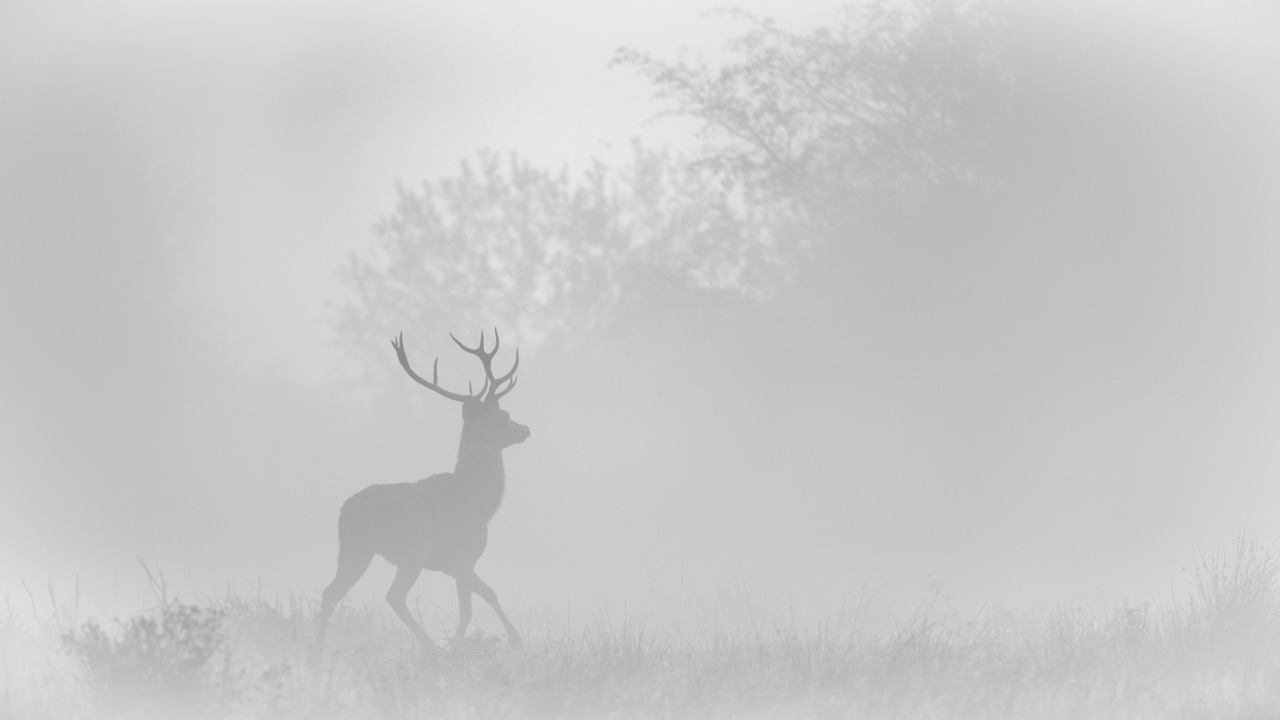
    The elegance of a red deer stag walking in the fog during the rut. Photograph by Amar Guillen, photographer artist
    The elegance of a red deer stag walking in the fog during the rut.

    Table of Contents

    • The Little Story Behind This Article
    • Definition of Fog and Mist
    • The Fog Phenomenon
    • The Best Time of the Year to Photograph Deer in the Fog
    • Some Pictures Of Red Deer Stags in the Fog
    • Why Should You Photograph Deer in the Fog?
    • How to Photograph Deer in the Fog
    • The Choice of Focal Lengths and Framing

    The Little Story Behind This Article

    My passion for the photography of big mammals, specifically deer, began in the forest of La Coubre in Charente-Maritime in France. It is a huge state-owned forest that extends over nearly 8000 hectares (nearly 20,000 acres) on the peninsula of Arvert.

    It was in this forest where I experienced overwhelming unexplainable emotions upon first hearing the regal bugling of the deer and where I had the chance to photograph deer, does, and wild boars.

    The forest is huge. I used to start my days beneath a cloth photo blind before walking in search of animals.

    I will always remember this day in September. The morning was cold. I had parked my car along a country road. It was 6 o'clock in the morning. The night was very dark. In spite of the unfavorable conditions for walking, I decided to venture into the forest. For the first 500 meters (1640 feet), I opted for using a headlamp. I had decided to walk the last 200 meters (650 feet) in absolute darkness to avoid being spotted.

    For several days, I had been waiting in a small clearing where I had spotted tracks and deer droppings. Not far from this clearing, I had photographed deer and wild boar. But the scenery and the plunging views prevented me from creating interesting pictures. The clearing was perfect, but each time proved unsuccessful in capturing images of the animals. I hoped that luck would smile on me on this cold morning.

    While waiting under my cloth photo blind, I had chosen a huge fir tree to lean against, dressed in my camouflage clothing. The trunk allowed me to break my silhouette.

    Once I arrived, I settled in quietly. I could see absolutely nothing. Not the tiniest noise disturbed the dark stillness of that magical morning.

    Around 8 o'clock, the night began to disappear. The day rose timidly. My surprise was immense because the fog completely enveloped the clearing. I did not expect this at all.

    Suddenly, without any warning signs, I heard a deer bugling on my right. The sound was impressive. The clear ringing was like a sound box. And yet, I could see nothing.

    The worst thing is even if I could have seen something, I would have been unable to take a picture because I had chosen a different angle that looked out over the track that led to the other side of the clearing. Impossible to move without making noise. I decided to be still and wait. Besides, the fog was too thick.

    The deer bugled for 30 minutes. At that time, my Nikon D200 could not record the sounds.

    I fully enjoyed the auditory show. What else could I do but soak up this glorious experience! He must also have been pretty angry because I could smell him.

    I was making a movie in my mind by imagining my deer emerging from the fog with its head held high and bugling. I had all the images in my head. Luck could not fail me, especially in such conditions.

    When the fog cleared, the deer had disappeared. The clearing remained desperately empty all morning.

    It was on this very day that my interest for the autumn season sparked, and so began my deep passion for shooting photographs in the fog. During the years that followed, I understood that I had been incredibly lucky and that it is already a challenge to come across fog, but then to have the right conditions to photograph it is yet another challenge.

    It is from this moment on that I began to look for specific areas that correspond to my creative research.

    In the rest of this article, I will explain what I have learned.

    Why and How: Photographing the Bugle of Deer in Black and White.

    Definition of "Fog" and "Mist"

    Before going any further in this article, it seems important to me to define the words “fog” and “mist” because very often people are mistaken about these.

    Fog and mist are the same phenomenon.

    On land, we talk about fog when the visibility is between 1 and 5 kilometers (0.6 and 3.1 miles), and we may even refer to fog having a visibility of less than 1 kilometer (0.6 mile).

    I specified that it was on land because on the sea we mainly talk about fog for visibilities of less than 1 kilometer (0.6 miles).

    In this article, I will only use the word fog because in wildlife photography, we are on earth. Fog is a visible phenomenon that is of great interest to those of us who are animal photographers.

    The Fog Phenomenon

    Fog is a meteorological phenomenon induced by the suspension of small water droplets in the air due to turbulent air movements.

    In fact, fog is a cloud that gently touches the ground.

    Several conditions must be met to have fog.

    On the one hand, for fog to form, the humidity level in the air must be high enough. In addition, wind must be present. It must not be too strong, otherwise the fog will disperse. However, it must not be too weak, otherwise water droplets cannot be suspended in the air. This balance between the two is difficult to find. That is why fog is quite rare in areas where you may photograph deer.

    In addition to a noticeably light wind, the air must have condensation or freezing nuclei. These are microparticles that will allow water droplets to settle and remain in suspension. In nature, without the phenomenon of pollution, these microparticles are transported by the wind as dust. They can also be induced by plants. The phenomena are quite complex and are beyond the scope of this article on wildlife photography. But just remember that without these microparticles, fog cannot be created. Again, this is a special condition that is not easy to create.

    Finally, and this is the last condition, the air must be saturated with water. This is why fog is more likely to be present in humid areas or in areas with ponds. When the ground is humid and warmer than the ambient air, it only takes a drop in temperature during the night to create fog. This is called evaporation fog.

    There are other types of fog such as radiative fog, advection fog or precipitation fog but what interests me most for this article is evaporation fog.

    To have foggy conditions perfect for photographing deer, you must look for a wet area, wait for a day with weather that will warm the ground, wait until the next night to cool the air, have enough microparticles in the atmosphere, and ultimately have the right wind conditions. You must understand that it is not so simple as showing up and snapping photos. Not all regions are conducive to fog, and it may take a bit of trial and error to scope out the locations with the best foggy conditions.

    The Best Time of the Year to Photograph Deer in the Fog

    The best time for fog is certainly autumn.

    Showers generate moisture in the soil. Winds are frequent. Vegetation, even if it starts to die off, can generate microparticles that will fix the water droplets. Mornings can be cold. The atmosphere cools down. You can also have beautiful sunny days that will warm the soil. Evaporation mists may appear after very cool nights.

    When the deer are bugling, you can easily orient yourself in their direction to take your pictures. Moreover, the woods are often dry in this season with the falling leaves, thus producing microparticles.

    Winter is not really a good time because deer antlers fall in February. It is necessary to wait for the summer for them to grow back completely, but during that time it is rare for fog to occur.

    Personally, I always wait until the middle of autumn to choose the places where I will go to photograph the deer.

    Why and How Creating Wildlife Photos in High Key Black and White.

    Some Pictures Of Red Deer Stags in the Fog

    Click on a thumbnail to enlarge it.

    • Red Deer Stag in the fog during the rut of the deer. Amar Guillen, Photographer.
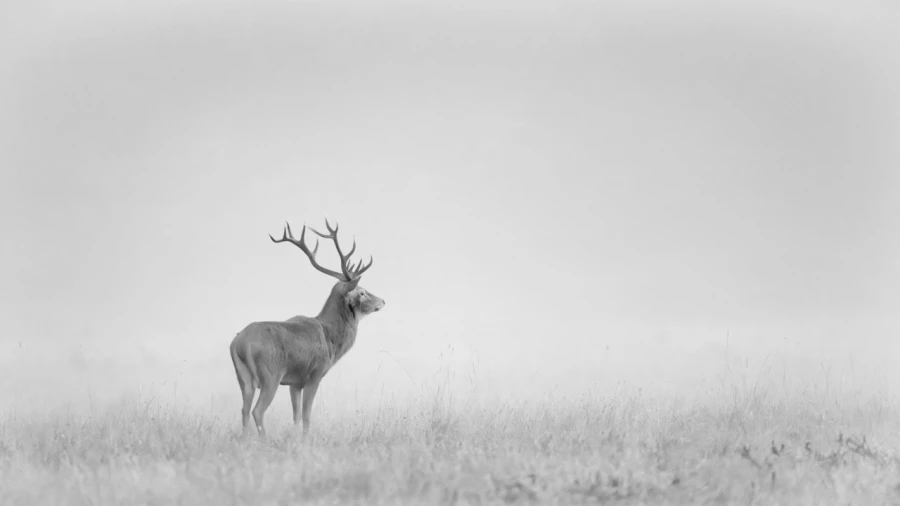
      Red Deer Stag in the fog during the rut of the deer.
      Red Deer Stag in the fog during the rut of the deer.
    • Red Deer Stag in the fog during the rut of the deer. Amar Guillen, Photographer.
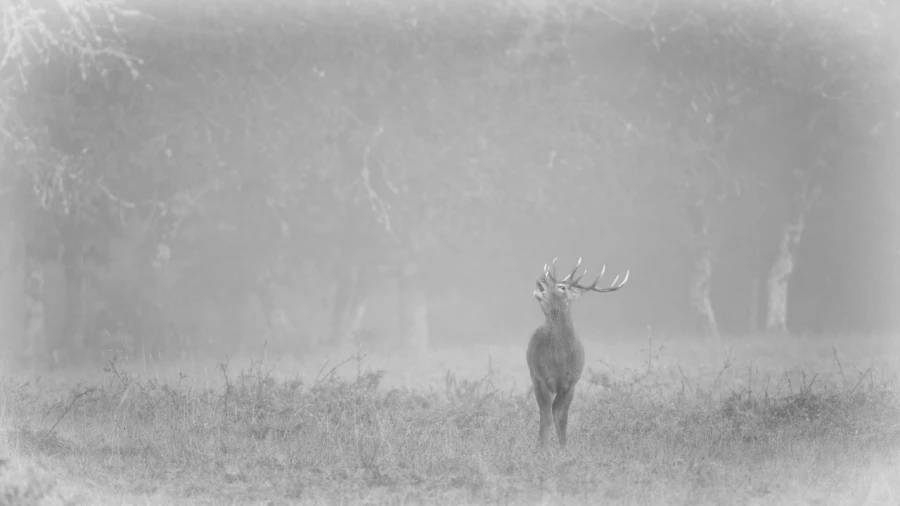
      Red Deer Stag in the fog during the rut of the deer.
      Red Deer Stag in the fog during the rut of the deer.
    • Red Deer Stag in the fog during the rut of the deer. Amar Guillen, Photographer.
      Red Deer Stag in the fog during the rut of the deer.
      Red Deer Stag in the fog during the rut of the deer.
    • Red Deer Stag in the fog during the rut of the deer. Amar Guillen, Photographer.
      Red Deer Stag in the fog during the rut of the deer.
      Red Deer Stag in the fog during the rut of the deer.
    • Red Deer Stag in the fog during the rut of the deer. Amar Guillen, Photographer.
      Red Deer Stag in the fog during the rut of the deer.
      Red Deer Stag in the fog during the rut of the deer.
    • Red Deer Stag in the fog during the rut of the deer. Amar Guillen, Photographer.
      Red Deer Stag in the fog during the rut of the deer.
      Red Deer Stag in the fog during the rut of the deer.
    • Red Deer Stag in the fog during the rut of the deer. Amar Guillen, Photographer.
      Red Deer Stag in the fog during the rut of the deer.
      Red Deer Stag in the fog during the rut of the deer.
    • Red Deer Stag in the fog during the rut of the deer. Amar Guillen, Photographer.
      Red Deer Stag in the fog during the rut of the deer.
      Red Deer Stag in the fog during the rut of the deer.
    • Red Deer Stag in the fog during the rut of the deer. Amar Guillen, Photographer.
      Red Deer Stag in the fog during the rut of the deer.
      Red Deer Stag in the fog during the rut of the deer.
    • Red Deer Stag in the fog during the rut of the deer. Amar Guillen, Photographer.
      Red Deer Stag in the fog during the rut of the deer.
      Red Deer Stag in the fog during the rut of the deer.
    • Red Deer Stag in the fog during the rut of the deer. Amar Guillen, Photographer.
      Red Deer Stag in the fog during the rut of the deer.
      Red Deer Stag in the fog during the rut of the deer.
    • Red Deer Stag in the fog during the rut of the deer. Amar Guillen, Photographer.
      Red Deer Stag in the fog during the rut of the deer.
      Red Deer Stag in the fog during the rut of the deer.
    • Red Deer Stag in the fog during the rut of the deer. Amar Guillen, Photographer.
      Red Deer Stag in the fog during the rut of the deer.
      Red Deer Stag in the fog during the rut of the deer.
    • Red Deer Stag in the fog during the rut of the deer. Amar Guillen, Photographer.
      Red Deer Stag in the fog during the rut of the deer.
      Red Deer Stag in the fog during the rut of the deer.
    • Red Deer Stag in the fog during the rut of the deer. Amar Guillen, Photographer.
      Red Deer Stag in the fog during the rut of the deer.
      Red Deer Stag in the fog during the rut of the deer.
    • Red Deer Stag in the fog during the rut of the deer. Amar Guillen, Photographer.
      Red Deer Stag in the fog during the rut of the deer.
      Red Deer Stag in the fog during the rut of the deer.
    • Red Deer Stag in the fog during the rut of the deer. Amar Guillen, Photographer.
      Red Deer Stag in the fog during the rut of the deer.
      Red Deer Stag in the fog during the rut of the deer.
    • Red Deer Stag in the fog during the rut of the deer. Amar Guillen, Photographer.
      Red Deer Stag in the fog during the rut of the deer.
      Red Deer Stag in the fog during the rut of the deer.
    • Red Deer Stag in the fog during the rut of the deer. Amar Guillen, Photographer.
      Red Deer Stag in the fog during the rut of the deer.
      Red Deer Stag in the fog during the rut of the deer.
    • Red Deer Stag in the fog during the rut of the deer. Amar Guillen, Photographer.
      Red Deer Stag in the fog during the rut of the deer.
      Red Deer Stag in the fog during the rut of the deer.
    • Red Deer Stag in the fog during the rut of the deer. Amar Guillen, Photographer.
      Red Deer Stag in the fog during the rut of the deer.
      Red Deer Stag in the fog during the rut of the deer.
    Red Deer Stag in the fog during the rut of the deer.
    Red Deer Stag in the fog during the rut of the deer.
    Red Deer Stag in the fog during the rut of the deer.
    Red Deer Stag in the fog during the rut of the deer.
    Red Deer Stag in the fog during the rut of the deer.
    Red Deer Stag in the fog during the rut of the deer.
    Red Deer Stag in the fog during the rut of the deer.
    Red Deer Stag in the fog during the rut of the deer.
    Red Deer Stag in the fog during the rut of the deer.
    Red Deer Stag in the fog during the rut of the deer.
    Red Deer Stag in the fog during the rut of the deer.
    Red Deer Stag in the fog during the rut of the deer.
    Red Deer Stag in the fog during the rut of the deer.
    Red Deer Stag in the fog during the rut of the deer.
    Red Deer Stag in the fog during the rut of the deer.
    Red Deer Stag in the fog during the rut of the deer.
    Red Deer Stag in the fog during the rut of the deer.
    Red Deer Stag in the fog during the rut of the deer.
    Red Deer Stag in the fog during the rut of the deer.
    Red Deer Stag in the fog during the rut of the deer.
    Red Deer Stag in the fog during the rut of the deer.
      • Red Deer Stag in the fog during the rut of the deer.
      • Red Deer Stag in the fog during the rut of the deer.
      • Red Deer Stag in the fog during the rut of the deer.
      • Red Deer Stag in the fog during the rut of the deer.
      • Red Deer Stag in the fog during the rut of the deer.
      • Red Deer Stag in the fog during the rut of the deer.
      • Red Deer Stag in the fog during the rut of the deer.
      • Red Deer Stag in the fog during the rut of the deer.
      • Red Deer Stag in the fog during the rut of the deer.
      • Red Deer Stag in the fog during the rut of the deer.
      • Red Deer Stag in the fog during the rut of the deer.
      • Red Deer Stag in the fog during the rut of the deer.
      • Red Deer Stag in the fog during the rut of the deer.
      • Red Deer Stag in the fog during the rut of the deer.
      • Red Deer Stag in the fog during the rut of the deer.
      • Red Deer Stag in the fog during the rut of the deer.
      • Red Deer Stag in the fog during the rut of the deer.
      • Red Deer Stag in the fog during the rut of the deer.
      • Red Deer Stag in the fog during the rut of the deer.
      • Red Deer Stag in the fog during the rut of the deer.
      • Red Deer Stag in the fog during the rut of the deer.

      Why Should You Photograph Deer in the Fog?

      Everyone has their reasons for photographing deer in the fog.

      Personally, fog allows me to create creative wildlife photography. For me, the deer's bugle is above all a question of atmosphere. In the collective imagination, the fog evokes autumn and the first frosts which mark the approaching winter. The atmospheres with the fog are always a guarantee to make interesting and evocative photos.

      If you are anything like me, then you surely enjoy creating photos that symbolize quietness, dreams, and serenity. Fog is your best ally.

      Fog reduces vision and muffles sound. It is always difficult to orient oneself and move around in the fog. Fog symbolizes the confusion of the mind.

      But the fog also makes it possible to conceal oneself and to escape from the gaze of others. It is associated with protection.

      Finally, the fog hides known places and increases the mystery. It reveals a new world hidden within the old.

      For me, fog is a symbolic way in which I fulfilled my search for new horizons where peace and tranquility reign. By sinking into the depths of the fog, I can venture into unknown lands in search of serenity. I do not know where I am going but I know what I am looking for. It will take me time to reach my goal, but my pugnacity will eventually reap great rewards.

      As for deer, they represent elegance, power, and virility. Photographing them in a foggy landscape allows me to highlight them in minimalist scenes. It is a juxtaposition of the powerful and bold with the ethereal and mysterious.

      It is up to you to find symbolic reasons to photograph deer in the fog you encounter.

      How to Photograph Deer in the Fog

      Photographing deer in the fog is not an easy thing. You must first find areas where fog can create itself. The conditions I mentioned earlier must all be met.

      Then you must look for deer. The deer slab is an interesting time in which you can locate them more easily.

      Finally, you must find the right stage to showcase the animal power and natural elegance of the deer.

      Personally, I invest time in stakeouts where I can photograph deer in the mist. I always evolve my skills in regions that are familiar. I know where to place myself.

      But I do not neglect the photography walk on the day of the shoot. This technique is interesting because if you cannot see the deer, they cannot see you either. The photo walk will offer you many creative possibilities.

      Nevertheless, knowledge of weather conditions and animals is not enough. Knowledge of your equipment is especially important. For example, you must be able to disengage your lens in manual focus. Deer silhouettes are often fleeting in the fog. Even with a central collimator, you will not be able to perform auto-focus. The lens will skate. Disengaging it in manual mode will be the only way to focus accurately. I recommend that you practice this before embarking upon your fall sessions.

      Why: Photography is A True Artistic Discipline.

      The Choice of Focal Lengths and Framing

      Personally, I use a long focal length to photograph deer in the mist. You will not have any chance to approach deer with a short focal length.

      In addition, I find it interesting to recreate the fall atmosphere. Your scenes should be airy and wide. The deer should be photographed from a distance.

      In my opinion, the best framing for a scene with fog is definitely the horizontal format. You need to make your scene breathe and give it a lot of space always to evoke the atmosphere. 3:2, 16:9 or 2:1 ratios are perfectly suitable.

      Click Here To See Black and White Fine Art Print Collections.
      1. October 2020. The Bugle of Red Deer Stag: A Photo Project
      2. Not Taking the Time to Develop Your Photos: A Trap to Avoid
      3. The Impostor Syndrome in Photography: A Trap to Avoid
      4. 10 Traps to Avoid If You Want to Create Good Photos

      Page 39 of 201

      • 34
      • 35
      • 36
      • 37
      • 38
      • 39
      • 40
      • 41
      • 42
      • 43
      1. You are here:  
      2. Home
      3. Blog Photographic Approach

      Share on Social Media

      Post
      Share
      Share
      E-mail
      WhatsApp
      Text

      Join Me on Social Networks

      Join Me on Facebook  Join Me on Instagram  Join Me on LinkedIn

      Claim your free guide to make your photo impactful and meaningful

      Claim Your Free Guide '50 Pages of Tips to Give Impact and Meaning to Your Photos'.

      4 + 8 =

      Click Here To Discover All My Chronicles About the Photographic Approach.

      Treat Yourself to a Fine Art Print That Matches your Personality

      Example of a vacation home interior with a black and white fine photo art displayed on the wall.

      Fine Art Print Collections in Black and White

      Fine Art Print Collections in Black and White Black and white photography is a suitable technique for many nature scenes. It requires a particular frame of mind. A black and white photograph should be prepared and planned from the framing to the…
      11991
      Fine Art Print Collections in Black and White
      An abstract art photo displayed in a contemporary living room decor.

      Fine Art Print Collections in Color

      Collections of Fine Art Prints in Color Color photographs allow digressions and take the audience to the message by secondary ways. The world around us, especially nature, is colorful. A color image can show the way our surroundings really are. Of course, it…
      10440
      Fine Art Print Collections in Color
      Example of a home interior with fine art prints in my style back to black displayed on the wall. These photos are a part of my collection 'Wild beauties of Kenya'.

      Fine Art Print Collections in Back to Black

      Fine Art Print Collections in Back to Black I want to share my fine art prints of nature in a personal style that I call "back to black." "Back to Black" was developed to embody a sharp and clean style for artistic photos that can be hung in your living room,…
      9980
      Fine Art Print Collections in Back to Black
      A waiting room with a photo in the style Fusion displayed on the wall. Grey Heron in Fusion.

      Fine Art Print Collections with the Fusion Style

      Fine Art Print Collections with the Fusion Style I would like to share a very creative and modern photography style to represent Nature in a very different way. I call it "Fusion." I created the style to offer dynamic photos, allowing you to start a good day…
      7908
      Fine Art Print Collections with the Fusion Style
      A living room with a photo in the style 'Impression' exposed on the wall. Rising sun in impression

      Fine Art Print Collections with the ‘Impression’ Style

      Fine Art Print Collections with the ‘Impression’ Style The objective of this photographic style is to create the ephemeral blurs. That's why I named it 'Impression.' Photography, as an art form, is a powerful means of expressing reality from different…
      5827
      Fine Art Print Collections with the ‘Impression’ Style
      Fine art prints from the style back to black displayed on a wall. Amar Guillen, photographer artist

      New Collections of Fine Art Prints Dedicated to the Wonders of Nature

      New and Updated Fine Art Print Collections Dedicated to the Wonders of Nature Fine art prints from the style back to black displayed on a wall.
      11446
      New Collections of Fine Art Prints Dedicated to the Wonders of Nature

      Themes of the Blog Articles

      Landscape of Arches National Park in Utah in black and white.

      Blog Articles Dedicated to Artist Statement

      Blog Articles Dedicated to Artist Statement
      Dunes of death Valley in Black and White

      Blog Articles Dedicated to Black and White Photography

      Blog Articles Dedicated to Black and White Photography
      Abstract photo or trees reflection on water

      Blog Articles Dedicated to Photographic Mindset

      Blog Articles Dedicated to Photographic Mindset
      Abstract photo of ridles on water

      Blog Articles Dedicated to Artistic Photography

      Blog Articles Dedicated to Artistic Photography
      Abstract photo of Yellowstone

      Blog Articles Dedicated to Photographic Language

      Blog Articles Dedicated to Photographic Language
      Pronghorn in Yellowstone

      Blog Articles Dedicated to Wildlife Photography

      Blog Articles Dedicated to Wildlife Photography
      Landscape of Bryce Canyon

      Blog Articles Dedicated to Photographing United States

      Blog Articles Dedicated to Photographing United States
      Underwater waves in the Red Sea

      Blog Articles Dedicated to Photographic Techniques

      Blog Articles Dedicated to Photographic Techniques
      Tree of Black Canyon in Black and White

      Blog Articles Dedicated to Landscape Photography

      Blog Articles Dedicated to Landscape Photography
      Manta Ray in Maldives in Black and White

      Blog Articles Dedicated to Underwater Photography

      Blog Articles Dedicated to Underwater Photography
      Red Deer stag during the rut of the deer

      Blog Articles Dedicated to Photographic Judgement

      Blog Articles Dedicated to Photographic Judgement
      Great Crested Greb and his chick

      Unclassified Blog Articles

      Unclassified Blog Articles

      You Might Be Interested By One of These Photographic Approach Articles

      Photograph in black and white of the Grand Canyon from Arizona State in USA.

      Why and How Mastering the Steps of Creating an Art Photograph

      3603
      Why and How Mastering the Steps of Creating an Art Photograph
      An example of a narrative photo. Landscape of Island in the Sky in the Canyonlands in Utah in United States. Photo in black and white by Amar Guillen.

      Why and How: Creating Impactful Narrative Photos

      4118
      Why and How: Creating Impactful Narrative Photos
      Snowy landscape of Yellowstone during winter.

      3 Steps for Giving Meaning to Your Photos

      8750
      3 Steps for Giving Meaning to Your Photos
      Two lions in Kenya. Photographed in black and white. Photograph by Amar Guillen, photographer artist.

      To Create Aesthetics Photos, Print your Images

      4238
      To Create Aesthetics Photos, Print your Images

      Receive Free Tips On How to Give Impact and Meaning to Your Photos. Subscribe to Receive Regular Articles.

      2 + 7 =

      Contact Me By Email

      10 + 9 =
      This site is protected by reCAPTCHA and the Google Privacy Policy and Terms of Service apply.

      About Amar Guillen, Creator of Fine Art Prints of Nature
      As a photographer capturing the artistic essence for several decades, I have mastered the art of crafting an authentic experience for art enthusiasts and collectors of visual art.
      When I observe my surroundings, be it friends, family, relationships, or professional contacts, I see souls in perpetual motion. Every moment of their existence is engulfed by daily hassles, work concerns, social media, online or televised information streams, and videos on the web.
      Every minute, they strive to accomplish something, fearing losing ground and feeling marginalized in this frenzied society. Imprisoned by an oppressive schedule, the essential eludes them, drowned in the tumult of daily life. Is it really crucial to watch yet another cat video on the internet? Is it necessary to post twenty daily messages on social media?
      Despite this, they remain constantly stressed and anxious about the challenges of the world, without being able to influence these monumental problems. It is at this moment that my artistic nature photographs come into play. Those who have had the privilege of hanging one of my works in their personal or professional space have expressed a radical transformation in their lives.
      Every day, contemplating these works of art immerses them in tranquility, inner peace, and rediscovered serenity. They then understand that nature has the power to unravel tensions, to encourage reflection on the essential. Artistic photographs thus become open windows to the wonders of nature.
      I have chosen to share the best of myself by helping others discover their identity, personality, style, all while reconnecting with nature. Take the time to explore my artistic photographs if you wish to reveal your true essence. Once hung in your space, your view of the world will be transformed.
      Amar Guillen is a creator of fine art prints of nature.
      I am Amar Guillen, creator of nature art photographs. I have a deep conviction that contemplating nature has the power to transform human beings. If everyone learned to know, respect, and preserve nature, our world would be transformed into a haven of peace where everyone would find their place.
      Copyright © 2003 - 2026 Guillen Photo LLC - All rights reserved. Amar Guillen, professional photographer since 2003.
      • Blog
      • Calibration
      • Legal Information
      • Sitemap
      • Accessibility
      • Contact Me
      • Updates of the Website
      I Want to Help You to Create Interesting Photos

      How Can I Help You To Create More Interesting Photos?

      Ask Me a Technical Question.
      Subscribe to my Newsletter. The Inspiration Behind Guillen Photo.

      Select your language

      • English (United Kingdom)
      • Français (France)
      Claim your free guide to make your photo impactful and meaningful

      Claim Your Free Guide '50 Pages of Tips to Give Impact and Meaning to Your Photos'.

      2 + 1 =

      Contact Me By Email

      5 + 10 =

      Office Address:
      3512 Robin Road
      Plano Texas 75075
      USA

      Office phone: (+1)214-769-6825