• The Art of ChoosingHome page
  • Fine Art Prints3 Editions
  • CollectionsAll Collections
  • AboutAmar Guillen
  • Customer Space & Contact
  • Select your language

    • English (United Kingdom)
    • Français (France)
  • All You Need to Select Your Fine Art Print
    • How to Choose a Fine Art Print - Q&A - FAQ
    • New Creations
    • Explore Some Interiors
    • Fine Art Print Blog
  • Browse by Edition
    • All Fine Art Prints
    • Unique Edition
    • Limited Edition
    • Open Edition
  • Browse by Style
    • Black and White
    • Color
    • Fusion
    • Impression
    • Back to Black
    • Landscapes in Black and White
    • Landscapes in Color
    • Animals in Black and White
    • Animals in Color
  • Browse by Theme
    • Landscape
    • Wildlife
    • Underwater
    • Abstract
    • Symbolic
    • Landscapes of the United States
    • Landscapes of France
    • Landscapes of Scotland
    • Seascapes
    • Relaxing
    • Energizing
    • Playful
  • Browse by Format
    • Rectangular
    • Square
    • Panoramic
  • Contact Me
    • Contact Me by Email or Phone
  • Collections
    • New Collections
    • All Collections
  • Browse by Theme
    • Landscapes
    • Wildlife
    • Underwater
    • Abstract
    • Symbolic
    • Landscapes of France
    • Landscapes of the United States
  • Browse by Style
    • Black and White
    • Color
    • Impression
    • Back to Black
    • Fusion
  • Contact Me
    • Contact Me by Email or Phone
  • Discover More About Me
    • Discover Who is Amar Guillen
    • Artistic and Photographic Statement
  • Galleries
    • Photo Galleries
    • Abstract Portfolio in Color
    • Black and White Landscape Photography Portfolio
    • Color Landscape Photography Portfolio
    • Black and White Wildlife Photography Portfolio
    • Color Wildlife Photography Portfolio
    • Underwater Photography Portfolio
  • Contact Me
    • Contact Me by Email or Phone
  • Your Customer Space
    • Create or Manage your Account
    • Your Download Space
    • Your Orders
  • Contact Me
    • Contact Me by Email or Phone

You are in that section: Home > Blog > Blog of the Photographic Creation Approach

The Choice of the Decor is Essential for Your Wildlife Photos
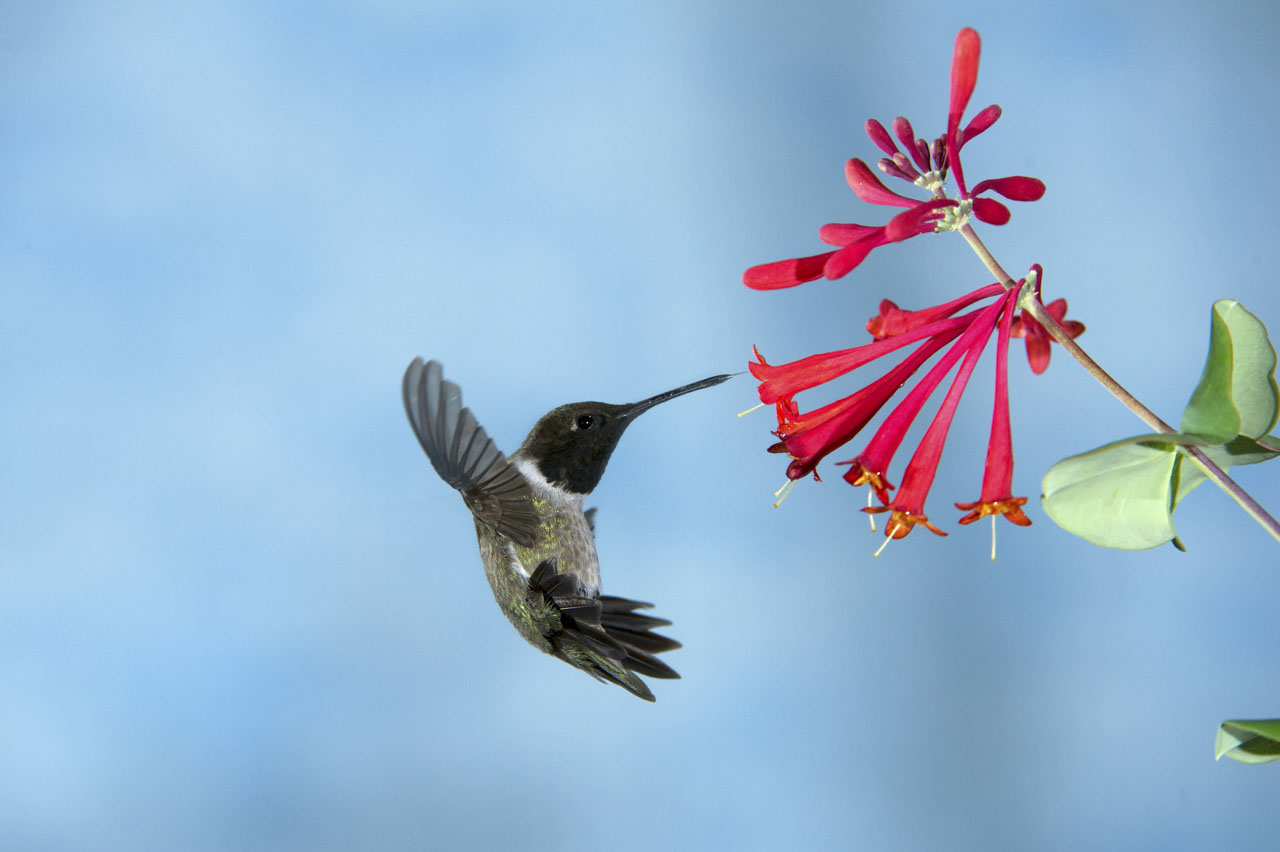
To achieve this photo of a hummingbird we asked ourselves the question of the quality of the background and the negative space.
To achieve this photo of a hummingbird I asked myself the question of the quality of the background and the negative space.

What Will I Choose For the Setting, the Light and the Point of Interest?

When I arrive somewhere for a photo session, I choose the setting first, then the light and finally the points of interest. The setting and light are like the packaging and gift wrap around a gift. This method enables us to choose the "packaging" that will showcase the animals in my photographs first. I often place my blind in such a way that the animals will be placed in the best setting. Similarly, when I approach an animal, my choice of a point of view is conditional on a good setting. I do not create wildlife photographs just because the animals are there. I always try to create harmony between all the elements in my compositions.

How Will I Compose My Photo?

As I pointed out in another article, composing a photograph is harmoniously organizing all the elements of the photo. The photographer must use the photographic attributes and the reinforcing elements to improve the readability of the point of interest. A harmonious composition respects the balance between masses and enables the audience’s eyes to go directly to the animal’s eyes.

A wildlife photographer must always ask how to build a picture so that it will have the strongest impact.

Which Framing Will I Use?

Once the photograph has been composed, the photographer must choose the framing. Before triggering the camera, I always ask myself what the purpose of the photograph is. Is it for an exhibition, a collection of fine art photos, or a slideshow? The answer to this question will dictate whether I use a horizontal or vertical framing and will help us decide what proportions I will choose for the final picture. The choice of framing is critical for a wildlife photographer.

Will the Photo Be in Color or Black and White?

The choice of color or black and white will have a great impact on the final result. If the final image will be in black and white, the scene will be refined and sober, with beautiful contrasts.

If the final image will be in color, the photographer will focus on the bokehs of the foreground and the background. He will emphasize certain photographic elements in order to create gradients of tones or colors. A wildlife photographer must know the theory of complementary colors if he wants to create a harmonious, eye-catching final photograph.

What Message Do I Want this Photo to Convey?

The photographer must ask himself one last question before he triggers the camera: what message does he want the photo to convey? The message may be an emotion, a feeling, or the photographer’s current mood.

If the photo will be an illustration, the message is less important because the most important thing is for the picture to show a species of animal and the maximum number of ways that the animal can be identified. Illustrative photography is primarily intended for books and magazines. The priority is that the photo make it easy to identify the animal.

In artistic photography, the message is essential. Everything must be unspoken, conveyed through suggestion. The photographer suggests messages and clearly says what he feels when taking the picture. In artistic animal photography, the audience shows a lot of anthropomorphism (attribution of human qualities to animals).

It Is Time to Take the Picture

Once all the questions listed above have been answered, the wildlife photographer can finally trigger the camera and achieve the photograph he has hoped for. This is a long process that should lead to an interesting photograph with a good amount of impact. If these questions are not asked, the picture will be taken, but it will be deleted or will never be edited, because it will not be very interesting.

Then it is time to process the photograph with software. I give the editing and correction phase 5% of the credit for a beautiful picture. 95% of the beauty of a picture comes from what was done in the field. However, this is the famous 5% that can give the "wow" factor to a photo.

Today, I consider that 1% of the wildlife pictures that I see are interesting. Most of them are uninteresting. They are only pale copies of existing photographs. The reason is simple: most photographers do not ask questions. They only deal with the technical aspect of photography. They care more about the number of photos made during a burst or the number of megapixels that their digital sensor has.

Finally

A wildlife photographer has to ask lots of questions before taking the first photograph during a photo session. If he does not pose these questions, or if he does not find the answers, then the session will certainly be wasted. It’s already hard to take good pictures and prepare well so that nothing is left to chance. Nature is unpredictable, and no one can master it. Careful preparation and asking good questions will enable the photographer to limit the number of unforeseen events that occur when he is in the field.

Be humble, patient, constant, persevering, and persistent because the road to excellence is long.
Questions to Ask Yourself When Taking Wildlife Photos

In order to make wildlife pictures with impact, a wildlife photographer must always ask questions before he triggers the camera for the first time. This time spent asking questions is absolutely necessary, because it is crucial that nothing be left to chance. A photographer should have prepared and planned for everything, even the improbable. This preparation will enable him to react better to the unexpected events that will happen when he is out in the field.

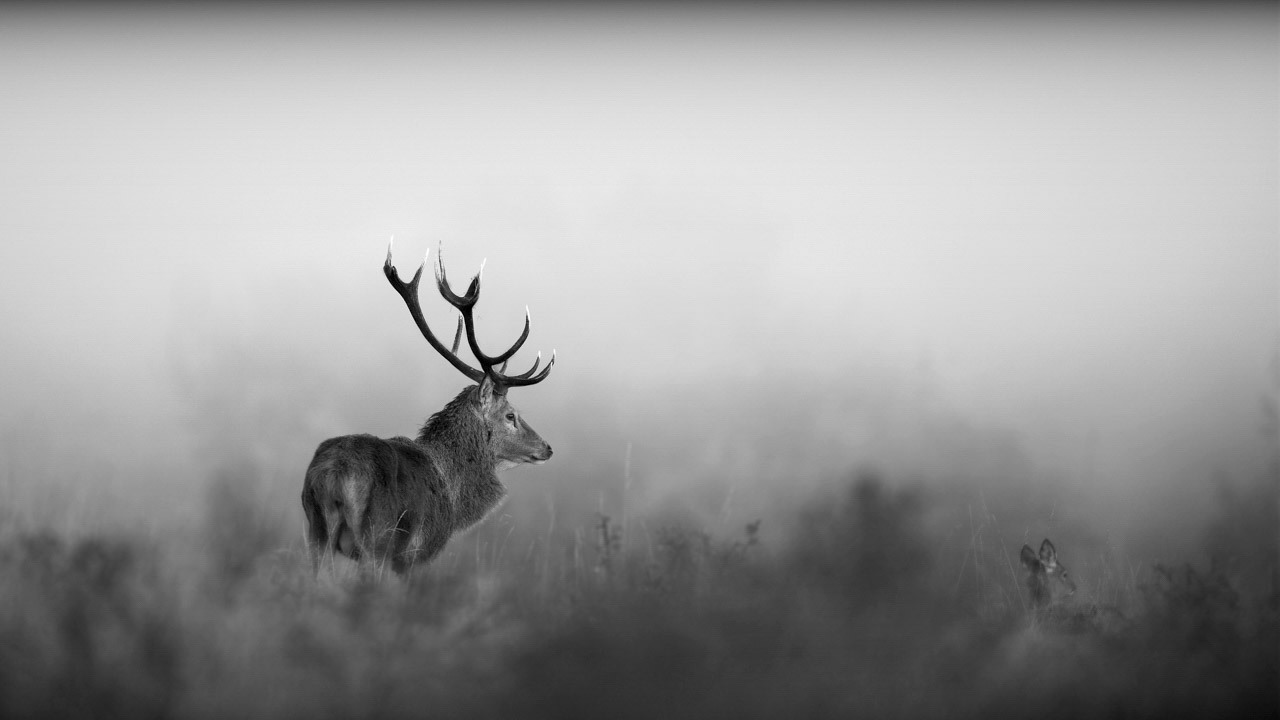
This photo of a deer during the rutting season has  been the subject of many questions, especially about the choice of the scene.
This photo of a deer during the rutting season has been the subject of many questions, especially about the choice of the scene.

Table of Contents

    Page 1

  • Which Species Will I Photograph?
  • What Kind of Photo Do I Want to Take?
  • How Am I Going to Approach the Animals?
  • What Camera and Lens Will I Use?
  • Out in the Field: What Point of View Will I Choose?
  • Page 2

  • What Will I Choose For the Setting, the Light and the Point of Interest?
  • How Will I Compose My Photo?
  • Which Framing Will I Use?
  • Will the Photo Be in Color or Black and White?
  • What Message Do I Want this Photo to Convey?
  • It Is Time to Take the Picture
  • Finally

Which Species Will I Photograph?

The first question that a wildlife photographer should ask is what kind of animal he is going to photograph: birds, mammals, reptiles, etc. Depending on the answer to this question, the conditions under which the photo is taken and the choices the photographer makes for the lighting and the scene will be totally different. The best time of day to photograph animals is also very different for different species. Birds are very active in the early morning when they are feeding, but reptiles are hard to find in the morning. Mammals are the most beautiful in the morning and evening when the lighting is indirect.

The camera lens used will be completely different for different species.

The technique used to approach the animals on the field will also change depending on the species. For example, a blind is usually not useful for photographing birds, except for species like the western marsh harrier. However, it is often necessary when photographing large mammals.

The answer to this question will determine the material in the photograph, the terrain the photographer chooses, and the hours when he takes pictures.

What Kind of Photo Do I Want to Take?

Before leaving for a photo session, a wildlife photographer has to decide what he will use his pictures for. Will they be used for commercial purposes, such as advertising? Will they be used for illustrations in a magazine or an ID book, or for a slideshow? Will they be art photographs to be displayed in an exhibition or framed and displayed in a house?

This is a critical question because the subjects, the points of interest, and the lighting sought by the photographer depend on the answer. Also, if the goal of the photo session is to create an artistic photograph, that photo must conform to the photographer’s vision. That is not necessarily the case for an illustrative photo.

The type of photograph he wants to take will completely change the way the wildlife photographer will choose the terrain, the point of interest, and the way he takes the picture. For us, this is an essential question.

How Am I Going to Approach the Animals?

Before arriving on the field, when he is still in the preparatory phase, the wildlife photographer has to ask himself whether he will wait in a blind, go on a photo walk, or stalk the animals.

The technique used changes depending on the species. Going on a photo walk is a good technique when photographing highly mobile animals which move unpredictably. You will have to go over a lot of ground to find and photograph them.

Stalking is ideal for large mammals such as deer or wild boar. It requires a thorough knowledge of the topography and of the animals’ habits, but it produces the most spectacular pictures.

The blind is the most attractive solution for animals which follow known paths and feed in known places. A blind can be artificial, like a tent, or made from natural material such as branches and foliage (this type requires nets to fix everything in place).

Choosing the right method for taking pictures is the best way to capture unique wildlife behaviors. If a photographer does not make these decisions before he goes out in the field, he will lose a lot of time and miss a lot of good pictures. Preparation is essential for creating good photos.

What Camera and Lens Will I Use?

A wildlife photographer’s gear must always be appropriate for the photographs he is going to take. For mammals that are not easy to approach, like deer, foxes or badgers, a long lens is required. I often recommend a focal length of more than 400mm for European and American animals.

For many species of birds a lens with a long focal length, such as a 500mm or a 600mm, is necessary for tight framing.

For insects, shorter focal lengths, such as 100mm, are sufficient. For reptiles even shorter focal lengths are appropriate.

For photographing fast-moving animals, a camera box with a fast autofocus is necessary so that the camera will focus as fast as possible. For nearby subjects that stay fairly still, a bridge camera is enough.

The camera equipment should always be appropriate for the species being photographed and the type of photos being taken.

Out in the Field: What Point of View Will I Choose?

After he has identified the species he will photograph, the type of photo he will take, the method he will use to get close to the animals, and the equipment he will use, the wildlife photographer arrives on the field. Before triggering the camera for the first time, there are still some critical questions he must ask.

The first of them is "What point of view will I choose?" The answer to this question will determine what the photographer chooses for the foreground, the background and the negative space. A good point of view will help to highlight the point of interest in the photograph. I usually do not recommend a high-angle shot, because it distorts the animals and makes them look crushed. I also do not recommend low-angle shots except for birds that are flying overhead. Photos are most interesting when the photographer’s point of view is on the animal’s eye level.

I also recommend always choosing a point of view that enables the photographer to show the gleam in the subject’s eyes. This point of light will quickly establish a connection between the audience and the animal.

What Will I Choose For the Setting, the Light and the Point of Interest?

  1. June 2016. Photography trip to the Dombes in France
  2. May 2016. Wildlife photo conference in Paris
  3. Why and How Composing A Nature Photograph Well
  4. Why and How It Is Important To Manage The Negative Space In Nature Photo

Page 126 of 201

  • 121
  • 122
  • 123
  • 124
  • 125
  • 126
  • 127
  • 128
  • 129
  • 130
  1. You are here:  
  2. Home
  3. Blog Photographic Approach

Share on Social Media

Post
Share
Share
E-mail
WhatsApp
Text

Join Me on Social Networks

Join Me on Facebook  Join Me on Instagram  Join Me on LinkedIn

Claim your free guide to make your photo impactful and meaningful

Claim Your Free Guide '50 Pages of Tips to Give Impact and Meaning to Your Photos'.

4 + 8 =

Click Here To Discover All My Chronicles About the Photographic Approach.

Treat Yourself to a Fine Art Print That Matches your Personality

Example of a vacation home interior with a black and white fine photo art displayed on the wall.

Fine Art Print Collections in Black and White

Fine Art Print Collections in Black and White Black and white photography is a suitable technique for many nature scenes. It requires a particular frame of mind. A black and white photograph should be prepared and planned from the framing to the…
11991
Fine Art Print Collections in Black and White
An abstract art photo displayed in a contemporary living room decor.

Fine Art Print Collections in Color

Collections of Fine Art Prints in Color Color photographs allow digressions and take the audience to the message by secondary ways. The world around us, especially nature, is colorful. A color image can show the way our surroundings really are. Of course, it…
10440
Fine Art Print Collections in Color
Example of a home interior with fine art prints in my style back to black displayed on the wall. These photos are a part of my collection 'Wild beauties of Kenya'.

Fine Art Print Collections in Back to Black

Fine Art Print Collections in Back to Black I want to share my fine art prints of nature in a personal style that I call "back to black." "Back to Black" was developed to embody a sharp and clean style for artistic photos that can be hung in your living room,…
9980
Fine Art Print Collections in Back to Black
A waiting room with a photo in the style Fusion displayed on the wall. Grey Heron in Fusion.

Fine Art Print Collections with the Fusion Style

Fine Art Print Collections with the Fusion Style I would like to share a very creative and modern photography style to represent Nature in a very different way. I call it "Fusion." I created the style to offer dynamic photos, allowing you to start a good day…
7908
Fine Art Print Collections with the Fusion Style
A living room with a photo in the style 'Impression' exposed on the wall. Rising sun in impression

Fine Art Print Collections with the ‘Impression’ Style

Fine Art Print Collections with the ‘Impression’ Style The objective of this photographic style is to create the ephemeral blurs. That's why I named it 'Impression.' Photography, as an art form, is a powerful means of expressing reality from different…
5827
Fine Art Print Collections with the ‘Impression’ Style
Fine art prints from the style back to black displayed on a wall. Amar Guillen, photographer artist

New Collections of Fine Art Prints Dedicated to the Wonders of Nature

New and Updated Fine Art Print Collections Dedicated to the Wonders of Nature Fine art prints from the style back to black displayed on a wall.
11446
New Collections of Fine Art Prints Dedicated to the Wonders of Nature

Themes of the Blog Articles

Landscape of Arches National Park in Utah in black and white.

Blog Articles Dedicated to Artist Statement

Blog Articles Dedicated to Artist Statement
Dunes of death Valley in Black and White

Blog Articles Dedicated to Black and White Photography

Blog Articles Dedicated to Black and White Photography
Abstract photo or trees reflection on water

Blog Articles Dedicated to Photographic Mindset

Blog Articles Dedicated to Photographic Mindset
Abstract photo of ridles on water

Blog Articles Dedicated to Artistic Photography

Blog Articles Dedicated to Artistic Photography
Abstract photo of Yellowstone

Blog Articles Dedicated to Photographic Language

Blog Articles Dedicated to Photographic Language
Pronghorn in Yellowstone

Blog Articles Dedicated to Wildlife Photography

Blog Articles Dedicated to Wildlife Photography
Landscape of Bryce Canyon

Blog Articles Dedicated to Photographing United States

Blog Articles Dedicated to Photographing United States
Underwater waves in the Red Sea

Blog Articles Dedicated to Photographic Techniques

Blog Articles Dedicated to Photographic Techniques
Tree of Black Canyon in Black and White

Blog Articles Dedicated to Landscape Photography

Blog Articles Dedicated to Landscape Photography
Manta Ray in Maldives in Black and White

Blog Articles Dedicated to Underwater Photography

Blog Articles Dedicated to Underwater Photography
Red Deer stag during the rut of the deer

Blog Articles Dedicated to Photographic Judgement

Blog Articles Dedicated to Photographic Judgement
Great Crested Greb and his chick

Unclassified Blog Articles

Unclassified Blog Articles

You Might Be Interested By One of These Photographic Approach Articles

Photograph in black and white of the Grand Canyon from Arizona State in USA.

Why and How Mastering the Steps of Creating an Art Photograph

3603
Why and How Mastering the Steps of Creating an Art Photograph
An example of a narrative photo. Landscape of Island in the Sky in the Canyonlands in Utah in United States. Photo in black and white by Amar Guillen.

Why and How: Creating Impactful Narrative Photos

4118
Why and How: Creating Impactful Narrative Photos
Snowy landscape of Yellowstone during winter.

3 Steps for Giving Meaning to Your Photos

8750
3 Steps for Giving Meaning to Your Photos
Two lions in Kenya. Photographed in black and white. Photograph by Amar Guillen, photographer artist.

To Create Aesthetics Photos, Print your Images

4238
To Create Aesthetics Photos, Print your Images

Receive Free Tips On How to Give Impact and Meaning to Your Photos. Subscribe to Receive Regular Articles.

2 + 7 =

Contact Me By Email

10 + 9 =
This site is protected by reCAPTCHA and the Google Privacy Policy and Terms of Service apply.

About Amar Guillen, Creator of Fine Art Prints of Nature
As a photographer capturing the artistic essence for several decades, I have mastered the art of crafting an authentic experience for art enthusiasts and collectors of visual art.
When I observe my surroundings, be it friends, family, relationships, or professional contacts, I see souls in perpetual motion. Every moment of their existence is engulfed by daily hassles, work concerns, social media, online or televised information streams, and videos on the web.
Every minute, they strive to accomplish something, fearing losing ground and feeling marginalized in this frenzied society. Imprisoned by an oppressive schedule, the essential eludes them, drowned in the tumult of daily life. Is it really crucial to watch yet another cat video on the internet? Is it necessary to post twenty daily messages on social media?
Despite this, they remain constantly stressed and anxious about the challenges of the world, without being able to influence these monumental problems. It is at this moment that my artistic nature photographs come into play. Those who have had the privilege of hanging one of my works in their personal or professional space have expressed a radical transformation in their lives.
Every day, contemplating these works of art immerses them in tranquility, inner peace, and rediscovered serenity. They then understand that nature has the power to unravel tensions, to encourage reflection on the essential. Artistic photographs thus become open windows to the wonders of nature.
I have chosen to share the best of myself by helping others discover their identity, personality, style, all while reconnecting with nature. Take the time to explore my artistic photographs if you wish to reveal your true essence. Once hung in your space, your view of the world will be transformed.
Amar Guillen is a creator of fine art prints of nature.
I am Amar Guillen, creator of nature art photographs. I have a deep conviction that contemplating nature has the power to transform human beings. If everyone learned to know, respect, and preserve nature, our world would be transformed into a haven of peace where everyone would find their place.
Copyright © 2003 - 2026 Guillen Photo LLC - All rights reserved. Amar Guillen, professional photographer since 2003.
  • Blog
  • Calibration
  • Legal Information
  • Sitemap
  • Accessibility
  • Contact Me
  • Updates of the Website
I Want to Help You to Create Interesting Photos

How Can I Help You To Create More Interesting Photos?

Ask Me a Technical Question.
Subscribe to my Newsletter. The Inspiration Behind Guillen Photo.

Select your language

  • English (United Kingdom)
  • Français (France)
Claim your free guide to make your photo impactful and meaningful

Claim Your Free Guide '50 Pages of Tips to Give Impact and Meaning to Your Photos'.

10 + 4 =

Contact Me By Email

5 + 1 =

Office Address:
3512 Robin Road
Plano Texas 75075
USA

Office phone: (+1)214-769-6825