• The Art of ChoosingHome page
  • Fine Art Prints3 Editions
  • CollectionsAll Collections
  • AboutAmar Guillen
  • Customer Space & Contact
  • Select your language

    • English (United Kingdom)
    • Français (France)
  • All You Need to Select Your Fine Art Print
    • How to Choose a Fine Art Print - Q&A - FAQ
    • New Creations
    • Explore Some Interiors
    • Fine Art Print Blog
  • Browse by Edition
    • All Fine Art Prints
    • Unique Edition
    • Limited Edition
    • Open Edition
  • Browse by Style
    • Black and White
    • Color
    • Fusion
    • Impression
    • Back to Black
    • Landscapes in Black and White
    • Landscapes in Color
    • Animals in Black and White
    • Animals in Color
  • Browse by Theme
    • Landscape
    • Wildlife
    • Underwater
    • Abstract
    • Symbolic
    • Landscapes of the United States
    • Landscapes of France
    • Landscapes of Scotland
    • Seascapes
    • Relaxing
    • Energizing
    • Playful
  • Browse by Format
    • Rectangular
    • Square
    • Panoramic
  • Contact Me
    • Contact Me by Email or Phone
  • Collections
    • New Collections
    • All Collections
  • Browse by Theme
    • Landscapes
    • Wildlife
    • Underwater
    • Abstract
    • Symbolic
    • Landscapes of France
    • Landscapes of the United States
  • Browse by Style
    • Black and White
    • Color
    • Impression
    • Back to Black
    • Fusion
  • Contact Me
    • Contact Me by Email or Phone
  • Discover More About Me
    • Discover Who is Amar Guillen
    • Artistic and Photographic Statement
  • Galleries
    • Photo Galleries
    • Abstract Portfolio in Color
    • Black and White Landscape Photography Portfolio
    • Color Landscape Photography Portfolio
    • Black and White Wildlife Photography Portfolio
    • Color Wildlife Photography Portfolio
    • Underwater Photography Portfolio
  • Contact Me
    • Contact Me by Email or Phone
  • Your Customer Space
    • Create or Manage your Account
    • Your Download Space
    • Your Orders
  • Contact Me
    • Contact Me by Email or Phone

You are in that section: Home > Blog > Blog of the Photographic Creation Approach

Using the Concepts of the Decisive Moment and Momentum to Give Impact to Your Photos

The decisive moment defined by Henri Cartier-Bresson and momentum are two important concepts that will allow you to give impact to your photos.

In this article, I share techniques with you on how to apply them in your field photography.

This article is a continuation of the ones dedicated to the 7 elements of art to use in your photos, the 8 principles of art applied to photography, as well as the concepts of studium and punctum.

This article will help you understand how to implement a new tool in your photography toolbox. By implementing it, you will make your photos even more interesting and instill in them true meaning.
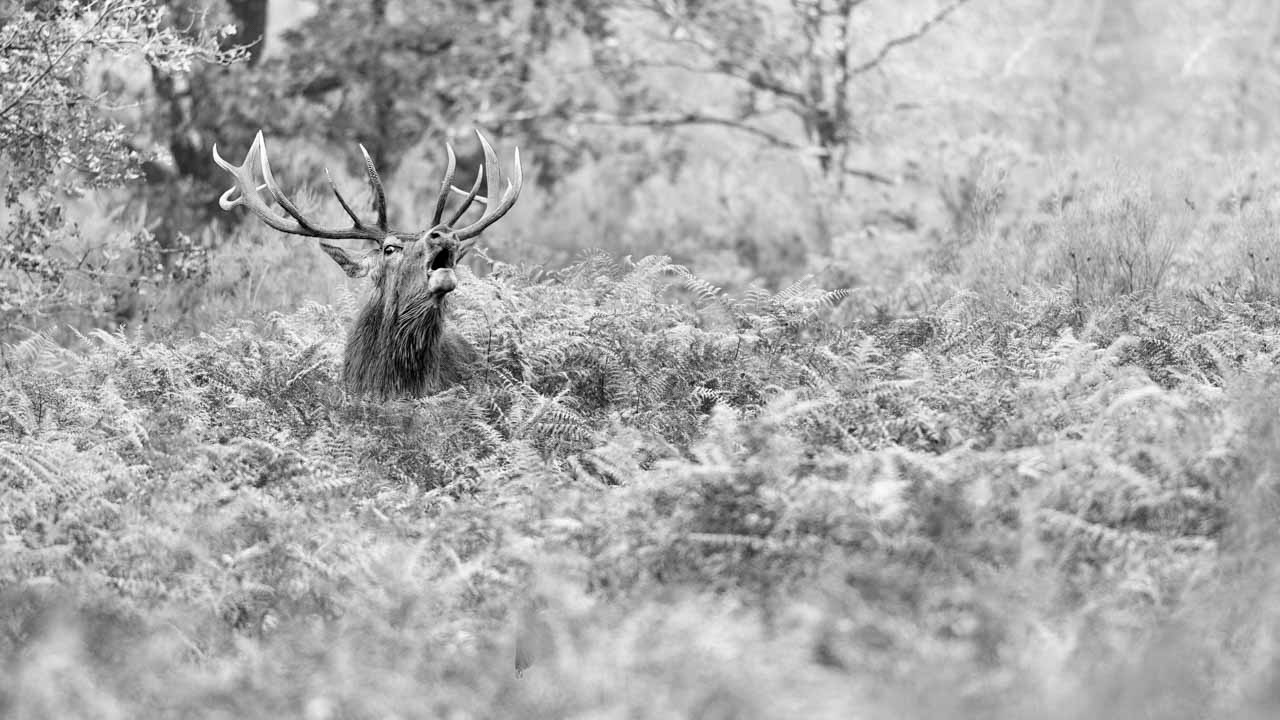
Red deer stag bellowing in a field of ferns in Charente-Maritime. A momentum among many others during this particularly unique period.

Table of Contents

  • Preamble
  • Henri Cartier-Bresson's Decisive Moment
  • The Momentum
  • How to Use the Concepts of Decisive Moment and Momentum in Your Photos
  • Finally
 

Preamble

I often say during my photography conferences or workshops that in photography, everything has been done, but everything remains to be done or invented.

This statement often elicits smiles and raises questions. Through years of experience, I have learned that by delving into the past and the work of art or photography masters, it is possible to understand essential concepts, bring them up to date to create novelties, and make our photos even better.

The main problem we face is ourselves. Indeed, we think we know everything and have everything under control. We believe that having a camera in hand and pressing a button is enough to realize and create good photos. I still encounter people who say, "I took great photos. You should take a look."

When I do, I often see rehashed, classic, copy-paste images. And even when they are technically correct, we all suffer from a malady that is difficult to cure: our ego is oversized. In the preceding lines, I used the word 'we' because I include myself in this population afflicted with ego issues.

Over the years, I have been treating myself, and I am getting better. I regularly step out of my comfort zone. I explore. I let go.

I often tell myself that I know nothing, that I master no subject, that I must learn, again and again. That is how I started studying masters from various artistic disciplines, particularly photography. Gradually, I change. My ego shrinks.

This is how I learned to understand the photographer Henri Cartier-Bresson. I delved into his technique and way of being, learning a lot from his concept of the decisive moment. I extrapolated it into the concept of momentum, which is well suited to the atmosphere photography, one of my favorite subjects.

I will share this with you in the following paragraphs.


Henri Cartier-Bresson's Decisive Moment

Henri Cartier-Bresson was a French photographer associated with the humanist photography movement. He excelled in street photography, capturing picturesque or meaningful aspects of everyday life. Along with other photographers, he co-founded the cooperative agency Magnum Photos in 1947.

I encourage you to take an interest in Henri Cartier-Bresson because he had a unique sense of composition and a different way of photographing.

In 1952, Henri Cartier-Bresson published a photo album, 'Images à la sauvette!' In it, he discusses his work, particularly the decisive moment, where he develops his concept of photography.

It is a somewhat expensive book, but in my opinion, it is one of the best photo books ever published.

Here's how Henri Cartier-Bresson defines the decisive moment: "For me, the camera is a sketchbook, an instrument of intuition and spontaneity, the master of the instant which, in visual terms, questions and decides simultaneously. In order to 'give a meaning' to the world, one has to feel oneself involved in what one frames through the viewfinder. This attitude requires concentration, a discipline of mind, sensitivity, and a sense of geometry."

The evocation of the fraction of a second in this definition inspired an American publisher to translate 'Images à la sauvette!' as 'Decisive Moment.'

In another sentence, Cartier-Bresson writes:

To me, photography is the simultaneous recognition, in a fraction of a second, of the significance of an event, as well as of a precise organization of forms which give that event its proper expression.

Once again, the last sentence aptly conveys the idea of the decisive moment as the result of a precise organization of forms. Although I generally agree with Cartier-Bresson's text, I would nuance this statement.

Cartier-Bresson is primarily a documentary and street photographer. He was not interested in abstract or landscape photography.

The spontaneous feeling of plastic rhythms is not always a reality. Processes are slow and lengthy. It is at the end of a process that the ideal scene is obtained.

Now that you understand the general sense of the decisive moment, it is time to see how momentum, a concept somewhat different from the decisive moment, is defined. For you, as a photographer, it is another aspect of photography that will help you capture photos more precisely.


The Momentum

As I wrote in the previous paragraph, the decisive moment defined by Henri Cartier-Bresson is a moment that lasts a fraction of a second and will be frozen by a photographer in a photograph.

It is a brief moment that will not be repeated.

You must keep in mind that Cartier-Bresson was a documentary and street photographer. He primarily photographed human beings with specific facial expressions and attitudes at very precise moments. You had to be ready to capture the moment.

In landscape or abstract photography, this decisive moment does not always exist. However, photos expressing the relationship between our inner world and the external world are achievable.

Personally, I prefer to use the word 'Momentum.' It is a Latin word borrowed by the English language. It is found in expressions such as 'seizing the momentum,' 'creating momentum,' 'having the momentum.' It simply means taking advantage of the impulse of the moment, favorable circumstances.

Momentum suggests a rhythm, dynamism, a favorable conjunction. It is a long time, lasting. It is an extrapolation of the decisive moment because it is longer.

But it adheres to the same criteria as the decisive moment. I started using this word when I realized that I enjoyed photographing atmospheres.

As an example, I can mention misty morning atmospheres during the deer rut or on the ponds of the Dombes. It is also a morning landscape in a large American national park.

An atmosphere is a set of defining characteristics of the environment in which one finds oneself at a given moment. An atmosphere is also a moment. Imagine a clearing in a forest. The day is starting to dawn. The sun is making its appearance. The night has been cool. You are sitting, hidden, waiting for a stag to walk through the mist, bellowing.

This moment may last for 15 to 20 minutes. It is otherwise much longer than Henri Cartier-Bresson's decisive moment. This is what I call the momentum. It is a favorable confluence of elements: a dynamic impulse over an extended period.

You must be ready to capture this momentum. Similar to Cartier-Bresson's decisive moment or Roland Barthes' punctum, you cannot control it, set it up.

But you can anticipate it to freeze it in photography.

I will now share with you how to do that.


How to Use the Concepts of Decisive Moment and Momentum in Your Photos

I believe you have grasped that the decisive moment, as coined by Henri Cartier-Bresson, refers to a specific, fleeting moment that will not be repeated, while momentum is also a moment but one that lasts longer than the decisive moment (like an atmosphere).

Utilizing these two concepts can significantly enhance your photos by making them more captivating. I mean, grabbing the viewer's attention and holding it for at least 10 seconds. It is not as simple as it seems.

I think these two concepts are genuinely interesting for engaging viewers, enticing them to stop and contemplate your photos. They will not necessarily help you imbue your photos with meaning or convey emotions or messages; it is more related to framing and composition.

But when you create a photo, it must first be visible and catch the eye. Then comes the time for analysis, decryption, transmission, and meaning. These are two distinct phases.

To employ the decisive moment or momentum, you must be familiar with the terrain. This knowledge will help you understand the best lighting conditions, where to position yourself, and what events might unfold.

Terrain knowledge, whether in landscape, wildlife, or underwater photography, is absolutely essential.

The second thing to implement these concepts is patience and tenacity! You have to wait, wait, and wait some more.

Since these moments are unpredictable, they cannot be planned. But when they occur, you must be ready. You must be tenacious. Always return to a location you consider strategic. Never give up.

Patience and tenacity are two essential qualities for a photographer. Another crucial one is choosing the right perspective to photograph the scene.

You must position yourself correctly. If you choose the wrong place, the impact of the decisive moment or momentum will not be the same.

That is why the scene reconnaissance phase is essential. If you are not familiar with the terrain where you will be shooting, you will not be well-placed to capture the right moment, whether it's decisive or a momentum.

But keep in mind that true qualities are patience and tenacity. The decisive moment and momentum are the result of chance.

You cannot intervene. At that point, you become a spectator. But chance, much like luck, can be provoked. If you do not seek them, you will not find them. Go ahead, act.


Finally

I hope this article has opened your mind and will enable you to explore new creative paths.

The decisive moment and momentum are two concepts linked to luck, to chance. They allow you to create impactful photos. You will grab the viewer's attention. It is the first step to a successful photo.

Be patient and persistent in applying them and observe the results.

Never give up.

Be humble, patient, constant, persevering, and persistent because the road to excellence is long.
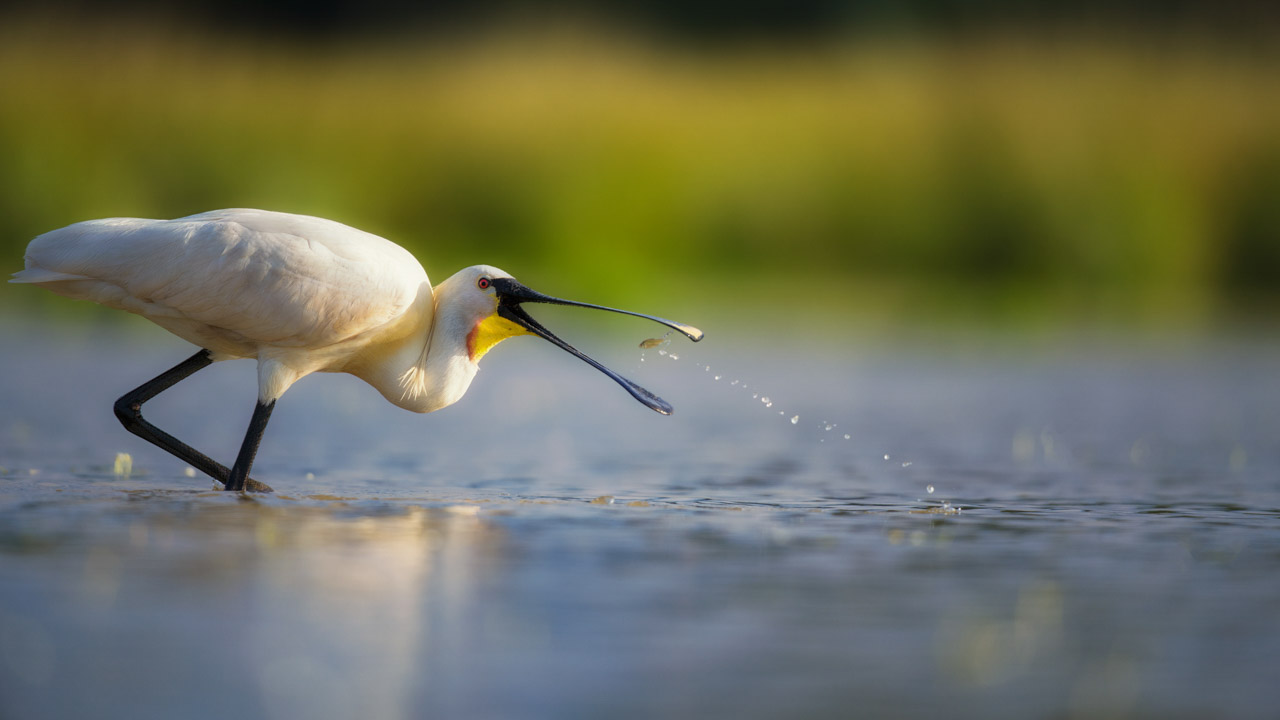
In Photography, the Punctum Is a Detail that Attracts your Attention

In this photo of a spoonbill walking in a pond in Dombes, the punctum is the small fish about to be caught in its beak. The studium is conveyed by the gradients of greens and blues, creating the ambiance of a beautiful sunny day.
 

The Punctum

The punctum is a specific point in a photo that imparts meaning without invoking a system of symbolic representation.

It arises from certain details in the photo that are unexpected and beyond the photographer's control.

The punctum disrupts the studium. It is often a detail, something that grabs your attention.

The punctum is the detail that strikes a particular sensibility. It embodies the poetry of uniqueness.

In Latin, punctum means a prick, a point. It comes from pungo, meaning I pierce. It corresponds to an isolated musical note.

For Roland Barthes, the punctum is the small spot, the little cut in a photo. The punctum is also the chance that puts a point in a photo.

The punctum is a detail in a photo. It is both an inevitable and graceful addition. The punctum does not necessarily originate from the photographer.

It does not necessarily attest to the photographer's artistry. What the punctum reveals is that the photographer was present at the scene during the shot.

It also suggests that the photographer could not capture this small entity in close-up but had to integrate it into the overall scene.

For Barthes, this implies that the photographer's insight lies not in seeing but in being there.

Personally, I disagree with him. I believe that indeed, a photographer must be there, but they must know how to look, understand, and immerse themselves in the scene. They must do this to anticipate the decisive moment, known as the "momentum," to freeze the punctum. This will be discussed in the next article.


The Relationship Between Studium and Punctum

The studium is what you feel when you look at a photo. Emotions and kind feelings arise due to your upbringing, personality, and soul.

The punctum is an element of the photo unintentional on the part of the photographer but that catches the eye.

These two concepts may seem unrelated at first glance, yet they complement each other perfectly.

The studium is a slow, almost lazy reflex. We must delve into ourselves to understand and articulate what we feel. It is a passive action.

On the contrary, the punctum is a quick, incongruous analysis. It is an active, rapid reflex. The punctum compels the viewer to look because they are seized by the detail. The punctum is somewhat similar to the technique of off-screen in photographic composition.


How to Use Punctum and Studium to Create Your Photos

Roland Barthes was not a photographer; he was a philosopher, linguist, literary critic, semiotician, sociologist, and literary theorist.

When he defines these concepts of studium and punctum, it is from a theoretical, sometimes abstract standpoint. On initial reading, they may seem obscure.

This book can be challenging to understand. We are far removed from on-field photographic practice. Yet, thorough analysis and detailed note-taking reveal that these concepts are applicable in the field. They can be useful for you as a photographer not only to realize and create your photos but also to establish a new framework for photographic analysis that you can use to study your photos and those of others.

This framework can be compared to one that uses positive and negative spaces, 5 or 10 criteria for analyzing a photo, and photographic elements. Studium and punctum can be highly effective tools for creating interesting photos with meaning and impact.


Using Studium to Create Your Photos

The studium allows you to understand why viewers appreciate your photos. When you take photos, it is generally to showcase them, whether in a family or friendly setting, on social media, in exhibitions, festivals or galleries, in online or print magazines, in books, or on a website.

I have encountered very few photographers who don't share their photos. They exist, but they are exceptions.

Let us assume that the vast majority of photographers want to display their photos. I belong to this group, and you do too if you are reading this article and blog.

The only way to know what viewers think of your photos is to receive written or verbal feedback. That is why we have a comment system on the web pages of our websites, a guestbook at exhibitions, and why we read comments on social media.

What is important in these comments and remarks is that they do not focus on technique. What matters are the emotional, sentimental comments. These are the ones that touch us deeply.

We must pay the utmost attention to them because they show us whether we have succeeded in creating interesting, meaningful photos. This concept of studium enables us to listen carefully and better understand if our photos engage others.

However, the studium is also a concept we can adopt to analyze our photos and those of others. When we take a photo, we must ask ourselves what it evokes for us, what it represents, why it moves us. We must tap into our deep personality to analyze it.

Naturally, we will understand if it is interesting to display and defend. But we can apply the studium to analyze other photographers' photos. This is often what I do.

When I look at photos taken by others, I strive to give an opinion based on what I feel. It is a bit of a like or dislike. This does not mean it's a good or bad photo; it's a subjective analysis. Ultimately, I believe that, to simplify, it is enough to consider the studium as a way of apprehending the meaning of a photo from an emotional, sentimental, and personal perspective.


Using Punctum to Create Your Photos

The punctum is the detail that catches the viewer's eye. It triggers attention.

It is a reflex, a spontaneous attitude. It will not prompt a deep analysis of the photo by the spectator.

Yet, for you, it is an essential concept. Indeed, this detail will make the viewer linger on your photo. Instead of glancing for a second and moving on, they will linger, take their time, analyze, and spend at least 10 seconds contemplating your photo because you have sparked their interest.

The punctum enables you to maintain a viewer's attention and attract them by keeping their focus.

This is what we all seek in showcasing our photos. The problem with the punctum is that it can be easy to incorporate into a studio scene, but it is more complex in nature, as scenes cannot be arranged. This is where patience, dedication, and knowledge of the terrain are crucial.

You must understand the environment, know the habits of animals to capture and show a punctum.


Finally

I hope this article has helped you understand the concepts of studium and punctum developed by Roland Barthes.

These are not just theoretical concepts. You can apply them in the field to create your shots.

The studium allows you to understand yourself and your viewers better.

The punctum enables you to add that touch of originality that will attract attention.

Both concepts are another method to help you build your photos.

Be humble, patient, constant, persevering, and persistent because the road to excellence is long.

  1. Using the Concepts of Studium and Punctum to Create your Photos
  2. 5 Tips for Managing Negative Space in Your Photos
  3. Gradation and Rhythm: 2 Principles of Art that Help Your Photos Stand Apart
  4. Balance and Proportion: 2 Principles of Art to Apply in Photography

Page 8 of 201

  • 3
  • 4
  • 5
  • 6
  • 7
  • 8
  • 9
  • 10
  • 11
  • 12
  1. You are here:  
  2. Home
  3. Blog Photographic Approach

Share on Social Media

Post
Share
Share
E-mail
WhatsApp
Text

Join Me on Social Networks

Join Me on Facebook  Join Me on Instagram  Join Me on LinkedIn

Claim your free guide to make your photo impactful and meaningful

Claim Your Free Guide '50 Pages of Tips to Give Impact and Meaning to Your Photos'.

4 + 8 =

Click Here To Discover All My Chronicles About the Photographic Approach.

Treat Yourself to a Fine Art Print That Matches your Personality

Example of a vacation home interior with a black and white fine photo art displayed on the wall.

Fine Art Print Collections in Black and White

Fine Art Print Collections in Black and White Black and white photography is a suitable technique for many nature scenes. It requires a particular frame of mind. A black and white photograph should be prepared and planned from the framing to the…
11991
Fine Art Print Collections in Black and White
An abstract art photo displayed in a contemporary living room decor.

Fine Art Print Collections in Color

Collections of Fine Art Prints in Color Color photographs allow digressions and take the audience to the message by secondary ways. The world around us, especially nature, is colorful. A color image can show the way our surroundings really are. Of course, it…
10440
Fine Art Print Collections in Color
Example of a home interior with fine art prints in my style back to black displayed on the wall. These photos are a part of my collection 'Wild beauties of Kenya'.

Fine Art Print Collections in Back to Black

Fine Art Print Collections in Back to Black I want to share my fine art prints of nature in a personal style that I call "back to black." "Back to Black" was developed to embody a sharp and clean style for artistic photos that can be hung in your living room,…
9980
Fine Art Print Collections in Back to Black
A waiting room with a photo in the style Fusion displayed on the wall. Grey Heron in Fusion.

Fine Art Print Collections with the Fusion Style

Fine Art Print Collections with the Fusion Style I would like to share a very creative and modern photography style to represent Nature in a very different way. I call it "Fusion." I created the style to offer dynamic photos, allowing you to start a good day…
7908
Fine Art Print Collections with the Fusion Style
A living room with a photo in the style 'Impression' exposed on the wall. Rising sun in impression

Fine Art Print Collections with the ‘Impression’ Style

Fine Art Print Collections with the ‘Impression’ Style The objective of this photographic style is to create the ephemeral blurs. That's why I named it 'Impression.' Photography, as an art form, is a powerful means of expressing reality from different…
5827
Fine Art Print Collections with the ‘Impression’ Style
Fine art prints from the style back to black displayed on a wall. Amar Guillen, photographer artist

New Collections of Fine Art Prints Dedicated to the Wonders of Nature

New and Updated Fine Art Print Collections Dedicated to the Wonders of Nature Fine art prints from the style back to black displayed on a wall.
11446
New Collections of Fine Art Prints Dedicated to the Wonders of Nature

Themes of the Blog Articles

Landscape of Arches National Park in Utah in black and white.

Blog Articles Dedicated to Artist Statement

Blog Articles Dedicated to Artist Statement
Dunes of death Valley in Black and White

Blog Articles Dedicated to Black and White Photography

Blog Articles Dedicated to Black and White Photography
Abstract photo or trees reflection on water

Blog Articles Dedicated to Photographic Mindset

Blog Articles Dedicated to Photographic Mindset
Abstract photo of ridles on water

Blog Articles Dedicated to Artistic Photography

Blog Articles Dedicated to Artistic Photography
Abstract photo of Yellowstone

Blog Articles Dedicated to Photographic Language

Blog Articles Dedicated to Photographic Language
Pronghorn in Yellowstone

Blog Articles Dedicated to Wildlife Photography

Blog Articles Dedicated to Wildlife Photography
Landscape of Bryce Canyon

Blog Articles Dedicated to Photographing United States

Blog Articles Dedicated to Photographing United States
Underwater waves in the Red Sea

Blog Articles Dedicated to Photographic Techniques

Blog Articles Dedicated to Photographic Techniques
Tree of Black Canyon in Black and White

Blog Articles Dedicated to Landscape Photography

Blog Articles Dedicated to Landscape Photography
Manta Ray in Maldives in Black and White

Blog Articles Dedicated to Underwater Photography

Blog Articles Dedicated to Underwater Photography
Red Deer stag during the rut of the deer

Blog Articles Dedicated to Photographic Judgement

Blog Articles Dedicated to Photographic Judgement
Great Crested Greb and his chick

Unclassified Blog Articles

Unclassified Blog Articles

You Might Be Interested By One of These Photographic Approach Articles

Photograph in black and white of the Grand Canyon from Arizona State in USA.

Why and How Mastering the Steps of Creating an Art Photograph

3603
Why and How Mastering the Steps of Creating an Art Photograph
An example of a narrative photo. Landscape of Island in the Sky in the Canyonlands in Utah in United States. Photo in black and white by Amar Guillen.

Why and How: Creating Impactful Narrative Photos

4118
Why and How: Creating Impactful Narrative Photos
Snowy landscape of Yellowstone during winter.

3 Steps for Giving Meaning to Your Photos

8750
3 Steps for Giving Meaning to Your Photos
Two lions in Kenya. Photographed in black and white. Photograph by Amar Guillen, photographer artist.

To Create Aesthetics Photos, Print your Images

4238
To Create Aesthetics Photos, Print your Images

Receive Free Tips On How to Give Impact and Meaning to Your Photos. Subscribe to Receive Regular Articles.

2 + 7 =

Contact Me By Email

10 + 9 =
This site is protected by reCAPTCHA and the Google Privacy Policy and Terms of Service apply.

About Amar Guillen, Creator of Fine Art Prints of Nature
As a photographer capturing the artistic essence for several decades, I have mastered the art of crafting an authentic experience for art enthusiasts and collectors of visual art.
When I observe my surroundings, be it friends, family, relationships, or professional contacts, I see souls in perpetual motion. Every moment of their existence is engulfed by daily hassles, work concerns, social media, online or televised information streams, and videos on the web.
Every minute, they strive to accomplish something, fearing losing ground and feeling marginalized in this frenzied society. Imprisoned by an oppressive schedule, the essential eludes them, drowned in the tumult of daily life. Is it really crucial to watch yet another cat video on the internet? Is it necessary to post twenty daily messages on social media?
Despite this, they remain constantly stressed and anxious about the challenges of the world, without being able to influence these monumental problems. It is at this moment that my artistic nature photographs come into play. Those who have had the privilege of hanging one of my works in their personal or professional space have expressed a radical transformation in their lives.
Every day, contemplating these works of art immerses them in tranquility, inner peace, and rediscovered serenity. They then understand that nature has the power to unravel tensions, to encourage reflection on the essential. Artistic photographs thus become open windows to the wonders of nature.
I have chosen to share the best of myself by helping others discover their identity, personality, style, all while reconnecting with nature. Take the time to explore my artistic photographs if you wish to reveal your true essence. Once hung in your space, your view of the world will be transformed.
Amar Guillen is a creator of fine art prints of nature.
I am Amar Guillen, creator of nature art photographs. I have a deep conviction that contemplating nature has the power to transform human beings. If everyone learned to know, respect, and preserve nature, our world would be transformed into a haven of peace where everyone would find their place.
Copyright © 2003 - 2026 Guillen Photo LLC - All rights reserved. Amar Guillen, professional photographer since 2003.
  • Blog
  • Calibration
  • Legal Information
  • Sitemap
  • Accessibility
  • Contact Me
  • Updates of the Website
I Want to Help You to Create Interesting Photos

How Can I Help You To Create More Interesting Photos?

Ask Me a Technical Question.
Subscribe to my Newsletter. The Inspiration Behind Guillen Photo.

Select your language

  • English (United Kingdom)
  • Français (France)
Claim your free guide to make your photo impactful and meaningful

Claim Your Free Guide '50 Pages of Tips to Give Impact and Meaning to Your Photos'.

3 + 10 =

Contact Me By Email

5 + 10 =

Office Address:
3512 Robin Road
Plano Texas 75075
USA

Office phone: (+1)214-769-6825