• The Art of ChoosingHome page
  • Fine Art Prints3 Editions
  • CollectionsAll Collections
  • AboutAmar Guillen
  • Customer Space & Contact
  • Select your language

    • English (United Kingdom)
    • Français (France)
  • All You Need to Select Your Fine Art Print
    • How to Choose a Fine Art Print - Q&A - FAQ
    • New Creations
    • Explore Some Interiors
    • Fine Art Print Blog
  • Browse by Edition
    • All Fine Art Prints
    • Unique Edition
    • Limited Edition
    • Open Edition
  • Browse by Style
    • Black and White
    • Color
    • Fusion
    • Impression
    • Back to Black
    • Landscapes in Black and White
    • Landscapes in Color
    • Animals in Black and White
    • Animals in Color
  • Browse by Theme
    • Landscape
    • Wildlife
    • Underwater
    • Abstract
    • Symbolic
    • Landscapes of the United States
    • Landscapes of France
    • Landscapes of Scotland
    • Seascapes
    • Relaxing
    • Energizing
    • Playful
  • Browse by Format
    • Rectangular
    • Square
    • Panoramic
  • Contact Me
    • Contact Me by Email or Phone
  • Collections
    • New Collections
    • All Collections
  • Browse by Theme
    • Landscapes
    • Wildlife
    • Underwater
    • Abstract
    • Symbolic
    • Landscapes of France
    • Landscapes of the United States
  • Browse by Style
    • Black and White
    • Color
    • Impression
    • Back to Black
    • Fusion
  • Contact Me
    • Contact Me by Email or Phone
  • Discover More About Me
    • Discover Who is Amar Guillen
    • Artistic and Photographic Statement
  • Galleries
    • Photo Galleries
    • Abstract Portfolio in Color
    • Black and White Landscape Photography Portfolio
    • Color Landscape Photography Portfolio
    • Black and White Wildlife Photography Portfolio
    • Color Wildlife Photography Portfolio
    • Underwater Photography Portfolio
  • Contact Me
    • Contact Me by Email or Phone
  • Your Customer Space
    • Create or Manage your Account
    • Your Download Space
    • Your Orders
  • Contact Me
    • Contact Me by Email or Phone

You are in that section: Home > Blog > Blog of the Photographic Creation Approach

Using the Concepts of Studium and Punctum to Create your Photos

Are you still searching for a method, a technique to make your photos interesting, to give them meaning?

Whether you are a beginner, advanced, or seasoned photographer, I am convinced that you are always seeking new creative ways.

In this article, I invite you to discover how to use the concepts of studium and punctum to create photos that reflect your style.

I will share with you a simple method to apply them when taking your photos.

Let yourself be guided.

This article will help you understand how to implement a new tool in your photography toolbox. By implementing it, you will make your photos even more interesting and instill in them true meaning.
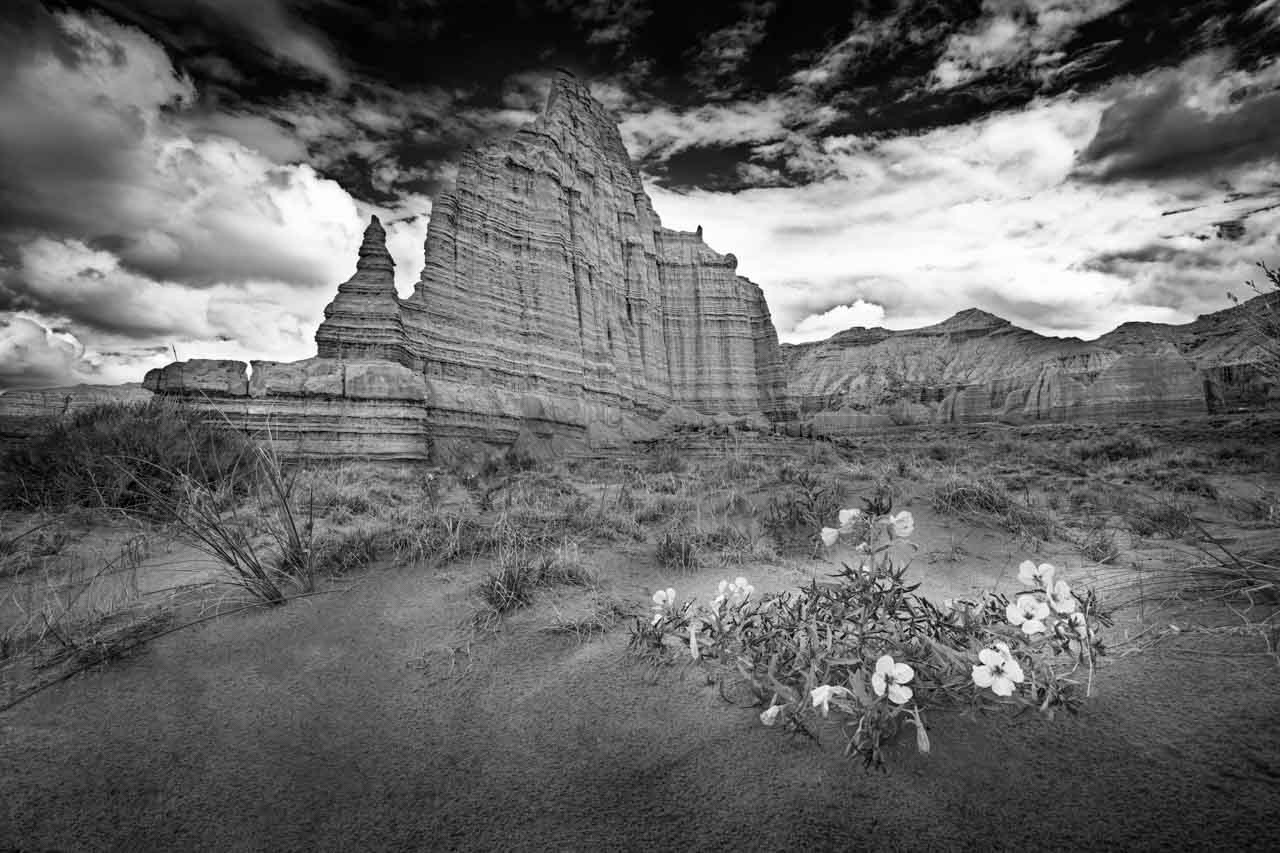
Landscape in black and white of Cathedral Valley in Utah in United States. This photo shows the studium and the punctum.
In this photo of a Cathedral Valley landscape in Utah, USA, the studium is the atmosphere created by the cloudy and menacing sky. The punctum is the plant that contrasts with the background. It represents softness and delicacy.

Table of Contents

    Page 1

  • Preamble
  • "Camera Lucida" by Roland Barthes
  • The Studium
  • Page 2

  • The Punctum
  • The Relationship Between Studium and Punctum
  • How to Use Punctum and Studium to Create Your Photos
  • Using Studium to Create Your Photos
  • Using Punctum to Create Your Photos
  • Finally
 

Preamble

Since I have been working as a professional photographer, I have had to deal with various demands and constraints.

Firstly, I have to sell my photos because it is my sole source of income. I always need to understand what my clients are looking for and why.

Additionally, I have to optimize the time spent in the field, as the majority of my professional activity involves marketing and sales, which can be time-consuming.

Lastly, I want to create photos that reflect who I am and bring me joy. I chose this profession out of passion, and it guides my life choices. Photography is the primary interest in my life. I also love learning, creating, and sharing. These different demands compel me to seek new methods and innovative techniques to create new collections of art photos while being efficient in my work.

When I finished my 10th reading of Roland Barthes' "Camera Lucida," I wondered how these concepts would serve me in my daily activities. It is a challenging book to read and understand. After this final reading, I waited a few days, reviewed my notes, delved into some passages, and suddenly everything became clear.

Some of the concepts Roland Barthes developed would help strengthen my photographic and artistic approach. I finally understood that there was nothing new in this book; it is just a different way of seeing and presenting photography. That is what I will share with you now.

"Camera Lucida" by Roland Barthes

Roland Barthes is the author of a theoretical book on photography titled "Camera Lucida," published in 1980 by Gallimard-Le Seuil.

In this book, Barthes argues that a photo elicits a reaction (emotional, sentimental, etc.) in him if you remove comments related to technique, reportage, reality, and art.

"Camera Lucida" consists of 48 chapters that offer a reflection on the image and its status in photography.

Roland Barthes, a French semiotician and intellectual, presents an analysis of images in the book. The language and text structures make it challenging to understand the meaning of certain concepts, requiring multiple readings.

What I took away from my 10th reading of this book is that Roland Barthes proposes a specific approach to photography with an analytical framework for photos, often focusing on portraits. It is as if wildlife photography, natural landscapes, or underwater photography do not exist.

While this book has been extraordinarily successful and become a reference in image analysis, it is important to consider it as one photographic approach, among others. Its merit lies in its existence.

According to Roland Barthes, photography can be approached from three angles:

  • The operator: the photographer.
  • The spectator: the one looking at the photo.
  • The spectrum: the subject. It does not evoke the scene, only the subject.

He also distinguishes two characteristics:

  • Studium, representing the interest of the photo based on the viewer's culture.
  • Punctum, the elusive element of the photo that touches the spectator.

In this book, Barthes also explores the time inscribed in the photo: that it was.

Studium and punctum are two characteristics for critiquing a photo. Keep in mind that Barthes, not being a photographer, considers the operator (photographer) unnecessary for the success of a photo.

His priority is given to the spectator and the spectrum (subject). You may not agree with this photographic approach, but as you will see later in the article, some interesting ideas will help you analyze photos better.

In this article, I will not dissect Roland Barthes' book. I will simply discuss the two concepts of studium and punctum for direct application to your photos.


The Studium

In his book "Camera Lucida," Roland Barthes discusses studium. Here is what he says:

What I feel for certain photos is a kind of average affect, almost a training. I did not see, in French, a word that simply expressed this kind of human interest, but in Latin, I believe, this word exists: it is studium, which does not mean immediately, "study," but application to a thing, taste for someone, a kind of general, eager investment, certainly, but without particular acuity.
Roland Barthes.

In simple terms, consider studium as a scientific analysis seeking the meaning hidden in photographs. It is what is shareable among people with the same culture.

Studium is a Latin word that means to study, eager to learn, enthusiasm, ardor, interest.

Studium is related to the information conveyed by the photograph and the meanings it accommodates.

Consider studium as what a photograph is in itself—all the elements that touch you when you look at it. Studium is the interest you have in a photograph, what makes you like it or not.

When you study the studium of a photo, you try to identify what the photographer wanted to convey. You may interpret it as you wish, agreeing or not, but you understand the photographer because you are educated. You have an education, training that allows you to analyze a photo emotionally or sentimentally.

Studium appeals to your knowledge, who you really are, your history, personality, and soul.

What you need to remember is that the studium defined by Roland Barthes concerns your motivations for liking or disliking a photo. These motivations are influenced by your general culture, education, relationships with others, qualities, flaws, and personality.

If you read "Camera Lucida," you will notice that the examples chosen by the author relate to people and documentary photos. There are no examples of natural landscapes, wildlife photos, or underwater photos.

However, studium is a concept that can be applied to all photographic themes. Personally, I can be equally moved by a bucolic landscape that reminds me of my childhood in the northern French countryside. I can also be touched by photos of miners that evoke the atmosphere of the mining region near Lens and Liévin.

What is interesting is that studium has nothing to do with photographic technique or semiotic analysis of an image. Studium simply appeals to what you feel.
The Punctum

5 Tips for Managing Negative Space in Your Photos

You have probably heard about negative space as a criterion for judging your photos. Or maybe you've heard that you need to pay attention to the negative space in order to build your photos properly.

But perhaps you have difficulty understanding this concept?

In this article, I will explain clearly and simply what is behind the negative space in photography. I will give you some tips on how to use it to create both interesting and impactful photos.

This article will help you understand how to implement a new tool in your photography toolbox. By implementing it, you will make your photos even more interesting and instill in them true meaning.

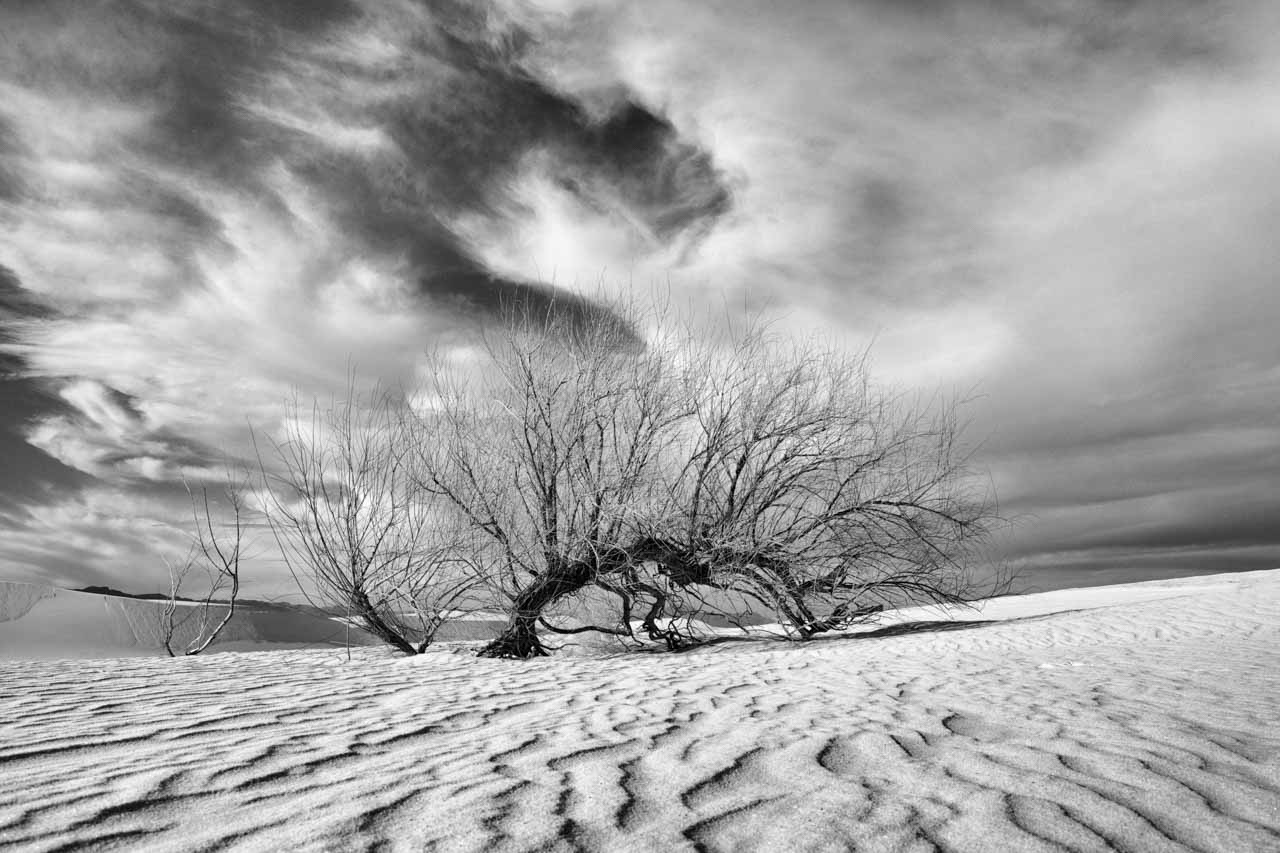
Tree in the gypsum desert of White Sand Dunes. Negative space is composed of sand and sky.

Table of Contents

  • The Story Behind This Article
  • Definition of Negative Space in Photography
  • Why You Need to Pay Attention to the Negative space in Your Photos
  • Tip #1 for Managing Negative Space: Pay Attention to Tonality
  • Tip #2: Watch Out for Disruptive Elements
  • Tip #3: Manage Depth of Field
  • Tip #4: Balance Foreground and Background
  • Tip: #5: Use Neutral Negative Space
  • Finally

The Story Behind This Article

When I started photography, the only rule I incorporated was the rule of thirds. Everyone talked about it. It was the best way to achieve good compositions. Then I would focus on making sharp pictures. For years, those were the only two criteria that were important to me.

When I decided to become a professional photographer, I opted for underwater photography. I decided to take a training course with an American photographer whose book I had read. This photographer's work fascinated me. His name was Jim Church. During the first presentation, he talked to us about negative space. He explained its importance and its interest. He always talked about paying attention to it. I was not familiar with this concept at all. At that time my English was rather academic. I didn't understand everything. I didn't dare ask technical questions.

Thus, I ended the course with an incomplete visual picture of the negative space.

When I got home, I reread my notes to better formalize them. After several readings, I came to understand what negative space was and its value.

During the following years, I mainly practiced underwater photography. I applied this concept assiduously. When I decided to also practice landscape and wildlife photography, I immediately understood that this notion of negative space applied to all photographic domains.

When I started organizing photo workshops in 2007, I realized that few photographers had mastered the concept of negative space. I have always tried to explain it simply because it is essential to build good photos.

Even today, when I talk with other photographers, I realize that the negative space remains nebulous and rather misunderstood. And for this reason, I decided to write and publish this article.

I would like to demystify negative space and give it the importance it deserves.

I hope it will help you to venture even further in your photographic journey.

Definition of Negative Space in Photography

In order to define the negative space of a photo, I propose that you consider a photo as a space composed of two elements:

  • Positive space.
  • Negative space.

The positive space of a photograph consists of the main subject (the primary photographic element) and the secondary subjects (the secondary photographic elements).

The negative space of a photo consists of the rest of the photo: foreground and background.

By definition the negative space of a photo is everything that is not positive.

Why You Need to Pay Attention to the Negative space in Your Photos

Most beginner photographers are obsessed with managing sharpness, the rule of thirds to compose, framing, etc. In short, they are obsessed with technique.

By evolving photographically, they learn to capture unique moments to create photos that become unique. It is the permanent search for the incredible scene, the sensational. Today, I notice that 90% of photographers are in this state of mind.

Most photographers take pictures that are interesting for a few moments but are quickly forgotten because another photographer has captured yet another unique moment.

The strength of timeless photos is that they hold attention. These are the ones which will mark it because they are well constructed. They are thought in terms of photographic elements and space management.

Negative space is an essential element of a successful photographic construction. But it is not often talked about. Yet most interesting photographs have a negative space that has been carefully planned out.

It is an essential element in photography. It allows to improve the quality of your photos. The negative space of a photo allows you to showcase the main photographic element: the subject.

The negative space is like a jewel case. It serves as an envelope which will guide the glance of the spectator.

The function of negative space is to highlight the subject of a photo.

The negative space allows you to approach the creation of a photo from a new angle. Indeed, you can consider that a photo is composed of distinct parts:

  • Frame. It imposes the physical limits of your photo. These are the edges.
  • Positive space. It is composed of the main (primary) or secondary photographic elements (like subject and the secondary subjects).
  • Negative space. It is composed of the background and the foreground. It determines the atmosphere of your photo. It is the case that will carry the subject.

You may not be used to looking at a photo in this way. But it is very practical and easy to use.

By paying attention to the negative space, you will make pictures that have more impact and will hold the attention of the viewers.

It may seem strange to you because you think that a photo is primarily a subject. But always think of the case that contains a jewel. It is the case that will make the success of the whole. It will give a good first impression. This is the same principle for the negative space.

Tip #1 for Managing Negative Space: Pay Attention to Tonality

I must remind you that the tonality concerns the whole photo. The tonality can be clear or can be forced. It is the general rendering of the brightness of a photo.

Tones are about the elements in your photo. You can have light tones, dark tones and medium tones.

Tones are very precise. For example, you can say that your main photographic element (the subject) has light and/or dark tones. If your subject is predominantly light, your negative space should be predominantly dark.

If your subject has a majority of dark tones, your negative space should have a majority of light tones.

You will probably wonder where the average tones are. That's a good question. If you remember the principle of art called gradation, your midtones are going to be used to graduate from light to dark or from dark to light.

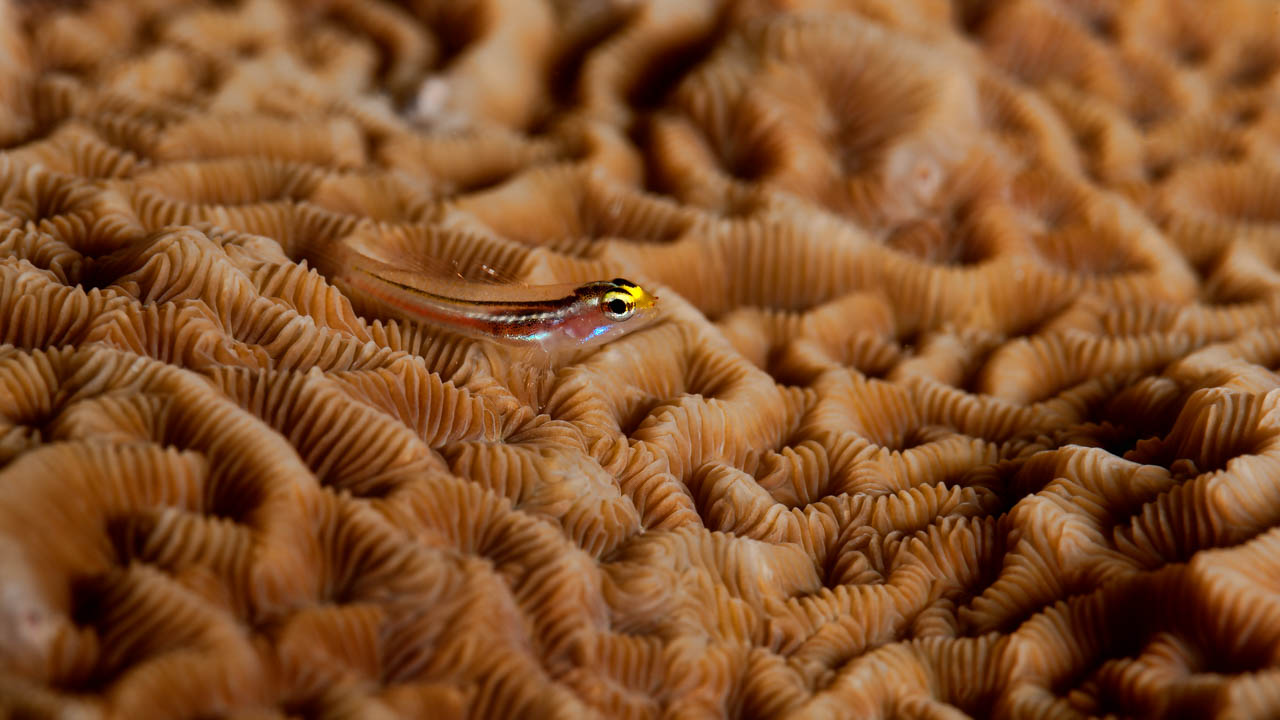
The space in this underwater photo is made up of coral. The tones are consistent with each other.

Tip #2: Watch Out for Disruptive Elements

In a photo, the disruptive elements are those that do not contribute to the reading and understanding of the image.

They do not help the reader to decipher the meaning of a photo.

When you compose and when you frame, you absolutely must exclude them.

Why? Because they are likely to attract attention and distract.

In addition, disturbing elements can cause mass imbalances in your photos.

It may be a dead tree trunk. It may be a stone or rock in the corner of a photo.

Identifying a disturbing element in a photo is pretty easy. You look at all the elements you have chosen to place in your scene. You study the relationships between the elements. If you see an element that is not related to others, it is disrupting or unbalancing the whole. It is a disruptive element.

To remove it, recompose or crop. If you can't do it in the field, you can always do it when developing, but I still recommend that you take great care when shooting.

Tip #3: Manage Depth of Field

When you take a photo, you have the choice to either put forward a main element called a subject, or to show a mood, or to create an abstract photo. It all depends on your goal and what you want to show, translate, transmit.

But in all three cases, you need to manage the depth of field well so as not to leave the negative space to chance in order for your photos to have impact and be interesting.

If you want to emphasize a main element, the bokeh technique of blurring the background is appropriate. It allows you not to draw the eye on a part which is not essential.

The foreground can also be blurred. It is not always possible to do this when shooting. Developing allows you to blur any part of a photo.

If you want to create a mood photo, it means that you want to take the viewer into another universe, or another world. In general, these photos have a large depth of field. The negative space must be as clear as possible because all the elements of the photo are interesting.

In the case of an abstract photo, there is no negative space. Consequently, there is no positive space.

Tip #4: Balance Foreground and Background

In an interesting photo, all the elements must bring something to the viewer. The void must have a meaning. In this case, said frame is well filled. If the negative space in your photo is composed of the foreground and background, remember to balance them well.

Remember that the foreground should welcome the viewer, to step into your photo. Do not make it too wide. The tone should be rather clear so as not to block the eye. The foreground is an invitation to enter a photo.

The function of the background is to highlight the subject (the main element). It must create the contrast of light and color. It can occupy the entire frame, unlike the foreground.

To create a negative space that strengthens your photo by carrying the subject, you must balance the foreground and background.

This balance is based on the tones, the color, the masses, and the sharpness. The balance must be harmonious and respect the things listed above.

The negative space around this white spoonbill photographed in la Dombes against the light is made up of sparkling bokeh reflections.

Tip: #5: Use Neutral Negative Space

The negative space in a photo is intended to highlight the main element, in other words, the subject. It should not be the essential element. It serves as a support. That is why I advise you to choose neutral negative space.

I'm talking about tones, masses, and details. If, for example, you are photographing an animal with great sharpness and a lot of details, your negative space must be blurred, light. It should not attract the eye.

The negative space must not provoke an engagement or a discussion, because otherwise it becomes the interest. It must be interesting but only complementary to the subject.

The negative space around the deer is made up of meadow and airspace. It has been high-keyed to make it neutral.

Finally

You now know that the negative space of your photos is an essential part. You must manage it well because it is the one that carries the subject or the main element.

It allows you to judge certain photos. It allows you to create harmonious compositions.

Keep in mind that you must manage the tones and the disturbing elements. It is not him who is the subject of your photo.

Be humble, patient, constant, persevering, and persistent because the road to excellence is long.

  1. Gradation and Rhythm: 2 Principles of Art that Help Your Photos Stand Apart
  2. Balance and Proportion: 2 Principles of Art to Apply in Photography
  3. Using the 8 Principles of Art to Create Photos
  4. The Figure: Uncovering the Second Element of Art

Page 9 of 201

  • 4
  • 5
  • 6
  • 7
  • 8
  • 9
  • 10
  • 11
  • 12
  • 13
  1. You are here:  
  2. Home
  3. Blog Photographic Approach

Share on Social Media

Post
Share
Share
E-mail
WhatsApp
Text

Join Me on Social Networks

Join Me on Facebook  Join Me on Instagram  Join Me on LinkedIn

Claim your free guide to make your photo impactful and meaningful

Claim Your Free Guide '50 Pages of Tips to Give Impact and Meaning to Your Photos'.

4 + 8 =

Click Here To Discover All My Chronicles About the Photographic Approach.

Treat Yourself to a Fine Art Print That Matches your Personality

Example of a vacation home interior with a black and white fine photo art displayed on the wall.

Fine Art Print Collections in Black and White

Fine Art Print Collections in Black and White Black and white photography is a suitable technique for many nature scenes. It requires a particular frame of mind. A black and white photograph should be prepared and planned from the framing to the…
11991
Fine Art Print Collections in Black and White
An abstract art photo displayed in a contemporary living room decor.

Fine Art Print Collections in Color

Collections of Fine Art Prints in Color Color photographs allow digressions and take the audience to the message by secondary ways. The world around us, especially nature, is colorful. A color image can show the way our surroundings really are. Of course, it…
10440
Fine Art Print Collections in Color
Example of a home interior with fine art prints in my style back to black displayed on the wall. These photos are a part of my collection 'Wild beauties of Kenya'.

Fine Art Print Collections in Back to Black

Fine Art Print Collections in Back to Black I want to share my fine art prints of nature in a personal style that I call "back to black." "Back to Black" was developed to embody a sharp and clean style for artistic photos that can be hung in your living room,…
9980
Fine Art Print Collections in Back to Black
A waiting room with a photo in the style Fusion displayed on the wall. Grey Heron in Fusion.

Fine Art Print Collections with the Fusion Style

Fine Art Print Collections with the Fusion Style I would like to share a very creative and modern photography style to represent Nature in a very different way. I call it "Fusion." I created the style to offer dynamic photos, allowing you to start a good day…
7908
Fine Art Print Collections with the Fusion Style
A living room with a photo in the style 'Impression' exposed on the wall. Rising sun in impression

Fine Art Print Collections with the ‘Impression’ Style

Fine Art Print Collections with the ‘Impression’ Style The objective of this photographic style is to create the ephemeral blurs. That's why I named it 'Impression.' Photography, as an art form, is a powerful means of expressing reality from different…
5827
Fine Art Print Collections with the ‘Impression’ Style
Fine art prints from the style back to black displayed on a wall. Amar Guillen, photographer artist

New Collections of Fine Art Prints Dedicated to the Wonders of Nature

New and Updated Fine Art Print Collections Dedicated to the Wonders of Nature Fine art prints from the style back to black displayed on a wall.
11446
New Collections of Fine Art Prints Dedicated to the Wonders of Nature

Themes of the Blog Articles

Landscape of Arches National Park in Utah in black and white.

Blog Articles Dedicated to Artist Statement

Blog Articles Dedicated to Artist Statement
Dunes of death Valley in Black and White

Blog Articles Dedicated to Black and White Photography

Blog Articles Dedicated to Black and White Photography
Abstract photo or trees reflection on water

Blog Articles Dedicated to Photographic Mindset

Blog Articles Dedicated to Photographic Mindset
Abstract photo of ridles on water

Blog Articles Dedicated to Artistic Photography

Blog Articles Dedicated to Artistic Photography
Abstract photo of Yellowstone

Blog Articles Dedicated to Photographic Language

Blog Articles Dedicated to Photographic Language
Pronghorn in Yellowstone

Blog Articles Dedicated to Wildlife Photography

Blog Articles Dedicated to Wildlife Photography
Landscape of Bryce Canyon

Blog Articles Dedicated to Photographing United States

Blog Articles Dedicated to Photographing United States
Underwater waves in the Red Sea

Blog Articles Dedicated to Photographic Techniques

Blog Articles Dedicated to Photographic Techniques
Tree of Black Canyon in Black and White

Blog Articles Dedicated to Landscape Photography

Blog Articles Dedicated to Landscape Photography
Manta Ray in Maldives in Black and White

Blog Articles Dedicated to Underwater Photography

Blog Articles Dedicated to Underwater Photography
Red Deer stag during the rut of the deer

Blog Articles Dedicated to Photographic Judgement

Blog Articles Dedicated to Photographic Judgement
Great Crested Greb and his chick

Unclassified Blog Articles

Unclassified Blog Articles

You Might Be Interested By One of These Photographic Approach Articles

Photograph in black and white of the Grand Canyon from Arizona State in USA.

Why and How Mastering the Steps of Creating an Art Photograph

3603
Why and How Mastering the Steps of Creating an Art Photograph
An example of a narrative photo. Landscape of Island in the Sky in the Canyonlands in Utah in United States. Photo in black and white by Amar Guillen.

Why and How: Creating Impactful Narrative Photos

4118
Why and How: Creating Impactful Narrative Photos
Snowy landscape of Yellowstone during winter.

3 Steps for Giving Meaning to Your Photos

8750
3 Steps for Giving Meaning to Your Photos
Two lions in Kenya. Photographed in black and white. Photograph by Amar Guillen, photographer artist.

To Create Aesthetics Photos, Print your Images

4238
To Create Aesthetics Photos, Print your Images

Receive Free Tips On How to Give Impact and Meaning to Your Photos. Subscribe to Receive Regular Articles.

2 + 7 =

Contact Me By Email

10 + 9 =
This site is protected by reCAPTCHA and the Google Privacy Policy and Terms of Service apply.

About Amar Guillen, Creator of Fine Art Prints of Nature
As a photographer capturing the artistic essence for several decades, I have mastered the art of crafting an authentic experience for art enthusiasts and collectors of visual art.
When I observe my surroundings, be it friends, family, relationships, or professional contacts, I see souls in perpetual motion. Every moment of their existence is engulfed by daily hassles, work concerns, social media, online or televised information streams, and videos on the web.
Every minute, they strive to accomplish something, fearing losing ground and feeling marginalized in this frenzied society. Imprisoned by an oppressive schedule, the essential eludes them, drowned in the tumult of daily life. Is it really crucial to watch yet another cat video on the internet? Is it necessary to post twenty daily messages on social media?
Despite this, they remain constantly stressed and anxious about the challenges of the world, without being able to influence these monumental problems. It is at this moment that my artistic nature photographs come into play. Those who have had the privilege of hanging one of my works in their personal or professional space have expressed a radical transformation in their lives.
Every day, contemplating these works of art immerses them in tranquility, inner peace, and rediscovered serenity. They then understand that nature has the power to unravel tensions, to encourage reflection on the essential. Artistic photographs thus become open windows to the wonders of nature.
I have chosen to share the best of myself by helping others discover their identity, personality, style, all while reconnecting with nature. Take the time to explore my artistic photographs if you wish to reveal your true essence. Once hung in your space, your view of the world will be transformed.
Amar Guillen is a creator of fine art prints of nature.
I am Amar Guillen, creator of nature art photographs. I have a deep conviction that contemplating nature has the power to transform human beings. If everyone learned to know, respect, and preserve nature, our world would be transformed into a haven of peace where everyone would find their place.
Copyright © 2003 - 2026 Guillen Photo LLC - All rights reserved. Amar Guillen, professional photographer since 2003.
  • Blog
  • Calibration
  • Legal Information
  • Sitemap
  • Accessibility
  • Contact Me
  • Updates of the Website
I Want to Help You to Create Interesting Photos

How Can I Help You To Create More Interesting Photos?

Ask Me a Technical Question.
Subscribe to my Newsletter. The Inspiration Behind Guillen Photo.

Select your language

  • English (United Kingdom)
  • Français (France)
Claim your free guide to make your photo impactful and meaningful

Claim Your Free Guide '50 Pages of Tips to Give Impact and Meaning to Your Photos'.

5 + 10 =

Contact Me By Email

8 + 3 =

Office Address:
3512 Robin Road
Plano Texas 75075
USA

Office phone: (+1)214-769-6825